

- Industry Size (2026)
- USD 680 Mn
- Forecast (2036)
- USD 1930.8 Mn
- CAGR (2026 to 2036)
- 11%
Low-Carbon PVC Artificial Leather for Automotive Interiors Market Forecast and Outlook 2026 to 2036
The low-carbon PVC artificial leather for automotive interiors market is projected to grow from USD 680 million in 2026 to USD 1,930.8 million by 2036, with a compound annual growth rate (CAGR) of 11%. This market is defined by stable, long-term demand rather than volume fluctuations. Buyers, particularly automotive manufacturers, are increasingly committed to sourcing sustainable materials that meet both regulatory requirements and consumer preferences for eco-friendly products. This commitment leads to repeat usage, as manufacturers seek reliable, consistent solutions that align with their sustainability goals. The demand quality is driven by the need for durability, performance, and environmental compliance in automotive interiors, where low-carbon alternatives offer a competitive edge in a rapidly evolving market. Buyer loyalty will be shaped by suppliers’ ability to provide high-quality artificial leather with proven long-term benefits. Suppliers that can consistently deliver on these expectations will secure lasting relationships and capture a significant share of the growing market.
Quick Stats of the Low-Carbon PVC Artificial Leather for Automotive Interiors Market
- Low-Carbon PVC Artificial Leather for Automotive Interiors Market Value (2026): USD 680 million
- Low-Carbon PVC Artificial Leather for Automotive Interiors Market Forecast Value (2036): USD 1,930.8 million
- Low-Carbon PVC Artificial Leather for Automotive Interiors Market Global Forecast CAGR (2026-2036): 11%
- Low-Carbon PVC Artificial Leather for Automotive Interiors Market Leading Segment: End Use (OEM Automotive Production) 68%
- Key Growth Regions in Low-Carbon PVC Artificial Leather for Automotive Interiors Market: USA
- Top Players in Low-Carbon PVC Artificial Leather for Automotive Interiors Market: Covestro AG, INEOS Group Ltd., Nan Ya Plastics Corporation, LG Chem Ltd., SABIC, Dow Chemical Company, Wacker Chemie AG, Maneurop, BASF SE, Toray Industries, Inc.
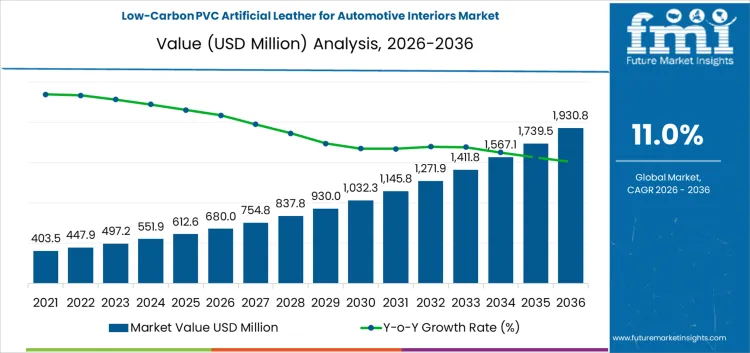
What is the Growth Forecast for the Low-Carbon PVC Artificial Leather for Automotive Interiors Market through 2036?
The saturation point analysis for the low-carbon PVC artificial leather for automotive interiors market shows distinct phases of rapid adoption followed by a stabilization in the growth rate as the market matures. From 2026 to 2031, the market will grow from USD 680 million to USD 1,330 million, reflecting a strong surge driven by the automotive industry's increasing focus on sustainability. During this phase, there will be a marked acceleration in the adoption of low-carbon PVC artificial leather as a sustainable alternative to traditional materials, driven by regulatory pressure, consumer demand for eco-friendly products, and advancements in production technologies.
By 2031, the market will approach its saturation point. Although growth will continue, the pace will stabilize, with the market expanding more gradually from USD 1,330 million to USD 1.93 billion by 2036. This deceleration is expected as low-carbon PVC artificial leather becomes standard in automotive manufacturing, making further growth less rapid. The saturation phase will be characterized by the optimization of production processes and more widespread, consistent adoption across the automotive industry. The focus will shift from expanding market share to refining the material's performance and cost-efficiency while maintaining its sustainability credentials. This maturation of the market will lead to steady demand, but at a more stable and predictable growth rate.
Low-Carbon PVC Artificial Leather for Automotive Interiors Market Key Takeaways
| Metric | Value |
|---|---|
| Industry Sales Value (2026) | USD 680 million |
| Industry Forecast Value (2036) | USD 1,930.8 million |
| Industry Forecast CAGR (2026-2036) | 11% |
What Is Driving the Demand for Low Carbon PVC for Automotive Interiors Market?
Historical demand for PVC based artificial leather in automotive interiors has been shaped by the material’s durability, wear resistance, ease of maintenance, and cost advantages relative to genuine leather, leading to wide adoption in seats, door trims, dashboards, and other cabin components. PVC artificial leather historically comprised a significant portion of the larger synthetic leather segment, which serves diverse interior applications and has grown as automakers seek materials that balance performance and affordability. The broader automotive PVC artificial leather market has demonstrated moderate growth over recent years, with estimates showing it valued in the low single digit billions of US dollars and expanding at mid single digit compound annual growth rates as vehicle production and interior material use increases globally. Consumer preference for synthetic alternatives and functional attributes of PVC contributed to steady demand before low carbon considerations became central.
Future demand for low carbon PVC used in automotive interiors is expected to be influenced by increasing regulatory and corporate emphasis on reducing lifecycle carbon emissions and aligning materials with sustainability criteria. Automotive manufacturers and suppliers are under pressure to reduce vehicle embodied carbon as part of broader decarbonization commitments, which encourages use of PVC formulations produced with lower greenhouse gas intensity, recycled content, or renewable energy inputs in production. Growth factors include tightening regulations on vehicle material emissions, rising consumer and fleet purchaser interest in eco friendly interior options, and advances in manufacturing processes that reduce PVC’s carbon footprint. The broader automotive interior materials market, valued at tens of billions of US dollars and projected to grow through the early 2030s, supports continued diversification of material choices as sustainability becomes a purchasing and compliance driver. Challenges include balancing sustainability improvements with cost and maintaining the performance attributes required in automotive applications, but ongoing shifts toward low carbon supply chains and environmental certification frameworks are expected to reinforce demand for low carbon PVC artificial leather in vehicle interiors.
What are the Leading Segments in the Global Low-Carbon PVC Artificial Leather for Automotive Interiors Market?
The global low-carbon PVC artificial leather for automotive interiors market is segmented by application and end use. Among applications, seat covers & upholstery lead the market, capturing 55% of the share, followed by door panel leather surfaces, armrests & trim, headliners & miscellaneous interior components. Seat covers and upholstery are preferred due to their high demand for comfort, durability, and aesthetic appeal in both OEM and aftermarket automotive production. On the end-use side, OEM automotive production dominates the market, holding 68% of the share, followed by aftermarket automotive interiors and specialty or custom interiors. OEM automotive production leads due to the need for consistent, large-scale production of interior materials for new vehicles.
What Drives the Growth of Seat Covers & Upholstery in the Low-Carbon PVC Artificial Leather for Automotive Interiors Market?
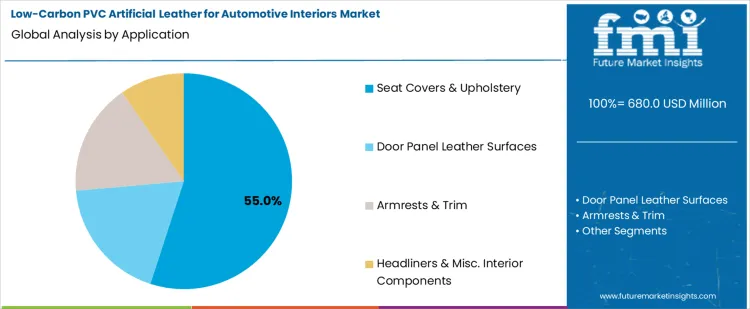
Seat covers & upholstery are the leading application in the low-carbon PVC artificial leather for automotive interiors market, holding 55% of the share. This demand is driven by the high importance of seat covers in automotive interiors, where both aesthetic appeal and durability are critical. Low-carbon PVC artificial leather provides an eco-friendly alternative to traditional leather, offering similar visual and tactile qualities, but with a reduced environmental footprint. The rising preference for sustainable materials in the automotive industry, driven by both consumer demand and regulatory pressures, is accelerating the adoption of low-carbon PVC artificial leather for seat covers and upholstery. Additionally, low-carbon PVC offers durability, ease of maintenance, and resistance to wear, which are essential qualities for automotive interiors that face constant use and environmental stress. As the automotive industry continues to focus on sustainability, the demand for low-carbon PVC in seat covers and upholstery will continue to grow, ensuring its continued dominance in the market.
What is Driving the Demand for OEM Automotive Production in the Low-Carbon PVC Artificial Leather for Automotive Interiors Market?
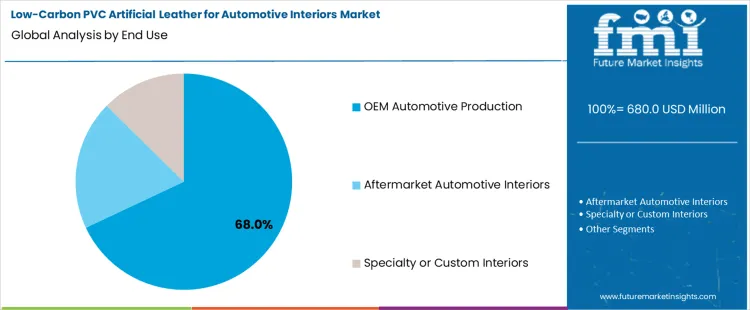
OEM automotive production is the leading end-use sector in the low-carbon PVC artificial leather for automotive interiors market, capturing 68% of the share. This demand is primarily driven by the automotive industry's growing emphasis on sustainable manufacturing practices. Original Equipment Manufacturers (OEMs) are increasingly adopting low-carbon PVC artificial leather to meet consumer demand for environmentally friendly vehicles while maintaining high standards for interior quality and design. The automotive industry is one of the largest consumers of artificial leather, particularly for seating, trim, and panel applications, where materials need to balance durability, comfort, and aesthetics. Low-carbon PVC artificial leather meets these needs while providing an eco-friendly alternative to conventional leather, which has a higher environmental impact. As more OEMs integrate sustainability into their manufacturing processes and production lines, the demand for low-carbon PVC artificial leather in OEM automotive production is expected to continue to grow, reinforcing its dominant position in the market.
What are the Key Dynamics in the Low Carbon PVC Artificial Leather for Automotive Interiors Market?
The low carbon PVC artificial leather for automotive interiors market involves materials engineered to reduce greenhouse gas emissions in production while meeting performance needs for seats, door panels, and trim. Automotive manufacturers prioritize durability, abrasion resistance, and visual quality alongside lower carbon intensity. Regulations on vehicle lifecycle emissions and corporate sustainability commitments influence material choice. Supplier ability to document reduced emissions and traceability of feedstocks shapes adoption. Market dynamics reflect balancing sustainability with cost, supply chain readiness, and integration with existing automotive interior manufacturing processes.
What are the Main Drivers Supporting Growth in This Market?
Growth in this market is supported by increasing regulatory focus on reducing embodied carbon in vehicles. Automakers face stricter emissions reporting requirements and sustainability targets that include material footprints. Consumer awareness of environmental impact in vehicle purchase decisions is also rising, which encourages brands to seek low carbon interior components. Advances in PVC compounding and processing that use renewable energy and alternative feedstocks help lower carbon intensity without sacrificing performance. Collaborations between material suppliers and automotive OEMs accelerate development of solutions tailored to industry specifications. Expansion of electric vehicle production further emphasizes sustainable material selection.
What Restraints Are Limiting Market Expansion?
High production cost remains a significant restraint for the low carbon PVC artificial leather market. Materials engineered to reduce carbon intensity often require investments in renewable energy, alternative feedstocks, or new processing technologies, which can raise input costs relative to conventional PVC. Automotive manufacturers may be cautious about cost increases in a competitive industry with tight margins. Supply chain variability in availability and quality of low carbon inputs adds complexity for consistent material supply. Differences in regional standards for carbon reporting and certification also create uncertainty for global suppliers and buyers.
What Emerging Trends Are Shaping the Future of This Market?
Emerging trends include increased use of mass balance accounting and environmental product declarations to verify and communicate carbon reductions. Manufacturers are exploring hybrid material systems that combine low carbon PVC with recycled or bio based components to improve sustainability profiles. Digital lifecycle assessment tools are being adopted to quantify material carbon footprints and support procurement decisions. There is rising interest in aligning low carbon interior materials with broader vehicle sustainability strategies, including recycled content targets and end of life recyclability. Collaboration between automotive brands, suppliers, and standards bodies is growing to harmonize performance requirements with environmental reporting expectations.
What is the Country-Wise Analysis of the Low-Carbon PVC Artificial Leather for Automotive Interiors Market?
The low-carbon PVC artificial leather for automotive interiors market is experiencing significant growth, driven by the automotive industry’s increasing focus on sustainability and reducing the environmental impact of vehicle manufacturing. Low-carbon PVC artificial leather, produced with a reduced carbon footprint compared to traditional PVC, is gaining popularity in automotive interiors due to its durability, aesthetic appeal, and eco-friendly qualities. Developed markets like the USA, Germany, and Japan are at the forefront of adopting low-carbon PVC artificial leather, supported by government regulations and strong consumer demand for sustainable products. Emerging markets like China and South Korea are also witnessing growth, driven by a shift towards greener manufacturing processes and a growing preference for eco-friendly vehicle interiors. As the automotive industry globally prioritizes sustainability, the market for low-carbon PVC artificial leather in automotive interiors is expected to expand significantly.
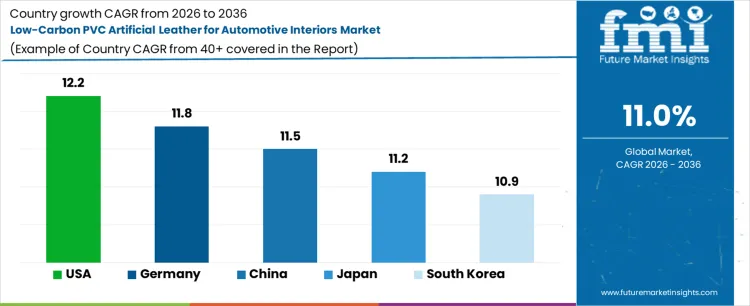
| Country | CAGR (2026-2036) |
|---|---|
| USA | 12.2% |
| Germany | 11.8% |
| China | 11.5% |
| Japan | 11.2% |
| South Korea | 10.9% |
What is the Growth Outlook for the Low-Carbon PVC Artificial Leather for Automotive Interiors Market in the USA?
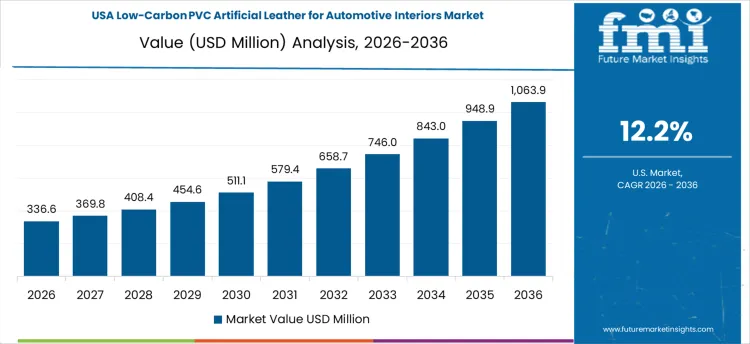
The low-carbon PVC artificial leather for automotive interiors market in the USA is projected to grow steadily, with a projected CAGR of 12.2% from 2026 to 2036. The USA is a leader in automotive innovation, and sustainability is becoming a critical focus in the industry. The demand for low-carbon PVC artificial leather is increasing as automakers seek to reduce their environmental impact, particularly in vehicle interiors. The USA government’s push for more sustainable manufacturing practices, combined with rising consumer demand for eco-friendly materials in automotive products, is expected to drive growth in this market. As the automotive industry in the USA continues to adopt greener solutions and materials, the market for low-carbon PVC artificial leather for automotive interiors is set to expand steadily.
What is the Market Outlook for the Low-Carbon PVC Artificial Leather for Automotive Interiors Market in Germany?
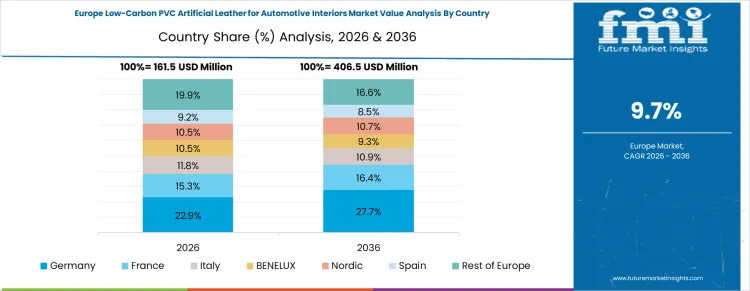
Germany is expected to see steady growth in the low-carbon PVC artificial leather for automotive interiors market, with a projected CAGR of 11.8% from 2026 to 2036. Germany is a global leader in automotive manufacturing, and the demand for sustainable materials is rising, particularly in the production of vehicle interiors. Low-carbon PVC artificial leather offers an environmentally friendly alternative to traditional materials, and the automotive industry is increasingly turning to these solutions to meet green building standards and sustainability goals. The German government’s focus on reducing carbon emissions and promoting sustainable manufacturing practices is further driving the adoption of low-carbon PVC artificial leather. With growing consumer demand for eco-conscious products, the market for low-carbon PVC artificial leather in Germany is expected to grow steadily in the coming years.
What is the Growth Forecast for the Low-Carbon PVC Artificial Leather for Automotive Interiors Market in China?
China is projected to experience steady growth in the low-carbon PVC artificial leather for automotive interiors market, with a projected CAGR of 11.5% from 2026 to 2036. As one of the largest automotive manufacturing countries globally, China is increasingly focusing on reducing its carbon footprint and adopting more sustainable materials. The demand for low-carbon PVC artificial leather in automotive interiors is growing as the automotive sector seeks to meet stricter environmental regulations and consumer preferences for greener solutions. Government initiatives to reduce plastic waste and promote sustainable manufacturing are supporting the adoption of eco-friendly materials like low-carbon PVC artificial leather. With China’s growing commitment to sustainability, the market for low-carbon PVC artificial leather is expected to continue its steady growth.
What is the Market Outlook for the Low-Carbon PVC Artificial Leather for Automotive Interiors Market in Japan?
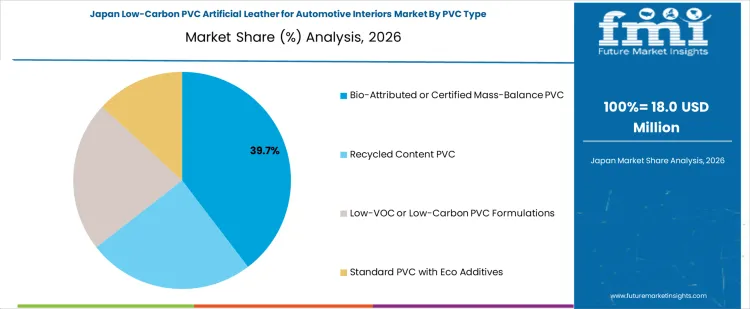
Japan is expected to see steady growth in the low-carbon PVC artificial leather for automotive interiors market, with a projected CAGR of 11.2% from 2026 to 2036. Japan’s automotive industry is focused on innovation and sustainability, and low-carbon PVC artificial leather is becoming an attractive alternative to conventional materials for automotive interiors. As the Japanese government introduces policies to reduce carbon emissions and promote sustainable manufacturing, the demand for eco-friendly materials in the automotive sector is increasing. The growing consumer preference for sustainable products is also driving the adoption of low-carbon PVC artificial leather. As Japan continues to prioritize sustainability in its manufacturing practices, the market for low-carbon PVC artificial leather in automotive interiors is expected to expand steadily.
What is the Growth Forecast for the Low-Carbon PVC Artificial Leather for Automotive Interiors Market in South Korea?
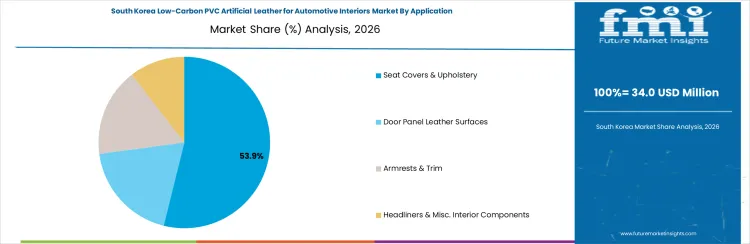
South Korea is projected to experience steady growth in the low-carbon PVC artificial leather for automotive interiors market, with a projected CAGR of 10.9% from 2026 to 2036. South Korea has been proactive in adopting sustainable technologies, and the automotive sector is increasingly focusing on using eco-friendly materials in vehicle production. The demand for low-carbon PVC artificial leather is rising as automakers seek to reduce their carbon footprint and meet both regulatory requirements and consumer expectations for sustainable products. Government policies supporting sustainable manufacturing, coupled with growing consumer awareness of environmental issues, are expected to drive the adoption of low-carbon PVC artificial leather in automotive interiors. As the South Korean automotive industry continues to embrace sustainable practices, the market for low-carbon PVC artificial leather is expected to grow steadily.
What is the Competitive Landscape for the Low-Carbon PVC Artificial Leather for Automotive Interiors Market?
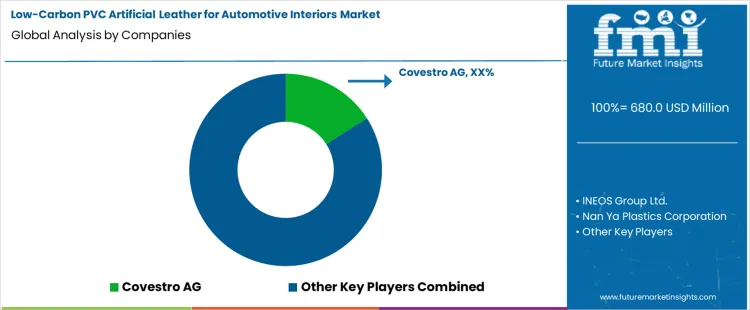
The low-carbon PVC artificial leather for automotive interiors market is growing as the automotive industry increasingly shifts toward sustainable materials that reduce environmental impact while maintaining high performance and durability. Covestro AG leads the market with its innovative low-carbon PVC artificial leather solutions designed for automotive interiors, offering eco-friendly alternatives that meet both aesthetic and functional requirements. Their commitment to sustainability, innovation, and high-quality material production has positioned them as a dominant player in this space. INEOS Group Ltd., Nan Ya Plastics Corporation, and LG Chem Ltd. are significant competitors, each providing low-carbon PVC artificial leather products for automotive applications. INEOS Group Ltd. specializes in high-performance, sustainable polymers for various industries, including automotive, while Nan Ya Plastics Corporation and LG Chem Ltd. focus on providing advanced materials that combine low-carbon attributes with durability for vehicle interiors.
SABIC, Dow Chemical Company, and Wacker Chemie AG further contribute to the competitive landscape by offering low-carbon PVC-based solutions for automotive interiors. SABIC focuses on developing innovative, sustainable materials that support eco-friendly automotive manufacturing, while Dow Chemical Company delivers high-performance, low-carbon polymer solutions that cater to the automotive industry's needs. Wacker Chemie AG specializes in providing materials for artificial leather and synthetic polymers with sustainable production processes. Maneurop, BASF SE, and Toray Industries, Inc. also play key roles in the market by offering low-carbon PVC artificial leather materials designed to meet the automotive sector's demand for both sustainable and high-performance interior solutions. These companies compete by focusing on product innovation, sustainability, and the ability to meet the automotive industry's growing demand for eco-friendly, durable materials. As the automotive sector continues to prioritize sustainability, the market for low-carbon PVC artificial leather is expected to expand, fostering further innovation and competition.
Key Players of the Low-Carbon PVC Artificial Leather for Automotive Interiors Market
- Covestro AG
- INEOS Group Ltd.
- Nan Ya Plastics Corporation
- LG Chem Ltd.
- SABIC
- Dow Chemical Company
- Wacker Chemie AG
- Maneurop
- BASF SE
- Toray Industries, Inc.
Scope of the Report
| Items | Values |
|---|---|
| Quantitative Units (2026) | USD million |
| PVC Type | Bio Attributed or Certified Mass Balance PVC, Recycled Content PVC, Low VOC or Low Carbon PVC Formulations, Standard PVC with Eco Additives |
| Application | Seat Covers & Upholstery, Door Panel Leather Surfaces, Armrests & Trim, Headliners & Miscellaneous Interior Components |
| End Use | OEM Automotive Production, Aftermarket Automotive Interiors, Specialty or Custom Interiors |
| Companies | Covestro AG, INEOS Group Ltd., Nan Ya Plastics Corporation, LG Chem Ltd., SABIC, Dow Chemical Company, Wacker Chemie AG, Maneurop, BASF SE, Toray Industries, Inc. |
| Regions Covered | North America, Latin America, Western Europe, Eastern Europe, South Asia & Pacific, East Asia, Middle East & Africa |
| Countries Covered | United States, Canada, Mexico, Brazil, Argentina, Germany, France, United Kingdom, Italy, Spain, Netherlands, China, India, Japan, South Korea, ANZ, GCC Countries, South Africa |
| Additional Attributes | Dollar sales by PVC type, application, end use, and region. Includes analysis of market trends in low carbon PVC artificial leather for automotive interiors, performance in OEM and aftermarket applications, cost and formulation considerations, regulatory and sustainability drivers for low carbon and recycled PVC materials, integration with automotive design and durability standards, competitive positioning and market share of key companies, innovations in eco friendly PVC technologies, and evaluation of impact on interior performance, emissions, vehicle weight, and end use adoption. |
Low-Carbon PVC Artificial Leather for Automotive Interiors Market Segmentation
PVC Type:
- Bio-Attributed or Certified Mass-Balance PVC
- Recycled Content PVC
- Low-VOC or Low-Carbon PVC Formulations
- Standard PVC with Eco Additives
Application:
- Seat Covers & Upholstery
- Door Panel Leather Surfaces
- Armrests & Trim
- Headliners & Misc. Interior Components
End Use:
- OEM Automotive Production
- Aftermarket Automotive Interiors
- Specialty or Custom Interiors
Region:
- Asia Pacific
- China
- Japan
- South Korea
- India
- Australia & New Zealand
- ASEAN
- Rest of Asia Pacific
- Europe
- Germany
- United Kingdom
- France
- Italy
- Spain
- Nordic
- BENELUX
- Rest of Europe
- North America
- United States
- Canada
- Mexico
- Latin America
- Brazil
- Chile
- Rest of Latin America
- Middle East & Africa
- Kingdom of Saudi Arabia
- Other GCC Countries
- Turkey
- South Africa
- Other African Union
- Rest of Middle East & Africa
Frequently Asked Questions
How big is the low-carbon pvc artificial leather for automotive interiors market in 2026?
The global low-carbon pvc artificial leather for automotive interiors market is estimated to be valued at USD 680.0 million in 2026.
What will be the size of low-carbon pvc artificial leather for automotive interiors market in 2036?
The market size for the low-carbon pvc artificial leather for automotive interiors market is projected to reach USD 1,930.8 million by 2036.
How much will be the low-carbon pvc artificial leather for automotive interiors market growth between 2026 and 2036?
The low-carbon pvc artificial leather for automotive interiors market is expected to grow at a 11.0% CAGR between 2026 and 2036.
What are the key product types in the low-carbon pvc artificial leather for automotive interiors market?
The key product types in low-carbon pvc artificial leather for automotive interiors market are bio‑attributed or certified mass‑balance pvc, recycled content pvc, low‑voc or low‑carbon pvc formulations and standard pvc with eco additives.
Which application segment to contribute significant share in the low-carbon pvc artificial leather for automotive interiors market in 2026?
In terms of application, seat covers & upholstery segment to command 55.0% share in the low-carbon pvc artificial leather for automotive interiors market in 2026.
Preview the report firsthand - request a free sample
Get SampleGet the brochure for pricing and purchase details.
Get PDFTable of Content
- Executive Summary
- Global Market Outlook
- Demand-side Trends
- Supply-side Trends
- Technology Roadmap Analysis
- Analysis and Recommendations
- Market Overview
- Market Coverage / Taxonomy
- Market Definition / Scope / Limitations
- Market Background
- Market Dynamics
- Drivers
- Restraints
- Opportunity
- Trends
- Scenario Forecast
- Demand in Optimistic Scenario
- Demand in Likely Scenario
- Demand in Conservative Scenario
- Opportunity Map Analysis
- Product Life Cycle Analysis
- Supply Chain Analysis
- Investment Feasibility Matrix
- Value Chain Analysis
- PESTLE and Porter’s Analysis
- Regulatory Landscape
- Regional Parent Market Outlook
- Production and Consumption Statistics
- Import and Export Statistics
- Market Dynamics
- Global Market Analysis 2021 to 2025 and Forecast, 2026 to 2036
- Historical Market Size Value (USD Million) Analysis, 2021 to 2025
- Current and Future Market Size Value (USD Million) Projections, 2026 to 2036
- Y-o-Y Growth Trend Analysis
- Absolute $ Opportunity Analysis
- Global Market Pricing Analysis 2021 to 2025 and Forecast 2026 to 2036
- Global Market Analysis 2021 to 2025 and Forecast 2026 to 2036, By PVC Type
- Introduction / Key Findings
- Historical Market Size Value (USD Million) Analysis By PVC Type , 2021 to 2025
- Current and Future Market Size Value (USD Million) Analysis and Forecast By PVC Type , 2026 to 2036
- Bio‑Attributed or Certified Mass‑Balance PVC
- Recycled Content PVC
- Low‑VOC or Low‑Carbon PVC Formulations
- Standard PVC with Eco Additives
- Bio‑Attributed or Certified Mass‑Balance PVC
- Y-o-Y Growth Trend Analysis By PVC Type , 2021 to 2025
- Absolute $ Opportunity Analysis By PVC Type , 2026 to 2036
- Global Market Analysis 2021 to 2025 and Forecast 2026 to 2036, By Application
- Introduction / Key Findings
- Historical Market Size Value (USD Million) Analysis By Application, 2021 to 2025
- Current and Future Market Size Value (USD Million) Analysis and Forecast By Application, 2026 to 2036
- Seat Covers & Upholstery
- Door Panel Leather Surfaces
- Armrests & Trim
- Headliners & Misc. Interior Components
- Seat Covers & Upholstery
- Y-o-Y Growth Trend Analysis By Application, 2021 to 2025
- Absolute $ Opportunity Analysis By Application, 2026 to 2036
- Global Market Analysis 2021 to 2025 and Forecast 2026 to 2036, By End Use
- Introduction / Key Findings
- Historical Market Size Value (USD Million) Analysis By End Use, 2021 to 2025
- Current and Future Market Size Value (USD Million) Analysis and Forecast By End Use, 2026 to 2036
- OEM Automotive Production
- Aftermarket Automotive Interiors
- Specialty or Custom Interiors
- OEM Automotive Production
- Y-o-Y Growth Trend Analysis By End Use, 2021 to 2025
- Absolute $ Opportunity Analysis By End Use, 2026 to 2036
- Global Market Analysis 2021 to 2025 and Forecast 2026 to 2036, By Region
- Introduction
- Historical Market Size Value (USD Million) Analysis By Region, 2021 to 2025
- Current Market Size Value (USD Million) Analysis and Forecast By Region, 2026 to 2036
- North America
- Latin America
- Western Europe
- Eastern Europe
- East Asia
- South Asia and Pacific
- Middle East & Africa
- Market Attractiveness Analysis By Region
- North America Market Analysis 2021 to 2025 and Forecast 2026 to 2036, By Country
- Historical Market Size Value (USD Million) Trend Analysis By Market Taxonomy, 2021 to 2025
- Market Size Value (USD Million) Forecast By Market Taxonomy, 2026 to 2036
- By Country
- USA
- Canada
- Mexico
- By PVC Type
- By Application
- By End Use
- By Country
- Market Attractiveness Analysis
- By Country
- By PVC Type
- By Application
- By End Use
- Key Takeaways
- Latin America Market Analysis 2021 to 2025 and Forecast 2026 to 2036, By Country
- Historical Market Size Value (USD Million) Trend Analysis By Market Taxonomy, 2021 to 2025
- Market Size Value (USD Million) Forecast By Market Taxonomy, 2026 to 2036
- By Country
- Brazil
- Chile
- Rest of Latin America
- By PVC Type
- By Application
- By End Use
- By Country
- Market Attractiveness Analysis
- By Country
- By PVC Type
- By Application
- By End Use
- Key Takeaways
- Western Europe Market Analysis 2021 to 2025 and Forecast 2026 to 2036, By Country
- Historical Market Size Value (USD Million) Trend Analysis By Market Taxonomy, 2021 to 2025
- Market Size Value (USD Million) Forecast By Market Taxonomy, 2026 to 2036
- By Country
- Germany
- UK
- Italy
- Spain
- France
- Nordic
- BENELUX
- Rest of Western Europe
- By PVC Type
- By Application
- By End Use
- By Country
- Market Attractiveness Analysis
- By Country
- By PVC Type
- By Application
- By End Use
- Key Takeaways
- Eastern Europe Market Analysis 2021 to 2025 and Forecast 2026 to 2036, By Country
- Historical Market Size Value (USD Million) Trend Analysis By Market Taxonomy, 2021 to 2025
- Market Size Value (USD Million) Forecast By Market Taxonomy, 2026 to 2036
- By Country
- Russia
- Poland
- Hungary
- Balkan & Baltic
- Rest of Eastern Europe
- By PVC Type
- By Application
- By End Use
- By Country
- Market Attractiveness Analysis
- By Country
- By PVC Type
- By Application
- By End Use
- Key Takeaways
- East Asia Market Analysis 2021 to 2025 and Forecast 2026 to 2036, By Country
- Historical Market Size Value (USD Million) Trend Analysis By Market Taxonomy, 2021 to 2025
- Market Size Value (USD Million) Forecast By Market Taxonomy, 2026 to 2036
- By Country
- China
- Japan
- South Korea
- By PVC Type
- By Application
- By End Use
- By Country
- Market Attractiveness Analysis
- By Country
- By PVC Type
- By Application
- By End Use
- Key Takeaways
- South Asia and Pacific Market Analysis 2021 to 2025 and Forecast 2026 to 2036, By Country
- Historical Market Size Value (USD Million) Trend Analysis By Market Taxonomy, 2021 to 2025
- Market Size Value (USD Million) Forecast By Market Taxonomy, 2026 to 2036
- By Country
- India
- ASEAN
- Australia & New Zealand
- Rest of South Asia and Pacific
- By PVC Type
- By Application
- By End Use
- By Country
- Market Attractiveness Analysis
- By Country
- By PVC Type
- By Application
- By End Use
- Key Takeaways
- Middle East & Africa Market Analysis 2021 to 2025 and Forecast 2026 to 2036, By Country
- Historical Market Size Value (USD Million) Trend Analysis By Market Taxonomy, 2021 to 2025
- Market Size Value (USD Million) Forecast By Market Taxonomy, 2026 to 2036
- By Country
- Kingdom of Saudi Arabia
- Other GCC Countries
- Turkiye
- South Africa
- Other African Union
- Rest of Middle East & Africa
- By PVC Type
- By Application
- By End Use
- By Country
- Market Attractiveness Analysis
- By Country
- By PVC Type
- By Application
- By End Use
- Key Takeaways
- Key Countries Market Analysis
- USA
- Pricing Analysis
- Market Share Analysis, 2025
- By PVC Type
- By Application
- By End Use
- Canada
- Pricing Analysis
- Market Share Analysis, 2025
- By PVC Type
- By Application
- By End Use
- Mexico
- Pricing Analysis
- Market Share Analysis, 2025
- By PVC Type
- By Application
- By End Use
- Brazil
- Pricing Analysis
- Market Share Analysis, 2025
- By PVC Type
- By Application
- By End Use
- Chile
- Pricing Analysis
- Market Share Analysis, 2025
- By PVC Type
- By Application
- By End Use
- Germany
- Pricing Analysis
- Market Share Analysis, 2025
- By PVC Type
- By Application
- By End Use
- UK
- Pricing Analysis
- Market Share Analysis, 2025
- By PVC Type
- By Application
- By End Use
- Italy
- Pricing Analysis
- Market Share Analysis, 2025
- By PVC Type
- By Application
- By End Use
- Spain
- Pricing Analysis
- Market Share Analysis, 2025
- By PVC Type
- By Application
- By End Use
- France
- Pricing Analysis
- Market Share Analysis, 2025
- By PVC Type
- By Application
- By End Use
- India
- Pricing Analysis
- Market Share Analysis, 2025
- By PVC Type
- By Application
- By End Use
- ASEAN
- Pricing Analysis
- Market Share Analysis, 2025
- By PVC Type
- By Application
- By End Use
- Australia & New Zealand
- Pricing Analysis
- Market Share Analysis, 2025
- By PVC Type
- By Application
- By End Use
- China
- Pricing Analysis
- Market Share Analysis, 2025
- By PVC Type
- By Application
- By End Use
- Japan
- Pricing Analysis
- Market Share Analysis, 2025
- By PVC Type
- By Application
- By End Use
- South Korea
- Pricing Analysis
- Market Share Analysis, 2025
- By PVC Type
- By Application
- By End Use
- Russia
- Pricing Analysis
- Market Share Analysis, 2025
- By PVC Type
- By Application
- By End Use
- Poland
- Pricing Analysis
- Market Share Analysis, 2025
- By PVC Type
- By Application
- By End Use
- Hungary
- Pricing Analysis
- Market Share Analysis, 2025
- By PVC Type
- By Application
- By End Use
- Kingdom of Saudi Arabia
- Pricing Analysis
- Market Share Analysis, 2025
- By PVC Type
- By Application
- By End Use
- Turkiye
- Pricing Analysis
- Market Share Analysis, 2025
- By PVC Type
- By Application
- By End Use
- South Africa
- Pricing Analysis
- Market Share Analysis, 2025
- By PVC Type
- By Application
- By End Use
- USA
- Market Structure Analysis
- Competition Dashboard
- Competition Benchmarking
- Market Share Analysis of Top Players
- By Regional
- By PVC Type
- By Application
- By End Use
- Competition Analysis
- Competition Deep Dive
- Covestro AG
- Overview
- Product Portfolio
- Profitability by Market Segments (Product/Age /Sales Channel/Region)
- Sales Footprint
- Strategy Overview
- Marketing Strategy
- Product Strategy
- Channel Strategy
- INEOS Group Ltd.
- Nan Ya Plastics Corporation
- LG Chem Ltd.
- SABIC
- Dow Chemical Company
- Wacker Chemie AG
- Maneurop
- BASF SE
- Toray Industries, Inc.
- Covestro AG
- Competition Deep Dive
- Assumptions & Acronyms Used
- Research Methodology


