

- Industry Size (2026)
- USD 1400.0 Mn
- Forecast (2036)
- USD 2754.0 Mn
- CAGR (2026 to 2036)
- 7.0%
POE Artificial Leather Lightweight Auto Interiors Market Forecast and Outlook 2026 to 2036
The POE artificial leather lightweight auto interiors market is positioned to expand from USD 1,400.0 million in 2026 to USD 2,754.0 million by 2036, demonstrating a 7.0% CAGR throughout the forecast period. Growth reflects how automotive manufacturers are pursuing weight reduction strategies and sustainable material alternatives while maintaining premium interior aesthetics and tactile quality expectations.
POE artificial leather systems are engineered for reduced environmental impact, enhanced durability, and weight optimization compared to conventional PVC alternatives while preserving the luxury appearance and soft-touch characteristics essential for automotive interior applications. This transforms interior material selection from simple cost considerations into comprehensive sustainability and performance optimization, where polymer chemistry, backing system design, and manufacturing process efficiency influence vehicle weight targets, lifecycle environmental impact, and interior design flexibility.
Large-scale automotive production lines are implementing automated cutting and heat-forming processes that optimize POE artificial leather utilization while reducing waste generation and improving dimensional consistency across high-volume interior component manufacturing. Materials that can conform to complex curvatures, bond reliably to substrate foam systems, and maintain color fastness under UV exposure testing are being integrated earlier in vehicle development programs.
As electric vehicle platforms prioritize lightweight construction and sustainable materials, interior designers evaluate POE artificial leather not only on aesthetic appeal but also on contribution to overall vehicle weight reduction, recyclability potential, and alignment with corporate environmental commitments that influence brand positioning and regulatory compliance strategies.
Polyolefin elastomer formulations lead where flexibility and processing efficiency are critical for complex interior geometries and automated manufacturing systems. Textile-backed configurations dominate applications requiring breathability and comfort characteristics that enhance passenger experience during extended vehicle occupancy. Foam-laminated systems serve applications demanding cushioning properties and sound dampening performance that contribute to interior noise reduction objectives.
Multi-layer constructions incorporating recycled content are gaining adoption because they enable sustainable material integration while maintaining surface quality and durability performance required for automotive qualification standards. Seat and upholstery applications remain the largest market segment, followed by door trim systems, while instrument panel applications provide specialized demand for enhanced chemical resistance and dimensional stability.
Quick Stats for POE Artificial Leather Lightweight Auto Interiors Market
- POE Artificial Leather Lightweight Auto Interiors Market Value (2026): USD 1,400.0 million
- POE Artificial Leather Lightweight Auto Interiors Market Forecast Value (2036): USD 2,754.0 million
- POE Artificial Leather Lightweight Auto Interiors Market Forecast CAGR: 7.0%
- Leading Interior Application in POE Artificial Leather Lightweight Auto Interiors Market: Seats and Upholstery (32%)
- Key Growth Countries in POE Artificial Leather Lightweight Auto Interiors Market: China, Germany, USA, UK, South Korea, Japan
- Key Players in POE Artificial Leather Lightweight Auto Interiors Market: Seiren, Tachi-S, Asahi Kasei, Continental, Kuraray
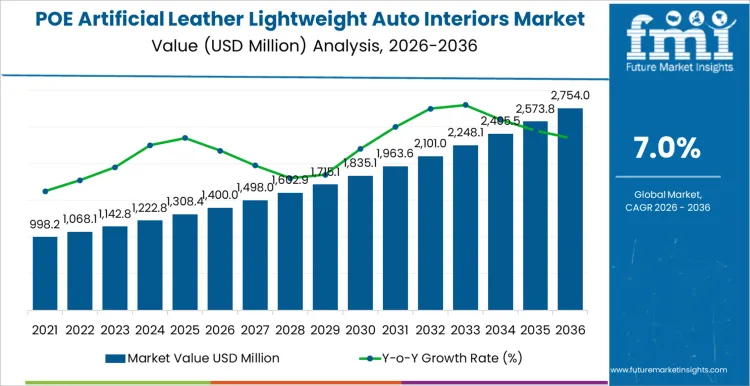
POE Artificial Leather Lightweight Auto Interiors Market Key Takeaways
| Metric | Value |
|---|---|
| Market Value (2026) | USD 1,400.0 million |
| Market Forecast Value (2036) | USD 2,754.0 million |
| Forecast CAGR 2026 to 2036 | 7.0% |
How Are Electric Vehicle Weight Reduction Mandates Reshaping Interior Material Strategies?
Electric vehicle range optimization is driving fundamental changes in automotive interior material specifications as manufacturers seek every opportunity to reduce vehicle weight while maintaining premium interior aesthetics and comfort characteristics. Battery-powered vehicles face unique challenges where interior material weight directly impacts driving range and energy efficiency, creating unprecedented emphasis on lightweight alternatives that can deliver equivalent or superior performance compared to traditional interior materials. This operational reality pushes material suppliers toward advanced polymer formulations and manufacturing techniques that achieve substantial weight reductions while preserving the tactile quality and durability characteristics essential for premium vehicle positioning.
The integration of sustainable material requirements with weight reduction objectives creates additional complexity in material selection processes that must simultaneously address environmental impact, performance characteristics, and cost considerations. Electric vehicle manufacturers increasingly emphasize lifecycle assessment metrics that encompass material production environmental impact, vehicle operation efficiency gains from weight reduction, and end-of-life recyclability potential. This comprehensive evaluation framework benefits POE artificial leather systems that can demonstrate measurable environmental advantages while contributing to vehicle weight optimization and maintaining interior quality standards.
How Is the Market Structured Across Interior Component Applications?
The POE artificial leather lightweight auto interiors market demonstrates distinct segmentation patterns based on application requirements and performance characteristics that directly influence material formulation and processing approaches. Seats and upholstery applications capture 32.0% market share through their critical importance in passenger comfort and aesthetic impression formation during vehicle evaluation processes. These applications require POE formulations that maintain softness and flexibility under repeated stress cycling while providing resistance to staining and wear patterns that develop during normal vehicle usage.
Door trim and panel applications achieve 26.0% market adoption through their visibility and tactile interaction frequency that makes surface quality and durability essential for maintaining interior appearance throughout vehicle service life. These components benefit from POE formulations optimized for heat-forming processes that enable complex curvature formation while maintaining consistent surface texture and color uniformity. In high-touch trims, microfiber synthetic leather is being specified to hold surface consistency while improving abrasion resistance. Material selection criteria typically emphasize chemical resistance to cleaning products and UV stability that prevents fading or surface degradation during prolonged sun exposure through vehicle windows.
Which Backing System Configuration Generates the Highest Manufacturing Adoption?
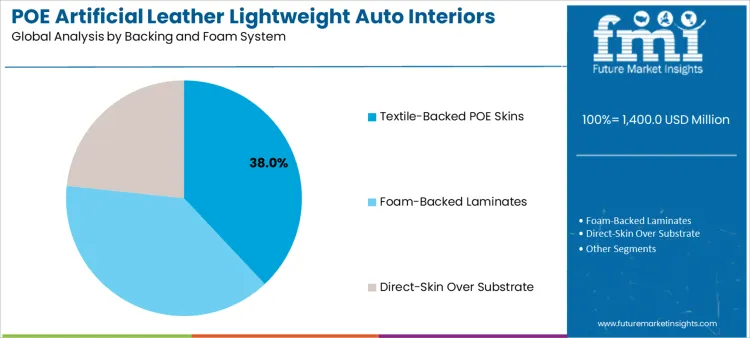
Textile-backed POE skins maintain 38.0% market preference, reflecting their ability to provide breathability characteristics and dimensional stability that support comfort enhancement while enabling efficient processing through existing automotive manufacturing equipment. These configurations offer superior conformability to complex interior geometries while providing tear resistance and edge finishing capabilities essential for professional installation and long-term durability. Some supply chains pair skins with olefinic thermoplastic elastomers to improve low-temperature flexibility and recyclability. The textile backing system enables moisture management and air circulation that contributes to passenger comfort during extended vehicle occupancy periods.
Which Vehicle Segment Drives Market Development?
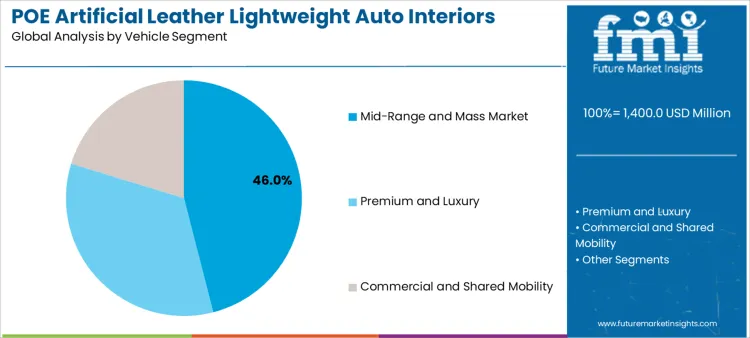
Mid-range and mass market vehicles represent 46.0% of market applications, establishing volume automotive production as the primary driver of POE artificial leather adoption and technology development. These applications emphasize cost-effectiveness and processing efficiency while maintaining appearance quality and durability standards that support manufacturer warranty requirements. Manufacturing volumes for mass market applications create opportunities for specialized POE formulations optimized for automated processing while achieving cost structures that enable competitive positioning relative to conventional PVC alternatives.
Which Adoption Route Leads Market Integration?
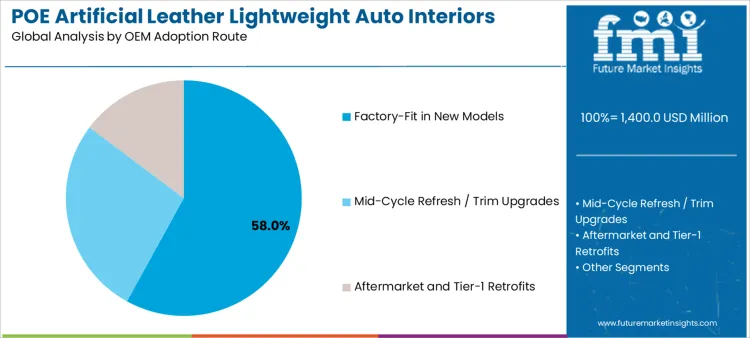
Factory-fit integration in new vehicle models commands 58.0% of market adoption, reflecting the strategic importance of material selection during vehicle design phases when optimal integration with manufacturing processes and cost structure can be achieved. Original equipment manufacturers typically establish material specifications during early development phases that emphasize long-term supply reliability, quality consistency, and technical support capabilities rather than transactional purchasing relationships. This adoption preference supports premium pricing for advanced POE formulations while encouraging continuous innovation in material technology and application development.
Market Dynamics
How Is Automotive Sustainability Regulation Driving Material Innovation?
Evolving environmental regulations for automotive manufacturing are creating substantial opportunities for POE artificial leather systems that can demonstrate measurable environmental advantages compared to traditional PVC-based interior materials. Corporate average fuel economy standards increasingly consider vehicle weight as a factor in efficiency calculations, creating direct regulatory incentives for lightweight interior materials that contribute to overall vehicle efficiency improvements. This regulatory environment favors POE systems that can provide significant weight reduction while maintaining durability and appearance characteristics required for automotive applications.
The implementation of end-of-life vehicle regulations requiring specific recyclability percentages creates additional market drivers for POE artificial leather systems designed for material recovery and reprocessing. Automotive manufacturers face increasing requirements to demonstrate sustainable material sourcing and disposal pathways that influence material selection criteria throughout vehicle development processes. These regulatory trends drive innovation in POE formulations that incorporate recycled content while maintaining processing characteristics and performance standards required for demanding automotive applications.
What Technical Challenges Constrain Market Expansion?
The primary technical barrier affecting POE artificial leather adoption centers on achieving the precise balance of flexibility, durability, and surface quality required for premium automotive interior applications while maintaining cost structures that support volume production economics. Advanced POE formulations that provide superior performance characteristics often require specialized processing equipment and quality control systems that increase manufacturing complexity and capital investment requirements. Material consistency across large production runs becomes critical for automotive applications where color matching and surface texture uniformity directly impact perceived quality and brand reputation. Where recycled inputs are introduced, programs increasingly require crash test certified PCR content for interior parts that sit near occupant zones.
Heat-forming limitations associated with certain POE formulations can restrict application opportunities in components requiring extreme curvature formation or complex three-dimensional geometries that characterize modern automotive interior designs. Processing temperature sensitivity and tooling compatibility requirements may limit adoption in applications where existing manufacturing infrastructure cannot accommodate modified processing parameters without significant equipment modification or replacement costs.
How Do Consumer Preference Trends Create Growth Opportunities?
Rising consumer awareness of environmental issues is creating substantial demand for verifiable sustainable interior materials that maintain the luxury appearance and tactile characteristics expected in modern vehicle interiors. OEM option lists increasingly include synthetic leather surfaces to support sustainability messaging without sacrificing cleanability. Market research indicates significant consumer willingness to pay premium pricing for vehicles featuring sustainable interior materials that provide equivalent or superior comfort and durability compared to conventional alternatives. This market trend benefits POE artificial leather systems that can provide transparent environmental benefits while maintaining aesthetic and functional performance standards.
The growing preference for customizable interior options creates opportunities for POE artificial leather systems that enable diverse color, texture, and finishing options while maintaining consistent processing characteristics and quality standards. Automotive manufacturers increasingly offer interior personalization programs that benefit from materials capable of supporting diverse aesthetic options while maintaining cost-effective production economics. Consumer demand for unique interior configurations drives innovation in POE formulation and processing technologies that enable enhanced design flexibility while supporting efficient manufacturing operations.
How Is the POE Artificial Leather Lightweight Auto Interiors Market Expected to Evolve Across Major Nations?
The global POE artificial leather lightweight auto interiors market reflects regional variations in automotive production capacity, environmental regulations, and consumer preference patterns that influence market development across different economic zones. Leading automotive manufacturing regions drive innovation in sustainable interior materials while emerging markets focus on establishing cost-effective production capabilities that can serve growing domestic automotive demand.
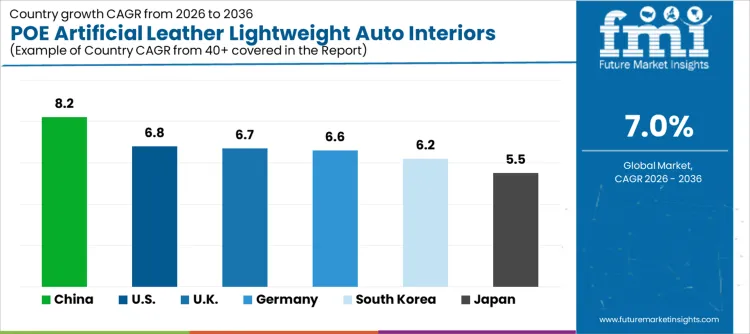
| Country | CAGR (%) |
|---|---|
| China | 8.2% |
| Germany | 6.6% |
| USA | 6.8% |
| Japan | 5.5% |
| South Korea | 6.2% |
| UK | 6.7% |
What Drives China's Market Leadership?
China's POE artificial leather lightweight auto interiors market is projected to achieve the highest growth rate at 8.2% CAGR, driven primarily by massive domestic automotive production capacity and aggressive electric vehicle adoption targets that emphasize lightweight construction and sustainable materials. The country's position as the world's largest automotive market creates enormous demand for advanced interior materials while fostering rapid innovation in polymer chemistry and manufacturing processes that support cost-effective POE production. Chinese manufacturers are developing integrated supply chains that encompass polymer production, material processing, and automotive component manufacturing to achieve competitive advantages in global markets.
Government policies promoting new energy vehicles and environmental protection accelerate adoption of sustainable interior materials while creating favorable conditions for domestic POE artificial leather industry development. The integration of electric vehicle production with conventional automotive manufacturing creates opportunities for material suppliers who can serve diverse powertrain technologies while maintaining quality consistency and supply reliability. China's manufacturing scale advantages enable cost-effective POE artificial leather production while supporting both domestic consumption and export market development across Asia-Pacific regions.
How Is Germany Advancing Automotive Material Excellence?
Sales of POE artificial leather lightweight auto interiors in Germany are set to achieve a CAGR of 6.6% reflects the country's leadership in premium automotive manufacturing and advanced materials technology that creates demand for the highest-quality POE artificial leather solutions. German automotive manufacturers implement rigorous material qualification processes that favor suppliers capable of demonstrating exceptional consistency, durability, and environmental performance while meeting stringent automotive safety standards. The emphasis on premium vehicle segments creates opportunities for advanced POE formulations that justify higher costs through superior performance characteristics and environmental benefits.
The country's leadership in automotive interior systems drives innovation in multi-functional material designs that integrate comfort, safety, and sustainability characteristics within single-component solutions. German engineering standards typically exceed international requirements, creating demand for specialized POE formulations that demonstrate superior aging characteristics, chemical resistance, and dimensional stability under accelerated testing conditions while supporting automated manufacturing processes required for efficient production operations.
Why Are the USA Market Emphasizing Innovation and Sustainability?
The United States market experiences 6.8% CAGR growth supported by federal fuel economy regulations and corporate sustainability initiatives that drive adoption of lightweight interior materials in both conventional and electric vehicle applications. Automotive manufacturers face increasing regulatory pressure to achieve fleet average efficiency targets that create direct economic incentives for weight reduction technologies including advanced interior materials. The emphasis on domestic manufacturing capabilities creates opportunities for POE artificial leather suppliers who can provide local production and technical support while meeting automotive qualification requirements.
Consumer preference trends emphasizing environmental responsibility and premium interior experiences create market demand for POE artificial leather systems that can provide verified sustainability benefits while maintaining luxury appearance and comfort characteristics. The development of automotive lightweight materials in the USA benefits from collaboration between material suppliers, automotive manufacturers, and research institutions that accelerate technology development and commercialization processes.
How Is Japanese Quality Focus Driving Material Innovation?
The POE artificial leather lightweight auto interiors industry in the Japan is projected to record a CAGR of 5.5% is supported by the country's leadership in automotive manufacturing excellence and advanced polymer technology that enables development of premium POE artificial leather solutions with exceptional quality characteristics. Japanese automotive manufacturers maintain some of the industry's most stringent material standards, creating demand for POE formulations that demonstrate superior consistency and long-term reliability under demanding operating conditions. This quality emphasis drives innovation in precision manufacturing processes and quality control systems that ensure exceptional material performance.
The country's expertise in hybrid and electric vehicle technologies creates demand for specialized POE artificial leather formulations optimized for unique thermal and mechanical requirements of advanced powertrain systems. Japanese automotive polymer materials development typically emphasizes long-term durability testing and comprehensive environmental validation that influences material specification requirements throughout the global automotive industry while fostering innovation in sustainable polymer chemistry.
What Opportunities Exist in South Korea's Automotive Ecosystem?
The industry for POE artificial leather lightweight auto interiors in South Korea is likely to rise at a CAGR of 6.2% growth is driven by the country's strong position in automotive manufacturing and advanced materials technology that creates demand for innovative POE artificial leather solutions. Korean automotive manufacturers require interior materials that support high-quality vehicle positioning while maintaining cost competitiveness in global markets. The integration of advanced electronics and connectivity systems in Korean vehicles creates opportunities for POE artificial leather designs that can accommodate embedded sensors and control interfaces while maintaining aesthetic and functional performance.
The country's investment in electric vehicle technology and automotive electronics integration creates demand for interior materials that provide electromagnetic compatibility and thermal management characteristics while maintaining traditional comfort and appearance standards. Korean automotive production emphasizes technological innovation and manufacturing efficiency that drives development of automated processing techniques and quality control systems optimized for POE artificial leather applications.
What Strategies Help Suppliers Maintain Competitive Position in POE Artificial Leather Lightweight Auto Interiors?
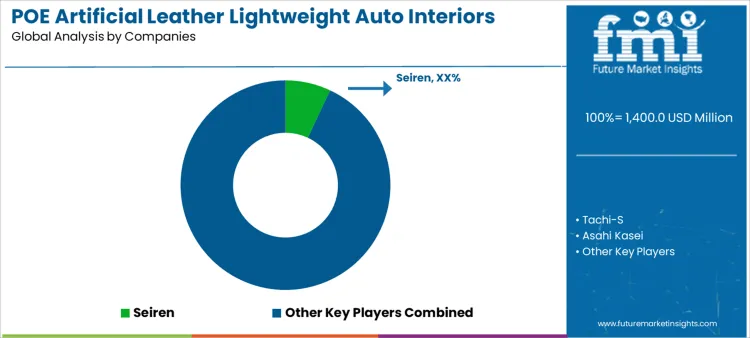
Suppliers maintain market leadership in POE artificial leather lightweight auto interiors through demonstrated application expertise and proven performance in demanding automotive manufacturing environments rather than competing solely on material specifications or cost considerations. Market leaders establish competitive advantages through comprehensive technical support capabilities that include application engineering, process optimization, and quality assurance services that help automotive manufacturers achieve consistent production results while meeting stringent quality standards and delivery requirements.
Successful suppliers invest in early collaboration with automotive designers and engineers during vehicle development phases, enabling POE material specifications to be optimized for specific interior applications and manufacturing processes before production tooling investments are finalized. This collaborative approach creates switching barriers while ensuring optimal integration between material properties and automotive manufacturing systems that benefit both suppliers and customers through improved efficiency, quality consistency, and cost optimization.
Advanced polymer chemistry capabilities enable suppliers to provide customized POE formulations that address specific performance requirements while maintaining compatibility with existing automotive manufacturing equipment and processes. Investment in research and development programs focused on sustainable polymer chemistry and processing innovation allows suppliers to differentiate their products through superior environmental performance while maintaining the durability and aesthetic characteristics essential for automotive interior applications.
Key Players in the POE Artificial Leather Lightweight Auto Interiors Market
- Seiren
- Tachi-S
- Asahi Kasei
- Continental (ContiTech)
- Kuraray
- Mitsubishi Chemical Group
- Benecke-Hornschuch Surface Group
- Kyowa Leather Cloth
- Kuraray Automotive Leather
- Faurecia Interiors (Forvia)
Scope of Report
| Items | Values |
|---|---|
| Quantitative Units | USD Million |
| Interior Application Segments | Seats and Upholstery; Door Trims and Panels; Instrument Panel and Console; Other Interior Surfaces |
| Vehicle Segment Types | Mid-Range and Mass Market; Premium and Luxury; Commercial and Shared Mobility |
| Backing System Categories | Textile-Backed POE Skins; Foam-Backed Laminates; Direct-Skin Over Substrate |
| OEM Adoption Routes | Factory-Fit in New Models; Mid-Cycle Refresh / Trim Upgrades; Aftermarket and Tier-1 Retrofits |
| Regions Covered | North America, Europe, Asia Pacific, Latin America, Middle East & Africa |
| Key Countries | USA, Germany, China, Japan, South Korea, UK |
| Key Companies Profiled | Seiren, Tachi-S, Asahi Kasei, Continental, Kuraray, and others |
| Additional Attributes | Dollar sales measured for POE artificial leather used in automotive interior applications, specified by weight reduction performance, durability characteristics, environmental impact, aesthetic quality, and automotive qualification compliance |
POE Artificial Leather Lightweight Auto Interiors Market by Segment
By Interior Application:
- Seats and Upholstery
- Door Trims and Panels
- Instrument Panel and Console
- Other Interior Surfaces
By Vehicle Segment:
- Mid-Range and Mass Market
- Premium and Luxury
- Commercial and Shared Mobility
By Backing and Foam System:
- Textile-Backed POE Skins
- Foam-Backed Laminates
- Direct-Skin Over Substrate
By OEM Adoption Route:
- Factory-Fit in New Models
- Mid-Cycle Refresh / Trim Upgrades
- Aftermarket and Tier-1 Retrofits
Bibliography
- International Organization for Standardization. (2024). ISO 14067: Greenhouse gases-Carbon footprint of products-Requirements and guidelines (2nd ed.). International Organization for Standardization.
- United Nations Economic Commission for Europe. (2023). UN Regulation No. 118: Burning behaviour and interior materials used in vehicle construction. United Nations.
- Organisation for Economic Co-operation and Development. (2023). Environmental performance of lightweight materials in transport systems. OECD Publishing.
- United States Department of Energy. (2024). Lightweight materials for vehicle efficiency and electrification. USA Department of Energy.
Frequently Asked Questions
How big is the POE artificial leather lightweight auto interiors market in 2026?
The global POE artificial leather lightweight auto interiors market is estimated to be valued at USD 1,400.0 million in 2026.
What will be the size of POE artificial leather lightweight auto interiors market in 2036?
The market size for the POE artificial leather lightweight auto interiors market is projected to reach USD 2,754.0 million by 2036.
How much will be the POE artificial leather lightweight auto interiors market growth between 2026 and 2036?
The POE artificial leather lightweight auto interiors market is expected to grow at a 7.0% CAGR between 2026 and 2036.
What are the key product types in the POE artificial leather lightweight auto interiors market?
The key product types in POE artificial leather lightweight auto interiors market are seats and upholstery, door trims and panels, instrument panel and console and other interior surfaces.
Which vehicle segment to contribute significant share in the POE artificial leather lightweight auto interiors market in 2026?
In terms of vehicle segment, mid-range and mass market segment to command 46.0% share in the POE artificial leather lightweight auto interiors market in 2026.
Preview the report firsthand - request a free sample
Get SampleGet the brochure for pricing and purchase details.
Get PDFTable of Content
- Executive Summary
- Global Market Outlook
- Demand-side Trends
- Supply-side Trends
- Technology Roadmap Analysis
- Analysis and Recommendations
- Market Overview
- Market Coverage / Taxonomy
- Market Definition / Scope / Limitations
- Market Background
- Market Dynamics
- Drivers
- Restraints
- Opportunity
- Trends
- Scenario Forecast
- Demand in Optimistic Scenario
- Demand in Likely Scenario
- Demand in Conservative Scenario
- Opportunity Map Analysis
- Product Life Cycle Analysis
- Supply Chain Analysis
- Investment Feasibility Matrix
- Value Chain Analysis
- PESTLE and Porter’s Analysis
- Regulatory Landscape
- Regional Parent Market Outlook
- Production and Consumption Statistics
- Import and Export Statistics
- Market Dynamics
- Global Market Analysis 2021 to 2025 and Forecast, 2026 to 2036
- Historical Market Size Value (USD Million) Analysis, 2021 to 2025
- Current and Future Market Size Value (USD Million) Projections, 2026 to 2036
- Y-o-Y Growth Trend Analysis
- Absolute $ Opportunity Analysis
- Global Market Pricing Analysis 2021 to 2025 and Forecast 2026 to 2036
- Global Market Analysis 2021 to 2025 and Forecast 2026 to 2036, By Interior Application
- Introduction / Key Findings
- Historical Market Size Value (USD Million) Analysis By Interior Application , 2021 to 2025
- Current and Future Market Size Value (USD Million) Analysis and Forecast By Interior Application , 2026 to 2036
- Seats and Upholstery
- Door Trims and Panels
- Instrument Panel and Console
- Other Interior Surfaces
- Seats and Upholstery
- Y-o-Y Growth Trend Analysis By Interior Application , 2021 to 2025
- Absolute $ Opportunity Analysis By Interior Application , 2026 to 2036
- Global Market Analysis 2021 to 2025 and Forecast 2026 to 2036, By Vehicle Segment
- Introduction / Key Findings
- Historical Market Size Value (USD Million) Analysis By Vehicle Segment, 2021 to 2025
- Current and Future Market Size Value (USD Million) Analysis and Forecast By Vehicle Segment, 2026 to 2036
- Mid-Range and Mass Market
- Premium and Luxury
- Commercial and Shared Mobility
- Mid-Range and Mass Market
- Y-o-Y Growth Trend Analysis By Vehicle Segment, 2021 to 2025
- Absolute $ Opportunity Analysis By Vehicle Segment, 2026 to 2036
- Global Market Analysis 2021 to 2025 and Forecast 2026 to 2036, By Backing and Foam System
- Introduction / Key Findings
- Historical Market Size Value (USD Million) Analysis By Backing and Foam System, 2021 to 2025
- Current and Future Market Size Value (USD Million) Analysis and Forecast By Backing and Foam System, 2026 to 2036
- Textile-Backed POE Skins
- Foam-Backed Laminates
- Direct-Skin Over Substrate
- Textile-Backed POE Skins
- Y-o-Y Growth Trend Analysis By Backing and Foam System, 2021 to 2025
- Absolute $ Opportunity Analysis By Backing and Foam System, 2026 to 2036
- Global Market Analysis 2021 to 2025 and Forecast 2026 to 2036, By OEM Adoption Route
- Introduction / Key Findings
- Historical Market Size Value (USD Million) Analysis By OEM Adoption Route, 2021 to 2025
- Current and Future Market Size Value (USD Million) Analysis and Forecast By OEM Adoption Route, 2026 to 2036
- Factory-Fit in New Models
- Mid-Cycle Refresh / Trim Upgrades
- Aftermarket and Tier-1 Retrofits
- Factory-Fit in New Models
- Y-o-Y Growth Trend Analysis By OEM Adoption Route, 2021 to 2025
- Absolute $ Opportunity Analysis By OEM Adoption Route, 2026 to 2036
- Global Market Analysis 2021 to 2025 and Forecast 2026 to 2036, By Region
- Introduction
- Historical Market Size Value (USD Million) Analysis By Region, 2021 to 2025
- Current Market Size Value (USD Million) Analysis and Forecast By Region, 2026 to 2036
- North America
- Latin America
- Western Europe
- Eastern Europe
- East Asia
- South Asia and Pacific
- Middle East & Africa
- Market Attractiveness Analysis By Region
- North America Market Analysis 2021 to 2025 and Forecast 2026 to 2036, By Country
- Historical Market Size Value (USD Million) Trend Analysis By Market Taxonomy, 2021 to 2025
- Market Size Value (USD Million) Forecast By Market Taxonomy, 2026 to 2036
- By Country
- USA
- Canada
- Mexico
- By Interior Application
- By Vehicle Segment
- By Backing and Foam System
- By OEM Adoption Route
- By Country
- Market Attractiveness Analysis
- By Country
- By Interior Application
- By Vehicle Segment
- By Backing and Foam System
- By OEM Adoption Route
- Key Takeaways
- Latin America Market Analysis 2021 to 2025 and Forecast 2026 to 2036, By Country
- Historical Market Size Value (USD Million) Trend Analysis By Market Taxonomy, 2021 to 2025
- Market Size Value (USD Million) Forecast By Market Taxonomy, 2026 to 2036
- By Country
- Brazil
- Chile
- Rest of Latin America
- By Interior Application
- By Vehicle Segment
- By Backing and Foam System
- By OEM Adoption Route
- By Country
- Market Attractiveness Analysis
- By Country
- By Interior Application
- By Vehicle Segment
- By Backing and Foam System
- By OEM Adoption Route
- Key Takeaways
- Western Europe Market Analysis 2021 to 2025 and Forecast 2026 to 2036, By Country
- Historical Market Size Value (USD Million) Trend Analysis By Market Taxonomy, 2021 to 2025
- Market Size Value (USD Million) Forecast By Market Taxonomy, 2026 to 2036
- By Country
- Germany
- UK
- Italy
- Spain
- France
- Nordic
- BENELUX
- Rest of Western Europe
- By Interior Application
- By Vehicle Segment
- By Backing and Foam System
- By OEM Adoption Route
- By Country
- Market Attractiveness Analysis
- By Country
- By Interior Application
- By Vehicle Segment
- By Backing and Foam System
- By OEM Adoption Route
- Key Takeaways
- Eastern Europe Market Analysis 2021 to 2025 and Forecast 2026 to 2036, By Country
- Historical Market Size Value (USD Million) Trend Analysis By Market Taxonomy, 2021 to 2025
- Market Size Value (USD Million) Forecast By Market Taxonomy, 2026 to 2036
- By Country
- Russia
- Poland
- Hungary
- Balkan & Baltic
- Rest of Eastern Europe
- By Interior Application
- By Vehicle Segment
- By Backing and Foam System
- By OEM Adoption Route
- By Country
- Market Attractiveness Analysis
- By Country
- By Interior Application
- By Vehicle Segment
- By Backing and Foam System
- By OEM Adoption Route
- Key Takeaways
- East Asia Market Analysis 2021 to 2025 and Forecast 2026 to 2036, By Country
- Historical Market Size Value (USD Million) Trend Analysis By Market Taxonomy, 2021 to 2025
- Market Size Value (USD Million) Forecast By Market Taxonomy, 2026 to 2036
- By Country
- China
- Japan
- South Korea
- By Interior Application
- By Vehicle Segment
- By Backing and Foam System
- By OEM Adoption Route
- By Country
- Market Attractiveness Analysis
- By Country
- By Interior Application
- By Vehicle Segment
- By Backing and Foam System
- By OEM Adoption Route
- Key Takeaways
- South Asia and Pacific Market Analysis 2021 to 2025 and Forecast 2026 to 2036, By Country
- Historical Market Size Value (USD Million) Trend Analysis By Market Taxonomy, 2021 to 2025
- Market Size Value (USD Million) Forecast By Market Taxonomy, 2026 to 2036
- By Country
- India
- ASEAN
- Australia & New Zealand
- Rest of South Asia and Pacific
- By Interior Application
- By Vehicle Segment
- By Backing and Foam System
- By OEM Adoption Route
- By Country
- Market Attractiveness Analysis
- By Country
- By Interior Application
- By Vehicle Segment
- By Backing and Foam System
- By OEM Adoption Route
- Key Takeaways
- Middle East & Africa Market Analysis 2021 to 2025 and Forecast 2026 to 2036, By Country
- Historical Market Size Value (USD Million) Trend Analysis By Market Taxonomy, 2021 to 2025
- Market Size Value (USD Million) Forecast By Market Taxonomy, 2026 to 2036
- By Country
- Kingdom of Saudi Arabia
- Other GCC Countries
- Turkiye
- South Africa
- Other African Union
- Rest of Middle East & Africa
- By Interior Application
- By Vehicle Segment
- By Backing and Foam System
- By OEM Adoption Route
- By Country
- Market Attractiveness Analysis
- By Country
- By Interior Application
- By Vehicle Segment
- By Backing and Foam System
- By OEM Adoption Route
- Key Takeaways
- Key Countries Market Analysis
- USA
- Pricing Analysis
- Market Share Analysis, 2025
- By Interior Application
- By Vehicle Segment
- By Backing and Foam System
- By OEM Adoption Route
- Canada
- Pricing Analysis
- Market Share Analysis, 2025
- By Interior Application
- By Vehicle Segment
- By Backing and Foam System
- By OEM Adoption Route
- Mexico
- Pricing Analysis
- Market Share Analysis, 2025
- By Interior Application
- By Vehicle Segment
- By Backing and Foam System
- By OEM Adoption Route
- Brazil
- Pricing Analysis
- Market Share Analysis, 2025
- By Interior Application
- By Vehicle Segment
- By Backing and Foam System
- By OEM Adoption Route
- Chile
- Pricing Analysis
- Market Share Analysis, 2025
- By Interior Application
- By Vehicle Segment
- By Backing and Foam System
- By OEM Adoption Route
- Germany
- Pricing Analysis
- Market Share Analysis, 2025
- By Interior Application
- By Vehicle Segment
- By Backing and Foam System
- By OEM Adoption Route
- UK
- Pricing Analysis
- Market Share Analysis, 2025
- By Interior Application
- By Vehicle Segment
- By Backing and Foam System
- By OEM Adoption Route
- Italy
- Pricing Analysis
- Market Share Analysis, 2025
- By Interior Application
- By Vehicle Segment
- By Backing and Foam System
- By OEM Adoption Route
- Spain
- Pricing Analysis
- Market Share Analysis, 2025
- By Interior Application
- By Vehicle Segment
- By Backing and Foam System
- By OEM Adoption Route
- France
- Pricing Analysis
- Market Share Analysis, 2025
- By Interior Application
- By Vehicle Segment
- By Backing and Foam System
- By OEM Adoption Route
- India
- Pricing Analysis
- Market Share Analysis, 2025
- By Interior Application
- By Vehicle Segment
- By Backing and Foam System
- By OEM Adoption Route
- ASEAN
- Pricing Analysis
- Market Share Analysis, 2025
- By Interior Application
- By Vehicle Segment
- By Backing and Foam System
- By OEM Adoption Route
- Australia & New Zealand
- Pricing Analysis
- Market Share Analysis, 2025
- By Interior Application
- By Vehicle Segment
- By Backing and Foam System
- By OEM Adoption Route
- China
- Pricing Analysis
- Market Share Analysis, 2025
- By Interior Application
- By Vehicle Segment
- By Backing and Foam System
- By OEM Adoption Route
- Japan
- Pricing Analysis
- Market Share Analysis, 2025
- By Interior Application
- By Vehicle Segment
- By Backing and Foam System
- By OEM Adoption Route
- South Korea
- Pricing Analysis
- Market Share Analysis, 2025
- By Interior Application
- By Vehicle Segment
- By Backing and Foam System
- By OEM Adoption Route
- Russia
- Pricing Analysis
- Market Share Analysis, 2025
- By Interior Application
- By Vehicle Segment
- By Backing and Foam System
- By OEM Adoption Route
- Poland
- Pricing Analysis
- Market Share Analysis, 2025
- By Interior Application
- By Vehicle Segment
- By Backing and Foam System
- By OEM Adoption Route
- Hungary
- Pricing Analysis
- Market Share Analysis, 2025
- By Interior Application
- By Vehicle Segment
- By Backing and Foam System
- By OEM Adoption Route
- Kingdom of Saudi Arabia
- Pricing Analysis
- Market Share Analysis, 2025
- By Interior Application
- By Vehicle Segment
- By Backing and Foam System
- By OEM Adoption Route
- Turkiye
- Pricing Analysis
- Market Share Analysis, 2025
- By Interior Application
- By Vehicle Segment
- By Backing and Foam System
- By OEM Adoption Route
- South Africa
- Pricing Analysis
- Market Share Analysis, 2025
- By Interior Application
- By Vehicle Segment
- By Backing and Foam System
- By OEM Adoption Route
- USA
- Market Structure Analysis
- Competition Dashboard
- Competition Benchmarking
- Market Share Analysis of Top Players
- By Regional
- By Interior Application
- By Vehicle Segment
- By Backing and Foam System
- By OEM Adoption Route
- Competition Analysis
- Competition Deep Dive
- Seiren
- Overview
- Product Portfolio
- Profitability by Market Segments (Product/Age /Sales Channel/Region)
- Sales Footprint
- Strategy Overview
- Marketing Strategy
- Product Strategy
- Channel Strategy
- Tachi-S
- Asahi Kasei
- Continental (ContiTech)
- Kuraray
- Mitsubishi Chemical Group
- Benecke-Hornschuch Surface Group
- Kyowa Leather Cloth
- Kuraray Automotive Leather
- Faurecia Interiors (Forvia)
- Seiren
- Competition Deep Dive
- Assumptions & Acronyms Used
- Research Methodology


