

- Market Size (2026)
- USD 0.95 Bn
- Forecast (2036)
- USD 2.10 Bn
- CAGR (2026 to 2036)
- 6.2%
Blood Pressure Transducers Market Size, Market Forecast and Outlook By FMI
The blood pressure transducers market was valued at USD 1.1 billion in 2025. The market is set to reach USD 1.1 billion by 2026-end and grow at a CAGR of 6.2% between 2026-2036 to reach USD 2.1 billion by 2036. Digital will dominate with a 41.9% share, while Non-Invasive will lead with a 64.2%% share.
Summary of the Blood Pressure Transducers Market
- Demand and Growth Drivers
- Adoption is increasing due to rising clinical demand and regulatory requirements for performance-grade solutions across healthcare and rehabilitation settings.
- Institutional procurement cycles and compliance mandates are likely to support sustained demand through the forecast period.
- China leads growth at 8.4%, supported by expanding healthcare infrastructure and government modernization programs.
- Product and Segment View
- Digital is likely to remain a leading technology segment at 41.9%, supported by demand for compliant, performance-grade solutions across clinical and rehabilitation settings.
- Non-Invasive is likely to lead the procedure category at 64.2%, driven by preference among end users for established and cost-effective configurations.
- Disposable is likely to account for 59.8% the type segment as procurement patterns favor this category across key markets.
- Geography and Competitive Outlook
- China is likely to remain a key market owing to its large manufacturing base, policy support for domestic production, and expanding end-use demand.
- India is likely to sustain demand on account of government initiatives supporting domestic manufacturing, growing institutional demand, and cost advantages.
- Companies that can combine clinical evidence, regulatory compliance, and distribution reach across hospital and rehabilitation networks are likely to gain traction during the forecast period.
- Analyst Opinion
- Companies that can improve cost competitiveness while delivering consistent performance in core application areas are likely to strengthen their position over the forecast period.
- The blood pressure transducers market is evolving from a niche category into a more defined, procurement-ready market segment.
- Adoption is being shaped by compliance requirements, performance benchmarking, and the need for supply chain reliability across regions.
- Demand is further supported by institutional buyers seeking solutions that balance performance, compliance, and long-term cost efficiency.
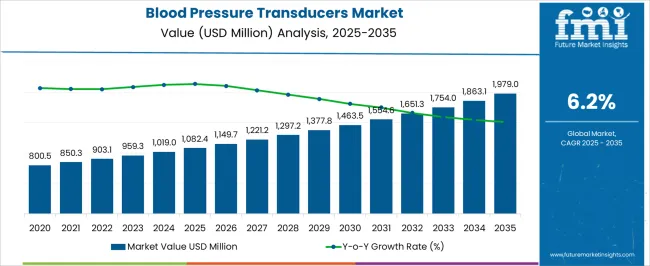
Key Takeaways, Market Size, and Forecast
- The blood pressure transducers market was valued at USD 1.08 Billion in 2025.
- By 2036, the Blood Pressure Transducers Market is expected to be worth USD 2.10 Billion.
- From 2026 to 2036, the market is projected to expand at a CAGR of 6.2%.
- The market is projected to create an incremental opportunity of USD 0.95 Billion between 2026 and 2036.
- In 2026, Digital is expected to account for 41.9% of the technology segment, driven by increasing clinical adoption and compliance requirements.
- China (8.4%) and India (7.8%) are two of the fastest growing markets in the world.
Blood Pressure Transducers Market Definition
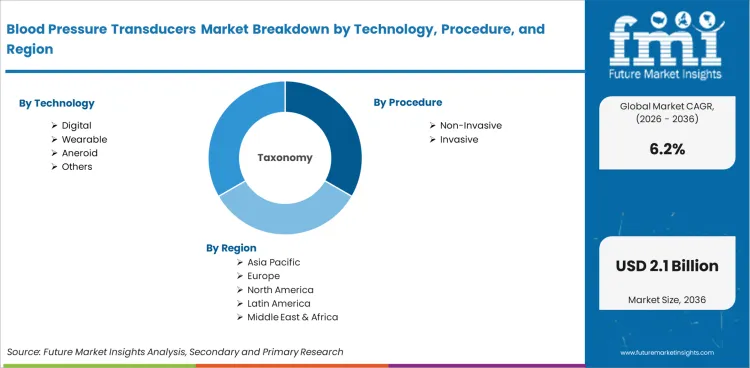
The blood pressure transducers market encompasses products, solutions, and services that fall within the defined scope of technology, procedure, type, end user categories. Market coverage includes commercially traded products across technology types such as digital, wearable, aneroid, others, and others.
Blood Pressure Transducers Market Inclusions
Market scope encompasses all commercially traded blood pressure transducers products categorized by technology (Digital, Wearable, Aneroid, Others); procedure (Non-Invasive, Invasive); type (Disposable, Reusable); end user (Hospitals, Specialty Clinics, Ambulatory Surgical Centers, Others). The revenue range spans from 2026 to 2036.
Blood Pressure Transducers Market Exclusions
The scope does not include general-purpose consumer products, non-commercial prototypes, or products not specifically designed for the clinical or institutional applications defined in the market scope.
Blood Pressure Transducers Market Research Methodology
- Primary Research: FMI analysts conducted interviews with medical device manufacturers, hospital procurement teams, and clinical specialists across key markets.
- Desk Research: Combined data from industry databases, regulatory filings, certification standards, and manufacturer disclosures.
- Market Sizing and Forecasting: Bottom-up approach aggregating data across segments and regions, with regional adoption curves and procurement data.
- Data Validation: Cross-checked quarterly against production statistics and manufacturer disclosures.
Why is the Blood Pressure Transducers Market Growing?
- Structural demand shifts and regulatory compliance requirements are creating sustained procurement activity across key application segments.
- China leads growth at 8.4%, supported by institutional procurement expansion and policy-driven modernization programs.
The blood pressure transducers market continues to expand as end-use demand matures beyond early adoption. Growth reflects structural shifts in procurement, where institutional and commercial buyers are prioritizing performance-grade solutions that meet regulatory standards. Digital remains the largest demand category, supported by established procurement channels and consistent application requirements across key end-use sectors.
Regional dynamics are shaping market expansion at different rates. China maintains its position through scale of domestic demand and policy support, while India reflects strong growth momentum driven by institutional modernization and expanding industrial capacity. Compliance frameworks in Europe and North America continue to set standards that influence global procurement patterns.
Market Segmentation Analysis
- Blood Pressure Transducers holds 41.9% share in the technology category, with Digital leading demand.
- Non-Invasive accounts for 64.2% the procedure category.
- Disposable leads the type segment at 59.8%.
The blood pressure transducers market is segmented by technology, procedure, type, end user. Each category reflects distinct procurement dynamics, end-use requirements, and growth trajectories across regions.
Insights into the Digital Technology Segment
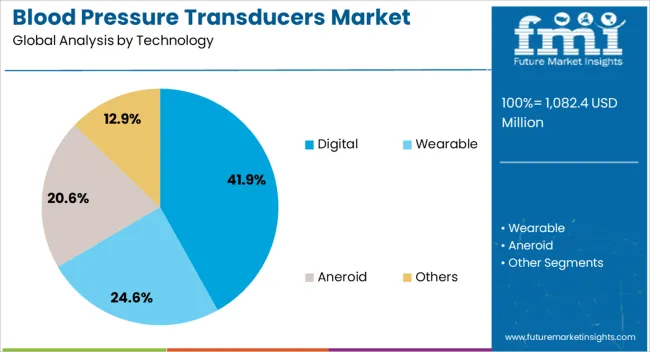
In 2026, Digital is expected to account for 41.9% of the technology segment. Demand is concentrated in institutional and commercial procurement channels where performance standards, compliance requirements, and cost efficiency drive purchasing decisions. This segment benefits from established application protocols and consistent end-use demand across key markets.
Insights into the Non-Invasive Procedure Segment
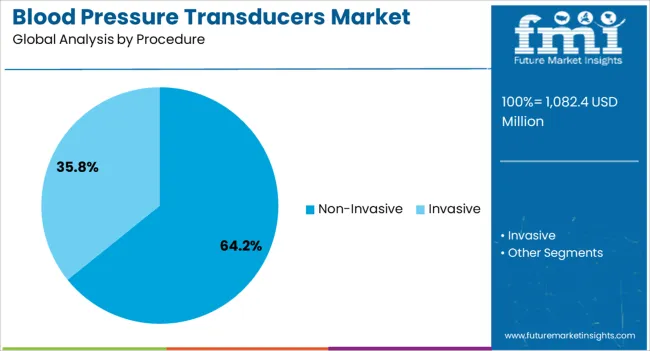
Non-Invasive is the leading category within the procedure segment at 64.2%. Adoption reflects end-user preference for configurations that balance performance with cost efficiency. Procurement activity in this category is supported by established supply chains and compatibility with existing infrastructure across commercial and institutional settings.
Blood Pressure Transducers Market Drivers, Restraints, and Opportunities
- Regulatory compliance and performance standards are creating structured demand for quality-grade solutions across institutional procurement channels.
- Cost premiums relative to conventional alternatives limit adoption in price-sensitive segments, concentrating growth in premium and compliance-driven applications.
- Expanding institutional infrastructure in developing regions is creating new procurement opportunities for established and emerging suppliers.
The blood pressure transducers market continues to grow as institutional demand matures and compliance frameworks tighten. Cost pressures remain a constraint in commodity segments, but opportunities exist in premium applications, compliance-driven procurement, and new regional markets.
Regulatory and Compliance-Driven Demand
Demand is shaped by tightening regulatory standards that require end users to adopt compliant, performance-verified solutions. Institutional procurement cycles are increasingly aligned with certification requirements, creating structured and recurring demand patterns.
Cost Premium and Adoption Barriers
Adoption remains constrained in price-sensitive segments where cost premiums over conventional alternatives reduce procurement volumes. Growth is concentrated in applications where compliance, performance, or certification requirements justify the higher cost.
Institutional Infrastructure Expansion
Expanding institutional capacity in China and India is creating new procurement channels. Government modernization programs and capital investment in end-use infrastructure are supporting demand expansion.
Supply Chain and Sourcing Dynamics
Supply concentration among established manufacturers creates pricing stability but limits buyer leverage. Emerging suppliers are gaining market access through niche applications and regional distribution partnerships.
Analysis of Blood Pressure Transducers Market By Key Countries
.webp "Top Country Growth Comparison Blood Pressure Transducers Market Cagr (2026 2036)")
| Country | CAGR |
|---|---|
| China | 8.4% |
| India | 7.8% |
| Germany | 7.2% |
| France | 6.5% |
| the United Kingdom | 5.9% |
| the United States | 5.3% |
| Brazil | 4.7% |
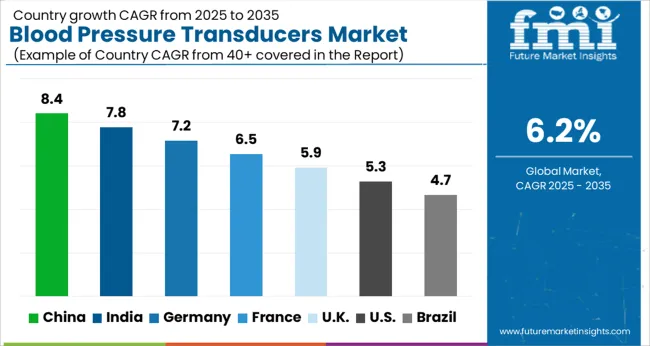
- China at 8.4% reflects large-scale institutional procurement and government modernization mandates.
- India at 7.8% reflects rapid industrial expansion and growing institutional buyer base.
- Germany at 7.2% reflects regulatory rigor and advanced manufacturing demand.
- France at 6.5% reflects EU regulatory compliance and industrial diversification.
The global blood pressure transducers market is expected to grow at a rate of 6.2% per year from 2026 to 2036. The study covers more than 30 countries, and the main markets are listed below.
Demand Outlook for Blood Pressure Transducers Market in China
China is expected to grow at 8.4% through 2036. Demand reflects institutional procurement activity, regulatory compliance requirements, and ongoing investment in end-use infrastructure that supports adoption of performance-grade solutions.
- Institutional procurement expansion supports sustained demand.
- Government modernization programs accelerate adoption of compliant solutions.
- Manufacturing scale provides cost advantages for domestic and export supply.
Future Outlook for Blood Pressure Transducers Market in India
India is expected to grow at 7.8% through 2036. Demand reflects institutional procurement activity, regulatory compliance requirements, and ongoing investment in end-use infrastructure that supports adoption of performance-grade solutions.
- Rapid industrialization expands the institutional buyer base.
- Government programs support modernization of procurement infrastructure.
- Cost-sensitive segments benefit from competitive domestic supply.
Opportunity Analysis of Blood Pressure Transducers Market in Germany
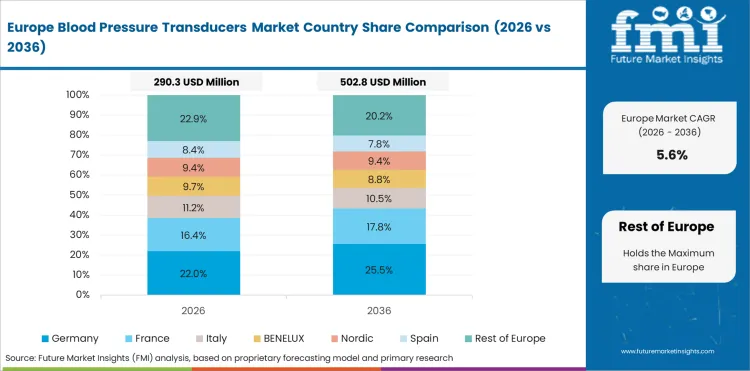
Germany is expected to grow at 7.2% through 2036. Demand reflects institutional procurement activity, regulatory compliance requirements, and ongoing investment in end-use infrastructure that supports adoption of performance-grade solutions.
- Regulatory standards drive adoption of certified, performance-grade products.
- Advanced manufacturing creates demand for high-specification solutions.
- Export orientation supports global supply chain integration.
In-depth Analysis of Blood Pressure Transducers Market in France
France is expected to grow at 6.5% through 2036. Demand reflects institutional procurement activity, regulatory compliance requirements, and ongoing investment in end-use infrastructure that supports adoption of performance-grade solutions.
- EU sustainability mandates accelerate adoption of compliant alternatives.
- Industrial diversification creates demand across multiple application areas.
- Strong institutional procurement frameworks support consistent demand.
Sales Analysis of Blood Pressure Transducers Market in the United Kingdom
the United Kingdom is expected to grow at 5.9% through 2036. Demand reflects institutional procurement activity, regulatory compliance requirements, and ongoing investment in end-use infrastructure that supports adoption of performance-grade solutions.
- Regulatory alignment with international standards supports procurement.
- Institutional demand remains consistent across healthcare and commercial sectors.
- Post-regulatory updates are accelerating product compliance cycles.
Demand Outlook for Blood Pressure Transducers Market in the United States
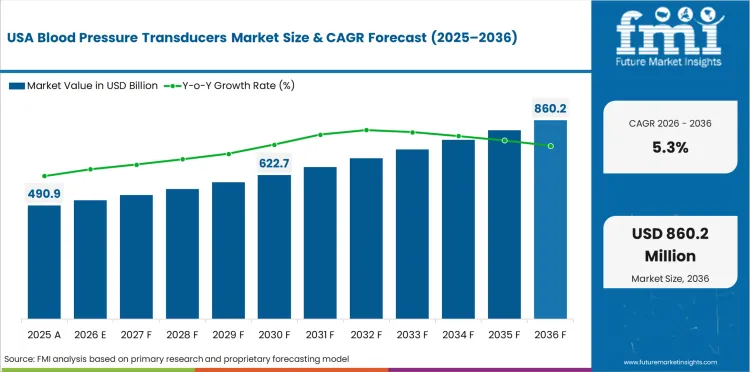
the United States is expected to grow at 5.3% through 2036. Demand reflects institutional procurement activity, regulatory compliance requirements, and ongoing investment in end-use infrastructure that supports adoption of performance-grade solutions.
- Established procurement channels ensure consistent demand.
- Regulatory compliance drives product upgrades and replacement cycles.
- R&D investment supports next-generation product development.
Competitive Landscape and Strategic Positioning
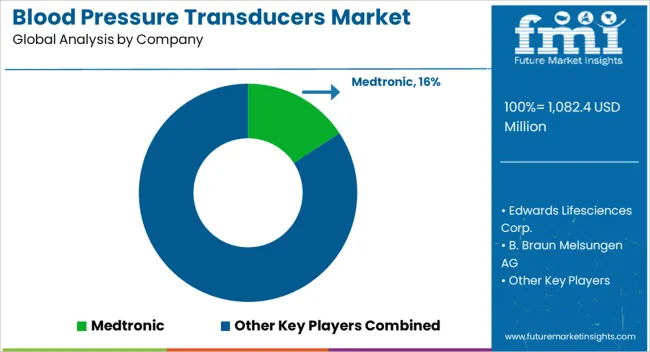
- Medtronic is a leading player in the blood pressure transducers market owing to its established manufacturing infrastructure, distribution networks, and long-term institutional relationships.
- Edwards Lifesciences Corp. and B. Braun Melsungen AG offer diversified product portfolios across multiple segments.
- Emerging players are focusing on specialized applications and niche market positioning.
Medtronic maintains a leading position in the blood pressure transducers market through integrated manufacturing capabilities and established relationships with institutional buyers. Edwards Lifesciences Corp. offers a diversified product portfolio that spans multiple segments within the market scope.
B. Braun Melsungen AG, Koninklijke Philips NV, ICU Medical Inc. compete through specialized product offerings and regional distribution strengths. Market positioning varies by segment, with some players focusing on premium applications while others target cost-sensitive procurement channels.
Barriers to entry include regulatory approval requirements, established supply chain relationships, manufacturing scale requirements, and the need for product performance validation. Strategic priorities for market participants include cost reduction, geographic expansion, and compliance with evolving regulatory frameworks.
Key Companies in the Blood Pressure Transducers Market
Key global companies leading the blood pressure transducers market include:
- Medtronic, Edwards Lifesciences Corp., B. Braun Melsungen AG, Koninklijke Philips NV maintain strong positions through established manufacturing and distribution capabilities.
- ICU Medical Inc., Merit Medical Systems Inc., Smith’s Group Plc have built regional presence through specialized product offerings.
- BIOPAC Systems Inc., Harvard Bioscience Inc., Utah Medical Products Inc., Argon Medical Devices represent the emerging segment with focus on niche applications and new technologies.
Competitive Benchmarking: Blood Pressure Transducers Market
| Company | Product Breadth | Clinical Evidence | Distribution Reach | Geographic Footprint |
|---|---|---|---|---|
| Medtronic | High | High | Strong | Global |
| Edwards Lifesciences Corp. | High | Medium | Strong | Global |
| B. Braun Melsungen AG | Medium | High | Moderate | Regional |
| Koninklijke Philips NV | Medium | High | Moderate | Regional |
| ICU Medical Inc. | Medium | Medium | Moderate | Regional |
| Merit Medical Systems Inc. | Medium | Medium | Moderate | Regional |
| Smith’s Group Plc | Medium | Medium | Moderate | Regional |
| BIOPAC Systems Inc. | Low | Medium | Low | Niche |
| Harvard Bioscience Inc. | Low | Medium | Low | Niche |
| Utah Medical Products Inc. | Low | Medium | Low | Niche |
Source: Future Market Insights competitive analysis, 2026.
Key Players in the Blood Pressure Transducers Market
Major Global Players
- Medtronic
- Edwards Lifesciences Corp.
- B. Braun Melsungen AG
- Koninklijke Philips NV
- ICU Medical Inc.
- Merit Medical Systems Inc.
- Smith’s Group Plc
Emerging Players/Startups
- BIOPAC Systems Inc.
- Harvard Bioscience Inc.
- Utah Medical Products Inc.
- Argon Medical Devices
Report Scope and Coverage
| Parameter | Details |
|---|---|
| Quantitative Units | USD 1.15 Billion to USD 2.10 Billion, at a CAGR of 6.2% |
| Market Definition | The blood pressure transducers market encompasses commercially traded products and solutions across defined segmentation categories for institutional and commercial applications. |
| Regions Covered | North America, Latin America, Europe, East Asia, South Asia and Pacific, Middle East and Africa |
| Countries Covered | China, India, Germany, France, the United Kingdom, the United States, Brazil, 30 plus countries |
| Key Companies Profiled | Medtronic, Edwards Lifesciences Corp., B. Braun Melsungen AG, Koninklijke Philips NV, ICU Medical Inc., Merit Medical Systems Inc., Smith’s Group Plc, BIOPAC Systems Inc., Harvard Bioscience Inc., Utah Medical Products Inc., Argon Medical Devices |
| Forecast Period | 2026 to 2036 |
| Approach | Hybrid bottom-up and top-down methodology starting with verified transaction data, projecting adoption velocity across segments and regions. |
Segmentation
Blood Pressure Transducers Market Segmented by Technology:
- Digital
- Wearable
- Aneroid
- Others
Blood Pressure Transducers Market Segmented by Procedure:
- Non-Invasive
- Invasive
Blood Pressure Transducers Market Segmented by Type:
- Disposable
- Reusable
Blood Pressure Transducers Market Segmented by End User:
- Hospitals
- Specialty Clinics
- Ambulatory Surgical Centers
- Others
Blood Pressure Transducers Market by Region:
- North America
- USA
- Canada
- Mexico
- Latin America
- Brazil
- Chile
- Rest of Latin America
- Western Europe
- Germany
- UK
- Italy
- Spain
- France
- Nordic
- BENELUX
- Rest of Western Europe
- Eastern Europe
- Russia
- Poland
- Hungary
- Balkan & Baltic
- Rest of Eastern Europe
- East Asia
- China
- Japan
- South Korea
- South Asia and Pacific
- India
- ASEAN
- Australia & New Zealand
- Rest of South Asia and Pacific
- Middle East & Africa
- Kingdom of Saudi Arabia
- Other GCC Countries
- Turkiye
- South Africa
- Other African Union
- Rest of Middle East & Africa
Research Sources and Bibliography
- 1. World Health Organization. (2025). WHO Global Health Technology Assessment Guidelines. WHO.
- 2. USA Food and Drug Administration. (2025). FDA Medical Device Regulatory Framework Update. FDA.
- 3. European Commission. (2024). EU Medical Device Regulation: Implementation Report. EC.
- 4. International Organization for Standardization. (2025). ISO Standards for Medical Devices. ISO.
- 5. World Bank. (2025). World Bank Health Infrastructure Investment Report. World Bank.
This bibliography is provided for reader reference. The full Future Market Insights report contains the complete reference list with publication dates, URLs, and supporting data for all cited works.
This Report Answers
- Estimating the size of the market and revenue projections from 2026 to 2036.
- Segmentation analysis across all defined product, application, and end-use categories.
- Regional insights covering more than 30 markets worldwide.
- Competitive landscape assessment including company benchmarking and strategic positioning.
- Investment opportunity identification across segments and regions.
- Supply chain and procurement dynamics analysis.
- Regulatory and compliance framework evaluation.
- Data delivery in PDF and Excel formats.
Frequently Asked Questions
What is the global market demand for Blood Pressure Transducers Market in 2026?
In 2026, the global blood pressure transducers market is expected to be worth USD 1.15 Billion.
How big will the Blood Pressure Transducers Market be in 2036?
By 2036, the blood pressure transducers market is expected to be worth USD 2.10 Billion.
How much is demand for Blood Pressure Transducers Market expected to grow between 2026 and 2036?
Between 2026 and 2036, demand for the blood pressure transducers market is expected to grow at a CAGR of 6.2%.
Which technology segment is likely to lead by 2026?
Digital is expected to account for 41.9% of the technology segment in 2026, reflecting strong end-use demand and established procurement patterns.
What is causing Blood Pressure Transducers demand to rise in China?
China is expected to grow at 8.4% through 2036 for the Blood Pressure Transducers Market, supported by its large manufacturing base, policy support for domestic production, and expanding end-use demand.
What is causing Blood Pressure Transducers demand to rise in India?
India is expected to grow at 7.8% through 2036 for the Blood Pressure Transducers Market, driven by government initiatives supporting domestic manufacturing, growing institutional demand, and cost advantages.
What does this report mean by 'Blood Pressure Transducers Market definition'?
The blood pressure transducers market includes commercially traded products and solutions across defined segmentation categories for institutional and commercial applications.
How does FMI make the Blood Pressure Transducers Market forecast and validate it?
Forecasting models use a hybrid bottom-up and top-down approach, starting with verified transaction data and checking it against production statistics and manufacturer disclosures.
Preview the report firsthand - request a free sample
Get SampleGet the brochure for pricing and purchase details.
Get PDFTable of Content
- Executive Summary
- Global Market Outlook
- Demand-side Trends
- Supply-side Trends
- Technology Roadmap Analysis
- Analysis and Recommendations
- Market Overview
- Market Coverage / Taxonomy
- Market Definition / Scope / Limitations
- Research Methodology
- Chapter Orientation
- Analytical Lens and Working Hypotheses
- Market Structure, Signals, and Trend Drivers
- Benchmarking and Cross-market Comparability
- Market Sizing, Forecasting, and Opportunity Mapping
- Research Design and Evidence Framework
- Desk Research Programme (Secondary Evidence)
- Company Annual and Sustainability Reports
- Peer-reviewed Journals and Academic Literature
- Corporate Websites, Product Literature, and Technical Notes
- Earnings Decks and Investor Briefings
- Statutory Filings and Regulatory Disclosures
- Technical White Papers and Standards Notes
- Trade Journals, Industry Magazines, and Analyst Briefs
- Conference Proceedings, Webinars, and Seminar Materials
- Government Statistics Portals and Public Data Releases
- Press Releases and Reputable Media Coverage
- Specialist Newsletters and Curated Briefings
- Sector Databases and Reference Repositories
- FMI Internal Proprietary Databases and Historical Market Datasets
- Subscription Datasets and Paid Sources
- Social Channels, Communities, and Digital Listening Inputs
- Additional Desk Sources
- Expert Input and Fieldwork (Primary Evidence)
- Primary Modes
- Qualitative Interviews and Expert Elicitation
- Quantitative Surveys and Structured Data Capture
- Blended Approach
- Why Primary Evidence is Used
- Field Techniques
- Interviews
- Surveys
- Focus Groups
- Observational and In-context Research
- Social and Community Interactions
- Stakeholder Universe Engaged
- C-suite Leaders
- Board Members
- Presidents and Vice Presidents
- R&D and Innovation Heads
- Technical Specialists
- Domain Subject-matter Experts
- Scientists
- Physicians and Other Healthcare Professionals
- Governance, Ethics, and Data Stewardship
- Research Ethics
- Data Integrity and Handling
- Primary Modes
- Tooling, Models, and Reference Databases
- Desk Research Programme (Secondary Evidence)
- Data Engineering and Model Build
- Data Acquisition and Ingestion
- Cleaning, Normalisation, and Verification
- Synthesis, Triangulation, and Analysis
- Quality Assurance and Audit Trail
- Market Background
- Market Dynamics
- Drivers
- Restraints
- Opportunity
- Trends
- Scenario Forecast
- Demand in Optimistic Scenario
- Demand in Likely Scenario
- Demand in Conservative Scenario
- Opportunity Map Analysis
- Product Life Cycle Analysis
- Supply Chain Analysis
- Investment Feasibility Matrix
- Value Chain Analysis
- PESTLE and Porter’s Analysis
- Regulatory Landscape
- Regional Parent Market Outlook
- Production and Consumption Statistics
- Import and Export Statistics
- Market Dynamics
- Global Market Analysis 2021 to 2025 and Forecast, 2026 to 2036
- Historical Market Size Value (USD Million) Analysis, 2021 to 2025
- Current and Future Market Size Value (USD Million) Projections, 2026 to 2036
- Y-o-Y Growth Trend Analysis
- Absolute $ Opportunity Analysis
- Global Market Pricing Analysis 2021 to 2025 and Forecast 2026 to 2036
- Global Market Analysis 2021 to 2025 and Forecast 2026 to 2036, By Technology
- Introduction / Key Findings
- Historical Market Size Value (USD Million) Analysis By Technology, 2021 to 2025
- Current and Future Market Size Value (USD Million) Analysis and Forecast By Technology, 2026 to 2036
- Digital
- Wearable
- Aneroid
- Others
- Digital
- Y-o-Y Growth Trend Analysis By Technology, 2021 to 2025
- Absolute $ Opportunity Analysis By Technology, 2026 to 2036
- Global Market Analysis 2021 to 2025 and Forecast 2026 to 2036, By Procedure
- Introduction / Key Findings
- Historical Market Size Value (USD Million) Analysis By Procedure, 2021 to 2025
- Current and Future Market Size Value (USD Million) Analysis and Forecast By Procedure, 2026 to 2036
- Non-Invasive
- Invasive
- Non-Invasive
- Y-o-Y Growth Trend Analysis By Procedure, 2021 to 2025
- Absolute $ Opportunity Analysis By Procedure, 2026 to 2036
- Global Market Analysis 2021 to 2025 and Forecast 2026 to 2036, By Type
- Introduction / Key Findings
- Historical Market Size Value (USD Million) Analysis By Type, 2021 to 2025
- Current and Future Market Size Value (USD Million) Analysis and Forecast By Type, 2026 to 2036
- Disposable
- Reusable
- Disposable
- Y-o-Y Growth Trend Analysis By Type, 2021 to 2025
- Absolute $ Opportunity Analysis By Type, 2026 to 2036
- Global Market Analysis 2021 to 2025 and Forecast 2026 to 2036, By End User
- Introduction / Key Findings
- Historical Market Size Value (USD Million) Analysis By End User, 2021 to 2025
- Current and Future Market Size Value (USD Million) Analysis and Forecast By End User, 2026 to 2036
- Hospitals
- Specialty Clinics
- Ambulatory Surgical Centers
- Others
- Hospitals
- Y-o-Y Growth Trend Analysis By End User, 2021 to 2025
- Absolute $ Opportunity Analysis By End User, 2026 to 2036
- Global Market Analysis 2021 to 2025 and Forecast 2026 to 2036, By Region
- Introduction
- Historical Market Size Value (USD Million) Analysis By Region, 2021 to 2025
- Current Market Size Value (USD Million) Analysis and Forecast By Region, 2026 to 2036
- North America
- Latin America
- Western Europe
- Eastern Europe
- East Asia
- South Asia and Pacific
- Middle East & Africa
- Market Attractiveness Analysis By Region
- North America Market Analysis 2021 to 2025 and Forecast 2026 to 2036, By Country
- Historical Market Size Value (USD Million) Trend Analysis By Market Taxonomy, 2021 to 2025
- Market Size Value (USD Million) Forecast By Market Taxonomy, 2026 to 2036
- By Country
- USA
- Canada
- Mexico
- By Technology
- By Procedure
- By Type
- By End User
- By Country
- Market Attractiveness Analysis
- By Country
- By Technology
- By Procedure
- By Type
- By End User
- Key Takeaways
- Latin America Market Analysis 2021 to 2025 and Forecast 2026 to 2036, By Country
- Historical Market Size Value (USD Million) Trend Analysis By Market Taxonomy, 2021 to 2025
- Market Size Value (USD Million) Forecast By Market Taxonomy, 2026 to 2036
- By Country
- Brazil
- Chile
- Rest of Latin America
- By Technology
- By Procedure
- By Type
- By End User
- By Country
- Market Attractiveness Analysis
- By Country
- By Technology
- By Procedure
- By Type
- By End User
- Key Takeaways
- Western Europe Market Analysis 2021 to 2025 and Forecast 2026 to 2036, By Country
- Historical Market Size Value (USD Million) Trend Analysis By Market Taxonomy, 2021 to 2025
- Market Size Value (USD Million) Forecast By Market Taxonomy, 2026 to 2036
- By Country
- Germany
- UK
- Italy
- Spain
- France
- Nordic
- BENELUX
- Rest of Western Europe
- By Technology
- By Procedure
- By Type
- By End User
- By Country
- Market Attractiveness Analysis
- By Country
- By Technology
- By Procedure
- By Type
- By End User
- Key Takeaways
- Eastern Europe Market Analysis 2021 to 2025 and Forecast 2026 to 2036, By Country
- Historical Market Size Value (USD Million) Trend Analysis By Market Taxonomy, 2021 to 2025
- Market Size Value (USD Million) Forecast By Market Taxonomy, 2026 to 2036
- By Country
- Russia
- Poland
- Hungary
- Balkan & Baltic
- Rest of Eastern Europe
- By Technology
- By Procedure
- By Type
- By End User
- By Country
- Market Attractiveness Analysis
- By Country
- By Technology
- By Procedure
- By Type
- By End User
- Key Takeaways
- East Asia Market Analysis 2021 to 2025 and Forecast 2026 to 2036, By Country
- Historical Market Size Value (USD Million) Trend Analysis By Market Taxonomy, 2021 to 2025
- Market Size Value (USD Million) Forecast By Market Taxonomy, 2026 to 2036
- By Country
- China
- Japan
- South Korea
- By Technology
- By Procedure
- By Type
- By End User
- By Country
- Market Attractiveness Analysis
- By Country
- By Technology
- By Procedure
- By Type
- By End User
- Key Takeaways
- South Asia and Pacific Market Analysis 2021 to 2025 and Forecast 2026 to 2036, By Country
- Historical Market Size Value (USD Million) Trend Analysis By Market Taxonomy, 2021 to 2025
- Market Size Value (USD Million) Forecast By Market Taxonomy, 2026 to 2036
- By Country
- India
- ASEAN
- Australia & New Zealand
- Rest of South Asia and Pacific
- By Technology
- By Procedure
- By Type
- By End User
- By Country
- Market Attractiveness Analysis
- By Country
- By Technology
- By Procedure
- By Type
- By End User
- Key Takeaways
- Middle East & Africa Market Analysis 2021 to 2025 and Forecast 2026 to 2036, By Country
- Historical Market Size Value (USD Million) Trend Analysis By Market Taxonomy, 2021 to 2025
- Market Size Value (USD Million) Forecast By Market Taxonomy, 2026 to 2036
- By Country
- Kingdom of Saudi Arabia
- Other GCC Countries
- Turkiye
- South Africa
- Other African Union
- Rest of Middle East & Africa
- By Technology
- By Procedure
- By Type
- By End User
- By Country
- Market Attractiveness Analysis
- By Country
- By Technology
- By Procedure
- By Type
- By End User
- Key Takeaways
- Key Countries Market Analysis
- USA
- Pricing Analysis
- Market Share Analysis, 2025
- By Technology
- By Procedure
- By Type
- By End User
- Canada
- Pricing Analysis
- Market Share Analysis, 2025
- By Technology
- By Procedure
- By Type
- By End User
- Mexico
- Pricing Analysis
- Market Share Analysis, 2025
- By Technology
- By Procedure
- By Type
- By End User
- Brazil
- Pricing Analysis
- Market Share Analysis, 2025
- By Technology
- By Procedure
- By Type
- By End User
- Chile
- Pricing Analysis
- Market Share Analysis, 2025
- By Technology
- By Procedure
- By Type
- By End User
- Germany
- Pricing Analysis
- Market Share Analysis, 2025
- By Technology
- By Procedure
- By Type
- By End User
- UK
- Pricing Analysis
- Market Share Analysis, 2025
- By Technology
- By Procedure
- By Type
- By End User
- Italy
- Pricing Analysis
- Market Share Analysis, 2025
- By Technology
- By Procedure
- By Type
- By End User
- Spain
- Pricing Analysis
- Market Share Analysis, 2025
- By Technology
- By Procedure
- By Type
- By End User
- France
- Pricing Analysis
- Market Share Analysis, 2025
- By Technology
- By Procedure
- By Type
- By End User
- India
- Pricing Analysis
- Market Share Analysis, 2025
- By Technology
- By Procedure
- By Type
- By End User
- ASEAN
- Pricing Analysis
- Market Share Analysis, 2025
- By Technology
- By Procedure
- By Type
- By End User
- Australia & New Zealand
- Pricing Analysis
- Market Share Analysis, 2025
- By Technology
- By Procedure
- By Type
- By End User
- China
- Pricing Analysis
- Market Share Analysis, 2025
- By Technology
- By Procedure
- By Type
- By End User
- Japan
- Pricing Analysis
- Market Share Analysis, 2025
- By Technology
- By Procedure
- By Type
- By End User
- South Korea
- Pricing Analysis
- Market Share Analysis, 2025
- By Technology
- By Procedure
- By Type
- By End User
- Russia
- Pricing Analysis
- Market Share Analysis, 2025
- By Technology
- By Procedure
- By Type
- By End User
- Poland
- Pricing Analysis
- Market Share Analysis, 2025
- By Technology
- By Procedure
- By Type
- By End User
- Hungary
- Pricing Analysis
- Market Share Analysis, 2025
- By Technology
- By Procedure
- By Type
- By End User
- Kingdom of Saudi Arabia
- Pricing Analysis
- Market Share Analysis, 2025
- By Technology
- By Procedure
- By Type
- By End User
- Turkiye
- Pricing Analysis
- Market Share Analysis, 2025
- By Technology
- By Procedure
- By Type
- By End User
- South Africa
- Pricing Analysis
- Market Share Analysis, 2025
- By Technology
- By Procedure
- By Type
- By End User
- USA
- Market Structure Analysis
- Competition Dashboard
- Competition Benchmarking
- Market Share Analysis of Top Players
- By Regional
- By Technology
- By Procedure
- By Type
- By End User
- Competition Analysis
- Competition Deep Dive
- Medtronic
- Overview
- Product Portfolio
- Profitability by Market Segments (Product/Age /Sales Channel/Region)
- Sales Footprint
- Strategy Overview
- Marketing Strategy
- Product Strategy
- Channel Strategy
- Edwards Lifesciences Corp.
- B. Braun Melsungen AG
- Koninklijke Philips NV
- ICU Medical Inc.
- Merit Medical Systems Inc.
- Smith’s Group Plc
- BIOPAC Systems Inc.
- Harvard Bioscience Inc.
- Utah Medical Products Inc.
- Argon Medical Devices
- Medtronic
- Competition Deep Dive
- Assumptions & Acronyms Used


