

- Industry Size (2025)
- USD 1.2 Bn
- Forecast (2035)
- USD 2.3 Bn
- CAGR (2025 to 2035)
- 6.50%
BPA-Free Beverage End Interior Coatings Market Forecast and Outlook 2026 to 2036
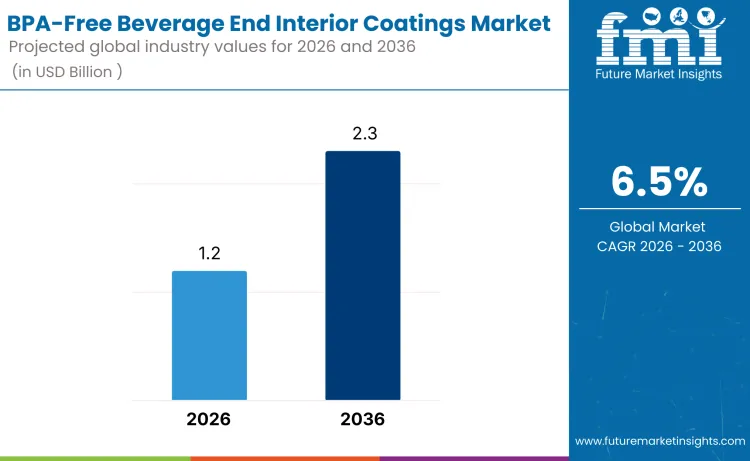
The BPA-free beverage end interior coatings market, valued at USD 1.2 billion in 2026, is projected to grow to USD 2.3 billion by 2036, with a CAGR of 6.50%. The market is driven by increasing consumer demand for safer, non-toxic packaging solutions in the beverage industry and growing regulatory restrictions on BPA (bisphenol A) usage in food and beverage containers.
Epoxy-based coatings, which account for 35% of the coating type market share, are widely used due to their excellent adhesion, chemical resistance, and durability. Aluminum beverage ends, representing 60% of the application segment, dominate due to their widespread use in beverage packaging, particularly for carbonated drinks and energy beverages. The market growth is supported by ongoing efforts to develop and implement safer alternatives to BPA-based coatings.
Quick Stats for BPA-Free Beverage End Interior Coatings Market
- BPA-Free Beverage End Interior Coatings Market Value (2026): USD 1.2 billion
- BPA-Free Beverage End Interior Coatings Market Forecast Value (2036): USD 2.3 billion
- BPA-Free Beverage End Interior Coatings Market Global Forecast CAGR: 6.50%
- Leading Application in BPA-Free Beverage End Interior Coatings Market: Aluminum beverage ends (60%)
- Key Growth Regions in BPA-Free Beverage End Interior Coatings Market: China, India, USA, UK, Japan
- Top Players in BPA-Free Beverage End Interior Coatings Market: PPG Industries, AkzoNobel, Sherwin-Williams, Kansai Paint, ALTANA AG, Toyo Ink Group, Suzhou 3N Packaging Coatings, Berger Paints, Tiger Coatings, Salchi Metalcoat
BPA-Free Beverage End Interior Coatings Market Key Takeaways
| Metric | Value |
|---|---|
| Industry Sales Value (2026) | USD 1.2 billion |
| Industry Forecast Value (2036) | USD 2.3 billion |
| Industry Forecast CAGR (2026 to 2036) | 6.5% |
What Is Driving the Demand for BPA Free Beverage End Interior Coatings Globally?
The global demand for BPA‑free beverage end interior coatings is driven by heightened regulatory scrutiny and growing concern about bisphenol A in food contact materials. Beverage ends, the interior surfaces of can tops that contact liquid products, have historically been coated with resins containing BPA to prevent corrosion and maintain beverage quality. Scientific and regulatory bodies in multiple regions have raised questions about BPA’s potential health effects, leading to regulatory restrictions or voluntary industry shifts away from BPA‑based coatings in jurisdictions including North America, Europe, and parts of Asia.
Beverage producers have responded by specifying BPA‑free interior coatings to satisfy regulatory requirements and minimise risk in packed foods and drinks. In addition, rising consumer demand for safer, cleaner label packaging has reinforced the move toward BPA‑free solutions. Brand owners and can manufacturers increasingly prioritise coating systems that can deliver corrosion protection, compatibility with beverage chemistries, and compliance with evolving food safety standards while eliminating BPA from direct food contact applications.
Future demand for BPA‑free beverage end interior coatings is expected to grow as packaged beverage consumption expands globally and regulatory frameworks continue to evolve. Growth in markets such as soft drinks, alcoholic beverages, energy drinks, and ready‑to‑drink teas will sustain the need for effective, compliant interior coatings. Technological advancements in polymer chemistry are improving the performance of BPA‑free coatings, making them more competitive with traditional BPA‑based systems in terms of durability, corrosion resistance, and adhesion.
The pace of adoption will depend on how quickly coating suppliers can scale production of such alternatives and how regulatory clarity develops across major markets. Continued industry focus on materials safety, transparency in ingredient disclosure, and alignment with sustainability goals will also support the expansion of BPA‑free beverage end interior coatings worldwide.
What Are the Key Segments in Global BPA‑Free Beverage End Interior Coatings Market?
The global BPA‑free beverage end interior coatings market is segmented by coating type and application. Epoxy‑based coatings account for 35% of the market share, reflecting their continued role even as BPA‑free alternatives evolve. In terms of application, aluminum beverage ends dominate, holding 60% of the market. The shift toward BPA‑free coatings is driven by regulatory actions and consumer preference for safer food‑contact materials.
Which Coating Type Drives BPA‑Free Beverage End Interior Coatings Demand Globally?
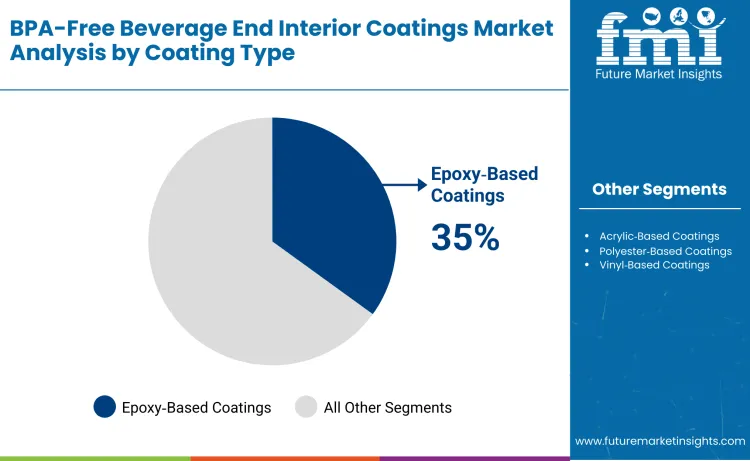
Epoxy‑based coatings are the leading coating type in the BPA‑free beverage end interior coatings market, representing 35% of the global share. Historically, epoxy resins provided excellent adhesion and corrosion resistance inside beverage ends, but concerns over bisphenol A have driven reformulation toward BPA‑free epoxies and alternative polymer systems. BPA‑free epoxy‑based coatings retain many performance attributes of traditional epoxies while eliminating BPA from the formulation, making them suitable for applications where food‑contact safety is critical. Other coating types-including acrylics, polyester‑based systems, and novel polymer blends-also contribute to the market, but BPA‑free epoxy remains an important segment due to established performance and ongoing reformulations that maintain coating integrity without BPA.
Which Application Drives BPA‑Free Beverage End Interior Coatings Demand Globally?
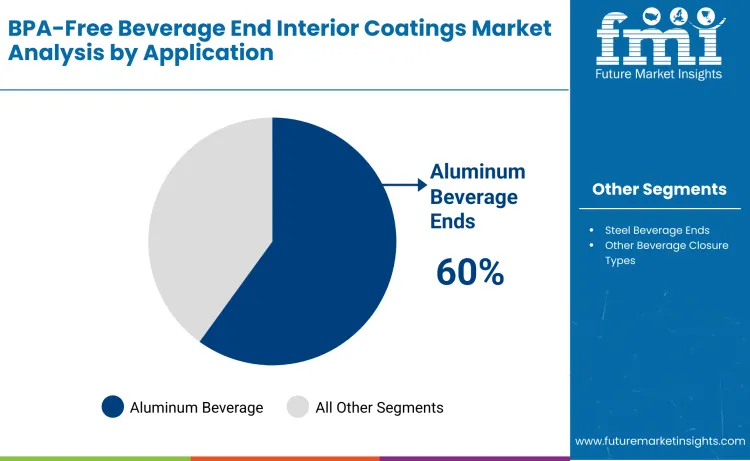
Aluminum beverage ends are the dominant application segment, accounting for 60% of the market share. Beverage ends (the tops of cans) require interior coatings that prevent metal corrosion and preserve product quality, making coating performance essential for carbonated drinks, juices, and other packaged beverages. The majority of beverage end production uses aluminum due to its lightweight nature and recyclability, and the demand for BPA‑free interior coatings in this area reflects stringent safety standards and brand commitments to remove controversial substances from food‑contact surfaces. Other applications, such as can bodies, food cans, and specialty closures, also use BPA‑free coatings, but beverage ends remain the largest driver due to their volume and regulatory focus on interior food‑contact surfaces.
What are the Key Trends of the Global BPA‑Free Beverage End Interior Coatings Market?
The global BPA‑free beverage end interior coatings market is expanding as beverage producers seek safer and regulatory compliant alternatives to bisphenol A based linings. Interior coatings are crucial for cans, bottles, and closures to prevent corrosion, protect flavor, and ensure shelf life. Rising consumer concern about chemical safety, especially in foods and beverages, is prompting brands to adopt BPA‑free solutions. Growth in packaged beverages, including carbonated drinks, juices, and ready‑to‑drink formats, supports broader use of BPA‑free interior coatings worldwide.
What are the Key Drivers for the Global BPA‑Free Beverage End Interior Coatings Market?
Key drivers include increasing regulatory scrutiny and restrictions on BPA in food and beverage contact materials, which encourage adoption of BPA‑free interior coating technologies that meet safety standards. Rising consumer awareness about chemical exposure and preference for cleaner ingredient and packaging profiles motivate beverage brands to switch to BPA‑free coatings. Growth in global beverage consumption, including soft drinks, energy drinks, juices, and functional beverages, necessitates durable and compliant interior linings. Increased emphasis on product quality, shelf life, and flavor integrity further supports demand for BPA‑free beverage end coatings that deliver performance without BPA.
What are the Restraints for the Global BPA‑Free Beverage End Interior Coatings Market?
One restraint is the technical challenge of developing BPA‑free coatings that match the long‑established performance of BPA‑based linings in terms of corrosion resistance, adhesion, and barrier properties. Reformulation and qualification processes can require considerable research, testing, and quality assurance, which may slow adoption for some producers. Cost differentials between BPA‑based and BPA‑free coating systems may deter uptake in price‑sensitive segments or regions. Variable regulatory enforcement and differing timelines for BPA restrictions across countries may also reduce urgency for conversion in some markets, leading to uneven global adoption.
What is the Global Demand Outlook for BPA-Free Beverage End Interior Coatings?
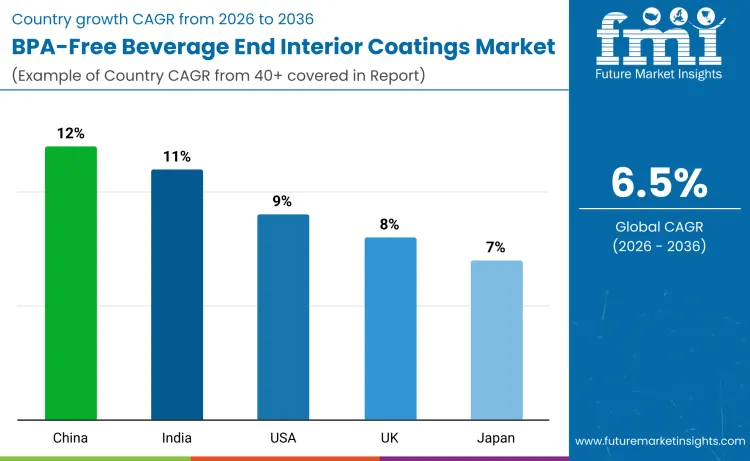
| Countries | CAGR (2026-2036) |
|---|---|
| China | 12% |
| India | 11% |
| USA | 9% |
| UK | 8% |
| Japan | 7% |
The demand for BPA-free beverage end interior coatings is projected to grow steadily across various countries, with China leading the market at a projected CAGR of 12%. India follows closely with a growth rate of 11%, while the USA is expected to grow at 9%. The UK is projected to grow at 8%, and Japan at 7%. The growing concerns over the health risks associated with Bisphenol A (BPA), along with increasing consumer demand for safer, eco-friendly packaging solutions, are key drivers for the adoption of BPA-free coatings in the beverage industry. As more companies shift towards sustainable alternatives to BPA-based coatings, the market is expected to see steady growth.
What is Driving the Growth of BPA-Free Beverage End Interior Coatings in China?
China is projected to experience the highest growth in the BPA-free beverage end interior coatings market, with a projected CAGR of 12%. The country’s expanding beverage industry, driven by rising consumption and demand for safer packaging, is a key factor in this growth. As concerns over the harmful health effects of BPA continue to rise, there is an increasing push toward safer, BPA-free alternatives for beverage packaging. China’s regulatory environment is also evolving, with growing pressure on manufacturers to phase out harmful substances like BPA from food and beverage packaging. The rising consumer demand for more sustainable and eco-friendly packaging solutions, along with China’s push for green technology, will continue to drive the demand for BPA-free coatings in the beverage sector.
Why is the BPA-Free Beverage End Interior Coatings Market Expanding in India?
In India, the demand for BPA-free beverage end interior coatings is projected to grow at a CAGR of 11%. India’s growing beverage industry, driven by increasing disposable income and changing consumer preferences for healthier, safer packaged products, is driving the adoption of BPA-free coatings. As awareness of the health risks associated with BPA increases, consumers are demanding safer alternatives in food and beverage packaging. Additionally, India’s evolving regulatory framework, which is beginning to address the use of harmful chemicals in packaging materials, is pushing manufacturers to adopt BPA-free solutions. As the demand for sustainable and safer packaging solutions continues to rise, the BPA-free coating market in India is expected to grow steadily.
How is the BPA-Free Beverage End Interior Coatings Market Growing in the USA?
In the USA, the BPA-free beverage end interior coatings market is projected to grow at a CAGR of 9%. The USA has been at the forefront of regulating harmful chemicals like BPA, with increasing pressure from both consumers and regulators to phase out BPA-based packaging. As consumer concerns about the health risks associated with BPA grow, manufacturers are increasingly adopting BPA-free coatings for beverage cans. The demand for safer and more sustainable packaging solutions is growing across industries, including soft drinks, beer, and juice, where BPA-free coatings are becoming the standard. With the growing regulatory focus on safer food and beverage packaging, the USA is expected to continue seeing strong growth in the demand for BPA-free beverage end interior coatings.
What is Contributing to the Growth of BPA-Free Beverage End Interior Coatings in the UK?
In the UK, the demand for BPA-free beverage end interior coatings is projected to grow at a CAGR of 8%. The UK’s strong commitment to sustainability and reducing the environmental impact of packaging is a significant driver of this market. As consumer awareness about the health risks of BPA increases, there is growing demand for safer, BPA-free alternatives in beverage packaging. The UK government’s tightening regulations on harmful substances in food and beverage packaging are further driving the shift toward BPA-free coatings. Additionally, as the UK beverage industry continues to grow and focus on sustainable packaging, the adoption of BPA-free coatings is expected to rise steadily.
What is Influencing the Growth of BPA-Free Beverage End Interior Coatings in Japan?
In Japan, the demand for BPA-free beverage end interior coatings is projected to grow at a CAGR of 7%. Japan’s strong focus on health and sustainability is driving the adoption of safer packaging materials, including BPA-free coatings. As the beverage industry in Japan grows, the demand for eco-friendly and non-toxic packaging solutions is increasing. Japan’s evolving regulatory environment, which is becoming more stringent regarding the use of harmful chemicals like BPA, is contributing to the shift toward BPA-free coatings. Additionally, Japanese consumers’ growing preference for sustainable and safer food packaging is supporting the steady growth of the BPA-free beverage end interior coatings market in the country.
What is the Competitive Landscape for the Global BPA‑Free Beverage End Interior Coatings Market?
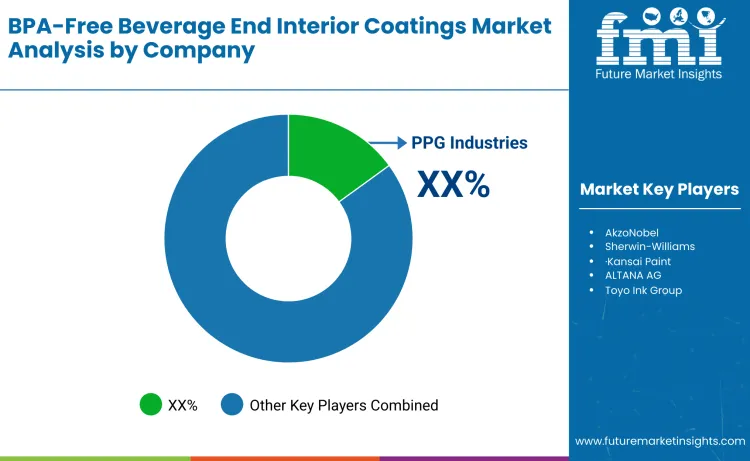
Global demand for BPA‑free beverage end interior coatings has been growing as beverage producers, regulators and consumers increasingly prioritise food safety and sustainability. Bisphenol A (BPA) was widely used in can and end coatings to protect beverages from corrosion and preserve flavour, but concerns about BPA migration into food and drinks have led to stricter regulations and voluntary industry shifts toward safer alternatives.
Beverage segments such as soft drinks, beer, juices, ready‑to‑drink teas and functional drinks have all seen rising adoption of BPA‑free coatings that provide corrosion protection, product integrity and long shelf life while meeting safety expectations. This trend is especially strong in markets with rigorous food contact standards and high consumer awareness of chemical exposure, including North America, Europe, and parts of Asia Pacific.
On the supply side, several major coatings and materials companies compete to lead this evolving market, with PPG Industries widely recognised as a leading player. Other key competitors include AkzoNobel, Sherwin‑Williams, Kansai Paint, ALTANA AG, Toyo Ink Group, Suzhou 3N Packaging Coatings, Berger Paints, Tiger Coatings, and Salchi Metalcoat. These firms offer BPA‑free interior coatings formulated to deliver adhesion, corrosion resistance, thermal stability and compatibility with diverse beverage types.
Competition among suppliers focuses on coating performance, regulatory compliance, ability to customise formulations for specific can and end substrates, and global supply‑chain reliability. Companies that combine strong formulation expertise, rigorous quality control, and broad technical support for coater and converter customers are well positioned to capture growth in the BPA‑free beverage end coatings market as beverage producers continue to prioritise safety, performance and sustainability.
Key Players
- PPG Industries
- AkzoNobel
- Sherwin-Williams
- Kansai Paint
- ALTANA AG
- Toyo Ink Group
- Suzhou 3N Packaging Coatings
- Berger Paints
- Tiger Coatings
- Salchi Metalcoat
Scope of the Report
| Items | Values |
|---|---|
| Quantitative Units (2026) | USD Billion |
| Coating Type | Epoxy-based coatings, Acrylic-based coatings, Polyester-based coatings, Vinyl-based coatings |
| Application | Aluminum beverage ends, Steel beverage ends, Other beverage closure types |
| End-Use Beverage | Carbonated soft drinks, Beer and alcoholic beverages, Juices and non-carbonated drinks, Functional and energy drinks |
| Companies | PPG Industries, AkzoNobel, Sherwin-Williams, Kansai Paint, ALTANA AG, Toyo Ink Group, Suzhou 3N Packaging Coatings, Berger Paints, Tiger Coatings, Salchi Metalcoat |
| Regions Covered | North America, Latin America, Western Europe, Eastern Europe, South Asia and Pacific, East Asia, Middle East & Africa |
| Countries Covered | United States, Canada, Mexico, Brazil, Argentina, Germany, France, United Kingdom, Italy, Spain, Netherlands, China, India, Japan, South Korea, ANZ, GCC Countries, South Africa |
| Additional Attributes | Dollar by sales by coating type, application, end-use beverage, and region. Includes market trends towards BPA-free coatings, performance in beverage applications, cost-effectiveness, impact on product stability and safety, market share and competitive positioning of key companies, regulatory compliance, sustainability practices, and the role of BPA-free coatings in enhancing beverage can safety, durability, and functionality. |
Key Segments in the BPA-Free Beverage End Interior Coatings Market
By Coating Type:
- Epoxy‑based coatings
- Acrylic‑based coatings
- Polyester‑based coatings
- Vinyl‑based coatings
By Application:
- Aluminum beverage ends
- Steel beverage ends
- Other beverage closure types
By End Use Beverage:
- Carbonated soft drinks
- Beer and alcoholic beverages
- Juices and non‑carbonated drinks
- Functional and energy drinks
By Region:
- Asia Pacific
- China
- India
- Japan
- South Korea
- ASEAN
- Rest of Asia Pacific
- Europe
- Germany
- United Kingdom
- France
- Italy
- Spain
- Nordic
- BENELUX
- Rest of Europe
- North America
- United States
- Canada
- Mexico
- Latin America
- Brazil
- Chile
- Rest of Latin America
- Middle East & Africa
- Kingdom of Saudi Arabia
- Other GCC Countries
- Turkey
- South Africa
- Other African Union
- Rest of Middle East & Africa
Frequently Asked Questions
How big is the BPA-Free Beverage End Interior Coatings market?
The market is valued at USD 1.2 billion in 2026 and is expected to grow at a CAGR of 6.50%, reaching USD 2.3 billion by 2036.
What is the growth outlook for the BPA-Free Beverage End Interior Coatings market?
The market is projected to grow at a CAGR of 6.50% from 2026 to 2036.
Which region is expected to experience the fastest growth in the BPA-Free Beverage End Interior Coatings market?
China is expected to lead with a growth rate of 12%, driven by a shift towards more sustainable and safer beverage packaging solutions.
What are the key applications of BPA-Free Beverage End Interior Coatings?
BPA-Free Beverage End Interior Coatings are primarily used in aluminum beverage ends, ensuring the safety and quality of the contents.
Who is the major player in the BPA-Free Beverage End Interior Coatings market?
The leading player in the market is PPG Industries.
Preview the report firsthand - request a free sample
Get SampleGet the brochure for pricing and purchase details.
Get PDFTable of Content
- Executive Summary
- Market Overview
- Global Market Value, 2020-2026
- Global Market Forecast, 2026-2036
- Market Dynamics
- Drivers
- Restraints
- Opportunities
- Regulatory and Food-Safety Landscape
- Technology and Material Outlook
- Market Segmentation Analysis
- By Coating Type
- Epoxy-based coatings
- Acrylic-based coatings
- Polyester-based coatings
- Vinyl-based coatings
- By Application
- Aluminum beverage ends
- Steel beverage ends
- Other beverage closure types
- By End-Use Beverage Category
- Carbonated soft drinks
- Beer and alcoholic beverages
- Juices and non-carbonated drinks
- Functional and energy drinks
- By Coating Type
- Regional Outlook
- North America
- Latin America
- Western Europe
- Eastern Europe
- South Asia & Pacific
- East Asia
- Middle East & Africa
- Country-Level Outlook
- United States
- Canada
- Mexico
- Brazil
- Argentina
- Germany
- France
- United Kingdom
- Italy
- Spain
- Netherlands
- China
- India
- Japan
- South Korea
- ANZ
- GCC Countries
- South Africa
- Competitive Landscape
- Market Structure Overview
- Company Positioning
- Strategic Initiatives
- Key Player Profiles
- Scope of the Report
- Research Methodology
- Assumptions & Acronyms


