

- Market Size (2026)
- USD 19.4 Mn
- Forecast (2036)
- USD 75.7 Mn
- CAGR (2026 to 2036)
- 14.6%
Cissus Quadrangularis Market Size, Market Forecast and Outlook By FMI
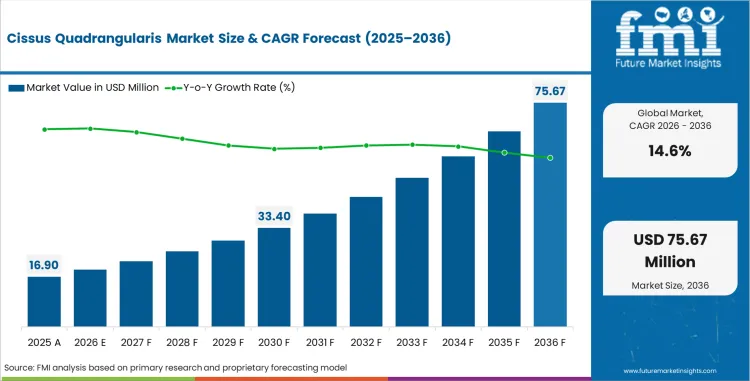
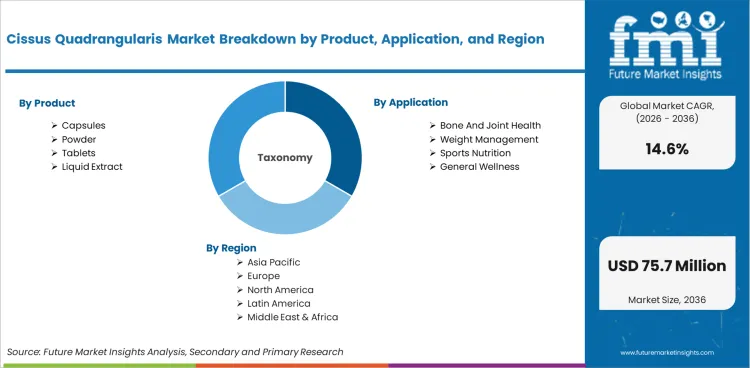
The cissus quadrangularis market was valued at USD 16.9 million in 2025. The market is set to reach USD 19.4 million by 2026-end and grow at a CAGR of 14.6% between 2026-2036 to reach USD 75.7 million by 2036. Capsules will dominate with a 50.0% share, while Bone And Joint Health will lead with a 55.0% share.
Summary of the Cissus Quadrangularis Market
- Demand and Growth Drivers
- Growing consumer awareness of plant based nutraceuticals for bone health, joint support, and weight management is driving mainstream adoption of Cissus quadrangularis supplements across developed and emerging markets.
- Clinical research demonstrating efficacy in fracture healing, bone density support, and metabolic health is strengthening the evidence base and supporting product positioning in regulated supplement markets.
- Growth of e-commerce supplement retail and direct to consumer subscription models is making it more accessible and reducing distribution barriers for specialized herbal ingredients.
- Product and Segment View
- The product segment is estimated to have the highest share of 50.0% in the year 2026. This is due to the consumer preference for standardized dosage forms with consistent extract potency.
- Cissus quadrangularis supplements are primarily being therapeutically positioned for bone and joint health, which is anticipated to lead the application segment with a 55.0% share of the market.
- Combination formulations are estimated to account for 65.0% share of the formulation segment due to the demand for multi-herb blends and nutrient fortified supplements.
- Geography and Competitive Outlook
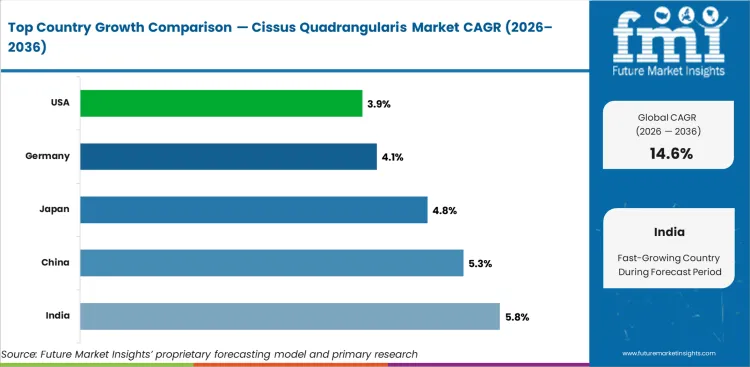
- India is expected to lead the global growth at a CAGR of 5.8% highlighting the country’s importance as the main raw material supplier and a rapidly growing domestic consumption market for traditional herbal supplements.
- North America and Europe are high value markets where premium pricing for standardized extracts is driven by clinical evidence based positioning and regulatory compliant labeling.
- Those companies with vertically integrated supply chains from raw material sourcing to standardized extraction and finished product manufacturing have a competitive advantage in quality assurance and cost control.
- Analyst Opinion
- Nandini Roy Choudhury, Principal Consultant at FMI says, 'The Cissus quadrangularis market is transitioning from a traditional Ayurvedic ingredient to a globally recognized nutraceutical supported by clinical evidence for bone health, joint support, and metabolic wellness. The growth trajectory reflects the broader mainstreaming of plant based supplements, but the specific competitive advantage for Cissus lies in the accumulating clinical data that differentiates it from commodity herbal ingredients. Suppliers that can combine standardized extraction with clinical substantiation and regulatory compliant positioning are capturing premium shelf space in developed markets.'
- The Cissus quadrangularis market is growing rapidly as clinical research and consumer demand converge on evidence based plant nutraceuticals.
- Adoption of Cissus quadrangularis is being propelled by growing awareness about its effectiveness in bone healing, joint mobility and weight management related applications among various demographic groups.
- The global trend towards preventive health and self managed wellness also underpins demand as consumers seek natural alternatives to pharmaceutical interventions for musculoskeletal and metabolic health.
Key Takeaways, Market Size, and Forecast
- The cissus quadrangularis market was valued at USD 16.90 million in 2025.
- By 2036, the Cissus Quadrangularis Market is expected to be worth USD 75.67 million.
- From 2026 to 2036, the market is projected to expand at a CAGR of 14.6%.
- The market is projected to create an incremental opportunity of USD 56.30 million between 2026 and 2036.
- Combination Formulations is expected to hold 65% share of the Formulation segment in 2026, due to consumer preference for multi herb and nutrient fortified supplements that combine Cissus quadrangularis with complementary ingredients for bone, joint and weight management applications.
- India (5.8%) and China (5.3%) are two of the fastest growing markets in the world.
Cissus Quadrangularis Market Definition
Cissus quadrangularis market is segmented into capsules, powders, tablets and liquid extracts from Cissus quadrangularis plant marketed for bone and joint health, weight management, sports nutrition and general wellness applications. The product scope includes single-ingredient and combination formulations in standardized and raw forms, sold through online and offline retail channels.
Cissus Quadrangularis Market Inclusions
Market scope encompasses all commercially traded Cissus quadrangularis supplements categorized by product (capsules, powder, tablets, liquid extract), application (bone and joint health, weight management, sports nutrition, general wellness), end use (adults, geriatric population, sports nutrition consumers), distribution channel (online retail, offline retail), formulation (combination formulations, single ingredient), and source (plant based). The range of revenue sizes is from 2026 to 2036.
Cissus Quadrangularis Market Exclusions
The scope does not include raw unprocessed Cissus quadrangularis plant material sold for agricultural or non supplement purposes, pharmaceutical drug formulations containing Cissus quadrangularis as an active pharmaceutical ingredient under prescription, or cosmetic products with Cissus extract as a minor ingredient.
Cissus Quadrangularis Market Research Methodology
- Primary research: FMI analysts interviewed nutraceutical product development managers, herbal extract suppliers, supplement brand founders and retail buyers in key markets.
- Desk Research: Integrated data from nutraceutical industry databases, clinical research publication databases, e-commerce supplement sales tracking platforms and herbal ingredient trade statistics.
- Market sizing and forecasting: Bottom-up aggregation of supplement sales by product formats, application categories and distribution channels with regional consumer adoption curves.
- Data Validation: Cross validated quarterly with herbal extract trade data, e-commerce sales tracking and supplement manufacturer production disclosures.
Why is the Cissus Quadrangularis Market Growing?
- The increasing clinical evidence for Cissus quadrangularis in bone healing, joint support and metabolic health is taking the ingredient from traditional use to evidence based nutraceutical positioning in regulated markets.
- E-commerce supplement retail and direct-to-consumer subscription models are reducing the barriers to distribution, which enable niche herbal ingredients to reach global consumer audiences.
- India shows the highest growth at a CAGR of 5.8% due to both the rising domestic consumption of traditional Ayurvedic supplements and the fact that India is the main source of Cissus quadrangularis raw material globally.
The Cissus quadrangularis market is growing at a fast pace as consumer demand for plant based nutraceuticals meets with increasing clinical evidence supporting the efficacy of the ingredient in bone and joint health applications. Cissus quadrangularis is a member of the grape family and is native to tropical Asia and Africa. It has been used for centuries in the traditional systems of Ayurvedic and African medicine for healing of bones and support of joints. The plant has shown osteogenic, anti-inflammatory and antioxidant properties in clinical studies, thus encouraging the transition from traditional use to mainstream nutraceutical positioning.
The bone and joint health application segment is the major demand driver for Cissus quadrangularis supplements used to help with fracture recovery, sustain bone density, enhance joint mobility and reduce pain. Bone health concerns like osteoporosis drive supplement use in the geriatric population segment, making it a particularly important demographic. The sports nutrition consumers are a secondary growth segment, with Cissus quadrangularis used for post workout recovery and injury prevention in athletic populations.
Market is changing along with the dynamics of distribution channels. The rapid growth of e-commerce supplement platforms, especially third party marketplaces and brand owned direct to consumer websites, has enabled Cissus quadrangularis products to reach consumers around the world, without the limitations of shelf space that traditional retail has. Subscription-based supplement delivery services are also driving repeat purchase rates and customer lifetime value, which is crucial for niche herbal ingredients that require ongoing consumer education and engagement.
Market Segmentation Analysis
- Capsules accounted for 50.0% of the product segment, suggesting that consumers prefer convenient and standardized dosage forms that have consistent extract potency across brands.
- Bone and joint health is the leading application segment with 55.0% of the market. This is the major therapeutic area driving demand for Cissus quadrangularis supplements.
- Distribution: 60.0% is Online Retail. This shows the importance of e-commerce platforms and direct to consumer channels in tapping into niche herbal supplements globally.
The Cissus quadrangularis market is segmented on the basis of product, application, end use, distribution channel, formulation, and source. The product categories are capsules, powder, tablets, and liquid extract. Application segments include bone and joint health, weight management, sports nutrition and general wellness.
Insights into the Bone and Joint Health Application Segment
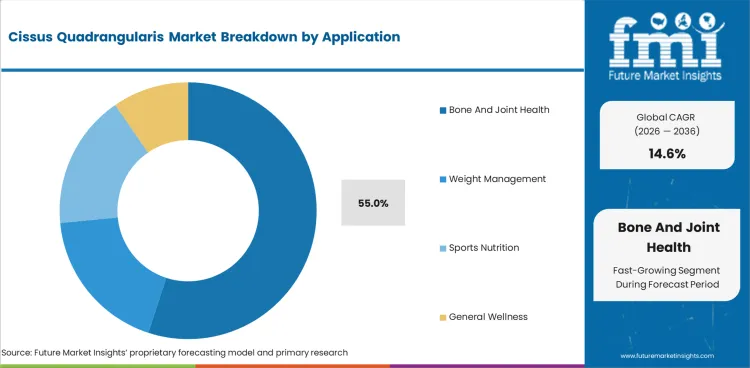
The application segment is anticipated to be 55.0% bone and joint health in 2026. This is where Cissus quadrangularis works its therapeutic magic and it is supported by clinical research that has shown that the plant can accelerate bone healing, support bone mineral density and reduce inflammation in the joints. The key use cases driving the growth of supplement consumption among the adult and geriatric population are fracture recovery and osteoporosis support.
A growing sub segment is joint support applications including mobility improvement and pain relief for age related joint conditions. Consumer demand for natural alternatives to non steroidal anti-inflammatory drugs is driving adoption of Cissus quadrangularis as part of multi ingredient joint health formulations that combine herbal extracts with glucosamine, chondroitin and other complementary ingredients.
Insights into the Combination Formulations Segment
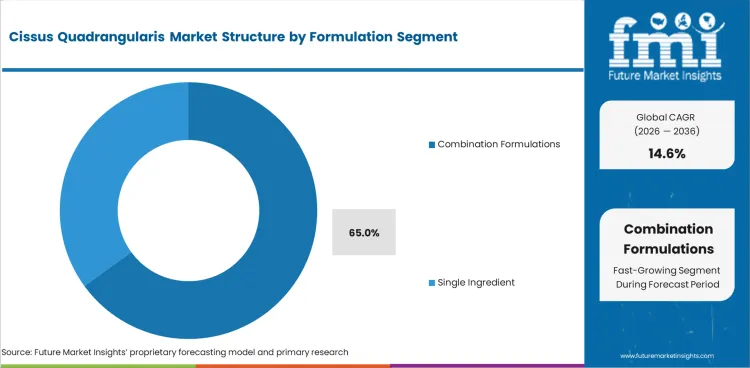
Combination products are projected to account for 65.0% of the formulation segment by 2026. The dominant product format is multi-herb blends combining Cissus quadrangularis with complementary Ayurvedic herbs, vitamins and minerals. This reflects the consumer preference for comprehensive health solutions rather than single-ingredient supplements.
Nutrient fortified formulations enriched with calcium, vitamin D, magnesium and other bone supportive nutrients are a premium sub segment. These formulations have Cissus quadrangularis as the hero ingredient in a synergistic nutrient complex which allows for premium pricing and differentiation from commodity bone health supplements.
Cissus Quadrangularis Market Drivers, Restraints, and Opportunities
- Growing clinical evidence for bone health, joint support and metabolic uses is strengthening market position and enabling regulatory-compliant claims in developed markets.
- Adoption velocity in mainstream supplement channels in North America and Europe is hindered by limited consumer awareness outside of traditional herbal medicine communities.
- Growing preventive health awareness and demand for natural musculoskeletal support in aging populations is a major incremental opportunity across all key markets.
Factors influencing the Cissus quadrangularis market are the convergence of clinical evidence development, consumer wellness trends, evolution of distribution channels and raw material supply chain dynamics. Growth is a sign that a traditional herbal ingredient is becoming mainstream thanks to modern extraction technology, clinical substantiation and digital retail distribution.
Clinical Evidence and Regulatory Positioning
Demand is backed by growing clinical research which shows the efficacy of Cissus quadrangularis to accelerate bone healing, support bone density and anti-inflammatory activity. This evidence base allows structure function claims in the USA and health claims in markets with ingredient specific regulatory pathways, reinforcing consumer confidence and retail positioning.
Consumer Awareness Limitations
Limited mainstream consumer awareness of Cissus quadrangularis beyond traditional Ayurvedic and natural health circles is a limiting factor of growth. Brands need to focus on consumer education, clinical communication and influencer marketing to build awareness in mass market supplement channels.
Preventive Health and Aging Population Demand
Adoption is driven by the global trend towards preventive health management and the demographic increase of the aging population seeking natural bone and joint support. Cissus quadrangularis is well positioned to satisfy the demand of consumers looking for alternatives to pharmaceutical bone health interventions.
Raw Material Supply Chain Concentration
The supply of Cissus quadrangularis raw material is localized in South & South-East Asia, mainly India, which is a factor affecting the market development. Manufacturers that invest in a vertically integrated sourcing strategy receive competitive differentiators such as supply chain reliability, standardized extraction processes and organic certification.
Analysis of Cissus Quadrangularis Market By Key Countries
.webp "Top Country Growth Comparison Cissus Quadrangularis Market Cagr (2026 2036)")
| Country | CAGR |
|---|---|
| India | 5.8% |
| China | 5.3% |
| Japan | 4.8% |
| Germany | 4.1% |
| USA | 3.9% |
- India leads with a 5.8% CAGR led by demand for traditional Ayurvedic supplements, growth in domestic consumption and India’s leadership as a global source for raw materials.
- China at 5.3% reflects the increasing acceptance of plant based supplements across the traditional Chinese medicine and modern nutraceutical retail channels.
- Japan (4.8%) is a developed health supplement market where the novel herbal ingredients uptake is driven by clinical evidence and quality certifications.
- Growth is recorded in Germany (4.1%) and in the USA (3.9%) through evidence-based supplement positioning and e-commerce retail expansion.
The global Cissus quadrangularis market is projected to grow at a CAGR of 14.6% from 2026 to 2036. The analysis covers more than 20 countries, with key markets detailed below.
Sales Analysis of Cissus Quadrangularis Market in India
India is projected to grow at 5.8% to 2036. India plays a dual role as the largest global supplier of Cissus quadrangularis raw material and a fast-growing domestic market with Ayurvedic and traditional herbal supplements in broadening acceptance.
- Ayushman Bharat and related public health programs are increasing health awareness across rural and urban populations, supporting adoption of traditional plant based supplements for preventive health management.
- E-commerce supplement platforms and Ayurvedic wellness brands are scaling direct to consumer distribution of Cissus quadrangularis products across tier 1 through tier 3 cities.
- India's established Ayurvedic manufacturing ecosystem provides vertically integrated supply chains from cultivation through extraction and finished product manufacturing, enabling cost competitive production at scale.
Demand Outlook for Cissus Quadrangularis Market in China
China is predicted to grow by 5.3% by 2036. China is a huge and sophisticated health supplement market and is increasingly receptive to plant based ingredients with clinical evidence. Cissus quadrangularis is recognized in the integration of traditional Chinese medicine and modern nutraceutical retail channels.
- Cross platform e-commerce distribution through Tmall, JD.com, and health specialty platforms is enabling rapid consumer trial and awareness building for novel herbal ingredients including Cissus quadrangularis.
- Integration of Cissus quadrangularis into combination formulations alongside traditional Chinese medicine ingredients is creating hybrid supplement products that resonate with domestic consumer preferences.
- Growing geriatric population health concerns around bone density and joint mobility are driving supplement adoption in the bone health category where Cissus quadrangularis holds clinical positioning.
Opportunity Analysis of Cissus Quadrangularis Market in Japan
Japan is projected to grow at 4.8% through 2036. Japan's mature functional food and supplement market, with well established regulatory pathways for health claims and high consumer receptiveness to clinically supported ingredients, represents a premium opportunity for Cissus quadrangularis products.
- Japan's Foods with Function Claims regulatory pathway enables evidence based health claims for supplements, supporting premium positioning of clinically substantiated Cissus quadrangularis products.
- The aging Japanese population represents a significant demographic opportunity for bone health and joint support supplements, with high per capita supplement spending in these categories.
- Japanese consumers demonstrate strong preference for quality certified, standardized extract supplements, favoring manufacturers with GMP certified production and transparent supply chain documentation.
In-depth Analysis of Cissus Quadrangularis Market in Germany
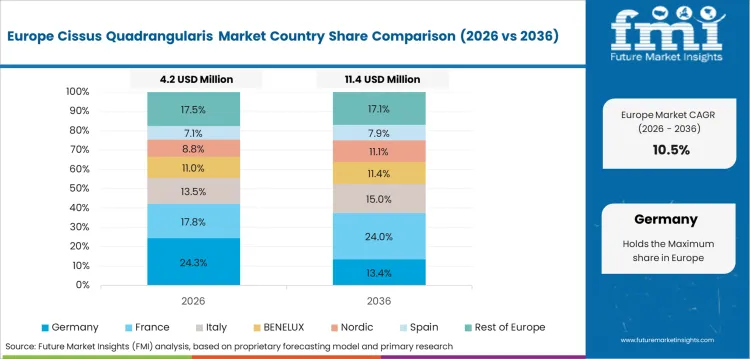
Germany is projected to grow at 4.1% through 2036. Germany's health conscious consumer base, strong natural products retail infrastructure, and EU regulatory framework for food supplements create a structured market environment for evidence based herbal ingredients.
- EU food supplement regulations requiring substantiated health claims favor Cissus quadrangularis products with clinical evidence packages, creating competitive barriers for unsubstantiated alternatives.
- Germany's established natural health retail infrastructure including pharmacies, organic stores, and specialized supplement retailers provides premium distribution channels for quality positioned Cissus products.
- Consumer preference for sustainable, ethically sourced herbal ingredients is driving demand for organic certified and fair trade positioned Cissus quadrangularis supplements.
Future Outlook for Cissus Quadrangularis Market in the United States
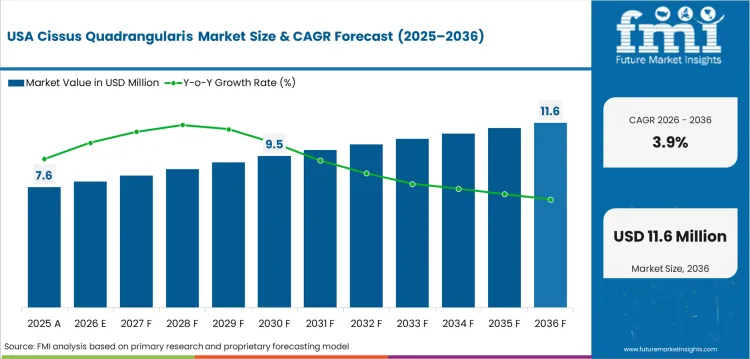
The USA is projected to grow at 3.9% through 2036. The USA represents the largest single national market for dietary supplements, with Cissus quadrangularis gaining traction through e-commerce retail, sports nutrition positioning, and clinical evidence based marketing to health conscious consumers.
- FDA structure function claim regulations enable supplement manufacturers to communicate bone health and joint support benefits, supporting consumer confidence in Cissus quadrangularis positioning.
- Sports nutrition and fitness supplement channels represent a significant growth vector, with Cissus quadrangularis marketed for post workout recovery and injury prevention among athletic consumers.
- Direct to consumer subscription models and influencer driven marketing on social media platforms are accelerating awareness and trial among millennial and Gen Z health supplement consumers.
Competitive Landscape and Strategic Positioning
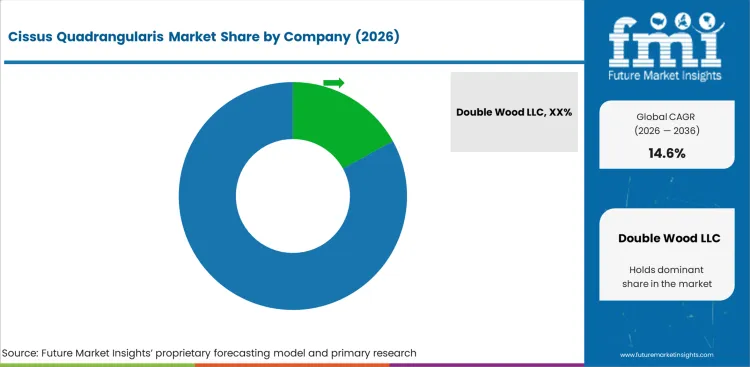
- Double Wood LLC and True Nutrition have a visible presence in the North American market through direct to consumer e-commerce distribution and clinical evidenced based product positioning.
- Rajvi Enterprise and Ramsun Rasayanics compete on vertically integrated Indian supply chains, sourcing raw materials and standardizing extraction and export of final products.
- New brands are separating themselves from commodity herbal supplement suppliers by providing clinical substantiation, premium formulation and digital first distribution.
Double Wood LLC is a well-established US based supplement brand with a strong e-commerce presence. They offer standardized Cissus quadrangularis extract capsules for bone health and joint support. True Nutrition competes with a wider sports nutrition product portfolio that features Cissus quadrangularis in single ingredient and combination formulations geared towards athletic recovery applications.
Rajvi Enterprise and Ramsun Rasayanics are manufacturers and exporters of vertically integrated herbal extracts based out of India. They provide standardized Cissus quadrangularis extract to supplement brands around the world. VitaJing Ltd. and Bulk Nutrients supply bulk herbal ingredients and private label supplement manufacturing to B2B and direct to consumer channels.
The Indian Ayurvedic supplement manufacturing ecosystem is comprised of Herbo Nutra, Keter Wellness and bixa BOTANICAL. Activa Naturals and LongLifeNutri are rivals in the North American retail supplements market. Competitive differentiation is around extract standardisation, clinical evidence packages, organic & sustainability certifications and digital marketing capabilities.
Key Companies in the Cissus Quadrangularis Market
Key global companies leading the cissus quadrangularis market include:
- Double Wood LLC (USA), True Nutrition (USA), and Bulk Nutrients (Australia) hold consumer facing positions through e-commerce distribution and brand recognition in the dietary supplement market.
- Rajvi Enterprise (India), Ramsun Rasayanics (India), and Herbo Nutra (India) compete through vertically integrated supply chains from cultivation through extraction and export, serving global supplement manufacturers.
- VitaJing Ltd. (New Zealand), Keter Wellness (India), bixa BOTANICAL (India), Activa Naturals (USA), and LongLifeNutri (USA) serve B2B and niche consumer channels with specialized herbal ingredient and finished supplement products.
Competitive Benchmarking: Cissus Quadrangularis Market
| Company | Supply Chain Integration | Product Range | Clinical Positioning | Distribution Reach |
|---|---|---|---|---|
| Double Wood LLC | Low | Medium | Strong | N. America |
| Rajvi Enterprise | High | Medium | Medium | Global (B2B) |
| Ramsun Rasayanics | High | Medium | Medium | Global (B2B) |
| VitaJing Ltd. | Medium | Medium | Medium | Asia-Pacific |
| Bulk Nutrients | Low | High | Medium | Australia, Global |
| Herbo Nutra | High | High | Medium | India, Global (B2B) |
| True Nutrition | Low | High | Strong | N. America |
Source: Future Market Insights competitive analysis, 2026.
Key Developments in Cissus Quadrangularis Market
- In 2025, The Vollrath Company expanded its commercial induction cooktop portfolio with advanced high-output and multi-zone induction solutions for professional foodservice and chain restaurant applications.
- In 2025, True Induction introduced connected commercial induction cooking solutions with programmable controls and smart monitoring capabilities for multi-location foodservice operations.
Key Players in the Cissus Quadrangularis Market
Major Global Players
- Double Wood LLC
- Rajvi Enterprise
- Ramsun Rasayanics
- VitaJing Ltd.
- Bulk Nutrients
- Herbo Nutra
Emerging Players/Startups
- Keter Wellness
- Activa Naturals
- bixa BOTANICAL
- True Nutrition
- LongLifeNutri
- Sabinsa Corporation
- Nutricost
Report Scope and Coverage
| Parameter | Details |
|---|---|
| Quantitative Units | USD 19.37 million to USD 75.67 million, at a CAGR of 14.6% |
| Market Definition | The Cissus quadrangularis market encompasses capsules, powders, tablets, and liquid extracts derived from the Cissus quadrangularis plant for health supplement applications. |
| Regions Covered | North America, Latin America, Europe, East Asia, South Asia and Pacific, Middle East and Africa |
| Countries Covered | USA, Germany, Japan, China, India, and 20 plus countries |
| Key Companies Profiled | Double Wood LLC, Rajvi Enterprise, Ramsun Rasayanics, VitaJing Ltd., Bulk Nutrients, Herbo Nutra, Keter Wellness, Activa Naturals, bixa BOTANICAL, True Nutrition, LongLifeNutri |
| Forecast Period | 2026 to 2036 |
| Approach | Hybrid bottom up and top down methodology starting with verified supplement sales and herbal extract trade data, projecting consumer adoption across product formats, applications, and regions. |
Market Segmentation Analysis
Cissus Quadrangularis Market Segmented by Product:
- Capsules
- Standard Capsules
- Gelatin Capsules
- Vegetarian Capsules
- Extract Capsules
- Standardized Extract
- High Potency Extract
- Standard Capsules
- Powder
- Raw Powder
- Bulk Powder
- Herbal Powder
- Blended Powder
- Herbal Blends
- Nutritional Blends
- Raw Powder
- Tablets
- Compressed Tablets
- Standard Tablets
- Coated Tablets
- Chewable Tablets
- Flavored Tablets
- Nutraceutical Tablets
- Compressed Tablets
- Liquid Extract
- Tinctures
- Alcohol Based Extract
- Water Based Extract
- Syrups
- Herbal Syrups
- Nutritional Syrups
- Tinctures
Cissus Quadrangularis Market Segmented by Application:
- Bone And Joint Health
- Bone Healing
- Fracture Recovery
- Bone Density Support
- Joint Support
- Pain Relief
- Mobility Improvement
- Bone Healing
- Weight Management
- Fat Reduction
- Metabolism Support
- Appetite Control
- Fat Reduction
- Sports Nutrition
- Muscle Recovery
- Post Workout Recovery
- Injury Prevention
- Muscle Recovery
- General Wellness
- Digestive Health
- Gut Health Support
- Metabolic Health
- Digestive Health
Cissus Quadrangularis Market Segmented by End Use:
- Adults
- Male Consumers
- Fitness Enthusiasts
- Athletes
- Female Consumers
- Weight Management Users
- Bone Health Users
- Male Consumers
- Geriatric Population
- Bone Health Users
- Osteoporosis Support
- Joint Pain Relief
- Bone Health Users
- Sports Nutrition Consumers
- Professional Athletes
- High Performance Training
- Recreational Users
- Fitness Enthusiasts
- Professional Athletes
Cissus Quadrangularis Market Segmented by Distribution Channel:
- Online Retail
- E Commerce Platforms
- Third Party Marketplaces
- Brand Owned Websites
- Subscription Services
- Monthly Supplement Plans
- Auto Replenishment Services
- E Commerce Platforms
- Offline Retail
- Pharmacies
- Chain Pharmacies
- Independent Pharmacies
- Health And Wellness Stores
- Specialty Nutrition Stores
- Ayurvedic Stores
- Supermarkets And Hypermarkets
- Large Format Stores
- Convenience Stores
- Pharmacies
Cissus Quadrangularis Market Segmented by Formulation:
- Combination Formulations
- Herbal Blends
- Multi Herb Formulations
- Ayurvedic Blends
- Nutrient Fortified
- Vitamin Enriched
- Mineral Enriched
- Herbal Blends
- Single Ingredient
- Pure Extract
- Standardized Extract
- Raw Herb Powder
- Pure Extract
Cissus Quadrangularis Market Segmented by Source:
- Plant Based
- Whole Plant Extract
- Stem Extract
- Root Extract
- Processed Extract
- Standardized Extract
- Concentrated Extract
- Whole Plant Extract
Cissus Quadrangularis Market by Region:
- North America
- USA
- Canada
- Mexico
- Latin America
- Brazil
- Chile
- Rest of Latin America
- Western Europe
- Germany
- UK
- Italy
- Spain
- France
- Nordic
- BENELUX
- Rest of Western Europe
- Eastern Europe
- Russia
- Poland
- Hungary
- Balkan & Baltic
- Rest of Eastern Europe
- East Asia
- China
- Japan
- South Korea
- South Asia and Pacific
- India
- ASEAN
- Australia & New Zealand
- Rest of South Asia and Pacific
- Middle East & Africa
- Kingdom of Saudi Arabia
- Other GCC Countries
- Turkiye
- South Africa
- Other African Union
- Rest of Middle East & Africa
Research Sources and Bibliography
- 1. National Institutes of Health. (2025). Office of Dietary Supplements: Botanical Supplement Research Database. NIH.
- 2. European Food Safety Authority. (2024). EFSA Scientific Opinion on Plant Based Food Supplements. EFSA.
- 3. World Health Organization. (2025). WHO Traditional Medicine Strategy: Herbal Medicine Quality Standards. WHO.
- 4. Journal of Ethnopharmacology. (2024). Systematic Review of Cissus Quadrangularis Clinical Evidence. Elsevier.
- 5. Grand View Research. (2025). Global Nutraceutical Ingredients Market Analysis. GVR.
This bibliography is provided for reader reference.
This Report Answers
- Estimating the size of the market and revenue projections from 2026 to 2036.
- Segmentation by product, application, end use, distribution channel, formulation, and source.
- Insights about more than 20 markets across key regions.
- Clinical evidence and regulatory positioning analysis across major markets.
- Assessment of the competitive landscape including key players and supply chain positioning.
- Identifying investment opportunities in bone health, sports nutrition, and weight management segments.
- Raw material supply chain and standardized extraction analysis.
- Delivery of data in PDF and Excel formats.
Frequently Asked Questions
How big is the cissus quadrangularis market in 2026?
The global cissus quadrangularis market is estimated to be valued at USD 19.37 million in 2026.
What will be the size of cissus quadrangularis market in 2036?
The market size for the cissus quadrangularis market is projected to reach USD 75.67 million by 2036.
How much will be the cissus quadrangularis market growth between 2026 and 2036?
The cissus quadrangularis market is expected to grow at a 14.6% CAGR between 2026 and 2036.
What are the key product types in the cissus quadrangularis market?
The key product types in cissus quadrangularis market are capsules, powder, tablets and liquid extract.
Which application segment is expected to contribute significant share in the cissus quadrangularis market in 2026?
In terms of application, bone and joint health segment is expected to command 55.0% share in the cissus quadrangularis market in 2026.
Preview the report firsthand - request a free sample
Get SampleGet the brochure for pricing and purchase details.
Get PDFTable of Content
- Executive Summary
- Global Market Outlook
- Demand-side Trends
- Supply-side Trends
- Technology Roadmap Analysis
- Analysis and Recommendations
- Market Overview
- Market Coverage / Taxonomy
- Market Definition / Scope / Limitations
- Research Methodology
- Chapter Orientation
- Analytical Lens and Working Hypotheses
- Market Structure, Signals, and Trend Drivers
- Benchmarking and Cross-market Comparability
- Market Sizing, Forecasting, and Opportunity Mapping
- Research Design and Evidence Framework
- Desk Research Programme (Secondary Evidence)
- Company Annual and Sustainability Reports
- Peer-reviewed Journals and Academic Literature
- Corporate Websites, Product Literature, and Technical Notes
- Earnings Decks and Investor Briefings
- Statutory Filings and Regulatory Disclosures
- Technical White Papers and Standards Notes
- Trade Journals, Industry Magazines, and Analyst Briefs
- Conference Proceedings, Webinars, and Seminar Materials
- Government Statistics Portals and Public Data Releases
- Press Releases and Reputable Media Coverage
- Specialist Newsletters and Curated Briefings
- Sector Databases and Reference Repositories
- FMI Internal Proprietary Databases and Historical Market Datasets
- Subscription Datasets and Paid Sources
- Social Channels, Communities, and Digital Listening Inputs
- Additional Desk Sources
- Expert Input and Fieldwork (Primary Evidence)
- Primary Modes
- Qualitative Interviews and Expert Elicitation
- Quantitative Surveys and Structured Data Capture
- Blended Approach
- Why Primary Evidence is Used
- Field Techniques
- Interviews
- Surveys
- Focus Groups
- Observational and In-context Research
- Social and Community Interactions
- Stakeholder Universe Engaged
- C-suite Leaders
- Board Members
- Presidents and Vice Presidents
- R&D and Innovation Heads
- Technical Specialists
- Domain Subject-matter Experts
- Scientists
- Physicians and Other Healthcare Professionals
- Governance, Ethics, and Data Stewardship
- Research Ethics
- Data Integrity and Handling
- Primary Modes
- Tooling, Models, and Reference Databases
- Desk Research Programme (Secondary Evidence)
- Data Engineering and Model Build
- Data Acquisition and Ingestion
- Cleaning, Normalisation, and Verification
- Synthesis, Triangulation, and Analysis
- Quality Assurance and Audit Trail
- Market Background
- Market Dynamics
- Drivers
- Restraints
- Opportunity
- Trends
- Scenario Forecast
- Demand in Optimistic Scenario
- Demand in Likely Scenario
- Demand in Conservative Scenario
- Opportunity Map Analysis
- Product Life Cycle Analysis
- Supply Chain Analysis
- Investment Feasibility Matrix
- Value Chain Analysis
- PESTLE and Porter’s Analysis
- Regulatory Landscape
- Regional Parent Market Outlook
- Production and Consumption Statistics
- Import and Export Statistics
- Market Dynamics
- Global Market Analysis 2021 to 2025 and Forecast, 2026 to 2036
- Historical Market Size Value (USD Million) Analysis, 2021 to 2025
- Current and Future Market Size Value (USD Million) Projections, 2026 to 2036
- Y-o-Y Growth Trend Analysis
- Absolute $ Opportunity Analysis
- Global Market Pricing Analysis 2021 to 2025 and Forecast 2026 to 2036
- Global Market Analysis 2021 to 2025 and Forecast 2026 to 2036, By Product
- Introduction / Key Findings
- Historical Market Size Value (USD Million) Analysis By Product , 2021 to 2025
- Current and Future Market Size Value (USD Million) Analysis and Forecast By Product , 2026 to 2036
- Capsules
- Standard Capsules
- Gelatin Capsules
- Vegetarian Capsules
- Extract Capsules
- Standardized Extract
- High Potency Extract
- Powder
- Raw Powder
- Bulk Powder
- Herbal Powder
- Blended Powder
- Herbal Blends
- Tablets
- Compressed Tablets
- Standard Tablets
- Coated Tablets
- Chewable Tablets
- Flavored Tablets
- Liquid Extract
- Tinctures
- Alcohol Based Extract
- Water Based Extract
- Syrups
- Herbal Syrups
- Capsules
- Y-o-Y Growth Trend Analysis By Product , 2021 to 2025
- Absolute $ Opportunity Analysis By Product , 2026 to 2036
- Global Market Analysis 2021 to 2025 and Forecast 2026 to 2036, By Application
- Introduction / Key Findings
- Historical Market Size Value (USD Million) Analysis By Application, 2021 to 2025
- Current and Future Market Size Value (USD Million) Analysis and Forecast By Application, 2026 to 2036
- Bone And Joint Health
- Bone Healing
- Fracture Recovery
- Bone Density Support
- Joint Support
- Pain Relief
- Mobility Improvement
- Weight Management
- Fat Reduction
- Metabolism Support
- Appetite Control
- Sports Nutrition
- Muscle Recovery
- Post Workout Recovery
- Injury Prevention
- General Wellness
- Digestive Health
- Gut Health Support
- Metabolic Health
- Bone And Joint Health
- Y-o-Y Growth Trend Analysis By Application, 2021 to 2025
- Absolute $ Opportunity Analysis By Application, 2026 to 2036
- Global Market Analysis 2021 to 2025 and Forecast 2026 to 2036, By End Use
- Introduction / Key Findings
- Historical Market Size Value (USD Million) Analysis By End Use, 2021 to 2025
- Current and Future Market Size Value (USD Million) Analysis and Forecast By End Use, 2026 to 2036
- Adults
- Male Consumers
- Fitness Enthusiasts
- Athletes
- Female Consumers
- Weight Management Users
- Bone Health Users
- Geriatric Population
- Bone Health Users
- Osteoporosis Support
- Joint Pain Relief
- Sports Nutrition Consumers
- Professional Athletes
- High Performance Training
- Recreational Users
- Fitness Enthusiasts
- Adults
- Y-o-Y Growth Trend Analysis By End Use, 2021 to 2025
- Absolute $ Opportunity Analysis By End Use, 2026 to 2036
- Global Market Analysis 2021 to 2025 and Forecast 2026 to 2036, By Distribution Channel
- Introduction / Key Findings
- Historical Market Size Value (USD Million) Analysis By Distribution Channel, 2021 to 2025
- Current and Future Market Size Value (USD Million) Analysis and Forecast By Distribution Channel, 2026 to 2036
- Online Retail
- E Commerce Platforms
- Third Party Marketplaces
- Brand Owned Websites
- Subscription Services
- Monthly Supplement Plans
- Auto Replenishment Services
- Offline Retail
- Pharmacies
- Chain Pharmacies
- Independent Pharmacies
- Health And Wellness Stores
- Specialty Nutrition Stores
- Online Retail
- Y-o-Y Growth Trend Analysis By Distribution Channel, 2021 to 2025
- Absolute $ Opportunity Analysis By Distribution Channel, 2026 to 2036
- Global Market Analysis 2021 to 2025 and Forecast 2026 to 2036, By Formulation
- Introduction / Key Findings
- Historical Market Size Value (USD Million) Analysis By Formulation, 2021 to 2025
- Current and Future Market Size Value (USD Million) Analysis and Forecast By Formulation, 2026 to 2036
- Combination Formulations
- Herbal Blends
- Multi Herb Formulations
- Ayurvedic Blends
- Nutrient Fortified
- Vitamin Enriched
- Mineral Enriched
- Single Ingredient
- Pure Extract
- Standardized Extract
- Raw Herb Powder
- Combination Formulations
- Y-o-Y Growth Trend Analysis By Formulation, 2021 to 2025
- Absolute $ Opportunity Analysis By Formulation, 2026 to 2036
- Global Market Analysis 2021 to 2025 and Forecast 2026 to 2036, By Source
- Introduction / Key Findings
- Historical Market Size Value (USD Million) Analysis By Source, 2021 to 2025
- Current and Future Market Size Value (USD Million) Analysis and Forecast By Source, 2026 to 2036
- Plant Based
- Whole Plant Extract
- Stem Extract
- Root Extract
- Processed Extract
- Standardized Extract
- Concentrated Extract
- Plant Based
- Y-o-Y Growth Trend Analysis By Source, 2021 to 2025
- Absolute $ Opportunity Analysis By Source, 2026 to 2036
- Global Market Analysis 2021 to 2025 and Forecast 2026 to 2036, By Region
- Introduction
- Historical Market Size Value (USD Million) Analysis By Region, 2021 to 2025
- Current Market Size Value (USD Million) Analysis and Forecast By Region, 2026 to 2036
- North America
- Latin America
- Western Europe
- Eastern Europe
- East Asia
- South Asia and Pacific
- Middle East & Africa
- Market Attractiveness Analysis By Region
- North America Market Analysis 2021 to 2025 and Forecast 2026 to 2036, By Country
- Historical Market Size Value (USD Million) Trend Analysis By Market Taxonomy, 2021 to 2025
- Market Size Value (USD Million) Forecast By Market Taxonomy, 2026 to 2036
- By Country
- USA
- Canada
- Mexico
- By Product
- By Application
- By End Use
- By Distribution Channel
- By Formulation
- By Source
- By Country
- Market Attractiveness Analysis
- By Country
- By Product
- By Application
- By End Use
- By Distribution Channel
- By Formulation
- By Source
- Key Takeaways
- Latin America Market Analysis 2021 to 2025 and Forecast 2026 to 2036, By Country
- Historical Market Size Value (USD Million) Trend Analysis By Market Taxonomy, 2021 to 2025
- Market Size Value (USD Million) Forecast By Market Taxonomy, 2026 to 2036
- By Country
- Brazil
- Chile
- Rest of Latin America
- By Product
- By Application
- By End Use
- By Distribution Channel
- By Formulation
- By Source
- By Country
- Market Attractiveness Analysis
- By Country
- By Product
- By Application
- By End Use
- By Distribution Channel
- By Formulation
- By Source
- Key Takeaways
- Western Europe Market Analysis 2021 to 2025 and Forecast 2026 to 2036, By Country
- Historical Market Size Value (USD Million) Trend Analysis By Market Taxonomy, 2021 to 2025
- Market Size Value (USD Million) Forecast By Market Taxonomy, 2026 to 2036
- By Country
- Germany
- UK
- Italy
- Spain
- France
- Nordic
- BENELUX
- Rest of Western Europe
- By Product
- By Application
- By End Use
- By Distribution Channel
- By Formulation
- By Source
- By Country
- Market Attractiveness Analysis
- By Country
- By Product
- By Application
- By End Use
- By Distribution Channel
- By Formulation
- By Source
- Key Takeaways
- Eastern Europe Market Analysis 2021 to 2025 and Forecast 2026 to 2036, By Country
- Historical Market Size Value (USD Million) Trend Analysis By Market Taxonomy, 2021 to 2025
- Market Size Value (USD Million) Forecast By Market Taxonomy, 2026 to 2036
- By Country
- Russia
- Poland
- Hungary
- Balkan & Baltic
- Rest of Eastern Europe
- By Product
- By Application
- By End Use
- By Distribution Channel
- By Formulation
- By Source
- By Country
- Market Attractiveness Analysis
- By Country
- By Product
- By Application
- By End Use
- By Distribution Channel
- By Formulation
- By Source
- Key Takeaways
- East Asia Market Analysis 2021 to 2025 and Forecast 2026 to 2036, By Country
- Historical Market Size Value (USD Million) Trend Analysis By Market Taxonomy, 2021 to 2025
- Market Size Value (USD Million) Forecast By Market Taxonomy, 2026 to 2036
- By Country
- China
- Japan
- South Korea
- By Product
- By Application
- By End Use
- By Distribution Channel
- By Formulation
- By Source
- By Country
- Market Attractiveness Analysis
- By Country
- By Product
- By Application
- By End Use
- By Distribution Channel
- By Formulation
- By Source
- Key Takeaways
- South Asia and Pacific Market Analysis 2021 to 2025 and Forecast 2026 to 2036, By Country
- Historical Market Size Value (USD Million) Trend Analysis By Market Taxonomy, 2021 to 2025
- Market Size Value (USD Million) Forecast By Market Taxonomy, 2026 to 2036
- By Country
- India
- ASEAN
- Australia & New Zealand
- Rest of South Asia and Pacific
- By Product
- By Application
- By End Use
- By Distribution Channel
- By Formulation
- By Source
- By Country
- Market Attractiveness Analysis
- By Country
- By Product
- By Application
- By End Use
- By Distribution Channel
- By Formulation
- By Source
- Key Takeaways
- Middle East & Africa Market Analysis 2021 to 2025 and Forecast 2026 to 2036, By Country
- Historical Market Size Value (USD Million) Trend Analysis By Market Taxonomy, 2021 to 2025
- Market Size Value (USD Million) Forecast By Market Taxonomy, 2026 to 2036
- By Country
- Kingdom of Saudi Arabia
- Other GCC Countries
- Turkiye
- South Africa
- Other African Union
- Rest of Middle East & Africa
- By Product
- By Application
- By End Use
- By Distribution Channel
- By Formulation
- By Source
- By Country
- Market Attractiveness Analysis
- By Country
- By Product
- By Application
- By End Use
- By Distribution Channel
- By Formulation
- By Source
- Key Takeaways
- Key Countries Market Analysis
- USA
- Pricing Analysis
- Market Share Analysis, 2025
- By Product
- By Application
- By End Use
- By Distribution Channel
- By Formulation
- By Source
- Canada
- Pricing Analysis
- Market Share Analysis, 2025
- By Product
- By Application
- By End Use
- By Distribution Channel
- By Formulation
- By Source
- Mexico
- Pricing Analysis
- Market Share Analysis, 2025
- By Product
- By Application
- By End Use
- By Distribution Channel
- By Formulation
- By Source
- Brazil
- Pricing Analysis
- Market Share Analysis, 2025
- By Product
- By Application
- By End Use
- By Distribution Channel
- By Formulation
- By Source
- Chile
- Pricing Analysis
- Market Share Analysis, 2025
- By Product
- By Application
- By End Use
- By Distribution Channel
- By Formulation
- By Source
- Germany
- Pricing Analysis
- Market Share Analysis, 2025
- By Product
- By Application
- By End Use
- By Distribution Channel
- By Formulation
- By Source
- UK
- Pricing Analysis
- Market Share Analysis, 2025
- By Product
- By Application
- By End Use
- By Distribution Channel
- By Formulation
- By Source
- Italy
- Pricing Analysis
- Market Share Analysis, 2025
- By Product
- By Application
- By End Use
- By Distribution Channel
- By Formulation
- By Source
- Spain
- Pricing Analysis
- Market Share Analysis, 2025
- By Product
- By Application
- By End Use
- By Distribution Channel
- By Formulation
- By Source
- France
- Pricing Analysis
- Market Share Analysis, 2025
- By Product
- By Application
- By End Use
- By Distribution Channel
- By Formulation
- By Source
- India
- Pricing Analysis
- Market Share Analysis, 2025
- By Product
- By Application
- By End Use
- By Distribution Channel
- By Formulation
- By Source
- ASEAN
- Pricing Analysis
- Market Share Analysis, 2025
- By Product
- By Application
- By End Use
- By Distribution Channel
- By Formulation
- By Source
- Australia & New Zealand
- Pricing Analysis
- Market Share Analysis, 2025
- By Product
- By Application
- By End Use
- By Distribution Channel
- By Formulation
- By Source
- China
- Pricing Analysis
- Market Share Analysis, 2025
- By Product
- By Application
- By End Use
- By Distribution Channel
- By Formulation
- By Source
- Japan
- Pricing Analysis
- Market Share Analysis, 2025
- By Product
- By Application
- By End Use
- By Distribution Channel
- By Formulation
- By Source
- South Korea
- Pricing Analysis
- Market Share Analysis, 2025
- By Product
- By Application
- By End Use
- By Distribution Channel
- By Formulation
- By Source
- Russia
- Pricing Analysis
- Market Share Analysis, 2025
- By Product
- By Application
- By End Use
- By Distribution Channel
- By Formulation
- By Source
- Poland
- Pricing Analysis
- Market Share Analysis, 2025
- By Product
- By Application
- By End Use
- By Distribution Channel
- By Formulation
- By Source
- Hungary
- Pricing Analysis
- Market Share Analysis, 2025
- By Product
- By Application
- By End Use
- By Distribution Channel
- By Formulation
- By Source
- Kingdom of Saudi Arabia
- Pricing Analysis
- Market Share Analysis, 2025
- By Product
- By Application
- By End Use
- By Distribution Channel
- By Formulation
- By Source
- Turkiye
- Pricing Analysis
- Market Share Analysis, 2025
- By Product
- By Application
- By End Use
- By Distribution Channel
- By Formulation
- By Source
- South Africa
- Pricing Analysis
- Market Share Analysis, 2025
- By Product
- By Application
- By End Use
- By Distribution Channel
- By Formulation
- By Source
- USA
- Market Structure Analysis
- Competition Dashboard
- Competition Benchmarking
- Market Share Analysis of Top Players
- By Regional
- By Product
- By Application
- By End Use
- By Distribution Channel
- By Formulation
- By Source
- Competition Analysis
- Competition Deep Dive
- Double Wood LLC
- Overview
- Product Portfolio
- Profitability by Market Segments (Product/Age /Sales Channel/Region)
- Sales Footprint
- Strategy Overview
- Marketing Strategy
- Product Strategy
- Channel Strategy
- Rajvi Enterprise
- Ramsun Rasayanics
- VitaJing Ltd.
- Bulk Nutrients
- Herbo Nutra
- Keter Wellness
- Activa Naturals
- bixa BOTANICAL
- True Nutrition
- LongLifeNutri
- Double Wood LLC
- Competition Deep Dive
- Assumptions & Acronyms Used


