

- Industry Size (2026)
- USD 10.96 Bn
- Forecast (2036)
- USD 41.36 Bn
- CAGR (2026 to 2036)
- 14.2%
Content Analytics Discovery And Cognitive Systems Market Market Size, Market Forecast and Outlook By FMI
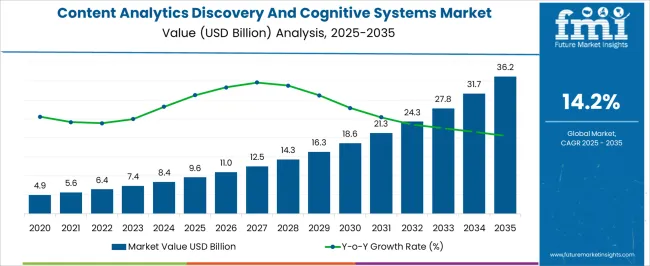
The Content Analytics and Cognitive Systems market was valued at USD 9.60 billion in 2025, projected to reach USD 10.96 billion in 2026, and is forecast to expand to USD 41.36 billion by 2036 at a 14.2% CAGR. As per FMI, the exponential growth of unstructured enterprise data volumes across text, speech, social media, and web content is driving mandatory investment in analytics and cognitive computing platforms that extract actionable intelligence from content repositories at scale.
Summary of Content Analytics Discovery And Cognitive Systems Market Market
- Market Overview
- The Content Analytics and Cognitive Systems market is valued at USD 9.60 billion in 2025 and is projected to reach USD 41.36 billion by 2036.
- The industry is expected to grow at a 14.2% CAGR from 2026 to 2036, creating an incremental opportunity of USD 30.40 billion.
- The market is a data-volume-driven enterprise intelligence category where LLM integration capability, regulatory compliance automation depth, and unstructured content processing scale define competitive positioning among content analytics and cognitive systems providers globally.
- Demand and Growth Drivers
- Demand is driven by exponential growth of unstructured enterprise data requiring analytics platforms that extract actionable intelligence at scale.
- LLM integration is transforming content analytics from keyword search into cognitive systems with contextual understanding and automated compliance review.
- GDPR and financial sector regulatory compliance requirements are driving automated content discovery and classification procurement across Europe.
- China leads at 19.2% CAGR, followed by India at 17.8%, Germany at 16.3%, France at 14.9%, UK at 13.5%, USA at 12.1%, and Brazil at 10.7%.
- Product and Segment View
- The market includes type, text analytics as primary segmentation dimensions.
- Solution leads by Type with 56.3% share in 2026.
- Text Analytics leads by Text Analytics with 41.1% share in 2026.
- Geography and Competitive Outlook
- China is the fastest-growing region at 19.2% CAGR, while India anchors the second-largest demand base.
- Competition is shaped by platform capability, regulatory compliance depth, and scale, with key players including IBM Corporation, Microsoft Corporation, Google LLC, Amazon Web Services (AWS), Oracle Corporation.
- Analyst Opinion at FMI
- Sudip Saha, Principal Consultant, opines: 'FMI's analysis reveals that the content analytics and cognitive systems market is entering a phase where procurement decisions are increasingly shaped by regulatory compliance timelines and measurable performance thresholds. Organisations that delay investment risk falling behind competitors actively securing next-generation positions.'
- Strategic Implications / Executive Takeaways
- Solution providers must secure certified pathways with tier-1 systems to qualify for forthcoming procurement contracts.
- Capital project directors should mandate native platform compatibility in all new procurement specifications.
- Technical teams must develop specialised competencies in type validation to demonstrate compliance parameters.
Content Analytics Discovery And Cognitive Systems Market Market Key Takeaways
| Metric | Details |
|---|---|
| Industry Size (2026) | USD 10.96 billion |
| Industry Value (2036) | USD 41.36 billion |
| CAGR (2026 to 2036) | 14.2% |
Source: Future Market Insights, 2026
FMI is of the opinion that the integration of large language model capabilities into content analytics platforms is transforming the market from keyword-based search and classification tooling into cognitive systems capable of contextual understanding, sentiment inference, and automated compliance review, justifying enterprise-wide deployment budgets that exceed traditional analytics tool procurement by three to five times.
FMI analysts observe that regional growth trajectories reflect varying enterprise data volumes and regulatory compliance analytics requirements. China leads at 19.2% CAGR, driven by the scale of domestic e-commerce and social media content requiring automated moderation and analytics. India follows at 17.8%, supported by BPO industry adoption of speech and text analytics for client service quality management. Germany registers 16.3% growth as GDPR compliance drives automated content discovery and classification procurement. France maintains 14.9% growth tied to financial services regulatory document analytics. The UK sustains 13.5% growth driven by e-discovery demand from legal services sector. The USA registers 12.1% growth reflecting mature enterprise deployment of cognitive content analytics across litigation, compliance, and customer experience management. Brazil maintains 10.7% growth as financial sector regulatory reporting automation generates analytics platform demand. Based on FMI's report, solution category commands 56.3% type share as enterprises prioritise integrated analytics platforms over disaggregated service engagements. Future Market Insights analysis indicates text analytics accounts for 41.1% share.
Content Analytics Discovery And Cognitive Systems Market Market Definition
Based on FMI's report, the Content Analytics and Cognitive Systems market covers solution and service offerings for text analytics, speech analytics, social media analytics, e-discovery and navigation tools, web analytics, and cognitive computing capabilities including machine learning, automated reasoning, and natural language processing deployed across enterprise content management environments globally.
Content Analytics Discovery And Cognitive Systems Market Market Inclusions
Future Market Insights analysis covers content analytics and cognitive systems across all solution and service categories. The scope encompasses regional market sizes across seven key countries, forecast projections from 2026 to 2036, and segmentation by type and analytics capability.
Content Analytics Discovery And Cognitive Systems Market Market Exclusions
The scope excludes basic business intelligence dashboards without unstructured content processing, standalone data warehousing platforms, and structured database query tools not designed for unstructured content analysis.
Content Analytics Discovery And Cognitive Systems Market Market Research Methodology
- Primary Research: Analysts engaged with enterprise information management directors, legal technology procurement managers, and cognitive computing platform architects to map deployment triggers and solution selection criteria.
- Desk Research: Data collection aggregated Gartner content analytics market sizing, GDPR compliance automation spending estimates, and published enterprise IT spending disclosures from Fortune 500 companies.
- Market-Sizing and Forecasting: Baseline values derive from a bottom-up aggregation of content analytics platform revenues across seven key countries, applying enterprise unstructured data growth curves and regulatory compliance analytics adoption rates.
- Data Validation and Update Cycle: Projections are cross-validated against quarterly cognitive computing revenue guidance from major platform vendors and enterprise software spending forecasts.
Why is the Content Analytics Discovery And Cognitive Systems Market Growing?
The Content Analytics Discovery and Cognitive Systems market is growing steadily, supported by the increasing volume of unstructured data generated across enterprises and the need for actionable insights to drive decision-making. Organizations are adopting advanced content analytics platforms to extract meaning from text, audio, images, and video data, thereby improving operational efficiency and strategic planning. The integration of artificial intelligence, natural language processing, and machine learning into these systems has enhanced their ability to identify trends, sentiment, and contextual meaning with accuracy.
Rising adoption in industries such as healthcare, BFSI, retail, and IT services is shaping demand, as companies seek competitive advantages through data-driven intelligence. Compliance with regulatory requirements, risk mitigation, and the growing emphasis on customer experience are further accelerating uptake.
Cloud deployment models and scalable architectures are enabling cost efficiency and rapid adoption across enterprises of varying sizes As digital transformation initiatives expand, content analytics solutions are expected to remain vital in unlocking business value, streamlining operations, and enabling enterprises to anticipate market shifts more effectively.
Segmental Analysis
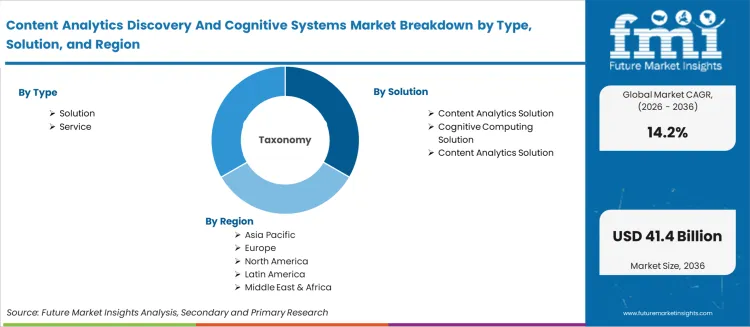
The content analytics discovery and cognitive systems market is segmented by type, solution, content analytics solution, cognitive computing solution, service, vertical, and geographic regions. By type, content analytics discovery and cognitive systems market is divided into Solution and Service. In terms of solution, content analytics discovery and cognitive systems market is classified into Content Analytics Solution and Cognitive Computing Solution. Based on content analytics solution, content analytics discovery and cognitive systems market is segmented into Text Analytics, Speech Analytics, Social Media Analytics, E-Discovery & Navigation Tools, Web Analytics, and Other.
By cognitive computing solution, content analytics discovery and cognitive systems market is segmented into Machine Learning, Automated Reasoning, Natural Language Processing, and Other. By service, content analytics discovery and cognitive systems market is segmented into Consulting Service, Integration Service, Implementation Service, and Maintenance Service. By vertical, content analytics discovery and cognitive systems market is segmented into BFSI, Media & Entertainment Sector, Healthcare Sector, Public Sector, Retail Sector, Transportation & Logistics Sector, Manufacturing Sector, IT & Telecom Sector, and Energy And Utility Sector. Regionally, the content analytics discovery and cognitive systems industry is classified into North America, Latin America, Western Europe, Eastern Europe, Balkan & Baltic Countries, Russia & Belarus, Central Asia, East Asia, South Asia & Pacific, and the Middle East & Africa.
Insights into the Solution Type Segment
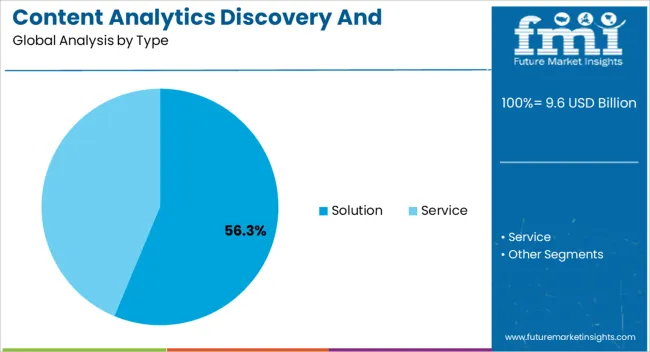
The solution type segment is projected to hold 56.3% of the market revenue share in 2025, making it the dominant type. This growth is being driven by the rising demand for integrated platforms capable of analyzing large volumes of unstructured data efficiently and accurately. Solutions offer comprehensive functionality, including data ingestion, semantic analysis, sentiment tracking, and predictive modeling, which enhance business intelligence and operational outcomes.
Enterprises are increasingly preferring solutions over standalone services because of their ability to provide end-to-end coverage, from data collection to insight generation. The integration of AI and machine learning further extends capabilities, allowing continuous improvement and adaptability. Organizations across multiple industries are adopting these solutions to optimize workflows, enhance customer engagement, and comply with evolving data governance requirements.
Cost efficiency and scalability are additional factors that reinforce the leadership of solutions in the market As businesses continue to prioritize digital transformation and invest in intelligent data processing platforms, the solution type segment is expected to maintain its leadership role.
Insights into the Content Analytics Solution Segment
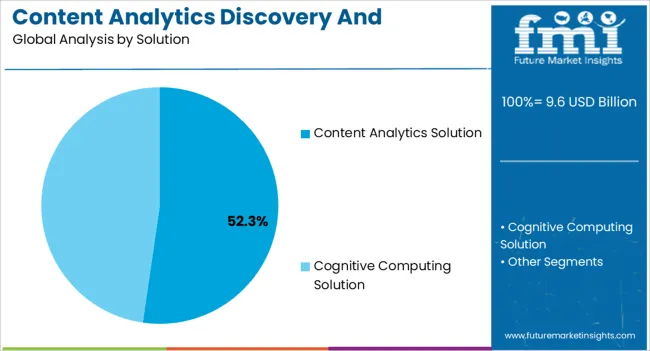
The content analytics solution segment is anticipated to account for 52.3% of the overall solution share in 2025, underscoring its importance as a key growth driver. Content analytics enables enterprises to process and interpret large volumes of structured and unstructured content, uncovering patterns and actionable insights that support business strategy. Its value lies in enabling organizations to transform raw data into meaningful intelligence, improving decision-making and operational efficiency.
The integration of natural language processing and machine learning enhances accuracy and the ability to interpret contextual nuances across diverse content types. Enterprises are increasingly deploying these solutions to address compliance requirements, detect emerging risks, and optimize marketing and customer service operations.
Demand is particularly strong in industries such as healthcare and BFSI, where real-time insights are essential for risk management and customer engagement As organizations continue to expand digital footprints and handle growing data volumes, the role of content analytics solutions is expected to strengthen further, cementing their position as a core component of enterprise intelligence strategies.
Insights into the Text Analytics Subsegment
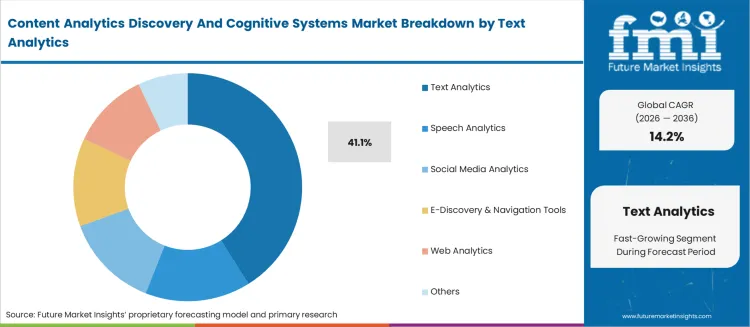
The text analytics subsegment is expected to hold 41.1% of the content analytics solution share in 2025, establishing itself as the leading subsegment. Growth is being driven by the exponential increase in text-based data from emails, customer feedback, social media, and corporate documents. Text analytics tools enable organizations to extract sentiment, detect trends, and identify risks with high accuracy, providing a strong foundation for data-driven strategies.
Advanced natural language processing techniques and machine learning algorithms are improving the ability to understand linguistic context, making text analytics more powerful and reliable. Enterprises are applying these solutions in areas such as customer experience management, fraud detection, regulatory compliance, and market research.
The scalability and real-time processing capabilities of modern text analytics platforms further enhance adoption As the demand for actionable insights from unstructured text data grows, text analytics is expected to continue its dominance within content analytics solutions, solidifying its role as a key driver of innovation and efficiency across industries.
Market Overview
Content Analytics Discovery And Cognitive Systems Market Overview
Information can be a strategic asset for an organisation which can reduce business risks, enable better customer relationships and drive better decision making. With tremendous surge in the diversity and volume of data, the need is more urgent to extract information across the organisation.
Content analytics, discovery and cognitive systems enable user to connect customers and employees with right insights and information at right time that can help in growth of the organisation.
Analysis of Content Analytics Discovery And Cognitive Systems Market By Key Countries
| Country | CAGR |
|---|---|
| China | 19.2% |
| India | 17.8% |
| Germany | 16.3% |
| France | 14.9% |
| UK | 13.5% |
| USA | 12.1% |
| Brazil | 10.7% |
Country-wise Analysis
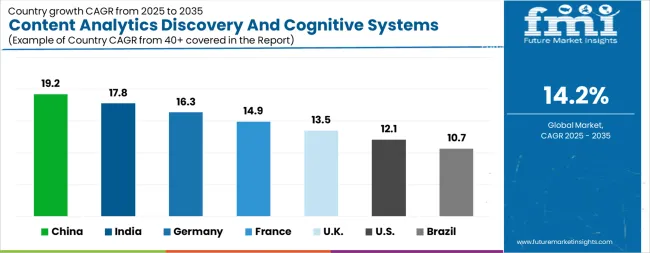
The Content Analytics Discovery And Cognitive Systems Market is expected to register a CAGR of 14.2% during the forecast period, exhibiting varied country level momentum. China leads with the highest CAGR of 19.2%, followed by India at 17.8%. Developed markets such as Germany, France, and the UK continue to expand steadily, while the USA is likely to grow at consistent rates. Brazil posts the lowest CAGR at 10.7%, yet still underscores a broadly positive trajectory for the global Content Analytics Discovery And Cognitive Systems Market. In 2024, Germany held a dominant revenue in the Western Europe market and is expected to grow with a CAGR of 16.3%. The USA Content Analytics Discovery And Cognitive Systems Market is estimated to be valued at USD 3.5 billion in 2026 and is anticipated to reach a valuation of USD 10.8 billion by 2036. Sales are projected to rise at a CAGR of 12.1% over the forecast period between 2026 and 2036. While Japan and South Korea markets are estimated to be valued at USD 473.5 million and USD 321.7 million respectively in 2026.
Key Players in the Content Analytics Discovery And Cognitive Systems Market
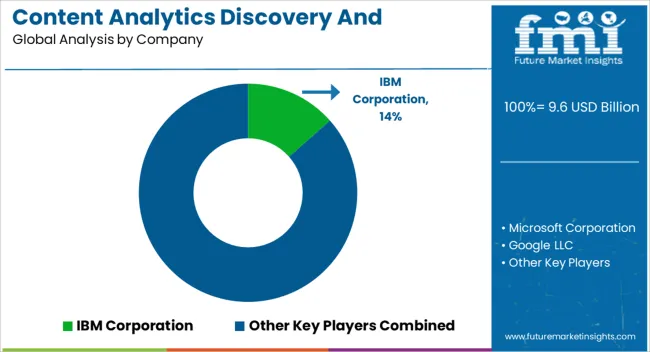
- IBM Corporation
- Microsoft Corporation
- Google LLC
- Amazon Web Services (AWS)
- Oracle Corporation
- SAP SE
- OpenText Corporation
- SAS Institute Inc.
- Micro Focus International plc
- Hewlett Packard Enterprise (HPE)
- Verint Systems Inc.
- Adobe Inc.
- Salesforce, Inc.
- Nuance Communications, Inc.
- Cognizant Technology Solutions
Scope of the Report
| Metric | Value |
|---|---|
| Quantitative Units | USD 10.96 billion to USD 41.36 billion, at a CAGR of 14.2% |
| Market Definition | Based on FMI's report, the Content Analytics and Cognitive Systems market covers solution and service offerings for text analytics, speech analytics, social media analytics, e-discovery and navigation tools, web analytics, and cognitive computing capabilities including machine learning, automated reasoning, and natural language processing deployed across enterprise content management environments globally. |
| Segmentation | Type: Solution, Service; Text Analytics: Text Analytics, Speech Analytics, Social Media Analytics, E-Discovery & Navigation Tools, Web Analytics, Others |
| Regions Covered | China, India, Germany, France, UK, USA, Brazil |
| Key Companies Profiled | IBM Corporation, Microsoft Corporation, Google LLC, Amazon Web Services (AWS), Oracle Corporation, SAP SE, OpenText Corporation, SAS Institute Inc., Verint Systems Inc., Adobe Inc. |
| Forecast Period | 2026 to 2036 |
| Approach | Hybrid bottom-up methodology combining installed base metrics with regulatory compliance adoption curves and primary research validation. |
Content Analytics Discovery And Cognitive Systems Market by Segments
Type:
- Solution
- Service
Solution:
- Content Analytics Solution
- Cognitive Computing Solution
Content Analytics Solution:
- Text Analytics
- Speech Analytics
- Social Media Analytics
- E-Discovery & Navigation Tools
- Web Analytics
- Other
Cognitive Computing Solution:
- Machine Learning
- Automated Reasoning
- Natural Language Processing
- Other
Service:
- Consulting Service
- Integration Service
- Implementation Service
- Maintenance Service
Region:
- North America
- USA
- Canada
- Mexico
- Latin America
- Brazil
- Chile
- Rest of Latin America
- Western Europe
- Germany
- UK
- Italy
- Spain
- France
- Nordic
- BENELUX
- Rest of Western Europe
- Eastern Europe
- Russia
- Poland
- Hungary
- Balkan & Baltic
- Rest of Eastern Europe
- East Asia
- China
- Japan
- South Korea
- South Asia and Pacific
- India
- ASEAN
- Australia & New Zealand
- Rest of South Asia and Pacific
- Middle East & Africa
- Kingdom of Saudi Arabia
- Other GCC Countries
- Turkiye
- South Africa
- Other African Union
- Rest of Middle East & Africa
Bibliography
- 1. International Organization for Standardization. (2024). ISO/IEC 27001: Information Security Management Systems. ISO.
- 2. European Commission. (2024). General Data Protection Regulation: Automated Content Processing Compliance Assessment. European Commission.
- 3. National Institute of Standards and Technology. (2024). NIST AI Risk Management Framework. NIST.
- 4. Organisation for Economic Co-operation and Development. (2025). AI Policy Observatory: Enterprise Cognitive Systems Indicators. OECD.
- 5. World Economic Forum. (2024). The Future of Enterprise Intelligence: Cognitive Systems Transformation. WEF.
- 6. International Telecommunication Union. (2025). ICT Facts and Figures: Enterprise Data Volume Statistics. ITU.
This bibliography is provided for reader reference. The full Future Market Insights report contains the complete reference list with primary research documentation.
Frequently Asked Questions
How large is the Content Analytics and Cognitive Systems market in 2026?
The Content Analytics and Cognitive Systems market is estimated to be valued at USD 10.96 billion in 2026.
What will be the market size of Content Analytics and Cognitive Systems by 2036?
Market size for Content Analytics and Cognitive Systems is projected to reach USD 41.36 billion by 2036.
What is the expected CAGR for Content Analytics and Cognitive Systems between 2026 and 2036?
The Content Analytics and Cognitive Systems market is expected to grow at a CAGR of 14.2% between 2026 and 2036.
Which Type leads the Content Analytics and Cognitive Systems market in 2026?
Solution accounts for 56.3% share in 2026 by Type.
Which region is projected to grow fastest?
China is projected to grow at a CAGR of 19.2% during 2026 to 2036.
What does this report include in its scope?
The report covers market sizing, segmentation analysis, regional forecasts, competitive landscape evaluation, and forecast projections from 2026 to 2036.
How does FMI build and validate the Content Analytics and Cognitive Systems forecast?
Forecasting models apply a bottom-up methodology starting with installed base metrics and cross-validate projections against quarterly revenue volumes and industry data.
Preview the report firsthand - request a free sample
Get SampleGet the brochure for pricing and purchase details.
Get PDFTable of Content
- Executive Summary
- Global Market Outlook
- Demand-side Trends
- Supply-side Trends
- Technology Roadmap Analysis
- Analysis and Recommendations
- Market Overview
- Market Coverage / Taxonomy
- Market Definition / Scope / Limitations
- Research Methodology
- Chapter Orientation
- Analytical Lens and Working Hypotheses
- Market Structure, Signals, and Trend Drivers
- Benchmarking and Cross-market Comparability
- Market Sizing, Forecasting, and Opportunity Mapping
- Research Design and Evidence Framework
- Desk Research Programme (Secondary Evidence)
- Company Annual and Sustainability Reports
- Peer-reviewed Journals and Academic Literature
- Corporate Websites, Product Literature, and Technical Notes
- Earnings Decks and Investor Briefings
- Statutory Filings and Regulatory Disclosures
- Technical White Papers and Standards Notes
- Trade Journals, Industry Magazines, and Analyst Briefs
- Conference Proceedings, Webinars, and Seminar Materials
- Government Statistics Portals and Public Data Releases
- Press Releases and Reputable Media Coverage
- Specialist Newsletters and Curated Briefings
- Sector Databases and Reference Repositories
- FMI Internal Proprietary Databases and Historical Market Datasets
- Subscription Datasets and Paid Sources
- Social Channels, Communities, and Digital Listening Inputs
- Additional Desk Sources
- Expert Input and Fieldwork (Primary Evidence)
- Primary Modes
- Qualitative Interviews and Expert Elicitation
- Quantitative Surveys and Structured Data Capture
- Blended Approach
- Why Primary Evidence is Used
- Field Techniques
- Interviews
- Surveys
- Focus Groups
- Observational and In-context Research
- Social and Community Interactions
- Stakeholder Universe Engaged
- C-suite Leaders
- Board Members
- Presidents and Vice Presidents
- R&D and Innovation Heads
- Technical Specialists
- Domain Subject-matter Experts
- Scientists
- Physicians and Other Healthcare Professionals
- Governance, Ethics, and Data Stewardship
- Research Ethics
- Data Integrity and Handling
- Primary Modes
- Tooling, Models, and Reference Databases
- Desk Research Programme (Secondary Evidence)
- Data Engineering and Model Build
- Data Acquisition and Ingestion
- Cleaning, Normalisation, and Verification
- Synthesis, Triangulation, and Analysis
- Quality Assurance and Audit Trail
- Market Background
- Market Dynamics
- Drivers
- Restraints
- Opportunity
- Trends
- Scenario Forecast
- Demand in Optimistic Scenario
- Demand in Likely Scenario
- Demand in Conservative Scenario
- Opportunity Map Analysis
- Product Life Cycle Analysis
- Supply Chain Analysis
- Investment Feasibility Matrix
- Value Chain Analysis
- PESTLE and Porter’s Analysis
- Regulatory Landscape
- Regional Parent Market Outlook
- Production and Consumption Statistics
- Import and Export Statistics
- Market Dynamics
- Global Market Analysis 2021 to 2025 and Forecast, 2026 to 2036
- Historical Market Size Value (USD Million) Analysis, 2021 to 2025
- Current and Future Market Size Value (USD Million) Projections, 2026 to 2036
- Y-o-Y Growth Trend Analysis
- Absolute $ Opportunity Analysis
- Global Market Pricing Analysis 2021 to 2025 and Forecast 2026 to 2036
- Global Market Analysis 2021 to 2025 and Forecast 2026 to 2036, By Type
- Introduction / Key Findings
- Historical Market Size Value (USD Million) Analysis By Type , 2021 to 2025
- Current and Future Market Size Value (USD Million) Analysis and Forecast By Type , 2026 to 2036
- Solution
- Service
- Solution
- Y-o-Y Growth Trend Analysis By Type , 2021 to 2025
- Absolute $ Opportunity Analysis By Type , 2026 to 2036
- Global Market Analysis 2021 to 2025 and Forecast 2026 to 2036, By Solution
- Introduction / Key Findings
- Historical Market Size Value (USD Million) Analysis By Solution, 2021 to 2025
- Current and Future Market Size Value (USD Million) Analysis and Forecast By Solution, 2026 to 2036
- Content Analytics Solution
- Cognitive Computing Solution
- Content Analytics Solution
- Content Analytics Solution
- Y-o-Y Growth Trend Analysis By Solution, 2021 to 2025
- Absolute $ Opportunity Analysis By Solution, 2026 to 2036
- Global Market Analysis 2021 to 2025 and Forecast 2026 to 2036, By Text Analytics
- Introduction / Key Findings
- Historical Market Size Value (USD Million) Analysis By Text Analytics, 2021 to 2025
- Current and Future Market Size Value (USD Million) Analysis and Forecast By Text Analytics, 2026 to 2036
- Text Analytics
- Speech Analytics
- Social Media Analytics
- E-Discovery & Navigation Tools
- Web Analytics
- Others
- Text Analytics
- Y-o-Y Growth Trend Analysis By Text Analytics, 2021 to 2025
- Absolute $ Opportunity Analysis By Text Analytics, 2026 to 2036
- Global Market Analysis 2021 to 2025 and Forecast 2026 to 2036, By Cognitive Computing Solution
- Introduction / Key Findings
- Historical Market Size Value (USD Million) Analysis By Cognitive Computing Solution, 2021 to 2025
- Current and Future Market Size Value (USD Million) Analysis and Forecast By Cognitive Computing Solution, 2026 to 2036
- Machine Learning
- Automated Reasoning
- Natural Language Processing
- Other
- Machine Learning
- Y-o-Y Growth Trend Analysis By Cognitive Computing Solution, 2021 to 2025
- Absolute $ Opportunity Analysis By Cognitive Computing Solution, 2026 to 2036
- Global Market Analysis 2021 to 2025 and Forecast 2026 to 2036, By Service
- Introduction / Key Findings
- Historical Market Size Value (USD Million) Analysis By Service, 2021 to 2025
- Current and Future Market Size Value (USD Million) Analysis and Forecast By Service, 2026 to 2036
- Consulting Service
- Integration Service
- Implementation Service
- Maintenance Service
- Consulting Service
- Y-o-Y Growth Trend Analysis By Service, 2021 to 2025
- Absolute $ Opportunity Analysis By Service, 2026 to 2036
- Global Market Analysis 2021 to 2025 and Forecast 2026 to 2036, By Region
- Introduction
- Historical Market Size Value (USD Million) Analysis By Region, 2021 to 2025
- Current Market Size Value (USD Million) Analysis and Forecast By Region, 2026 to 2036
- North America
- Latin America
- Western Europe
- Eastern Europe
- East Asia
- South Asia and Pacific
- Middle East & Africa
- Market Attractiveness Analysis By Region
- North America Market Analysis 2021 to 2025 and Forecast 2026 to 2036, By Country
- Historical Market Size Value (USD Million) Trend Analysis By Market Taxonomy, 2021 to 2025
- Market Size Value (USD Million) Forecast By Market Taxonomy, 2026 to 2036
- By Country
- USA
- Canada
- Mexico
- By Type
- By Solution
- By Text Analytics
- By Cognitive Computing Solution
- By Service
- By Country
- Market Attractiveness Analysis
- By Country
- By Type
- By Solution
- By Text Analytics
- By Cognitive Computing Solution
- By Service
- Key Takeaways
- Latin America Market Analysis 2021 to 2025 and Forecast 2026 to 2036, By Country
- Historical Market Size Value (USD Million) Trend Analysis By Market Taxonomy, 2021 to 2025
- Market Size Value (USD Million) Forecast By Market Taxonomy, 2026 to 2036
- By Country
- Brazil
- Chile
- Rest of Latin America
- By Type
- By Solution
- By Text Analytics
- By Cognitive Computing Solution
- By Service
- By Country
- Market Attractiveness Analysis
- By Country
- By Type
- By Solution
- By Text Analytics
- By Cognitive Computing Solution
- By Service
- Key Takeaways
- Western Europe Market Analysis 2021 to 2025 and Forecast 2026 to 2036, By Country
- Historical Market Size Value (USD Million) Trend Analysis By Market Taxonomy, 2021 to 2025
- Market Size Value (USD Million) Forecast By Market Taxonomy, 2026 to 2036
- By Country
- Germany
- UK
- Italy
- Spain
- France
- Nordic
- BENELUX
- Rest of Western Europe
- By Type
- By Solution
- By Text Analytics
- By Cognitive Computing Solution
- By Service
- By Country
- Market Attractiveness Analysis
- By Country
- By Type
- By Solution
- By Text Analytics
- By Cognitive Computing Solution
- By Service
- Key Takeaways
- Eastern Europe Market Analysis 2021 to 2025 and Forecast 2026 to 2036, By Country
- Historical Market Size Value (USD Million) Trend Analysis By Market Taxonomy, 2021 to 2025
- Market Size Value (USD Million) Forecast By Market Taxonomy, 2026 to 2036
- By Country
- Russia
- Poland
- Hungary
- Balkan & Baltic
- Rest of Eastern Europe
- By Type
- By Solution
- By Text Analytics
- By Cognitive Computing Solution
- By Service
- By Country
- Market Attractiveness Analysis
- By Country
- By Type
- By Solution
- By Text Analytics
- By Cognitive Computing Solution
- By Service
- Key Takeaways
- East Asia Market Analysis 2021 to 2025 and Forecast 2026 to 2036, By Country
- Historical Market Size Value (USD Million) Trend Analysis By Market Taxonomy, 2021 to 2025
- Market Size Value (USD Million) Forecast By Market Taxonomy, 2026 to 2036
- By Country
- China
- Japan
- South Korea
- By Type
- By Solution
- By Text Analytics
- By Cognitive Computing Solution
- By Service
- By Country
- Market Attractiveness Analysis
- By Country
- By Type
- By Solution
- By Text Analytics
- By Cognitive Computing Solution
- By Service
- Key Takeaways
- South Asia and Pacific Market Analysis 2021 to 2025 and Forecast 2026 to 2036, By Country
- Historical Market Size Value (USD Million) Trend Analysis By Market Taxonomy, 2021 to 2025
- Market Size Value (USD Million) Forecast By Market Taxonomy, 2026 to 2036
- By Country
- India
- ASEAN
- Australia & New Zealand
- Rest of South Asia and Pacific
- By Type
- By Solution
- By Text Analytics
- By Cognitive Computing Solution
- By Service
- By Country
- Market Attractiveness Analysis
- By Country
- By Type
- By Solution
- By Text Analytics
- By Cognitive Computing Solution
- By Service
- Key Takeaways
- Middle East & Africa Market Analysis 2021 to 2025 and Forecast 2026 to 2036, By Country
- Historical Market Size Value (USD Million) Trend Analysis By Market Taxonomy, 2021 to 2025
- Market Size Value (USD Million) Forecast By Market Taxonomy, 2026 to 2036
- By Country
- Kingdom of Saudi Arabia
- Other GCC Countries
- Turkiye
- South Africa
- Other African Union
- Rest of Middle East & Africa
- By Type
- By Solution
- By Text Analytics
- By Cognitive Computing Solution
- By Service
- By Country
- Market Attractiveness Analysis
- By Country
- By Type
- By Solution
- By Text Analytics
- By Cognitive Computing Solution
- By Service
- Key Takeaways
- Key Countries Market Analysis
- USA
- Pricing Analysis
- Market Share Analysis, 2025
- By Type
- By Solution
- By Text Analytics
- By Cognitive Computing Solution
- By Service
- Canada
- Pricing Analysis
- Market Share Analysis, 2025
- By Type
- By Solution
- By Text Analytics
- By Cognitive Computing Solution
- By Service
- Mexico
- Pricing Analysis
- Market Share Analysis, 2025
- By Type
- By Solution
- By Text Analytics
- By Cognitive Computing Solution
- By Service
- Brazil
- Pricing Analysis
- Market Share Analysis, 2025
- By Type
- By Solution
- By Text Analytics
- By Cognitive Computing Solution
- By Service
- Chile
- Pricing Analysis
- Market Share Analysis, 2025
- By Type
- By Solution
- By Text Analytics
- By Cognitive Computing Solution
- By Service
- Germany
- Pricing Analysis
- Market Share Analysis, 2025
- By Type
- By Solution
- By Text Analytics
- By Cognitive Computing Solution
- By Service
- UK
- Pricing Analysis
- Market Share Analysis, 2025
- By Type
- By Solution
- By Text Analytics
- By Cognitive Computing Solution
- By Service
- Italy
- Pricing Analysis
- Market Share Analysis, 2025
- By Type
- By Solution
- By Text Analytics
- By Cognitive Computing Solution
- By Service
- Spain
- Pricing Analysis
- Market Share Analysis, 2025
- By Type
- By Solution
- By Text Analytics
- By Cognitive Computing Solution
- By Service
- France
- Pricing Analysis
- Market Share Analysis, 2025
- By Type
- By Solution
- By Text Analytics
- By Cognitive Computing Solution
- By Service
- India
- Pricing Analysis
- Market Share Analysis, 2025
- By Type
- By Solution
- By Text Analytics
- By Cognitive Computing Solution
- By Service
- ASEAN
- Pricing Analysis
- Market Share Analysis, 2025
- By Type
- By Solution
- By Text Analytics
- By Cognitive Computing Solution
- By Service
- Australia & New Zealand
- Pricing Analysis
- Market Share Analysis, 2025
- By Type
- By Solution
- By Text Analytics
- By Cognitive Computing Solution
- By Service
- China
- Pricing Analysis
- Market Share Analysis, 2025
- By Type
- By Solution
- By Text Analytics
- By Cognitive Computing Solution
- By Service
- Japan
- Pricing Analysis
- Market Share Analysis, 2025
- By Type
- By Solution
- By Text Analytics
- By Cognitive Computing Solution
- By Service
- South Korea
- Pricing Analysis
- Market Share Analysis, 2025
- By Type
- By Solution
- By Text Analytics
- By Cognitive Computing Solution
- By Service
- Russia
- Pricing Analysis
- Market Share Analysis, 2025
- By Type
- By Solution
- By Text Analytics
- By Cognitive Computing Solution
- By Service
- Poland
- Pricing Analysis
- Market Share Analysis, 2025
- By Type
- By Solution
- By Text Analytics
- By Cognitive Computing Solution
- By Service
- Hungary
- Pricing Analysis
- Market Share Analysis, 2025
- By Type
- By Solution
- By Text Analytics
- By Cognitive Computing Solution
- By Service
- Kingdom of Saudi Arabia
- Pricing Analysis
- Market Share Analysis, 2025
- By Type
- By Solution
- By Text Analytics
- By Cognitive Computing Solution
- By Service
- Turkiye
- Pricing Analysis
- Market Share Analysis, 2025
- By Type
- By Solution
- By Text Analytics
- By Cognitive Computing Solution
- By Service
- South Africa
- Pricing Analysis
- Market Share Analysis, 2025
- By Type
- By Solution
- By Text Analytics
- By Cognitive Computing Solution
- By Service
- USA
- Market Structure Analysis
- Competition Dashboard
- Competition Benchmarking
- Market Share Analysis of Top Players
- By Regional
- By Type
- By Solution
- By Text Analytics
- By Cognitive Computing Solution
- By Service
- Competition Analysis
- Competition Deep Dive
- IBM Corporation
- Overview
- Product Portfolio
- Profitability by Market Segments (Product/Age /Sales Channel/Region)
- Sales Footprint
- Strategy Overview
- Marketing Strategy
- Product Strategy
- Channel Strategy
- Microsoft Corporation
- Google LLC
- Amazon Web Services (AWS)
- Oracle Corporation
- SAP SE
- OpenText Corporation
- SAS Institute Inc.
- Micro Focus International plc
- Hewlett Packard Enterprise (HPE)
- Verint Systems Inc.
- Adobe Inc.
- Salesforce, Inc.
- Nuance Communications, Inc.
- Cognizant Technology Solutions
- IBM Corporation
- Competition Deep Dive
- Assumptions & Acronyms Used


