

- Industry Size (2026)
- USD 1.5 Bn
- Forecast (2036)
- USD 2.7 Bn
- CAGR (2026 to 2036)
- 6.2%
Critical Care Disinfection Chemicals Market Forecast and Outlook 2026 to 2036
The critical care disinfection chemicals market is valued at USD 1.5 billion in 2026 and is projected to reach USD 2.7 billion by 2036, advancing at a CAGR of 6.2%. This growth is driven by the increasing focus on infection prevention in critical healthcare settings such as hospitals and intensive care units (ICUs), where patients are highly vulnerable to hospital-acquired infections (HAIs). Disinfection chemicals are vital for sanitizing surfaces, medical equipment, and instruments, helping prevent the spread of infections. Advances in disinfectant formulations, such as alcohol-free and environmentally friendly options, are further expanding the market.
Quick Stats for Critical Care Disinfection Chemicals Market
- Critical Care Disinfection Chemicals Market Value (2026): USD 1.5 billion
- Critical Care Disinfection Chemicals Market Forecast Value (2036): USD 2.7 billion
- Critical Care Disinfection Chemicals Market Forecast CAGR (2026-2036): 6.2%
- Leading Product Type in Critical Care Disinfection Chemicals Market: Surface Disinfectants (ICU-grade)
- Leading Active Chemistry in Critical Care Disinfection Chemicals Market: Quats (healthcare grade)
- Key Growth Regions in Critical Care Disinfection Chemicals Market: Asia Pacific, North America, Top Players in Critical Care Disinfection Chemicals Market: Ecolab, STERIS, 3M, Reckitt, Clorox, Diversey, SC Johnson Professional, Becton Dickinson, Paul Hartmann, Kimberly-Clark Professional
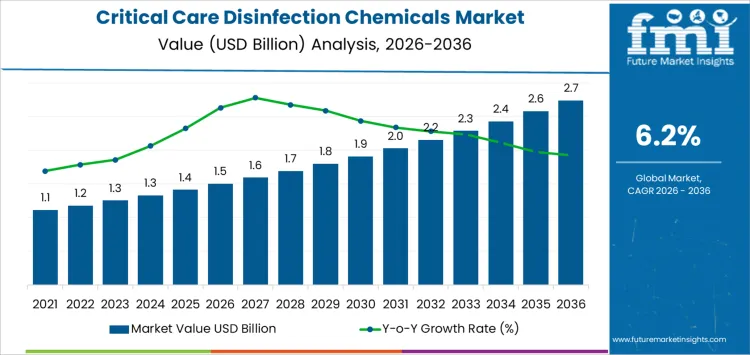
Surface disinfectants (ICU-grade) lead the market with a 46% share due to their high efficacy in high-risk environments, while ICU/CCU patient rooms hold a 44% share, driven by the need to maintain sterile conditions. The demand for these chemicals is strong in regions like China and Brazil, where healthcare infrastructure is expanding. In contrast, steady growth is observed in the USA, Germany, and Japan, supported by increasing regulations and a focus on high-quality infection control. Leading companies in the market, including Ecolab and STERIS, emphasize advanced disinfection solutions to ensure high efficacy and meet healthcare standards.
Critical Care Disinfection Chemicals Market Key Takeaways
| Metric | Value |
|---|---|
| Industry Value (2026) | USD 1.5 billion |
| Forecast Value (2036) | USD 2.7 billion |
| Forecast CAGR (2026-2036) | 6.2% |
How Is the Global Critical Care Disinfection Chemicals Sector Evolving?
The global critical care disinfection chemicals market is experiencing robust growth, driven by the increasing need for effective infection control in critical care settings such as hospitals, intensive care units (ICUs), and emergency departments. These chemicals play a vital role in preventing healthcare-associated infections (HAIs) by disinfecting surfaces, medical equipment, and instruments in high-risk environments. Initially, disinfection in critical care relied on standard chemical solutions, but over time, innovations have led to the development of more advanced, faster-acting, and broad-spectrum disinfectants that can target a wider range of pathogens.
The market for critical care disinfection chemicals will continue to grow, fueled by rising awareness of the importance of infection prevention in healthcare settings. The increasing prevalence of antibiotic-resistant infections and stricter healthcare regulations will drive demand for high-efficacy disinfectants. Advancements in formulation technologies, such as alcohol-free and environmentally friendly disinfectants, will further expand the market. Challenges such as regulatory hurdles, rising costs of raw materials, and the need for product differentiation in a competitive market will influence the sector's growth. As infection control remains a top priority in healthcare, critical care disinfection chemicals will continue to be essential for maintaining safe and sterile environments.
What is the Segment-Wise Analysis for the Critical Care Disinfection Chemicals Market?
The global critical care disinfection chemicals market is driven by product types and target areas. Surface disinfectants (ICU-grade) lead the market with a 46% share, as they are specifically formulated to disinfect high-risk surfaces in intensive care units (ICU) and critical care units (CCU), ensuring optimal infection control. Other key products include terminal cleaning chemicals, equipment/device surface disinfectants, and other specialized disinfection chemicals. In terms of target areas, ICU/CCU patient rooms account for 44% of the market, driven by the high demand for disinfection in environments with immunocompromised patients.
Why Do Surface Disinfectants (ICU-Grade) Lead the Global Critical Care Disinfection Chemicals Market?
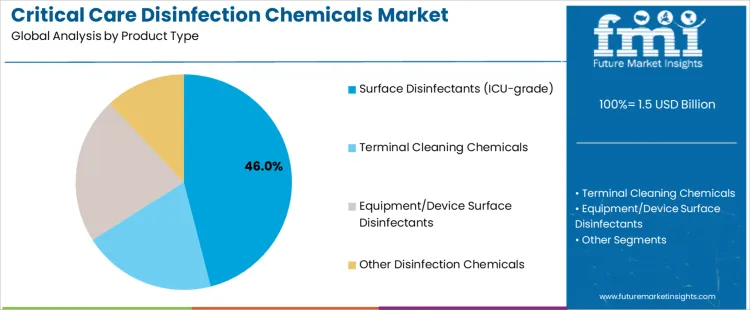
Surface disinfectants (ICU-grade) hold a 46% share of the global critical care disinfection chemicals market due to their high efficacy in preventing infections in intensive care and critical care units. These disinfectants are specifically designed to address the unique needs of healthcare environments with high infection risks, where patients are vulnerable to hospital-acquired infections (HAIs). ICU-grade surface disinfectants are formulated to effectively eliminate a wide range of pathogens, including bacteria, viruses, and fungi, on surfaces like bed rails, tables, and medical equipment. The need for highly effective, quick-drying disinfectants in these critical areas ensures their dominant position in the market, reinforcing their essential role in infection control and patient safety.
Why Do ICU/CCU Patient Rooms Hold the Largest Share in the Global Critical Care Disinfection Chemicals Market?
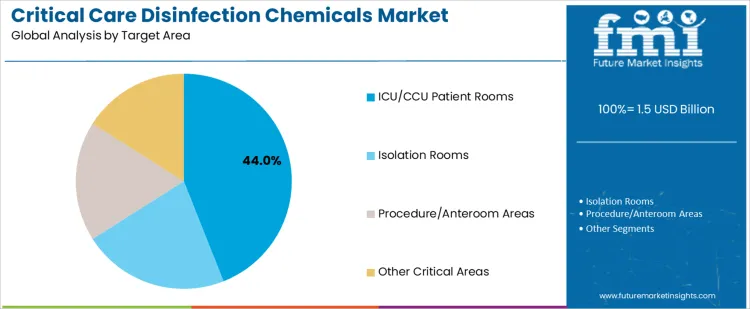
ICU/CCU patient rooms account for 44% of the global critical care disinfection chemicals market due to the need for rigorous infection control measures in these high-risk areas. Patients in intensive care units are often immunocompromised, making them more susceptible to infections, which increases the demand for effective disinfection solutions. The frequent cleaning and disinfecting of surfaces, medical equipment, and high-touch areas in these rooms are essential to prevent the spread of hospital-acquired infections (HAIs). As the priority for patient safety and infection prevention continues to grow in healthcare facilities, the demand for critical care disinfection chemicals remains strong in ICU/CCU patient rooms, ensuring their dominant market share.
What is Shaping the Critical Care Disinfection Chemicals Market?
The critical care disinfection chemicals market is shaped by the growing demand for advanced sanitation solutions in intensive care units, emergency departments, and high‑risk hospital zones. These environments require powerful disinfectants that eliminate a wide range of pathogens, including drug‑resistant bacteria and viruses, due to the elevated risk of infection transmission. Strict hospital infection control standards and regulatory requirements are driving adoption.
What Are the Key Drivers for the Critical Care Disinfection Chemicals Market?
A growing number of hospital admissions, surgical procedures, and chronic health conditions escalate the demand for reliable disinfection solutions. Healthcare authorities globally enforce stringent hygiene protocols, boosting the use of advanced chemical disinfectants. Innovations in broad‑spectrum, rapid‑acting, and residue‑free formulations that are compatible with medical equipment further propel demand. Increased investment in healthcare infrastructure, especially in emerging regions, also supports market expansion.
What Are the Constraints Limiting the Adoption of Critical Care Disinfection Chemicals?
Regulatory and compliance hurdles can constrain adoption of critical care disinfection chemicals. Highly potent disinfectants must meet strict safety and efficacy standards, which can increase development costs and time‑to‑market. Some chemical agents may pose risks of surface corrosion or adverse effects on sensitive medical equipment, limiting their use. Concerns about toxicity or irritation with frequent exposure can influence purchasing decisions. Budget constraints in certain healthcare facilities may further restrict the adoption of premium disinfection solutions.
What is the Growth Outlook for the Critical Care Disinfection Chemicals Market by Country?
| Country | CAGR (%) |
|---|---|
| USA | 5.9% |
| Japan | 4.8% |
| Germany | 5.8% |
| China | 7.2% |
| Brazil | 7.0% |
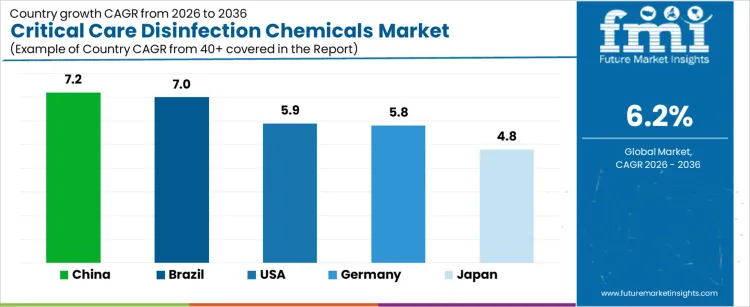
The critical care disinfection chemicals market is experiencing strong growth, with China leading at a 7.2% CAGR, driven by the increasing demand for infection prevention in critical healthcare settings. Brazil follows closely at 7.0%, supported by rising awareness of hygiene standards in healthcare. The USA and Germany show steady growth at 5.9% and 5.8%, respectively, reflecting consistent demand for disinfection chemicals in hospitals and critical care units. Japan’s market grows at a moderate pace of 4.8%, supported by stringent healthcare regulations and an aging population.
Why is the Critical Care Disinfection Chemicals Market Growing in China?
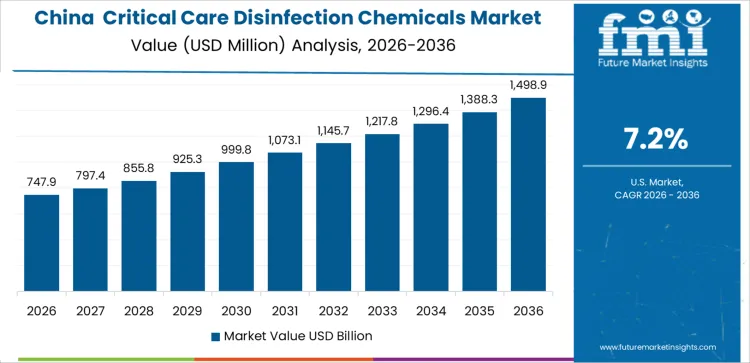
China’s critical care disinfection chemicals market is growing at a 7.2% CAGR, driven by rapid healthcare infrastructure expansion, urbanization, and increased focus on infection prevention. As China’s healthcare system continues to develop, particularly in critical care settings, the demand for disinfection chemicals to maintain hygiene and prevent hospital-acquired infections (HAIs) is rising. The government’s increased focus on public health, coupled with rising awareness of the importance of infection control, is further accelerating market growth. The rising middle class and improved healthcare access are contributing to greater demand for quality healthcare, thereby driving the need for effective critical care disinfection solutions. China’s market for critical care disinfection chemicals is expected to continue expanding rapidly as the healthcare sector modernizes and infection prevention remains a priority.
What is Contributing to the Growth of the Critical Care Disinfection Chemicals Market in Brazil?
Brazil’s critical care disinfection chemicals market is growing at a 7.0% CAGR, driven by the increasing demand for infection control solutions in healthcare settings. As Brazil’s healthcare system expands and modernizes, particularly in critical care units and hospitals, the need for effective disinfection chemicals to reduce hospital-acquired infections (HAIs) is rising. Brazil’s growing awareness of hygiene and infection prevention, is pushing demand for high-performance disinfection solutions. Brazil’s expanding healthcare infrastructure, including new hospitals and healthcare facilities, is contributing to market growth. The government’s initiatives to improve sanitation and healthcare quality are further fueling the demand for critical care disinfection chemicals, ensuring steady market expansion in the coming years.
How is the Critical Care Disinfection Chemicals Market Expanding in the USA?
The USA’s critical care disinfection chemicals market is growing at a 5.9% CAGR, driven by the increasing demand for effective infection control solutions in healthcare settings. Hospitals, clinics, and critical care units require disinfection chemicals to maintain hygiene and prevent the spread of hospital-acquired infections (HAIs). As the healthcare industry in the USA continues to evolve, particularly with the rise of outpatient care and emergency services, the need for high-quality disinfection chemicals is growing. The USA’s strong focus on healthcare standards, along with rising awareness of the importance of infection prevention, is contributing to market expansion. The increasing demand for eco-friendly and skin-friendly disinfection solutions is shaping the market’s growth. As healthcare regulations continue to evolve, the demand for critical care disinfection chemicals in the USA is expected to remain strong.
Why is the Critical Care Disinfection Chemicals Market Growing in Japan?
Japan’s critical care disinfection chemicals market is growing at a 4.8% CAGR, supported by the country’s stringent healthcare regulations and aging population. Japan’s healthcare system places a strong emphasis on infection prevention, particularly in critical care units, where the risk of hospital-acquired infections (HAIs) is high. As Japan’s aging population continues to increase, the demand for disinfection chemicals in hospitals and healthcare facilities is rising. Japan’s high standards for cleanliness and hygiene, combined with government regulations aimed at improving healthcare sanitation, are driving the adoption of critical care disinfection chemicals. Japan’s growing focus on eco-friendly and non-toxic disinfection products is influencing market trends. With continued investment in healthcare infrastructure and a focus on preventing infections, Japan’s market for critical care disinfection chemicals is expected to experience steady growth.
What is Shaping the Critical Care Disinfection Chemicals Market Growth in Germany?
Germany’s critical care disinfection chemicals market is growing at a 5.8% CAGR, driven by the country’s strong healthcare system, high hygiene standards, and growing awareness of infection prevention. As Germany’s healthcare facilities, particularly in critical care units, expand and modernize, the demand for effective disinfection chemicals to reduce hospital-acquired infections (HAIs) is rising. The country’s strict healthcare regulations ensure the widespread adoption of high-quality disinfectants in hospitals and clinics. Germany’s focus on sustainability and eco-friendly solutions is influencing the market, with increasing demand for environmentally friendly disinfection products. With Germany’s strong emphasis on healthcare standards and hygiene, the market for critical care disinfection chemicals is expected to continue growing steadily as infection prevention remains a priority in the healthcare sector.
How are Leading Companies Competing in the Critical Care Disinfection Chemicals Market?
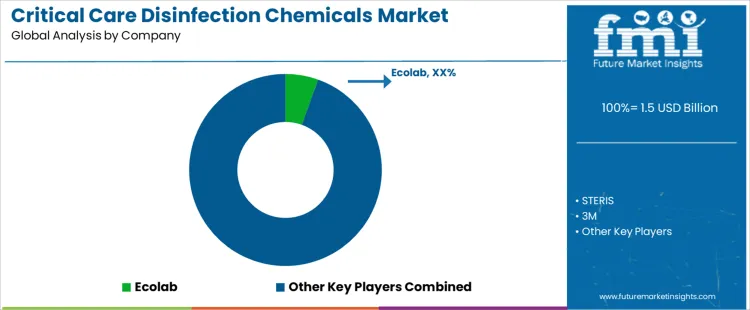
Ecolab, STERIS, 3M, Reckitt, Clorox, Diversey, SC Johnson Professional, Becton Dickinson, Paul Hartmann, and Kimberly‑Clark Professional vie intensely for attention in critical care disinfection. Each firm promotes unique product brochures that showcase hospital‑grade surface and instrument disinfectants with documented efficacy against pathogens. Ecolab stresses advanced infection prevention systems suited for hospitals and foodservice settings with data‑backed performance claims. STERIS leans into high‑efficacy sterilants and chemical disinfectants tailored for complex clinical environments. 3M highlights broad‑spectrum wipes, sprays, and cleaners validated through scientific testing and global distribution.
Reckitt’s materials position Lysol and hospital formulas for rapid action and safety in institutional contexts. Clorox professional brochures feature ready‑to‑use wipes and sprays trusted for high‑touch zones. Diversey and SC Johnson Professional focus on integrated hygiene portfolios with ease of use and compliance support. Becton Dickinson and Paul Hartmann Professional emphasize solutions engineered for healthcare workflows and clinician preferences, often pairing disinfectants with compatible consumables. Kimberly‑Clark Professional showcases solutions designed for critical care settings where reliability and regulatory compliance matter most. Brochures stress efficacy claims, regulatory registrations, formats like wipes and liquids, and application guidance. Competitive strategies rest on broad portfolios, distribution reach, tailored solutions for healthcare buyers, and clear efficacy messaging to influence procurement decisions.
Key Players in Critical Care Disinfection Chemicals Market
- Ecolab
- STERIS
- 3M
- Reckitt
- Clorox
- Diversey
- SC Johnson Professional
- Becton Dickinson
- Paul Hartmann
- Kimberly-Clark Professional
Scope of Report
| Items | Values |
|---|---|
| Quantitative Units (2025) | USD billion |
| Target Area | ICU/CCU Patient Rooms, Isolation Rooms, Procedure/Anteroom Areas, Other Critical Areas |
| Product Type | Surface Disinfectants (ICU-grade), Terminal Cleaning Chemicals, Equipment/Device Surface Disinfectants, Other Disinfection Chemicals |
| Active Chemistry | Quats (healthcare grade), Hydrogen Peroxide/Peracetic Systems, Chlorine/Hypochlorite, Other Actives |
| Use Pattern | Daily Disinfection Programs, Outbreak/Enhanced Protocols, Terminal Clean Events, Other Patterns |
| End-Use Sector | ICU/CCU Patient Rooms, Isolation Rooms, Procedure/Anteroom Areas, Other Critical Areas |
| Regions Covered | Asia Pacific, Europe, North America, Latin America, Middle East & Africa |
| Countries Covered | USA, China, Japan, South Korea, India, Australia & New Zealand, ASEAN, Germany, UK, France, Italy, Spain, Nordic, BENELUX, Brazil, Chile, Mexico, Saudi Arabia, Other GCC Countries, Turkey, South Africa, Other African Union, Rest of Regions |
| Key Companies Profiled | Ecolab, STERIS, 3M, Reckitt, Clorox, Diversey, SC Johnson Professional, Becton Dickinson, Paul Hartmann, Kimberly-Clark Professional |
| Additional Attributes | Dollar sales by product type, active chemistry, and use pattern; regional CAGR and growth outlook; distribution channels including hospital contracts, GPO/IDN programs, and distributor supply; innovation trends in hydrogen peroxide and quat-based products; competitive positioning of global vs regional suppliers. |
Critical Care Disinfection Chemicals Market by Segments
Product Type
- Surface Disinfectants (ICU-grade)
- Terminal Cleaning Chemicals
- Equipment/Device Surface Disinfectants
- Other Disinfection Chemicals
Active Chemistry
- Quats (healthcare grade)
- Hydrogen Peroxide/Peracetic Systems
- Chlorine/Hypochlorite
- Other Actives
Target Area
- ICU/CCU Patient Rooms
- Isolation Rooms
- Procedure/Anteroom Areas
- Other Critical Areas
Use Pattern
- Daily Disinfection Programs
- Outbreak/Enhanced Protocols
- Terminal Clean Events
- Other Patterns
Region
- Asia Pacific
- China
- Japan
- South Korea
- India
- Australia & New Zealand
- ASEAN
- Rest of Asia Pacific
- Europe
- Germany
- United Kingdom
- France
- Italy
- Spain
- Nordic
- BENELUX
- Rest of Europe
- North America
- United States
- Canada
- Mexico
- Latin America
- Brazil
- Chile
- Rest of Latin America
- Middle East & Africa
- Kingdom of Saudi Arabia
- Other GCC Countries
- Turkey
- South Africa
- Other African Union
- Rest of Middle East & Africa
Frequently Asked Questions
How big is the critical care disinfection chemicals market in 2026?
The global critical care disinfection chemicals market is estimated to be valued at USD 1.5 billion in 2026.
What will be the size of critical care disinfection chemicals market in 2036?
The market size for the critical care disinfection chemicals market is projected to reach USD 2.7 billion by 2036.
How much will be the critical care disinfection chemicals market growth between 2026 and 2036?
The critical care disinfection chemicals market is expected to grow at a 6.2% CAGR between 2026 and 2036.
What are the key product types in the critical care disinfection chemicals market?
The key product types in critical care disinfection chemicals market are surface disinfectants (icu-grade), terminal cleaning chemicals, equipment/device surface disinfectants and other disinfection chemicals.
Which active chemistry segment to contribute significant share in the critical care disinfection chemicals market in 2026?
In terms of active chemistry, quats (healthcare grade) segment to command 30.0% share in the critical care disinfection chemicals market in 2026.
Preview the report firsthand - request a free sample
Get SampleGet the brochure for pricing and purchase details.
Get PDFTable of Content
- Executive Summary
- Global Market Outlook
- Demand-side Trends
- Supply-side Trends
- Technology Roadmap Analysis
- Analysis and Recommendations
- Market Overview
- Market Coverage / Taxonomy
- Market Definition / Scope / Limitations
- Market Background
- Market Dynamics
- Drivers
- Restraints
- Opportunity
- Trends
- Scenario Forecast
- Demand in Optimistic Scenario
- Demand in Likely Scenario
- Demand in Conservative Scenario
- Opportunity Map Analysis
- Product Life Cycle Analysis
- Supply Chain Analysis
- Investment Feasibility Matrix
- Value Chain Analysis
- PESTLE and Porter’s Analysis
- Regulatory Landscape
- Regional Parent Market Outlook
- Production and Consumption Statistics
- Import and Export Statistics
- Market Dynamics
- Global Market Analysis 2021 to 2025 and Forecast, 2026 to 2036
- Historical Market Size Value (USD Million) Analysis, 2021 to 2025
- Current and Future Market Size Value (USD Million) Projections, 2026 to 2036
- Y-o-Y Growth Trend Analysis
- Absolute $ Opportunity Analysis
- Global Market Pricing Analysis 2021 to 2025 and Forecast 2026 to 2036
- Global Market Analysis 2021 to 2025 and Forecast 2026 to 2036, By Product Type
- Introduction / Key Findings
- Historical Market Size Value (USD Million) Analysis By Product Type , 2021 to 2025
- Current and Future Market Size Value (USD Million) Analysis and Forecast By Product Type , 2026 to 2036
- Surface Disinfectants (ICU-grade)
- Terminal Cleaning Chemicals
- Equipment/Device Surface Disinfectants
- Other Disinfection Chemicals
- Y-o-Y Growth Trend Analysis By Product Type , 2021 to 2025
- Absolute $ Opportunity Analysis By Product Type , 2026 to 2036
- Global Market Analysis 2021 to 2025 and Forecast 2026 to 2036, By Active Chemistry
- Introduction / Key Findings
- Historical Market Size Value (USD Million) Analysis By Active Chemistry, 2021 to 2025
- Current and Future Market Size Value (USD Million) Analysis and Forecast By Active Chemistry, 2026 to 2036
- Quats (healthcare grade)
- Hydrogen Peroxide/Peracetic Systems
- Chlorine/Hypochlorite
- Other Actives
- Y-o-Y Growth Trend Analysis By Active Chemistry, 2021 to 2025
- Absolute $ Opportunity Analysis By Active Chemistry, 2026 to 2036
- Global Market Analysis 2021 to 2025 and Forecast 2026 to 2036, By Target Area
- Introduction / Key Findings
- Historical Market Size Value (USD Million) Analysis By Target Area, 2021 to 2025
- Current and Future Market Size Value (USD Million) Analysis and Forecast By Target Area, 2026 to 2036
- ICU/CCU Patient Rooms
- Isolation Rooms
- Procedure/Anteroom Areas
- Other Critical Areas
- Y-o-Y Growth Trend Analysis By Target Area, 2021 to 2025
- Absolute $ Opportunity Analysis By Target Area, 2026 to 2036
- Global Market Analysis 2021 to 2025 and Forecast 2026 to 2036, By Use Pattern
- Introduction / Key Findings
- Historical Market Size Value (USD Million) Analysis By Use Pattern, 2021 to 2025
- Current and Future Market Size Value (USD Million) Analysis and Forecast By Use Pattern, 2026 to 2036
- Daily Disinfection Programs
- Outbreak/Enhanced Protocols
- Terminal Clean Events
- Other Patterns
- Y-o-Y Growth Trend Analysis By Use Pattern, 2021 to 2025
- Absolute $ Opportunity Analysis By Use Pattern, 2026 to 2036
- Global Market Analysis 2021 to 2025 and Forecast 2026 to 2036, By Region
- Introduction
- Historical Market Size Value (USD Million) Analysis By Region, 2021 to 2025
- Current Market Size Value (USD Million) Analysis and Forecast By Region, 2026 to 2036
- North America
- Latin America
- Western Europe
- Eastern Europe
- East Asia
- South Asia and Pacific
- Middle East & Africa
- Market Attractiveness Analysis By Region
- North America Market Analysis 2021 to 2025 and Forecast 2026 to 2036, By Country
- Historical Market Size Value (USD Million) Trend Analysis By Market Taxonomy, 2021 to 2025
- Market Size Value (USD Million) Forecast By Market Taxonomy, 2026 to 2036
- By Country
- USA
- Canada
- Mexico
- By Product Type
- By Active Chemistry
- By Target Area
- By Use Pattern
- By Country
- Market Attractiveness Analysis
- By Country
- By Product Type
- By Active Chemistry
- By Target Area
- By Use Pattern
- Key Takeaways
- Latin America Market Analysis 2021 to 2025 and Forecast 2026 to 2036, By Country
- Historical Market Size Value (USD Million) Trend Analysis By Market Taxonomy, 2021 to 2025
- Market Size Value (USD Million) Forecast By Market Taxonomy, 2026 to 2036
- By Country
- Brazil
- Chile
- Rest of Latin America
- By Product Type
- By Active Chemistry
- By Target Area
- By Use Pattern
- By Country
- Market Attractiveness Analysis
- By Country
- By Product Type
- By Active Chemistry
- By Target Area
- By Use Pattern
- Key Takeaways
- Western Europe Market Analysis 2021 to 2025 and Forecast 2026 to 2036, By Country
- Historical Market Size Value (USD Million) Trend Analysis By Market Taxonomy, 2021 to 2025
- Market Size Value (USD Million) Forecast By Market Taxonomy, 2026 to 2036
- By Country
- Germany
- UK
- Italy
- Spain
- France
- Nordic
- BENELUX
- Rest of Western Europe
- By Product Type
- By Active Chemistry
- By Target Area
- By Use Pattern
- By Country
- Market Attractiveness Analysis
- By Country
- By Product Type
- By Active Chemistry
- By Target Area
- By Use Pattern
- Key Takeaways
- Eastern Europe Market Analysis 2021 to 2025 and Forecast 2026 to 2036, By Country
- Historical Market Size Value (USD Million) Trend Analysis By Market Taxonomy, 2021 to 2025
- Market Size Value (USD Million) Forecast By Market Taxonomy, 2026 to 2036
- By Country
- Russia
- Poland
- Hungary
- Balkan & Baltic
- Rest of Eastern Europe
- By Product Type
- By Active Chemistry
- By Target Area
- By Use Pattern
- By Country
- Market Attractiveness Analysis
- By Country
- By Product Type
- By Active Chemistry
- By Target Area
- By Use Pattern
- Key Takeaways
- East Asia Market Analysis 2021 to 2025 and Forecast 2026 to 2036, By Country
- Historical Market Size Value (USD Million) Trend Analysis By Market Taxonomy, 2021 to 2025
- Market Size Value (USD Million) Forecast By Market Taxonomy, 2026 to 2036
- By Country
- China
- Japan
- South Korea
- By Product Type
- By Active Chemistry
- By Target Area
- By Use Pattern
- By Country
- Market Attractiveness Analysis
- By Country
- By Product Type
- By Active Chemistry
- By Target Area
- By Use Pattern
- Key Takeaways
- South Asia and Pacific Market Analysis 2021 to 2025 and Forecast 2026 to 2036, By Country
- Historical Market Size Value (USD Million) Trend Analysis By Market Taxonomy, 2021 to 2025
- Market Size Value (USD Million) Forecast By Market Taxonomy, 2026 to 2036
- By Country
- India
- ASEAN
- Australia & New Zealand
- Rest of South Asia and Pacific
- By Product Type
- By Active Chemistry
- By Target Area
- By Use Pattern
- By Country
- Market Attractiveness Analysis
- By Country
- By Product Type
- By Active Chemistry
- By Target Area
- By Use Pattern
- Key Takeaways
- Middle East & Africa Market Analysis 2021 to 2025 and Forecast 2026 to 2036, By Country
- Historical Market Size Value (USD Million) Trend Analysis By Market Taxonomy, 2021 to 2025
- Market Size Value (USD Million) Forecast By Market Taxonomy, 2026 to 2036
- By Country
- Kingdom of Saudi Arabia
- Other GCC Countries
- Turkiye
- South Africa
- Other African Union
- Rest of Middle East & Africa
- By Product Type
- By Active Chemistry
- By Target Area
- By Use Pattern
- By Country
- Market Attractiveness Analysis
- By Country
- By Product Type
- By Active Chemistry
- By Target Area
- By Use Pattern
- Key Takeaways
- Key Countries Market Analysis
- USA
- Pricing Analysis
- Market Share Analysis, 2025
- By Product Type
- By Active Chemistry
- By Target Area
- By Use Pattern
- Canada
- Pricing Analysis
- Market Share Analysis, 2025
- By Product Type
- By Active Chemistry
- By Target Area
- By Use Pattern
- Mexico
- Pricing Analysis
- Market Share Analysis, 2025
- By Product Type
- By Active Chemistry
- By Target Area
- By Use Pattern
- Brazil
- Pricing Analysis
- Market Share Analysis, 2025
- By Product Type
- By Active Chemistry
- By Target Area
- By Use Pattern
- Chile
- Pricing Analysis
- Market Share Analysis, 2025
- By Product Type
- By Active Chemistry
- By Target Area
- By Use Pattern
- Germany
- Pricing Analysis
- Market Share Analysis, 2025
- By Product Type
- By Active Chemistry
- By Target Area
- By Use Pattern
- UK
- Pricing Analysis
- Market Share Analysis, 2025
- By Product Type
- By Active Chemistry
- By Target Area
- By Use Pattern
- Italy
- Pricing Analysis
- Market Share Analysis, 2025
- By Product Type
- By Active Chemistry
- By Target Area
- By Use Pattern
- Spain
- Pricing Analysis
- Market Share Analysis, 2025
- By Product Type
- By Active Chemistry
- By Target Area
- By Use Pattern
- France
- Pricing Analysis
- Market Share Analysis, 2025
- By Product Type
- By Active Chemistry
- By Target Area
- By Use Pattern
- India
- Pricing Analysis
- Market Share Analysis, 2025
- By Product Type
- By Active Chemistry
- By Target Area
- By Use Pattern
- ASEAN
- Pricing Analysis
- Market Share Analysis, 2025
- By Product Type
- By Active Chemistry
- By Target Area
- By Use Pattern
- Australia & New Zealand
- Pricing Analysis
- Market Share Analysis, 2025
- By Product Type
- By Active Chemistry
- By Target Area
- By Use Pattern
- China
- Pricing Analysis
- Market Share Analysis, 2025
- By Product Type
- By Active Chemistry
- By Target Area
- By Use Pattern
- Japan
- Pricing Analysis
- Market Share Analysis, 2025
- By Product Type
- By Active Chemistry
- By Target Area
- By Use Pattern
- South Korea
- Pricing Analysis
- Market Share Analysis, 2025
- By Product Type
- By Active Chemistry
- By Target Area
- By Use Pattern
- Russia
- Pricing Analysis
- Market Share Analysis, 2025
- By Product Type
- By Active Chemistry
- By Target Area
- By Use Pattern
- Poland
- Pricing Analysis
- Market Share Analysis, 2025
- By Product Type
- By Active Chemistry
- By Target Area
- By Use Pattern
- Hungary
- Pricing Analysis
- Market Share Analysis, 2025
- By Product Type
- By Active Chemistry
- By Target Area
- By Use Pattern
- Kingdom of Saudi Arabia
- Pricing Analysis
- Market Share Analysis, 2025
- By Product Type
- By Active Chemistry
- By Target Area
- By Use Pattern
- Turkiye
- Pricing Analysis
- Market Share Analysis, 2025
- By Product Type
- By Active Chemistry
- By Target Area
- By Use Pattern
- South Africa
- Pricing Analysis
- Market Share Analysis, 2025
- By Product Type
- By Active Chemistry
- By Target Area
- By Use Pattern
- USA
- Market Structure Analysis
- Competition Dashboard
- Competition Benchmarking
- Market Share Analysis of Top Players
- By Regional
- By Product Type
- By Active Chemistry
- By Target Area
- By Use Pattern
- Competition Analysis
- Competition Deep Dive
- Ecolab
- Overview
- Product Portfolio
- Profitability by Market Segments (Product/Age /Sales Channel/Region)
- Sales Footprint
- Strategy Overview
- Marketing Strategy
- Product Strategy
- Channel Strategy
- STERIS
- 3M
- Reckitt
- Clorox
- Diversey
- SC Johnson Professional
- Becton Dickinson
- Paul Hartmann
- Kimberly-Clark Professional
- Ecolab
- Competition Deep Dive
- Assumptions & Acronyms Used
- Research Methodology


