

- Industry Size (2026)
- USD 1.6 Bn
- Forecast (2036)
- USD 3.8 Bn
- CAGR (2026 to 2036)
- 9.10%
Drone Specialty Lubricant Feedstocks Market Forecast and Outlook 2026 to 2036
The global drone specialty lubricant feedstocks market is valued at USD 1.6 billion in 2026 and is projected to reach USD 3.8 billion by 2036, growing at a CAGR of 9.10%. This market occupies a critical position within the rapidly evolving drone industry, where it plays a crucial role in enhancing the efficiency and longevity of drone components. As drones become integral to sectors such as agriculture, logistics, defense, and surveillance, the demand for high-performance specialty lubricants is rising to meet the operational demands of various applications.
The competitive weight of this space is shaped by advancements in lubricant formulations, offering solutions that improve performance under extreme conditions. Companies like Royal Dutch Shell, ExxonMobil, and Chevron Phillips Chemical are shaping the landscape by providing innovative products that cater to both consumer and commercial drone needs. The increasing adoption of drones across industries further underscores the importance of this market in ensuring reliable and efficient UAV operations.
Quick Stats for Drone Specialty Lubricant Feedstocks Market
- Drone Specialty Lubricant Feedstocks Market Value (2026): USD 1.6 Billion
- Drone Specialty Lubricant Feedstocks Market Forecast Value (2036): USD 3.8 Billion
- Drone Specialty Lubricant Feedstocks Market Forecast CAGR 2026 to 2036: 9.10%
- Leading Drone Type in Drone Specialty Lubricant Feedstocks Market: Commercial or Industrial Drones
- Key Growth Regions in Drone Specialty Lubricant Feedstocks Market: Asia Pacific, North America
- Top Key Players in Drone Specialty Lubricant Feedstocks Market: Royal Dutch Shell plc (Shell Lubricants), ExxonMobil, Chevron Phillips Chemical, PPG Industries, Fuchs Petrolub SE
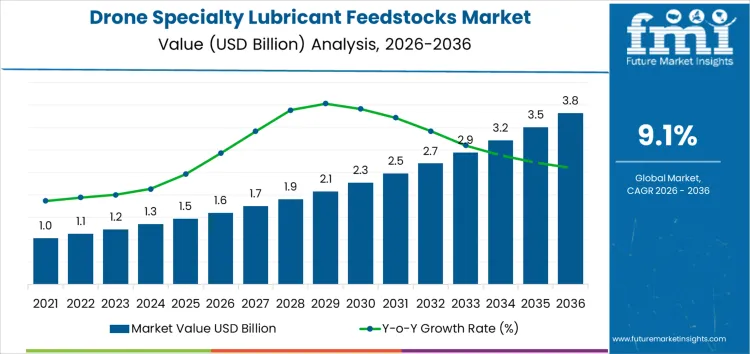
Drone Specialty Lubricant Feedstocks Market Key Takeaways
| Metric | Value |
|---|---|
| Industry Value (2026) | USD 1.6 Billion |
| Forecast Value (2036) | USD 3.8 Billion |
| Forecast CAGR 2026 to 2036 | 9.10% |
How is the Global Drone Specialty Lubricant Feedstocks Market Advancing?
The global drone specialty lubricant feedstocks market is experiencing significant growth, driven by the increasing use of drones in various industries such as agriculture, logistics, surveillance, and defense. Specialty lubricants are critical to ensuring the smooth operation and longevity of drone components, particularly in high-performance and high-stress applications like motors, gears, and bearings. As drones become more widely adopted for commercial and industrial purposes, the demand for specialized lubricant feedstocks to enhance drone efficiency and reliability is rising.
A major driver for the market is the growing demand for drones in commercial applications, particularly in sectors like agriculture, delivery services, and infrastructure inspection. Drones used in these applications require specialized lubricants that can withstand the demanding operational conditions, including extreme temperatures, high altitudes, and prolonged flight durations. These lubricants reduce friction, wear, and heat generation, ensuring that drone components function optimally for extended periods and minimizing maintenance costs. As drone technology evolves and becomes more sophisticated, the need for advanced, high-performance lubricants continues to increase.
Technological advancements in lubricant formulations are also contributing to market growth. Manufacturers are developing specialty lubricants with improved wear resistance, better load-bearing capacity, and greater stability under varying environmental conditions. Innovations in synthetic and bio-based lubricants are further enhancing the performance of drone components, making them more efficient and environmentally friendly. As the drone industry continues to expand and diversify, the demand for specialty lubricant feedstocks is expected to grow, offering a crucial solution for the next generation of unmanned aerial vehicles (UAVs).
What Is the Segment-Wise Analysis for the Drone Specialty Lubricant Feedstocks Market?
The drone specialty lubricant feedstocks market is segmented by drone type and application type. Commercial or industrial drones lead the drone type segment with a 42% share, followed by consumer drones, military & defense drones, delivery or logistics drones, and other types. Commercial drones are widely used in industrial applications that require high-performance lubricants for various moving parts. In terms of application type, bearing lubrication holds the largest share at 33%, followed by geartrain & transmission lubrication, servo & rotor mechanism lubrication, thermal & friction management, and other applications.
Why Do Commercial or Industrial Drones Lead the Drone Specialty Lubricant Feedstocks Market?
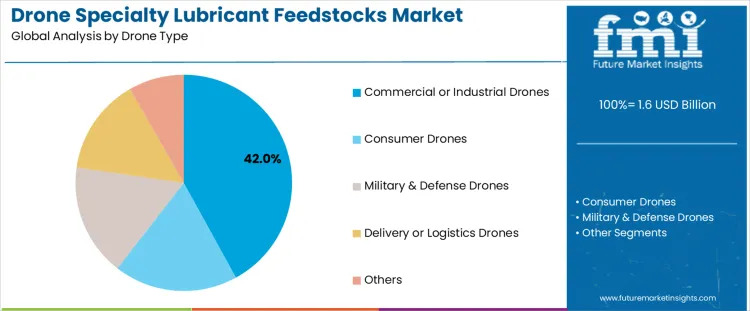
Commercial or industrial drones lead the drone specialty lubricant feedstocks market with a 42% share due to their extensive use in industries such as agriculture, logistics, surveillance, and infrastructure inspection. These drones typically have more complex mechanical systems, including bearings, geartrains, and transmissions, which require high-quality lubricants to ensure smooth operation and reliability. As industrial drones are used for long-duration, heavy-duty tasks, the demand for specialized lubricants that can withstand extreme conditions and reduce wear and tear is high. The growing use of drones in commercial applications is driving the adoption of specialty lubricants, making commercial drones the dominant segment in the market.
How Does Bearing Lubrication Contribute to the Drone Specialty Lubricant Feedstocks Market?
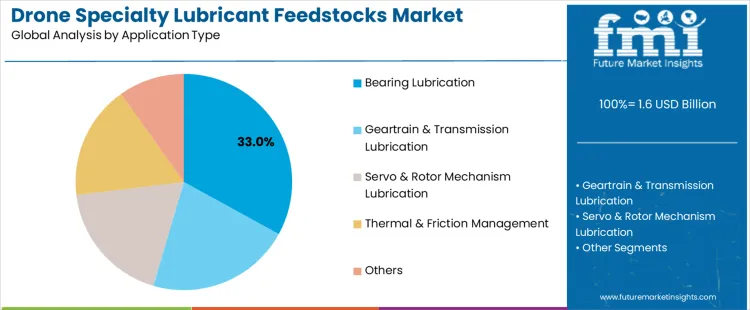
Bearing lubrication accounts for 33% of the application type segment in the drone specialty lubricant feedstocks market. Bearings play a crucial role in reducing friction and wear in drone components, ensuring smooth movement and extended operational life. Lubricants designed for bearings help maintain the performance of critical parts, such as rotors, motors, and landing gear. The demand for high-performance bearing lubricants is particularly high in drones used for commercial and industrial applications, where reliability and durability are key. As the drone industry continues to grow, the need for specialized bearing lubricants to support various drone applications will continue to contribute significantly to the market.
What Are the Key Dynamics for the Drone Specialty Lubricant Feedstocks Market?
The drone specialty lubricant feedstocks market is driven by the increasing adoption of drones across various sectors, including agriculture, logistics, defense, and surveillance. These applications require specialized lubricants that can withstand extreme temperatures, provide high performance, and ensure the longevity of drone components like motors and bearings. As drone usage expands, there is a growing demand for specialty lubricants that are specifically designed to meet the unique challenges of drone operations, such as high-speed flight, heavy payloads, and prolonged operational hours.
Why Is the Drone Specialty Lubricant Feedstocks Market Growing?
The drone specialty lubricant feedstocks market is growing due to the rapid expansion of the drone industry, particularly in commercial and military applications. As drones are increasingly used for precision tasks like surveillance, mapping, and delivery, the need for reliable, high-performance lubricants becomes crucial. These lubricants ensure optimal functioning and reduce the risk of wear and tear on critical moving parts. Advancements in drone technology, which push the boundaries of operational time and conditions, are further driving the demand for specialty lubricants that can handle the unique stressors of drone components.
How Are the Key Drivers Shaping the Drone Specialty Lubricant Feedstocks Market?
Key drivers shaping the drone specialty lubricant feedstocks market include the rising demand for drones in commercial and industrial applications, which increases the need for high-performance, specialized lubricants. The development of drones with extended operational lifespans and improved payload capacity is driving the demand for lubricants that can handle high loads and extreme environmental conditions. Technological advancements in drone design, such as the integration of more efficient motors and longer battery lives, also require advanced lubricants to reduce friction, prevent overheating, and ensure smooth operations. Increasing awareness of the importance of maintenance in prolonging drone life is contributing to market growth.
What is the Growth Outlook for the Drone Specialty Lubricant Feedstocks Market by Country?
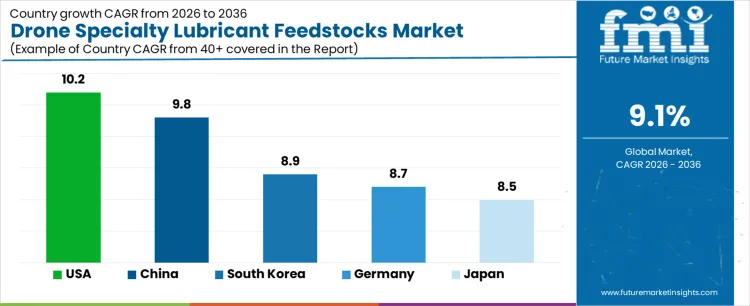
| Country | CAGR (%) |
|---|---|
| USA | 10.2% |
| China | 9.8% |
| South Korea | 8.9% |
| Germany | 8.7% |
| Japan | 8.5% |
The drone specialty lubricant feedstocks market is growing across key regions, with the USA leading at 10.2%, driven by its advanced drone technology, rising commercial drone applications, and regulatory support. China follows at 9.8%, fueled by its growing drone market and demand for high-performance lubricants in industrial applications. South Korea expands at 8.9%, supported by innovation in drone technology and government support for industrial drone use. Germany grows at 8.7%, driven by technological advancements and a focus on eco-friendly, high-performance lubricants. Japan grows at 8.5%, supported by investments in drone technology and its strong emphasis on sustainability and performance.
What is Driving the Growth of the Drone Specialty Lubricant Feedstocks Market in the USA?
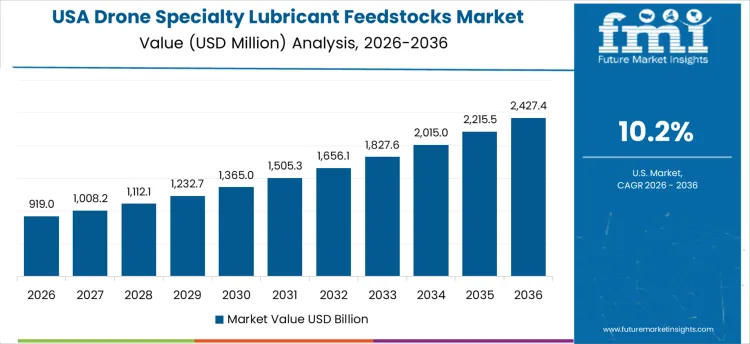
The drone specialty lubricant feedstocks market in the USA is growing at 10.2%, driven by the increasing demand for high-performance lubricants in the drone industry. As drone applications expand across industries such as agriculture, defense, logistics, and surveillance, there is a growing need for specialized lubricants to ensure the smooth operation and longevity of drone components, particularly in extreme conditions. The USA’s leadership in drone technology and innovation, along with the rise of commercial drone usage and regulatory support for drone operations, is fueling market growth. Furthermore, the need for high-quality, environmentally friendly lubricants to meet performance standards and sustainability goals in the drone sector is further driving demand. As drone technology continues to evolve and find new applications, the demand for specialty lubricant feedstocks will increase, ensuring the continued expansion of the market.
How is the Drone Specialty Lubricant Feedstocks Market Expanding in China?
China’s drone specialty lubricant feedstocks market is growing at 9.8%, driven by the rapid growth of the drone industry, particularly in sectors such as agriculture, infrastructure, and logistics. As China continues to advance its drone technology and expand commercial applications, the demand for high-performance lubricants that ensure optimal functioning and reliability of drone components is rising. With increasing government support for drone technology and the country’s growing role in the global drone market, the need for specialty lubricants is becoming more critical. The rising focus on drone performance, longevity, and cost-efficiency is pushing manufacturers to invest in superior feedstocks for lubrication. As China looks to maintain environmental sustainability in its manufacturing processes, the demand for eco-friendly and high-performance lubricant feedstocks is also contributing to the market’s growth.
How is the Drone Specialty Lubricant Feedstocks Market Expanding in South Korea?
South Korea’s drone specialty lubricant feedstocks market is growing at 8.9%, supported by the country’s rapid adoption of drone technology across various industries. South Korea is increasingly using drones in agriculture, surveillance, defense, and logistics, driving the demand for specialty lubricants that can withstand harsh operating conditions and ensure the longevity of drone components. The country’s strong emphasis on technological innovation and industrial applications for drones is fueling the need for specialized lubricant feedstocks. As the South Korean drone market expands, there is rising demand for lubricants that are both high-performing and environmentally friendly. Government initiatives and regulations promoting advanced manufacturing practices in the drone industry are also contributing to the market’s growth, as South Korea positions itself as a key player in the global drone market.
What is Driving the Growth of the Drone Specialty Lubricant Feedstocks Market in Germany?
Germany’s drone specialty lubricant feedstocks market is growing at 8.7%, driven by the country’s focus on innovation in drone technology and industrial applications. Germany is a leader in engineering and manufacturing and is increasingly adopting drones in sectors like manufacturing, logistics, and surveillance. The need for high-performance specialty lubricants is growing as drones become essential for various business operations. Germany’s strong emphasis on sustainability and regulatory frameworks to reduce the environmental impact of manufacturing is also pushing for eco-friendly lubricant feedstocks in the drone industry. As the country accelerates its use of drones and continues to prioritize reliability and performance in its technology, the demand for advanced lubricants that ensure durability and efficiency in drones will continue to rise.
How is the Drone Specialty Lubricant Feedstocks Market Expanding in Japan?
Japan’s drone specialty lubricant feedstocks market is growing at 8.5%, supported by the country’s significant investments in drone technology for a variety of applications, including agriculture, construction, and infrastructure monitoring. Japan’s focus on enhancing the reliability and performance of drones in challenging environments, coupled with its leadership in manufacturing advanced drone components, is driving the demand for specialty lubricants. The need for lubricants that offer durability, performance, and resistance to extreme temperatures is crucial for the growth of the market. Japan’s commitment to environmental sustainability and regulatory standards for product safety is also contributing to the adoption of high-quality and eco-friendly lubricants. As drone adoption in Japan continues to grow and expand into new industries, the demand for specialty lubricant feedstocks will continue to rise.
How Are Companies Competing in the Drone Specialty Lubricant Feedstocks Market?
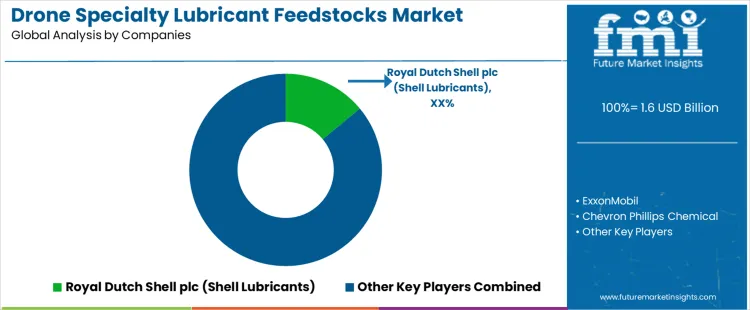
Competition in the drone specialty lubricant feedstocks market is driven by thermal stability, low viscosity at altitude, oxidation resistance, component compatibility, and customized formulation support for bearings, geartrains, and rotor systems. Royal Dutch Shell plc (Shell Lubricants) positions its feedstocks with a strong emphasis on advanced base oils and additive integration that help drones maintain stable lubrication across wide temperature swings. Its product materials highlight consistent friction control and longevity that reduce maintenance frequency for commercial and industrial UAV fleets.
ExxonMobil competes by offering high-performance ester and synthetic base fluids engineered for low-temperature operability and high shear resilience, with brochures stressing broad application fit and compatibility with lightweight drone architectures. Chevron Phillips Chemical differentiates through specialty polymer-modified feedstock components designed to balance oxidation resistance and mechanical stability, marketed for extended life in high-duty rotary mechanisms. PPG Industries (Lubricant Division) brings tailored feedstock blends that enhance thermal management and surface protection, with documentation focusing on smooth geartrain operation and reduced wear in both consumer and enterprise UAV applications.
Fuchs Petrolub SE adds value with bespoke lubricant base stocks and performance additives that support critical moving parts and long-duration missions, its materials emphasizing durability and consistent performance under repeated loads. Others in the market contribute with niche specialty base oils and formulation services tailored to specific drone platforms or regulatory environments. Across all vendors, product literature underscores fit with aerial dynamics, thermal resilience, oxidation stability, and formulation adaptability as key differentiators that help designers and operators select feedstocks capable of meeting demanding drone operational profiles.
Key Players in Drone Specialty Lubricant Feedstocks Market
- Royal Dutch Shell plc (Shell Lubricants)
- ExxonMobil
- Chevron Phillips Chemical
- PPG Industries (Lubricant Division)
- Fuchs Petrolub SE
- Others
Scope of Report
| Attributes | Description |
|---|---|
| Quantitative Unit (2026) | USD Billion |
| Drone Type | Commercial or Industrial Drones, Consumer Drones, Military & Defense Drones, Delivery or Logistics Drones, Others |
| Application Type | Bearing Lubrication, Geartrain & Transmission Lubrication, Servo & Rotor Mechanism Lubrication, Thermal & Friction Management, Others |
| Regions Covered | Asia Pacific, Europe, North America, Latin America, Middle East & Africa |
| Countries Covered | China, Japan, South Korea, India, Australia & New Zealand, ASEAN, Germany, United Kingdom, France, Italy, Spain, Nordic, BENELUX, United States, Canada, Mexico, Brazil, Chile, Turkey, South Africa, Other GCC Countries |
| Key Companies Profiled | Royal Dutch Shell plc (Shell Lubricants), ExxonMobil, Chevron Phillips Chemical, PPG Industries (Lubricant Division), Fuchs Petrolub SE, Others |
| Additional Attributes | Dollar sales by drone type, application type, and region; regional CAGR and growth outlook for the drone specialty lubricant feedstocks market. |
Drone Specialty Lubricant Feedstocks Market by Key Segments
Drone Type
- Commercial or Industrial Drones
- Consumer Drones
- Military & Defense Drones
- Delivery or Logistics Drones
- Others
Application Type
- Bearing Lubrication
- Geartrain & Transmission Lubrication
- Servo & Rotor Mechanism Lubrication
- Thermal & Friction Management
- Others
Region
- Asia Pacific
- China
- Japan
- South Korea
- India
- Australia & New Zealand
- ASEAN
- Rest of Asia Pacific
- Europe
- Germany
- United Kingdom
- France
- Italy
- Spain
- Nordic
- BENELUX
- Rest of Europe
- North America
- United States
- Canada
- Mexico
- Latin America
- Brazil
- Chile
- Rest of Latin America
- Middle East & Africa
- Kingdom of Saudi Arabia
- Other GCC Countries
- Turkey
- South Africa
- Other African Union
- Rest of Middle East & Africa
Bibliography
- National Aeronautics and Space Administration (NASA). (2024). Advanced lubrication requirements for unmanned aerial vehicle propulsion systems and aerospace bearings. NASA Glenn Research Center.
- European Union Aviation Safety Agency (EASA). (2024). Materials and lubrication considerations for unmanned aircraft systems (UAS). European Union Aviation Safety Agency.
- U.S. Department of Defense – Defense Technical Information Center (DTIC). (2025). Tribological performance of synthetic and bio‑based lubricants in unmanned systems. U.S. Department of Defense.
- International Civil Aviation Organization (ICAO). (2024). Technical guidance on materials, mechanical reliability, and maintenance of remotely piloted aircraft systems. ICAO Secretariat.
- Organisation for Economic Co‑operation and Development (OECD). (2024). Specialty chemicals and advanced lubricants in high‑precision machinery and aerospace systems. OECD Environment, Health and Safety Programme.
Frequently Asked Questions
How big is the drone specialty lubricant feedstocks market in 2026?
The global drone specialty lubricant feedstocks market is estimated to be valued at USD 1.6 billion in 2026.
What will be the size of drone specialty lubricant feedstocks market in 2036?
The market size for the drone specialty lubricant feedstocks market is projected to reach USD 3.8 billion by 2036.
How much will be the drone specialty lubricant feedstocks market growth between 2026 and 2036?
The drone specialty lubricant feedstocks market is expected to grow at a 9.1% CAGR between 2026 and 2036.
What are the key product types in the drone specialty lubricant feedstocks market?
The key product types in drone specialty lubricant feedstocks market are commercial or industrial drones, consumer drones, military & defense drones, delivery or logistics drones and others.
Which application type segment to contribute significant share in the drone specialty lubricant feedstocks market in 2026?
In terms of application type, bearing lubrication segment to command 33.0% share in the drone specialty lubricant feedstocks market in 2026.
Preview the report firsthand - request a free sample
Get SampleGet the brochure for pricing and purchase details.
Get PDFTable of Content
- Executive Summary
- Global Market Outlook
- Demand-side Trends
- Supply-side Trends
- Technology Roadmap Analysis
- Analysis and Recommendations
- Market Overview
- Market Coverage / Taxonomy
- Market Definition / Scope / Limitations
- Market Background
- Market Dynamics
- Drivers
- Restraints
- Opportunity
- Trends
- Scenario Forecast
- Demand in Optimistic Scenario
- Demand in Likely Scenario
- Demand in Conservative Scenario
- Opportunity Map Analysis
- Product Life Cycle Analysis
- Supply Chain Analysis
- Investment Feasibility Matrix
- Value Chain Analysis
- PESTLE and Porter’s Analysis
- Regulatory Landscape
- Regional Parent Market Outlook
- Production and Consumption Statistics
- Import and Export Statistics
- Market Dynamics
- Global Market Analysis 2021 to 2025 and Forecast, 2026 to 2036
- Historical Market Size Value (USD Million) Analysis, 2021 to 2025
- Current and Future Market Size Value (USD Million) Projections, 2026 to 2036
- Y-o-Y Growth Trend Analysis
- Absolute $ Opportunity Analysis
- Global Market Pricing Analysis 2021 to 2025 and Forecast 2026 to 2036
- Global Market Analysis 2021 to 2025 and Forecast 2026 to 2036, By Drone Type
- Introduction / Key Findings
- Historical Market Size Value (USD Million) Analysis By Drone Type , 2021 to 2025
- Current and Future Market Size Value (USD Million) Analysis and Forecast By Drone Type , 2026 to 2036
- Commercial or Industrial Drones
- Consumer Drones
- Military & Defense Drones
- Delivery or Logistics Drones
- Others
- Commercial or Industrial Drones
- Y-o-Y Growth Trend Analysis By Drone Type , 2021 to 2025
- Absolute $ Opportunity Analysis By Drone Type , 2026 to 2036
- Global Market Analysis 2021 to 2025 and Forecast 2026 to 2036, By Application Type
- Introduction / Key Findings
- Historical Market Size Value (USD Million) Analysis By Application Type, 2021 to 2025
- Current and Future Market Size Value (USD Million) Analysis and Forecast By Application Type, 2026 to 2036
- Bearing Lubrication
- Geartrain & Transmission Lubrication
- Servo & Rotor Mechanism Lubrication
- Thermal & Friction Management
- Others
- Bearing Lubrication
- Y-o-Y Growth Trend Analysis By Application Type, 2021 to 2025
- Absolute $ Opportunity Analysis By Application Type, 2026 to 2036
- Global Market Analysis 2021 to 2025 and Forecast 2026 to 2036, By Region
- Introduction
- Historical Market Size Value (USD Million) Analysis By Region, 2021 to 2025
- Current Market Size Value (USD Million) Analysis and Forecast By Region, 2026 to 2036
- North America
- Latin America
- Western Europe
- Eastern Europe
- East Asia
- South Asia and Pacific
- Middle East & Africa
- Market Attractiveness Analysis By Region
- North America Market Analysis 2021 to 2025 and Forecast 2026 to 2036, By Country
- Historical Market Size Value (USD Million) Trend Analysis By Market Taxonomy, 2021 to 2025
- Market Size Value (USD Million) Forecast By Market Taxonomy, 2026 to 2036
- By Country
- USA
- Canada
- Mexico
- By Drone Type
- By Application Type
- By Country
- Market Attractiveness Analysis
- By Country
- By Drone Type
- By Application Type
- Key Takeaways
- Latin America Market Analysis 2021 to 2025 and Forecast 2026 to 2036, By Country
- Historical Market Size Value (USD Million) Trend Analysis By Market Taxonomy, 2021 to 2025
- Market Size Value (USD Million) Forecast By Market Taxonomy, 2026 to 2036
- By Country
- Brazil
- Chile
- Rest of Latin America
- By Drone Type
- By Application Type
- By Country
- Market Attractiveness Analysis
- By Country
- By Drone Type
- By Application Type
- Key Takeaways
- Western Europe Market Analysis 2021 to 2025 and Forecast 2026 to 2036, By Country
- Historical Market Size Value (USD Million) Trend Analysis By Market Taxonomy, 2021 to 2025
- Market Size Value (USD Million) Forecast By Market Taxonomy, 2026 to 2036
- By Country
- Germany
- UK
- Italy
- Spain
- France
- Nordic
- BENELUX
- Rest of Western Europe
- By Drone Type
- By Application Type
- By Country
- Market Attractiveness Analysis
- By Country
- By Drone Type
- By Application Type
- Key Takeaways
- Eastern Europe Market Analysis 2021 to 2025 and Forecast 2026 to 2036, By Country
- Historical Market Size Value (USD Million) Trend Analysis By Market Taxonomy, 2021 to 2025
- Market Size Value (USD Million) Forecast By Market Taxonomy, 2026 to 2036
- By Country
- Russia
- Poland
- Hungary
- Balkan & Baltic
- Rest of Eastern Europe
- By Drone Type
- By Application Type
- By Country
- Market Attractiveness Analysis
- By Country
- By Drone Type
- By Application Type
- Key Takeaways
- East Asia Market Analysis 2021 to 2025 and Forecast 2026 to 2036, By Country
- Historical Market Size Value (USD Million) Trend Analysis By Market Taxonomy, 2021 to 2025
- Market Size Value (USD Million) Forecast By Market Taxonomy, 2026 to 2036
- By Country
- China
- Japan
- South Korea
- By Drone Type
- By Application Type
- By Country
- Market Attractiveness Analysis
- By Country
- By Drone Type
- By Application Type
- Key Takeaways
- South Asia and Pacific Market Analysis 2021 to 2025 and Forecast 2026 to 2036, By Country
- Historical Market Size Value (USD Million) Trend Analysis By Market Taxonomy, 2021 to 2025
- Market Size Value (USD Million) Forecast By Market Taxonomy, 2026 to 2036
- By Country
- India
- ASEAN
- Australia & New Zealand
- Rest of South Asia and Pacific
- By Drone Type
- By Application Type
- By Country
- Market Attractiveness Analysis
- By Country
- By Drone Type
- By Application Type
- Key Takeaways
- Middle East & Africa Market Analysis 2021 to 2025 and Forecast 2026 to 2036, By Country
- Historical Market Size Value (USD Million) Trend Analysis By Market Taxonomy, 2021 to 2025
- Market Size Value (USD Million) Forecast By Market Taxonomy, 2026 to 2036
- By Country
- Kingdom of Saudi Arabia
- Other GCC Countries
- Turkiye
- South Africa
- Other African Union
- Rest of Middle East & Africa
- By Drone Type
- By Application Type
- By Country
- Market Attractiveness Analysis
- By Country
- By Drone Type
- By Application Type
- Key Takeaways
- Key Countries Market Analysis
- USA
- Pricing Analysis
- Market Share Analysis, 2025
- By Drone Type
- By Application Type
- Canada
- Pricing Analysis
- Market Share Analysis, 2025
- By Drone Type
- By Application Type
- Mexico
- Pricing Analysis
- Market Share Analysis, 2025
- By Drone Type
- By Application Type
- Brazil
- Pricing Analysis
- Market Share Analysis, 2025
- By Drone Type
- By Application Type
- Chile
- Pricing Analysis
- Market Share Analysis, 2025
- By Drone Type
- By Application Type
- Germany
- Pricing Analysis
- Market Share Analysis, 2025
- By Drone Type
- By Application Type
- UK
- Pricing Analysis
- Market Share Analysis, 2025
- By Drone Type
- By Application Type
- Italy
- Pricing Analysis
- Market Share Analysis, 2025
- By Drone Type
- By Application Type
- Spain
- Pricing Analysis
- Market Share Analysis, 2025
- By Drone Type
- By Application Type
- France
- Pricing Analysis
- Market Share Analysis, 2025
- By Drone Type
- By Application Type
- India
- Pricing Analysis
- Market Share Analysis, 2025
- By Drone Type
- By Application Type
- ASEAN
- Pricing Analysis
- Market Share Analysis, 2025
- By Drone Type
- By Application Type
- Australia & New Zealand
- Pricing Analysis
- Market Share Analysis, 2025
- By Drone Type
- By Application Type
- China
- Pricing Analysis
- Market Share Analysis, 2025
- By Drone Type
- By Application Type
- Japan
- Pricing Analysis
- Market Share Analysis, 2025
- By Drone Type
- By Application Type
- South Korea
- Pricing Analysis
- Market Share Analysis, 2025
- By Drone Type
- By Application Type
- Russia
- Pricing Analysis
- Market Share Analysis, 2025
- By Drone Type
- By Application Type
- Poland
- Pricing Analysis
- Market Share Analysis, 2025
- By Drone Type
- By Application Type
- Hungary
- Pricing Analysis
- Market Share Analysis, 2025
- By Drone Type
- By Application Type
- Kingdom of Saudi Arabia
- Pricing Analysis
- Market Share Analysis, 2025
- By Drone Type
- By Application Type
- Turkiye
- Pricing Analysis
- Market Share Analysis, 2025
- By Drone Type
- By Application Type
- South Africa
- Pricing Analysis
- Market Share Analysis, 2025
- By Drone Type
- By Application Type
- USA
- Market Structure Analysis
- Competition Dashboard
- Competition Benchmarking
- Market Share Analysis of Top Players
- By Regional
- By Drone Type
- By Application Type
- Competition Analysis
- Competition Deep Dive
- Royal Dutch Shell plc (Shell Lubricants)
- Overview
- Product Portfolio
- Profitability by Market Segments (Product/Age /Sales Channel/Region)
- Sales Footprint
- Strategy Overview
- Marketing Strategy
- Product Strategy
- Channel Strategy
- ExxonMobil
- Chevron Phillips Chemical
- PPG Industries (Lubricant Division)
- Fuchs Petrolub SE
- Others
- Royal Dutch Shell plc (Shell Lubricants)
- Competition Deep Dive
- Assumptions & Acronyms Used
- Research Methodology


