

- Industry Size (2026)
- USD 190.6 Mn
- Forecast (2036)
- USD 924 Mn
- CAGR (2026 to 2036)
- 17.1%
Drought-Season Adaptive Fertility Strategy Package Market Forecast and Outlook 2026 to 2036
The drought-season adaptive fertility strategy package market is valued at USD 190.6 million in 2026 and is expected to reach USD 924 million by 2036, growing at a compound annual growth rate (CAGR) of 17.1%. Production concentration will be a key factor, as a few established players control the majority of the market share, relying on specialized manufacturing processes that ensure consistent product quality. Regional manufacturing control is critical, especially in drought-prone areas where demand is more concentrated. These suppliers must maintain localized production capacity to ensure timely delivery and minimize supply chain disruptions. Supply reliability will be essential, as any delays or quality inconsistencies could significantly impact the effectiveness of these fertility packages. The industry will face constraints related to the high cost of production and the complexity of meeting both local and global regulatory standards. Companies that can efficiently navigate these challenges while maintaining scalable operations will be best positioned to capture value in this growing market.
Quick Stats of the Drought-Season Adaptive Fertility Strategy Package Market
- Drought-Season Adaptive Fertility Strategy Package Market Value (2026): USD 190.6 million
- Drought-Season Adaptive Fertility Strategy Package Market Forecast Value (2036): USD 924 million
- Drought-Season Adaptive Fertility Strategy Package Market Global Forecast CAGR (2026-2036): 17.1%
- Drought-Season Adaptive Fertility Strategy Package Market Leading Segment: Channel (Direct) 60%
- Key Growth Regions in Drought-Season Adaptive Fertility Strategy Package Market: India
- Top Players in Drought-Season Adaptive Fertility Strategy Package Market: Nutrien, Yara International, Bayer, Corteva, Syngenta, BASF
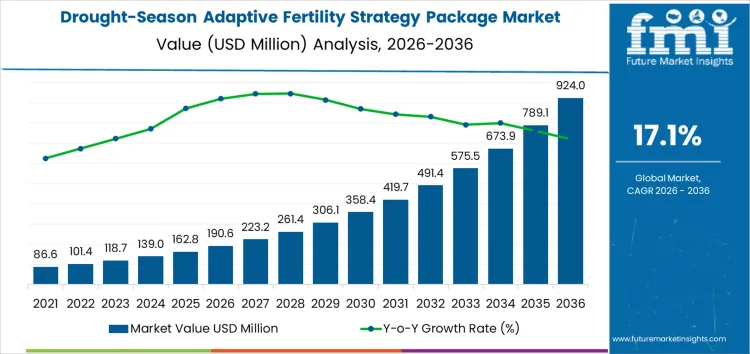
What is the Growth Forecast for the Drought-Season Adaptive Fertility Strategy Package Market through 2036?
The five-year growth analysis for the droug ht-season adaptive fertility strategy package market highlights a period of strong and accelerated growth followed by steady expansion as the technology matures. From 2026 to 2031, the market will grow from USD 190.6 million to USD 435.4 million, representing a significant increase of USD 244.8 million over the first five years. This growth will be primarily driven by the growing urgency to adopt water-conserving agricultural practices in response to climate change. During this phase, farmers will increasingly seek adaptive fertility strategies to ensure optimal crop yields despite drought conditions.
In the second half of the decade, from 2031 to 2036, the market will continue to experience steady growth, rising from USD 435.4 million in 2031 to USD 924 million in 2036, reflecting an increase of USD 586.3 million. This phase will be marked by more widespread adoption as drought-season adaptive fertility strategies become an integral part of farming practices. The steady pace of growth during this period will be driven by the ongoing development of more efficient and cost-effective solutions, along with greater integration of technology to monitor and manage soil health during drought conditions. The five-year growth analysis shows a strong upward trend, fueled by both adoption and technological innovation, which will ensure the market remains on a solid growth path throughout the forecast period.
Drought-Season Adaptive Fertility Strategy Package Market Key Takeaways
| Metric | Value |
|---|---|
| Industry Sales Value (2026) | USD 190.6 million |
| Industry Forecast Value (2036) | USD 924 million |
| Industry Forecast CAGR (2026-2036) | 17.1% |
What Is Driving the Demand for Drought-Season Adaptive Fertility Strategy Package Market?
Historical demand for drought-season adaptive fertility strategies has been shaped by longstanding agricultural challenges of linking nutrient management with water scarcity and climate variability. Traditional fertilizer practices often applied nutrients on fixed schedules without accounting for soil moisture conditions or imminent dry spells, which contributed to inefficient nutrient uptake and heightened crop stress when water was limited. Agronomic research has shown that adaptive nutrient management improves resilience to climate extremes by enhancing soil structure and water retention and by aligning nutrient availability with critical plant growth stages, particularly under drought conditions. Integrated practices such as cover cropping and organic amendments have been used to increase water-holding capacity and nutrient cycling, helping crops withstand periods of limited rainfall. Scientific studies note that adaptive nutrient management is part of broader climate-smart agriculture approaches that aim to sustain productivity while coping with drought and other stressors. Farmers have also adjusted fertilizer application rates in anticipation of drought risk to reduce waste and avoid exacerbating water stress.
Future demand for drought-season adaptive fertility strategy packages is expected to grow as climate volatility and water scarcity become more central to agricultural risk management and decision support markets. The broader climate resilient agriculture market reached about USD 26.25 billion in 2024 and is projected to expand toward USD 61.50 billion by 2032 at roughly 11.23 % CAGR, reflecting rising adoption of adaptive technologies, precision tools, and data driven nutrient and water management solutions. Growth factors include integration of real-time soil moisture monitoring, weather-linked decision support, and tailored nutrient timing that help farmers adjust fertilizer use ahead of and during drought events. Precision agriculture technologies, sensors, and analytics facilitate optimized nutrient placement and timing in response to drought forecasts, enhancing nutrient use efficiency and reducing environmental losses. Regulatory and market incentives that encourage climate smart practices also support adoption of adaptive fertility toolkits. Challenges may include access to reliable weather data and digital infrastructure, variation in drought patterns across regions, and the need for user training to interpret adaptive recommendations effectively.
What are the Leading Segments in the Global Drought-Season Adaptive Fertility Strategy Package Market?
The global drought-season adaptive fertility strategy package market is segmented by application and channel. Among applications, standard leads the market, capturing 50% of the share, followed by premium, industrial, and other applications. Standard packages are favored due to their cost-effectiveness and applicability to a wide range of agricultural practices. On the channel side, direct sales dominate, holding 60% of the share, followed by retail, online, and distributor channels. Direct sales are preferred due to the personalized service, technical support, and tailored solutions they offer to farmers dealing with drought conditions.
What Drives the Growth of Standard Applications in the Drought-Season Adaptive Fertility Strategy Package Market?
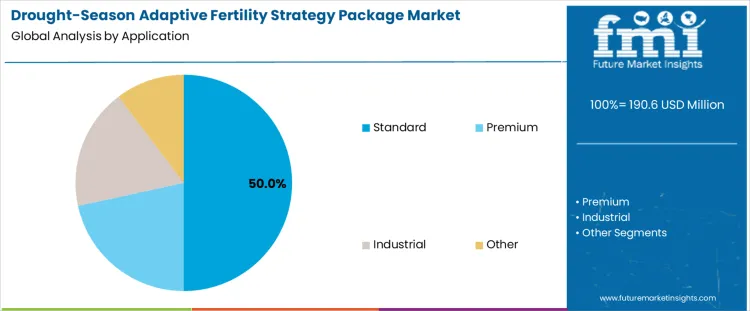
Standard applications are the leading segment in the drought-season adaptive fertility strategy package market, holding 50% of the share. This growth is driven by the widespread need for affordable, effective fertility solutions during drought conditions. Standard fertility strategy packages are designed to provide essential nutrients and improve soil health while minimizing water usage, which is crucial during dry periods.
These packages are accessible to a broad range of farmers, including those with small- to medium-scale operations, as they offer a balanced solution to sustain crops through challenging drought conditions without requiring high investments. As global climate variability increases and droughts become more frequent, the demand for cost-effective, adaptive fertility strategies is expected to grow, further driving the popularity of standard packages. These packages are an ideal choice for farmers looking to improve soil resilience and crop productivity while managing water scarcity, making them a dominant solution in the market.
What is Driving the Demand for Direct Sales in the Drought-Season Adaptive Fertility Strategy Package Market?
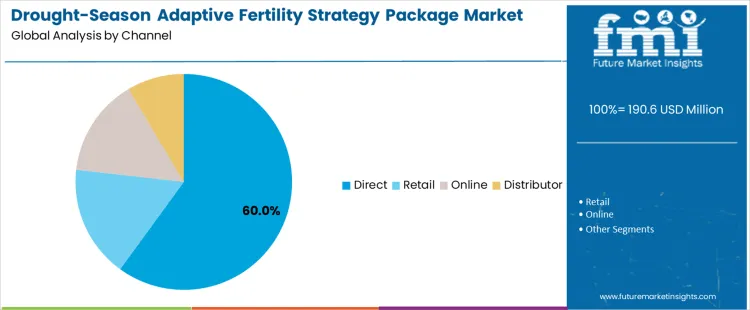
Direct sales are the leading channel in the drought-season adaptive fertility strategy package market, capturing 60% of the share. This demand is primarily driven by the personalized service and tailored solutions that direct sales channels provide. Farmers facing drought conditions often require specific advice and customized fertility strategies to suit their unique soil and crop needs. Direct sales enable companies to offer these personalized recommendations, ensuring that farmers receive the most appropriate fertility solutions.
Additionally, direct sales allow for stronger customer relationships and ongoing support, which is particularly valuable when implementing adaptive strategies during stressful agricultural periods like droughts. This channel also provides a more hands-on approach, where farmers can receive immediate feedback, updates on product effectiveness, and additional resources to optimize fertility programs. As the need for specialized, drought-resilient solutions grows, direct sales channels will continue to be a dominant force in providing drought-season adaptive fertility packages to farmers.
What are the Core Dynamics in the Drought-Season Adaptive Fertility Strategy Package Market?
The drought-season adaptive fertility strategy package market involves products and services designed to support nutrient management when soil moisture is limited. Packages integrate soil testing, tailored fertilizer placement, and timing to match crop needs under water stress. Growers evaluate solutions on nutrient efficiency, impact on crop yield, and compatibility with irrigation practices. Climate patterns that include prolonged dry periods influence adoption. Data on soil nutrient status and drought forecasts inform strategy design. Supply networks for specialty fertilizers and advisory support shape how packages are delivered to farms.
What are the Primary Drivers Supporting Growth in This Market?
Demand for adaptive fertility strategies rises with concerns about crop performance during drought conditions. Scientific research linking nutrient timing with water availability supports targeted inputs. Advances in soil moisture monitoring and predictive tools help tailor nutrient plans that aim to reduce losses and sustain crop yield. Farmers seek approaches that align fertilizer applications with plant uptake under stress. Regulatory guidelines on nutrient stewardship and water quality encourage efficient use of inputs. Expansion of advisory services that combine weather, soil, and crop data supports consideration of drought adaptive packages.
What Restraints Are Limiting Adoption and Market Expansion?
Cost pressures can limit uptake of drought-season adaptive fertility strategies, especially for smaller farms with tight budgets. Training and technical expertise are required to interpret soil test results and align nutrient plans with water stress conditions. Variability in soil type and crop response under drought leads to inconsistent results, which may reduce confidence. Access to reliable soil moisture data and predictive weather information varies by region and affects service value. Differences in local guidance and water use regulations create complexity for providers seeking to serve multiple markets.
What Emerging Trends Are Shaping the Future of This Market?
Emerging trends include integration of remote sensing and field sensors that track soil moisture and plant stress in real time. Digital tools that link nutrient plans with drought forecasts are supporting more precise decisions. Collaboration between agronomists, data scientists, and technology firms is producing models that estimate nutrient needs under dry conditions. There is increased use of slow-release and controlled-release fertilizer formulations intended to maintain nutrient availability when water is scarce. Programs that combine fertility strategy with irrigation scheduling are drawing interest from growers seeking to optimize inputs and maintain crop performance during drought seasons.
What is the Country-Wise Analysis of the Drought-Season Adaptive Fertility Strategy Package Market?
The drought-season adaptive fertility strategy package market is experiencing significant growth as agriculture faces increasing challenges from climate change, particularly droughts. These packages provide farmers with strategies and tools to optimize fertilizer use during dry periods, helping to improve soil health, retain moisture, and enhance crop productivity. Developed markets like the USA, Australia, and China are seeing strong demand for these adaptive solutions due to their focus on sustainable farming and resilience to climate variability. Emerging markets like India are also witnessing rapid growth as farmers seek to improve their productivity and minimize the impact of droughts. As the agricultural sector globally faces the effects of more frequent and intense droughts, the market for drought-season adaptive fertility strategy packages is expected to expand significantly.
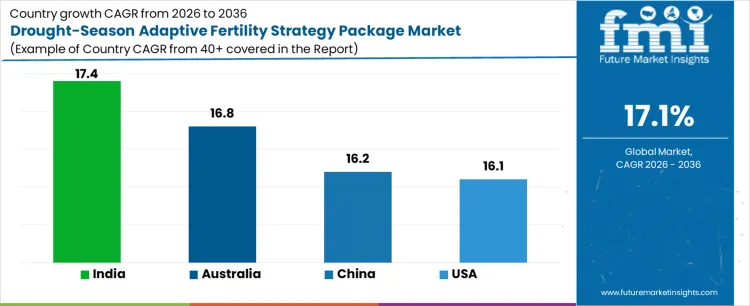
| Country | CAGR (2026-2036) |
|---|---|
| USA | 16.1% |
| India | 17.4% |
| Australia | 16.8% |
| China | 16.2% |
What is the Growth Outlook for the Drought-Season Adaptive Fertility Strategy Package Market in the USA?
The drought-season adaptive fertility strategy package market in the USA is expected to grow steadily, with a projected CAGR of 16.1% from 2026 to 2036. U.S. agriculture is facing increasing droughts and water scarcity issues, making efficient water and nutrient management crucial for maintaining crop yields. These adaptive fertility strategies, which help optimize fertilizer application during drought seasons, are gaining popularity among U.S. farmers as they seek to improve resilience to climate variability. With the U.S. government and agricultural institutions focusing on sustainable farming practices, the market for drought-season adaptive fertility strategies is expected to expand as farmers look for ways to mitigate the effects of water stress on crops. Continued support for precision agriculture and climate-smart solutions will further drive growth in this market.
What is the Market Outlook for the Drought-Season Adaptive Fertility Strategy Package Market in India?
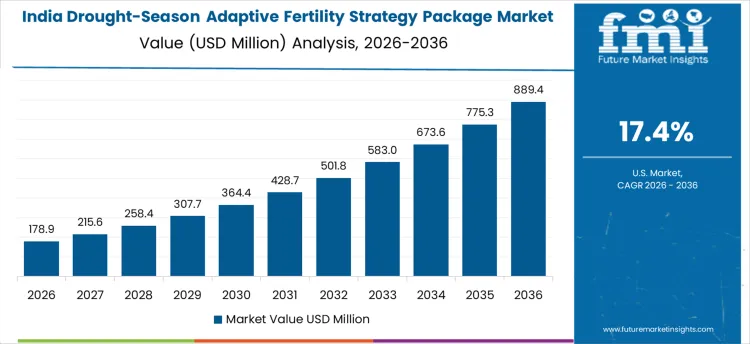
India is projected to experience the highest growth in the drought-season adaptive fertility strategy package market, with a projected CAGR of 17.4% from 2026 to 2036. India’s agricultural sector is heavily reliant on seasonal rainfall, and droughts have become more frequent and intense in recent years. As the country grapples with water scarcity and the need to optimize fertilizer use, drought-season adaptive fertility strategies are becoming essential. These packages help Indian farmers manage their crops more effectively during dry periods, ensuring better yields while conserving water and minimizing fertilizer waste. The Indian government’s push for sustainable agriculture, coupled with increasing awareness of climate change and its impact on farming, is expected to drive rapid growth in the market. As India continues to seek solutions for improving agricultural productivity under water stress conditions, the market for adaptive fertility strategies is poised for strong expansion.
What is the Growth Forecast for the Drought-Season Adaptive Fertility Strategy Package Market in Australia?
Australia is expected to experience strong growth in the drought-season adaptive fertility strategy package market, with a projected CAGR of 16.8% from 2026 to 2036. Australia is no stranger to drought, with farming communities increasingly focusing on water conservation and sustainable practices to maintain productivity during dry seasons. The country’s agricultural sector is highly vulnerable to climate change, particularly in regions prone to drought, which has led to an increased demand for adaptive fertility solutions. These packages offer farmers strategies to apply fertilizers efficiently during droughts, helping to minimize nutrient loss while supporting crop health. With the Australian government’s emphasis on climate adaptation and sustainability in farming, the demand for drought-season adaptive fertility strategies is expected to grow steadily, offering a crucial solution to improve farm resilience to water scarcity.
What is the Market Outlook for the Drought-Season Adaptive Fertility Strategy Package Market in China?
China is projected to experience steady growth in the drought-season adaptive fertility strategy package market, with a projected CAGR of 16.2% from 2026 to 2036. China’s vast agricultural base is increasingly being affected by drought conditions, which are impacting water availability for irrigation and overall crop productivity. The adoption of drought-season adaptive fertility strategies is gaining momentum as farmers seek to optimize fertilizer use during dry periods and improve crop resilience. These packages help farmers in China adjust their farming practices to better manage soil moisture, enhance nutrient uptake, and ensure better yields during droughts. The Chinese government’s support for sustainable agriculture and efforts to combat the effects of climate change will continue to drive the adoption of adaptive fertility strategies. As China continues to modernize its agricultural practices and improve water management, the market for these solutions is expected to grow steadily.
What are the Growth Prospects for the Drought-Season Adaptive Fertility Strategy Package Market Globally?
Globally, the drought-season adaptive fertility strategy package market is set to grow rapidly as the agricultural sector seeks solutions to cope with the increasing frequency of droughts and the impacts of climate change. Farmers worldwide are turning to adaptive fertility solutions that optimize nutrient use during droughts to improve crop productivity and water efficiency. These strategies help minimize nutrient loss, conserve water, and maintain soil health under water stress conditions. Governments, especially in regions prone to drought, are increasingly supporting sustainable farming practices and climate-smart solutions. With the global agricultural community increasingly prioritizing resilience and sustainability, the market for drought-season adaptive fertility strategies is expected to expand significantly, offering solutions to farmers in both developed and emerging markets.
What is the Competitive Landscape for the Drought-Season Adaptive Fertility Strategy Package Market?
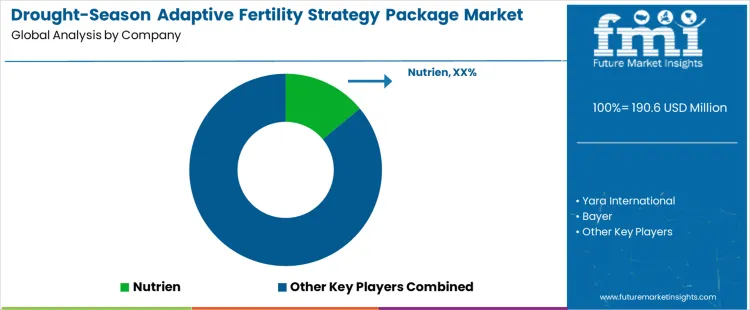
The drought-season adaptive fertility strategy package market is expanding as the agricultural industry seeks solutions to optimize fertilizer use and improve crop resilience during drought conditions. Nutrien leads the market with its innovative adaptive fertility strategies, offering tailored nutrient management solutions designed to maximize crop yield and minimize nutrient loss during periods of drought. Their focus on sustainability, precision agriculture, and improving nutrient efficiency has positioned them as a dominant player in this space. Yara International, Bayer, and Corteva are key competitors, each providing specialized fertility programs that help farmers manage nutrient needs in drought-prone areas. Yara International focuses on sustainable, efficient nutrient solutions that enhance drought resilience, while Bayer and Corteva offer advanced products and technologies aimed at improving crop performance and soil health during water scarcity.
Syngenta and BASF further contribute to the competitive landscape by offering their own drought-season adaptive fertility programs. Syngenta focuses on providing adaptive solutions that support crop health under stress conditions, while BASF delivers advanced products to optimize fertilizer use in drought scenarios. These companies compete by focusing on product innovation, sustainability, and the growing demand for nutrient management solutions that support farmers in coping with drought conditions. As climate change and water scarcity continue to challenge global agriculture, the market for drought-season adaptive fertility strategy packages is expected to grow, encouraging further innovation and competition in the sector.
Key Players of the Drought-Season Adaptive Fertility Strategy Package Market
- Nutrien
- Yara International
- Bayer
- Corteva
- Syngenta
- BASF
Scope of the Report
| Items | Values |
|---|---|
| Quantitative Units (2026) | USD million |
| Application | Standard, Premium, Industrial, Other |
| Form | Liquid, Solid, Gas, Gel |
| Channel | Direct, Retail, Online, Distributor |
| Companies | Nutrien, Yara International, Bayer, Corteva, Syngenta, BASF |
| Regions Covered | North America, Latin America, Western Europe, Eastern Europe, South Asia & Pacific, East Asia, Middle East & Africa |
| Countries Covered | United States, Canada, Mexico, Brazil, Argentina, Germany, France, United Kingdom, Italy, Spain, Netherlands, China, India, Japan, South Korea, ANZ, GCC Countries, South Africa |
| Additional Attributes | Dollar by sales by application, form, channel, and region. Includes analysis of market trends in drought-season adaptive fertility strategy packages adoption, performance across application segments and forms, cost and implementation drivers, regulatory and environmental considerations affecting drought adaptive fertility practices, adoption patterns among agricultural producers and advisors, market share and competitive positioning of key companies, innovations in adaptive fertility technologies, and evaluation of impact on nutrient use efficiency, crop performance under drought conditions, soil moisture management, and resilience outcomes. |
Drought-Season Adaptive Fertility Strategy Package Market Segmentation
Application:
- Standard
- Premium
- Industrial
- Other
Form:
- Liquid
- Solid
- Gas
- Gel
Channel:
- Direct
- Retail
- Online
- Distributor
Region:
- Asia Pacific
- China
- Japan
- South Korea
- India
- Australia & New Zealand
- ASEAN
- Rest of Asia Pacific
- Europe
- Germany
- United Kingdom
- France
- Italy
- Spain
- Nordic
- BENELUX
- Rest of Europe
- North America
- United States
- Canada
- Mexico
- Latin America
- Brazil
- Chile
- Rest of Latin America
- Middle East & Africa
- Kingdom of Saudi Arabia
- Other GCC Countries
- Turkey
- South Africa
- Other African Union
- Rest of Middle East & Africa
Frequently Asked Questions
How big is the drought-season adaptive fertility strategy package market in 2026?
The global drought-season adaptive fertility strategy package market is estimated to be valued at USD 190.6 million in 2026.
What will be the size of drought-season adaptive fertility strategy package market in 2036?
The market size for the drought-season adaptive fertility strategy package market is projected to reach USD 924.0 million by 2036.
How much will be the drought-season adaptive fertility strategy package market growth between 2026 and 2036?
The drought-season adaptive fertility strategy package market is expected to grow at a 17.1% CAGR between 2026 and 2036.
What are the key application types in the drought-season adaptive fertility strategy package market?
The key application types in drought-season adaptive fertility strategy package market are standard, premium, industrial and other.
Which channel segment will contribute significant share in the drought-season adaptive fertility strategy package market in 2026?
In terms of channel, direct sales segment to command 60.0% share in the drought-season adaptive fertility strategy package market in 2026.
Preview the report firsthand - request a free sample
Get SampleGet the brochure for pricing and purchase details.
Get PDFTable of Content
- Executive Summary
- Global Market Outlook
- Demand-side Trends
- Supply-side Trends
- Technology Roadmap Analysis
- Analysis and Recommendations
- Market Overview
- Market Coverage / Taxonomy
- Market Definition / Scope / Limitations
- Market Background
- Market Dynamics
- Drivers
- Restraints
- Opportunity
- Trends
- Scenario Forecast
- Demand in Optimistic Scenario
- Demand in Likely Scenario
- Demand in Conservative Scenario
- Opportunity Map Analysis
- Product Life Cycle Analysis
- Supply Chain Analysis
- Investment Feasibility Matrix
- Value Chain Analysis
- PESTLE and Porter’s Analysis
- Regulatory Landscape
- Regional Parent Market Outlook
- Production and Consumption Statistics
- Import and Export Statistics
- Market Dynamics
- Global Market Analysis 2021 to 2025 and Forecast, 2026 to 2036
- Historical Market Size Value (USD Million) Analysis, 2021 to 2025
- Current and Future Market Size Value (USD Million) Projections, 2026 to 2036
- Y-o-Y Growth Trend Analysis
- Absolute $ Opportunity Analysis
- Global Market Pricing Analysis 2021 to 2025 and Forecast 2026 to 2036
- Global Market Analysis 2021 to 2025 and Forecast 2026 to 2036, By Application
- Introduction / Key Findings
- Historical Market Size Value (USD Million) Analysis By Application , 2021 to 2025
- Current and Future Market Size Value (USD Million) Analysis and Forecast By Application , 2026 to 2036
- Standard
- Premium
- Industrial
- Other
- Standard
- Y-o-Y Growth Trend Analysis By Application , 2021 to 2025
- Absolute $ Opportunity Analysis By Application , 2026 to 2036
- Global Market Analysis 2021 to 2025 and Forecast 2026 to 2036, By Form
- Introduction / Key Findings
- Historical Market Size Value (USD Million) Analysis By Form, 2021 to 2025
- Current and Future Market Size Value (USD Million) Analysis and Forecast By Form, 2026 to 2036
- Liquid
- Solid
- Gas
- Gel
- Liquid
- Y-o-Y Growth Trend Analysis By Form, 2021 to 2025
- Absolute $ Opportunity Analysis By Form, 2026 to 2036
- Global Market Analysis 2021 to 2025 and Forecast 2026 to 2036, By Channel
- Introduction / Key Findings
- Historical Market Size Value (USD Million) Analysis By Channel, 2021 to 2025
- Current and Future Market Size Value (USD Million) Analysis and Forecast By Channel, 2026 to 2036
- Direct
- Retail
- Online
- Distributor
- Direct
- Y-o-Y Growth Trend Analysis By Channel, 2021 to 2025
- Absolute $ Opportunity Analysis By Channel, 2026 to 2036
- Global Market Analysis 2021 to 2025 and Forecast 2026 to 2036, By Region
- Introduction
- Historical Market Size Value (USD Million) Analysis By Region, 2021 to 2025
- Current Market Size Value (USD Million) Analysis and Forecast By Region, 2026 to 2036
- North America
- Latin America
- Western Europe
- Eastern Europe
- East Asia
- South Asia and Pacific
- Middle East & Africa
- Market Attractiveness Analysis By Region
- North America Market Analysis 2021 to 2025 and Forecast 2026 to 2036, By Country
- Historical Market Size Value (USD Million) Trend Analysis By Market Taxonomy, 2021 to 2025
- Market Size Value (USD Million) Forecast By Market Taxonomy, 2026 to 2036
- By Country
- USA
- Canada
- Mexico
- By Application
- By Form
- By Channel
- By Country
- Market Attractiveness Analysis
- By Country
- By Application
- By Form
- By Channel
- Key Takeaways
- Latin America Market Analysis 2021 to 2025 and Forecast 2026 to 2036, By Country
- Historical Market Size Value (USD Million) Trend Analysis By Market Taxonomy, 2021 to 2025
- Market Size Value (USD Million) Forecast By Market Taxonomy, 2026 to 2036
- By Country
- Brazil
- Chile
- Rest of Latin America
- By Application
- By Form
- By Channel
- By Country
- Market Attractiveness Analysis
- By Country
- By Application
- By Form
- By Channel
- Key Takeaways
- Western Europe Market Analysis 2021 to 2025 and Forecast 2026 to 2036, By Country
- Historical Market Size Value (USD Million) Trend Analysis By Market Taxonomy, 2021 to 2025
- Market Size Value (USD Million) Forecast By Market Taxonomy, 2026 to 2036
- By Country
- Germany
- UK
- Italy
- Spain
- France
- Nordic
- BENELUX
- Rest of Western Europe
- By Application
- By Form
- By Channel
- By Country
- Market Attractiveness Analysis
- By Country
- By Application
- By Form
- By Channel
- Key Takeaways
- Eastern Europe Market Analysis 2021 to 2025 and Forecast 2026 to 2036, By Country
- Historical Market Size Value (USD Million) Trend Analysis By Market Taxonomy, 2021 to 2025
- Market Size Value (USD Million) Forecast By Market Taxonomy, 2026 to 2036
- By Country
- Russia
- Poland
- Hungary
- Balkan & Baltic
- Rest of Eastern Europe
- By Application
- By Form
- By Channel
- By Country
- Market Attractiveness Analysis
- By Country
- By Application
- By Form
- By Channel
- Key Takeaways
- East Asia Market Analysis 2021 to 2025 and Forecast 2026 to 2036, By Country
- Historical Market Size Value (USD Million) Trend Analysis By Market Taxonomy, 2021 to 2025
- Market Size Value (USD Million) Forecast By Market Taxonomy, 2026 to 2036
- By Country
- China
- Japan
- South Korea
- By Application
- By Form
- By Channel
- By Country
- Market Attractiveness Analysis
- By Country
- By Application
- By Form
- By Channel
- Key Takeaways
- South Asia and Pacific Market Analysis 2021 to 2025 and Forecast 2026 to 2036, By Country
- Historical Market Size Value (USD Million) Trend Analysis By Market Taxonomy, 2021 to 2025
- Market Size Value (USD Million) Forecast By Market Taxonomy, 2026 to 2036
- By Country
- India
- ASEAN
- Australia & New Zealand
- Rest of South Asia and Pacific
- By Application
- By Form
- By Channel
- By Country
- Market Attractiveness Analysis
- By Country
- By Application
- By Form
- By Channel
- Key Takeaways
- Middle East & Africa Market Analysis 2021 to 2025 and Forecast 2026 to 2036, By Country
- Historical Market Size Value (USD Million) Trend Analysis By Market Taxonomy, 2021 to 2025
- Market Size Value (USD Million) Forecast By Market Taxonomy, 2026 to 2036
- By Country
- Kingdom of Saudi Arabia
- Other GCC Countries
- Turkiye
- South Africa
- Other African Union
- Rest of Middle East & Africa
- By Application
- By Form
- By Channel
- By Country
- Market Attractiveness Analysis
- By Country
- By Application
- By Form
- By Channel
- Key Takeaways
- Key Countries Market Analysis
- USA
- Pricing Analysis
- Market Share Analysis, 2025
- By Application
- By Form
- By Channel
- Canada
- Pricing Analysis
- Market Share Analysis, 2025
- By Application
- By Form
- By Channel
- Mexico
- Pricing Analysis
- Market Share Analysis, 2025
- By Application
- By Form
- By Channel
- Brazil
- Pricing Analysis
- Market Share Analysis, 2025
- By Application
- By Form
- By Channel
- Chile
- Pricing Analysis
- Market Share Analysis, 2025
- By Application
- By Form
- By Channel
- Germany
- Pricing Analysis
- Market Share Analysis, 2025
- By Application
- By Form
- By Channel
- UK
- Pricing Analysis
- Market Share Analysis, 2025
- By Application
- By Form
- By Channel
- Italy
- Pricing Analysis
- Market Share Analysis, 2025
- By Application
- By Form
- By Channel
- Spain
- Pricing Analysis
- Market Share Analysis, 2025
- By Application
- By Form
- By Channel
- France
- Pricing Analysis
- Market Share Analysis, 2025
- By Application
- By Form
- By Channel
- India
- Pricing Analysis
- Market Share Analysis, 2025
- By Application
- By Form
- By Channel
- ASEAN
- Pricing Analysis
- Market Share Analysis, 2025
- By Application
- By Form
- By Channel
- Australia & New Zealand
- Pricing Analysis
- Market Share Analysis, 2025
- By Application
- By Form
- By Channel
- China
- Pricing Analysis
- Market Share Analysis, 2025
- By Application
- By Form
- By Channel
- Japan
- Pricing Analysis
- Market Share Analysis, 2025
- By Application
- By Form
- By Channel
- South Korea
- Pricing Analysis
- Market Share Analysis, 2025
- By Application
- By Form
- By Channel
- Russia
- Pricing Analysis
- Market Share Analysis, 2025
- By Application
- By Form
- By Channel
- Poland
- Pricing Analysis
- Market Share Analysis, 2025
- By Application
- By Form
- By Channel
- Hungary
- Pricing Analysis
- Market Share Analysis, 2025
- By Application
- By Form
- By Channel
- Kingdom of Saudi Arabia
- Pricing Analysis
- Market Share Analysis, 2025
- By Application
- By Form
- By Channel
- Turkiye
- Pricing Analysis
- Market Share Analysis, 2025
- By Application
- By Form
- By Channel
- South Africa
- Pricing Analysis
- Market Share Analysis, 2025
- By Application
- By Form
- By Channel
- USA
- Market Structure Analysis
- Competition Dashboard
- Competition Benchmarking
- Market Share Analysis of Top Players
- By Regional
- By Application
- By Form
- By Channel
- Competition Analysis
- Competition Deep Dive
- Nutrien
- Overview
- Product Portfolio
- Profitability by Market Segments (Product/Age /Sales Channel/Region)
- Sales Footprint
- Strategy Overview
- Marketing Strategy
- Product Strategy
- Channel Strategy
- Yara International
- Bayer
- Corteva
- Syngenta
- BASF
- Nutrien
- Competition Deep Dive
- Assumptions & Acronyms Used
- Research Methodology


