

- Industry Size (2026): USD 119.1 Mn
- Forecast (2036):
- USD 801.2 Mn
- CAGR
- 21% (2026 to 2036)
Carbon-Credit Eligible Fertility Program Market Forecast and Outlook 2026 to 2036
The carbon-credit eligible fertility program market is valued at USD 119.1 million in 2026 and is expected to reach USD 801.2 million by 2036, reflecting a compound annual growth rate (CAGR) of 21%. While the market presents significant growth potential, execution risk remains a critical challenge. The complexity of integrating carbon-credit eligible systems with existing farming practices can create friction in adoption, particularly among farmers who are cautious of new, unproven technologies. Additionally, economic sensitivity could slow adoption, as fluctuating commodity prices and profit margins make upfront investments in these systems a more difficult decision. Even with increasing demand, the financial viability of carbon-credit programs will depend on market stability and the long-term value of credits themselves. Suppliers that can effectively manage these constraints—by offering scalable, cost-efficient solutions—will have a distinct advantage. As adoption becomes more widespread, however, competition will intensify, placing pressure on both pricing and product differentiation strategies.
Quick Stats of the Carbon-Credit Eligible Fertility Program Market
- Carbon-Credit Eligible Fertility Program Market Value (2026): USD 119.1 million
- Carbon-Credit Eligible Fertility Program Market Forecast Value (2036): USD 801.2 million
- Carbon-Credit Eligible Fertility Program Market Global Forecast CAGR (2026-2036): 21%
- Carbon-Credit Eligible Fertility Program Market Leading Segment: Channel (Direct) 60%
- Key Growth Regions in Carbon-Credit Eligible Fertility Program Market: Netherlands
- Top Players in Carbon-Credit Eligible Fertility Program Market: Nutrien, Yara International, Bayer, Corteva, BASF, Syngenta
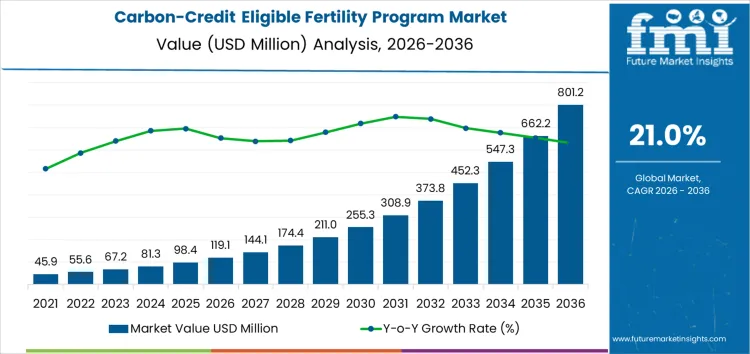
The growth contribution index for the carbon-credit eligible fertility program market highlights the key factors influencing the market's expansion, with both volume growth and technological innovation playing crucial roles. From 2026 to 2031, the market will experience significant volume growth, rising from USD 119.1 million to USD 310.3 million. This early-stage growth will be largely driven by increasing adoption of carbon-credit eligible fertility programs as farmers seek to reduce their environmental footprint and take advantage of carbon credit opportunities. During this period, regulatory incentives, government policies promoting sustainable farming practices, and growing awareness of agriculture’s role in climate change mitigation will push farmers toward adopting these programs. The market will also benefit from heightened consumer demand for sustainably produced food, further driving volume growth as more agricultural producers integrate carbon-conscious practices into their operations.
From 2031 to 2036, the contribution of technological innovation will become more pronounced, driving steady growth as the market matures. The market will expand from USD 310.3 million to USD 801.2 million during this phase. Technological advancements in nutrient management systems, carbon measurement, and the precision application of fertilizers will enhance the efficiency and effectiveness of these programs, increasing their appeal. As these technologies improve, the carbon-credit eligible fertility programs will become more cost-effective and accessible to a wider range of farmers, contributing to continued growth. This phase will see more predictable, sustained expansion as these innovations become integral to sustainable farming practices globally.
Carbon-Credit Eligible Fertility Program Market Key Takeaways
| Metric | Value |
|---|---|
| Industry Sales Value (2026) | USD 119.1 million |
| Industry Forecast Value (2036) | USD 801.2 million |
| Industry Forecast CAGR (2026-2036) | 21% |
What Is Driving the Demand for Carbon-Credit Eligible Fertility Program Market?
Historical demand for carbon credit eligible fertility programs stems from the increasing focus on climate change mitigation and sustainable agriculture practices that reduce greenhouse gas emissions or increase carbon sequestration in soil. Traditional fertilizer regimes have contributed to emissions of nitrous oxide and related gases, prompting research into nutrient management practices that enhance soil carbon storage while limiting emissions. Agricultural practices such as cover cropping, reduced tillage, and optimized nutrient use have been linked to higher soil organic carbon and lower emissions, creating a foundation for linking nutrient programs to measurable climate outcomes.
These practices first gained attention through academic and extension efforts focused on soil health and carbon sequestration, reinforcing the idea that managing fertility with regard to carbon dynamics can improve soil quality and contribute to broader environmental goals. Early carbon farming concepts framed soil carbon and emission reductions as assets that could potentially be quantified and valued, setting the stage for integrating soil fertility management into carbon credit frameworks.
Future demand for carbon credit eligible fertility programs is expected to be driven by the expanding voluntary agriculture carbon credit market, which was estimated at USD 53.8 million in 2025 and is projected to grow at an 31.9 % CAGR through 2034 as corporate, institutional, and supply chain actors seek verifiable carbon offsets from agricultural practices. Fertility programs that reduce nitrous oxide emissions, enhance soil organic carbon, and improve nutrient use efficiency can qualify for carbon credits under credible standards such as Verra’s Verified Carbon Standard (VCS) and the Gold Standard, provided robust measurement, reporting, and verification (MRV) supports the claimed outcomes. Key growth factors include rising corporate net zero commitments, regulatory and voluntary incentives for climate friendly farming, and development of MRV tools that quantify soil carbon gains and emission reductions linked to fertility management. Challenges include the need to align nutrient practices with verifiable carbon outcomes and to integrate these programs into existing carbon markets with standardized protocols. Continued expansion of carbon markets tied to agricultural practices that generate measurable climate benefits is expected to support broader adoption of carbon credit eligible fertility programs.
What are the Leading Segments in the Global Carbon-Credit Eligible Fertility Program Market?
The global carbon-credit eligible fertility program market is segmented by application and form. Among applications, standard leads the market, capturing 50% of the share, followed by premium, industrial, and other applications. Standard programs are the most widely used due to their accessibility and cost-effectiveness for various agricultural operations. On the form side, liquid fertilizers dominate the market, holding 45% of the share, followed by solid, gas, and gel forms. Liquid fertilizers are preferred for their ease of application, fast absorption, and compatibility with advanced agricultural techniques.
What Drives the Growth of Standard Applications in the Carbon-Credit Eligible Fertility Program Market?
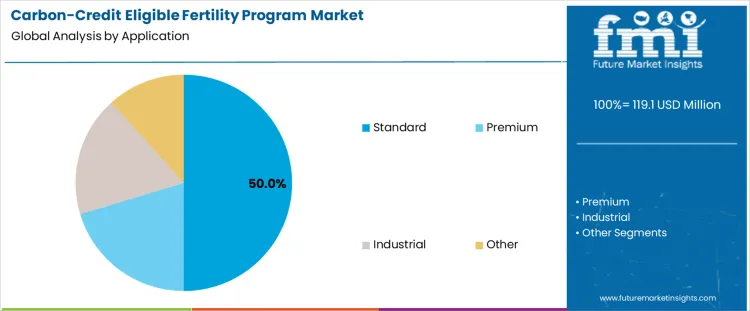
Standard applications are the leading segment in the carbon-credit eligible fertility program market, holding 50% of the share. This growth is largely driven by the broad adoption of standard fertility programs by a wide range of farmers who seek effective, cost-efficient solutions to improve crop yields while reducing environmental impacts. These programs are designed to optimize nutrient use and reduce greenhouse gas emissions, making them eligible for carbon credits. As the agricultural sector increasingly seeks to participate in carbon credit systems and sustainability initiatives, standard fertility programs offer a practical solution to integrate sustainable practices without significant upfront investment. The growth of carbon-credit schemes, which incentivize the adoption of sustainable farming practices, further accelerates the demand for standard carbon-credit eligible fertility programs, ensuring their dominant position in the market.
What is Driving the Demand for Liquid Fertilizers in the Carbon-Credit Eligible Fertility Program Market?
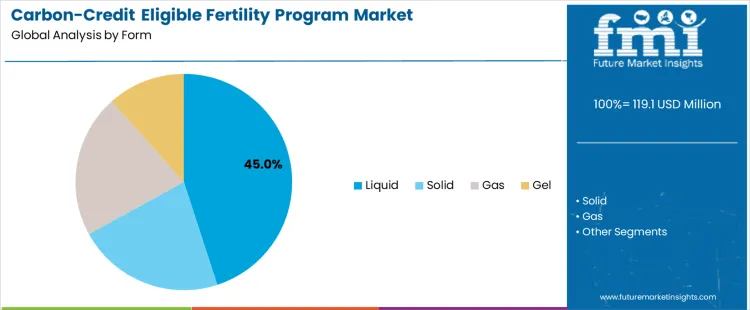
Liquid fertilizers are the leading form in the carbon-credit eligible fertility program market, capturing 45% of the share. This demand is driven by liquid fertilizers' ease of application and effectiveness in delivering nutrients directly to plants, promoting rapid absorption and growth. Liquid forms can be easily incorporated into advanced agricultural systems, such as drip irrigation or fertigation, making them highly efficient for large-scale farming operations. Moreover, liquid fertilizers provide more control over nutrient distribution, reducing waste and ensuring that plants receive the exact nutrients they need, which enhances both crop yields and environmental sustainability. As the agricultural industry continues to focus on sustainability and carbon credit eligibility, liquid fertilizers will remain a preferred choice for fertility programs aimed at reducing emissions and improving soil health. The ability to meet the precise nutrient needs of crops while contributing to carbon credit schemes makes liquid fertilizers a key driver of growth in this market.
What are the Key Dynamics in the Carbon-Credit Eligible Fertility Program Market?
The carbon credit eligible fertility program market involves soil nutrient management practices that generate measurable reductions in greenhouse gas emissions and qualify for carbon credit schemes. Programs integrate fertilizer choices, application timing, and soil practices to influence carbon and nitrogen cycles. Growers evaluate options based on nutrient use efficiency, emission outcomes, and potential revenue from carbon credits. Regulatory frameworks for carbon markets and agricultural reporting influence adoption. Data measurement systems and verification protocols are central to determining eligibility. The interaction of agronomy, environmental compliance, and market incentives shapes program uptake.
What are the Main Drivers Supporting Growth in the Market?
Demand for climate smart agriculture practices drives growth in this market. Policy emphasis on reducing carbon intensity in food systems encourages adoption of fertility programs that can produce credits. Advances in soil testing, greenhouse gas monitoring, and data analytics support accurate measurement of emission changes linked to nutrient management. Growers seek ways to enhance nutrient use efficiency while capturing economic value from carbon markets. Corporate supply chain commitments to low carbon inputs are increasing interest in verified programs. Expansion of carbon registries and incentive structures that recognize soil and fertilizer linked emission reductions supports broader participation.
What Restraints Are Limiting Market Expansion?
Complexity of carbon credit verification and registration processes can limit market expansion. Measurement of soil carbon changes and nitrous oxide fluxes requires specialized tools and expertise, creating barriers for some growers. Costs associated with data collection, reporting, and third party verification reduce net economic benefit for participants. Variability in soil type, climate, and cropping systems leads to inconsistent outcomes, complicating standardized program design. Differences in carbon market rules and eligibility criteria across regions add administrative challenges for program developers and end users.
What Emerging Trends Are Shaping the Future of the Market?
Emerging trends include increased integration of digital tools for soil nutrient mapping, greenhouse gas estimation, and real time data capture. Adoption of decision support systems that link fertilizer regimes with carbon outcome models is growing. Collaboration among agricultural advisors, technology providers, and carbon market platforms is expanding to streamline program entry and reporting. Research on fertilizer formulations and application protocols that influence soil carbon sequestration and emission pathways is advancing. Interest in bundled ecosystem service credits that combine carbon with soil health metrics is influencing how programs are structured and marketed.
What is the Country-Wise Analysis of the Carbon-Credit Eligible Fertility Program Market?
The carbon-credit eligible fertility program market is witnessing strong growth due to the increasing demand for sustainable agricultural practices that can contribute to carbon emission reductions. These programs provide farmers with incentives, such as carbon credits, for implementing practices that sequester carbon and reduce emissions, including efficient fertilizer management. The adoption of carbon-credit eligible fertility programs is growing globally as the agricultural sector seeks to align with climate goals and reduce its environmental impact. Developed markets like the Netherlands, Germany, and the U.S. are seeing steady growth driven by government incentives, sustainability initiatives, and the financial benefits of participating in carbon credit schemes. Emerging markets such as China are also witnessing rapid growth, as the country focuses on improving agricultural sustainability and reducing carbon emissions. As the focus on carbon neutrality intensifies globally, the market for carbon-credit eligible fertility programs is expected to expand significantly across both developed and emerging markets.
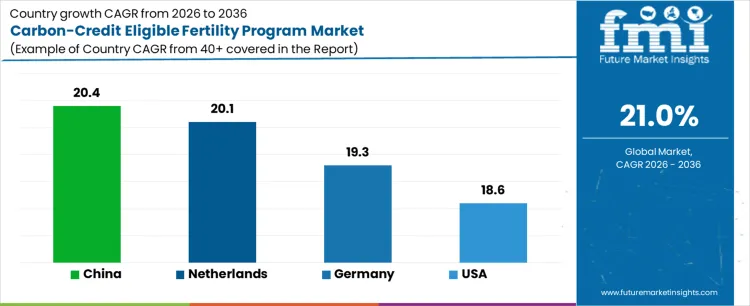
| Country | CAGR (2026-2036) |
|---|---|
| Netherlands | 20.1% |
| Germany | 19.3% |
| U.S. | 18.6% |
| China | 20.4% |
What is the Growth Outlook for the Carbon-Credit Eligible Fertility Program Market in the Netherlands?
The carbon-credit eligible fertility program market in the Netherlands is projected to experience robust growth, with a projected CAGR of 20.1% from 2026 to 2036. As one of the global leaders in sustainability, the Netherlands has been at the forefront of adopting environmentally responsible agricultural practices. Dutch farmers are increasingly participating in carbon-credit schemes to meet sustainability goals, improve soil health, and reduce carbon emissions from their farming operations. The Dutch government supports these initiatives through policies aimed at promoting sustainable farming and reducing the agricultural sector’s carbon footprint. The country’s focus on circular economy principles and sustainable agriculture is expected to drive the adoption of carbon-credit eligible fertility programs. As awareness of the financial benefits and environmental impact of carbon credits grows, the Netherlands is expected to continue leading the market in this innovative sector.
What is the Market Outlook for the Carbon-Credit Eligible Fertility Program Market in Germany?
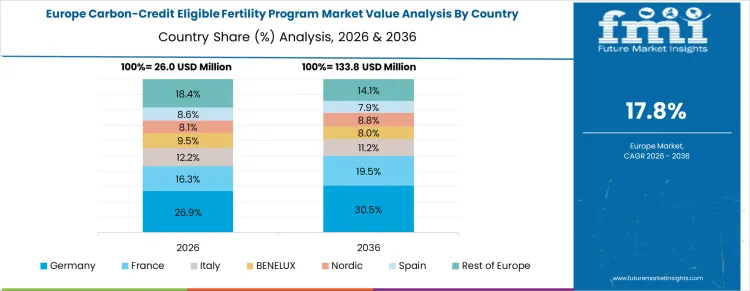
Germany is expected to see steady growth in the carbon-credit eligible fertility program market, with a projected CAGR of 19.3% from 2026 to 2036. As a leader in environmental sustainability, Germany’s agricultural sector is increasingly adopting practices that reduce carbon emissions and improve soil health. Carbon-credit eligible fertility programs provide German farmers with financial incentives for implementing sustainable agricultural practices, such as optimized fertilizer use and carbon sequestration techniques. Germany’s strong regulatory framework promoting climate action and sustainable farming practices, along with growing consumer demand for environmentally friendly products, will drive the continued adoption of these programs. The market is expected to grow as more farmers participate in carbon credit programs, contributing to Germany’s overall climate goals and enhancing the financial viability of sustainable farming practices.
What is the Growth Forecast for the Carbon-Credit Eligible Fertility Program Market in the USA?
The carbon-credit eligible fertility program market in the U.S. is projected to grow steadily, with a projected CAGR of 18.6% from 2026 to 2036. In the U.S., the agricultural sector is increasingly focused on sustainability, and carbon-credit programs are seen as an effective way to reduce the environmental impact of farming while providing financial benefits to farmers. The U.S. government has introduced policies and incentives to support carbon emissions reduction, making participation in carbon-credit eligible fertility programs attractive to farmers. These programs promote sustainable fertilizer management and improved soil practices, helping farmers mitigate climate change and contribute to the country’s carbon reduction goals. As the demand for environmentally responsible farming practices continues to rise, the U.S. market for carbon-credit eligible fertility programs is expected to experience steady growth in the coming years.
What is the Market Outlook for the Carbon-Credit Eligible Fertility Program Market in China?
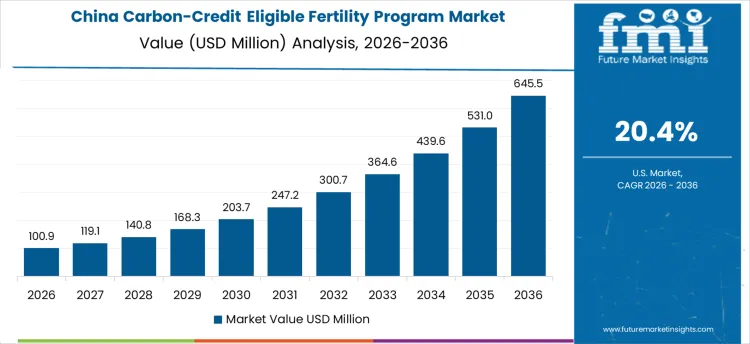
China is expected to experience the highest growth in the carbon-credit eligible fertility program market, with a projected CAGR of 20.4% from 2026 to 2036. As the world’s largest agricultural producer and one of the largest emitters of carbon, China is increasingly focused on reducing its carbon footprint and promoting sustainable agricultural practices. Carbon-credit eligible fertility programs are gaining traction as China seeks to improve the environmental sustainability of its agricultural sector and reduce emissions from fertilizer use. The Chinese government is promoting green farming practices, including carbon sequestration and optimized fertilizer use, to meet its climate goals. With strong government support and a growing awareness of the financial incentives available through carbon credits, China’s market for carbon-credit eligible fertility programs is expected to experience rapid growth, contributing to the country’s efforts to reduce carbon emissions and promote sustainable farming practices.
What are the Growth Prospects for the Carbon-Credit Eligible Fertility Program Market Globally?
Globally, the carbon-credit eligible fertility program market is poised for significant growth. As the agricultural industry seeks ways to reduce its environmental impact and contribute to global climate goals, carbon-credit programs are becoming a key tool for achieving sustainability in farming. These programs offer farmers financial incentives for adopting practices that reduce carbon emissions and enhance soil health, such as efficient fertilizer use and carbon sequestration. The increasing global emphasis on reducing greenhouse gas emissions, along with the financial benefits of participating in carbon credit schemes, is expected to drive the adoption of these programs worldwide. The market will be supported by government policies, international climate agreements, and the growing recognition of agriculture’s role in mitigating climate change. As both developed and emerging economies invest in sustainable farming solutions, the global market for carbon-credit eligible fertility programs is set to expand rapidly.
What is the Competitive Landscape for the Carbon-Credit Eligible Fertility Program Market?
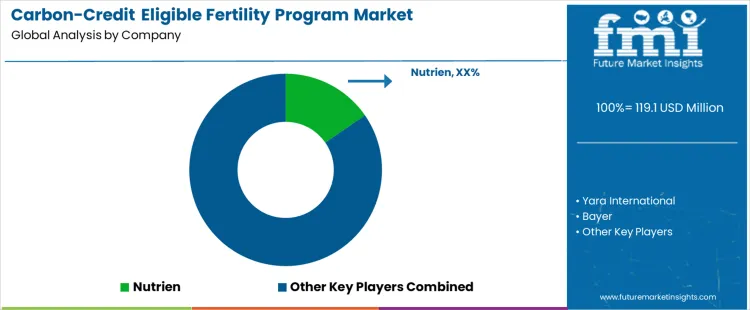
The carbon-credit eligible fertility program market is growing rapidly as the agricultural industry embraces sustainability and looks for ways to reduce carbon emissions while improving soil health and crop productivity. Nutrien leads the market with its innovative carbon-credit eligible fertility programs, offering solutions that help farmers reduce greenhouse gas emissions and earn carbon credits through sustainable farming practices. Their commitment to environmental stewardship, sustainability, and regulatory compliance has positioned them as a dominant player. Yara International, Bayer, and Corteva are key competitors, each providing specialized fertilizers and nutrient management programs aimed at minimizing emissions and enabling farmers to participate in carbon credit programs. Yara International focuses on reducing the environmental footprint of agricultural practices through advanced nutrient management, while Bayer and Corteva offer products that support sustainable farming and carbon sequestration efforts.
BASF and Syngenta further contribute to the competitive landscape by offering their own carbon-credit eligible fertility programs. BASF focuses on providing solutions that enhance soil health and optimize nutrient use, while Syngenta develops innovative products to support carbon reduction goals in agriculture. These companies compete by focusing on innovation, sustainability, and the ability to meet the growing demand for solutions that reduce carbon emissions and support environmentally responsible farming. As the agriculture industry increasingly integrates sustainability and carbon reduction into its practices, the market for carbon-credit eligible fertility programs is expected to expand, driving further competition and innovation in the sector.
Key Players of the Carbon-Credit Eligible Fertility Program Market
- Nutrien
- Yara International
- Bayer
- Corteva
- BASF
- Syngenta
Scope of the Report
| Items | Values |
|---|---|
| Quantitative Units (2026) | USD million |
| Application | Standard, Premium, Industrial, Other |
| Form | Liquid, Solid, Gas, Gel |
| Channel | Direct, Retail, Online, Distributor |
| Companies | Nutrien, Yara International, Bayer, Corteva, BASF, Syngenta |
| Regions Covered | North America, Latin America, Western Europe, Eastern Europe, South Asia & Pacific, East Asia, Middle East & Africa |
| Countries Covered | United States, Canada, Mexico, Brazil, Argentina, Germany, France, United Kingdom, Italy, Spain, Netherlands, China, India, Japan, South Korea, ANZ, GCC Countries, South Africa |
| Additional Attributes | Dollar by sales by application, form, channel, and region. Includes analysis of market dynamics in carbon-credit eligible fertility programs adoption, performance across application segments and forms, cost and implementation factors, regulatory and carbon credit frameworks and eligibility criteria, adoption trends among agricultural producers and industrial users, market share and competitive positioning of key companies, innovations in fertility program technologies supporting carbon credit outcomes, and evaluation of impact on soil health, nutrient use efficiency, greenhouse gas mitigation, and economic incentives linked to carbon credit generation. |
Carbon-Credit Eligible Fertility Program Market Segmentation
Application:
- Standard
- Premium
- Industrial
- Other
Form:
- Liquid
- Solid
- Gas
- Gel
Channel:
- Industry Size (2026):
- Forecast (2036):
- CAGR: (2026 to 2036)
- Direct
- Retail
- Online
- Distributor
Region:
- Asia Pacific
- China
- Japan
- South Korea
- India
- Australia & New Zealand
- ASEAN
- Rest of Asia Pacific
- Europe
- Germany
- United Kingdom
- France
- Italy
- Spain
- Nordic
- BENELUX
- Rest of Europe
- North America
- United States
- Canada
- Mexico
- Latin America
- Brazil
- Chile
- Rest of Latin America
- Middle East & Africa
- Kingdom of Saudi Arabia
- Other GCC Countries
- Turkey
- South Africa
- Other African Union
- Rest of Middle East & Africa
Frequently Asked Questions
How big is the carbon-credit eligible fertility program market in 2026?
The global carbon-credit eligible fertility program market is estimated to be valued at USD 119.1 million in 2026.
What will be the size of carbon-credit eligible fertility program market in 2036?
The market size for the carbon-credit eligible fertility program market is projected to reach USD 801.2 million by 2036.
How much will be the carbon-credit eligible fertility program market growth between 2026 and 2036?
The carbon-credit eligible fertility program market is expected to grow at a 21.0% CAGR between 2026 and 2036.
What are the key application types in the carbon-credit eligible fertility program market?
The key application types in carbon-credit eligible fertility program market are standard, premium, industrial and other.
Which form segment will contribute significant share in the carbon-credit eligible fertility program market in 2026?
In terms of form, liquid segment to command 45.0% share in the carbon-credit eligible fertility program market in 2026.
Preview the report firsthand - request a free sample
Get SampleGet the brochure for pricing and purchase details.
Get PDFTable of Content
- Executive Summary
- Global Market Outlook
- Demand-side Trends
- Supply-side Trends
- Technology Roadmap Analysis
- Analysis and Recommendations
- Market Overview
- Market Coverage / Taxonomy
- Market Definition / Scope / Limitations
- Market Background
- Market Dynamics
- Drivers
- Restraints
- Opportunity
- Trends
- Scenario Forecast
- Demand in Optimistic Scenario
- Demand in Likely Scenario
- Demand in Conservative Scenario
- Opportunity Map Analysis
- Product Life Cycle Analysis
- Supply Chain Analysis
- Investment Feasibility Matrix
- Value Chain Analysis
- PESTLE and Porter’s Analysis
- Regulatory Landscape
- Regional Parent Market Outlook
- Production and Consumption Statistics
- Import and Export Statistics
- Market Dynamics
- Global Market Analysis 2021 to 2025 and Forecast, 2026 to 2036
- Historical Market Size Value (USD Million) Analysis, 2021 to 2025
- Current and Future Market Size Value (USD Million) Projections, 2026 to 2036
- Y-o-Y Growth Trend Analysis
- Absolute $ Opportunity Analysis
- Global Market Pricing Analysis 2021 to 2025 and Forecast 2026 to 2036
- Global Market Analysis 2021 to 2025 and Forecast 2026 to 2036, By Application
- Introduction / Key Findings
- Historical Market Size Value (USD Million) Analysis By Application , 2021 to 2025
- Current and Future Market Size Value (USD Million) Analysis and Forecast By Application , 2026 to 2036
- Standard
- Premium
- Industrial
- Other
- Standard
- Y-o-Y Growth Trend Analysis By Application , 2021 to 2025
- Absolute $ Opportunity Analysis By Application , 2026 to 2036
- Global Market Analysis 2021 to 2025 and Forecast 2026 to 2036, By Form
- Introduction / Key Findings
- Historical Market Size Value (USD Million) Analysis By Form, 2021 to 2025
- Current and Future Market Size Value (USD Million) Analysis and Forecast By Form, 2026 to 2036
- Liquid
- Solid
- Gas
- Gel
- Liquid
- Y-o-Y Growth Trend Analysis By Form, 2021 to 2025
- Absolute $ Opportunity Analysis By Form, 2026 to 2036
- Global Market Analysis 2021 to 2025 and Forecast 2026 to 2036, By Channel
- Introduction / Key Findings
- Historical Market Size Value (USD Million) Analysis By Channel, 2021 to 2025
- Current and Future Market Size Value (USD Million) Analysis and Forecast By Channel, 2026 to 2036
- Direct
- Retail
- Online
- Distributor
- Direct
- Y-o-Y Growth Trend Analysis By Channel, 2021 to 2025
- Absolute $ Opportunity Analysis By Channel, 2026 to 2036
- Global Market Analysis 2021 to 2025 and Forecast 2026 to 2036, By Region
- Introduction
- Historical Market Size Value (USD Million) Analysis By Region, 2021 to 2025
- Current Market Size Value (USD Million) Analysis and Forecast By Region, 2026 to 2036
- North America
- Latin America
- Western Europe
- Eastern Europe
- East Asia
- South Asia and Pacific
- Middle East & Africa
- Market Attractiveness Analysis By Region
- North America Market Analysis 2021 to 2025 and Forecast 2026 to 2036, By Country
- Historical Market Size Value (USD Million) Trend Analysis By Market Taxonomy, 2021 to 2025
- Market Size Value (USD Million) Forecast By Market Taxonomy, 2026 to 2036
- By Country
- USA
- Canada
- Mexico
- By Application
- By Form
- By Channel
- By Country
- Market Attractiveness Analysis
- By Country
- By Application
- By Form
- By Channel
- Key Takeaways
- Latin America Market Analysis 2021 to 2025 and Forecast 2026 to 2036, By Country
- Historical Market Size Value (USD Million) Trend Analysis By Market Taxonomy, 2021 to 2025
- Market Size Value (USD Million) Forecast By Market Taxonomy, 2026 to 2036
- By Country
- Brazil
- Chile
- Rest of Latin America
- By Application
- By Form
- By Channel
- By Country
- Market Attractiveness Analysis
- By Country
- By Application
- By Form
- By Channel
- Key Takeaways
- Western Europe Market Analysis 2021 to 2025 and Forecast 2026 to 2036, By Country
- Historical Market Size Value (USD Million) Trend Analysis By Market Taxonomy, 2021 to 2025
- Market Size Value (USD Million) Forecast By Market Taxonomy, 2026 to 2036
- By Country
- Germany
- UK
- Italy
- Spain
- France
- Nordic
- BENELUX
- Rest of Western Europe
- By Application
- By Form
- By Channel
- By Country
- Market Attractiveness Analysis
- By Country
- By Application
- By Form
- By Channel
- Key Takeaways
- Eastern Europe Market Analysis 2021 to 2025 and Forecast 2026 to 2036, By Country
- Historical Market Size Value (USD Million) Trend Analysis By Market Taxonomy, 2021 to 2025
- Market Size Value (USD Million) Forecast By Market Taxonomy, 2026 to 2036
- By Country
- Russia
- Poland
- Hungary
- Balkan & Baltic
- Rest of Eastern Europe
- By Application
- By Form
- By Channel
- By Country
- Market Attractiveness Analysis
- By Country
- By Application
- By Form
- By Channel
- Key Takeaways
- East Asia Market Analysis 2021 to 2025 and Forecast 2026 to 2036, By Country
- Historical Market Size Value (USD Million) Trend Analysis By Market Taxonomy, 2021 to 2025
- Market Size Value (USD Million) Forecast By Market Taxonomy, 2026 to 2036
- By Country
- China
- Japan
- South Korea
- By Application
- By Form
- By Channel
- By Country
- Market Attractiveness Analysis
- By Country
- By Application
- By Form
- By Channel
- Key Takeaways
- South Asia and Pacific Market Analysis 2021 to 2025 and Forecast 2026 to 2036, By Country
- Historical Market Size Value (USD Million) Trend Analysis By Market Taxonomy, 2021 to 2025
- Market Size Value (USD Million) Forecast By Market Taxonomy, 2026 to 2036
- By Country
- India
- ASEAN
- Australia & New Zealand
- Rest of South Asia and Pacific
- By Application
- By Form
- By Channel
- By Country
- Market Attractiveness Analysis
- By Country
- By Application
- By Form
- By Channel
- Key Takeaways
- Middle East & Africa Market Analysis 2021 to 2025 and Forecast 2026 to 2036, By Country
- Historical Market Size Value (USD Million) Trend Analysis By Market Taxonomy, 2021 to 2025
- Market Size Value (USD Million) Forecast By Market Taxonomy, 2026 to 2036
- By Country
- Kingdom of Saudi Arabia
- Other GCC Countries
- Turkiye
- South Africa
- Other African Union
- Rest of Middle East & Africa
- By Application
- By Form
- By Channel
- By Country
- Market Attractiveness Analysis
- By Country
- By Application
- By Form
- By Channel
- Key Takeaways
- Key Countries Market Analysis
- USA
- Pricing Analysis
- Market Share Analysis, 2025
- By Application
- By Form
- By Channel
- Canada
- Pricing Analysis
- Market Share Analysis, 2025
- By Application
- By Form
- By Channel
- Mexico
- Pricing Analysis
- Market Share Analysis, 2025
- By Application
- By Form
- By Channel
- Brazil
- Pricing Analysis
- Market Share Analysis, 2025
- By Application
- By Form
- By Channel
- Chile
- Pricing Analysis
- Market Share Analysis, 2025
- By Application
- By Form
- By Channel
- Germany
- Pricing Analysis
- Market Share Analysis, 2025
- By Application
- By Form
- By Channel
- UK
- Pricing Analysis
- Market Share Analysis, 2025
- By Application
- By Form
- By Channel
- Italy
- Pricing Analysis
- Market Share Analysis, 2025
- By Application
- By Form
- By Channel
- Spain
- Pricing Analysis
- Market Share Analysis, 2025
- By Application
- By Form
- By Channel
- France
- Pricing Analysis
- Market Share Analysis, 2025
- By Application
- By Form
- By Channel
- India
- Pricing Analysis
- Market Share Analysis, 2025
- By Application
- By Form
- By Channel
- ASEAN
- Pricing Analysis
- Market Share Analysis, 2025
- By Application
- By Form
- By Channel
- Australia & New Zealand
- Pricing Analysis
- Market Share Analysis, 2025
- By Application
- By Form
- By Channel
- China
- Pricing Analysis
- Market Share Analysis, 2025
- By Application
- By Form
- By Channel
- Japan
- Pricing Analysis
- Market Share Analysis, 2025
- By Application
- By Form
- By Channel
- South Korea
- Pricing Analysis
- Market Share Analysis, 2025
- By Application
- By Form
- By Channel
- Russia
- Pricing Analysis
- Market Share Analysis, 2025
- By Application
- By Form
- By Channel
- Poland
- Pricing Analysis
- Market Share Analysis, 2025
- By Application
- By Form
- By Channel
- Hungary
- Pricing Analysis
- Market Share Analysis, 2025
- By Application
- By Form
- By Channel
- Kingdom of Saudi Arabia
- Pricing Analysis
- Market Share Analysis, 2025
- By Application
- By Form
- By Channel
- Turkiye
- Pricing Analysis
- Market Share Analysis, 2025
- By Application
- By Form
- By Channel
- South Africa
- Pricing Analysis
- Market Share Analysis, 2025
- By Application
- By Form
- By Channel
- USA
- Market Structure Analysis
- Competition Dashboard
- Competition Benchmarking
- Market Share Analysis of Top Players
- By Regional
- By Application
- By Form
- By Channel
- Competition Analysis
- Competition Deep Dive
- Nutrien
- Overview
- Product Portfolio
- Profitability by Market Segments (Product/Age /Sales Channel/Region)
- Sales Footprint
- Strategy Overview
- Marketing Strategy
- Product Strategy
- Channel Strategy
- Yara International
- Bayer
- Corteva
- BASF
- Syngenta
- Nutrien
- Competition Deep Dive
- Assumptions & Acronyms Used
- Research Methodology


