

- Industry Size (2026)
- USD 1.3 Bn
- Forecast (2036)
- USD 3.8 Bn
- CAGR (2026 to 2036)
- 11%
Demand for Personalized Fertility Care Market Forecast and Outlook (2026 to 2036
The personalized fertility care market is expected to grow from USD 1.3 billion in 2026 to USD 3.8 billion by 2036, reflecting a compound annual growth rate (CAGR) of 11%. Personalized fertility care involves the use of advanced technologies, such as genetic testing, AI-driven fertility predictions, and personalized treatment plans, to improve outcomes in assisted reproductive technologies (ART) and fertility treatments. As more couples and individuals seek fertility solutions tailored to their unique genetic, lifestyle, and medical conditions, the demand for personalized care continues to rise.
The market is driven by increased awareness and the growing acceptance of personalized medicine in fertility treatments. As advancements in genetic testing, artificial intelligence, and data analytics continue to enhance the precision of fertility care, patients are able to access treatments that are better suited to their specific needs, improving success rates in ART procedures. The rising prevalence of infertility and delayed family planning are significant factors contributing to the demand for personalized fertility solutions, further fueling market growth.
Quick Stats for Personalized Fertility Care Market
- Personalized Fertility Care Market Value (2026): USD 1.3 billion
- Personalized Fertility Care Market Forecast Value (2036): USD 3.8 billion
- Personalized Fertility Care Market Global Forecast CAGR (2026 to 2036): 11%
- Top Application by Share in Personalized Fertility Care Market: Conception Assistance (50%)
- Key Growth Regions in Personalized Fertility Care Market: India, China, USA, UK, Germany
- Top Players in Personalized Fertility Care Market: Progyny, Modern Fertility, Kindbody, Flo Health, Invitae
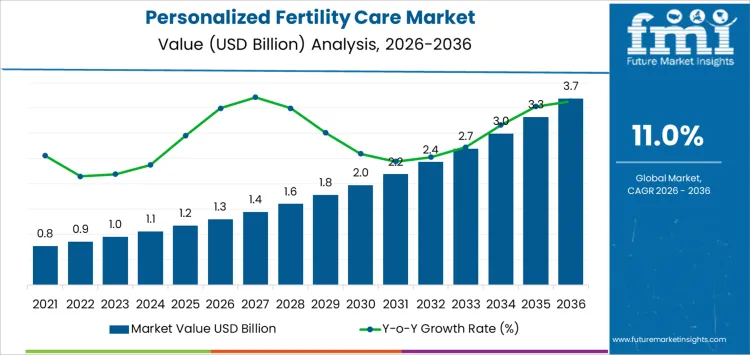
What is the Growth Forecast for the Personalized Fertility Care Market through 2036?
The growth rate volatility index for the personalized fertility care market indicates steady growth with moderate fluctuations throughout the forecast period. Starting at USD 1.3 billion in 2026, the market grows to USD 1.5 billion in 2027 and USD 1.6 billion in 2028, reflecting early adoption and increasing consumer interest in personalized fertility solutions.
From 2028 to 2030, the market shows a continued upward trend, reaching USD 1.8 billion in 2029 and USD 2.0 billion in 2030, as technological advancements in genetic testing, predictive analytics, and personalized treatment plans begin to yield more tangible benefits. Between 2030 and 2035, the market experiences an acceleration in growth, with the value reaching USD 2.2 billion in 2031, USD 2.5 billion in 2032, and USD 2.8 billion in 2033, as more patients opt for personalized care options.
By 2035, the market is projected to reach USD 3.4 billion, with the final market value of USD 3.8 billion expected in 2036. The growth rate volatility index suggests a stable, predictable increase in demand, with occasional acceleration driven by new technological innovations, growing market acceptance, and the continued demand for more effective, tailored fertility treatments. The overall market trajectory indicates strong and sustained growth in personalized fertility care solutions over the next decade.
Personalized Fertility Care Market Key Takeaways
| Metric | Value |
|---|---|
| Industry Sales Value (2026) | USD 1.3 billion |
| Industry Forecast Value (2036) | USD 3.8 billion |
| Industry Forecast CAGR (2026-2036) | 11% |
What Is Driving the Demand for the Personalized Fertility Care Market Globally?
The global demand for personalized fertility care is being driven by increasing prevalence of infertility, shifting reproductive patterns and greater emphasis on tailored health solutions. Rising maternal age at first conception, lifestyle factors, and awareness of reproductive health have contributed to higher utilisation of assisted reproductive technologies and fertility services. Traditional fertility care has often relied on standard protocols, but advances in genetics, hormonal profiling, and reproductive endocrinology have enabled more individualized assessment and treatment planning. Personalized fertility care uses patient specific data such as genetic markers, hormonal cycles, ovarian reserve, sperm quality and lifestyle factors to tailor interventions, optimise treatment timing, and enhance success rates. Growing acceptance of precision medicine across healthcare settings has encouraged fertility clinics, diagnostic laboratories and specialists to incorporate personalized diagnostics and treatment regimens, helping patients pursue targeted therapies rather than one size fits all approaches.
Future demand for personalized fertility care is expected to grow as technological capabilities and clinical evidence supporting tailored interventions expand. Innovations such as advanced reproductive imaging, artificial intelligence for treatment optimisation, and real time monitoring tools will further refine how care plans are designed and delivered. Improvements in genetic and biomarker testing will deepen understanding of individual reproductive profiles and outcomes, promoting more accurate predictions and personalised treatment pathways. As social trends such as delayed parenthood continue and desire for family building remains high, patients and providers will increasingly seek fertility solutions that offer higher efficacy, lower risk and better alignment with personal health goals. Access to fertility care may expand as telehealth, digital monitoring and remote consultation tools improve convenience and reach, particularly in markets with limited specialist availability. Regulatory frameworks that support personalised reproductive therapies, coupled with patient demand for transparency and outcome tracking, will shape how the market evolves. Long term growth will depend on integration of data analytics with clinical protocols, affordability of tailored services, and continued evidence demonstrating improved outcomes from personalized approaches relative to conventional fertility care.
What Are the Key Segments in Personalized Fertility Care Market?
The personalized fertility care market is segmented by product and application. Diagnostics & genomics leads the product segment with 40% of the market share, providing genetic and diagnostic tools to support personalized fertility treatments. Conception assistance dominates the application segment with 50%, reflecting the growing demand for customized fertility solutions. The market is expanding as advances in genetics, diagnostics, and digital technologies empower individuals and healthcare providers to create more tailored, effective fertility care plans.
Which Product Drives Personalized Fertility Care Market Demand Globally?
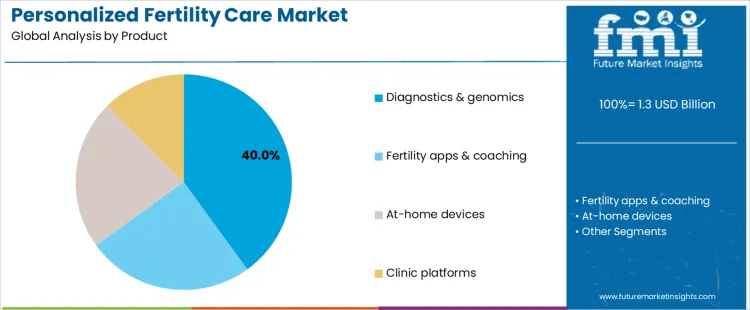
Diagnostics & genomics account for 40% of the market share. These tools play a crucial role in personalized fertility care by helping to identify genetic factors, hormonal imbalances, and other conditions that may impact fertility. Advanced diagnostic tests and genomic analysis enable healthcare providers to develop more targeted fertility treatments, improving success rates for individuals seeking conception assistance. As awareness of genetic testing grows and more couples opt for personalized care, demand for diagnostics and genomics in fertility treatment continues to rise. These tools provide essential insights into a person’s reproductive health, allowing for the development of customized fertility interventions based on individual needs, which drives the growth of this product segment.
Which Application Drives Personalized Fertility Care Market Demand Globally?
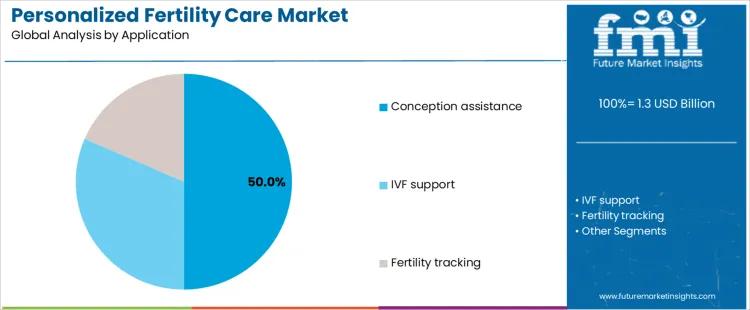
Conception assistance leads the application segment with 50% of the market share. This application focuses on providing tailored support for individuals and couples trying to conceive. With a growing number of fertility treatment options and a focus on personalized care, conception assistance addresses the specific needs of patients, considering factors like age, medical history, and genetic predispositions. Fertility apps, coaching, IVF support, and other technologies contribute to this segment by offering guidance and tracking services that enhance the chances of successful conception. The increasing demand for more effective, personalized fertility solutions, driven by advancements in diagnostics and digital platforms, continues to fuel growth in this application. While other applications such as IVF support, fertility tracking, and clinic platforms contribute to market expansion, conception assistance remains the dominant application due to its direct impact on helping individuals achieve pregnancy.
What are the Key Dynamics of the Global Personalized Fertility Care Market?
The global personalized fertility care market is growing as demand increases for tailored solutions that support reproductive health and fertility outcomes. Personalized approaches use data from genetics, hormones and lifestyle factors to guide treatment plans and improve success rates. Growth reflects rising infertility rates, increasing maternal age at first pregnancy and expansion of fertility clinics and diagnostic services. Technology and analytics enable clinicians to customise care pathways. Patients and providers are prioritising more precise, evidence driven fertility planning and treatment in clinical and assisted reproductive settings worldwide.
What are the Key Drivers for the Global Personalized Fertility Care Market?
Rising prevalence of infertility and delayed parenthood is encouraging use of personalised fertility services that adjust interventions based on individual biology. Advances in reproductive medicine, reproductive endocrinology and technology such as genetic screening, hormone profiling and imaging support more customised treatment strategies. Increased awareness and acceptance of fertility care, improved access to diagnostics and broader insurance coverage in some regions help uptake. Demand from patients seeking higher success rates and reduced treatment cycles motivates clinics to adopt data driven protocols. Expansion of fertility care networks and partnerships between healthcare providers and technology developers supports adoption of personalised solutions.
What are the Restraints for the Global Personalized Fertility Care Market?
One restraint is cost of personalised testing and treatment, which can limit access in markets without comprehensive insurance coverage or public funding. Clinics and providers may face challenges adopting advanced tools and data systems that support tailored care due to infrastructure and expertise requirements. Patient privacy and regulatory requirements for genetic and health data vary by region and require careful compliance planning. Differences in standards for fertility care and variation in availability of trained specialists influence how widely personalised approaches are used. Socio cultural barriers related to fertility treatment can also affect demand in some populations.
What is the Key Trends in the Global Personalized Fertility Care Market?
A key trend is integration of multi parameter data into clinical decision support systems that help customise protocols based on hormone patterns, genetics and reproductive history. Use of digital platforms that allow patients to track cycles, receive guidance and engage with care teams is increasing. Clinics are adopting advanced biomarkers and analytics to refine patient segmentation and optimise intervention timing. Collaboration between fertility specialists, biotech companies and digital health developers is expanding to create more holistic, personalised fertility care pathways. Growth of telemedicine and remote monitoring supports access to personalised fertility guidance beyond traditional clinic settings.
What is the Country-Wise Outlook for the Personalized Fertility Care Market?
The Personalized Fertility Care market is growing rapidly, driven by increasing awareness and demand for customized solutions that address individual fertility needs. Advances in reproductive medicine, genomics, and artificial intelligence (AI) are enabling personalized fertility treatments that improve the chances of conception and address specific fertility challenges. Countries like India, China, and the USA are leading the growth in this market due to rising infertility rates, changing societal norms around family planning, and increased acceptance of fertility treatments. In more developed regions such as the UK and Germany, the market is being driven by advancements in assisted reproductive technologies (ART), improved patient outcomes, and a growing focus on wellness and personalized healthcare. As more individuals and couples seek tailored fertility care to enhance their reproductive health, the demand for personalized fertility solutions is expected to grow, transforming the fertility care landscape globally.
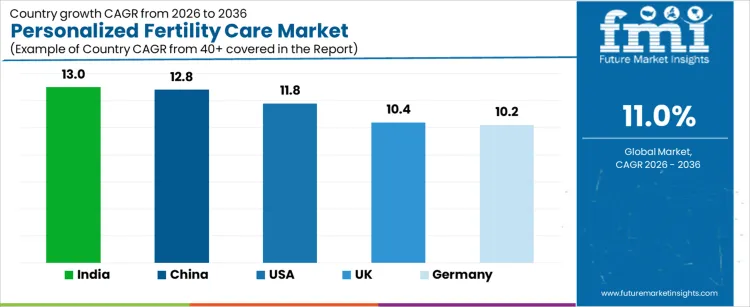
| Country | CAGR (2026 to2036) |
|---|---|
| India | 13% |
| China | 12.8% |
| USA | 11.8% |
| UK | 10.4% |
| Germany | 10.2% |
What is Driving the Growth of the Personalized Fertility Care Market in India?
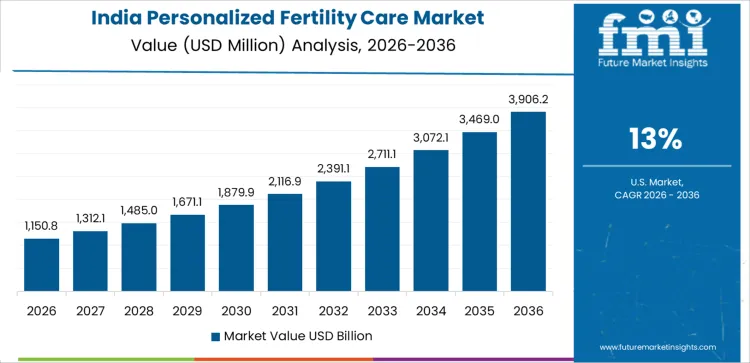
India’s Personalized Fertility Care market is projected to grow at a CAGR of 13%. The rapid rise in infertility rates, changing lifestyle factors, and delayed marriages are contributing to a growing demand for fertility treatments. With increasing awareness about reproductive health and advancements in assisted reproductive technologies (ART), Indian consumers are increasingly seeking personalized fertility solutions that cater to their specific health conditions. India’s growing middle class, rising disposable incomes, and expanding healthcare infrastructure are also driving the adoption of fertility treatments. Additionally, government initiatives to improve healthcare access and the increasing number of fertility clinics across urban and rural areas are expected to further accelerate the market’s growth. As consumers in India turn to more tailored healthcare solutions, the demand for personalized fertility care is expected to rise, making it a key area of growth in the country’s healthcare sector.
What is Contributing to the Growth of the Personalized Fertility Care Market in China?
China’s Personalized Fertility Care market is expected to grow at a CAGR of 12.8%. With an increasing focus on family planning and reproductive health, China is seeing a rise in demand for personalized fertility care services. Factors such as the country’s aging population, lifestyle changes, and rising infertility rates are driving the need for more customized fertility treatments. Furthermore, government policies and societal acceptance of ART are supporting the adoption of fertility services. The growing number of private fertility clinics, along with advancements in genomic testing and AI-driven fertility monitoring, is contributing to the market’s growth. China’s rapid development in healthcare technology and increased investments in reproductive health are expected to continue fueling the expansion of the personalized fertility care market. As the demand for tailored fertility solutions rises, this sector is likely to see significant growth in the coming years.
What is Driving the Personalized Fertility Care Market Growth in the USA?
The USA’s Personalized Fertility Care market is projected to grow at a CAGR of 11.8%. The increasing prevalence of infertility, coupled with greater societal acceptance of fertility treatments, is driving demand for more customized solutions. Advances in genomics, AI, and biotechnology have made it possible to offer highly personalized fertility care that is tailored to an individual’s unique genetic makeup and health conditions. The USA’s well-established healthcare infrastructure, high levels of healthcare spending, and increasing focus on improving patient outcomes are contributing to the growth of this market. Additionally, the demand for fertility preservation services, such as egg freezing and sperm banking, has further boosted the personalized fertility care market. With the growing trend of delayed parenthood and the desire for tailored fertility treatments, the market is expected to see continued growth in the USA.
What is Influencing the Growth of the Personalized Fertility Care Market in the UK?
The UK’s Personalized Fertility Care market is projected to grow at a CAGR of 10.4%. As more individuals and couples seek fertility treatments, the demand for personalized and precise care solutions is increasing. Advances in ART, such as in vitro fertilization (IVF), combined with personalized health assessments, are enabling better treatment outcomes. The UK’s healthcare system, supported by the National Health Service (NHS), is increasingly offering fertility treatments that focus on individualized care, which is driving market growth. Additionally, the increasing focus on women’s health and the rising acceptance of fertility preservation options, such as egg freezing, are contributing to the market’s expansion. As patients in the UK seek fertility treatments tailored to their specific needs, personalized fertility care is becoming an integral part of the healthcare system, leading to steady market growth.
What is Contributing to the Growth of the Personalized Fertility Care Market in Germany?
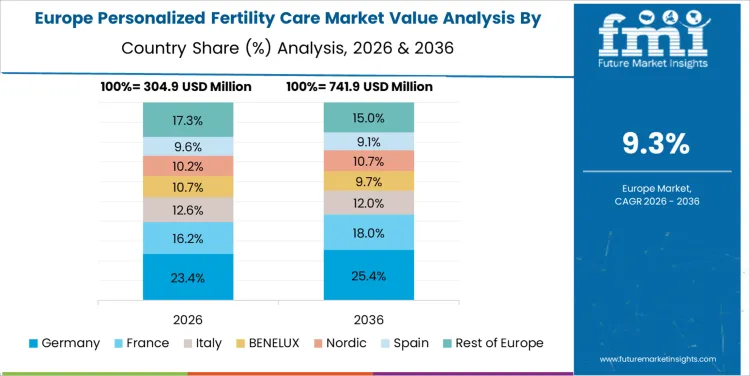
Germany’s Personalized Fertility Care market is expected to grow at a CAGR of 10.2%. The country’s growing interest in reproductive health, combined with the rise in infertility rates, is contributing to the demand for more personalized fertility treatments. Germany’s advanced healthcare system, which offers cutting-edge fertility technologies and services, is playing a crucial role in the market’s growth. The increasing availability of ART, along with genetic testing and AI-assisted fertility monitoring, is enabling more tailored and effective fertility care. The German government’s support for assisted reproductive treatments and fertility preservation is further driving the adoption of personalized fertility care. As the demand for individualized fertility solutions continues to grow, Germany’s market for personalized fertility care is expected to see consistent growth
What is the Competitive Landscape for the Personalized Fertility Care Market?
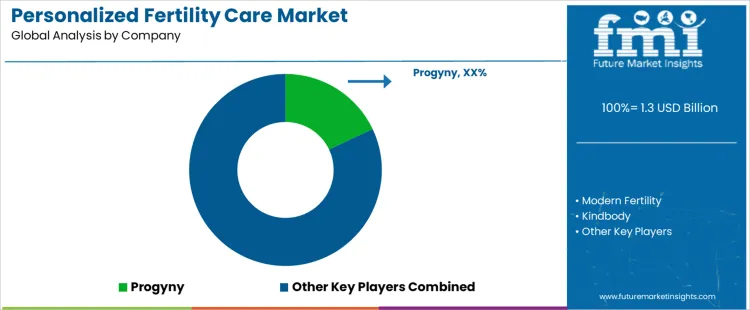
Global demand for personalized fertility care is rising as individuals and couples seek tailored solutions that reflect unique biological, genetic and lifestyle factors. Fertility rates, delayed parenthood trends and growing awareness of reproductive health contribute to increased uptake of diagnostics, hormone profiling, genetic screening, personalized treatment plans and digital fertility tracking. Clinics and care networks are investing in technologies that support data driven decision making, patient centric pathways and continuous monitoring to improve outcomes for in vitro fertilization, intrauterine insemination, egg freezing and related services. Growth in telehealth and direct to consumer reproductive health tools further expands reach to underserved geographies and demographic segments. Across North America, Europe and Asia Pacific fertility care providers are responding to rising demand for comprehensive, customized programs that integrate medical, emotional and lifestyle support.
Progyny is recognised as a leading player, known for its integrated fertility benefit management and tailored care coordination that helps employers, patients and providers navigate treatment journeys. Modern Fertility extends personalized care through accessible at home testing, hormone panels and education that empower individuals to understand reproductive health earlier. Kindbody combines clinic based services with digital tools, offering fertility assessments, personalized treatment planning and supportive care across multiple locations. Flo Health brings strength in mobile based cycle tracking and data driven insights that guide users toward personalized fertility recommendations. Invitae contributes advanced genetic testing and interpretation that informs individualized risk profiles and treatment planning. Others in the competitive landscape include startups and emerging service models that leverage artificial intelligence, real time monitoring and integrated care ecosystems. Competition among these providers centers on depth of personalization, quality of clinical support, integration of diagnostics with care pathways, ease of access and user experience. Companies that blend strong medical evidence, seamless digital engagement and supportive care services are best positioned to capture growth as demand for customized fertility solutions continues to expand.
Key Players of the Personalized Fertility Care Market
- Progyny
- Modern Fertility
- Kindbody
- Flo Health
- Invitae
- Others
Scope of the Report
| Items | Values |
|---|---|
| Quantitative Units (2026) | USD Billion |
| Product | Diagnostics & Genomics, Fertility Apps & Coaching, At-Home Devices, Clinic Platforms |
| Application | Conception Assistance, IVF Support, Fertility Tracking |
| End User | Clinics & IVF Centers, D2C (Direct to Consumer), Retail/Pharmacies, Telehealth |
| Companies | Progyny, Modern Fertility, Kindbody, Flo Health, Invitae, Others |
| Regions Covered | North America, Latin America, Western Europe, Eastern Europe, South Asia and Pacific, East Asia, Middle East & Africa |
| Countries Covered | United States, Canada, Mexico, Brazil, Argentina, Germany, France, United Kingdom, Italy, Spain, Netherlands, China, India, Japan, South Korea, ANZ, GCC Countries, South Africa |
| Additional Attributes | Dollar by sales by product, application, end-user, and region. Includes market trends in personalized fertility care products, performance in conception assistance, IVF support, and fertility tracking, cost-effectiveness, sustainability practices, regulatory compliance, market share and competitive positioning of key companies, and the role of personalized fertility care in improving outcomes, enhancing patient experience, and expanding access to fertility solutions through digital platforms and telehealth services. |
Personalized Fertility Care Market Segmentation
Product
- Diagnostics & genomics
- Fertility apps & coaching
- At-home devices
- Clinic platforms
Application
- Conception assistance
- IVF support
- Fertility tracking
End User
- Clinics & IVF centers
- D2C
- Retail/Pharmacies
- Telehealth
Region
- Asia Pacific
- China
- Japan
- South Korea
- India
- Australia & New Zealand
- ASEAN
- Rest of Asia Pacific
- Europe
- Germany
- United Kingdom
- France
- Italy
- Spain
- Nordic
- BENELUX
- Rest of Europe
- North America
- United States
- Canada
- Mexico
- Latin America
- Brazil
- Chile
- Rest of Latin America
- Middle East & Africa
- Kingdom of Saudi Arabia
- Other GCC Countries
- Turkey
- South Africa
- Other African Union
- Rest of Middle East & Africa
Frequently Asked Questions
How big is the personalized fertility care market in 2026?
The global personalized fertility care market is estimated to be valued at USD 1.3 billion in 2026.
What will be the size of personalized fertility care market in 2036?
The market size for the personalized fertility care market is projected to reach USD 3.7 billion by 2036.
How much will be the personalized fertility care market growth between 2026 and 2036?
The personalized fertility care market is expected to grow at a 11.0% CAGR between 2026 and 2036.
What are the key product types in the personalized fertility care market?
The key product types in personalized fertility care market are diagnostics & genomics, fertility apps & coaching, at-home devices and clinic platforms.
Which application segment to contribute significant share in the personalized fertility care market in 2026?
In terms of application, conception assistance segment to command 50.0% share in the personalized fertility care market in 2026.
Preview the report firsthand - request a free sample
Get SampleGet the brochure for pricing and purchase details.
Get PDFTable of Content
- Executive Summary
- Global Market Outlook
- Demand-side Trends
- Supply-side Trends
- Technology Roadmap Analysis
- Analysis and Recommendations
- Market Overview
- Market Coverage / Taxonomy
- Market Definition / Scope / Limitations
- Market Background
- Market Dynamics
- Drivers
- Restraints
- Opportunity
- Trends
- Scenario Forecast
- Demand in Optimistic Scenario
- Demand in Likely Scenario
- Demand in Conservative Scenario
- Opportunity Map Analysis
- Product Life Cycle Analysis
- Supply Chain Analysis
- Investment Feasibility Matrix
- Value Chain Analysis
- PESTLE and Porter’s Analysis
- Regulatory Landscape
- Regional Parent Market Outlook
- Production and Consumption Statistics
- Import and Export Statistics
- Market Dynamics
- Global Market Analysis 2021 to 2025 and Forecast, 2026 to 2036
- Historical Market Size Value (USD Million) Analysis, 2021 to 2025
- Current and Future Market Size Value (USD Million) Projections, 2026 to 2036
- Y-o-Y Growth Trend Analysis
- Absolute $ Opportunity Analysis
- Global Market Pricing Analysis 2021 to 2025 and Forecast 2026 to 2036
- Global Market Analysis 2021 to 2025 and Forecast 2026 to 2036, By Product
- Introduction / Key Findings
- Historical Market Size Value (USD Million) Analysis By Product , 2021 to 2025
- Current and Future Market Size Value (USD Million) Analysis and Forecast By Product , 2026 to 2036
- Diagnostics & genomics
- Fertility apps & coaching
- At-home devices
- Clinic platforms
- Y-o-Y Growth Trend Analysis By Product , 2021 to 2025
- Absolute $ Opportunity Analysis By Product , 2026 to 2036
- Global Market Analysis 2021 to 2025 and Forecast 2026 to 2036, By Application
- Introduction / Key Findings
- Historical Market Size Value (USD Million) Analysis By Application, 2021 to 2025
- Current and Future Market Size Value (USD Million) Analysis and Forecast By Application, 2026 to 2036
- Conception assistance
- IVF support
- Fertility tracking
- Y-o-Y Growth Trend Analysis By Application, 2021 to 2025
- Absolute $ Opportunity Analysis By Application, 2026 to 2036
- Global Market Analysis 2021 to 2025 and Forecast 2026 to 2036, By End User
- Introduction / Key Findings
- Historical Market Size Value (USD Million) Analysis By End User, 2021 to 2025
- Current and Future Market Size Value (USD Million) Analysis and Forecast By End User, 2026 to 2036
- Clinics & IVF centers
- D2C
- Retail/Pharmacies
- Telehealth
- Y-o-Y Growth Trend Analysis By End User, 2021 to 2025
- Absolute $ Opportunity Analysis By End User, 2026 to 2036
- Global Market Analysis 2021 to 2025 and Forecast 2026 to 2036, By Region
- Introduction
- Historical Market Size Value (USD Million) Analysis By Region, 2021 to 2025
- Current Market Size Value (USD Million) Analysis and Forecast By Region, 2026 to 2036
- North America
- Latin America
- Western Europe
- Eastern Europe
- East Asia
- South Asia and Pacific
- Middle East & Africa
- Market Attractiveness Analysis By Region
- North America Market Analysis 2021 to 2025 and Forecast 2026 to 2036, By Country
- Historical Market Size Value (USD Million) Trend Analysis By Market Taxonomy, 2021 to 2025
- Market Size Value (USD Million) Forecast By Market Taxonomy, 2026 to 2036
- By Country
- USA
- Canada
- Mexico
- By Product
- By Application
- By End User
- By Country
- Market Attractiveness Analysis
- By Country
- By Product
- By Application
- By End User
- Key Takeaways
- Latin America Market Analysis 2021 to 2025 and Forecast 2026 to 2036, By Country
- Historical Market Size Value (USD Million) Trend Analysis By Market Taxonomy, 2021 to 2025
- Market Size Value (USD Million) Forecast By Market Taxonomy, 2026 to 2036
- By Country
- Brazil
- Chile
- Rest of Latin America
- By Product
- By Application
- By End User
- By Country
- Market Attractiveness Analysis
- By Country
- By Product
- By Application
- By End User
- Key Takeaways
- Western Europe Market Analysis 2021 to 2025 and Forecast 2026 to 2036, By Country
- Historical Market Size Value (USD Million) Trend Analysis By Market Taxonomy, 2021 to 2025
- Market Size Value (USD Million) Forecast By Market Taxonomy, 2026 to 2036
- By Country
- Germany
- UK
- Italy
- Spain
- France
- Nordic
- BENELUX
- Rest of Western Europe
- By Product
- By Application
- By End User
- By Country
- Market Attractiveness Analysis
- By Country
- By Product
- By Application
- By End User
- Key Takeaways
- Eastern Europe Market Analysis 2021 to 2025 and Forecast 2026 to 2036, By Country
- Historical Market Size Value (USD Million) Trend Analysis By Market Taxonomy, 2021 to 2025
- Market Size Value (USD Million) Forecast By Market Taxonomy, 2026 to 2036
- By Country
- Russia
- Poland
- Hungary
- Balkan & Baltic
- Rest of Eastern Europe
- By Product
- By Application
- By End User
- By Country
- Market Attractiveness Analysis
- By Country
- By Product
- By Application
- By End User
- Key Takeaways
- East Asia Market Analysis 2021 to 2025 and Forecast 2026 to 2036, By Country
- Historical Market Size Value (USD Million) Trend Analysis By Market Taxonomy, 2021 to 2025
- Market Size Value (USD Million) Forecast By Market Taxonomy, 2026 to 2036
- By Country
- China
- Japan
- South Korea
- By Product
- By Application
- By End User
- By Country
- Market Attractiveness Analysis
- By Country
- By Product
- By Application
- By End User
- Key Takeaways
- South Asia and Pacific Market Analysis 2021 to 2025 and Forecast 2026 to 2036, By Country
- Historical Market Size Value (USD Million) Trend Analysis By Market Taxonomy, 2021 to 2025
- Market Size Value (USD Million) Forecast By Market Taxonomy, 2026 to 2036
- By Country
- India
- ASEAN
- Australia & New Zealand
- Rest of South Asia and Pacific
- By Product
- By Application
- By End User
- By Country
- Market Attractiveness Analysis
- By Country
- By Product
- By Application
- By End User
- Key Takeaways
- Middle East & Africa Market Analysis 2021 to 2025 and Forecast 2026 to 2036, By Country
- Historical Market Size Value (USD Million) Trend Analysis By Market Taxonomy, 2021 to 2025
- Market Size Value (USD Million) Forecast By Market Taxonomy, 2026 to 2036
- By Country
- Kingdom of Saudi Arabia
- Other GCC Countries
- Turkiye
- South Africa
- Other African Union
- Rest of Middle East & Africa
- By Product
- By Application
- By End User
- By Country
- Market Attractiveness Analysis
- By Country
- By Product
- By Application
- By End User
- Key Takeaways
- Key Countries Market Analysis
- USA
- Pricing Analysis
- Market Share Analysis, 2025
- By Product
- By Application
- By End User
- Canada
- Pricing Analysis
- Market Share Analysis, 2025
- By Product
- By Application
- By End User
- Mexico
- Pricing Analysis
- Market Share Analysis, 2025
- By Product
- By Application
- By End User
- Brazil
- Pricing Analysis
- Market Share Analysis, 2025
- By Product
- By Application
- By End User
- Chile
- Pricing Analysis
- Market Share Analysis, 2025
- By Product
- By Application
- By End User
- Germany
- Pricing Analysis
- Market Share Analysis, 2025
- By Product
- By Application
- By End User
- UK
- Pricing Analysis
- Market Share Analysis, 2025
- By Product
- By Application
- By End User
- Italy
- Pricing Analysis
- Market Share Analysis, 2025
- By Product
- By Application
- By End User
- Spain
- Pricing Analysis
- Market Share Analysis, 2025
- By Product
- By Application
- By End User
- France
- Pricing Analysis
- Market Share Analysis, 2025
- By Product
- By Application
- By End User
- India
- Pricing Analysis
- Market Share Analysis, 2025
- By Product
- By Application
- By End User
- ASEAN
- Pricing Analysis
- Market Share Analysis, 2025
- By Product
- By Application
- By End User
- Australia & New Zealand
- Pricing Analysis
- Market Share Analysis, 2025
- By Product
- By Application
- By End User
- China
- Pricing Analysis
- Market Share Analysis, 2025
- By Product
- By Application
- By End User
- Japan
- Pricing Analysis
- Market Share Analysis, 2025
- By Product
- By Application
- By End User
- South Korea
- Pricing Analysis
- Market Share Analysis, 2025
- By Product
- By Application
- By End User
- Russia
- Pricing Analysis
- Market Share Analysis, 2025
- By Product
- By Application
- By End User
- Poland
- Pricing Analysis
- Market Share Analysis, 2025
- By Product
- By Application
- By End User
- Hungary
- Pricing Analysis
- Market Share Analysis, 2025
- By Product
- By Application
- By End User
- Kingdom of Saudi Arabia
- Pricing Analysis
- Market Share Analysis, 2025
- By Product
- By Application
- By End User
- Turkiye
- Pricing Analysis
- Market Share Analysis, 2025
- By Product
- By Application
- By End User
- South Africa
- Pricing Analysis
- Market Share Analysis, 2025
- By Product
- By Application
- By End User
- USA
- Market Structure Analysis
- Competition Dashboard
- Competition Benchmarking
- Market Share Analysis of Top Players
- By Regional
- By Product
- By Application
- By End User
- Competition Analysis
- Competition Deep Dive
- Progyny
- Overview
- Product Portfolio
- Profitability by Market Segments (Product/Age /Sales Channel/Region)
- Sales Footprint
- Strategy Overview
- Marketing Strategy
- Product Strategy
- Channel Strategy
- Modern Fertility
- Kindbody
- Flo Health
- Invitae
- Others
- Progyny
- Competition Deep Dive
- Assumptions & Acronyms Used
- Research Methodology


