

- Industry Size (2026)
- USD 410.0 Mn
- Forecast (2036)
- USD 979.6 Mn
- CAGR (2026 to 2036)
- 9.1%
E-Axle Hub Bearing Units Market Forecast and Outlook 2026 to 2036
The global e-axle hub bearing units market is likely to grow from USD 410.0 million in 2026 to USD 979.6 million by 2036, representing a CAGR of 9.1%. This growth is driven by the rapid adoption of electric vehicle (EV) architectures, where the integration of the motor, transmission, and differential into a compact drive unit increases the demand for specialized bearing solutions. E-axle hub bearings are critical components that support higher torque loads and unique thermal stress profiles, especially in direct motor-coupled systems. The rise of battery electric vehicles (BEVs) and hybrid vehicles further boosts demand for hub bearings optimized to handle regenerative braking, rapid acceleration, and high operational temperatures.
As the market for electrified powertrains grows, OEMs prioritize the development of e-axle hub bearings that balance load capacity with low friction to improve vehicle range and energy efficiency. This trend is most prominent in passenger and light commercial EVs, where e-axle configurations are becoming standard. The e-axle hub bearing units market is also witnessing growth in replacement demand as the vehicle parc of electrified models expands. Advanced sealing systems, materials with high fatigue resistance, and precision-engineered lubricants play a key role in maintaining bearing performance in the challenging conditions of urban and highway EV operation.
Quick Stats for E-Axle Hub Bearing Units Market
- E-Axle Hub Bearing Units Market Value (2026): USD 410.0 million
- E-Axle Hub Bearing Units Market Forecast Value (2036): USD 979.6 million
- E-Axle Hub Bearing Units Market Forecast CAGR 2026 to 2036: 9.1%
- Leading EV Application by Demand Share: Passenger BEVs
- Fastest-Growing Countries: China, India, South Korea, Indonesia, Mexico
- Top Players in Global Demand: SKF, Schaeffler, NSK, NTN, JTEKT (Koyo)
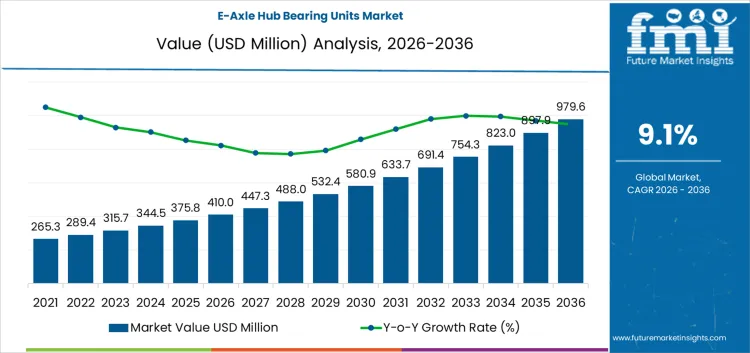
E-Axle Hub Bearing Units Market Key Takeaways
| Metric | Value |
|---|---|
| Market Value (2026) | USD 410.0 million |
| Market Forecast Value (2036) | USD 979.6 million |
| Forecast CAGR (2026 to 2036) | 9.1% |
Why is the Demand for E-Axle Hub Bearing Units Market Growing?
Demand for axle hub bearing units is increasing as vehicle OEMs accelerate deployment of electric powertrain architectures that integrate the motor, transmission, and differential in a compact drive unit. These specialized hub bearings support higher torque loads and unique thermal stress patterns stemming from direct motor coupling at the wheel ends. Precision engineered units help manage forces generated during rapid acceleration and regenerative braking, enabling stability and driveability performance that aligns with stringent automotive NVH (noise vibration harshness) targets.
Designers of battery electric vehicles prioritize bearings that balance load capacity with low friction to optimize driving range and ensure efficient energy transfer. The shift toward front, rear, and all-wheel-drive e-axle configurations across passenger and light commercial EV segments broadens application requirements for customized hub bearing solutions.
Market growth reflects increasing production volumes of electrified platforms that rely on integrated bearing units tuned for e-axle dynamics. Tier 1 suppliers work closely with OEM powertrain groups to calibrate preload and sealing systems that withstand sustained operation at elevated speeds and temperatures. Aftermarket demand emerges as the electrified vehicle parc ages, creating service needs for replacement hub bearing units matched to e‑axle specifications. Engineering development emphasizes materials with high fatigue resistance and advanced lubrication strategies to maintain performance under continuous electrical drive loads in urban and highway use scenarios.
How Are the Segments Classified in the E-Axle Hub Bearing Units Market?
The E-Axle hub bearing units market is expanding due to the rapid growth of electric vehicle (EV) adoption, driven by the need for more efficient, compact, and reliable drivetrains. E-Axle systems integrate the motor, inverter, and transmission into one compact unit, and hub bearings are essential for supporting the weight, torque, and speed of these systems. As electric vehicles, particularly passenger battery electric vehicles (BEVs), continue to dominate the market, the demand for specialized hub bearings that support the unique requirements of e-axles is increasing.
Which EV application represents the largest share of demand?
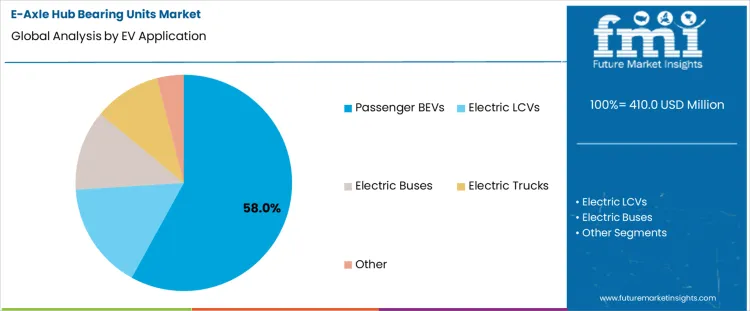
Passenger BEVs lead the market with a 58.0% share, driven by the dominant position of electric passenger vehicles in the growing EV sector. BEVs require advanced e-axle hub bearing units to handle the high torque and speed associated with electric drivetrains while maintaining energy efficiency and vehicle performance. The continued growth of BEV adoption, especially in urban areas and regions with strong EV incentives, strengthens the demand for specialized hub bearings that offer low friction, durability, and minimal maintenance.
Key Points:
- Dominates due to the rise of electric passenger vehicles globally
- Requires bearings that support high torque and speed in compact designs
- Driven by government incentives and increasing BEV adoption
Which integration level holds the highest share of demand?
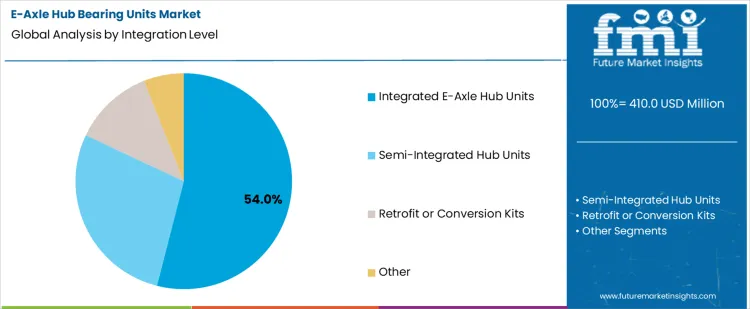
Integrated e-axle hub units account for 54.0% of the market, as they offer the advantage of a single, compact unit that integrates the motor, transmission, and bearings. This level of integration is critical for electric vehicles, especially BEVs, where space efficiency, weight reduction, and performance optimization are key. Integrated units streamline the drivetrain, improving energy efficiency and reducing complexity. This integration also simplifies manufacturing and reduces the number of parts, making it the preferred choice for most OEMs in the electric vehicle sector.
Key Points:
- Offers compact, efficient solutions for modern electric drivetrains
- Reduces complexity and number of parts for easier manufacturing
- Enhances performance and energy efficiency in BEVs
Which bearing technology holds the highest share of demand?
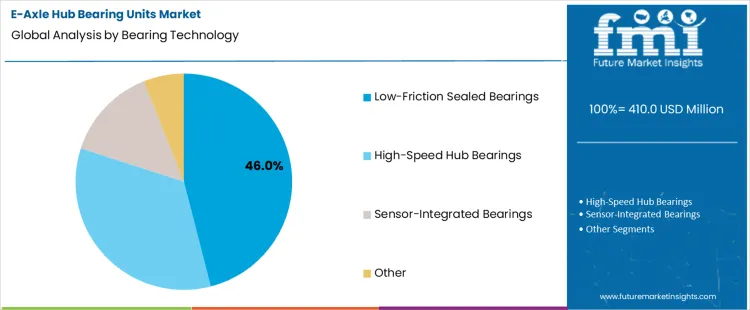
Low-friction sealed bearings lead the market with a 46.0% share, driven by their ability to reduce energy losses and enhance the efficiency of e-axle systems. These bearings are designed to handle high-speed operations while minimizing friction, a key factor in electric drivetrains that demand optimal energy use. Low-friction sealed bearings are crucial for extending battery life, improving range, and ensuring quiet, smooth operation in electric vehicles. Their performance and reliability make them ideal for use in high-demand applications like BEVs and electric light commercial vehicles (LCVs).
Key Points:
- Minimizes friction, improving energy efficiency and vehicle range
- Essential for quiet, smooth operation in electric drivetrains
- Extends battery life and supports long-term performance in BEVs and LCVs
What are the Key Dynamics in the e axle hub bearing units market?
Demand in the e-axle hub bearing units market is shaped by the transition to electrified drivetrains and increasing integration of motor, transmission, and bearing assemblies in passenger and commercial electric vehicles (EVs). Activity centers on components that support high torque loads, precise rotor alignment, and thermal stability within compact e-axle architectures. Value depends on bearing load capacity, electrical isolation performance, and compatibility with direct drive configurations. Procurement aligns with EV platform strategies, drivetrain efficiency targets, and long service life expectations.
How do electric drivetrain integration and torque load requirements shape adoption?
Adoption of e-axle hub bearing units grows where EV powertrain designs demand bearings that support high torque and dynamic loading without compromising efficiency. Bearings in e-axles must manage forces from integrated motors and gearsets under continuous acceleration and regenerative braking cycles, requiring materials and internal geometries that sustain fatigue resistance and minimal friction. Precise rotor positioning is critical to maintain electromagnetic balance and reduce vibration, influencing both NVH performance and energy use.
Thermal resilience matters, as e-axles concentrate heat from high current densities near the bearing zone, which influences lubricant formulation and seal design. Automotive OEMs and tier suppliers evaluate bearings for electrical insulation properties to prevent stray current damage and to ensure compatibility with direct drive e-axle configurations. Demand concentrates on solutions qualified for both front and rear-drive e-axle applications across multiple EV segments.
How do thermal management challenges and production cost constraints influence market scalability?
Market scalability faces barriers from thermal management demands and high unit production costs inherent to e-axle hub bearing designs. Bearings must tolerate elevated temperatures generated by adjacent motor and inverter systems without lubricant breakdown or accelerated wear. This drives requirements for specialized greases, high-temperature seals, and material combinations that increase production complexity. Precision manufacturing to tight tolerances is essential to meet e-axle performance criteria, which raises unit costs relative to conventional wheel bearings.
Electrical insulation features designed to mitigate motor current effects add design layers that require validation and quality control investment. Cost pressures in electric vehicle production, especially in lower price bands, constrain the rate at which advanced e-axle bearing units are specified. Supply chain bottlenecks for high-grade bearing steels and engineered polymers used in seals and cages may affect lead times, influencing production planning for OEMs scaling multiple EV platforms. Customer expectations for extended service life under continuous high torque use push manufacturers to balance durability with affordability in bearing solutions.
How Is Demand for the E-Axle Hub Bearing Units Market Evolving Globally?
Global demand for e-axle hub bearing units is increasing as electric vehicles (EVs) gain market share and automakers push for more efficient and compact drivetrain solutions. Growth is driven by the transition to electric mobility, which requires specialized components to optimize motor performance, reduce energy loss, and ensure long-lasting operation. Demand growth is also influenced by the shift toward more sustainable transportation solutions and regulatory pushes for cleaner vehicles. China records 11.0% CAGR, India records 10.3% CAGR, South Korea records 9.2% CAGR, Indonesia records 8.6% CAGR, and Mexico records 8.0% CAGR. Adoption is led by the rise of EV production, particularly in emerging markets, and advancements in electric drivetrain technologies.
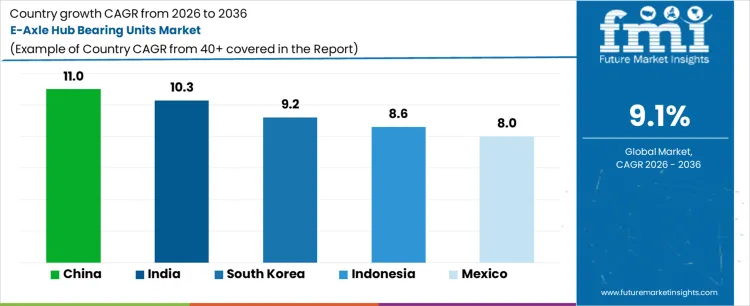
| Country | CAGR (%) |
|---|---|
| China | 11.0% |
| India | 10.3% |
| South Korea | 9.2% |
| Indonesia | 8.6% |
| Mexico | 8.0% |
What is driving demand for e-axle hub bearing units in China?
Demand for e-axle hub bearing units in China is rapidly expanding as the country leads the electric vehicle revolution globally. With a growth rate of 11.0% CAGR, China’s push towards electric mobility and government incentives for EV manufacturing are key drivers. The shift from traditional combustion engines to electric drivetrains necessitates the development of specialized components, including e-axle hub bearings, which help optimize motor efficiency and reduce friction. As China increases its domestic EV production and expands its EV export market, the demand for high-performance e-axle hub bearings continues to rise, particularly for lightweight, energy-efficient solutions.
- Strong push for electric vehicle adoption
- Government incentives for EV manufacturing
- Rapid increase in EV production capacity
- Focus on energy-efficient, lightweight bearing solutions
What factors are shaping e-axle hub bearing units demand in India?
Demand for e-axle hub bearing units in India is rising as the country’s automotive sector shifts toward electric vehicles. Growth of 10.3% CAGR reflects the increasing focus on clean energy vehicles and the government’s efforts to promote EV adoption through policy support. India’s growing infrastructure for electric mobility, including charging stations and manufacturing facilities, drives demand for electric drivetrain components, particularly e-axle hub bearings. As the country looks to reduce emissions and dependency on fossil fuels, the rise of electric vehicle production in India continues to fuel the need for specialized bearing solutions that ensure high performance and durability.
- Strong government support for EV adoption
- Increasing infrastructure development for electric vehicles
- Rise of electric vehicle production and manufacturing
- Focus on reducing emissions and energy consumption
What is driving sales of e-axle hub bearing units in South Korea?
Sales of e-axle hub bearing units in South Korea are increasing as the country strengthens its position in the electric vehicle market. With a 9.2% CAGR, South Korea’s automotive industry is actively transitioning toward electric drivetrains. The demand for e-axle hub bearings is driven by the country’s growing production of electric vehicles, as well as the technological advancements in drivetrain efficiency and motor performance. South Korean automakers are investing heavily in EV technologies, and the focus on enhancing vehicle performance and energy efficiency boosts the need for high-quality bearings that optimize vehicle functionality and reduce energy loss.
- Strong growth of South Korea’s EV industry
- Technological advancements in electric drivetrains
- Focus on performance and energy efficiency
- Investment in EV production and infrastructure
What factors are shaping e-axle hub bearings demand in Indonesia?
E-axle hub bearings demand in Indonesia is growing as the country’s automotive market gradually shifts toward electric vehicles. Growth of 8.6% CAGR reflects the increasing push for EV adoption driven by government incentives and the global shift toward cleaner energy. Indonesia’s automotive industry, which has traditionally been focused on internal combustion engine vehicles, is starting to explore electric mobility as part of a broader effort to meet environmental sustainability goals. As automakers in the region begin to invest in EV production, the demand for specialized drivetrain components, such as e-axle hub bearings, is expected to rise significantly.
- Government push for electric vehicle adoption
- Growing focus on sustainable transportation solutions
- Investment in EV manufacturing and infrastructure
- Emerging market for clean energy vehicles
What is driving e-axle hub bearing units demand in Mexico?
E-axle hub bearing units demand in Mexico is rising as the country’s automotive sector shifts to meet the growing global demand for electric vehicles. With a 8.0% CAGR, Mexico’s position as a manufacturing hub for North America boosts demand for electric vehicle components, including e-axle hub bearings. The expansion of EV production facilities, both for domestic use and export, drives the need for advanced drivetrain technologies. Manufacturers are increasingly focused on delivering lightweight, efficient bearing solutions to meet the performance requirements of electric vehicles. Mexico’s growing focus on sustainability and the demand for cleaner transportation further support the adoption of e-axle hub bearings.
- Mexico’s role in North American EV manufacturing
- Focus on advanced drivetrain technologies
- Rising demand for lightweight, efficient bearings
- Growing emphasis on clean energy transportation solutions
What is the competitive landscape of demand for the E-axle hub bearing units market globally?
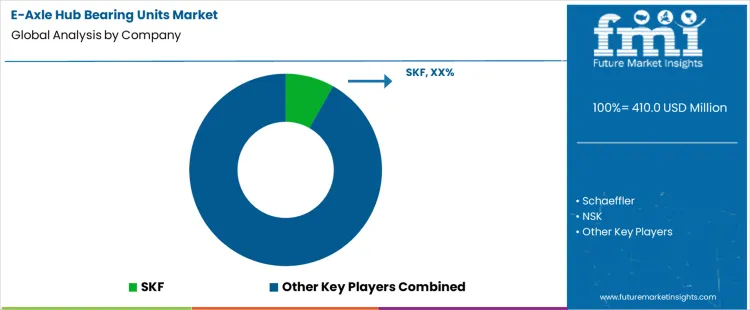
Demand for E-axle hub bearing units is driven by the increasing adoption of electric vehicles (EVs), the need for high efficiency, and the development of electric drivetrains. Buyers evaluate bearing precision, energy efficiency, load-bearing capacity, vibration resistance, and compatibility with electric axle systems. Procurement behavior prioritizes suppliers offering high-performance solutions that integrate seamlessly into EV platforms, with a focus on low rolling resistance and optimized torque transmission. Purchasing decisions emphasize suppliers with strong engineering capabilities, long-term reliability, and scalable manufacturing to meet the growing demand for electric drivetrains. Trend in the market reflects a shift towards modular, lightweight bearing units that enhance vehicle efficiency and reduce energy consumption.
SKF leads competitive positioning with its advanced E-axle hub bearing units designed for high performance in electric vehicles, focusing on reduced friction and energy efficiency. Schaeffler competes by offering customized bearing solutions optimized for electric drivetrains, ensuring performance and durability under high torque conditions. NSK supports demand with innovative E-axle bearing units designed for smooth power transfer and reduced energy losses, catering to the growing EV market. NTN participates with its high-precision bearings designed for electric axle systems, ensuring long service life and superior performance in EVs. Timken delivers E-axle hub bearing solutions optimized for electric vehicle efficiency, emphasizing high reliability and lightweight design.
Key Players in the E-Axle Hub Bearing Units Market
- SKF
- Schaeffler
- NSK
- NTN
- JTEKT (Koyo)
- Timken
- ILJIN
- C&U Group
- ZWZ
- Nachi-Fujikoshi
Scope of the Report
| Items | Values |
|---|---|
| Quantitative Units | USD million |
| EV Application | Passenger BEVs; Electric LCVs; Electric Buses; Electric Trucks; Other |
| Integration Level | Integrated E-Axle Hub Units; Semi-Integrated Hub Units; Retrofit or Conversion Kits; Other |
| Bearing Technology | Low-Friction Sealed Bearings; High-Speed Hub Bearings; Sensor-Integrated Bearings; Other |
| Sales Channel | OEM or Line-Fit; Aftermarket Replacement; Other |
| Regions Covered | Asia Pacific, Europe, North America, Latin America, Middle East & Africa |
| Countries Covered | China, India, South Korea, Indonesia, Mexico, and 40+ countries |
| Key Companies Profiled | SKF; Schaeffler; NSK; NTN; JTEKT (Koyo); Timken; ILJIN; C&U Group; ZWZ; Nachi-Fujikoshi |
| Additional Attributes | Dollar sales by EV application, integration level, bearing technology, and sales channel; bearing efficiency, thermal stability, and noise reduction across low-friction sealed, high-speed, and sensor-integrated bearings; system integration performance in electric vehicle e-axles, spanning integrated and semi-integrated hub units; aftermarket demand for retrofit kits in BEVs, LCVs, and electric buses; procurement patterns driven by OEM EV contracts and retrofitting demand. |
E-Axle Hub Bearing Units Market by Segment
By EV Application:
- Passenger BEVs
- Electric LCVs
- Electric Buses
- Electric Trucks
- Other
By Integration Level:
- Integrated E-Axle Hub Units
- Semi-Integrated Hub Units
- Retrofit or Conversion Kits
- Other
By Bearing Technology:
- Low-Friction Sealed Bearings
- High-Speed Hub Bearings
- Sensor-Integrated Bearings
- Other
By Sales Channel:
- OEM or Line-Fit
- Aftermarket Replacement
- Other
By Region:
- Asia Pacific
- China
- Japan
- South Korea
- India
- Australia & New Zealand
- ASEAN
- Rest of Asia Pacific
- Europe
- Germany
- United Kingdom
- France
- Italy
- Spain
- Nordic
- BENELUX
- Rest of Europe
- North America
- United States
- Canada
- Mexico
- Latin America
- Brazil
- Chile
- Rest of Latin America
- Middle East & Africa
- Kingdom of Saudi Arabia
- Other GCC Countries
- Turkey
- South Africa
- Other African Union
- Rest of Middle East & Africa
Bibliography
- International Organization for Standardization. (2023). Rolling bearings—Lubrication—Grease life and thermal endurance test methods (ISO 16281:2023). ISO.
- International Electrotechnical Commission. (2023). Electric vehicle powertrain systems—Functional safety and mechanical integration considerations (IEC 61851 series, updated provisions). IEC.
- European Commission. (2023). General Safety Regulation (EU) 2019/2144: Phased implementation for electric drivetrains, braking systems, and wheel-end components. Official Journal of the European Union.
Frequently Asked Questions
How big is the e-axle hub bearing units market in 2026?
The global e-axle hub bearing units market is estimated to be valued at USD 410.0 million in 2026.
What will be the size of e-axle hub bearing units market in 2036?
The market size for the e-axle hub bearing units market is projected to reach USD 979.6 million by 2036.
How much will be the e-axle hub bearing units market growth between 2026 and 2036?
The e-axle hub bearing units market is expected to grow at a 9.1% CAGR between 2026 and 2036.
What are the key product types in the e-axle hub bearing units market?
The key product types in e-axle hub bearing units market are passenger bevs, electric lcvs, electric buses, electric trucks and other.
Which integration level segment to contribute significant share in the e-axle hub bearing units market in 2026?
In terms of integration level, integrated e-axle hub units segment to command 54.0% share in the e-axle hub bearing units market in 2026.
Preview the report firsthand - request a free sample
Get SampleGet the brochure for pricing and purchase details.
Get PDFTable of Content
- Executive Summary
- Global Market Outlook
- Demand-side Trends
- Supply-side Trends
- Technology Roadmap Analysis
- Analysis and Recommendations
- Market Overview
- Market Coverage / Taxonomy
- Market Definition / Scope / Limitations
- Market Background
- Market Dynamics
- Drivers
- Restraints
- Opportunity
- Trends
- Scenario Forecast
- Demand in Optimistic Scenario
- Demand in Likely Scenario
- Demand in Conservative Scenario
- Opportunity Map Analysis
- Product Life Cycle Analysis
- Supply Chain Analysis
- Investment Feasibility Matrix
- Value Chain Analysis
- PESTLE and Porter’s Analysis
- Regulatory Landscape
- Regional Parent Market Outlook
- Production and Consumption Statistics
- Import and Export Statistics
- Market Dynamics
- Global Market Analysis 2021 to 2025 and Forecast, 2026 to 2036
- Historical Market Size Value (USD Million) Analysis, 2021 to 2025
- Current and Future Market Size Value (USD Million) Projections, 2026 to 2036
- Y-o-Y Growth Trend Analysis
- Absolute $ Opportunity Analysis
- Global Market Pricing Analysis 2021 to 2025 and Forecast 2026 to 2036
- Global Market Analysis 2021 to 2025 and Forecast 2026 to 2036, By EV Application
- Introduction / Key Findings
- Historical Market Size Value (USD Million) Analysis By EV Application , 2021 to 2025
- Current and Future Market Size Value (USD Million) Analysis and Forecast By EV Application , 2026 to 2036
- Passenger BEVs
- Electric LCVs
- Electric Buses
- Electric Trucks
- Other
- Passenger BEVs
- Y-o-Y Growth Trend Analysis By EV Application , 2021 to 2025
- Absolute $ Opportunity Analysis By EV Application , 2026 to 2036
- Global Market Analysis 2021 to 2025 and Forecast 2026 to 2036, By Integration Level
- Introduction / Key Findings
- Historical Market Size Value (USD Million) Analysis By Integration Level, 2021 to 2025
- Current and Future Market Size Value (USD Million) Analysis and Forecast By Integration Level, 2026 to 2036
- Integrated E-Axle Hub Value (USD Million)s
- Semi-Integrated Hub Value (USD Million)s
- Retrofit or Conversion Kits
- Other
- Integrated E-Axle Hub Value (USD Million)s
- Y-o-Y Growth Trend Analysis By Integration Level, 2021 to 2025
- Absolute $ Opportunity Analysis By Integration Level, 2026 to 2036
- Global Market Analysis 2021 to 2025 and Forecast 2026 to 2036, By Bearing Technology
- Introduction / Key Findings
- Historical Market Size Value (USD Million) Analysis By Bearing Technology, 2021 to 2025
- Current and Future Market Size Value (USD Million) Analysis and Forecast By Bearing Technology, 2026 to 2036
- Low-Friction Sealed Bearings
- High-Speed Hub Bearings
- Sensor-Integrated Bearings
- Other
- Low-Friction Sealed Bearings
- Y-o-Y Growth Trend Analysis By Bearing Technology, 2021 to 2025
- Absolute $ Opportunity Analysis By Bearing Technology, 2026 to 2036
- Global Market Analysis 2021 to 2025 and Forecast 2026 to 2036, By Sales Channel
- Introduction / Key Findings
- Historical Market Size Value (USD Million) Analysis By Sales Channel, 2021 to 2025
- Current and Future Market Size Value (USD Million) Analysis and Forecast By Sales Channel, 2026 to 2036
- OEM or Line-Fit
- Aftermarket Replacement
- Other
- OEM or Line-Fit
- Y-o-Y Growth Trend Analysis By Sales Channel, 2021 to 2025
- Absolute $ Opportunity Analysis By Sales Channel, 2026 to 2036
- Global Market Analysis 2021 to 2025 and Forecast 2026 to 2036, By Region
- Introduction
- Historical Market Size Value (USD Million) Analysis By Region, 2021 to 2025
- Current Market Size Value (USD Million) Analysis and Forecast By Region, 2026 to 2036
- North America
- Latin America
- Western Europe
- Eastern Europe
- East Asia
- South Asia and Pacific
- Middle East & Africa
- Market Attractiveness Analysis By Region
- North America Market Analysis 2021 to 2025 and Forecast 2026 to 2036, By Country
- Historical Market Size Value (USD Million) Trend Analysis By Market Taxonomy, 2021 to 2025
- Market Size Value (USD Million) Forecast By Market Taxonomy, 2026 to 2036
- By Country
- USA
- Canada
- Mexico
- By EV Application
- By Integration Level
- By Bearing Technology
- By Sales Channel
- By Country
- Market Attractiveness Analysis
- By Country
- By EV Application
- By Integration Level
- By Bearing Technology
- By Sales Channel
- Key Takeaways
- Latin America Market Analysis 2021 to 2025 and Forecast 2026 to 2036, By Country
- Historical Market Size Value (USD Million) Trend Analysis By Market Taxonomy, 2021 to 2025
- Market Size Value (USD Million) Forecast By Market Taxonomy, 2026 to 2036
- By Country
- Brazil
- Chile
- Rest of Latin America
- By EV Application
- By Integration Level
- By Bearing Technology
- By Sales Channel
- By Country
- Market Attractiveness Analysis
- By Country
- By EV Application
- By Integration Level
- By Bearing Technology
- By Sales Channel
- Key Takeaways
- Western Europe Market Analysis 2021 to 2025 and Forecast 2026 to 2036, By Country
- Historical Market Size Value (USD Million) Trend Analysis By Market Taxonomy, 2021 to 2025
- Market Size Value (USD Million) Forecast By Market Taxonomy, 2026 to 2036
- By Country
- Germany
- UK
- Italy
- Spain
- France
- Nordic
- BENELUX
- Rest of Western Europe
- By EV Application
- By Integration Level
- By Bearing Technology
- By Sales Channel
- By Country
- Market Attractiveness Analysis
- By Country
- By EV Application
- By Integration Level
- By Bearing Technology
- By Sales Channel
- Key Takeaways
- Eastern Europe Market Analysis 2021 to 2025 and Forecast 2026 to 2036, By Country
- Historical Market Size Value (USD Million) Trend Analysis By Market Taxonomy, 2021 to 2025
- Market Size Value (USD Million) Forecast By Market Taxonomy, 2026 to 2036
- By Country
- Russia
- Poland
- Hungary
- Balkan & Baltic
- Rest of Eastern Europe
- By EV Application
- By Integration Level
- By Bearing Technology
- By Sales Channel
- By Country
- Market Attractiveness Analysis
- By Country
- By EV Application
- By Integration Level
- By Bearing Technology
- By Sales Channel
- Key Takeaways
- East Asia Market Analysis 2021 to 2025 and Forecast 2026 to 2036, By Country
- Historical Market Size Value (USD Million) Trend Analysis By Market Taxonomy, 2021 to 2025
- Market Size Value (USD Million) Forecast By Market Taxonomy, 2026 to 2036
- By Country
- China
- Japan
- South Korea
- By EV Application
- By Integration Level
- By Bearing Technology
- By Sales Channel
- By Country
- Market Attractiveness Analysis
- By Country
- By EV Application
- By Integration Level
- By Bearing Technology
- By Sales Channel
- Key Takeaways
- South Asia and Pacific Market Analysis 2021 to 2025 and Forecast 2026 to 2036, By Country
- Historical Market Size Value (USD Million) Trend Analysis By Market Taxonomy, 2021 to 2025
- Market Size Value (USD Million) Forecast By Market Taxonomy, 2026 to 2036
- By Country
- India
- ASEAN
- Australia & New Zealand
- Rest of South Asia and Pacific
- By EV Application
- By Integration Level
- By Bearing Technology
- By Sales Channel
- By Country
- Market Attractiveness Analysis
- By Country
- By EV Application
- By Integration Level
- By Bearing Technology
- By Sales Channel
- Key Takeaways
- Middle East & Africa Market Analysis 2021 to 2025 and Forecast 2026 to 2036, By Country
- Historical Market Size Value (USD Million) Trend Analysis By Market Taxonomy, 2021 to 2025
- Market Size Value (USD Million) Forecast By Market Taxonomy, 2026 to 2036
- By Country
- Kingdom of Saudi Arabia
- Other GCC Countries
- Turkiye
- South Africa
- Other African Union
- Rest of Middle East & Africa
- By EV Application
- By Integration Level
- By Bearing Technology
- By Sales Channel
- By Country
- Market Attractiveness Analysis
- By Country
- By EV Application
- By Integration Level
- By Bearing Technology
- By Sales Channel
- Key Takeaways
- Key Countries Market Analysis
- USA
- Pricing Analysis
- Market Share Analysis, 2025
- By EV Application
- By Integration Level
- By Bearing Technology
- By Sales Channel
- Canada
- Pricing Analysis
- Market Share Analysis, 2025
- By EV Application
- By Integration Level
- By Bearing Technology
- By Sales Channel
- Mexico
- Pricing Analysis
- Market Share Analysis, 2025
- By EV Application
- By Integration Level
- By Bearing Technology
- By Sales Channel
- Brazil
- Pricing Analysis
- Market Share Analysis, 2025
- By EV Application
- By Integration Level
- By Bearing Technology
- By Sales Channel
- Chile
- Pricing Analysis
- Market Share Analysis, 2025
- By EV Application
- By Integration Level
- By Bearing Technology
- By Sales Channel
- Germany
- Pricing Analysis
- Market Share Analysis, 2025
- By EV Application
- By Integration Level
- By Bearing Technology
- By Sales Channel
- UK
- Pricing Analysis
- Market Share Analysis, 2025
- By EV Application
- By Integration Level
- By Bearing Technology
- By Sales Channel
- Italy
- Pricing Analysis
- Market Share Analysis, 2025
- By EV Application
- By Integration Level
- By Bearing Technology
- By Sales Channel
- Spain
- Pricing Analysis
- Market Share Analysis, 2025
- By EV Application
- By Integration Level
- By Bearing Technology
- By Sales Channel
- France
- Pricing Analysis
- Market Share Analysis, 2025
- By EV Application
- By Integration Level
- By Bearing Technology
- By Sales Channel
- India
- Pricing Analysis
- Market Share Analysis, 2025
- By EV Application
- By Integration Level
- By Bearing Technology
- By Sales Channel
- ASEAN
- Pricing Analysis
- Market Share Analysis, 2025
- By EV Application
- By Integration Level
- By Bearing Technology
- By Sales Channel
- Australia & New Zealand
- Pricing Analysis
- Market Share Analysis, 2025
- By EV Application
- By Integration Level
- By Bearing Technology
- By Sales Channel
- China
- Pricing Analysis
- Market Share Analysis, 2025
- By EV Application
- By Integration Level
- By Bearing Technology
- By Sales Channel
- Japan
- Pricing Analysis
- Market Share Analysis, 2025
- By EV Application
- By Integration Level
- By Bearing Technology
- By Sales Channel
- South Korea
- Pricing Analysis
- Market Share Analysis, 2025
- By EV Application
- By Integration Level
- By Bearing Technology
- By Sales Channel
- Russia
- Pricing Analysis
- Market Share Analysis, 2025
- By EV Application
- By Integration Level
- By Bearing Technology
- By Sales Channel
- Poland
- Pricing Analysis
- Market Share Analysis, 2025
- By EV Application
- By Integration Level
- By Bearing Technology
- By Sales Channel
- Hungary
- Pricing Analysis
- Market Share Analysis, 2025
- By EV Application
- By Integration Level
- By Bearing Technology
- By Sales Channel
- Kingdom of Saudi Arabia
- Pricing Analysis
- Market Share Analysis, 2025
- By EV Application
- By Integration Level
- By Bearing Technology
- By Sales Channel
- Turkiye
- Pricing Analysis
- Market Share Analysis, 2025
- By EV Application
- By Integration Level
- By Bearing Technology
- By Sales Channel
- South Africa
- Pricing Analysis
- Market Share Analysis, 2025
- By EV Application
- By Integration Level
- By Bearing Technology
- By Sales Channel
- USA
- Market Structure Analysis
- Competition Dashboard
- Competition Benchmarking
- Market Share Analysis of Top Players
- By Regional
- By EV Application
- By Integration Level
- By Bearing Technology
- By Sales Channel
- Competition Analysis
- Competition Deep Dive
- SKF
- Overview
- Product Portfolio
- Profitability by Market Segments (Product/Age /Sales Channel/Region)
- Sales Footprint
- Strategy Overview
- Marketing Strategy
- Product Strategy
- Channel Strategy
- Schaeffler
- NSK
- NTN
- JTEKT (Koyo)
- Timken
- ILJIN
- C&U Group
- ZWZ
- Nachi-Fujikoshi
- SKF
- Competition Deep Dive
- Assumptions & Acronyms Used
- Research Methodology


