

Frozen Food Packaging Market Size and Share Forecast Outlook (2025 to 2035)
The landscape of the frozen food packaging industry has been rapidly shifting at the core as manufacturers place emphasis on durability, sustainability, and an increased shelf life. With the constant growth in demand from the food services sector, the retail sector, and the direct-to-consumer chain, companies are now investing in high-barrier films, recyclable materials, and temperature-resistant packaging solutions. Many of them reported investing significantly in smart packaging, anti-fog coatings, and leak-proof designs products that maintain their freshness while being more convenient.
Manufacturers take the advantage of AI-optimized packaging technologies, introduce quality control, automated sealing, and eco-friendly material innovations. The field includes recyclable, compostable, and multilayer barrier films, thereby improving the preservation of products while causing less damage to the environment.
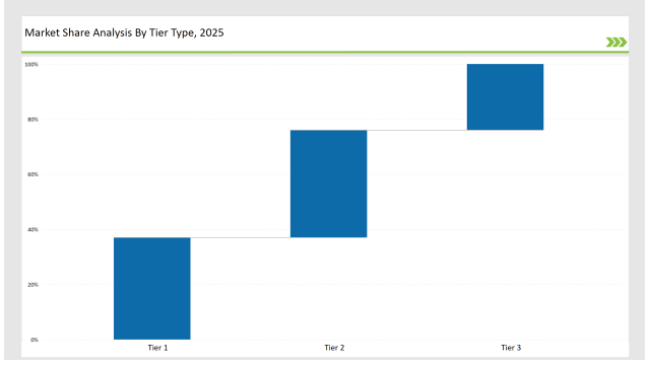
Tier 1 players such as Amcor, Sealed Air, and Berry Global, take 37% of the market as these companies are leading in the high performance flexible packaging segment along with sustainability and wider distribution network.
Tier 2 players such as Mondi Group, Tetra Pak, and Sonoco would acquire 35% of the market share attributed to cost-effective, customized and specialized frozen food packaging solutions.
Tier 3 are players at the regional or niche level packaging biodegradable, smart and tamper-proof packaging with 28% market holding. The emphasis for these companies is on localized production, innovative ingredients, and energy-efficient packaging solutions.
Vendor Performance in Flexible, Tray-Seal, and VSP (Vacuum Skin Packaging) for Frozen Goods
Global Market Share by Key Players (2025)
| Category | Market Share (%) |
|---|---|
| Top 3 (Amcor, Sealed Air, Berry Global) | 16% |
| Rest of Top 5 (Mondi Group, Tetra Pak) | 14% |
| Next 5 of Top 10 (Sonoco, Smurfit Kappa, Novolex, Huhtamaki, Constantia Flexibles) | 7% |
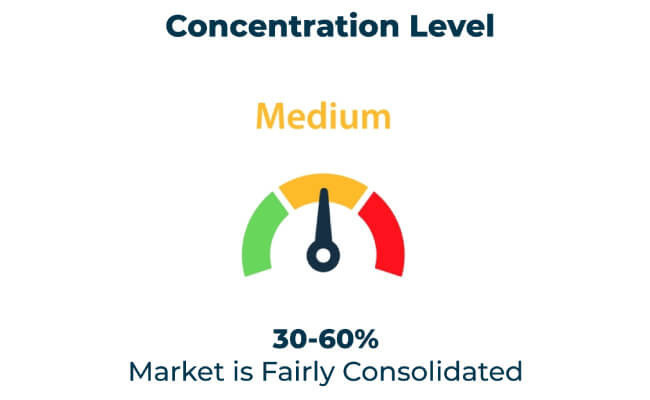
Market Concentration (2025E)
Segment Analysis
Powering Success in Leading Industries
The frozen food packaging industry caters to the various domains where durability, product protection, and sustainability are the key elements in consideration. Innovated packaging designs are being developed to ensure the maintenance of freshness, avoid waste, and work with the changing regulatory environment.
- Retail & Supermarkets: Expanding the use of tamper-proof, resealable packaging for convenience.
- Foodservice & QSR: Improving heat-sealable, leak-proof packaging for frozen meals and ingredients.
- E-Commerce & Direct-to-Consumer: Enhancing temperature-controlled packaging for home delivery.
- Meat & Seafood Processing: Providing high-barrier, vacuum-sealed packaging to prevent freezer burn.
Vendor-Driven Product Categories
Manufacturers are optimizing frozen food packaging with sustainability-focused solutions, improved barrier properties, and smart tracking. Manufacturers use high-strength yet lightweight materials to enhance durability with a lower environmental impact. Moreover, companies working on insulation technology to consolidate temperature control and reduce energy consumption are also harnessing digital printing techniques to improve branding through good-quality display and clear labeling.
- Recyclable & Compostable Packaging: Reducing plastic waste while maintaining food protection.
- High-Barrier & Multi-Layer Films: Improving shelf life and freezer burn resistance.
- Tamper-Evident & Leak-Proof Packaging: Ensuring safety and product integrity.
- Smart & Interactive Packaging: Integrating QR codes and temperature-sensitive indicators.
Who Shaped the Year
The frozen food packing world is changing because of sustainability and automation. Businesses are seeking to enhance packaging viability using AI for defect detection, bio-based polymers, and high-performance sealing techniques. Businesses are producing ultra-thin films with ultra-high strength to save on materials. Manufacturers are packaging products with embedded freshness sensors for real-time quality tracking. In addition, firms are using low-carbon water-based printing techniques to enhance recyclability.
Year-on-Year Leaders
- Amcor: Launched fully recyclable, high-barrier frozen food pouches.
- Sealed Air: Developed vacuum-sealed, leak-proof frozen food packaging.
- Berry Global: Expanded compostable and bio-based frozen food containers.
- Mondi Group: Innovated paper-based, freezer-safe packaging solutions.
- Tetra Pak: Strengthened aseptic and temperature-controlled packaging solutions.
- Sonoco: Introduced smart labels with temperature-sensitive indicators.
- Smurfit Kappa: Pioneered fiber-based frozen food trays for sustainability.
Recommendations for Technology Suppliers
Technology suppliers should focus on automation, eco-friendly material innovations, and smart packaging advancements to support the evolving frozen food packaging market. Partnering with food manufacturers, retailers, and e-commerce platforms will drive adoption and market expansion.
- Sustainability Trends: Develop biodegradable and recyclable frozen food packaging materials.
- Automation & Efficiency: Improve AI-powered defect detection and high-speed sealing technology.
- Customization & Scalability: Offer digital-printed and tamper-evident packaging solutions.
- Regional Growth Dynamics: North America and Europe lead in sustainability, while Asia-Pacific focuses on cost-effective production.
Tier-Wise Vendor Classification (2025)
| Tier Type | Example of Key Players |
|---|---|
| Tier 1 | Amcor, Sealed Air, Berry Global |
| Tier 2 | Mondi Group, Tetra Pak, Sonoco |
| Tier 3 | Smurfit Kappa, Novolex, Huhtamaki, Constantia Flexibles |
Key Company Initiatives
Top manufacturers are modernizing frozen food packaging using AI for automation, sustainable materials, and high-barrier sealing technologies. They are adding next-generation sealing methods that enhance package integrity and shelf life. Packaging designs are made with better insulation to keep temperatures optimal. Companies are also introducing innovations in water-based adhesives and coatings to reduce environmental impact and improve recyclability.
| Manufacturer | Latest Developments |
|---|---|
| Amcor | Launched recyclable, high-barrier frozen food packaging in March 2024. |
| Sealed Air | Developed vacuum-sealed, leak-proof packaging in April 2024. |
| Berry Global | Expanded compostable frozen food containers in May 2024. |
| Mondi Group | Released freezer-safe, paper-based packaging in June 2024. |
| Tetra Pak | Strengthened aseptic and temperature-controlled packaging in July 2024. |
| Sonoco | Introduced smart labels with freshness tracking in August 2024. |
| Smurfit Kappa | Pioneered fiber-based frozen food trays in September 2024. |
Vendor Insights
The frozen food packaging market is evolving as companies invest in sustainable materials, AI-driven defect detection, and high-barrier packaging technologies. They are integrating smart temperature-control features to maintain product integrity during storage and transit. Additionally, manufacturers are enhancing moisture-resistant coatings to prevent freezer burn and improve food quality. Businesses are also adopting high-speed automated packaging lines to increase efficiency and reduce waste.
- Amcor leads in recyclable, high-barrier frozen food packaging.
- Sealed Air pioneers vacuum-sealed and leak-proof solutions.
- Berry Global develops compostable and bio-based containers.
- Mondi Group innovates freezer-safe, paper-based packaging.
- Tetra Pak strengthens aseptic and temperature-controlled solutions.
- Sonoco enhances packaging with smart freshness tracking.
- Smurfit Kappa focuses on fiber-based frozen food trays.
Future Roadmap
Manufacturers will continue refining AI-driven defect detection, ultra-thin high-barrier films, and interactive smart packaging. Companies will expand the use of bio-based plastics to comply with sustainability regulations. Businesses will enhance packaging for home delivery with temperature-controlled and vacuum-sealed formats. Smart packaging with freshness indicators and anti-counterfeit features will become more prevalent. Additionally, AI-powered supply chain tracking will optimize inventory management and reduce food waste.
Frequently Asked Questions
Who are the key manufacturers in the frozen food packaging market?
Leading players include Amcor, Sealed Air, Berry Global, Mondi Group, Tetra Pak, Sonoco, and Smurfit Kappa.
What is the market share of the top 3 players?
The top 3 players collectively control 16% of the global market.
How is market concentration assessed for 2025?
The market shows medium concentration, with top players holding 37%.
What factors drive innovation in this market?
Key drivers include sustainability, automation, high-barrier packaging, and smart tracking solutions.
Preview the report firsthand - request a free sample
Get SampleGet the brochure for pricing and purchase details.
Get PDFTable of Content
- Executive Summary
- Market Overview
- Key Growth Drivers
- Company Performance
- Market Concentration
- Segment Analysis
- Key Highlights from the Forecast
- Tier-Wise Company Classification
- Key Company Initiatives
- Recommendations for Technology Suppliers
- Future Roadmap
- FAQs


