

- Industry Size (2026)
- USD 4.1 Bn
- Forecast (2036)
- USD 6.0 Bn
- CAGR (2026 to 2036)
- 4%
Glass and Hard Surface Cleaners Market Forecast and Outlook 2026 to 2036
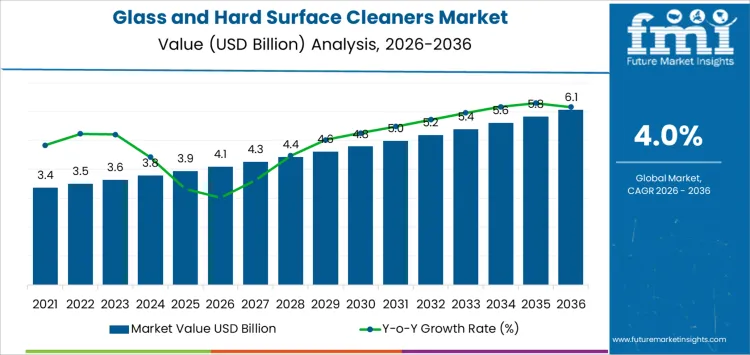
The glass and hard surface cleaners market, valued at USD 4.1 billion in 2026, is projected to reach USD 6.0 billion by 2036, growing at a 4% CAGR. Glass cleaners dominate the market, holding a 46% share, thanks to their effectiveness in providing streak-free finishes on glass surfaces. Other significant product types include stainless steel cleaners, multipurpose hard surface cleaners, and specialty cleaners. Commercial facilities account for the largest market share at 34%, driven by the high demand for cleaning solutions in offices, retail spaces, and public areas. These sectors require high-performance products to maintain hygiene, aesthetics, and hygiene standards, especially in high-traffic areas.
Quick Stats for Glass and Hard Surface Cleaners Market
- Glass and Hard Surface Cleaners Market Value (2026): USD 4.1 billion
- Glass and Hard Surface Cleaners Market Forecast Value (2036): USD 6.0 billion
- Glass and Hard Surface Cleaners Market Forecast CAGR: 4%
- Leading Product Type in Glass and Hard Surface Cleaners Market: Glass Cleaners
- Key Growth Regions in Glass and Hard Surface Cleaners Market: Asia Pacific, Europe, and North America
- Top Players in Glass and Hard Surface Cleaners Market: Procter & Gamble, Reckitt, Clorox, Unilever, SC Johnson Professional, 3M, Ecolab, Diversey, Zep, Betco
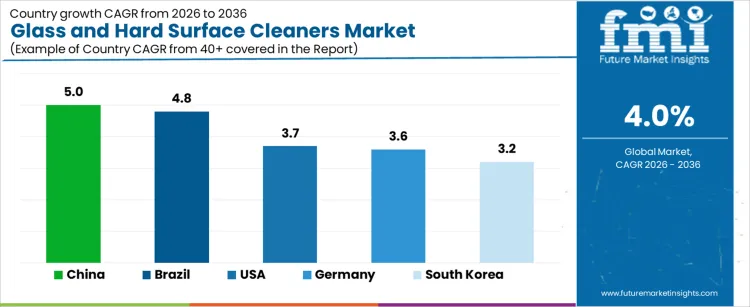
China leads with a 5.0% CAGR, fueled by urbanization, industrial growth, and rising demand for cleaning products across residential and commercial sectors. Brazil follows with a 4.8% CAGR, supported by the expansion of its commercial cleaning services. The USA and Germany show moderate growth at 3.7% and 3.6%, respectively, driven by steady demand from residential, commercial, and industrial markets. South Korea's market grows at a slower pace of 3.2%, but demand for eco-friendly products in commercial cleaning remains strong. This growing focus on eco-friendly, streak-free, and efficient cleaning products is expected to drive continued market growth across these regions.
Glass and Hard Surface Cleaners Market Key Takeaways
| Metric | Value |
|---|---|
| Industry Value (2026) | USD 4.1 billion |
| Forecast Value (2036) | USD 6.0 billion |
| Forecast CAGR (2026-2036) | 4% |
How is the Global Glass and Hard Surface Cleaners Sector Taking Shape Across Cleaning and Hygiene Solutions?
Global glass and hard surface cleaners market is growing as demand for effective cleaning solutions for glass, tiles, countertops, and other hard surfaces increases across residential, commercial, and industrial sectors. These cleaners are essential for maintaining a streak-free, polished finish, especially in high-visibility areas like storefronts, windows, and bathrooms. Initially, the market focused primarily on products for glass surfaces, but over time, formulations have evolved to include cleaners that are effective on a wide range of hard surfaces, including granite, marble, and stainless steel. This expansion has been driven by consumer preferences for versatile and easy-to-use cleaning solutions.
Glass and hard surface cleaners market will continue to grow, fueled by advancements in cleaning technologies and the increasing focus on convenience and durability. The demand for eco-friendly and non-toxic cleaning solutions is expected to rise as consumers seek products that are safe for both their health and the environment. Innovations in formulations that reduce streaking, enhance cleaning efficiency, and provide longer-lasting results will further boost market expansion. Challenges such as competition from alternative cleaning methods, price sensitivity, and regulatory pressures will influence market dynamics. As cleaning standards continue to evolve, manufacturers will need to focus on product differentiation, durability, and performance to remain competitive in this growing market.
What Is the Segment-Wise Analysis for the Global Glass and Hard Surface Cleaners Market?
Key product types and end-use sectors shape the global glass and hard surface cleaners market. Glass cleaners lead with a 46% share, driven by their ability to provide streak-free shine and spotless finishes on glass surfaces. Other important product types include stainless steel cleaners, multipurpose hard surface cleaners, and specialty cleaners. Commercial facilities hold the largest share at 34%, driven by the high demand for cleaning solutions in office buildings, retail spaces, and public areas.
How Do Glass Cleaners Lead the Global Glass and Hard Surface Cleaners Market?
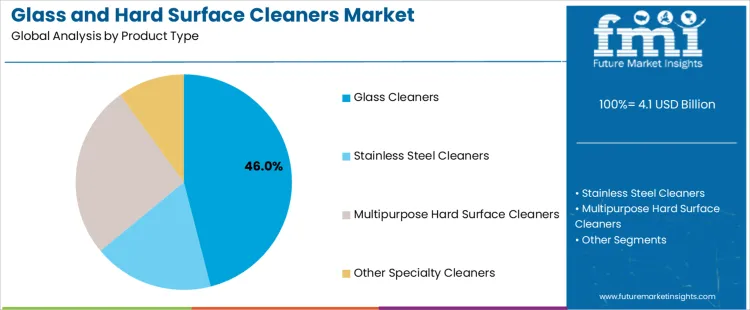
Glass cleaners dominate the global glass and hard surface cleaners market with a 46% share, primarily due to their unmatched effectiveness in providing a streak-free shine and spotless finishes on glass and mirror surfaces. These cleaners are essential for maintaining clear and attractive glass surfaces in both residential and commercial settings. Their specialized formula is designed to quickly cut through grease, dirt, fingerprints, and other contaminants, ensuring that glass surfaces remain visually appealing. Glass cleaners are widely used in homes, offices, retail spaces, and hospitality venues, where maintaining a clean, professional environment is crucial. Their ease of application, fast-drying properties, and superior results contribute to their dominance in the market.
Why Do Commercial Facilities Hold the Largest Share in the Global Glass and Hard Surface Cleaners Market?
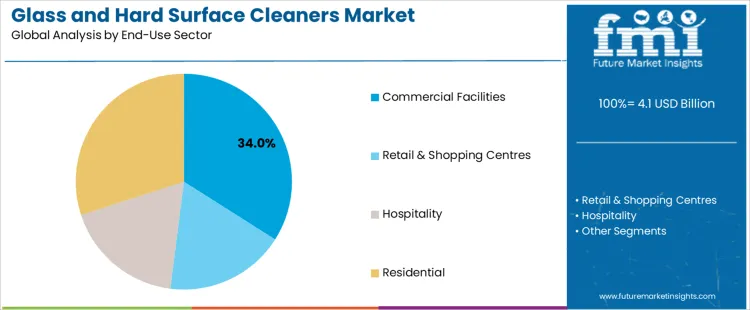
Commercial facilities account for 34% of the global glass and hard surface cleaners market, driven by the high demand for effective and reliable cleaning solutions across office buildings, retail stores, hotels, and other public spaces. These environments require frequent cleaning of glass windows, mirrors, stainless steel fixtures, and other hard surfaces to maintain cleanliness, hygiene, and aesthetics. Cleanliness is essential for creating a professional, welcoming atmosphere for employees, clients, and visitors. As commercial buildings experience high foot traffic, the need for durable, fast-acting, and efficient cleaning products is critical. Businesses continue to prioritize hygiene and appearance, which drives the demand for high-performance glass and hard surface cleaners in commercial settings.
What is Shaping the Glass and Hard Surface Cleaners Market?
Increased focus on hygiene and cleanliness, particularly in public spaces and high-traffic areas, is fueling the need for reliable cleaning products. Innovations in formulations that offer streak-free finishes, fast-drying properties, and powerful dirt removal are contributing to market growth. There is a rising preference for eco-friendly, non-toxic cleaners, as consumers and businesses seek safer and eco-friendlier solutions for maintaining cleanliness on glass and hard surfaces.
What Are the Key Drivers for the Glass and Hard Surface Cleaners Market?
Demand for glass and hard surface cleaners is primarily driven by the increasing emphasis on hygiene and cleanliness, particularly in commercial, residential, and public spaces. The need for products that can effectively clean without leaving streaks or residue is pushing the market forward. Innovations in cleaning formulas that offer convenience, efficiency, and superior cleaning performance are fueling growth. The shift towards eco-friendly, eco-friendly cleaning products that use non-toxic and biodegradable ingredients is gaining momentum as consumers increasingly seek safer alternatives that align with their health and environmental priorities.
What Are the Constraints Limiting the Adoption of Glass and Hard Surface Cleaners?
Adoption of glass and hard surface cleaners is limited by concerns over the potential health risks of certain chemical ingredients. Some formulations may contain volatile organic compounds (VOCs) that can irritate the skin or affect air quality, leading consumers to seek safer, non-toxic options. The higher price point of eco-friendly cleaners may also hinder widespread adoption in price-sensitive markets. Competition from natural, DIY cleaning solutions that are often perceived as safer and more affordable can limit the growth of conventional glass and hard surface cleaning products.
What is the Growth Outlook for the Glass and Hard Surface Cleaners Market by Country?
| Country | CAGR (%) |
|---|---|
| USA | 3.7% |
| Germany | 3.6% |
| China | 5.0% |
| South Korea | 3.2% |
| Brazil | 4.8% |
The glass and hard surface cleaners market is experiencing steady growth, with China leading at a 5.0% CAGR, driven by increasing demand for cleaning solutions in residential, commercial, and industrial sectors. Brazil follows closely at 4.8%, supported by expanding commercial cleaning services and increased awareness of hygiene. The USA and Germany show moderate growth at 3.7% and 3.6%, respectively, with consistent demand for effective cleaning products across residential and commercial applications. South Korea’s market is growing at a slower pace of 3.2%, driven primarily by the demand for cleaning solutions in commercial spaces and growing interest in eco-friendly products.
Why is the Glass and Hard Surface Cleaners Market Growing in China?
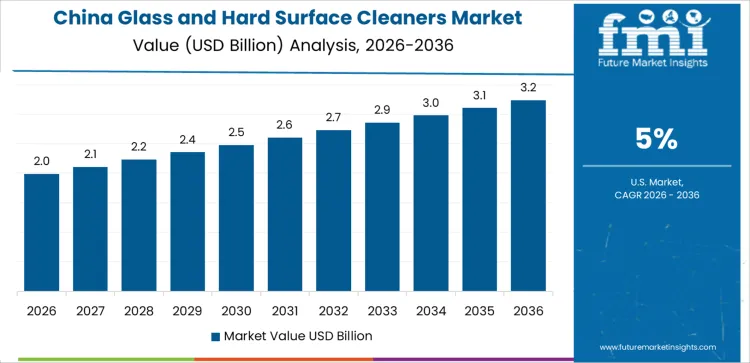
China’s glass and hard surface cleaners market is growing at a 5.0% CAGR, driven by the country’s rapid urbanization and expanding commercial and industrial sectors. As urban areas continue to develop, the need for effective cleaning solutions in both residential and commercial properties is increasing. The rise in disposable incomes and living standards is also contributing to greater demand for cleaning products that ensure hygiene and maintain aesthetic appeal. The growth of commercial spaces such as offices, retail stores, and hospitality establishments is boosting the need for glass and hard surface cleaners. China’s government policies and regulations promoting cleanliness and hygiene in public areas further accelerate market growth. As consumer awareness of the importance of cleanliness rises, particularly in the wake of health concerns, demand for glass and hard surface cleaners in China is expected to continue to grow at a strong pace.
What is Contributing to the Glass and Hard Surface Cleaners Market Growth in Brazil?
Brazil’s glass and hard surface cleaners market is growing at a 4.8% CAGR, driven by increasing demand for cleaning products in both residential and commercial sectors. As Brazil continues to expand its urban infrastructure and commercial spaces, there is a growing need for effective cleaning solutions to maintain the appearance and hygiene of glass and hard surfaces. The hospitality industry, in particular, requires high-quality cleaning products to maintain clean and welcoming spaces. The rise in consumer awareness about hygiene and cleanliness, particularly in public spaces, is contributing to the market's growth. Brazil’s focus on improving sanitation standards in both private and public sectors is pushing demand for reliable and effective cleaning solutions. As the market matures and the demand for eco-friendly and eco-friendly products rises, the growth of the glass and hard surface cleaners market in Brazil is expected to continue steadily.
How is the Glass and Hard Surface Cleaners Market Expanding in the USA?
The USA’s glass and hard surface cleaners market is growing at a 3.7% CAGR, supported by steady demand across residential, commercial, and industrial sectors. The need for effective cleaning solutions in households, offices, and commercial buildings remains strong, particularly as businesses prioritize cleanliness and hygiene. The USA’s growing focus on durability and eco-friendly cleaning products is also driving demand for green alternatives. The increasing trend of DIY cleaning and home improvement projects is contributing to market growth in the residential sector. Commercial spaces, including retail stores, schools, and healthcare facilities, require consistent maintenance of glass and hard surfaces, further fueling the demand for cleaning products. With regulatory requirements emphasizing cleanliness in commercial environments, the market for glass and hard surface cleaners in the USA is expected to continue its steady growth.
Why is the Glass and Hard Surface Cleaners Market Growing in South Korea?
South Korea’s glass and hard surface cleaners market is growing at a 3.2% CAGR, supported by the rising demand for cleaning solutions in residential, commercial, and industrial sectors. South Korea places a strong emphasis on cleanliness, particularly in public spaces, commercial buildings, and homes. As consumer awareness of hygiene increases, the demand for effective and efficient cleaning products is rising. The growing commercial cleaning services sector in South Korea, driven by urbanization and infrastructure development, is a key contributor to market growth. There is increasing interest in eco-friendly and eco-friendly cleaning products, as consumers and businesses seek greener alternatives. Although market growth is slower compared to other regions, South Korea’s strong hygiene regulations, coupled with growing consumer demand for cleaning solutions, will continue to drive steady growth in the glass and hard surface cleaners market.
What is Shaping the Glass and Hard Surface Cleaners Market Growth in Germany?
Germany’s glass and hard surface cleaners market is growing at a 3.6% CAGR, driven by steady demand across commercial, industrial, and residential sectors. The country’s high standards for cleanliness, particularly in public facilities, offices, and healthcare settings, are driving the adoption of cleaning solutions for glass and hard surfaces. Germany’s growing focus on durability is contributing to the demand for eco-friendly and non-toxic cleaning products. As consumer awareness of hygiene continues to rise, particularly in light of health concerns, the need for high-performance cleaners is growing. The commercial cleaning industry, especially in sectors like hospitality and retail, remains a key driver of market demand. With continued urbanization and infrastructure development, Germany’s market for glass and hard surface cleaners is expected to grow steadily, supported by increasing demand for effective, eco-friendly cleaning solutions.
How Do Major Players Compete in the Glass and Hard Surface Cleaners Market?
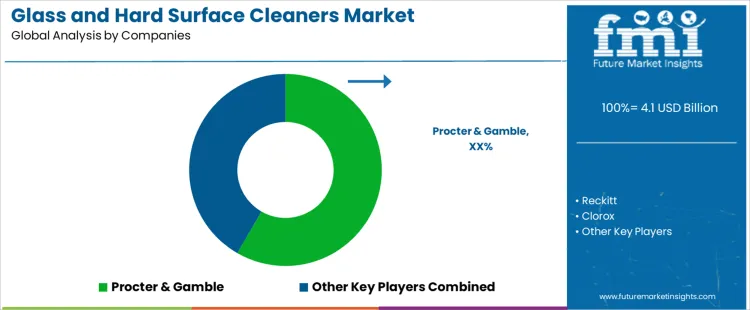
The glass and hard surface cleaners market is highly competitive, with leading players like Procter & Gamble, Reckitt, and Clorox at the forefront. Procter & Gamble, known for its trusted brand Windex, dominates with products designed for streak-free shine and versatility. Their formulations are engineered to clean a variety of surfaces, from glass to stainless steel, providing a quick, easy solution for both residential and commercial needs. Reckitt’s brands, particularly Lysol, offer effective cleaners that not only clean but also disinfect, making them a go-to choice for consumers and professionals alike. Clorox competes by emphasizing strong, powerful formulations that ensure optimal cleanliness, particularly in high-traffic areas where hard surface cleaning is critical.
Unilever, SC Johnson Professional, and 3M stand out by targeting specific market segments. Unilever offers eco-friendly cleaning solutions, catering to environmentally conscious consumers with brands like Seventh Generation. SC Johnson Professional focuses on the commercial sector, providing high-performance cleaners that address the needs of large-scale operations, from offices to industrial environments. 3M competes by integrating advanced technologies into its glass and hard surface cleaners, ensuring high efficiency and reduced environmental impact. Their products are known for ease of use and effectiveness, making them ideal for both residential and industrial use.
Ecolab, Diversey, Zep, and Betco also play a crucial role in shaping the market. Ecolab offers products that combine advanced cleaning technology with durability, meeting the demands of industries like hospitality, healthcare, and foodservice. Diversey brings eco-friendly, high-performance products suitable for both commercial and residential applications. Zep and Betco focus on offering concentrated, cost-effective solutions for the professional cleaning sector. These players continue to compete by emphasizing product performance, durability, and addressing the specific needs of their target markets.
Key Players in Glass and Hard Surface Cleaners Market
- Procter & Gamble
- Reckitt
- Clorox
- Unilever
- SC Johnson Professional
- 3M
- Ecolab
- Diversey
- Zep
- Betco
Scope of Report
| Items | Values |
|---|---|
| Quantitative Units (2026) | USD billion |
| End Use Application | Commercial Facilities, Retail & Shopping Centres, Hospitality, Residential |
| Product Type | Glass Cleaners, Stainless Steel Cleaners, Multipurpose Hard Surface Cleaners, Other Specialty Cleaners |
| Performance Claim | Streak-Free / Quick-Dry, Low-Odor / Low-VOC, Anti-Soil / Fingerprint Resistance, Other Claims |
| Product Form | RTU Sprays, Concentrates, Wipes, Other Forms |
| End-Use Sector | Commercial Facilities, Retail & Shopping Centres, Hospitality, Residential |
| Regions Covered | Asia Pacific, Europe, North America, Latin America, Middle East & Africa |
| Countries Covered | USA, China, Japan, South Korea, India, Australia & New Zealand, ASEAN, Germany, UK, France, Italy, Spain, Nordic, BENELUX, Brazil, Chile, Mexico, Saudi Arabia, Other GCC Countries, Turkey, South Africa, Other African Union, Rest of Regions |
| Key Companies Profiled | Procter & Gamble, Reckitt, Clorox, Unilever, SC Johnson Professional, 3M, Ecolab, Diversey, Zep, Betco |
| Additional Attributes | Dollar sales by product type, performance claim, and product form; regional CAGR and growth outlook; distribution channels including retail, DTC, e-commerce, and institutional buyers; product form prevalence in RTU sprays, concentrates, and wipes; innovation trends in eco-friendly and low-VOC formulations; competitive positioning of global vs regional suppliers. |
Glass and Hard Surface Cleaners Market by Segments
Product Type:
- Glass Cleaners
- Stainless Steel Cleaners
- Multipurpose Hard Surface Cleaners
- Other Specialty Cleaners
End-Use Sector:
- Commercial Facilities
- Retail & Shopping Centres
- Hospitality
- Residential
Form:
- RTU Sprays
- Concentrates
- Wipes
- Other Forms
Performance Claim:
- Streak-Free / Quick-Dry
- Low-Odor / Low-VOC
- Anti-Soil / Fingerprint Resistance
- Other Claims
Region:
- Asia Pacific
- China
- Japan
- South Korea
- India
- Australia & New Zealand
- ASEAN
- Rest of Asia Pacific
- Europe
- Germany
- United Kingdom
- France
- Italy
- Spain
- Nordic
- BENELUX
- Rest of Europe
- North America
- United States
- Canada
- Mexico
- Latin America
- Brazil
- Chile
- Rest of Latin America
- Middle East & Africa
- Kingdom of Saudi Arabia
- Other GCC Countries
- Turkey
- South Africa
- Other African Union
- Rest of Middle East & Africa
Frequently Asked Questions
How big is the glass and hard surface cleaners market in 2026?
The global glass and hard surface cleaners market is estimated to be valued at USD 4.1 billion in 2026.
What will be the size of glass and hard surface cleaners market in 2036?
The market size for the glass and hard surface cleaners market is projected to reach USD 6.1 billion by 2036.
How much will be the glass and hard surface cleaners market growth between 2026 and 2036?
The glass and hard surface cleaners market is expected to grow at a 4.0% CAGR between 2026 and 2036.
What are the key product types in the glass and hard surface cleaners market?
The key product types in glass and hard surface cleaners market are glass cleaners, stainless steel cleaners, multipurpose hard surface cleaners and other specialty cleaners.
Which end-use sector segment to contribute significant share in the glass and hard surface cleaners market in 2026?
In terms of end-use sector, commercial facilities segment to command 34.0% share in the glass and hard surface cleaners market in 2026.
Preview the report firsthand - request a free sample
Get SampleGet the brochure for pricing and purchase details.
Get PDFTable of Content
- Executive Summary
- Global Market Outlook
- Demand-side Trends
- Supply-side Trends
- Technology Roadmap Analysis
- Analysis and Recommendations
- Market Overview
- Market Coverage / Taxonomy
- Market Definition / Scope / Limitations
- Market Background
- Market Dynamics
- Drivers
- Restraints
- Opportunity
- Trends
- Scenario Forecast
- Demand in Optimistic Scenario
- Demand in Likely Scenario
- Demand in Conservative Scenario
- Opportunity Map Analysis
- Product Life Cycle Analysis
- Supply Chain Analysis
- Investment Feasibility Matrix
- Value Chain Analysis
- PESTLE and Porter’s Analysis
- Regulatory Landscape
- Regional Parent Market Outlook
- Production and Consumption Statistics
- Import and Export Statistics
- Market Dynamics
- Global Market Analysis 2021 to 2025 and Forecast, 2026 to 2036
- Historical Market Size Value (USD Million) Analysis, 2021 to 2025
- Current and Future Market Size Value (USD Million) Projections, 2026 to 2036
- Y-o-Y Growth Trend Analysis
- Absolute $ Opportunity Analysis
- Global Market Pricing Analysis 2021 to 2025 and Forecast 2026 to 2036
- Global Market Analysis 2021 to 2025 and Forecast 2026 to 2036, By Product Type
- Introduction / Key Findings
- Historical Market Size Value (USD Million) Analysis By Product Type , 2021 to 2025
- Current and Future Market Size Value (USD Million) Analysis and Forecast By Product Type , 2026 to 2036
- Glass Cleaners
- Stainless Steel Cleaners
- Multipurpose Hard Surface Cleaners
- Other Specialty Cleaners
- Y-o-Y Growth Trend Analysis By Product Type , 2021 to 2025
- Absolute $ Opportunity Analysis By Product Type , 2026 to 2036
- Global Market Analysis 2021 to 2025 and Forecast 2026 to 2036, By End-Use Sector
- Introduction / Key Findings
- Historical Market Size Value (USD Million) Analysis By End-Use Sector, 2021 to 2025
- Current and Future Market Size Value (USD Million) Analysis and Forecast By End-Use Sector, 2026 to 2036
- Commercial Facilities
- Retail & Shopping Centres
- Hospitality
- Residential
- Y-o-Y Growth Trend Analysis By End-Use Sector, 2021 to 2025
- Absolute $ Opportunity Analysis By End-Use Sector, 2026 to 2036
- Global Market Analysis 2021 to 2025 and Forecast 2026 to 2036, By Form
- Introduction / Key Findings
- Historical Market Size Value (USD Million) Analysis By Form, 2021 to 2025
- Current and Future Market Size Value (USD Million) Analysis and Forecast By Form, 2026 to 2036
- RTU Sprays
- Concentrates
- Wipes
- Other Forms
- Y-o-Y Growth Trend Analysis By Form, 2021 to 2025
- Absolute $ Opportunity Analysis By Form, 2026 to 2036
- Global Market Analysis 2021 to 2025 and Forecast 2026 to 2036, By Performance Claim
- Introduction / Key Findings
- Historical Market Size Value (USD Million) Analysis By Performance Claim, 2021 to 2025
- Current and Future Market Size Value (USD Million) Analysis and Forecast By Performance Claim, 2026 to 2036
- Streak-Free / Quick-Dry
- Low-Odor / Low-VOC
- Anti-Soil / Fingerprint Resistance
- Other Claims
- Y-o-Y Growth Trend Analysis By Performance Claim, 2021 to 2025
- Absolute $ Opportunity Analysis By Performance Claim, 2026 to 2036
- Global Market Analysis 2021 to 2025 and Forecast 2026 to 2036, By Region
- Introduction
- Historical Market Size Value (USD Million) Analysis By Region, 2021 to 2025
- Current Market Size Value (USD Million) Analysis and Forecast By Region, 2026 to 2036
- North America
- Latin America
- Western Europe
- Eastern Europe
- East Asia
- South Asia and Pacific
- Middle East & Africa
- Market Attractiveness Analysis By Region
- North America Market Analysis 2021 to 2025 and Forecast 2026 to 2036, By Country
- Historical Market Size Value (USD Million) Trend Analysis By Market Taxonomy, 2021 to 2025
- Market Size Value (USD Million) Forecast By Market Taxonomy, 2026 to 2036
- By Country
- USA
- Canada
- Mexico
- By Product Type
- By End-Use Sector
- By Form
- By Performance Claim
- By Country
- Market Attractiveness Analysis
- By Country
- By Product Type
- By End-Use Sector
- By Form
- By Performance Claim
- Key Takeaways
- Latin America Market Analysis 2021 to 2025 and Forecast 2026 to 2036, By Country
- Historical Market Size Value (USD Million) Trend Analysis By Market Taxonomy, 2021 to 2025
- Market Size Value (USD Million) Forecast By Market Taxonomy, 2026 to 2036
- By Country
- Brazil
- Chile
- Rest of Latin America
- By Product Type
- By End-Use Sector
- By Form
- By Performance Claim
- By Country
- Market Attractiveness Analysis
- By Country
- By Product Type
- By End-Use Sector
- By Form
- By Performance Claim
- Key Takeaways
- Western Europe Market Analysis 2021 to 2025 and Forecast 2026 to 2036, By Country
- Historical Market Size Value (USD Million) Trend Analysis By Market Taxonomy, 2021 to 2025
- Market Size Value (USD Million) Forecast By Market Taxonomy, 2026 to 2036
- By Country
- Germany
- UK
- Italy
- Spain
- France
- Nordic
- BENELUX
- Rest of Western Europe
- By Product Type
- By End-Use Sector
- By Form
- By Performance Claim
- By Country
- Market Attractiveness Analysis
- By Country
- By Product Type
- By End-Use Sector
- By Form
- By Performance Claim
- Key Takeaways
- Eastern Europe Market Analysis 2021 to 2025 and Forecast 2026 to 2036, By Country
- Historical Market Size Value (USD Million) Trend Analysis By Market Taxonomy, 2021 to 2025
- Market Size Value (USD Million) Forecast By Market Taxonomy, 2026 to 2036
- By Country
- Russia
- Poland
- Hungary
- Balkan & Baltic
- Rest of Eastern Europe
- By Product Type
- By End-Use Sector
- By Form
- By Performance Claim
- By Country
- Market Attractiveness Analysis
- By Country
- By Product Type
- By End-Use Sector
- By Form
- By Performance Claim
- Key Takeaways
- East Asia Market Analysis 2021 to 2025 and Forecast 2026 to 2036, By Country
- Historical Market Size Value (USD Million) Trend Analysis By Market Taxonomy, 2021 to 2025
- Market Size Value (USD Million) Forecast By Market Taxonomy, 2026 to 2036
- By Country
- China
- Japan
- South Korea
- By Product Type
- By End-Use Sector
- By Form
- By Performance Claim
- By Country
- Market Attractiveness Analysis
- By Country
- By Product Type
- By End-Use Sector
- By Form
- By Performance Claim
- Key Takeaways
- South Asia and Pacific Market Analysis 2021 to 2025 and Forecast 2026 to 2036, By Country
- Historical Market Size Value (USD Million) Trend Analysis By Market Taxonomy, 2021 to 2025
- Market Size Value (USD Million) Forecast By Market Taxonomy, 2026 to 2036
- By Country
- India
- ASEAN
- Australia & New Zealand
- Rest of South Asia and Pacific
- By Product Type
- By End-Use Sector
- By Form
- By Performance Claim
- By Country
- Market Attractiveness Analysis
- By Country
- By Product Type
- By End-Use Sector
- By Form
- By Performance Claim
- Key Takeaways
- Middle East & Africa Market Analysis 2021 to 2025 and Forecast 2026 to 2036, By Country
- Historical Market Size Value (USD Million) Trend Analysis By Market Taxonomy, 2021 to 2025
- Market Size Value (USD Million) Forecast By Market Taxonomy, 2026 to 2036
- By Country
- Kingdom of Saudi Arabia
- Other GCC Countries
- Turkiye
- South Africa
- Other African Union
- Rest of Middle East & Africa
- By Product Type
- By End-Use Sector
- By Form
- By Performance Claim
- By Country
- Market Attractiveness Analysis
- By Country
- By Product Type
- By End-Use Sector
- By Form
- By Performance Claim
- Key Takeaways
- Key Countries Market Analysis
- USA
- Pricing Analysis
- Market Share Analysis, 2025
- By Product Type
- By End-Use Sector
- By Form
- By Performance Claim
- Canada
- Pricing Analysis
- Market Share Analysis, 2025
- By Product Type
- By End-Use Sector
- By Form
- By Performance Claim
- Mexico
- Pricing Analysis
- Market Share Analysis, 2025
- By Product Type
- By End-Use Sector
- By Form
- By Performance Claim
- Brazil
- Pricing Analysis
- Market Share Analysis, 2025
- By Product Type
- By End-Use Sector
- By Form
- By Performance Claim
- Chile
- Pricing Analysis
- Market Share Analysis, 2025
- By Product Type
- By End-Use Sector
- By Form
- By Performance Claim
- Germany
- Pricing Analysis
- Market Share Analysis, 2025
- By Product Type
- By End-Use Sector
- By Form
- By Performance Claim
- UK
- Pricing Analysis
- Market Share Analysis, 2025
- By Product Type
- By End-Use Sector
- By Form
- By Performance Claim
- Italy
- Pricing Analysis
- Market Share Analysis, 2025
- By Product Type
- By End-Use Sector
- By Form
- By Performance Claim
- Spain
- Pricing Analysis
- Market Share Analysis, 2025
- By Product Type
- By End-Use Sector
- By Form
- By Performance Claim
- France
- Pricing Analysis
- Market Share Analysis, 2025
- By Product Type
- By End-Use Sector
- By Form
- By Performance Claim
- India
- Pricing Analysis
- Market Share Analysis, 2025
- By Product Type
- By End-Use Sector
- By Form
- By Performance Claim
- ASEAN
- Pricing Analysis
- Market Share Analysis, 2025
- By Product Type
- By End-Use Sector
- By Form
- By Performance Claim
- Australia & New Zealand
- Pricing Analysis
- Market Share Analysis, 2025
- By Product Type
- By End-Use Sector
- By Form
- By Performance Claim
- China
- Pricing Analysis
- Market Share Analysis, 2025
- By Product Type
- By End-Use Sector
- By Form
- By Performance Claim
- Japan
- Pricing Analysis
- Market Share Analysis, 2025
- By Product Type
- By End-Use Sector
- By Form
- By Performance Claim
- South Korea
- Pricing Analysis
- Market Share Analysis, 2025
- By Product Type
- By End-Use Sector
- By Form
- By Performance Claim
- Russia
- Pricing Analysis
- Market Share Analysis, 2025
- By Product Type
- By End-Use Sector
- By Form
- By Performance Claim
- Poland
- Pricing Analysis
- Market Share Analysis, 2025
- By Product Type
- By End-Use Sector
- By Form
- By Performance Claim
- Hungary
- Pricing Analysis
- Market Share Analysis, 2025
- By Product Type
- By End-Use Sector
- By Form
- By Performance Claim
- Kingdom of Saudi Arabia
- Pricing Analysis
- Market Share Analysis, 2025
- By Product Type
- By End-Use Sector
- By Form
- By Performance Claim
- Turkiye
- Pricing Analysis
- Market Share Analysis, 2025
- By Product Type
- By End-Use Sector
- By Form
- By Performance Claim
- South Africa
- Pricing Analysis
- Market Share Analysis, 2025
- By Product Type
- By End-Use Sector
- By Form
- By Performance Claim
- USA
- Market Structure Analysis
- Competition Dashboard
- Competition Benchmarking
- Market Share Analysis of Top Players
- By Regional
- By Product Type
- By End-Use Sector
- By Form
- By Performance Claim
- Competition Analysis
- Competition Deep Dive
- Procter & Gamble
- Overview
- Product Portfolio
- Profitability by Market Segments (Product/Age /Sales Channel/Region)
- Sales Footprint
- Strategy Overview
- Marketing Strategy
- Product Strategy
- Channel Strategy
- Reckitt
- Clorox
- Unilever
- SC Johnson Professional
- 3M
- Ecolab
- Diversey
- Zep
- Betco
- Procter & Gamble
- Competition Deep Dive
- Assumptions & Acronyms Used
- Research Methodology


