

- Industry Size (2026)
- USD 2.7 Bn
- Forecast (2036)
- USD 4 Bn
- CAGR (2026 to 2036)
- 3.90%
Integrated Fuel Filter Modules Market Forecast and Outlook 2026 to 2036
The global integrated fuel filter modules market is projected to reach USD 2.7 billion in 2026 and grow to USD 4 billion by 2036, with a forecasted CAGR of 3.90%. This growth is driven by the increasing demand for efficient, reliable fuel filtration systems in the automotive and industrial sectors. Integrated fuel filter modules play a vital role in maintaining fuel system integrity by preventing contaminants from reaching engine components, which enhances engine performance and prolongs vehicle lifespan.
The rise in regulatory pressures to reduce emissions and improve fuel efficiency is encouraging the adoption of these modules in modern vehicles. The growing demand for hybrid and electric vehicles, which still require fuel filtration for their combustion components, further supports market expansion. As advancements in filtration technologies, such as improved filter media and electronic monitoring systems, continue to evolve, the integrated fuel filter modules market is poised for steady growth throughout the next decade.
Quick Stats for Integrated Fuel Filter Modules Market
- Integrated Fuel Filter Modules Market Value (2026): USD 2.7 Billion
- Integrated Fuel Filter Modules Market Forecast Value (2036): USD 4 Billion
- Integrated Fuel Filter Modules Market Forecast CAGR 2026 to 2036: 3.90%
- Leading Module Type in Integrated Fuel Filter Modules Market: Cartridge Modules
- Key Growth Regions in Integrated Fuel Filter Modules Market: Asia Pacific, North America
- Top Key Players in Integrated Fuel Filter Modules Market: Mahle, MANN+HUMMEL, Donaldson, Bosch, Cummins Filtration (Fleetguard)
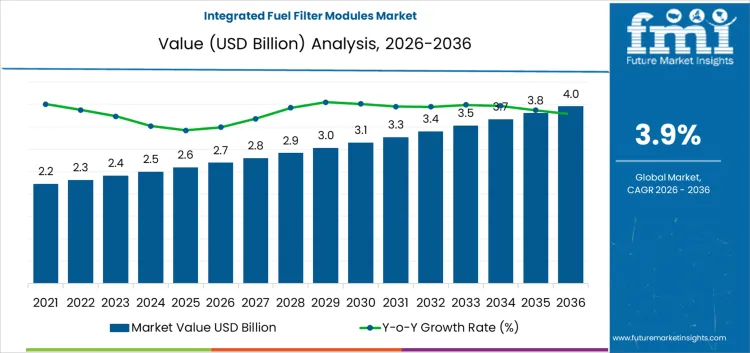
Integrated Fuel Filter Modules Market Key Takeaways
| Metric | Value |
|---|---|
| Industry Value (2026) | USD 2.7 Billion |
| Forecast Value (2036) | USD 4 Billion |
| Forecast CAGR 2026 to 2036 | 3.90% |
How is the Global Integrated Fuel Filter Modules Market Advancing?
The global integrated fuel filter modules market is experiencing steady growth, driven by the increasing need for efficient and reliable fuel filtration systems across the automotive and industrial sectors. Integrated fuel filter modules are crucial for preventing contaminants from reaching sensitive engine components, ensuring fuel system integrity and enhancing engine performance. These modules are increasingly important in modern vehicles, where maintaining high fuel efficiency and meeting stringent emissions standards are essential for regulatory compliance.
A major factor contributing to the market’s growth is the rising demand for fuel-efficient and environmentally compliant vehicles. As automakers focus on reducing emissions and improving fuel economy, integrated fuel filter modules play a key role in optimizing fuel flow, preventing clogs, and extending the lifespan of fuel systems. The growing adoption of hybrid and electric vehicles, which still require fuel filtration systems for their combustion engine components, is also contributing to the market's expansion. Regulatory pressures aimed at reducing emissions and improving fuel efficiency are pushing the automotive industry to adopt more advanced filtration solutions.
Technological advancements in fuel filtration are further boosting market growth. Manufacturers are developing integrated fuel filter modules with enhanced filtration capabilities, longer service intervals, and improved performance under extreme conditions. Innovations in materials, such as high-performance filter media, are helping to improve the durability and effectiveness of these modules, addressing the needs of modern engines and fuel systems. As the demand for high-performance, low-maintenance vehicles continues to rise, the integrated fuel filter modules market is set for continued growth, driven by both technological advancements and the increasing need for cleaner, more efficient fuel systems.
What Is the Segment-Wise Analysis for the Integrated Fuel Filter Modules Market?
The integrated fuel filter modules market is segmented by module type and sales channel. Cartridge modules lead the module type segment with a 32% share, followed by spin-on filter modules, water separator modules, and other types. Cartridge modules are popular due to their ease of replacement and efficient filtering capabilities in various automotive and industrial applications. In terms of sales channels, OEM line-fit leads the market with a 58% share, followed by aftermarket, dealer or OES, and other channels. The adoption of integrated fuel filter modules is driven by the increasing demand for fuel efficiency, vehicle longevity, and improved engine performance, particularly in new vehicle production.
Why Do Cartridge Modules Lead the Integrated Fuel Filter Modules Market?
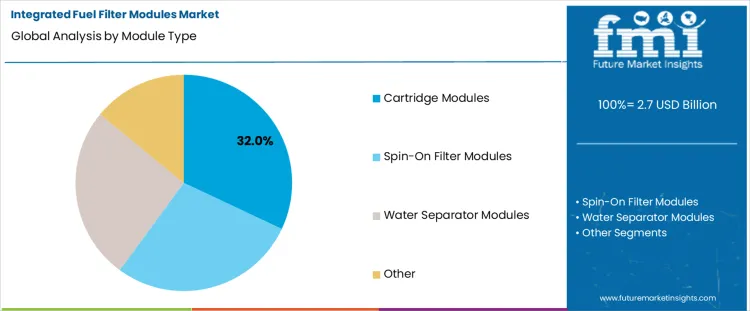
Cartridge modules lead the integrated fuel filter modules market with a 32% share due to their excellent filtration performance and ease of installation. These modules are designed for efficient fuel management in both automotive and industrial applications. They offer superior filtration capabilities, ensuring clean fuel delivery to the engine, while being easy to replace, which adds convenience for users. Their demand is growing in both OEM and aftermarket segments, as they can handle high filtration demands and improve fuel system efficiency. With an increasing focus on cleaner fuel systems and durable components, cartridge modules continue to dominate the market due to their reliability and performance in diverse applications.
How Does OEM Line-Fit Contribute to the Integrated Fuel Filter Modules Market?
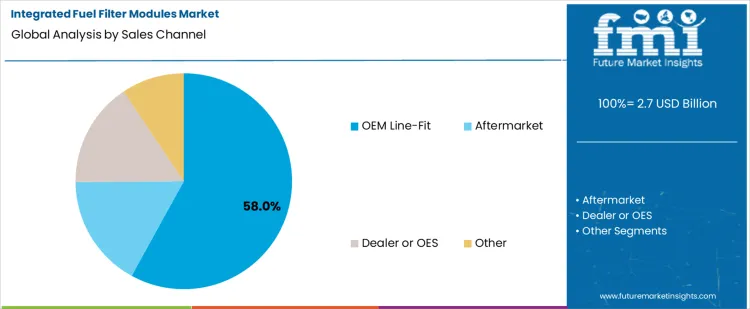
OEM line-fit accounts for 58% of the sales channel segment in the integrated fuel filter modules market. OEMs integrate these modules directly into new vehicles during the manufacturing process to meet performance and regulatory requirements. The growing emphasis on fuel efficiency, emissions compliance, and engine protection drives the adoption of high-performance fuel filter modules in new vehicles. These modules help improve fuel system efficiency and vehicle durability. As the automotive industry focuses on reducing emissions and enhancing engine longevity, OEM line-fit remains the dominant sales channel, especially in new vehicle production, where integrated fuel filter modules are essential components.
What Are the Key Dynamics for the Integrated Fuel Filter Modules Market?
The integrated fuel filter modules market is driven by the growing demand for efficient fuel filtration systems in automotive, commercial, and industrial vehicles. Integrated fuel filter modules combine fuel filtering and pump functions into a single unit, offering space-saving and cost-effective solutions. With increasing focus on fuel efficiency, emissions reduction, and extended vehicle lifespans, manufacturers are adopting advanced fuel filtration systems. Stringent regulations around fuel quality and vehicle emissions are pushing the market for integrated fuel filter modules, especially in the automotive and transportation sectors.
How Are the Key Drivers Shaping the Integrated Fuel Filter Modules Market?
The primary drivers of the integrated fuel filter modules market include the increasing demand for fuel-efficient, low-emission vehicles and stringent government regulations on fuel quality and emissions. Integrated fuel filter modules provide enhanced fuel filtration, ensuring better fuel quality, preventing contamination, and improving engine performance. The growing adoption of hybrid and electric vehicles (EVs), which require advanced fuel management systems, is contributing to market growth. The rising need for space-saving and cost-efficient solutions in automotive design is pushing manufacturers to opt for integrated fuel filter modules.
What Are the Key Trends Shaping the Integrated Fuel Filter Modules Market?
Key trends in the integrated fuel filter modules market include the development of more efficient filtration materials, such as advanced synthetic fibers and activated carbon, to improve fuel quality and system performance. There is also a trend toward incorporating smart technologies into fuel filter modules, such as sensors for real-time monitoring of fuel quality and filter status, enhancing maintenance and operational efficiency. The demand for lighter, compact, and modular solutions in vehicle design is driving innovation in integrated fuel filter systems. The increasing focus on sustainability and renewable fuels is pushing the market to develop filter modules compatible with biofuels and alternative energy sources.
What is the Growth Outlook for the Integrated Fuel Filter Modules Market by Country?
| Country | CAGR (%) |
|---|---|
| China | 5.2% |
| Brazil | 4.9% |
| USA | 3.6% |
| South Korea | 3.4% |
| Japan | 2.7% |
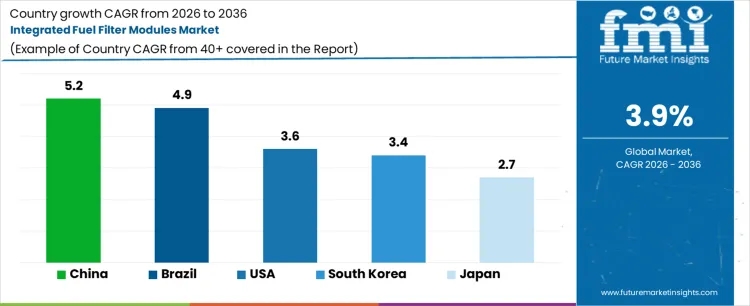
The integrated fuel filter modules market is growing across key regions, with China leading at 5.2%, driven by the expansion of the automotive industry and stricter emissions regulations. Brazil follows at 4.9%, fueled by increasing demand for fuel-efficient vehicles and government sustainability efforts. The USA grows at 3.6%, supported by rising fuel efficiency standards and the adoption of hybrid and electric vehicles. South Korea’s market expands at 3.4%, driven by advancements in automotive technology and environmental sustainability. Japan grows at 2.7%, supported by the automotive sector’s focus on fuel efficiency, reliability, and low-emission vehicles.
What is Driving the Growth of the Integrated Fuel Filter Modules Market in China?
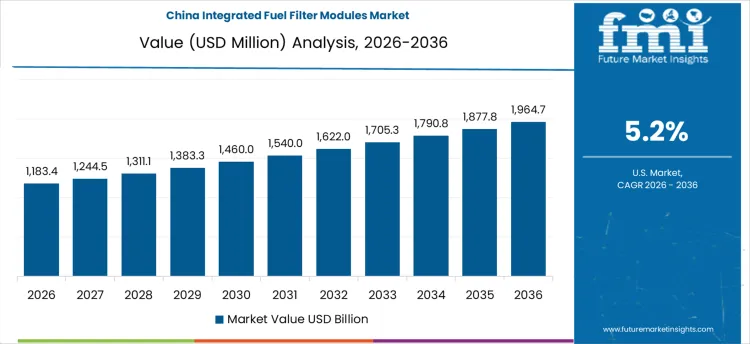
China’s integrated fuel filter modules market is growing at 5.2%, driven by the rapid expansion of the automotive industry, increased demand for fuel-efficient vehicles, and stricter environmental regulations. As China’s vehicle fleet continues to grow, especially in the commercial and industrial sectors, the demand for high-performance fuel filtration systems that ensure cleaner and more efficient engine performance is rising. The government's push for reducing emissions and improving fuel efficiency is further propelling the adoption of integrated fuel filter modules. The rise in electric and hybrid vehicle production in China contributes to market growth, as these vehicles also require effective fuel management systems. With growing infrastructure and a continued focus on innovation, China’s market for integrated fuel filter modules is set for sustained growth.
How is the Integrated Fuel Filter Modules Market Expanding in Brazil?
Brazil’s integrated fuel filter modules market is growing at 4.9%, supported by the expanding automotive sector and the increasing demand for fuel-efficient, environmentally friendly vehicles. The rising adoption of stricter fuel quality standards and government regulations to reduce emissions is pushing automakers to integrate advanced fuel filter modules in vehicles. Brazil’s automotive industry, especially in the commercial and agricultural vehicle sectors, is increasingly adopting integrated fuel filter modules to improve fuel efficiency, reduce contaminants, and meet environmental standards. The demand for these systems is rising as Brazilian consumers and manufacturers prioritize vehicle longevity and cleaner operation. As Brazil’s vehicle fleet continues to grow, the market for integrated fuel filter modules will continue expanding.
How is the Integrated Fuel Filter Modules Market Expanding in the USA?
The integrated fuel filter modules market in the USA is growing at 3.6%, driven by increasing demand for advanced fuel management systems in the automotive, commercial, and industrial vehicle sectors. As the U.S. government enforces stricter fuel efficiency and emissions regulations, the need for effective fuel filtration solutions has risen. The adoption of integrated fuel filter modules helps to enhance engine performance, reduce contaminants, and improve fuel efficiency. The rise in electric vehicle (EV) production and the growing demand for hybrid vehicles in the U.S. automotive market contribute to the demand for fuel filter modules. As environmental regulations continue to tighten, the USA’s market for these systems is expected to grow steadily.
What is Driving the Growth of the Integrated Fuel Filter Modules Market in South Korea?
South Korea’s integrated fuel filter modules market is growing at 3.4%, supported by the country’s advanced automotive sector and focus on fuel efficiency and environmental sustainability. As South Korea’s automotive industry continues to innovate, particularly with the rise of electric and hybrid vehicles, there is increasing demand for efficient fuel filtration systems that ensure cleaner fuel delivery and improve vehicle performance. The growing emphasis on reducing emissions and improving fuel efficiency in both domestic and commercial vehicles is also contributing to market growth. South Korea’s strong push for green technology adoption in the automotive sector, coupled with its advanced manufacturing capabilities, ensures that the market for integrated fuel filter modules will continue to grow.
How is the Integrated Fuel Filter Modules Market Expanding in Japan?
Japan’s integrated fuel filter modules market is growing at 2.7%, driven by the country’s advanced automotive industry and focus on sustainability. Japan’s automotive manufacturers are adopting integrated fuel filter modules in response to increasing environmental standards and consumer demand for fuel-efficient, low-emission vehicles. The adoption of stricter emissions regulations, along with the rise of electric and hybrid vehicles, is driving the need for high-performance fuel management systems. Japan’s automotive industry is increasingly focused on enhancing the reliability and efficiency of its vehicle fleet, further contributing to the demand for integrated fuel filter modules. Although growth is slower compared to other regions, Japan’s commitment to environmental innovation and automotive excellence ensures steady demand for these advanced systems.
How Are Companies Competing in the Integrated Fuel Filter Modules Market?
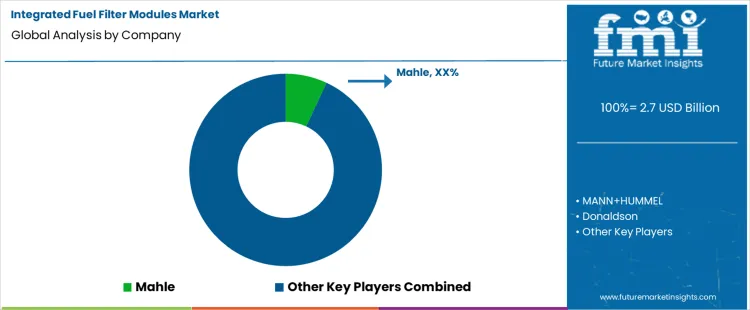
Competition in the Integrated Fuel Filter Modules Market is shaped by filtration efficiency, contaminant capture, pressure stability, integration with fuel systems, and serviceability. Mahle positions its fuel filter modules with high-efficiency media and robust housings that deliver consistent particle retention and minimal pressure drop, and its product materials stress fitment accuracy and long service intervals. MANN+HUMMEL competes with a broad range of engineered filter modules and media technologies designed for diverse engine types, with collateral emphasizing high dirt-holding capacity and reliable filtration performance under variable conditions.
Donaldson and Bosch differentiate through advanced media formulations and integrated sensor readiness, marketed for enhanced protection against water and solids ingress in modern fuel systems. Donaldson’s brochures spotlight rugged design and modularity, while Bosch highlights tight integration with injection systems and diagnostic compatibility. Cummins Filtration (Fleetguard) adds value with heavy-duty filtration solutions engineered for high debris loads and long life, with documentation that underscores engine protection and reduced maintenance costs.
Parker Hannifin, Sogefi, UFI Filters, and Hengst offer versatile filter module options that balance performance and service life for passenger and commercial vehicles, with materials focusing on media innovation and robust construction. Denso competes with compact, high-precision modules tailored for tight packaging spaces and consistent fuel cleanliness. Across all vendors, product materials emphasize filtration performance, integration ease, durability under operating stress, and alignment with OEM requirements as key differentiators that help engine makers and fleet operators maintain fuel system integrity and engine reliability.
Key Players in Integrated Fuel Filter Modules Market
- Mahle
- MANN+HUMMEL
- Donaldson
- Bosch
- Cummins Filtration (Fleetguard)
- Parker Hannifin
- Sogefi
- UFI Filters
- Hengst
- Denso
Scope of Report
| Attributes | Description |
|---|---|
| Quantitative Unit (2026) | USD Billion |
| Module Type | Cartridge Modules, Spin-On Filter Modules, Water Separator Modules, Other |
| Sales Channel | OEM Line-Fit, Aftermarket, Dealer or OES, Other |
| Regions Covered | Asia Pacific, Europe, North America, Latin America, Middle East & Africa |
| Countries Covered | China, Japan, South Korea, India, Australia & New Zealand, ASEAN, Germany, United Kingdom, France, Italy, Spain, Nordic, BENELUX, United States, Canada, Mexico, Brazil, Chile, Turkey, South Africa, Other GCC Countries |
| Key Companies Profiled | Mahle, MANN+HUMMEL, Donaldson, Bosch, Cummins Filtration (Fleetguard), Parker Hannifin, Sogefi, UFI Filters, Hengst, Denso |
| Additional Attributes | Dollar sales by module type, sales channel, and region; regional CAGR and growth outlook for the integrated fuel filter modules market. |
Integrated Fuel Filter Modules Market by Key Segments
Module Type
- Cartridge Modules
- Spin-On Filter Modules
- Water Separator Modules
- Other
Sales Channel
- OEM Line-Fit
- Aftermarket
- Dealer or OES
- Other
Region:
- Asia Pacific
- China
- Japan
- South Korea
- India
- Australia & New Zealand
- ASEAN
- Rest of Asia Pacific
- Europe
- Germany
- United Kingdom
- France
- Italy
- Spain
- Nordic
- BENELUX
- Rest of Europe
- North America
- United States
- Canada
- Mexico
- Latin America
- Brazil
- Chile
- Rest of Latin America
- Middle East & Africa
- Kingdom of Saudi Arabia
- Other GCC Countries
- Turkey
- South Africa
- Other African Union
- Rest of Middle East & Africa
Bibliography
- Mahle. (2023). Fuel filter modules for efficient fuel delivery: High-efficiency media and robust housings for long service intervals. Mahle GmbH.
- MANN+HUMMEL. (2023). Advanced filter modules for diverse engine types: High dirt holding capacity and reliable filtration performance. MANN+HUMMEL Group.
- Donaldson. (2023). Fuel filter modules with advanced media formulations: Enhanced protection against water and solids ingress. Donaldson Company, Inc.
Frequently Asked Questions
How big is the integrated fuel filter modules market in 2026?
The global integrated fuel filter modules market is estimated to be valued at USD 2.7 billion in 2026.
What will be the size of integrated fuel filter modules market in 2036?
The market size for the integrated fuel filter modules market is projected to reach USD 4.0 billion by 2036.
How much will be the integrated fuel filter modules market growth between 2026 and 2036?
The integrated fuel filter modules market is expected to grow at a 3.9% CAGR between 2026 and 2036.
What are the key product types in the integrated fuel filter modules market?
The key product types in integrated fuel filter modules market are cartridge modules, spin-on filter modules, water separator modules and other.
Which sales channel segment to contribute significant share in the integrated fuel filter modules market in 2026?
In terms of sales channel, oem line-fit segment to command 58.0% share in the integrated fuel filter modules market in 2026.
Preview the report firsthand - request a free sample
Get SampleGet the brochure for pricing and purchase details.
Get PDFTable of Content
- Executive Summary
- Global Market Outlook
- Demand-side Trends
- Supply-side Trends
- Technology Roadmap Analysis
- Analysis and Recommendations
- Market Overview
- Market Coverage / Taxonomy
- Market Definition / Scope / Limitations
- Market Background
- Market Dynamics
- Drivers
- Restraints
- Opportunity
- Trends
- Scenario Forecast
- Demand in Optimistic Scenario
- Demand in Likely Scenario
- Demand in Conservative Scenario
- Opportunity Map Analysis
- Product Life Cycle Analysis
- Supply Chain Analysis
- Investment Feasibility Matrix
- Value Chain Analysis
- PESTLE and Porter’s Analysis
- Regulatory Landscape
- Regional Parent Market Outlook
- Production and Consumption Statistics
- Import and Export Statistics
- Market Dynamics
- Global Market Analysis 2021 to 2025 and Forecast, 2026 to 2036
- Historical Market Size Value (USD Million) Analysis, 2021 to 2025
- Current and Future Market Size Value (USD Million) Projections, 2026 to 2036
- Y-o-Y Growth Trend Analysis
- Absolute $ Opportunity Analysis
- Global Market Pricing Analysis 2021 to 2025 and Forecast 2026 to 2036
- Global Market Analysis 2021 to 2025 and Forecast 2026 to 2036, By Module Type
- Introduction / Key Findings
- Historical Market Size Value (USD Million) Analysis By Module Type , 2021 to 2025
- Current and Future Market Size Value (USD Million) Analysis and Forecast By Module Type , 2026 to 2036
- Cartridge Modules
- Spin-On Filter Modules
- Water Separator Modules
- Other
- Cartridge Modules
- Y-o-Y Growth Trend Analysis By Module Type , 2021 to 2025
- Absolute $ Opportunity Analysis By Module Type , 2026 to 2036
- Global Market Analysis 2021 to 2025 and Forecast 2026 to 2036, By Sales Channel
- Introduction / Key Findings
- Historical Market Size Value (USD Million) Analysis By Sales Channel, 2021 to 2025
- Current and Future Market Size Value (USD Million) Analysis and Forecast By Sales Channel, 2026 to 2036
- OEM Line-Fit
- Aftermarket
- Dealer or OES
- Other
- OEM Line-Fit
- Y-o-Y Growth Trend Analysis By Sales Channel, 2021 to 2025
- Absolute $ Opportunity Analysis By Sales Channel, 2026 to 2036
- Global Market Analysis 2021 to 2025 and Forecast 2026 to 2036, By Region
- Introduction
- Historical Market Size Value (USD Million) Analysis By Region, 2021 to 2025
- Current Market Size Value (USD Million) Analysis and Forecast By Region, 2026 to 2036
- North America
- Latin America
- Western Europe
- Eastern Europe
- East Asia
- South Asia and Pacific
- Middle East & Africa
- Market Attractiveness Analysis By Region
- North America Market Analysis 2021 to 2025 and Forecast 2026 to 2036, By Country
- Historical Market Size Value (USD Million) Trend Analysis By Market Taxonomy, 2021 to 2025
- Market Size Value (USD Million) Forecast By Market Taxonomy, 2026 to 2036
- By Country
- USA
- Canada
- Mexico
- By Module Type
- By Sales Channel
- By Country
- Market Attractiveness Analysis
- By Country
- By Module Type
- By Sales Channel
- Key Takeaways
- Latin America Market Analysis 2021 to 2025 and Forecast 2026 to 2036, By Country
- Historical Market Size Value (USD Million) Trend Analysis By Market Taxonomy, 2021 to 2025
- Market Size Value (USD Million) Forecast By Market Taxonomy, 2026 to 2036
- By Country
- Brazil
- Chile
- Rest of Latin America
- By Module Type
- By Sales Channel
- By Country
- Market Attractiveness Analysis
- By Country
- By Module Type
- By Sales Channel
- Key Takeaways
- Western Europe Market Analysis 2021 to 2025 and Forecast 2026 to 2036, By Country
- Historical Market Size Value (USD Million) Trend Analysis By Market Taxonomy, 2021 to 2025
- Market Size Value (USD Million) Forecast By Market Taxonomy, 2026 to 2036
- By Country
- Germany
- UK
- Italy
- Spain
- France
- Nordic
- BENELUX
- Rest of Western Europe
- By Module Type
- By Sales Channel
- By Country
- Market Attractiveness Analysis
- By Country
- By Module Type
- By Sales Channel
- Key Takeaways
- Eastern Europe Market Analysis 2021 to 2025 and Forecast 2026 to 2036, By Country
- Historical Market Size Value (USD Million) Trend Analysis By Market Taxonomy, 2021 to 2025
- Market Size Value (USD Million) Forecast By Market Taxonomy, 2026 to 2036
- By Country
- Russia
- Poland
- Hungary
- Balkan & Baltic
- Rest of Eastern Europe
- By Module Type
- By Sales Channel
- By Country
- Market Attractiveness Analysis
- By Country
- By Module Type
- By Sales Channel
- Key Takeaways
- East Asia Market Analysis 2021 to 2025 and Forecast 2026 to 2036, By Country
- Historical Market Size Value (USD Million) Trend Analysis By Market Taxonomy, 2021 to 2025
- Market Size Value (USD Million) Forecast By Market Taxonomy, 2026 to 2036
- By Country
- China
- Japan
- South Korea
- By Module Type
- By Sales Channel
- By Country
- Market Attractiveness Analysis
- By Country
- By Module Type
- By Sales Channel
- Key Takeaways
- South Asia and Pacific Market Analysis 2021 to 2025 and Forecast 2026 to 2036, By Country
- Historical Market Size Value (USD Million) Trend Analysis By Market Taxonomy, 2021 to 2025
- Market Size Value (USD Million) Forecast By Market Taxonomy, 2026 to 2036
- By Country
- India
- ASEAN
- Australia & New Zealand
- Rest of South Asia and Pacific
- By Module Type
- By Sales Channel
- By Country
- Market Attractiveness Analysis
- By Country
- By Module Type
- By Sales Channel
- Key Takeaways
- Middle East & Africa Market Analysis 2021 to 2025 and Forecast 2026 to 2036, By Country
- Historical Market Size Value (USD Million) Trend Analysis By Market Taxonomy, 2021 to 2025
- Market Size Value (USD Million) Forecast By Market Taxonomy, 2026 to 2036
- By Country
- Kingdom of Saudi Arabia
- Other GCC Countries
- Turkiye
- South Africa
- Other African Union
- Rest of Middle East & Africa
- By Module Type
- By Sales Channel
- By Country
- Market Attractiveness Analysis
- By Country
- By Module Type
- By Sales Channel
- Key Takeaways
- Key Countries Market Analysis
- USA
- Pricing Analysis
- Market Share Analysis, 2025
- By Module Type
- By Sales Channel
- Canada
- Pricing Analysis
- Market Share Analysis, 2025
- By Module Type
- By Sales Channel
- Mexico
- Pricing Analysis
- Market Share Analysis, 2025
- By Module Type
- By Sales Channel
- Brazil
- Pricing Analysis
- Market Share Analysis, 2025
- By Module Type
- By Sales Channel
- Chile
- Pricing Analysis
- Market Share Analysis, 2025
- By Module Type
- By Sales Channel
- Germany
- Pricing Analysis
- Market Share Analysis, 2025
- By Module Type
- By Sales Channel
- UK
- Pricing Analysis
- Market Share Analysis, 2025
- By Module Type
- By Sales Channel
- Italy
- Pricing Analysis
- Market Share Analysis, 2025
- By Module Type
- By Sales Channel
- Spain
- Pricing Analysis
- Market Share Analysis, 2025
- By Module Type
- By Sales Channel
- France
- Pricing Analysis
- Market Share Analysis, 2025
- By Module Type
- By Sales Channel
- India
- Pricing Analysis
- Market Share Analysis, 2025
- By Module Type
- By Sales Channel
- ASEAN
- Pricing Analysis
- Market Share Analysis, 2025
- By Module Type
- By Sales Channel
- Australia & New Zealand
- Pricing Analysis
- Market Share Analysis, 2025
- By Module Type
- By Sales Channel
- China
- Pricing Analysis
- Market Share Analysis, 2025
- By Module Type
- By Sales Channel
- Japan
- Pricing Analysis
- Market Share Analysis, 2025
- By Module Type
- By Sales Channel
- South Korea
- Pricing Analysis
- Market Share Analysis, 2025
- By Module Type
- By Sales Channel
- Russia
- Pricing Analysis
- Market Share Analysis, 2025
- By Module Type
- By Sales Channel
- Poland
- Pricing Analysis
- Market Share Analysis, 2025
- By Module Type
- By Sales Channel
- Hungary
- Pricing Analysis
- Market Share Analysis, 2025
- By Module Type
- By Sales Channel
- Kingdom of Saudi Arabia
- Pricing Analysis
- Market Share Analysis, 2025
- By Module Type
- By Sales Channel
- Turkiye
- Pricing Analysis
- Market Share Analysis, 2025
- By Module Type
- By Sales Channel
- South Africa
- Pricing Analysis
- Market Share Analysis, 2025
- By Module Type
- By Sales Channel
- USA
- Market Structure Analysis
- Competition Dashboard
- Competition Benchmarking
- Market Share Analysis of Top Players
- By Regional
- By Module Type
- By Sales Channel
- Competition Analysis
- Competition Deep Dive
- Mahle
- Overview
- Product Portfolio
- Profitability by Market Segments (Product/Age /Sales Channel/Region)
- Sales Footprint
- Strategy Overview
- Marketing Strategy
- Product Strategy
- Channel Strategy
- MANN+HUMMEL
- Donaldson
- Bosch
- Cummins Filtration (Fleetguard)
- Parker Hannifin
- Sogefi
- UFI Filters
- Hengst
- Denso
- Mahle
- Competition Deep Dive
- Assumptions & Acronyms Used
- Research Methodology


