

- CAGR (2025 to 2035)
- 6.1%
IV Bag Market Share Analysis Outlook (2025 to 2035)
The IV bag market is experiencing consistent growth driven by the increasing demand for advanced healthcare infrastructure, rising chronic illnesses, and innovations in IV bag designs. By 2035, the market is projected to reach USD 3.6 billion, growing at a compound annual growth rate (CAGR) of 6.1%. Key growth drivers include regulatory mandates for improved patient safety, the rising adoption of single-use IV bags, and advancements in biodegradable and non-PVC materials.
Manufacturers are innovating with customized IV bag solutions and leveraging partnerships with healthcare providers and governments to ensure widespread adoption and compliance with global medical standards.
| Attributes | Values |
|---|---|
| Projected Industry Size 2035 | USD 3.6 billion |
| Value-based CAGR (2025 to 2035) | 6.1% |
SWOT Analysis of the Top Key Players
Summary
The SWOT analysis reveals the strategic positioning of leading companies in the IV bag market. Baxter International dominates with its diversified portfolio but faces challenges with raw material costs. B. Braun excels in offering eco-friendly and functional IV bags but struggles with scaling production in emerging markets. ICU Medical focuses on precision-engineered IV bags yet contends with high competition. Opportunities lie in bio-based materials and smart IV technologies, while threats include stringent regulations and fluctuating material costs.
Baxter International
Baxter International leads the market with its wide range of IV bag solutions, including non-PVC and multilayer designs. Its strengths lie in global distribution networks and innovation in patient-centric solutions. However, challenges arise from raw material costs and maintaining affordability across regions. Opportunities include expanding biodegradable product lines and targeting emerging markets, while threats stem from increasing competition and regulatory pressures.
B. Braun
B. Braun’s expertise in functional and eco-friendly IV bags gives it a competitive edge. The company’s focus on sustainability and advanced designs makes it a preferred choice for healthcare providers. However, limited production scalability in emerging markets restricts its growth potential. Opportunities lie in forming strategic partnerships and innovating in smart IV technologies. Threats include fluctuating raw material prices and market saturation in developed regions.
ICU Medical
ICU Medical stands out for its precision-engineered IV bag solutions tailored to critical care needs. The company’s strengths include high-quality designs and advanced safety features. However, intense competition from global and regional players poses challenges. Opportunities lie in leveraging IoT-enabled IV bags and expanding into underpenetrated regions. Threats include rising compliance costs and pricing pressure from competitors.
Global Market Share & Industry Share
| Category | Market Share (%) |
|---|---|
| Top 3 Players (Baxter, B. Braun, ICU Medical) | 14% |
| Rest of Top 5 Players | 08% |
| Next 5 of Top 10 Players | 01% |
Type of Player & Industry Share
| Type of Player | Market Share (%) |
|---|---|
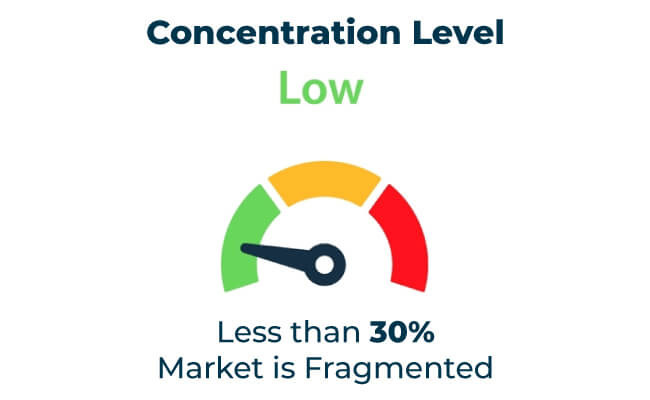
| Top 10 Players | 29% |
| Next 20 Players | 48% |
| Remaining Players | 23% |
Market Concentration
Year-on-Year Leaders
- Baxter International: Pioneers innovative and patient-centric IV bag solutions.
- B. Braun: Focuses on eco-friendly and functional IV bags.
- ICU Medical: Specializes in precision-engineered IV bags for critical care.
Emerging Technology in IV Bag Market
- Biodegradable Materials: Innovations in non-PVC and plant-based materials.
- IoT-Enabled IV Bags: Smart IV bags with integrated monitoring features.
- Antimicrobial Coatings: Prevents infections and enhances patient safety.
- Multi-Chamber Designs: Enables precise drug mixing and administration.
Sustainability Trends
- Non-PVC Solutions: Growing demand for non-toxic and recyclable materials.
- Circular Economy Models: Emphasis on reducing medical waste through reusable packaging.
- Energy-Efficient Production: Manufacturers optimize production to reduce carbon footprints.
Consumer Trends
-
Preference for Patient Safety: High demand for advanced safety features in IV bags.
- Adoption of Home Care: Rising use of IV bags in home-based healthcare settings.
- Sustainability Focus: Healthcare providers prioritize environmentally friendly packaging.
Regulatory Insights
North America leads with stringent safety standards and regulations supporting sustainable IV bag solutions. Europe focuses on reducing PVC usage and promoting recyclable materials. Asia-Pacific drives growth through increasing healthcare expenditure and infrastructure expansion, while emerging markets create opportunities for cost-effective IV bags.
Export Opportunities
Emerging markets in Asia-Pacific, South America, and Africa present significant growth potential. Affordable, scalable, and eco-friendly IV bag solutions are increasingly in demand.
Obstacles and Possibilities
Obstacles
- High Production Costs: Non-PVC materials and advanced designs increase costs.
- Regulatory Compliance: Complex global standards require significant investments.
- Material Volatility: Fluctuations in raw material prices pose challenges.
Possibilities
- Smart IV Bags: IoT-enabled designs for better monitoring and control.
- Material Innovations: Advancements in bioplastics and antimicrobial materials.
- Partnerships with Hospitals: Collaborations for tailored solutions and long-term contracts.
Market Environment
In-House vs. Contract Manufacturing
- In-House Manufacturing: Offers control over quality and innovation for leading players.
- Contract Manufacturing: Provides cost efficiency and scalability for smaller players.
Regional Analysis
Regional dynamics shape the IV bag market. North America dominates with advanced healthcare systems and regulatory support, while Europe emphasizes non-PVC solutions and innovation. Asia-Pacific sees rapid growth due to increasing healthcare investment, and emerging markets offer opportunities for affordable and scalable solutions.
| Region | North America |
|---|---|
| Market Share (%) | 35% |
| Key Drivers | Focus on patient safety and advanced technologies. |
| Region | Europe |
|---|---|
| Market Share (%) | 30% |
| Key Drivers | Shift to non-PVC and sustainable materials. |
| Region | Asia-Pacific |
|---|---|
| Market Share (%) | 25% |
| Key Drivers | Healthcare infrastructure and expenditure growth. |
| Region | Other Regions |
|---|---|
| Market Share (%) | 10% |
| Key Drivers | Opportunities in cost-effective solutions. |
End-Use Industry Segmentation
- Hospitals: High demand for IV bags for inpatient care.
- Home Healthcare: Growing need for portable and user-friendly solutions.
- Clinics: Focus on cost-effective and reliable IV bag options.
- Ambulatory Care: Lightweight and durable IV bags for mobility.
Recommendations for Technology Suppliers
- Sustainable Solutions: Invest in non-PVC and biodegradable materials.
- Automation Integration: Develop scalable production systems to reduce costs.
- Customized Solutions: Collaborate with healthcare providers for tailored IV bags.
Future Roadmap
The IV bag market is set for rapid growth through advancements in sustainability, smart technologies, and regional expansion. Companies prioritizing innovation in materials, scalability, and strategic partnerships will lead the market. Increased investment in healthcare infrastructure will further drive demand.
Market KPIs
- Sustainability Metrics: Measure adoption of non-PVC and biodegradable materials.
- Regional Revenue Growth: Track expansion in Asia-Pacific and emerging markets.
- Technology Integration: Monitor the adoption of IoT and antimicrobial technologies.
Who Shaped the Year
- Baxter International: Led with innovative IV bag designs.
- B. Braun: Focused on eco-friendly and advanced IV solutions.
- ICU Medical: Delivered precision-engineered IV bags tailored for critical care.
Tier Structure of Key Companies
| Tier | Key Companies |
|---|---|
| Tier 1 | Baxter International, B. Braun, ICU Medical |
| Tier 2 | Fresenius Kabi, Hospira |
| Tier 3 | Poly Medicure, Renolit, Terumo Corporation |
Key Vendor Initiatives
- Baxter International: Expanded product lines with non-PVC and smart IV bags.
- B. Braun: Invested in sustainable materials and innovative designs.
- ICU Medical: Partnered with hospitals for precision-engineered IV solutions.
Conclusion
The IV bag market is poised for robust growth, driven by advancements in healthcare infrastructure, sustainability, and smart technologies. Companies that invest in innovation, eco-friendly solutions, and strategic partnerships will gain a competitive edge in this evolving landscape.
Appendices
Key Definitions
- IV Bag: A sterile container used to deliver fluids, medication, or nutrients directly into a patient’s bloodstream.
- Smart IV Bag: An IV bag integrated with IoT technology for real-time monitoring.
Abbreviations
- CAGR: Compound Annual Growth Rate
Research Methodology
This report is based on primary research, secondary data analysis, and market modeling. Industry expert consultations validated insights.
Market Definition
The IV bag market includes solutions made from PVC, non-PVC, and biodegradable materials used across hospitals, clinics, and home healthcare settings.
IV Bag Market Share Analysis Segmentation
By Region:
- North America
- Europe
- Asia-Pacific
- Other Regions
By End-Use Industry:
- Hospitals
- Home Healthcare
- Clinics
- Ambulatory Care
Frequently Asked Questions
What drives growth in the IV bag market?
Increasing demand for advanced healthcare solutions and sustainable materials.
What is the projected market size by 2035?
The market is projected to reach USD 3.6 billion, growing at a compound annual growth rate (CAGR) of 6.1%
Who are the key players in the market?
Baxter International, B. Braun, and ICU Medical lead the market.
What challenges does the market face?
High raw material costs, regulatory pressures, and competitive pricing.
What opportunities exist in this market?
Innovations in bioplastics, IoT-enabled IV bags, and emerging healthcare markets.
Preview the report firsthand - request a free sample
Get SampleGet the brochure for pricing and purchase details.
Get PDFTable of Content
- Market Share Breakdown of the Market
- Executive Summary
- SWOT Analysis of the Top Key Players
- Market Size and Projection
- Global Market Share & Industry Share
- Year-on-Year Leaders
- Emerging Technology in Market
- Sustainability Trends
- Consumer Trends
- Regulatory Insights
- Export Opportunities
- Obstacles and Possibilities
- Market Environment
- Regional Analysis
- End-Use Industry Segmentation
- Recommendations for Technology Suppliers
- Future Roadmap
- Market KPIs
- Who Shaped the Year
- Key Vendor Initiatives
- Conclusion


