

- Industry Size (2025)
- USD 150.8 Mn
- Forecast (2035)
- USD 217.9 Mn
- CAGR (2025 to 2035)
- 3.8%
Demand for Blenders in Japan Forecast and Outlook 2025 to 2035
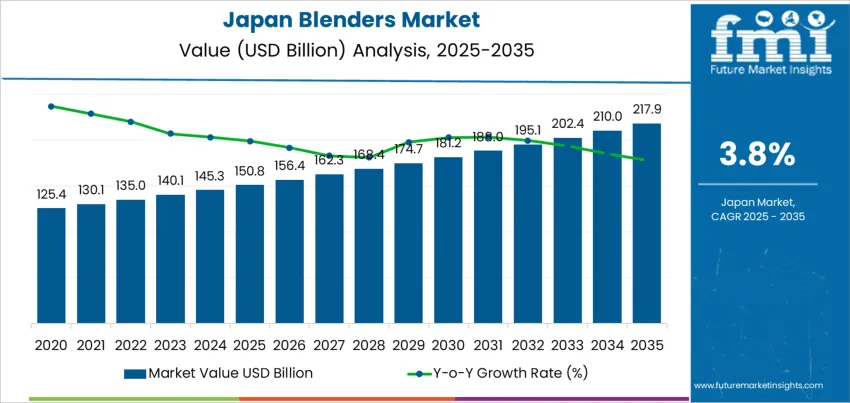
The demand for blenders in Japan is expected to grow from USD 150.8 million in 2025 to USD 217.9 million by 2035, driven by a CAGR of 3.8%. Blenders remain essential kitchen appliances, thanks to their versatility for preparing beverages, smoothies, and even soups and sauces. The growing trend toward health and wellness, particularly the rising interest in plant-based diets and at-home cooking, is driving demand for blenders in Japan. As more consumers look to improve their nutrition by incorporating fresh, homemade drinks into their diets, blenders have become indispensable tools for achieving these health goals.
Increased interest in convenience and multifunctional kitchen appliances is another major factor driving demand. Modern blenders are no longer limited to basic functions; they now offer multiple settings for varying texture and consistency, along with added capabilities such as crushing ice, grinding, and making nut butters. These features make blenders increasingly popular not only in homes but also in cafes, juice bars, and restaurants, where high-quality beverage preparation is essential.
The industry will also see a growing emphasis on energy-efficient, durable, and compact blender models. With smaller living spaces becoming more common in Japan, consumers increasingly prefer compact yet powerful blenders that can easily be stored without sacrificing performance. The demand for eco-friendly and eco-friendly products is expected to drive innovations in blender designs, such as the use of recyclable materials and energy-saving motors.
Quick Stats of the Demand for Blenders in Japan
- Demand for Blenders in Japan Value (2025): USD 150.8 million
- Demand for Blenders in Japan Forecast Value (2035): USD 217.9 million
- Demand for Blenders in Japan Forecast CAGR (2025-2035): 3.8%
- Demand for Blenders in Japan Key Segments: Countertop Blenders, Personal Blenders, Immersion/Hand Blenders, Others
- Demand for Blenders in Japan Key Growth Regions: Kyushu & Okinawa, Kanto, Kansai, Chubu, Tohoku, Rest of Japan
- Demand for Blenders in Japan Top Players: Vitamix, Blendtec, Breville, Ninja (SharkNinja), KitchenAid (Whirlpool)
What is the Growth Forecast for the Demand for Blenders in Japan through 2035?
From 2025 to 2030, demand for blenders in Japan is expected to grow from USD 150.8 million to USD 188.0 million, adding USD 37.2 million in value. This period will see significant growth driven by the increasing focus on health and wellness, prompting more consumers to adopt kitchen appliances that help facilitate healthier lifestyles. The popularity of plant-based diets and homemade smoothies will also contribute to this expansion, as more individuals look for convenient, at-home solutions to prepare fresh, nutritious beverages. As consumers seek products that support these lifestyle changes, blenders will become a key kitchen appliance.
From 2030 to 2035, demand will continue to rise from USD 188.0 million to USD 217.9 million, contributing USD 29.9 million in value. The growth rate will stabilize during this phase as the industry matures, with steady demand driven by consumers’ preference for high-performance, eco-friendly, and space-efficient blenders. Innovations focusing on durability, energy efficiency, and multifunctional features will further appeal to consumers. As the trend toward eco-friendly living continues, the demand for eco-conscious appliances like blenders will remain strong. Blenders will continue to be a staple in kitchens across Japan, as health-conscious individuals increasingly prioritize convenience and efficiency in preparing nutritious meals and beverages.
Demand for Blenders in Japan Key Takeaways
| Metric | Value |
|---|---|
| Demand for Blenders in Japan Value (2025) | USD 150.8 million |
| Demand for Blenders in Japan Forecast Value (2035) | USD 217.9 million |
| Demand for Blenders in Japan Forecast CAGR (2025-2035) | 3.8% |
Why is the Demand for Blenders in Japan Growing?
The demand for blenders in Japan is growing due to the increasing focus on healthy eating, convenience, and culinary innovation. Blenders have become essential kitchen appliances, widely used for preparing smoothies, soups, sauces, and other food and drink items. As the emphasis on wellness and nutrition grows, particularly in urban areas, blenders are becoming a staple in homes, gyms, and health-conscious cafes, driving their growing popularity.
A key factor contributing to this growth is the rising awareness of healthy living and the increasing consumption of fruits, vegetables, and plant-based foods. As more consumers incorporate blended beverages like smoothies and protein shakes into their diets for their nutritional benefits, the demand for high-performance blenders that can handle a variety of ingredients is rising. With Japan’s strong focus on wellness and diets that emphasize plant-based and low-calorie options, more individuals are turning to blenders for daily meal preparation.
The trend of convenience in food preparation is also a major driver behind the demand for blenders. With fast-paced lifestyles, consumers are seeking quick, easy solutions for meal prep, and blenders offer an efficient way to prepare healthy meals and beverages. Innovations in blender technology, including more compact, powerful, and easy-to-clean models, are making them more attractive to a wider range of consumers. As health-conscious habits and the need for convenience continue to rise, the demand for blenders in Japan is projected to grow steadily through 2035.
What is the Segment-Wise Analysis of Demand for Blenders in Japan?
Demand for blenders in Japan is segmented by product type, distribution channel, material type, and region. By product type, demand is divided into countertop blenders, personal blenders, immersion/hand blenders, and others, with countertop blenders leading at 38%. The demand is also segmented by distribution channel, with offline sales accounting for 58% and online sales contributing the rest. In terms of material type, blenders are available in plastic, stainless steel, glass, and other materials, with plastic being the most common. Regionally, demand is spread across Kyushu & Okinawa, Kanto, Kansai, Chubu, Tohoku, and the Rest of Japan.
Why are Countertop Blenders the Top Choice for Consumers in Japan?
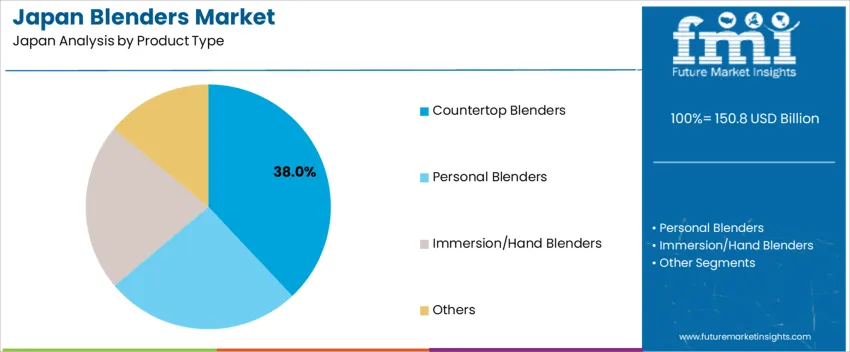
Countertop blenders account for 38% of the demand for blenders in Japan, driven by their versatility, power, and ability to handle a wide variety of tasks. These blenders are perfect for preparing larger quantities of smoothies, soups, sauces, and other blended foods. Their popularity is further reinforced by their capacity to blend tougher ingredients like ice, nuts, and frozen fruits, making them ideal for both home kitchens and commercial settings such as cafes and restaurants. With the growing trend toward healthy eating and meal prepping, countertop blenders are favored for delivering high-quality, consistent results. The range of features, including multiple speed settings and preset programs, makes them even more appealing to Japanese consumers who seek convenience and performance in their kitchen appliances.
What Drives the Dominance of Offline Distribution for Blenders in Japan?
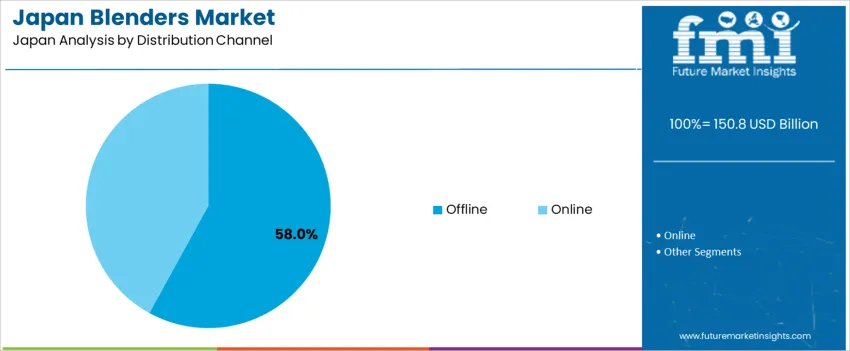
Offline sales account for 58% of the demand for blenders in Japan, largely due to consumers’ preference for experiencing products firsthand before making a purchase. Visiting large retail stores, electronics outlets, or specialty home goods stores provides consumers the opportunity to assess product quality, design, and features in person. Offline shopping allows immediate access to the product, which is appealing to those who need their appliances right away. In-person consultations, the ability to compare multiple models, and promotions or demonstrations further boost the appeal of offline channels. Retailers often offer warranties and customer support, which also adds to the confidence consumers have when purchasing appliances. While online sales are growing, offline distribution remains the dominant channel for blenders in Japan, driven by the tactile experience and convenience of immediate purchase.
What are the Key Trends, Drivers, and Restraints in Demand for Blenders in Japan?
Blenders, including countertop, hand-held, and personal/portable models, are used for preparing smoothies, soups, sauces, and other home-cooked meals quickly and conveniently. Growing health awareness and interest in homemade, nutritious food encourage use of blenders for juices, vegetable drinks, and blended meals. The trend toward smaller dwellings and compact kitchens also supports demand for space-efficient appliances that serve multiple roles. On the other side, price sensitivity among some consumers and preference for traditional cooking methods may restrain rapid uptake across all households.
Why is Demand for Blenders Growing in Japan?
Demand for blenders in Japan is growing because households and individuals increasingly value convenience, health, and flexibility in meal preparation. As many Japanese people live in urban apartments with limited kitchen space, compact blenders, particularly portable or multifunctional ones, offer an ideal solution. The rising interest in healthy diets, such as smoothies, fresh soups, and homemade sauces, emphasizes blender use. Growth in single-person or dual-income households shortens available cooking time, making quick food-prep tools appealing. Easy availability through retail stores and e-commerce also makes it simpler to purchase blenders, supporting higher adoption.
How are Technological & Industry Innovations Driving Blender Demand in Japan?
Technological and product innovations are boosting blender demand in Japan by improving performance, versatility, and ease of use. Modern blenders offer powerful motors, variable-speed settings, noise reduction, and multiple pre-set functions, such as smoothie mode, soup blending, and ice crushing, catering to diverse cooking needs. Portable and personal blenders, easy to store and clean, align well with compact urban kitchens. Some models emphasize energy efficiency and eco-friendly design, which appeals to environmentally conscious consumers. These enhancements expand blender functionality beyond simple blending, making them attractive for more households and increasing their utility in everyday cooking.
What are the Key Challenges and Risks That Could Limit Blender Demand in Japan?
Despite rising demand, several factors may limit broader adoption of blenders in Japan. Some consumers may continue to prefer traditional cooking and food preparation methods, seeing them as more authentic or suitable for Japanese cuisine. Price remains a barrier for premium or high-performance blender models, especially for budget-conscious buyers. Compact kitchens and small living spaces may limit willingness to invest in appliances perceived as non-essential. Maintenance and cleaning requirements, especially with models that have multiple components, can deter regular use. Finally, industry saturation in urban areas and changing dietary habits could slow growth over time.
What is the Regional Demand Outlook for Blenders in Japan?
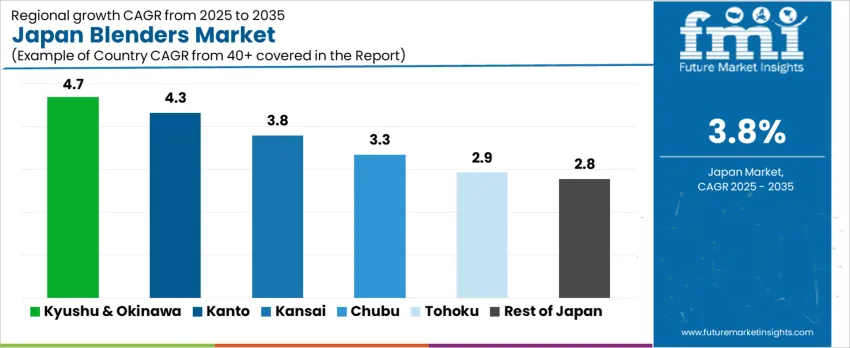
| Region | CAGR (%) |
|---|---|
| Kyushu & Okinawa | 4.7% |
| Kanto | 4.3% |
| Kansai | 3.8% |
| Chubu | 3.3% |
| Tohoku | 2.9% |
| Rest of Japan | 2.8% |
Demand for blenders in Japan is steadily increasing across regions, driven by rising health awareness, convenience-oriented cooking, and the adoption of space-saving kitchen appliances. Kyushu & Okinawa leads at 4.7%, fueled by urbanization and health-conscious living. Kanto follows with 4.3%, supported by busy urban lifestyles and a shift toward healthier home-cooked meals. Kansai shows 3.8% growth, driven by urban and suburban adoption of multifunctional blenders. Chubu experiences 3.3% growth due to urbanization and health trends. Tohoku and the Rest of Japan show steady demand, at 2.9% and 2.8% respectively, as lifestyle habits evolve in less urbanized regions. The ongoing trend toward compact, efficient appliances ensures the steady rise of blender demand in Japan.
How is Demand for Blenders Growing in Kyushu & Okinawa?
Kyushu & Okinawa shows the strongest demand for blenders, with a 4.7% CAGR. The region’s growing number of urban households, particularly in cities like Fukuoka, and shifting lifestyle habits, especially among younger and working populations, is driving interest in compact, multifunctional kitchen appliances. With rising health consciousness, many households are turning to blenders for smoothies, soups, and fresh juices. The trend toward home cooking and convenience-oriented kitchen gadgets, combined with limited kitchen space in urban settings, favors compact and efficient blenders. The increasing popularity of wellness and healthy-eating habits further boosts blender adoption. For small families, singles, or couples, blenders provide a quick and space-saving solution, making them an essential appliance in many households across Kyushu & Okinawa.
Why is Demand for Blenders Rising in Kanto?
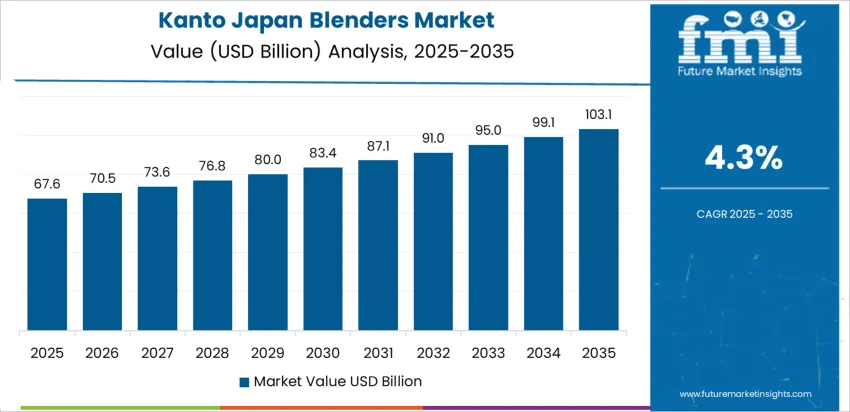
In Kanto, blender demand grows at a 4.3% CAGR. The region’s dense urban centers, especially Tokyo, drive high demand for space-efficient and multifunctional kitchen appliances. With busy city dwellers seeking quick meal prep solutions, blenders are used for making smoothies, sauces, purees, and other healthy drinks. Increasing health awareness and the desire for fresh, homemade meals encourage households to invest in blenders. As kitchens in Kanto are often smaller due to urbanization, compact or personal blenders are becoming more popular than bulky equipment. This shift towards efficient, easy-to-use kitchen gadgets is further accelerated by the growing trend of healthy living and convenience in urban lifestyles. Blenders, with their versatility and convenience, are in high demand in Kanto, particularly among young professionals, small families, and health-conscious individuals.
How is Demand for Blenders Expanding in Kansai?
Kansai is seeing moderate demand for blenders, with a 3.8% CAGR. The region, which includes large cities like Osaka and Kyoto, is characterized by a mix of urban and suburban living, creating a demand for compact and high-performing kitchen appliances. Many families and working individuals in Kansai are increasingly adopting blenders for various meal preparations, such as smoothies, soups, sauces, and even baby food. As home meal preparation and health-conscious cooking become more common, blenders offer an efficient way to prepare nutritious meals quickly. The region’s growing interest in versatile kitchen gadgets, ones that can blend, puree, and assist with meal prep, is also supporting the rise in blender demand. Kansai’s growing focus on durability and eco-friendly practices encourages consumers to choose energy-efficient and organic products, including blenders.
Why is Demand for Blenders Growing in Chubu?
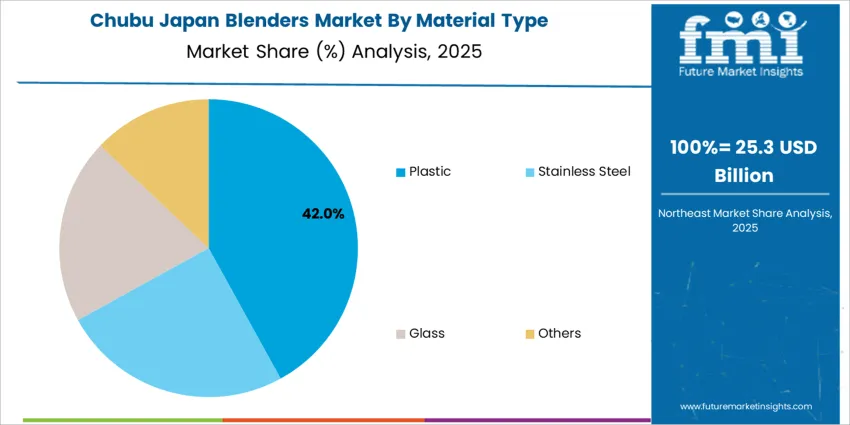
Chubu is experiencing steady demand for blenders, with a 3.3% CAGR. The region’s growing urbanization, particularly in cities like Nagoya, is contributing to the increasing interest in space-saving kitchen tools. Blenders meet the needs of smaller households, busy professionals, and young families who seek quick meal preparation solutions like smoothies, soups, and healthy drinks. Increasing health consciousness and a shift towards fresh, homemade meals further boost blender adoption. Blenders’ versatility, affordability, and compact nature make them an attractive option for households with limited kitchen space. As the region experiences growth in the hospitality and retail sectors, demand for commercial-grade blenders for restaurants, cafes, and other foodservice establishments is rising. As consumer preferences evolve, and people seek convenient, healthy meal options, the demand for blenders in Chubu continues to grow steadily, making it an important region for blender adoption.
How is Demand for Blenders Growing in Tohoku?
Tohoku is seeing a 2.9% CAGR in blender demand. While the region is less densely urbanized compared to more metropolitan areas, there is a steady rise in demand as consumer habits shift towards healthier living. In smaller towns and suburban households, blenders are becoming increasingly popular for preparing soups, smoothies, and sauces. Rising health consciousness and a desire for more homemade meals have prompted households to adopt compact, easy-to-use blenders. Growing access to online retail and e-commerce has made purchasing blenders easier for consumers in less urbanized areas. While growth is slower compared to major urban regions, the trend toward home cooking and wellness is contributing to a consistent increase in blender demand in Tohoku. As the region modernizes and lifestyle habits evolve, the adoption of blenders will likely continue to grow, supporting steady industry growth.
Why is Demand for Blenders Steady in the Rest of Japan?
The Rest of Japan, covering rural and less densely populated regions, shows a 2.8% CAGR in blender demand. While the demand is lower than in urban centers, there is a consistent rise as rural households increasingly adopt modern kitchen appliances. As healthy eating habits spread across the country, even smaller communities are recognizing the benefits of blenders for making homemade meals, juices, and soups. The rise in e-commerce has improved access to small kitchen appliances in these areas. As more families and individuals prioritize convenience and nutrition without relying on large appliances, blenders offer a practical solution. With a growing focus on durability and eco-friendly products in rural Japan, demand for organic and energy-efficient blenders continues to grow steadily. Although the pace of adoption is slower compared to urban regions, demand in the Rest of Japan is expected to rise gradually.
What is the Competitive Landscape of Blenders Demand in Japan?
Demand for blenders in Japan is rising alongside broader growth in the kitchen appliances industry, as consumers increasingly seek convenient, time-saving tools for healthy cooking and food preparation. The shift toward wellness with greater interest in smoothies, home-made soups, sauces, and nutritionally balanced homemade meals is driving more households to adopt blenders as essential kitchen appliances. Compact living spaces and the need for efficient, multifunctional tools further boost the appeal of blenders in Japanese homes.
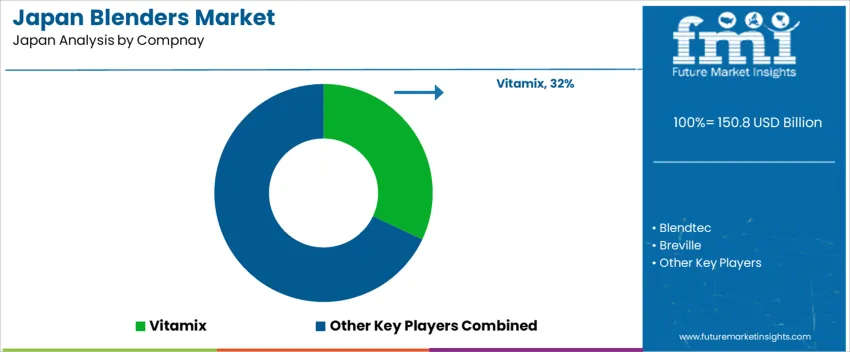
Key players in the Japanese blender industry include Vitamix, Blendtec, Breville, Ninja (SharkNinja), and KitchenAid (Whirlpool). Vitamix leads with a share of 32.0%, known for powerful motors, durability, and high-performance blending suited for tasks ranging from smoothies to crushing nuts and ice. Blendtec and Breville compete closely, offering high-quality countertop blenders that appeal to health-conscious consumers and home chefs. Ninja (by SharkNinja) is popular for affordable yet versatile models offering multiple functions blending, crushing, and food processing making them attractive for urban households and small-space kitchens. KitchenAid brings its reputation for reliability and strong design, offering both countertop and compact blender models for everyday use.
Competition in Japan’s blender industry is driven by a mixture of performance, versatility, and convenience. Buyers value powerful motors, durable construction, easy maintenance, and multifunctionality (e.g., ability to blend smoothies, crush ice, mix batters). The growing focus on health and home cooking fuels demand for blenders that handle a wide range of tasks from smoothies and soups to nut butters and sauces. Space constraints in urban homes boost demand for compact models or blenders that combine multiple functions in one unit. As lifestyle trends continue shifting toward health, convenience, and efficient living, blender makers who deliver reliable, high-performance, and space-wise solutions will likely dominate this expanding segment.
Key Players in Japan Blenders Demand
- Vitamix
- Blendtec
- Breville
- Ninja (SharkNinja)
- KitchenAid (Whirlpool)
Scope of Report
| Items | Values |
|---|---|
| Quantitative Units (2025) | USD million |
| Product Type | Countertop Blenders, Personal Blenders, Immersion/Hand Blenders, Others |
| Material Type | Plastic, Stainless Steel, Glass, Others |
| Distribution Channel | Offline, Online |
| Region | Kyushu & Okinawa, Kanto, Kansai, Chubu, Tohoku, Rest of Japan |
| Countries Covered | Japan |
| Key Companies Profiled | Vitamix, Blendtec, Breville, Ninja (SharkNinja), KitchenAid (Whirlpool) |
| Additional Attributes | Dollar sales by product type, material type, and distribution channel; regional CAGR and adoption trends; demand trends in blenders; growth in consumer preference for personal and countertop blenders; vendor offerings in kitchen appliances; product innovation in materials and design; industry standards and regulatory influences |
Japan Blenders Demand by Key Segments
Product Type:
- Countertop Blenders
- Personal Blenders
- Immersion/Hand Blenders
- Others
Material Type:
- Plastic
- Stainless Steel
- Glass
- Others
Distribution Channel:
- Offline
- Online
Region:
- Kyushu & Okinawa
- Kanto
- Kansai
- Chubu
- Tohoku
- Rest of Japan
Frequently Asked Questions
How big is the demand for blenders in Japan in 2025?
The demand for blenders in Japan is estimated to be valued at USD 150.8 billion in 2025.
What will be the size of blenders in Japan in 2035?
The market size for the blenders in Japan is projected to reach USD 217.9 billion by 2035.
How much will be the demand for blenders in Japan growth between 2025 and 2035?
The demand for blenders in Japan is expected to grow at a 3.8% CAGR between 2025 and 2035.
What are the key product types in the blenders in Japan?
The key product types in blenders in Japan are countertop blenders, personal blenders, immersion/hand blenders and others.
Which material type segment is expected to contribute significant share in the blenders in Japan in 2025?
In terms of material type, plastic segment is expected to command 42.0% share in the blenders in Japan in 2025.
Preview the report firsthand - request a free sample
Get SampleGet the brochure for pricing and purchase details.
Get PDFTable of Content
- Executive Summary
- Japan Market Outlook
- Demand-side Trends
- Supply-side Trends
- Technology Roadmap Analysis
- Analysis and Recommendations
- Market Overview
- Market Coverage / Taxonomy
- Market Definition / Scope / Limitations
- Market Background
- Market Dynamics
- Drivers
- Restraints
- Opportunity
- Trends
- Scenario Forecast
- Demand in Optimistic Scenario
- Demand in Likely Scenario
- Demand in Conservative Scenario
- Opportunity Map Analysis
- Product Life Cycle Analysis
- Supply Chain Analysis
- Investment Feasibility Matrix
- Value Chain Analysis
- PESTLE and Porter’s Analysis
- Regulatory Landscape
- Regional Parent Market Outlook
- Production and Consumption Statistics
- Import and Export Statistics
- Market Dynamics
- Japan Market Analysis 2020 to 2024 and Forecast, 2025 to 2035
- Historical Market Size Value (USD Million) Analysis, 2020 to 2024
- Current and Future Market Size Value (USD Million) Projections, 2025 to 2035
- Y-o-Y Growth Trend Analysis
- Absolute $ Opportunity Analysis
- Japan Market Pricing Analysis 2020 to 2024 and Forecast 2025 to 2035
- Japan Market Analysis 2020 to 2024 and Forecast 2025 to 2035, By Product Type
- Introduction / Key Findings
- Historical Market Size Value (USD Million) Analysis By Product Type , 2020 to 2024
- Current and Future Market Size Value (USD Million) Analysis and Forecast By Product Type , 2025 to 2035
- Countertop Blenders
- Personal Blenders
- Immersion/Hand Blenders
- Others
- Y-o-Y Growth Trend Analysis By Product Type , 2020 to 2024
- Absolute $ Opportunity Analysis By Product Type , 2025 to 2035
- Japan Market Analysis 2020 to 2024 and Forecast 2025 to 2035, By Material Type
- Introduction / Key Findings
- Historical Market Size Value (USD Million) Analysis By Material Type, 2020 to 2024
- Current and Future Market Size Value (USD Million) Analysis and Forecast By Material Type, 2025 to 2035
- Plastic
- Stainless Steel
- Glass
- Others
- Y-o-Y Growth Trend Analysis By Material Type, 2020 to 2024
- Absolute $ Opportunity Analysis By Material Type, 2025 to 2035
- Japan Market Analysis 2020 to 2024 and Forecast 2025 to 2035, By Distribution Channel
- Introduction / Key Findings
- Historical Market Size Value (USD Million) Analysis By Distribution Channel, 2020 to 2024
- Current and Future Market Size Value (USD Million) Analysis and Forecast By Distribution Channel, 2025 to 2035
- Offline
- Online
- Y-o-Y Growth Trend Analysis By Distribution Channel, 2020 to 2024
- Absolute $ Opportunity Analysis By Distribution Channel, 2025 to 2035
- Market Structure Analysis
- Competition Dashboard
- Competition Benchmarking
- Market Share Analysis of Top Players
- By Regional
- By Product Type
- By Material Type
- By Distribution Channel
- Competition Analysis
- Competition Deep Dive
- Vitamix
- Overview
- Product Portfolio
- Profitability by Market Segments (Product/Age /Sales Channel/Region)
- Sales Footprint
- Strategy Overview
- Marketing Strategy
- Product Strategy
- Channel Strategy
- Blendtec
- Breville
- Ninja (SharkNinja)
- KitchenAid (Whirlpool)
- Vitamix
- Competition Deep Dive
- Assumptions & Acronyms Used
- Research Methodology


