

- Industry Size (2025)
- USD 20.3 Mn
- Forecast (2035)
- USD 30.7 Mn
- CAGR (2025 to 2035)
- 4.2%
Demand for Body Luminizer in Japan Forecast and Outlook 2025 to 2035
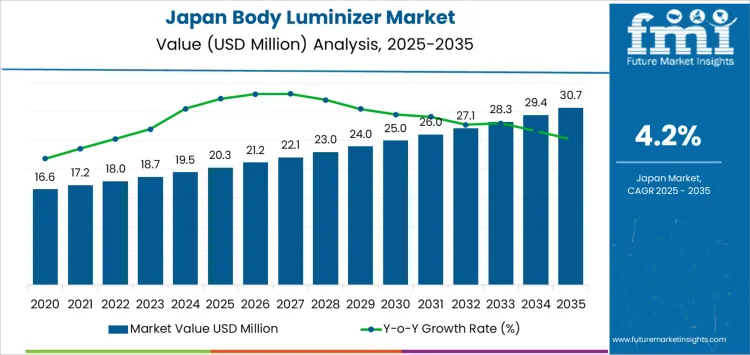
Demand for body luminizer in Japan is valued at USD 20.3 million in 2025 and is projected to reach USD 30.7 million by 2035, advancing at a CAGR of 4.2%. Growth reflects rising interest in subtle body highlight cosmetics within premium beauty and seasonal makeup categories. Lotion formats lead product demand due to ease of application and natural finish, followed by sprays and creams, while powders retain niche usage for event-based shimmer. Body glow remains the dominant application, supported by highlighting and shimmer effects. Demand is concentrated across Kanto, Kansai, and Chubu, where department stores, specialty beauty retailers, and digital-first brands maintain strong consumer reach within urban shopping districts and e-commerce platforms.
From 2030 onward, category expansion is linked to crossover positioning between skincare and cosmetics, with emphasis on hydration, light diffusion, and tone enhancement. Online and offline channels contribute evenly as omnichannel retail strategies expand across drugstores and high-end counters. Limited-edition launches and summer-focused collections generate short-cycle volume spikes. Distribution remains centered on national beauty chains and brand-owned platforms. Key companies active in competitive positioning include Estée Lauder, MAC, Huda Beauty, Anastasia Beverly Hills, and Becca Cosmetics. Brand strategies rely on influencer collaborations, shade range extensions, and texture differentiation aligned with Japanese consumer preferences for lightweight, skin-adaptive formulations.
Quick Stats of the Body Luminizer in Japan:
- Body Luminizer in Japan Value (2025): USD 20.3 million
- Body Luminizer in Japan Forecast Value (2035): USD 30.7 million
- Body Luminizer in Japan Forecast CAGR (2025–2035): 4.2%
- Body Luminizer in Japan Leading Product Type: Lotion (35%)
- Body Luminizer in Japan Key Growth Regions: Kyushu & Okinawa, Kanto, Kansai, Chubu
- Body Luminizer in Japan Top Players: Becca Cosmetics, Estée Lauder, Huda Beauty, Anastasia Beverly Hills, MAC
What is the Demand Forecast for Body Luminizer in Japan through 2035?
Body luminizer demand in Japan reaches USD 20.3 million in 2025 and moves to USD 24.0 million by 2030, creating a USD 3.7 million expansion in the first half of the forecast window. The climb from USD 16.6 million in 2020 reflects the steady repositioning of luminizing products from event-led makeup into daily body care routines linked to skincare layering. Usage is spreading beyond summer collections into year-round facial–body crossover products, particularly in tone-evening lotions and glow serums. Demand growth is concentrated in urban beauty chains and department-store cosmetic counters, with younger consumers driving repeat purchases through mini-size formats and bundled skincare kits rather than large single-SKU launches.
From 2030 to 2035, demand rises from USD 24.0 million to USD 30.7 million, adding USD 6.7 million in fresh value during the later phase of the outlook. The annual increments widen as product penetration strengthens in drugstores, travel retail, and online beauty subscriptions. Brand expansion into fragrance-layered luminizers, UV-reactive glow products, and subtle shimmer body emulsions supports higher basket values. Growth is also reinforced by the integration of luminizers into body makeup for weddings, stage performances, and influencer-driven beauty content. By 2035, body luminizer demand in Japan is anchored in everyday aesthetic grooming and premium personal care gifting rather than seasonal cosmetic spikes.
Body Luminizer Industry in Japan Key Takeaways
| Metric | Value |
|---|---|
| Industry Value (2025) | USD 20.3 million |
| Forecast Value (2035) | USD 30.7 million |
| Forecast CAGR (2025–2035) | 4.2% |
What Is Driving the Demand for Body Luminizer in Japan?
The demand for body luminizer in Japan is shaped by the country’s emphasis on refined appearance, seasonal fashion layering, and the cultural preference for subtle glow over heavy makeup. Historically, body enhancement products played a limited role in daily beauty routines, with stronger focus placed on facial skincare. This began to change as beauty trends shifted toward natural radiance, sheer finishes, and skin texture enhancement rather than full coverage. Social media, fashion magazines, and idol culture increased visibility of collarbones, shoulders, arms, and legs as styling focal points. Body luminizers gained traction through spring and summer fashion, bridal beauty, dance performance, and event styling where controlled sheen and light reflection enhance skin appearance under natural and artificial lighting.
Future demand for body luminizer in Japan will be shaped by growth in hybrid cosmetic skincare, expansion of inclusive beauty routines across age groups, and rising interest in minimal makeup aesthetics. Younger consumers will drive adoption through soft glow products integrated into daily body care rather than only for events. Bridal services, fitness culture, and resort travel will continue to support seasonal volume. Barriers include conservative usage norms in older demographics, limited shelf space in compact retail formats, and competition from tone up body lotions and shimmer body powders. Long term demand will depend on how well body luminizers adapt to lightweight textures, fragrance restraint, and multifunctional benefits aligned with Japans preference for subtle enhancement and skin comfort.
What Is the Demand for Body Luminizer in Japan by Product Type and Application?
The demand for body luminizer in Japan is shaped by daily skin care routines, warm season cosmetic use, and strong retail rotation across drugstores and specialty beauty chains. Lotion leads by product type due to its integration with moisturizing steps and lightweight feel preferred in humid conditions. Body glow dominates by application because consumers favor even radiance across exposed skin rather than localized shimmer. Procurement is driven by domestic beauty brands, contract manufacturers, and convenience focused retail networks. Import reliance persists for select pearl pigments and dispersing agents. Substitution pressure from illuminating moisturizers remains present. Demand stability is supported by consistent personal care purchasing and seasonal product refresh cycles.
Why does lotion dominate the demand for body luminizer in Japan by product type?
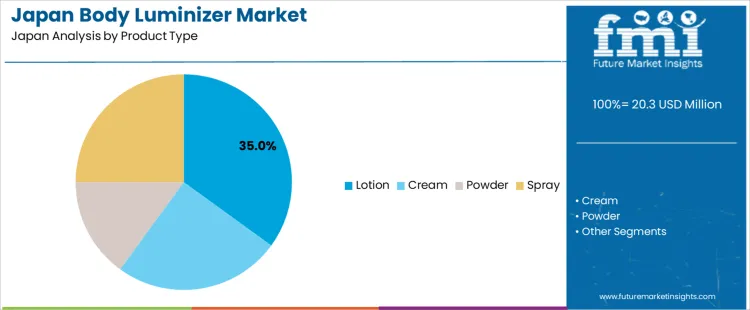
Lotion accounts for 35% of the demand for body luminizer in Japan by product type, reflecting preference for lightweight textures that absorb quickly without residue. Consumption intensity is driven by daily use after bathing, summer humidity management, and layering within multi step skin care routines. Usage remains stable because lotions provide both hydration and subtle radiance without heaviness. Procurement is led by mass beauty brands and private label suppliers serving drugstores and online platforms. Price sensitivity remains moderate as consumer’s balance texture quality with affordability. Specification control emphasizes viscosity stability, uniform pigment dispersion, non-tack finish, and compatibility with sensitive skin profiles common among repeat users.
Lotion based luminizers also generate consistent repeat demand due to regular replacement cycles and high household usage frequency. Repeat purchasing remains predictable because body lotions are consumed steadily rather than occasionally. Buyers favor standardized lotion bases to allow seasonal scent and pigment variation without reformulation complexity. Margin structure remains tight under strong competition from multifunctional skin care products. Regulatory exposure centers on cosmetic labeling and sensitivity testing. Import reliance persists for reflective mica and coating agents. Substitution pressure from creams increases during winter use, though lotion formats retain dominance across most of the year.
What drives body glow to lead the demand for body luminizer in Japan by application?
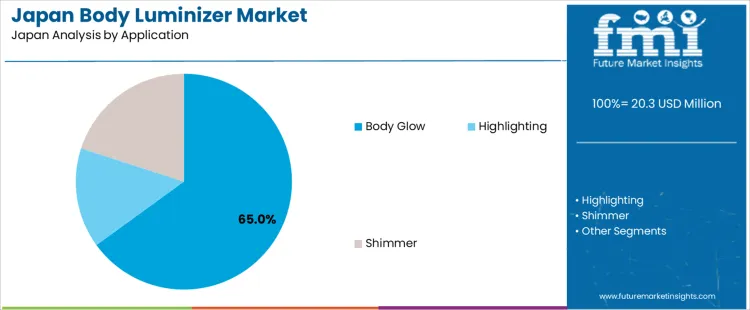
Body glow represents 65.0% of the demand for body luminizer in Japan by application, reflecting preference for subtle, even radiance rather than dramatic shimmer. Consumption intensity is driven by use on arms, neckline, legs, and collarbones for everyday wear and seasonal outings. Usage remains stable because body glow aligns with natural finish trends favored in Japanese beauty routines. Procurement is dominated by national cosmetic brands and contract manufacturers supplying mass retail and specialty beauty stores. Price sensitivity remains moderate because these products sit within routine discretionary spending categories. Specification control emphasizes uniform light diffusion, streak free application, and undertone compatibility across light to medium skin shades.
Body glow applications also support strong seasonal repeat demand linked to spring and summer cosmetic rotation. Repeat utilization remains high during periods of increased skin exposure. Buyers favor broader coverage products because they increase per use consumption compared with targeted highlighting formats. Margin structure remains controlled due to retail promotion cycles and frequent product renewals. Regulatory exposure remains limited to standard cosmetic compliance and allergen declaration. Import reliance persists for optical pigments and binder systems. Substitution pressure from highlighting products grows in premium segments, though everyday body glow use continues to drive the largest share of application demand nationwide.
What Is Shaping the Demand for Body Luminizer in Japan Beauty Rituals and Seasonal Aesthetic Culture?
Demand for body luminizer in Japan is shaped by seasonal skincare routines, youth-driven beauty layering, and visual refinement tied to social outings rather than bold glamour. Usage centers on summer festivals, beach travel, dance events, and photo culture where subtle light reflection is preferred over heavy shimmer. Urban consumers favor fine-particle glow that enhances collarbones, arms, and legs without overt glitter. Department store cosmetics, specialty beauty chains, and online platforms drive controlled product discovery. Demand develops around seasonal exposure, light-enhancement aesthetics, and occasion-focused beauty behavior rather than daily body care adoption.
How Are Seasonal Festivals and Fashion Cycles Creating Predictable Usage Peaks?
Japan calendar-driven event culture plays a direct role in body luminizer demand. Summer fireworks festivals, yukata gatherings, and coastal travel create short but intense usage periods where exposed skin becomes part of coordinated styling. Fashion brands coordinate glow products with seasonal apparel drops, reinforcing synchronized purchasing behavior. Unlike Western markets, demand does not sustain evenly through the year but follows tightly defined seasonal windows. This cyclical pattern shapes inventory planning and limits off-season sell-through.
Why Is Subtle Glow Preference Differentiating Product Design and Consumption?
Japanese consumers favor refined luminosity rather than dramatic shimmer. Body luminizers with ultra-fine pearl dispersion, low oil residue, and transparent tone adjustment perform better than high-impact metallic finishes. Products that blur skin texture and create soft reflection under indoor lighting gain stronger acceptance. This taste profile limits demand for heavy-body highlighting formats commonly seen in Western event makeup. As a result, formulation strategy in Japan emphasizes restraint, skin harmony, and light control instead of statement-driven radiance.
How Do Skin Sensitivity, Transfer Risk, and Conservative Daily Use Restrain Expansion?
Japan consumers maintain strong caution around body products that transfer onto clothing or cause irritation. Youkihan and synthetic pigment scrutiny remains high, especially for products used during heat and perspiration. Many consumers restrict luminizer use to specific occasions rather than everyday styling. Conservative office dress culture further limits daytime use. These behavioral and sensitivity-related factors prevent body luminizer from becoming a routine body care category despite repeated seasonal interest.
What is the Demand for Body Luminizer in Japan by Region?
| Region | CAGR (%) |
|---|---|
| Kyushu & Okinawa | 5.3% |
| Kanto | 4.8% |
| Kansai | 4.2% |
| Chubu | 3.7% |
| Tohoku | 3.3% |
| Rest of Japan | 3.1% |
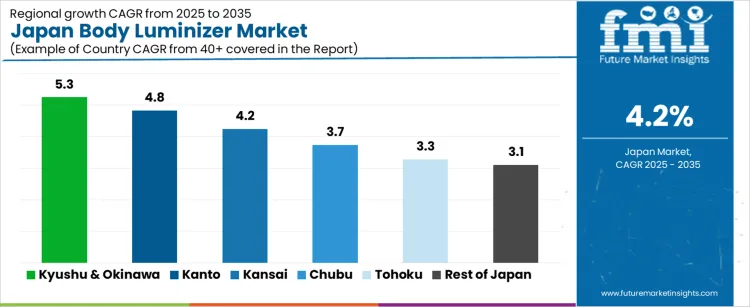
The demand for body luminizer in Japan is expanding steadily across beauty focused regions, led by Kyushu and Okinawa at a 5.3% CAGR. Growth here is supported by strong tourism activity, resort driven beauty consumption, and rising preference for body glow products in professional makeup and skincare routines. Kanto follows at 4.8%, driven by high concentration of premium cosmetic brands, strong online beauty retail, and rapid trend adoption among urban consumers. Kansai records 4.2% growth, reflecting stable demand from department store beauty counters and professional makeup users. Chubu at 3.7% shows moderate uptake linked to regional retail chains and lifestyle cosmetic brands. Tohoku and the Rest of Japan, at 3.3% and 3.1%, reflect slower growth shaped by traditional skincare preferences, lower penetration of decorative body cosmetics, and conservative seasonal purchasing patterns.
How Is Coastal Lifestyle and Tourism Spending Driving Body Luminizer Demand in Kyushu and Okinawa?
Demand for body luminizer in Kyushu and Okinawa is rising at a CAGR of 5.3% through 2035, shaped by strong beach tourism, resort oriented beauty consumption, and high seasonal use of glow enhancing body products. Warm climate conditions support year round demand for shimmer lotions, oils, and spray luminizers. This region differs from Kanto through heavier reliance on leisure driven purchases rather than daily fashion routines. Sales are concentrated in tourist retail, resort spas, and seasonal promotional ranges aligned with travel peaks.
- Beach tourism supports high seasonal product turnover
- Resort retail anchors premium glow product sales
- Spray and liquid formats dominate usage patterns
- Summer focused launches drive repeat purchasing
Why Is Urban Fashion Culture Sustaining Body Luminizer Growth in Kanto?
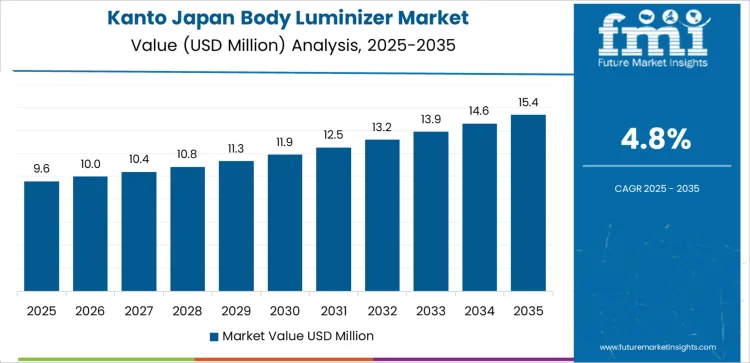
Demand for body luminizer in Kanto is expanding at a CAGR of 4.8% through 2035, supported by dense fashion retail, influencer driven beauty trends, and strong youth cosmetics spending in Tokyo and nearby cities. Kanto leads in subtle glow creams, multi use luminizers, and editorial makeup products tied to daily styling. This region contrasts with Kyushu and Okinawa through stronger everyday wear demand rather than seasonal resort use. Growth reflects steady product refresh cycles across drugstores, department stores, and digital commerce platforms.
- Fashion retail density sustains stable year round demand
- Influencer trends shape fast product adoption cycles
- Multi use glow products support daily application
- Digital commerce strengthens nationwide brand reach
What Is Supporting Balanced Body Luminizer Adoption Across Kansai Beauty Segments?
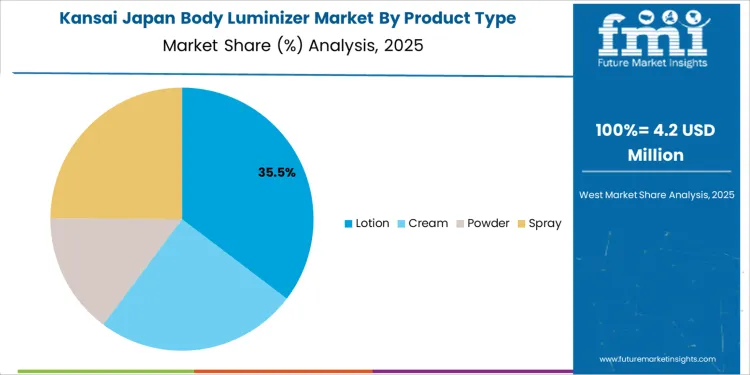
Demand for body luminizer in Kansai is advancing at a CAGR of 4.2% through 2035, supported by steady department store cosmetics sales, strong professional makeup artist presence, and stable premium beauty spending in Osaka and Kyoto. Kansai shows balanced uptake across shimmer lotions, highlight sticks, and subtle illuminating powders. This region differs from Kanto through stronger role of salon and professional artist recommendation rather than social media driven demand alone. Sales remain consistent across bridal makeup, fashion events, and seasonal gift cosmetics.
- Professional makeup artists influence product positioning
- Department stores anchor premium brand visibility
- Bridal and event makeup drive periodic demand spikes
- Gift cosmetics sustain seasonal luminizer sales
How Is Price Sensitive Retail Shaping Body Luminizer Demand in Chubu?
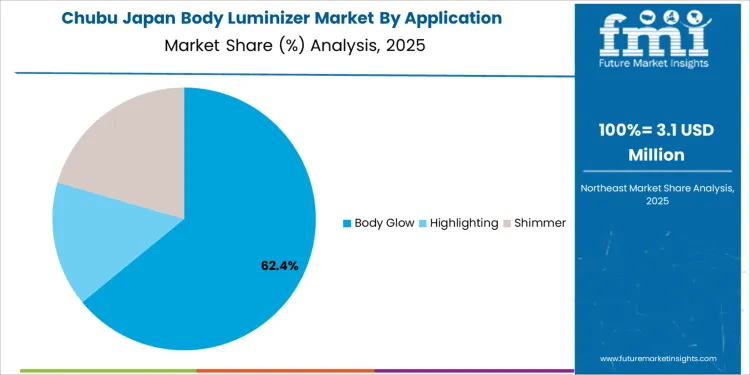
Demand for body luminizer in Chubu is progressing at a CAGR of 3.7% through 2035, supported by steady mass cosmetics retail, gradual expansion of beauty specialty chains, and moderate consumer spending on discretionary makeup. Aichi leads regional demand through drugstore channels and online platforms. Chubu contrasts with Kansai through stronger value orientation and slower movement into premium shimmer products. Adoption remains focused on affordable glow lotions and light illuminating creams suited for everyday use rather than statement makeup effects.
- Drugstores dominate distribution for glow products
- Affordable price tiers drive repeat purchasing behavior
- Online platforms expand access beyond urban cores
- Daily use formats shape product development focus
Why Is Demographic Structure Moderating Body Luminizer Growth in Tohoku?
Demand for body luminizer in Tohoku is growing at a CAGR of 3.3% through 2035, supported by limited but stable cosmetics consumption, aging population patterns, and steady retail presence in regional cities. Miyagi anchors most sales through mass retail and pharmacy chains. Tohoku differs from Kanto through lower impulse driven beauty purchasing and reduced influence of fast moving fashion trends. Usage remains centered on subtle illuminating lotions rather than bold shimmer products, with preference for practical and multifunction skincare cosmetics.
- Aging consumer base favors subtle glow formulations
- Pharmacies sustain baseline retail availability
- Lower impulse buying limits rapid trend adoption
- Multifunction skincare products shape demand structure
How Is Distributed Small City Retail Influencing Body Luminizer Demand in Rest of Japan?
Demand for body luminizer in Rest of Japan is advancing at a CAGR of 3.1% through 2035, supported by small city retail expansion, steady household cosmetics spending, and gradual penetration of new beauty product formats. These regions differ from Kanto through lower exposure to fashion led trends and slower rollout of premium cosmetic launches. Sales remain concentrated in general merchandise stores, pharmacies, and regional online platforms. Growth is steady and guided by basic glow products positioned as part of routine skincare rather than fashion makeup.
- Small city retail anchors consistent luminizer availability
- Routine skincare positioning supports stable usage
- General merchandise stores dominate distribution
- Slower trend diffusion moderates rapid volume shifts
What Is Driving the Demand for Body Luminizer in Japan and Which Brands Shape Retail Adoption?
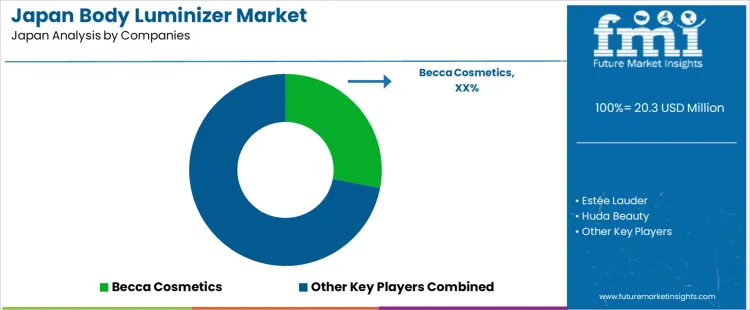
The demand for body luminizer in Japan is shaped by seasonal beauty routines, strong sun care habits, and steady premium cosmetics spending in urban retail. Shiseido anchors domestic adoption through department store counters and selective prestige lines that emphasize subtle radiance suited to daily wear. Estée Lauder supports premium demand through counter based sales in Tokyo, Osaka, and inbound tourism corridors. MAC influences professional use through artist led stores, media makeup partnerships, and seasonal collections tied to fashion weeks and print campaigns. Anastasia Beverly Hills and Huda Beauty participate through specialty beauty chains and cross border e commerce that serves trend driven younger consumers. Becca Cosmetics retains limited visibility through online resale tied to legacy hero luminizing products.
Merchandising in Japan is governed by texture refinement, ultra fine reflective particles, humidity resistance, and compatibility with tone up skin care routines favored for natural finish. Shade development favors neutral champagne and pale rose over high impact bronze used in Western launches. Retail adoption depends on tester performance under store lighting, transfer resistance, and layered use with sunscreen and body lotions. Buyer preference favors lightweight, non sticky formulas with restrained glow that align with office wear norms. Demand visibility tracks summer product resets, festival season promotions, influencer led short video content, and continued growth in premium beauty purchases among urban consumers in their twenties and early thirties.
Key Players in the Body Luminizer Industry in Japan
- Becca Cosmetics
- Estée Lauder
- Huda Beauty
- Anastasia Beverly Hills
- MAC
Scope of the Report
| Items | Values |
|---|---|
| Quantitative Units (2025) | USD million |
| Product Type | Lotion, Cream, Powder, Spray |
| Application | Body Glow, Highlighting, Shimmer |
| Distribution Channel | Online, Offline |
| Region | Kyushu & Okinawa, Kanto, Kansai, Chubu, Tohoku, Rest of Japan |
| Countries Covered | Japan |
| Key Companies Profiled | Becca Cosmetics, Estée Lauder, Huda Beauty, Anastasia Beverly Hills, MAC |
| Additional Attributes | Dollar by sales by product type and application; Regional CAGR and growth drivers; Texture and pigment performance; Repeat purchasing and seasonal refresh cycles; Integration with body care routines and hybrid skincare; Omnichannel distribution patterns; Urban vs small city adoption; Consumer preferences for lightweight, non-sticky, subtle glow formulas; Brand strategies including influencer campaigns, shade extensions, and limited-edition collections; Import reliance for specialty pigments and reflective agents; Regulatory compliance for cosmetics labeling and skin sensitivity |
Body Luminizer Industry in Japan Segmentation
Product Type:
- Lotion
- Cream
- Powder
- Spray
Application:
- Body Glow
- Highlighting
- Shimmer
Distribution Channel:
- Online
- Offline
Region
- Kyushu & Okinawa
- Kanto
- Kansai
- Chubu
- Tohoku
- Rest of Japan
Frequently Asked Questions
How big is the demand for body luminizer in Japan in 2025?
The demand for body luminizer in Japan is estimated to be valued at USD 20.3 million in 2025.
What will be the size of body luminizer in Japan in 2035?
The market size for the body luminizer in Japan is projected to reach USD 30.7 million by 2035.
How much will be the demand for body luminizer in Japan growth between 2025 and 2035?
The demand for body luminizer in Japan is expected to grow at a 4.2% CAGR between 2025 and 2035.
What are the key product types in the body luminizer in Japan?
The key product types in body luminizer in Japan are lotion, cream, powder and spray.
Which application segment is expected to contribute significant share in the body luminizer in Japan in 2025?
In terms of application, body glow segment is expected to command 65.0% share in the body luminizer in Japan in 2025.
Preview the report firsthand - request a free sample
Get SampleGet the brochure for pricing and purchase details.
Get PDFTable of Content
- Executive Summary
- Japan Market Outlook
- Demand-side Trends
- Supply-side Trends
- Technology Roadmap Analysis
- Analysis and Recommendations
- Market Overview
- Market Coverage / Taxonomy
- Market Definition / Scope / Limitations
- Market Background
- Market Dynamics
- Drivers
- Restraints
- Opportunity
- Trends
- Scenario Forecast
- Demand in Optimistic Scenario
- Demand in Likely Scenario
- Demand in Conservative Scenario
- Opportunity Map Analysis
- Product Life Cycle Analysis
- Supply Chain Analysis
- Investment Feasibility Matrix
- Value Chain Analysis
- PESTLE and Porter’s Analysis
- Regulatory Landscape
- Regional Parent Market Outlook
- Production and Consumption Statistics
- Import and Export Statistics
- Market Dynamics
- Japan Market Analysis 2020 to 2024 and Forecast, 2025 to 2035
- Historical Market Size Value (USD Million) Analysis, 2020 to 2024
- Current and Future Market Size Value (USD Million) Projections, 2025 to 2035
- Y-o-Y Growth Trend Analysis
- Absolute $ Opportunity Analysis
- Japan Market Pricing Analysis 2020 to 2024 and Forecast 2025 to 2035
- Japan Market Analysis 2020 to 2024 and Forecast 2025 to 2035, By Product Type
- Introduction / Key Findings
- Historical Market Size Value (USD Million) Analysis By Product Type , 2020 to 2024
- Current and Future Market Size Value (USD Million) Analysis and Forecast By Product Type , 2025 to 2035
- Lotion
- Cream
- Powder
- Spray
- Y-o-Y Growth Trend Analysis By Product Type , 2020 to 2024
- Absolute $ Opportunity Analysis By Product Type , 2025 to 2035
- Japan Market Analysis 2020 to 2024 and Forecast 2025 to 2035, By Application
- Introduction / Key Findings
- Historical Market Size Value (USD Million) Analysis By Application, 2020 to 2024
- Current and Future Market Size Value (USD Million) Analysis and Forecast By Application, 2025 to 2035
- Body Glow
- Highlighting
- Shimmer
- Y-o-Y Growth Trend Analysis By Application, 2020 to 2024
- Absolute $ Opportunity Analysis By Application, 2025 to 2035
- Japan Market Analysis 2020 to 2024 and Forecast 2025 to 2035, By Distribution Channel
- Introduction / Key Findings
- Historical Market Size Value (USD Million) Analysis By Distribution Channel, 2020 to 2024
- Current and Future Market Size Value (USD Million) Analysis and Forecast By Distribution Channel, 2025 to 2035
- Online
- Offline
- Y-o-Y Growth Trend Analysis By Distribution Channel, 2020 to 2024
- Absolute $ Opportunity Analysis By Distribution Channel, 2025 to 2035
- Market Structure Analysis
- Competition Dashboard
- Competition Benchmarking
- Market Share Analysis of Top Players
- By Regional
- By Product Type
- By Application
- By Distribution Channel
- Competition Analysis
- Competition Deep Dive
- Becca Cosmetics
- Overview
- Product Portfolio
- Profitability by Market Segments (Product/Age /Sales Channel/Region)
- Sales Footprint
- Strategy Overview
- Marketing Strategy
- Product Strategy
- Channel Strategy
- Estée Lauder
- Huda Beauty
- Anastasia Beverly Hills
- MAC
- Becca Cosmetics
- Competition Deep Dive
- Assumptions & Acronyms Used
- Research Methodology


