

- Industry Size (2025)
- USD 66.1 Mn
- Forecast (2035)
- USD 141.0 Mn
- CAGR (2025 to 2035)
- 7.9%
Demand for Body Scrub in Japan Forecast and Outlook 2025 to 2035
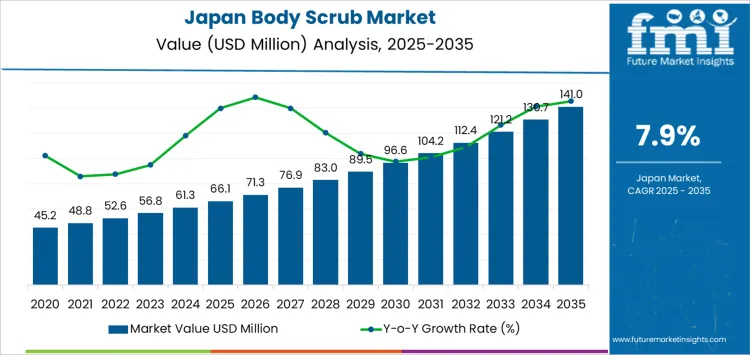
Demand for body scrub in Japan is projected to reach USD 66.1 million in 2025, expanding to USD 141.0 million by 2035 at a CAGR of 7.9%. Cream-based and powder-based formats anchor routine exfoliation usage across daily skincare regimens. Dullness control and anti-acne solutions remain priority skin concerns across urban consumers. Unisex usage continues to broaden category penetration across age groups. Online retail platforms account for the dominant sales route supported by high mobile commerce adoption. Kanto and Kinki remain the largest consumption centers due to population density and premium personal care spending, while Chubu and Kyushu contribute steady mid-tier volume growth. Estée Lauder, Unilever, L'Oréal, The Body Shop, and Clarins shape competitive positioning across premium, mass, and clean-beauty portfolios.
Product development strategies focus on texture refinement, plant-based exfoliants, and fragrance layering aligned with local skin sensitivities. Gel-based variants are seeing rising placement in travel formats and convenience retail. Male grooming routines add incremental lift to the category through charcoal and deep-clean variants. Distribution dynamics reflect strong brand control across proprietary online stores alongside marketplace partnerships. Import dependency on active exfoliating minerals and botanical abrasives shapes cost structures across mid-range pricing tiers. Expansion outside major metro regions reflects a chain-store rollout and an inbound-tourism recovery across retail-beauty hubs. Competitive execution centers on brand storytelling, skin compatibility testing, and limited-edition seasonal releases. Demand resilience through the forecast period aligns with discretionary income stability, product repurchase cycles, and routine-based skincare adoption across urban and regional consumer groups.
Quick Stats of the Body Scrub Industry in Japan:
- Body Scrub Industry in Japan Value (2025): USD 66.1 million
- Body Scrub Industry in Japan Forecast Value (2035): USD 141.0 million
- Body Scrub Industry in Japan Forecast CAGR (2025–2035): 7.9%
- Leading Product Type in Body Scrub Industry in Japan: Cream-Based (35%)
- Key Growth Regions in Body Scrub Industry in Japan: Kyushu & Okinawa, Kanto, Kansai
- Top Players in Body Scrub Industry in Japan: Estée Lauder, Unilever, L’Oréal, The Body Shop, Clarins
What is the Demand Forecast for Body Scrub in Japan through 2035?
Body scrub demand in Japan reaches USD 66.1 million in 2025 and progresses to USD 89.5 million by 2030, creating a USD 23.4 million value expansion within five years. The rise from USD 45.2 million in 2020 reflects the repositioning of exfoliation from occasional spa use into weekly home care routines. Product usage is increasingly linked to pore care, body acne management, and pre-tanning preparation rather than seasonal gifting. Urban drugstores and specialty beauty retailers remain the main sales channels, supported by frequent product rotation and compact trial sizes that encourage repeat purchases. Growth is sustained by texture diversification across salt, sugar, enzyme, and micro-bead alternatives that target different skin sensitivities.
From 2030 to 2035, demand increases from USD 89.5 million to USD 141.0 million, adding USD 51.5 million in the later phase. Annual value gains widen as body care routines extend into wellness-focused grooming across both genders. Premium body treatments, fragrance-layered exfoliants, and dermatologist-linked lines drive higher per-unit spending. E-commerce channels contribute to rising volumes through subscription bundles and limited-run collaborations with lifestyle brands. Travel retail also supports incremental demand through gift-oriented packaging. By 2035, body scrub demand in Japan reflects sustained engagement with full-body skincare maintenance rather than short-cycle cosmetic fashion trends.
Body Scrub Industry in Japan Key Takeaways
| Metric | Value |
|---|---|
| Industry Value (2025) | USD 66.1 million |
| Forecast Value (2035) | USD 141.0 million |
| Forecast CAGR (2025–2035) | 7.9% |
What Is Driving the Demand for Body Scrub in Japan?
The demand for body scrub in Japan is shaped by long standing bathing culture, rising interest in total body skin conditioning, and the influence of seasonal skincare routines. Exfoliation has traditionally been part of spa rituals and home bathing practices, supported by the popularity of hot springs and sento culture. As modern skincare expanded beyond the face, consumers began applying similar texture refinement principles to arms, legs, and back. Urban consumers adopted body scrubs as part of weekly maintenance routines focused on smoothness, brightness, and circulation support. Pharmacy led skincare education and beauty advisors in department stores also played a role by positioning exfoliation as a preparation step for moisturization and self-tanning free tone care.
Future demand for body scrub in Japan will be shaped by rising focus on keratin care, pore visibility control on the body, and extension of facial skincare logic to full body regimens. Growth will continue in sensitive skin targeted scrubs with fine particles, enzyme based exfoliants, and moisturizing hybrids designed for frequent use. Travel retail, seasonal gift sets, and bath focused lifestyle brands will also contribute to repeat purchasing. Barriers include skin sensitivity concerns among aging consumers, limited bathroom storage space in urban housing, and competition from exfoliating towels and body peels. Long term demand will depend on how well body scrubs adapt to gentle formulations, fragrance restraint, and multifunctional body care preferences within everyday Japanese skincare routines.
What Is the Demand for Body Scrub in Japan by Product Type and Skin Concern?
The demand for body scrub in Japan is shaped by routine bathing culture, seasonal skin care practices, and strong retail turnover across drugstores and specialty beauty chains. Cream based formats lead by product type due to their mild exfoliation profile and compatibility with sensitive skin routines. Dullness leads by skin concern because consumers prioritize tone clarity and surface brightness within regular body care regimens. Procurement is driven by domestic cosmetic brands, private label suppliers, and contract manufacturers serving nationwide retail networks. Import reliance remains present for select exfoliating minerals and emollient inputs. Substitution pressure exists from body washes with exfoliating properties. Demand stability is supported by consistent personal care consumption and seasonal product rotation cycles.
Why does cream based format dominate the demand for body scrub in Japan by product type?
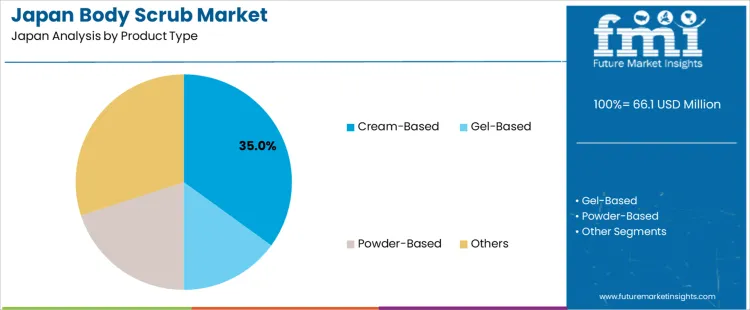
Cream based body scrub accounts for 35% of the demand for body scrub in Japan by product type, reflecting preference for low abrasion textures that align with gentle skin care routines. Consumption intensity is driven by daily or weekly exfoliation habits integrated into bathing rituals. Usage remains stable because cream carriers reduce friction and support moisture retention after exfoliation. Procurement is led by mass market cosmetic brands and private label manufacturers supplying drugstores and e commerce platforms. Price sensitivity remains moderate because consumers favor functional performance over novelty. Specification control emphasizes particle dispersion stability, viscosity balance, rinse off behavior, and compatibility with fragrance systems used in body care formulations.
Cream based scrubs also generate steady repeat demand through predictable household replacement cycles. Repeat purchasing remains consistent because these products are used across all seasons without strong climate dependence. Buyers favor standardized cream bases to allow variation in scent and exfoliant type without altering core texture. Margin structure remains tight under competition from multifunctional cleansing products. Regulatory exposure centers on cosmetic safety testing and ingredient labeling. Import reliance persists for polish agents and conditioning additives. Substitution pressure from gel based scrubs exists in summer use, though cream formats retain dominance across most consumer segments.
What drives dullness to lead the demand for body scrub in Japan by skin concern?
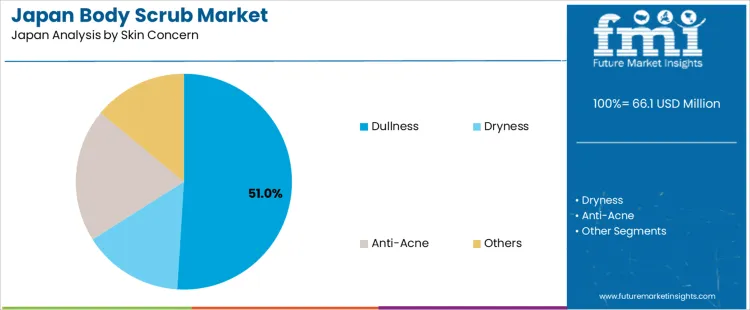
Dullness represents 51.0% of the demand for body scrub in Japan by skin concern, reflecting strong consumer focus on surface brightness and even skin tone. Consumption intensity is driven by exposure to urban pollution, seasonal dryness, and frequent bathing that affects skin turnover balance. Usage remains stable because scrubs are positioned as a primary step for restoring visual clarity and smoothness. Procurement is dominated by national cosmetic brands and contract formulators supplying both mass and premium channels. Price sensitivity remains moderate because tone improvement remains a core purchase driver. Specification control emphasizes exfoliant particle uniformity, controlled abrasion strength, and post rinse softness to avoid reactive skin response.
Dullness focused products also generate consistent repeat demand through year round usage rather than event based application. Repeat utilization remains predictable due to weekly exfoliation habits across multiple age groups. Buyers favor broader positioning that covers brightness, smoothness, and surface refinement in a single formulation. Margin structure remains controlled due to intense competition and frequent promotional pricing. Regulatory exposure remains limited to standard cosmetic compliance and irritation testing. Import reliance persists for mineral exfoliants and pearlizing agents. Substitution pressure from brightening body washes exists, though dedicated scrubs retain preference for deeper surface renewal.
What Is Driving the Demand for Body Scrub in Japan Bath Rituals and Seasonal Skin Renewal Practices?
Demand for body scrub in Japan is shaped by deep bathing culture, seasonal skin turnover, and rising interest in textured skincare routines. Hot spring visits, home soaking baths, and exfoliation practices align closely with scrub usage for skin smoothing and refresh cycles. Urban consumers link body exfoliation with stress relief and circulation stimulation rather than cosmetic brightness alone. Drugstores, lifestyle shops, and specialty bath product brands drive distribution. Demand rises during seasonal transitions when dry winter skin shifts to humid summer conditions. Body scrub functions as part of personal bathing discipline rather than occasional beauty enhancement product cycles.
How Are Seasonal Climate Shifts Structuring Usage Frequency Across the Year?
Japan sharply defined seasons create predictable changes in skin condition that influence body scrub usage. Cold dry winters increase flaking and roughness on arms, legs, and heels. Humid summers raise concerns around sweat buildup and clogged pores. Spring and autumn act as reset periods for full-body renewal. Consumers adjust scrub frequency according to these environmental shifts rather than fixed weekly routines. Retail merchandising mirrors this rhythm through seasonal packaging, fragrances, and limited releases. This climate driven behavior anchors product demand to meteorological patterns rather than permanent daily grooming habits within household bathing culture across coastal and inland regions nationwide each year.
Why Is Natural Texture and Ingredient Ritualization Shaping Consumer Preference?
Japan body scrub demand reflects strong preference for natural tactile experience and ingredient storytelling. Products using salt, sugar, rice bran, charcoal, and botanical powders gain traction due to perceived cleansing authenticity. Texture sensation during massage holds equal importance as fragrance. Consumers value controlled abrasion that avoids redness. Packaging often references hot spring minerals and regional agricultural inputs. This ritualization of ingredients connects exfoliation with traditional wellness culture. Brand loyalty forms around sensory familiarity rather than brand scale. This behavior shapes repeat purchase patterns linked to experiential comfort rather than novelty-driven cosmetic experimentation across successive use cycles today.
How Do Skin Sensitivity Awareness and Daily Care Discipline Restrain Overuse?
Japan consumers maintain high caution toward potential irritation from abrasive body products. Dermatology guidance and peer education stress moderation in exfoliation frequency. Many users restrict scrubs to weekly or biweekly cycles rather than daily use. Sensitive skin types avoid heavy grit formulations altogether. Sun exposure awareness limits aggressive exfoliation during peak ultraviolet months. This disciplined usage pattern controls volume expansion even with rising interest. Body scrub remains a maintenance tool within layered skincare routines rather than a high-frequency cleansing product. These clinical awareness patterns contain excessive utilization despite strong bathing culture integration.
What is the Demand for Body Scrub in Japan by Region?
| Region | CAGR (%) |
|---|---|
| Kyushu & Okinawa | 9.8% |
| Kanto | 9.1% |
| Kansai | 8.0% |
| Chubu | 7.0% |
| Tohoku | 6.1% |
| Rest of Japan | 5.8% |
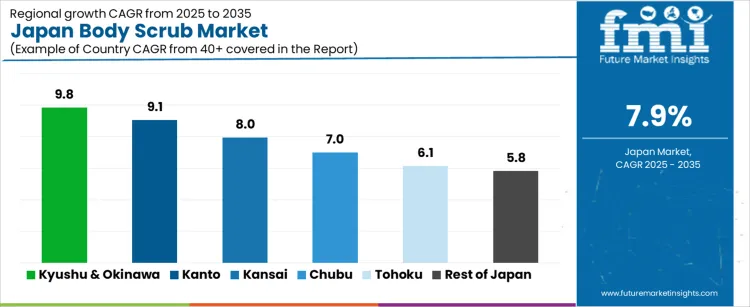
The demand for body scrub in Japan is expanding rapidly across beauty and personal care focused regions, led by Kyushu and Okinawa at a 9.8% CAGR. Growth in this region is supported by resort driven skincare consumption, strong spa and wellness tourism, and rising use of exfoliation products in professional treatments. Kanto follows at 9.1%, driven by dense urban populations, premium beauty retail networks, and rapid adoption of trend led skincare products through online platforms. Kansai records 8.0% growth, reflecting steady demand from department store brands and specialty cosmetic retailers. Chubu at 7.0% shows moderate uptake linked to regional retail chains and lifestyle beauty brands. Tohoku and the Rest of Japan, at 6.1% and 5.8%, reflect slower but stable growth shaped by traditional skincare routines and more seasonal purchasing patterns.
How Is Resort Beauty Culture Accelerating Body Scrub Demand in Kyushu and Okinawa?
Demand for body scrub in Kyushu and Okinawa is advancing at a CAGR of 9.8% through 2035, supported by strong resort spa activity, tourism driven beauty spending, and year round skincare routines shaped by coastal climate conditions. Salt based and botanical exfoliating products show high rotation across resort retail and wellness centers. This region records higher gifting and travel use patterns than most urban markets. Growth reflects rising wellness tourism, spa package bundling, and premium natural ingredient positioning across hospitality retail channels linked to seasonal visitor flows.
- Resort spas anchor premium product sales
- Coastal climate supports year round exfoliation routines
- Wellness tourism drives gifting oriented purchases
- Natural ingredient formulations gain stronger traction
Why Is Daily Skincare Integration Sustaining Body Scrub Growth in Kanto?
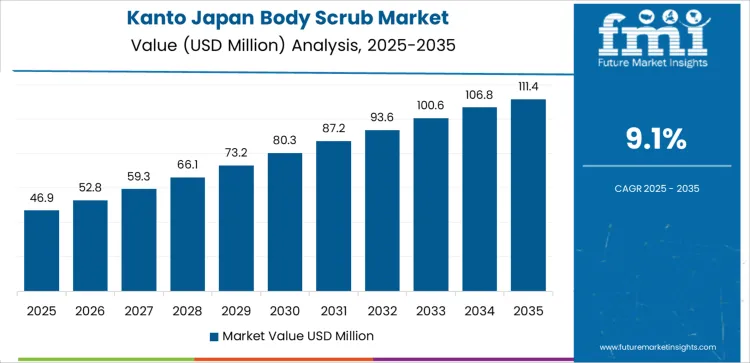
Demand for body scrub in Kanto is rising at a CAGR of 9.1% through 2035, driven by dense urban population, high personal care expenditure, and routine skincare integration across all age groups. Kanto shows strong uptake of gentle exfoliating creams, enzyme based scrubs, and multi use shower products. This region reflects high repeat purchase frequency supported by drugstores and e commerce platforms. Growth remains linked to rising self care routines, product innovation cycles, and consistent social exposure to skincare trends in metropolitan lifestyles.
- Drugstores lead mass volume body scrub distribution
- Multi use exfoliating products support repeat purchasing
- Urban skincare routines drive steady daily consumption
- Digital sales platforms strengthen brand visibility
What Is Supporting Balanced Body Scrub Adoption Across Kansai?
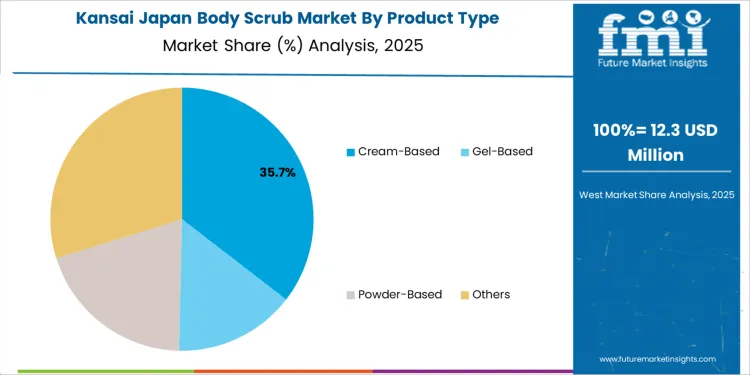
Demand for body scrub in Kansai is progressing at a CAGR of 8.0% through 2035, supported by steady premium beauty retail, consistent salon driven skincare use, and stable cosmetic spending across Osaka and Kyoto. Kansai shows balanced demand across sugar scrubs, cream exfoliators, and herbal body polishing products. This region reflects moderate gifting activity and steady personal care replenishment cycles. Growth remains tied to routine salon use, seasonal skincare transitions, and continued expansion of specialty beauty stores serving mid to high income consumer groups.
- Beauty salons support maintained professional usage
- Specialty retail channels sustain premium product flow
- Seasonal skincare routines shape exfoliation frequency
- Mid income consumer base anchors volume stability
How Is Value Oriented Personal Care Shaping Body Scrub Demand in Chubu?
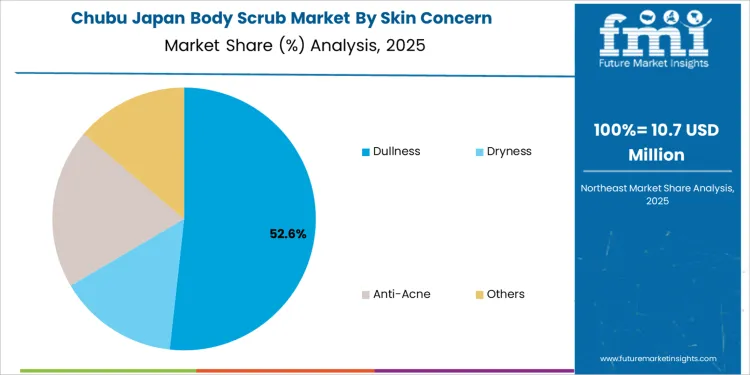
Demand for body scrub in Chubu is advancing at a CAGR of 7.0% through 2035, supported by mass market personal care retail, workforce driven household spending, and steady adoption of exfoliating products linked to general hygiene routines. Chubu shows stronger preference for affordable scrub formats and functional skincare positioning. This region differs from Kansai through price sensitivity and slower premium product migration. Growth reflects stable employment led consumption, rising awareness of skin renewal benefits, and consistent availability through supermarkets and pharmacy chains.
- Mass retail channels dominate scrub distribution
- Functional skincare positioning supports everyday use
- Affordable price tiers drive higher unit sales
- Workforce household routines sustain steady demand
Why Is Demographic Structure Moderating Body Scrub Growth in Tohoku?
Demand for body scrub in Tohoku is advancing at a CAGR of 6.1% through 2035, supported by stable household skincare spending, basic beauty retail coverage, and gradual uptake of exfoliation routines among aging consumer groups. Tohoku shows lower premium cosmetic penetration and fewer impulse driven skincare purchases. Treatment oriented exfoliating products gain preference over fragrance focused variants. Growth remains guided by practical skincare needs, pharmacy centered retail formats, and modest expansion of specialty beauty outlets in regional urban centers.
- Pharmacies anchor primary product access
- Practical skincare routines guide purchase behavior
- Aging population shapes treatment oriented demand
- Limited specialty retail restricts rapid premium growth
How Is Distributed Small City Retail Influencing Body Scrub Demand in Rest of Japan?
Demand for body scrub in Rest of Japan is advancing at a CAGR of 5.8% through 2035, supported by small city retail networks, steady household grooming routines, and basic expansion of personal care assortments. These areas show limited exposure to fast moving beauty trends and lower penetration of premium scrubs. Demand remains focused on classic exfoliating gels and soap based scrub formats sold through general merchandise stores. Growth remains consistent and guided by household necessity driven skincare use and gradual retail availability improvement.
- General merchandise stores drive baseline distribution
- Classic scrub formats dominate product mix
- Household necessity guides stable purchasing cycles
- Gradual retail expansion supports moderate growth
What Is Driving the Demand for Body Scrub in Japan and Which Brands Shape Retail Adoption?
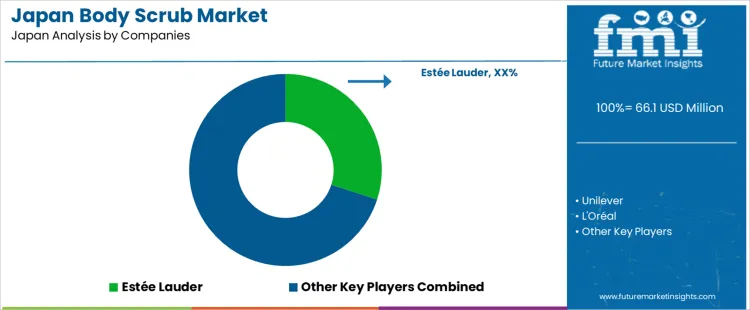
The demand for body scrub in Japan is shaped by seasonal skin care routines, strong exfoliation awareness, and rising interest in at home spa treatments among urban consumers. Shiseido holds a central domestic position through department store and drugstore brands that emphasize gentle exfoliation suited to sensitive skin. L Oréal supports volume demand through mass and dermocosmetic brands positioned across variety stores and pharmacy chains. Estée Lauder anchors the prestige segment through counter based sales that link body exfoliation with body care and fragrance layering routines. Unilever participates through affordable body care lines distributed through supermarkets and family drug channels. The Body Shop maintains steady visibility through ethical positioning and mall based specialty stores.
Clarins supports premium adoption through spa linked retail counters and body treatment lines aligned with professional salon practices. Merchandising in Japan is governed by particle fineness, foam texture, fragrance restraint, and compatibility with daily bathing habits. Product development favors mild exfoliants, botanical bases, and moisture retention after rinse off. Buyer preference favors products that avoid skin irritation, rinse clean without residue, and pair well with body lotions and sunscreens. Demand visibility tracks spring and summer product resets, bathing culture tied to seasonal skin turnover, inbound tourism recovery in major shopping districts, and steady growth in premium self-care purchases among working age women.
Key Players in the Body Scrub Industry in Japan
- Siemens Energy
- ITM Power
- Ørsted A/S
- Mitsubishi Heavy Industries
- NEL ASA
Scope of the Report
| Items | Values |
|---|---|
| Quantitative Units (2025) | USD million |
| Product Type | Cream-Based, Gel-Based, Powder-Based, Others |
| Skin Concern | Dullness, Dryness, Anti-Acne, Others |
| End User | Male, Female, Unisex |
| Distribution Channel | Online, Offline |
| Region | Kyushu & Okinawa, Kanto, Kansai, Chubu, Tohoku, Rest of Japan |
| Countries Covered | Japan |
| Key Companies Profiled | Estée Lauder, Unilever, L’Oréal, The Body Shop, Clarins |
| Additional Attributes | Dollar by sales by product type, skin concern, and end-user; Regional CAGR and growth patterns; Urban vs regional consumption dynamics; Ecommerce vs offline retail penetration; Seasonal and climate-driven usage patterns; Product innovation in texture, plant-based abrasives, and fragrance layering; Travel and gifting format demand; Brand positioning across premium, mass, and ethical portfolios; Import reliance for active minerals and botanical abrasives; Repeat purchase cycles and household replacement frequency; Sensitivity control, skin safety compliance, and cosmetic labeling standards |
Body Scrub Industry in Japan Segmentation
Product Type:
- Cream-Based
- Gel-Based
- Powder-Based
- Others
Skin Concern:
- Dullness
- Dryness
- Anti-Acne
- Others
End-User:
- Male
- Female
- Unisex
Distribution Channel:
- Online
- Offline
Region
- Kyushu & Okinawa
- Kanto
- Kansai
- Chubu
- Tohoku
- Rest of Japan
Frequently Asked Questions
How big is the demand for body scrub in Japan in 2025?
The demand for body scrub in Japan is estimated to be valued at USD 66.1 million in 2025.
What will be the size of body scrub in Japan in 2035?
The market size for the body scrub in Japan is projected to reach USD 141.0 million by 2035.
How much will be the demand for body scrub in Japan growth between 2025 and 2035?
The demand for body scrub in Japan is expected to grow at a 7.9% CAGR between 2025 and 2035.
What are the key product types in the body scrub in Japan?
The key product types in body scrub in Japan are cream-based, gel-based, powder-based and others.
Which skin concern segment is expected to contribute significant share in the body scrub in Japan in 2025?
In terms of skin concern, dullness segment is expected to command 51.0% share in the body scrub in Japan in 2025.
Preview the report firsthand - request a free sample
Get SampleGet the brochure for pricing and purchase details.
Get PDFTable of Content
- Executive Summary
- Japan Market Outlook
- Demand-side Trends
- Supply-side Trends
- Technology Roadmap Analysis
- Analysis and Recommendations
- Market Overview
- Market Coverage / Taxonomy
- Market Definition / Scope / Limitations
- Market Background
- Market Dynamics
- Drivers
- Restraints
- Opportunity
- Trends
- Scenario Forecast
- Demand in Optimistic Scenario
- Demand in Likely Scenario
- Demand in Conservative Scenario
- Opportunity Map Analysis
- Product Life Cycle Analysis
- Supply Chain Analysis
- Investment Feasibility Matrix
- Value Chain Analysis
- PESTLE and Porter’s Analysis
- Regulatory Landscape
- Regional Parent Market Outlook
- Production and Consumption Statistics
- Import and Export Statistics
- Market Dynamics
- Japan Market Analysis 2020 to 2024 and Forecast, 2025 to 2035
- Historical Market Size Value (USD Million) Analysis, 2020 to 2024
- Current and Future Market Size Value (USD Million) Projections, 2025 to 2035
- Y-o-Y Growth Trend Analysis
- Absolute $ Opportunity Analysis
- Japan Market Pricing Analysis 2020 to 2024 and Forecast 2025 to 2035
- Japan Market Analysis 2020 to 2024 and Forecast 2025 to 2035, By Product Type
- Introduction / Key Findings
- Historical Market Size Value (USD Million) Analysis By Product Type , 2020 to 2024
- Current and Future Market Size Value (USD Million) Analysis and Forecast By Product Type , 2025 to 2035
- Cream-Based
- Gel-Based
- Powder-Based
- Others
- Y-o-Y Growth Trend Analysis By Product Type , 2020 to 2024
- Absolute $ Opportunity Analysis By Product Type , 2025 to 2035
- Japan Market Analysis 2020 to 2024 and Forecast 2025 to 2035, By Skin Concern
- Introduction / Key Findings
- Historical Market Size Value (USD Million) Analysis By Skin Concern, 2020 to 2024
- Current and Future Market Size Value (USD Million) Analysis and Forecast By Skin Concern, 2025 to 2035
- Dullness
- Dryness
- Anti-Acne
- Others
- Y-o-Y Growth Trend Analysis By Skin Concern, 2020 to 2024
- Absolute $ Opportunity Analysis By Skin Concern, 2025 to 2035
- Japan Market Analysis 2020 to 2024 and Forecast 2025 to 2035, By End-User
- Introduction / Key Findings
- Historical Market Size Value (USD Million) Analysis By End-User, 2020 to 2024
- Current and Future Market Size Value (USD Million) Analysis and Forecast By End-User, 2025 to 2035
- Male
- Female
- Unisex
- Y-o-Y Growth Trend Analysis By End-User, 2020 to 2024
- Absolute $ Opportunity Analysis By End-User, 2025 to 2035
- Japan Market Analysis 2020 to 2024 and Forecast 2025 to 2035, By Distribution Channel
- Introduction / Key Findings
- Historical Market Size Value (USD Million) Analysis By Distribution Channel, 2020 to 2024
- Current and Future Market Size Value (USD Million) Analysis and Forecast By Distribution Channel, 2025 to 2035
- Online
- Offline
- Y-o-Y Growth Trend Analysis By Distribution Channel, 2020 to 2024
- Absolute $ Opportunity Analysis By Distribution Channel, 2025 to 2035
- Market Structure Analysis
- Competition Dashboard
- Competition Benchmarking
- Market Share Analysis of Top Players
- By Regional
- By Product Type
- By Skin Concern
- By End-User
- By Distribution Channel
- Competition Analysis
- Competition Deep Dive
- Estée Lauder
- Overview
- Product Portfolio
- Profitability by Market Segments (Product/Age /Sales Channel/Region)
- Sales Footprint
- Strategy Overview
- Marketing Strategy
- Product Strategy
- Channel Strategy
- Unilever
- L'Oréal
- The Body Shop
- Clarins
- Estée Lauder
- Competition Deep Dive
- Assumptions & Acronyms Used
- Research Methodology


