

- Industry Size (2025)
- USD 143.1 Mn
- Forecast (2035)
- USD 203.8 Mn
- CAGR (2025 to 2035)
- 3.6%
Demand for Cultured Buttermilk in Japan Forecast and Outlook 2025 to 2035
Demand for cultured buttermilk in Japan is expected to grow from USD 143.1 million in 2025 to USD 203.8 million by 2035, reflecting a CAGR of 3.6%. Key segments driving this growth include product type, distribution channel, and region. By product type, sweet churned cultured buttermilk dominates the demand, accounting for 63%, driven by its versatility in culinary applications, particularly in beverages, desserts, and sauces. Savory churned cultured buttermilk, while growing, accounts for the remaining 37%.
Hypermarkets and supermarkets lead with 53% of the demand, offering a wide variety of cultured buttermilk products across different packaging options. Convenience stores follow, playing a key role in urban areas where consumers seek quick, health-conscious food options. Other distribution channels, including online platforms, account for a smaller share of demand.
Kyushu & Okinawa lead the demand with a 4.5% CAGR, driven by the region’s increasing interest in fermented foods and digestive health. Kanto follows with a 4.1% CAGR, driven by Tokyo's large urban population and growing awareness of functional foods. Kansai shows steady growth at 3.6%, with Chubu, Tohoku, and the Rest of Japan showing moderate growth rates of 3.2%, 2.8%, and 2.7%, respectively.
Quick Stats of the Demand for Cultured Buttermilk in Japan
- Demand for Cultured Buttermilk in Japan Value (2025): USD 143.1 million
- Demand for Cultured Buttermilk in Japan Forecast Value (2035): USD 203.8 million
- Demand for Cultured Buttermilk in Japan Forecast CAGR (2025-2035): 3.6%
- Demand for Cultured Buttermilk in Japan Leading Product Type: Sweet Churned
- Demand for Cultured Buttermilk in Japan Key Growth Regions: Kyushu & Okinawa, Kanto, Kansai, Chubu, Tohoku, Rest of Japan
- Demand for Cultured Buttermilk in Japan Top Players: Bettys and Taylors Group, Bharat Group, CALIFORNIA TEA HOUSE, COFCO, FMS Consumer Products
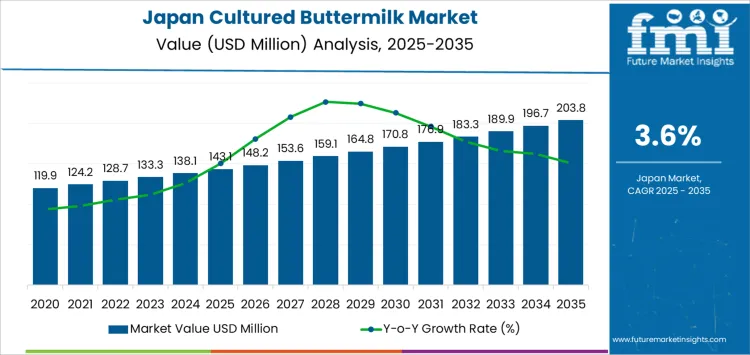
Demand for Cultured Buttermilk in Japan Key Takeaways
| Metric | Value |
|---|---|
| Demand for Cultured Buttermilk in Japan Value (2025) | USD 143.1 million |
| Demand for Cultured Buttermilk in Japan Forecast Value (2035) | USD 203.8 million |
| Demand for Cultured Buttermilk in Japan Forecast CAGR (2025-2035) | 3.6% |
Why is the Demand for Cultured Buttermilk in Japan Growing?
The demand for cultured buttermilk in Japan is growing as consumers seek healthier dairy alternatives with functional benefits. Cultured buttermilk, which is a byproduct of churning curdled milk, is gaining popularity due to its probiotic content, which supports digestive health. As awareness of the importance of gut health and probiotics rises, cultured buttermilk has become an attractive option for those looking to improve their digestive systems while still enjoying dairy products. Its versatility in both food and beverage applications has also contributed to its increasing demand.
A major driver behind the growth of cultured buttermilk is the rising focus on health and wellness. As Japanese consumers become more health-conscious, many are turning to products that offer nutritional benefits beyond basic sustenance. Cultured buttermilk is rich in probiotics, which are known to support digestive health, boost immunity, and improve overall well-being. The increasing popularity of functional foods products that offer health benefits beyond basic nutrition has played a significant role in the growth of cultured buttermilk consumption.
The increasing availability of cultured buttermilk in various forms, such as beverages, smoothies, and cooking ingredients, is making it more accessible to consumers. As the demand for probiotics and functional dairy products continues to rise, cultured buttermilk is expected to see continued growth in Japan. With its broad applications and health benefits, the demand for cultured buttermilk is projected to increase steadily through 2035.
What is the Segment-Wise Analysis of Demand for Cultured Buttermilk in Japan?
Demand for cultured buttermilk in Japan is segmented by product type and distribution channel. By product type, demand is divided into sweet churned and savory churned, with sweet churned leading at 63%. The demand is also segmented by distribution channel, including hypermarkets/supermarkets, convenience stores, and others, with hypermarkets/supermarkets accounting for 53%. Regionally, demand is divided into Kanto, Kinki, Chubu, Kyushu & Okinawa, Tohoku, and the Rest of Japan.
Why Does Sweet Churned Cultured Buttermilk Lead the Demand in Japan?
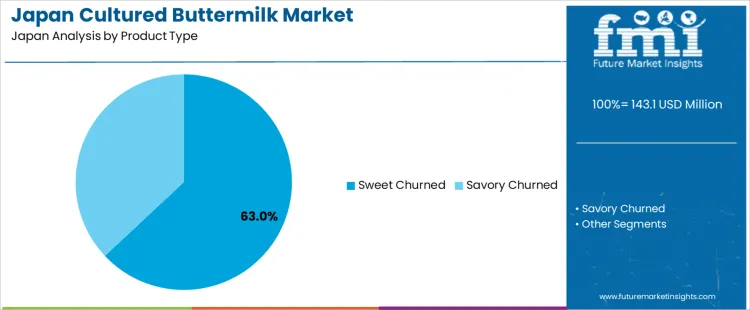
Sweet churned cultured buttermilk accounts for 63% of the demand for cultured buttermilk in Japan, driven by its versatility, flavor, and compatibility with traditional Japanese dishes. Sweet churned buttermilk is favored for its mild, slightly sweet taste, making it a popular ingredient in a variety of culinary applications, including beverages, desserts, and as a base for sauces or dressings. Its creamy texture and tangy flavor contribute to its widespread use in both home cooking and foodservice settings. Sweet churned buttermilk aligns with the growing trend of using natural, probiotic-rich ingredients, appealing to consumers seeking healthy and digestible products. As Japanese consumers increasingly prioritize health-conscious eating habits, sweet churned cultured buttermilk remains the dominant product type, offering a tasty and nutritious option in both traditional and modern Japanese cuisines.
Why Do Hypermarkets/Supermarkets Lead the Demand for Cultured Buttermilk in Japan?
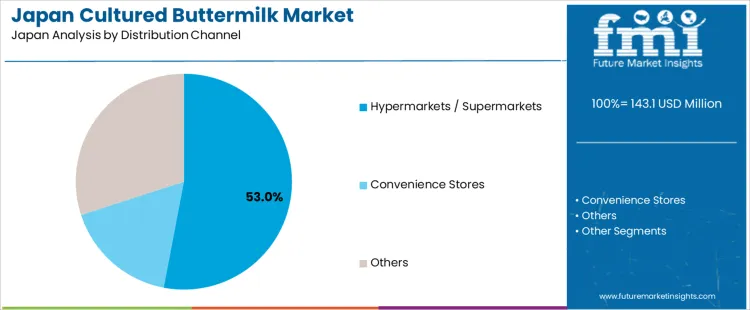
Hypermarkets and supermarkets account for 53% of the demand for cultured buttermilk in Japan, driven by their convenience, wide product variety, and accessibility. These retail outlets are the most common point of purchase for cultured buttermilk, offering a broad selection of both sweet and savory churned buttermilk in various sizes and packaging options. The ability to browse and compare different brands in person, along with frequent promotions and discounts, makes hypermarkets and supermarkets the preferred shopping destination for consumers. The widespread presence of these stores across urban and suburban areas ensures that consumers can easily access cultured buttermilk products. With the increasing focus on health-conscious eating and the growing interest in fermented foods, hypermarkets and supermarkets remain the dominant distribution channel for cultured buttermilk in Japan, ensuring that it is readily available to a broad consumer base.
What are the Key Trends, Drivers, and Restraints in Demand for Cultured Buttermilk in Japan?
Demand for cultured buttermilk in Japan is gradually rising, reflecting a broader shift toward functional and fermented dairy products. As Japanese consumers place increasing emphasis on gut health, digestive comfort, and wellness, probiotic‑rich foods like cultured buttermilk are gaining interest. With its lactic acid fermentation and associated digestive benefits, cultured buttermilk is being explored both as a drink and an ingredient for cooking, baking, and ready‑to‑eat meals. The growing trend toward fermented and functional dairy items supports its appeal. Demand is still relatively niche due to the low level of awareness. Many Japanese consumers are more familiar with traditional dairy staples like milk and yogurt, so introducing cultured buttermilk may require further consumer education.
Why is Demand for Cultured Buttermilk Growing in Japan?
Demand for cultured buttermilk is increasing as health awareness rises in Japan, particularly regarding digestive health and overall well‑being. As consumers become more proactive in maintaining their health, the interest in probiotic‑rich foods like cultured buttermilk is growing. The fermentation process and its associated benefits for gut flora are in line with the broader trend of consuming functional foods and preventive nutrition. Aging populations and busy urban dwellers seeking convenient, health‑enhancing options drive this demand. Cultured buttermilk fits well into modern lifestyles as it can be consumed directly or used in cooking, baking, and beverages. As global exposure to diverse foods increases, Japanese consumers are also becoming more curious about non‑traditional dairy products. Increased availability in supermarkets and online stores makes it easier for consumers to discover and try cultured buttermilk, further fueling demand for this functional dairy option.
How are Technological & Industry Innovations Driving Cultured Buttermilk Demand in Japan?
Technological advancements in fermentation, packaging, and distribution are making cultured buttermilk more appealing and accessible in Japan. Improved fermentation techniques help maintain the quality, safety, and consistency of the product, ensuring it meets consumer expectations for flavor and texture. The development of ready‑to‑consume, flavored, or lactose‑free versions of cultured buttermilk has expanded its appeal, catering to a broader audience. Packaging innovations such as convenient, single‑serve formats make cultured buttermilk easier for busy consumers to integrate into their daily routines. Enhanced cold‑chain logistics also ensure that these products can be reliably distributed to convenience stores, and online platforms, improving availability. As the demand for functional, health‑oriented foods grows, the innovations in production and packaging make cultured buttermilk a more attractive option for mainstream consumers who seek digestive health and convenient, nutritious dairy alternatives.
What are the Key Challenges and Risks That Could Limit Cultured Buttermilk Demand in Japan?
One of the primary hurdles is consumer awareness, as many Japanese people are still unfamiliar with buttermilk, making it difficult to convert mainstream consumers. Traditional dairy products, like milk and yogurt, remain the go-to options for most consumers, and the tangy flavor of buttermilk may not appeal to everyone. As a perishable fermented dairy product, cultured buttermilk requires proper storage and cold‑chain distribution, which can add costs and restrict its availability in less urban areas. While it offers health benefits, it competes with other probiotic and fermented products, such as yogurt and kefir, which are already widely consumed. The higher price point and limited availability of cultured buttermilk may also deter cost‑sensitive consumers, making its mass adoption challenging unless awareness and accessibility improve.
What is the Regional Demand Outlook for Cultured Buttermilk in Japan?
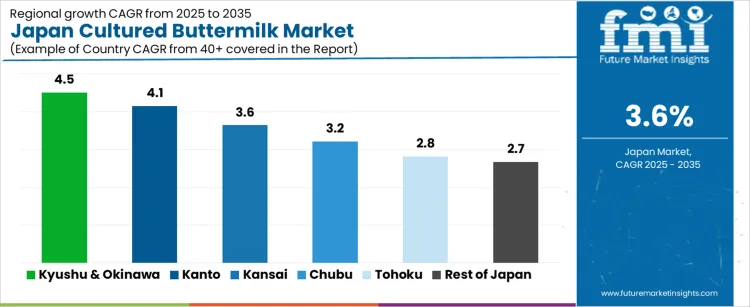
| Region | CAGR (%) |
|---|---|
| Kyushu & Okinawa | 4.5% |
| Kanto | 4.1% |
| Kansai | 3.6% |
| Chubu | 3.2% |
| Tohoku | 2.8% |
| Rest of Japan | 2.7% |
Demand for cultured buttermilk in Japan is growing steadily across all regions, with Kyushu & Okinawa leading at a 4.5% CAGR, driven by increasing interest in traditional dairy products and their health benefits. Kanto follows with a 4.1% CAGR, supported by the region’s large urban population and rising consumer interest in fermented foods. Kansai shows a 3.6% CAGR, driven by the region’s growing food culture and health-conscious consumers. Chubu experiences a 3.2% CAGR, as demand rises with a greater focus on digestive health and functional foods. Tohoku and the Rest of Japan see moderate growth at 2.8% and 2.7%, respectively, as cultured buttermilk continues to gain traction in both urban and rural areas.
How is Demand for Cultured Buttermilk Growing in Kyushu & Okinawa?
Kyushu & Okinawa leads demand for cultured buttermilk with a 4.5% CAGR. The region’s increasing interest in traditional dairy products and fermented foods, particularly for their digestive health benefits, is driving this growth. Okinawa, known for its health-conscious population and longevity, has seen rising demand for functional foods like cultured buttermilk. These foods are viewed as beneficial for gut health, which aligns with Okinawa’s cultural emphasis on wellness. The region’s large tourist population is contributing to this demand; as international visitors look for familiar health-oriented food options. Local supermarkets and health food stores in Okinawa and Kyushu are expanding their product offerings, making cultured buttermilk more accessible. As consumer awareness continues to grow about the benefits of fermented foods, demand for cultured buttermilk is expected to rise steadily in this region.
Why is Demand for Cultured Buttermilk Rising in Kanto?
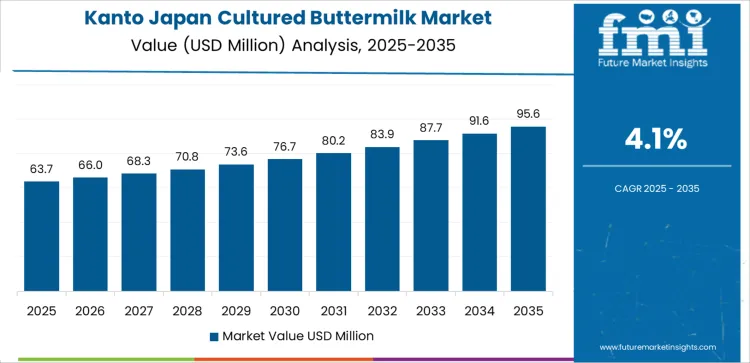
Kanto is experiencing rising demand for cultured buttermilk, growing at a 4.1% CAGR. The large urban population, particularly in Tokyo, has seen an increasing focus on health and wellness, driving demand for functional foods. Consumers in Kanto are becoming more aware of the benefits of digestive health and are turning to products like cultured buttermilk to improve their gut health. The region’s growing preference for fermented foods, which are seen as natural and beneficial for overall health, supports this trend. Retailers and foodservice establishments are increasingly offering cultured buttermilk and other probiotic-rich dairy products. The popularity of clean-label and health-oriented foods in Kanto further contributes to this trend. Kanto’s high population density and ease of access to diverse food products have made cultured buttermilk more widely available, fueling the demand. As more people adopt functional foods, Kanto is expected to continue leading in the consumption of cultured buttermilk.
How is Demand for Cultured Buttermilk Expanding in Kansai?
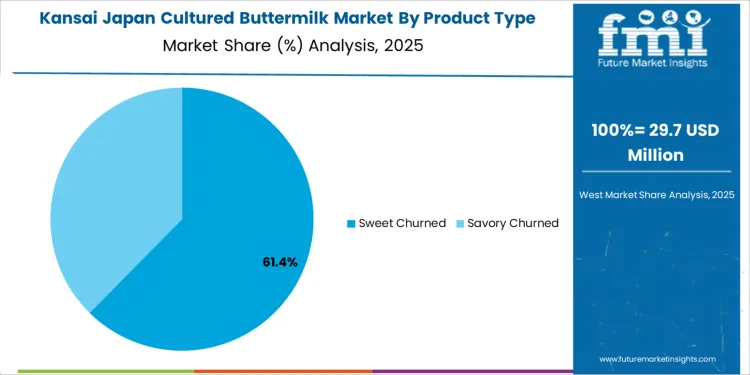
Kansai shows steady demand for cultured buttermilk, growing at a 3.6% CAGR. The region’s rich culinary culture, particularly in Osaka and Kyoto, has seen a growing interest in health-oriented food products. As consumers in Kansai become more health-conscious, many are turning to cultured buttermilk for its digestive health benefits. The rise in popularity of fermented foods, known for their probiotic properties, has made cultured buttermilk a sought-after product. Local supermarkets, health food stores, and restaurants are incorporating more cultured buttermilk options into their offerings, catering to the demand for functional foods. Kansai’s focus on traditional food, combined with a growing interest in modern wellness trends, makes it a key region for the rise of cultured buttermilk. With increasing awareness about gut health and digestion, more consumers are adopting cultured buttermilk as part of their daily routine. The demand in Kansai is expected to continue growing steadily as the market for functional foods expands.
Why is Demand for Cultured Buttermilk Growing in Chubu?
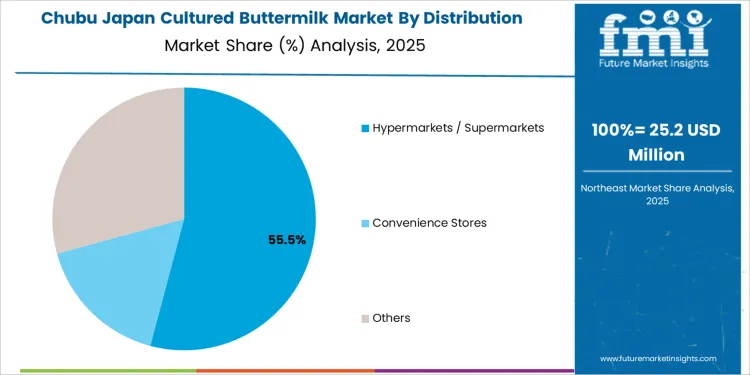
Chubu is witnessing steady demand for cultured buttermilk, growing at a 3.2% CAGR. As urbanization increases in cities like Nagoya, more consumers are becoming interested in functional foods that support digestive health. The demand for cultured buttermilk is being driven by consumers who are adopting health-conscious diets and seeking natural, probiotic-rich foods. The growing awareness of gut health and the benefits of fermented foods has made cultured buttermilk increasingly popular in Chubu. Local retailers, supermarkets, and health food stores are expanding their product ranges to include more cultured buttermilk options. The region’s rising focus on wellness, particularly among younger generations, has helped fuel the demand for health-boosting foods. Chubu’s evolving food culture, which embraces both traditional and modern nutrition, is encouraging the rise of fermented dairy products. As more consumers in Chubu turn to functional foods, demand for cultured buttermilk is expected to grow steadily.
How is Demand for Cultured Buttermilk Expanding in Tohoku?
Tohoku is seeing moderate growth in cultured buttermilk demand, with a 2.8% CAGR. While the region's consumption of cultured buttermilk is smaller compared to urban areas, there is a steady rise in interest as more consumers become aware of the benefits of fermented foods for digestive health. Tohoku's aging population, in particular, is seeking functional foods that support their health, and cultured buttermilk fits well within these dietary preferences. The increased availability of cultured buttermilk through local retailers and online platforms is helping to expand its reach. As Tohoku’s residents become more exposed to global dietary trends, especially those emphasizing gut health and wellness, the demand for cultured buttermilk is gradually increasing. The growing interest in natural, plant-based, and probiotic-rich foods is contributing to the steady rise in demand.
Why is Demand for Cultured Buttermilk Steady in the Rest of Japan?
The Rest of Japan is experiencing steady demand for cultured buttermilk, with a 2.7% CAGR. Although demand is lower compared to urban centers, there is a growing interest in health-conscious eating, particularly as consumers in rural and smaller cities become more aware of the benefits of functional foods. The rise in awareness about digestive health and probiotics is contributing to the steady increase in demand for cultured buttermilk in these areas. While retail availability may be limited, the growing accessibility through online shopping and delivery services is helping boost sales. As the population becomes more focused on wellness and preventive health, more consumers are adopting cultured buttermilk into their diets. Although the adoption rate is slower compared to more urbanized regions, the demand for cultured buttermilk in the Rest of Japan is expected to rise steadily. The broader trend of increased interest in functional foods supports this growth.
What is Driving the Demand for Cultured Buttermilk in Japan and Who Are the Key Players Shaping the Industry?
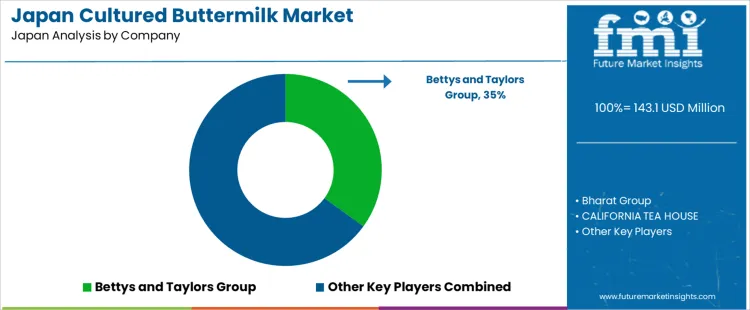
The demand for cultured buttermilk in Japan is rising as consumers increasingly seek healthy, probiotic-rich beverages that promote digestive health and overall well-being. Cultured buttermilk, which is rich in probiotics and low in fat, is gaining popularity due to its potential to support gut health, boost immunity, and enhance digestion. Japan’s growing interest in functional foods, along with a focus on natural and health-promoting ingredients, is driving the adoption of cultured buttermilk, particularly in the beverage and dairy product sectors. The rise of traditional and modern fusion recipes incorporating cultured buttermilk into various culinary applications, from smoothies to desserts, is further contributing to its growing presence in Japan’s food industry.
Key players shaping the cultured buttermilk industry in Japan include Bettys and Taylors Group, Bharat Group, CALIFORNIA TEA HOUSE, COFCO, and FMS Consumer Products. Bettys and Taylors Group leads the industry with a 35.0% share, offering high-quality cultured buttermilk products that cater to the growing demand for dairy-based beverages with added health benefits. These companies focus on providing cultured buttermilk in both traditional and innovative forms, targeting the health-conscious and wellness-focused Japanese consumers. Their product offerings are often used in ready-to-drink beverages, cooking applications, and dietary supplements, supporting Japan's shift toward functional, natural food options.
The growth of the cultured buttermilk industry in Japan is also supported by the increasing consumer demand for probiotic and gut-health-promoting products. As the industry for functional foods continues to expand, cultured buttermilk is expected to play a greater role in Japan’s evolving food landscape. With innovations in flavor, packaging, and product formats, cultured buttermilk is poised for continued growth, catering to the health-conscious population seeking dairy-based, probiotic-rich alternatives.
Key Players in Japan Cultured Buttermilk Demand
- Bettys and Taylors Group
- Bharat Group
- CALIFORNIA TEA HOUSE
- COFCO
- FMS Consumer Products
Scope of Report
| Items | Values |
|---|---|
| Quantitative Units (2025) | USD million |
| Product Type | Sweet Churned, Savory Churned |
| Distribution Channel | Hypermarkets / Supermarkets, Convenience Stores, Others |
| Region | Kyushu & Okinawa, Kanto, Kansai, Chubu, Tohoku, Rest of Japan |
| Countries Covered | Japan |
| Key Companies Profiled | Bettys and Taylors Group, Bharat Group, CALIFORNIA TEA HOUSE, COFCO, FMS Consumer Products |
| Additional Attributes | Dollar sales by product type and distribution channel; regional CAGR and growth outlook; increasing demand for functional dairy products; rising trend of savory buttermilk products; innovations in packaging and distribution; supply chain for dairy-based beverages in Japan. |
Japan Cultured Buttermilk Demand by Key Segments
Product Type
- Sweet Churned
- Savory Churned
Distribution Channel
- Hypermarkets / Supermarkets
- Convenience Stores
- Others
Region
- Kyushu & Okinawa
- Kanto
- Kansai
- Chubu
- Tohoku
- Rest of Japan
Frequently Asked Questions
How big is the demand for cultured buttermilk in Japan in 2025?
The demand for cultured buttermilk in Japan is estimated to be valued at USD 143.1 million in 2025.
What will be the size of cultured buttermilk in Japan in 2035?
The market size for the cultured buttermilk in Japan is projected to reach USD 203.8 million by 2035.
How much will be the demand for cultured buttermilk in Japan growth between 2025 and 2035?
The demand for cultured buttermilk in Japan is expected to grow at a 3.6% CAGR between 2025 and 2035.
What are the key product types in the cultured buttermilk in Japan?
The key product types in cultured buttermilk in Japan are sweet churned and savory churned.
Which distribution channel segment is expected to contribute significant share in the cultured buttermilk in Japan in 2025?
In terms of distribution channel, hypermarkets / supermarkets segment is expected to command 53.0% share in the cultured buttermilk in Japan in 2025.
Preview the report firsthand - request a free sample
Get SampleGet the brochure for pricing and purchase details.
Get PDFTable of Content
- Executive Summary
- Japan Market Outlook
- Demand-side Trends
- Supply-side Trends
- Technology Roadmap Analysis
- Analysis and Recommendations
- Market Overview
- Market Coverage / Taxonomy
- Market Definition / Scope / Limitations
- Market Background
- Market Dynamics
- Drivers
- Restraints
- Opportunity
- Trends
- Scenario Forecast
- Demand in Optimistic Scenario
- Demand in Likely Scenario
- Demand in Conservative Scenario
- Opportunity Map Analysis
- Product Life Cycle Analysis
- Supply Chain Analysis
- Investment Feasibility Matrix
- Value Chain Analysis
- PESTLE and Porter’s Analysis
- Regulatory Landscape
- Regional Parent Market Outlook
- Production and Consumption Statistics
- Import and Export Statistics
- Market Dynamics
- Japan Market Analysis 2020 to 2024 and Forecast, 2025 to 2035
- Historical Market Size Value (USD Million) Analysis, 2020 to 2024
- Current and Future Market Size Value (USD Million) Projections, 2025 to 2035
- Y-o-Y Growth Trend Analysis
- Absolute $ Opportunity Analysis
- Japan Market Pricing Analysis 2020 to 2024 and Forecast 2025 to 2035
- Japan Market Analysis 2020 to 2024 and Forecast 2025 to 2035, By Product Type
- Introduction / Key Findings
- Historical Market Size Value (USD Million) Analysis By Product Type , 2020 to 2024
- Current and Future Market Size Value (USD Million) Analysis and Forecast By Product Type , 2025 to 2035
- Sweet Churned
- Savory Churned
- Y-o-Y Growth Trend Analysis By Product Type , 2020 to 2024
- Absolute $ Opportunity Analysis By Product Type , 2025 to 2035
- Japan Market Analysis 2020 to 2024 and Forecast 2025 to 2035, By Distribution Channel
- Introduction / Key Findings
- Historical Market Size Value (USD Million) Analysis By Distribution Channel, 2020 to 2024
- Current and Future Market Size Value (USD Million) Analysis and Forecast By Distribution Channel, 2025 to 2035
- Hypermarkets / Supermarkets
- Convenience Stores
- Others
- Y-o-Y Growth Trend Analysis By Distribution Channel, 2020 to 2024
- Absolute $ Opportunity Analysis By Distribution Channel, 2025 to 2035
- Market Structure Analysis
- Competition Dashboard
- Competition Benchmarking
- Market Share Analysis of Top Players
- By Regional
- By Product Type
- By Distribution Channel
- Competition Analysis
- Competition Deep Dive
- Bettys and Taylors Group
- Overview
- Product Portfolio
- Profitability by Market Segments (Product/Age /Sales Channel/Region)
- Sales Footprint
- Strategy Overview
- Marketing Strategy
- Product Strategy
- Channel Strategy
- Bharat Group
- CALIFORNIA TEA HOUSE
- COFCO
- FMS Consumer Products
- Bettys and Taylors Group
- Competition Deep Dive
- Assumptions & Acronyms Used
- Research Methodology


