

- Industry Size (2026)
- USD 116.9 Mn
- Forecast (2036)
- USD 320.4 Mn
- CAGR (2026 to 2036)
- 9.6%
Demand for Diagnostic Tools for EVs in Japan Forecast and Outlook 2026 to 2036
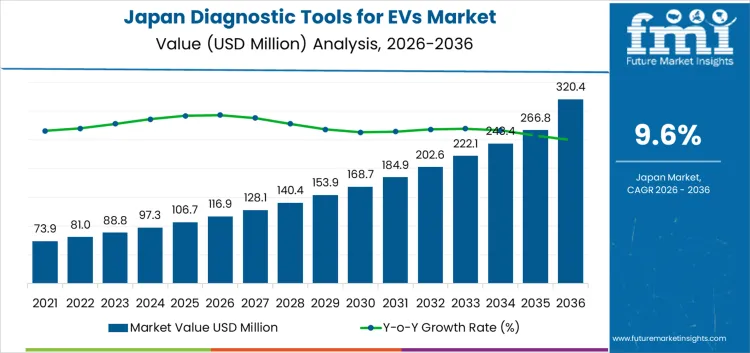
The demand for diagnostic tools for electric vehicles (EVs) in Japan is projected to grow significantly from USD 116.9 million in 2026 to USD 320.4 million by 2036, reflecting a 9.6% CAGR. As the fleet of EVs expands, traditional diagnostic tools are no longer sufficient, necessitating the development and adoption of advanced diagnostic solutions tailored specifically for EVs. Key drivers include government incentives promoting EV adoption, technological advancements in EV components such as batteries and electric drivetrains, and the growing need for diagnostic tools that support vehicle software and powertrain performance.
Quick Stats of the Demand for Diagnostic Tools for EVs in Japan
- Demand for Diagnostic Tools for EVs in Japan Value (2026): USD 116.9 million
- Demand for Diagnostic Tools for EVs in Japan Forecast Value (2036): USD 320.4 million
- Demand for Diagnostic Tools for EVs in Japan Forecast CAGR (2026 to 2036): 9.6%
- Demand for Diagnostic Tools for EVs in Japan Leading Offering: Diagnostic Hardware
- Demand for Diagnostic Tools for EVs in Japan Leading Tool Type: Professional Diagnostic
- Demand for Diagnostic Tools for EVs in Japan Key Growth Regions: Kyushu & Okinawa, Kanto, Kansai, Chubu, Tohoku, Rest of Japan
- Demand for Diagnostic Tools for EVs in Japan Top Players: Bosch Automotive Service Solutions, Snap-on Incorporated, Launch Tech Co., Ltd., Autel Intelligent Technology Corp., Denso Corporation
By tool type, professional diagnostic tools dominate, accounting for 24% of the demand, as they are essential for servicing EVs at specialized service centers. Automatic crash notification systems also account for 24% of the demand, reflecting the increasing focus on vehicle safety and emergency response features. Regionally, Kyushu & Okinawa leads with a 12.0% CAGR, driven by strong local adoption of electric vehicles, while Kanto follows with an 11.0% CAGR, supported by its large urban population and growing EV infrastructure. Technological innovations, such as remote diagnostics and over-the-air updates, are also driving demand, ensuring the continued growth of the EV diagnostic tool industry in Japan.
Demand for Diagnostic Tools for EVs in Japan Key Takeaways
| Metric | Value |
|---|---|
| Demand for Diagnostic Tools for EVs in Japan Value (2026) | USD 116.9 million |
| Demand for Diagnostic Tools for EVs in Japan Forecast Value (2036) | USD 320.4 million |
| Demand for Diagnostic Tools for EVs in Japan Forecast CAGR (2026 to 2036) | 9.6% |
Why is the Demand for Diagnostic Tools for EVs in Japan Growing?
The demand for diagnostic tools for electric vehicles (EVs) in Japan is growing due to the rapid increase in EV adoption and the need for specialized tools to maintain and repair electric drivetrains, batteries, and electrical systems. As EVs become more widespread, traditional diagnostic tools used for internal combustion engine (ICE) vehicles are no longer sufficient, creating a growing industry for advanced, EV-specific diagnostic tools. These tools are essential for ensuring the proper functioning of EV components such as batteries, motors, and power electronics, which require different maintenance and troubleshooting procedures compared to traditional vehicles.
Key drivers for this growth include the expansion of Japan's EV industry, driven by government incentives, environmental policies, and the increasing consumer demand for sustainable transportation options. As more automakers produce EV models and the fleet of electric vehicles on Japanese roads grows, the need for accurate, efficient, and reliable diagnostic equipment to support maintenance and repair services increases. Advancements in EV technologies, including complex onboard systems and software, are fueling demand for diagnostic tools capable of interfacing with these systems for accurate diagnostics and repairs.
What is the Segment-Wise Analysis of Demand for Diagnostic Tools for EVs in Japan?
Demand for diagnostic tools for electric vehicles (EVs) in Japan is segmented by tool type, application, and region. By tool type, professional diagnostic tools lead with 24% of the demand, followed by DIY diagnostics, OEM diagnostics, and others. In terms of application, automatic crash notification accounts for 24% of the demand, with vehicle tracking, vehicle health alerts & roadside assistance, repair & maintenance, and other applications contributing to the remainder. Regionally, demand is spread across Kyushu & Okinawa, Kanto, Kansai, Chubu, Tohoku, and the rest of Japan.
Why Do Professional Diagnostic Tools Lead the Demand for EV Diagnostic Tools in Japan?
Professional diagnostic tools account for 24% of the demand for EV diagnostic tools in Japan, driven by their essential role in the accurate and efficient troubleshooting of electric vehicle systems. These tools are widely used by service centers, automotive professionals, and EV manufacturers to diagnose issues related to the battery, motor, and other critical electrical components of EVs. As the EV industry continues to expand, the need for specialized diagnostic equipment to ensure vehicle performance and safety grows. Professional diagnostic tools provide detailed insights, enabling technicians to perform precise repairs, contributing to their dominance in the industry.
How Does Automatic Crash Notification Drive the Demand for EV Diagnostic Tools in Japan?
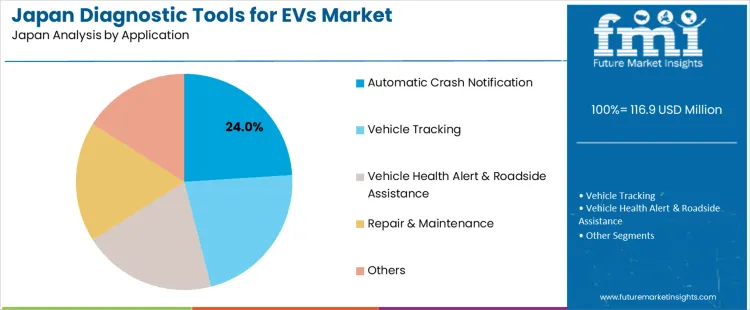
Automatic crash notification accounts for 24% of the demand for EV diagnostic tools in Japan, driven by its importance in enhancing vehicle safety and providing real-time emergency response. This system, which automatically alerts emergency services in the event of a crash, relies on diagnostic tools to ensure that the sensors and communication systems are functioning correctly. As the automotive industry continues to prioritize safety and innovation, the demand for diagnostic tools that support automatic crash notification systems is growing. The increased adoption of advanced safety features in EVs further drives the need for precise diagnostic tools to maintain system reliability and efficiency.
What are the Key Trends, Drivers and Restraints in Demand for Diagnostic Tools for EVs in Japan?
Demand for diagnostic tools for electric vehicles (EVs) in Japan is rising as the adoption of EVs increases. EVs require specialized diagnostic equipment to address their unique high voltage systems, battery management, and software components. Key drivers include the growth of EV fleet sizes, advancements in vehicle electronics, and increased focus on high voltage safety and system performance.
Why is Demand for Diagnostic Tools for EVs Growing in Japan?
The demand for diagnostic tools for electric vehicles in Japan is growing as the country’s EV industry expands. EVs require specialized diagnostic equipment to maintain and troubleshoot systems such as batteries, electric motors, and regenerative braking. The rise in BEV registrations and the increased complexity of EV components drive demand for tools that can efficiently monitor and diagnose faults. Consumers’ expectations for rapid and accurate service, coupled with the shift towards electric mobility, push workshops to invest in EV specific diagnostic solutions.
How are Technological and Industry Innovations Driving Diagnostic Tools Demand for EVs in Japan?
Technological innovations are driving demand for EV diagnostic tools in Japan by introducing advanced capabilities such as remote diagnostics, over the air updates, and predictive analytics. These innovations allow service providers to diagnose issues more efficiently, ensuring better service and faster repairs. The integration of machine learning and cloud computing in diagnostic platforms enables real time monitoring of battery health and system performance. As EVs increasingly rely on complex software, diagnostic tools that can interpret large datasets and perform diagnostics remotely are essential, fueling further demand in the industry.
What is the Regional Demand Outlook for Diagnostic Tools for EVs in Japan?
| Region | CAGR (%) |
|---|---|
| Kyushu & Okinawa | 12.0% |
| Kanto | 11.0% |
| Kansai | 9.7% |
| Chubu | 8.5% |
| Tohoku | 7.5% |
| Rest of Japan | 7.1% |
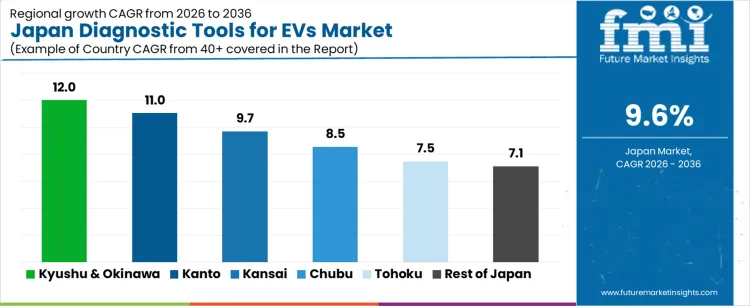
Demand for diagnostic tools for electric vehicles in Japan is growing rapidly, with Kyushu & Okinawa leading at a 12.0% CAGR, driven by the region’s increasing adoption of electric vehicles and focus on sustainable mobility. Kanto follows with an 11.0% CAGR, supported by its large urban population and expanding EV infrastructure. Kansai shows a 9.7% CAGR, fueled by its automotive industry’s transition to electric mobility. Chubu experiences an 8.5% CAGR, with growth driven by the region’s automotive manufacturing sector. Tohoku and the rest of Japan see moderate growth at 7.5% and 7.1% CAGR, respectively, as EV adoption spreads across rural and suburban areas.
How is Demand for Diagnostic Tools for EVs Growing in Kyushu & Okinawa?
Kyushu & Okinawa leads the demand for diagnostic tools for electric vehicles (EVs) in Japan, growing at a 12.0% CAGR. The region’s increasing adoption of electric vehicles, driven by local government incentives and environmental initiatives, is a key factor contributing to this growth. Kyushu’s strong industrial and automotive sectors, particularly in Fukuoka, are increasingly incorporating EVs, which in turn drives the need for specialized diagnostic tools to ensure vehicle performance and safety. Okinawa, with its focus on sustainable tourism and environmental solutions, is also contributing to the rise in EV adoption and the demand for diagnostic tools. As more consumers and businesses in Kyushu & Okinawa transition to electric vehicles, the demand for high-quality diagnostic tools to maintain and repair EVs is expected to grow steadily, supporting the region’s green transportation goals.
Why is Demand for Diagnostic Tools for EVs Rising in Kanto?
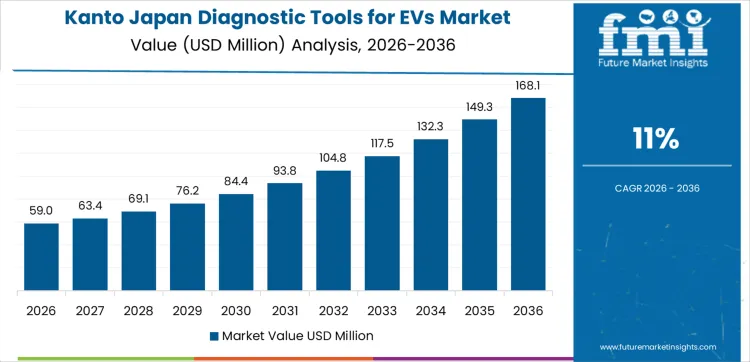
Kanto is experiencing strong demand for diagnostic tools for EVs, growing at an 11.0% CAGR. As the largest urban and industrial hub in Japan, Kanto, particularly Tokyo, is seeing rapid growth in electric vehicle adoption. With a large number of EVs on the roads, both private and commercial, there is an increasing need for diagnostic tools that ensure vehicle efficiency and safety. Kanto’s advanced automotive industry, including specialized EV service centers and research institutions, is driving the demand for cutting-edge diagnostic technologies. Region’s strong focus on reducing carbon emissions and increasing sustainability is further boosting the shift to electric vehicles. As Kanto’s EV industry expands, the need for high-quality diagnostic tools to support vehicle maintenance and troubleshooting will continue to rise, ensuring the efficient functioning of electric vehicles in the region.
How is Demand for Diagnostic Tools for EVs Expanding in Kansai?
Kansai is seeing moderate demand for diagnostic tools for EVs, growing at a 9.7% CAGR. The region’s growing focus on sustainability and clean energy, particularly in cities like Osaka and Kyoto, is contributing to the increasing adoption of electric vehicles. Kansai’s automotive sector, which has traditionally been home to major car manufacturers, is expanding its focus on electric mobility solutions, thereby driving the demand for EV diagnostic tools. With a rising number of EVs in the region, the need for specialized diagnostic tools to monitor vehicle health and performance is growing steadily. As Kansai continues to embrace the green transition, the automotive repair and maintenance industry is increasingly relying on advanced diagnostic tools to service electric vehicles. This shift toward sustainable mobility, combined with the region’s strong industrial infrastructure, ensures that demand for EV diagnostic tools will continue to rise in Kansai.
How is Demand for Diagnostic Tools for EVs Growing in Chubu?
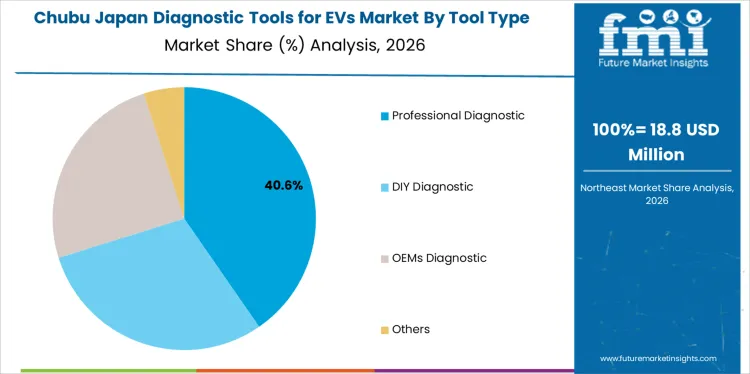
Chubu is experiencing moderate demand for diagnostic tools for EVs, with an 8.5% CAGR. The region’s growing automotive industry, particularly in Nagoya, is contributing to the increasing need for diagnostic tools for electric vehicles. As more electric vehicles enter the industry, both for personal and commercial use, there is a greater demand for tools that can assess EV performance, battery health, and overall vehicle efficiency. Chubu’s focus on innovation and sustainable mobility solutions, combined with its position as a major automotive manufacturing hub, is driving the demand for advanced diagnostic technologies. With local repair shops and service centers adopting EV-specific diagnostic tools, the region is poised to see continued growth in the demand for EV maintenance and repair solutions. As Chubu continues to transition to cleaner transportation options, the demand for EV diagnostic tools will rise steadily in the coming years.
How is Demand for Diagnostic Tools for EVs Growing in Tohoku?
Tohoku is seeing moderate demand for diagnostic tools for EVs, growing at a 7.5% CAGR. The region’s focus on sustainability and clean energy is contributing to the growing interest in electric vehicles, particularly as government incentives encourage EV adoption. Tohoku’s automotive industry, though smaller compared to other regions, is increasingly focusing on servicing electric vehicles as the demand for EVs rises. As more electric cars are sold, both in urban and rural areas, the need for specialized diagnostic tools to ensure vehicle safety and functionality is growing steadily. The region’s commitment to improving electric vehicle infrastructure, including the installation of EV charging stations and service centers, is further driving the demand for diagnostic tools. As Tohoku continues to embrace the green revolution in transportation, the demand for EV diagnostic tools will continue to rise, supporting the region’s shift toward sustainable mobility.
How is Demand for Diagnostic Tools for EVs Growing in Rest of Japan?
The rest of Japan is experiencing steady demand for diagnostic tools for EVs, growing at a 7.1% CAGR. While the demand is less concentrated in major metropolitan areas, there is a steady increase in electric vehicle adoption in rural and suburban regions. As more consumers in these areas transition to electric vehicles, the need for specialized diagnostic tools to monitor and maintain vehicle performance is rising. Local service providers and automotive repair shops in smaller cities are increasingly investing in EV diagnostic technologies to meet the demand for EV maintenance. With the growing focus on sustainable mobility and government incentives for EV adoption, the rest of Japan is seeing gradual but steady growth in the adoption of diagnostic tools. As the electric vehicle industry continues to expand outside urban centers, the demand for diagnostic solutions will rise steadily in the rest of Japan.
What is the Competitive Landscape of Diagnostic Tools for EVs in Japan?
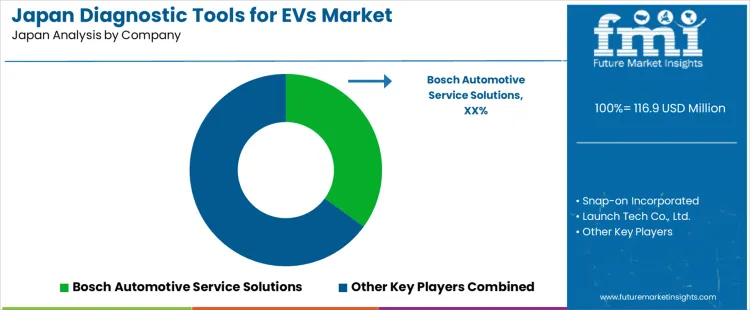
Demand for diagnostic tools for EVs in Japan is increasing as electric vehicle adoption accelerates across both consumer and commercial segments. EVs require specialized diagnostic capabilities to assess battery health, powertrain efficiency, software performance, and high-voltage system integrity. With Japan’s strong focus on automotive innovation and safety, workshops and service centers are adopting advanced EV diagnostic systems to ensure accurate maintenance and reduce downtime.
Bosch Automotive Service Solutions holds a strong position by offering comprehensive diagnostic platforms built for modern EV architectures. Its strategy emphasizes precision testing, compatibility with multiple EV models, and integration of software-driven analytics. Bosch’s product lines feature high-voltage insulation testers, battery analyzers, and multifunction diagnostic scanners suited for Japan’s service ecosystem.
Snap-on Incorporated, Launch Tech Co., Ltd., Autel Intelligent Technology Corp., and Denso Corporation enhance competition with differentiated product portfolios. Snap-on provides premium diagnostic tools with intuitive interfaces tailored for professional technicians. Launch Tech offers cost-effective, versatile scanners widely adopted by independent garages. Autel focuses on high-performance EV diagnostic units with deep battery analysis and OTA update support. Denso, benefiting from its close ties to Japanese automakers, delivers OE-grade diagnostic equipment engineered specifically for hybrid and EV platforms.
Key Players in Japan Diagnostic Tools for EVs Demand
- Bosch Automotive Service Solutions
- Snap-on Incorporated
- Launch Tech Co., Ltd.
- Autel Intelligent Technology Corp.
- Denso Corporation
Scope of Report
| Items | Values |
|---|---|
| Quantitative Units (2026) | USD million |
| Key Segments | Diagnostic Hardware, Diagnostic Software, Diagnostic Services, Others |
| Tool Type | Professional Diagnostic, DIY Diagnostic, OEMs Diagnostic, Others |
| Application | Automatic Crash Notification, Vehicle Tracking, Vehicle Health Alert & Roadside Assistance, Repair & Maintenance, Others |
| Vehicle Type | Passenger Vehicle, Commercial Vehicle, Others |
| Key Country | Japan |
| Region | Kyushu & Okinawa, Kanto, Kansai, Chubu, Tohoku, Rest of Japan |
| Key Players Profiled | Bosch Automotive Service Solutions, Snap-on Incorporated, Launch Tech Co., Ltd., Autel Intelligent Technology Corp., Denso Corporation |
| Additional Attributes | Dollar sales by offering, tool type, application, and vehicle type; regional CAGR and growth trends in diagnostic tools for EVs demand in Japan |
Japan Diagnostic Tools for EVs Demand by Key Segments
By Offering:
- Diagnostic Hardware
- Diagnostic Software
- Diagnostic Services
- Others
By Tool Type:
- Professional Diagnostic
- DIY Diagnostic
- OEMs Diagnostic
- Others
By Application:
- Automatic Crash Notification
- Vehicle Tracking
- Vehicle Health Alert & Roadside Assistance
- Repair & Maintenance
- Others
By Vehicle Type:
- Passenger Vehicle
- Commercial Vehicle
- Others
By Region:
- Kyushu & Okinawa
- Kanto
- Kansai
- Chubu
- Tohoku
- Rest of Japan
Frequently Asked Questions
How big is the demand for diagnostic tools for EVs in Japan in 2026?
The demand for diagnostic tools for EVs in Japan is estimated to be valued at USD 116.9 million in 2026.
What will be the size of diagnostic tools for EVs in Japan in 2036?
The market size for the diagnostic tools for EVs in Japan is projected to reach USD 320.4 million by 2036.
How much will be the demand for diagnostic tools for EVs in Japan growth between 2026 and 2036?
The demand for diagnostic tools for EVs in Japan is expected to grow at a 9.6% CAGR between 2026 and 2036.
What are the key product types in the diagnostic tools for EVs in Japan?
The key product types in diagnostic tools for EVs in Japan are diagnostic hardware, diagnostic software, diagnostic services and others.
Which tool type segment is expected to contribute significant share in the diagnostic tools for EVs in Japan in 2026?
In terms of tool type, professional diagnostic segment is expected to command 40.0% share in the diagnostic tools for EVs in Japan in 2026.
Preview the report firsthand - request a free sample
Get SampleGet the brochure for pricing and purchase details.
Get PDFTable of Content
- Executive Summary
- Japan Market Outlook
- Demand-side Trends
- Supply-side Trends
- Technology Roadmap Analysis
- Analysis and Recommendations
- Market Overview
- Market Coverage / Taxonomy
- Market Definition / Scope / Limitations
- Market Background
- Market Dynamics
- Drivers
- Restraints
- Opportunity
- Trends
- Scenario Forecast
- Demand in Optimistic Scenario
- Demand in Likely Scenario
- Demand in Conservative Scenario
- Opportunity Map Analysis
- Product Life Cycle Analysis
- Supply Chain Analysis
- Investment Feasibility Matrix
- Value Chain Analysis
- PESTLE and Porter’s Analysis
- Regulatory Landscape
- Regional Parent Market Outlook
- Production and Consumption Statistics
- Import and Export Statistics
- Market Dynamics
- Japan Market Analysis 2021 to 2025 and Forecast, 2026 to 2036
- Historical Market Size Value (USD Million) Analysis, 2021 to 2025
- Current and Future Market Size Value (USD Million) Projections, 2026 to 2036
- Y-o-Y Growth Trend Analysis
- Absolute $ Opportunity Analysis
- Japan Market Pricing Analysis 2021 to 2025 and Forecast 2026 to 2036
- Japan Market Analysis 2021 to 2025 and Forecast 2026 to 2036, By Offering
- Introduction / Key Findings
- Historical Market Size Value (USD Million) Analysis By Offering, 2021 to 2025
- Current and Future Market Size Value (USD Million) Analysis and Forecast By Offering, 2026 to 2036
- Diagnostic Hardware
- Diagnostic Software
- Diagnostic Services
- Others
- Y-o-Y Growth Trend Analysis By Offering, 2021 to 2025
- Absolute $ Opportunity Analysis By Offering, 2026 to 2036
- Japan Market Analysis 2021 to 2025 and Forecast 2026 to 2036, By Tool Type
- Introduction / Key Findings
- Historical Market Size Value (USD Million) Analysis By Tool Type, 2021 to 2025
- Current and Future Market Size Value (USD Million) Analysis and Forecast By Tool Type, 2026 to 2036
- Professional Diagnostic
- DIY Diagnostic
- OEMs Diagnostic
- Others
- Y-o-Y Growth Trend Analysis By Tool Type, 2021 to 2025
- Absolute $ Opportunity Analysis By Tool Type, 2026 to 2036
- Japan Market Analysis 2021 to 2025 and Forecast 2026 to 2036, By Application
- Introduction / Key Findings
- Historical Market Size Value (USD Million) Analysis By Application, 2021 to 2025
- Current and Future Market Size Value (USD Million) Analysis and Forecast By Application, 2026 to 2036
- Automatic Crash Notification
- Vehicle Tracking
- Vehicle Health Alert & Roadside Assistance
- Repair & Maintenance
- Others
- Y-o-Y Growth Trend Analysis By Application, 2021 to 2025
- Absolute $ Opportunity Analysis By Application, 2026 to 2036
- Japan Market Analysis 2021 to 2025 and Forecast 2026 to 2036, By Vehicle Type
- Introduction / Key Findings
- Historical Market Size Value (USD Million) Analysis By Vehicle Type, 2021 to 2025
- Current and Future Market Size Value (USD Million) Analysis and Forecast By Vehicle Type, 2026 to 2036
- Passenger Vehicle
- Commercial Vehicle
- Others
- Y-o-Y Growth Trend Analysis By Vehicle Type, 2021 to 2025
- Absolute $ Opportunity Analysis By Vehicle Type, 2026 to 2036
- Market Structure Analysis
- Competition Dashboard
- Competition Benchmarking
- Market Share Analysis of Top Players
- By Regional
- By Offering
- By Tool Type
- By Application
- By Vehicle Type
- Competition Analysis
- Competition Deep Dive
- Bosch Automotive Service Solutions
- Overview
- Product Portfolio
- Profitability by Market Segments (Product/Age /Sales Channel/Region)
- Sales Footprint
- Strategy Overview
- Marketing Strategy
- Product Strategy
- Channel Strategy
- Snap-on Incorporated
- Launch Tech Co., Ltd.
- Autel Intelligent Technology Corp.
- Denso Corporation
- Bosch Automotive Service Solutions
- Competition Deep Dive
- Assumptions & Acronyms Used
- Research Methodology


