

- Industry Size (2026)
- USD 240.7 Mn
- Forecast (2036)
- USD 407.4 Mn
- CAGR (2026 to 2036)
- 4.9%
Demand for Drug Eruptions Treatment in Japan Forecast and Outlook 2026 to 2036
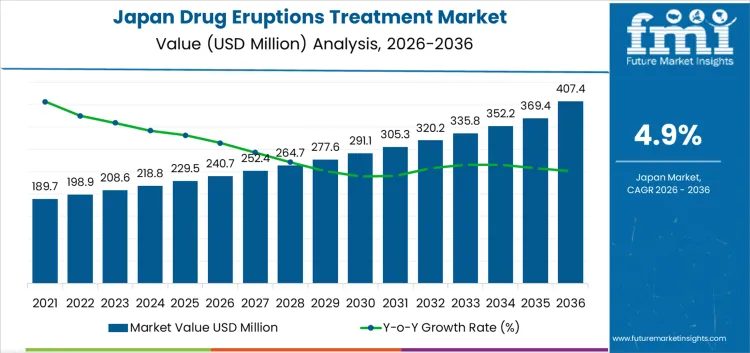
Demand for drug eruptions treatment in Japan is rising due to increasing adverse drug reactions (ADRs), particularly among the aging population on long-term medications. The industry, valued at USD 240.7 million in 2026 and projected to reach USD 407.4 million by 2036, is growing at a 4.9% CAGR. This growth is driven by advances in dermatology, including the development of corticosteroids, immunosuppressants, and targeted therapies that offer better management of drug-induced skin reactions. Corticosteroids dominate with 78% of the demand due to their proven efficacy in reducing inflammation and alleviating symptoms. Hospital pharmacies account for 55% of the distribution, as hospitals are key in managing severe cases and providing specialized care.
Quick Stats of the Demand for Drug Eruptions Treatment in Japan
- Demand for Drug Eruptions Treatment in Japan Value (2026): USD 240.7 million
- Demand for Drug Eruptions Treatment in Japan Forecast Value (2036): USD 407.4 million
- Demand for Drug Eruptions Treatment in Japan Forecast CAGR (2026 to 2036): 4.9%
- Demand for Drug Eruptions Treatment in Japan Leading Drug Class: Corticosteroids
- Demand for Drug Eruptions Treatment in Japan Key Growth Regions: Kyushu & Okinawa, Kanto, Kansai, Chubu, Tohoku, Rest of Japan
- Demand for Drug Eruptions Treatment in Japan Top Players: Anuh Pharma Ltd., Avik Pharma, Pfizer CentreOne, Hovione, Bausch Health Companies Inc.
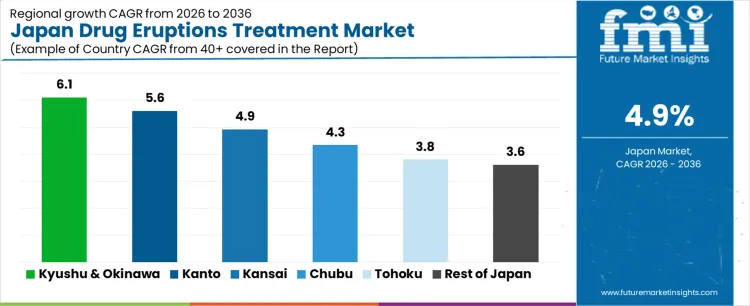
Kyushu & okinawa leads with a 6.1% CAGR, followed by kanto and kansai, reflecting strong healthcare infrastructures and a rising focus on dermatological care. Technological advancements, such as genetic testing and biologics, are enhancing treatment outcomes and early detection. Challenges such as high treatment costs, limited access in rural areas, and difficulty in diagnosing ADRs hinder faster adoption. Major players like anuh pharma, avik pharma, pfizer centreone, hovione, and bausch health are innovating and expanding their therapeutic offerings to meet the growing demand for effective drug eruptions treatments in Japan.
Demand for Drug Eruptions Treatment in Japan Key Takeaways
| Metric | Value |
|---|---|
| Demand for Drug Eruptions Treatment in Japan Value (2026) | USD 240.7 million |
| Demand for Drug Eruptions Treatment in Japan Forecast Value (2036) | USD 407.4 million |
| Demand for Drug Eruptions Treatment in Japan Forecast CAGR (2026 to 2036) | 4.9% |
Why is the Demand for Drug Eruptions Treatment in Japan Growing?
The demand for drug eruptions treatment in Japan is growing due to the rising incidence of adverse drug reactions (ADRs), which can lead to drug eruptions like rashes, blisters, and other skin reactions. As more people are prescribed medications for chronic conditions, there is a higher risk of drug-induced skin conditions, driving the need for specialized treatments. Advances in dermatology, including topical treatments, oral medications, and systemic therapies, have made managing drug eruptions more effective, further increasing the demand for these therapies.
Key drivers for this growth include Japan's aging population, which is more likely to be on long-term medication regimens, and the increasing awareness among healthcare providers and patients of ADRs and their management. Development of more targeted therapies, such as biologics and other advanced treatments, is improving patient outcomes, making them a more viable option for patients experiencing drug-induced skin reactions. The increasing use of personalized medicine is also contributing to the demand, as treatments are tailored to individual genetic profiles, improving effectiveness and reducing adverse reactions.
Despite challenges such as the high cost of new therapies and the difficulty in diagnosing the specific cause of drug eruptions, the growing awareness of ADRs, advancements in treatment options, and Japan's focus on patient safety and healthcare innovation are expected to support continued growth in the demand for drug eruptions treatment through 2036.
What is the Segment-Wise Analysis of Demand for Drug Eruptions Treatment in Japan?
Demand for drug eruptions treatment in Japan is segmented by drug class, distribution channel, and region. By drug class, corticosteroids lead with 78% of the demand, followed by immunosuppressant drugs, anti-cytokines, hemorrheologic agents, and antihistamines. In terms of distribution channel, hospital pharmacies account for 55% of the demand, with online pharmacies and others contributing to the remainder. Regionally, demand is spread across Kyushu & Okinawa, Kanto, Kansai, Chubu, Tohoku, and the rest of Japan.
Why Do Corticosteroids Lead the Demand for Drug Eruptions Treatment in Japan?
Corticosteroids account for 78% of the demand for drug eruptions treatment in Japan, primarily due to their anti-inflammatory and immune-modulating properties. These medications are widely used to treat drug-induced skin reactions and eruptions by reducing inflammation and controlling symptoms. Corticosteroids are effective in managing a range of conditions, making them the first-line treatment for many patients experiencing drug eruptions. Their widespread availability and established use in dermatology further reinforce their dominance in the treatment of drug eruptions. As the need for effective and rapid symptom relief continues to grow, corticosteroids remain a primary therapeutic option in Japan.
How Do Hospital Pharmacies Drive the Demand for Drug Eruptions Treatment in Japan?
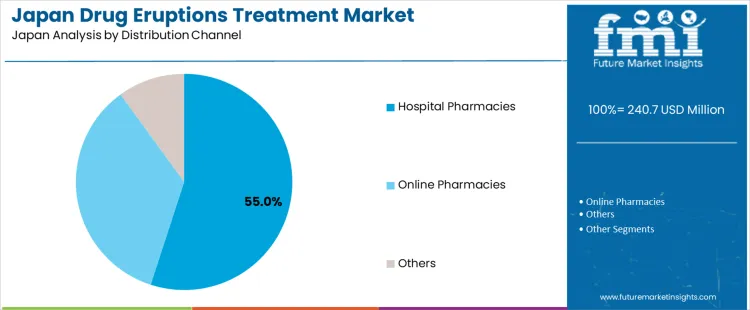
Hospital pharmacies account for 55% of the demand for drug eruptions treatment in Japan, driven by their critical role in providing medications for inpatient care and emergency treatment. Hospitals are often the first point of contact for patients with severe drug eruptions, requiring immediate medical attention and prescription medications like corticosteroids. The availability of specialized treatments and the need for monitoring and adjusting dosages make hospital pharmacies a key distribution channel for drug eruption therapies. As healthcare services continue to evolve, hospitals remain central to the management of complex and acute drug reactions, driving continued demand for these treatments.
What are the Key Drivers and Restraints in Demand for Drug Eruptions Treatment in Japan?
Drug eruptions range from mild rashes to severe, life‑threatening conditions, prompting a rise in demand for effective treatments. Trends include greater awareness of drug‑induced skin reactions and the availability of targeted therapies, such as corticosteroids and immunosuppressive agents. Restraints include challenges in early detection, high treatment costs, and side effects of certain drugs, which can limit access to optimal therapies.
How are Technological and Industry Innovations Driving Drug Eruptions Treatment in Japan?
Technological and industry innovations are driving the demand for drug eruptions treatment in Japan by improving early diagnosis and more precise treatment options. Advances in diagnostic testing, such as genetic screening, help identify patients who may be more susceptible to adverse drug reactions, enabling personalized care. Innovations in biologic therapies, corticosteroids, and immunosuppressive treatments allow for more effective management of severe drug eruptions. The development of topical treatments and novel systemic therapies with fewer side effects offers new options for patients, improving treatment outcomes and quality of life, while expanding the therapeutic landscape for healthcare providers.
What are the Key Challenges and Risks That Could Limit Drug Eruptions Treatment in Japan?
One challenge is the difficulty in distinguishing drug eruptions from other types of skin reactions, leading to delays in diagnosis and treatment. The high cost of advanced treatments, including biologic drugs and immunosuppressive therapies, may limit access for some patients, particularly in rural areas or among elderly populations on fixed incomes. There is a lack of comprehensive guidelines for treating certain severe drug reactions, which may hinder the development of standardized treatment protocols across healthcare facilities. Side effects of certain therapies could deter long‑term use.
What is the Regional Demand Outlook for Drug Eruptions Treatment in Japan?
| Region | CAGR (%) |
|---|---|
| Kyushu & Okinawa | 6.1% |
| Kanto | 5.6% |
| Kansai | 4.9% |
| Chubu | 4.3% |
| Tohoku | 3.8% |
| Rest of Japan | 3.6% |
Demand for drug eruptions treatment in Japan is growing steadily, with Kyushu & Okinawa leading at a 6.1% CAGR, driven by the region’s expanding healthcare services and focus on dermatological conditions. Kanto follows with a 5.6% CAGR, supported by its large urban population and advanced medical infrastructure. Kansai shows a 4.9% CAGR, fueled by its well-developed healthcare system and focus on rare drug-induced skin conditions. Chubu experiences a 4.3% CAGR, with steady growth driven by the region’s healthcare expansion and aging population. Tohoku and the rest of Japan see moderate growth at 3.8% and 3.6% CAGR, respectively.
How is Demand for Drug Eruptions Treatment Growing in Kyushu & Okinawa?
Kyushu & Okinawa leads the demand for drug eruptions treatment in Japan, growing at a 6.1% CAGR. The region’s growing healthcare infrastructure, particularly in cities like Fukuoka, is contributing to the rising demand for treatments for adverse drug reactions, including drug eruptions. Kyushu’s increasing focus on improving dermatological care, as well as the region's significant elderly population, is driving the adoption of these treatments. Okinawa’s higher prevalence of certain genetic conditions and environmental factors also contributes to the need for specialized treatments for skin reactions. As awareness of drug eruptions rises among both healthcare providers and the general public, more patients are seeking medical attention for these conditions. The demand for effective treatments is expected to continue growing steadily in Kyushu & Okinawa, driven by both increased awareness and the expansion of healthcare services targeting dermatological conditions.
Why is Demand for Drug Eruptions Treatment Rising in Kanto?
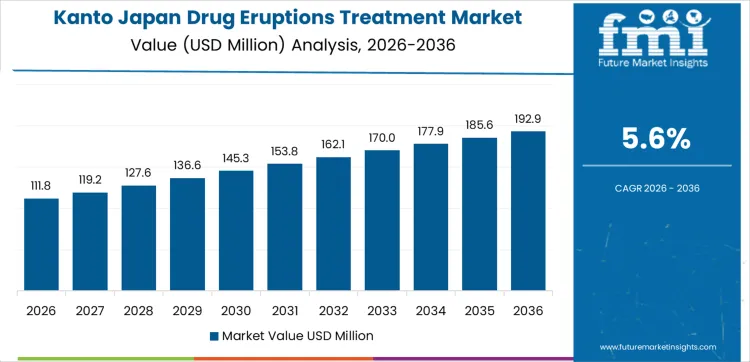
Kanto is experiencing steady demand for drug eruptions treatment, with a 5.6% CAGR. The region’s large urban population, particularly in Tokyo, is driving the rise in diagnoses and treatments for drug eruptions. As the prevalence of adverse drug reactions continues to grow with increased medication use, there is a greater need for treatments targeting drug-induced skin reactions. Kanto’s advanced healthcare infrastructure, including specialized dermatology clinics and hospitals, is well-equipped to offer these treatments. As more healthcare professionals are trained to recognize and address drug eruptions, early intervention becomes more common, driving demand for effective treatments. Kanto’s emphasis on innovation in medical care and dermatology ensures that the region remains a leader in providing solutions for drug eruptions. As awareness of these conditions continues to grow, the demand for effective treatments in Kanto will continue to rise steadily.
How is Demand for Drug Eruptions Treatment Expanding in Kansai?
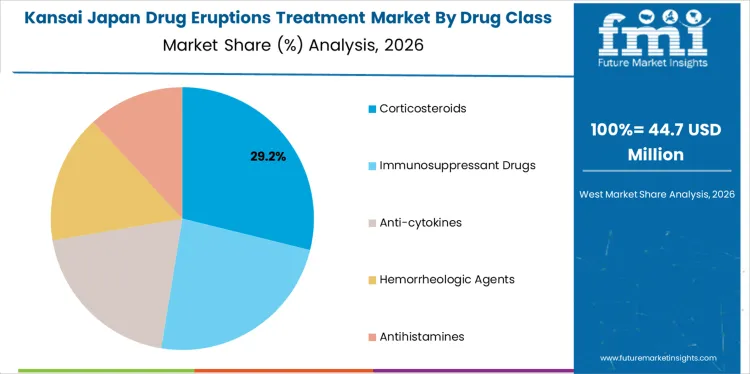
Kansai is seeing moderate demand for drug eruptions treatment, growing at a 4.9% CAGR. The region’s well-developed healthcare infrastructure and focus on dermatology are contributing to the rising demand for treatments for drug-induced skin conditions. Cities like Osaka and Kyoto, known for their medical and research facilities, are seeing increasing cases of drug eruptions as the region’s healthcare services expand. Kansai’s growing population of elderly individuals, who are more prone to drug reactions, is also driving the demand for specialized treatments. As more patients are diagnosed with drug eruptions, the adoption of targeted therapies is increasing in the region. Kansai’s commitment to improving patient care and treatment options for dermatological conditions ensures steady growth in the demand for drug eruptions treatments, particularly as the region’s healthcare services become more accessible and advanced.
How is Demand for Drug Eruptions Treatment Growing in Chubu?
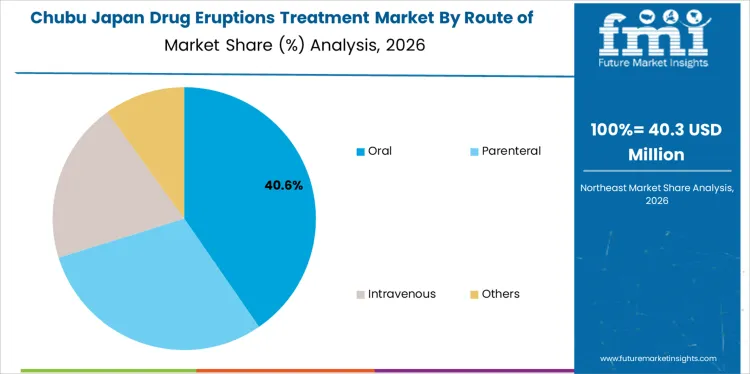
Chubu is experiencing moderate demand for drug eruptions treatment, with a 4.3% CAGR. The region’s growing focus on improving healthcare services, particularly in dermatology, is contributing to the rise in demand for treatments addressing adverse drug reactions. Cities like Nagoya are seeing an increasing number of patients seeking care for drug eruptions, driven by the growing use of pharmaceuticals and a greater awareness of skin conditions related to medications. Chubu’s expanding healthcare facilities, which include dermatology specialists, are helping to provide effective treatments for these conditions. As more elderly individuals in the region experience adverse drug reactions, the need for timely and effective treatment for drug eruptions is expected to rise. As Chubu’s healthcare sector continues to develop and expand, demand for drug eruptions treatments will grow steadily, with a focus on improving patient outcomes and increasing access to care.
How is Demand for Drug Eruptions Treatment Growing in Tohoku?
Tohoku is seeing moderate demand for drug eruptions treatment, growing at a 3.8% CAGR. While the region’s healthcare infrastructure is not as concentrated as in urban centers like Tokyo and Osaka, Tohoku’s focus on improving healthcare access is contributing to the rise in demand for dermatological treatments, including for drug eruptions. The region’s aging population, which is more susceptible to adverse drug reactions, is a key driver behind this growing demand. As more patients are diagnosed with drug eruptions, particularly among the elderly, the need for specialized treatments is increasing. Tohoku’s healthcare providers are focusing on improving the recognition and management of drug-induced skin conditions, ensuring better treatment outcomes for patients. As Tohoku’s healthcare system continues to expand and improve, the demand for drug eruptions treatment will grow steadily, benefiting from better access to care and improved diagnosis.
How is Demand for Drug Eruptions Treatment Growing in Rest of Japan?
The rest of Japan is experiencing moderate demand for drug eruptions treatment, with a 3.6% CAGR. While demand is not as concentrated in major urban centers, there is a growing need for dermatological treatments for drug eruptions in smaller cities and rural areas. As awareness of drug-induced skin conditions spreads across the country, more patients in these areas are seeking medical attention for such conditions. Regional healthcare providers are expanding their services to address the increasing incidence of drug eruptions, particularly in rural and underserved areas. The aging population in these regions is also contributing to the growing demand, as older individuals are more prone to adverse drug reactions. As awareness of drug eruptions increases and healthcare access improves, demand for treatment in the rest of Japan is expected to rise steadily, ensuring more patients can receive effective care for their condition.
What is the Competitive Landscape of Drug Eruptions Treatment in Japan?
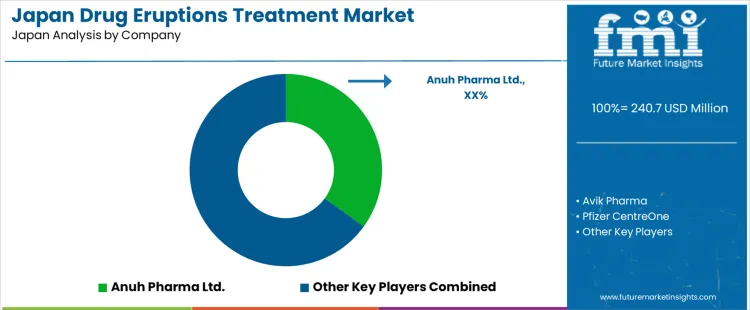
Demand for drug eruptions treatment in Japan is increasing as the healthcare industry focuses on improving the management of adverse drug reactions, particularly those affecting the skin. Drug eruptions, including rashes, blisters, and other dermatological conditions, can arise from both prescription and over-the-counter drugs. With Japan's strict regulatory framework and growing awareness of patient safety, there is a rising need for effective treatments that help manage these skin reactions and ensure better patient outcomes.
Anuh Pharma Ltd. is a key player in the industry, focusing on developing innovative therapies specifically targeting drug-induced skin eruptions. Their strategy revolves around offering specialized solutions that address both the symptoms and causes of these eruptions, with a focus on improving patient comfort and reducing long-term effects.
Avik Pharma offers effective, affordable solutions for managing skin eruptions caused by medications, while Pfizer CentreOne provides contract developmet and manufacturing services for therapeutic options. Hovione focuses on providing high-quality, customizable formulations for treating skin reactions, and Bausch Health specializes in dermatological treatments for various skin conditions, including drug eruptions.
Key Players in Japan Drug Eruptions Treatment Demand
- Anuh Pharma Ltd.
- Avik Pharma
- Pfizer CentreOne
- Hovione
- Bausch Health Companies Inc.
Scope of Report
| Items | Values |
|---|---|
| Quantitative Units (2026) | USD million |
| Key Segments | Corticosteroids, Immunosuppressant Drugs, Anti-cytokines, Hemorrheologic Agents, Antihistamines |
| Route of Administration | Oral, Parenteral, Intravenous, Others |
| Distribution Channel | Hospital Pharmacies, Online Pharmacies, Others |
| Key Country | Japan |
| Region | Kyushu & Okinawa, Kanto, Kansai, Chubu, Tohoku, Rest of Japan |
| Key Players Profiled | Anuh Pharma Ltd., Avik Pharma, Pfizer CentreOne, Hovione, Bausch Health Companies Inc. |
| Additional Attributes | Dollar sales by drug class, route of administration, and distribution channel; regional CAGR and growth trends in drug eruptions treatment demand in Japan |
Japan Drug Eruptions Treatment Demand by Key Segments
By Drug Class:
- Corticosteroids
- Immunosuppressant Drugs
- Anti-cytokines
- Hemorrheologic Agents
- Antihistamines
By Route of Administration:
- Oral
- Parenteral
- Intravenous
- Others
By Distribution Channel:
- Hospital Pharmacies
- Online Pharmacies
- Others
By Region:
- Kyushu & Okinawa
- Kanto
- Kansai
- Chubu
- Tohoku
- Rest of Japan
Frequently Asked Questions
How big is the demand for drug eruptions treatment in Japan in 2026?
The demand for drug eruptions treatment in Japan is estimated to be valued at USD 240.7 million in 2026.
What will be the size of drug eruptions treatment in Japan in 2036?
The market size for the drug eruptions treatment in Japan is projected to reach USD 407.4 million by 2036.
How much will be the demand for drug eruptions treatment in Japan growth between 2026 and 2036?
The demand for drug eruptions treatment in Japan is expected to grow at a 4.9% CAGR between 2026 and 2036.
What are the key product types in the drug eruptions treatment in Japan?
The key product types in drug eruptions treatment in Japan are corticosteroids, immunosuppressant drugs, anti-cytokines, hemorrheologic agents and antihistamines.
Which route of administration segment is expected to contribute significant share in the drug eruptions treatment in Japan in 2026?
In terms of route of administration, oral segment is expected to command 40.0% share in the drug eruptions treatment in Japan in 2026.
Preview the report firsthand - request a free sample
Get SampleGet the brochure for pricing and purchase details.
Get PDFTable of Content
- Executive Summary
- Japan Market Outlook
- Demand-side Trends
- Supply-side Trends
- Technology Roadmap Analysis
- Analysis and Recommendations
- Market Overview
- Market Coverage / Taxonomy
- Market Definition / Scope / Limitations
- Market Background
- Market Dynamics
- Drivers
- Restraints
- Opportunity
- Trends
- Scenario Forecast
- Demand in Optimistic Scenario
- Demand in Likely Scenario
- Demand in Conservative Scenario
- Opportunity Map Analysis
- Product Life Cycle Analysis
- Supply Chain Analysis
- Investment Feasibility Matrix
- Value Chain Analysis
- PESTLE and Porter’s Analysis
- Regulatory Landscape
- Regional Parent Market Outlook
- Production and Consumption Statistics
- Import and Export Statistics
- Market Dynamics
- Japan Market Analysis 2021 to 2025 and Forecast, 2026 to 2036
- Historical Market Size Value (USD Million) Analysis, 2021 to 2025
- Current and Future Market Size Value (USD Million) Projections, 2026 to 2036
- Y-o-Y Growth Trend Analysis
- Absolute $ Opportunity Analysis
- Japan Market Pricing Analysis 2021 to 2025 and Forecast 2026 to 2036
- Japan Market Analysis 2021 to 2025 and Forecast 2026 to 2036, By Drug Class
- Introduction / Key Findings
- Historical Market Size Value (USD Million) Analysis By Drug Class, 2021 to 2025
- Current and Future Market Size Value (USD Million) Analysis and Forecast By Drug Class, 2026 to 2036
- Corticosteroids
- Immunosuppressant Drugs
- Anti-cytokines
- Hemorrheologic Agents
- Antihistamines
- Y-o-Y Growth Trend Analysis By Drug Class, 2021 to 2025
- Absolute $ Opportunity Analysis By Drug Class, 2026 to 2036
- Japan Market Analysis 2021 to 2025 and Forecast 2026 to 2036, By Route of Administration
- Introduction / Key Findings
- Historical Market Size Value (USD Million) Analysis By Route of Administration, 2021 to 2025
- Current and Future Market Size Value (USD Million) Analysis and Forecast By Route of Administration, 2026 to 2036
- Oral
- Parenteral
- Intravenous
- Others
- Y-o-Y Growth Trend Analysis By Route of Administration, 2021 to 2025
- Absolute $ Opportunity Analysis By Route of Administration, 2026 to 2036
- Japan Market Analysis 2021 to 2025 and Forecast 2026 to 2036, By Distribution Channel
- Introduction / Key Findings
- Historical Market Size Value (USD Million) Analysis By Distribution Channel, 2021 to 2025
- Current and Future Market Size Value (USD Million) Analysis and Forecast By Distribution Channel, 2026 to 2036
- Hospital Pharmacies
- Online Pharmacies
- Others
- Y-o-Y Growth Trend Analysis By Distribution Channel, 2021 to 2025
- Absolute $ Opportunity Analysis By Distribution Channel, 2026 to 2036
- Market Structure Analysis
- Competition Dashboard
- Competition Benchmarking
- Market Share Analysis of Top Players
- By Regional
- By Drug Class
- By Route of Administration
- By Distribution Channel
- Competition Analysis
- Competition Deep Dive
- Anuh Pharma Ltd.
- Overview
- Product Portfolio
- Profitability by Market Segments (Product/Age /Sales Channel/Region)
- Sales Footprint
- Strategy Overview
- Marketing Strategy
- Product Strategy
- Channel Strategy
- Avik Pharma
- Pfizer CentreOne
- Hovione
- Bausch Health Companies Inc.
- Anuh Pharma Ltd.
- Competition Deep Dive
- Assumptions & Acronyms Used
- Research Methodology


