

- Industry Size (2026)
- USD 1.7 Bn
- Forecast (2036)
- USD 3.3 Bn
- CAGR (2026 to 2036)
- 6.2%
Demand for Drug Eruptions Treatment in USA Forecast and Outlook 2026 to 2036
Demand for drug eruptions treatment in the USA is projected to grow from USD 1.7 billion in 2026 to USD 3.3 billion in 2036, reflecting a 6.2% CAGR. A 5-year growth block analysis reveals a steady and consistent rise in demand. Starting at USD 1.7 billion in 2026, the industry shows a modest increase to USD 1.8 billion in 2027, reflecting a 5.88% growth. This incremental growth continues in 2028, where demand rises to USD 1.9 billion, marking a 5.56% increase. As the awareness of drug-induced skin reactions increases, the demand for specialized treatments for drug eruptions continues to rise steadily.
Quick Stats of the Demand for Drug Eruptions Treatment in USA
- Demand for Drug Eruptions Treatment in USA Value (2026): USD 1.7 billion
- Demand for Drug Eruptions Treatment in USA Forecast Value (2036): USD 3.3 billion
- Demand for Drug Eruptions Treatment in USA Forecast CAGR (2026-2036): 6.2%
- Demand for Drug Eruptions Treatment in USA Leading Drug Class: Corticosteroids
- Demand for Drug Eruptions Treatment in USA Key Growth Regions: West USA, South USA, Northeast USA, Midwest USA
- Demand for Drug Eruptions Treatment in USA Top Players: Anuh Pharma Ltd., Avik Pharma, Pfizer CentreOne, Hovione, Bausch Health Companies Inc.
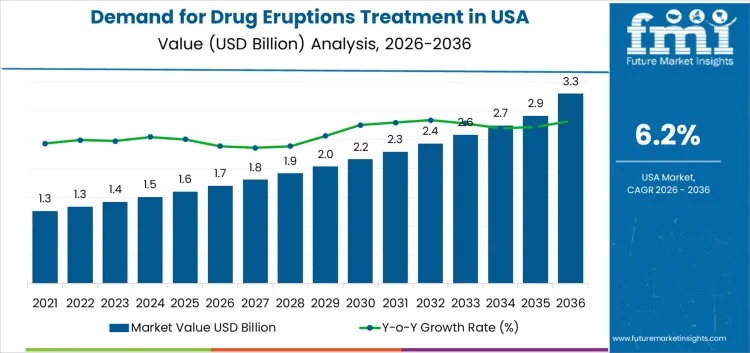
From 2029 to 2031, the growth rate accelerates slightly, with the industry reaching USD 2.0 billion in 2029 and USD 2.2 billion in 2030, reflecting YoY growth rates of 5.26% and 10.00%, respectively. By 2031, demand is expected to reach USD 2.3 billion, continuing a strong growth trend. Factors driving this acceleration include the increasing use of medications and the rising incidence of drug-related adverse reactions, prompting a greater focus on therapeutic solutions. The demand for drug eruptions treatment is expected to further expand in the following years, reaching USD 2.6 billion in 2033 and USD 2.7 billion in 2034. By 2035, the industry is projected to reach USD 2.9 billion before peaking at USD 3.3 billion in 2036.
Demand for Drug Eruptions Treatment in USA Key Takeaways
| Metric | Value |
|---|---|
| Demand for Drug Eruptions Treatment in USA Value (2026) | USD 1.7 billion |
| Demand for Drug Eruptions Treatment in USA Forecast Value (2036) | USD 3.3 billion |
| Demand for Drug Eruptions Treatment in USA Forecast CAGR (2026-2036) | 6.2% |
Why is the Demand for Drug Eruptions Treatment in USA Growing?
Demand for drug eruptions treatment in the USA is growing due to the increasing incidence of adverse drug reactions (ADRs) and a greater awareness of their effects on the skin. Drug eruptions, which refer to rashes or other skin reactions caused by medications, are becoming more prevalent as new drugs are introduced into the industry and as people are living longer, resulting in higher rates of polypharmacy. The demand for treatments, including topical medications, systemic therapies, and immunomodulatory drugs, is driven by the need to effectively manage these reactions and prevent serious complications such as blistering or systemic involvement.
Key drivers for this growth include the rising use of prescription medications, particularly among aging populations, and the increasing number of individuals undergoing long-term treatments for chronic conditions such as hypertension, diabetes, and autoimmune diseases. Advancements in dermatological treatments and biologics are improving the effectiveness of drug eruption therapies, enabling quicker symptom relief and better management of skin reactions. The focus on personalized medicine, where treatment regimens are tailored based on an individual’s genetic profile, is also helping to reduce the incidence of drug eruptions and improve the overall quality of care.
The rising awareness and education surrounding ADRs and drug-induced skin reactions are encouraging patients to seek prompt medical attention. Despite challenges such as the variability in responses to treatment and the difficulty in identifying the exact cause of drug eruptions, the demand for specialized treatments is expected to continue growing as new therapies emerge, offering improved outcomes for patients.
What is the Segment-Wise Analysis of Demand for Drug Eruptions Treatment in USA?
Demand for drug eruptions treatment in the USA is segmented by drug class, route of administration, distribution channel, and region. By drug class, corticosteroids lead with 28% of the demand, followed by immunosuppressant drugs, anti-cytokines, hemorrheologic agents, and antihistamines. In terms of route of administration, oral drugs account for 40% of the demand, with parenteral, intravenous, and other routes making up the remainder. Regarding distribution channels, hospital pharmacies dominate, followed by online pharmacies and other channels. Regionally, demand is distributed across West USA, South USA, Northeast USA, and Midwest USA.
How Does Corticosteroids Lead the Demand for Drug Eruptions Treatment in USA?
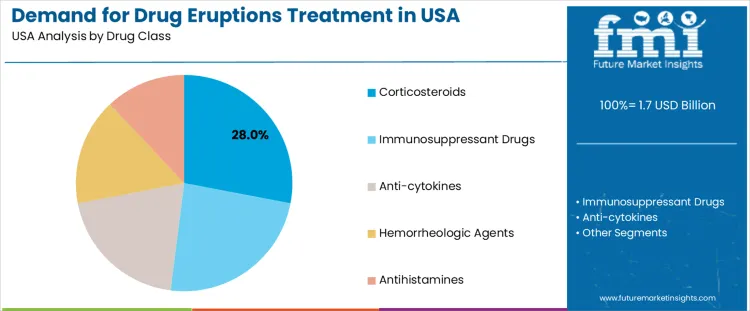
Corticosteroids account for 28% of the demand for drug eruptions treatment in the USA, driven by their efficacy in reducing inflammation and managing symptoms. As the most commonly prescribed treatment for drug eruptions, corticosteroids help control the immune response and minimize the severity of eruptions. These drugs are widely used in both acute and chronic cases, providing relief to patients experiencing rashes, skin irritation, and other allergic reactions due to medication. Corticosteroids are often administered orally but may also be used topically or parenterally depending on the severity of the eruption. The widespread availability, effectiveness, and relatively low cost of corticosteroids contribute to their dominant position in the industry. As the prevalence of drug eruptions continues to rise due to the increased use of medications, corticosteroids remain a key therapeutic option in managing these reactions, ensuring their ongoing demand in the treatment of drug eruptions.
How Does Oral Route of Administration Lead the Demand for Drug Eruptions Treatment in USA?
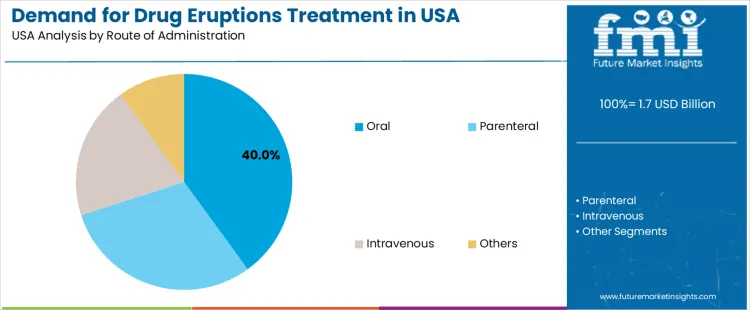
Oral drugs account for 40% of the demand for drug eruptions treatment in the USA, driven by their convenience, ease of administration, and effectiveness in treating a variety of conditions. Oral corticosteroids and immunosuppressants are commonly prescribed for managing drug eruptions, as they can be easily taken at home without the need for healthcare facility visits. The oral route of administration offers patients a non-invasive, straightforward option for ongoing treatment, making it the preferred choice for long-term management. Demand for oral medications is growing as patients seek more convenient, at-home treatments for managing allergic reactions and inflammation. The ability to control dosage and provide targeted therapy through oral medications further boosts their popularity, especially for individuals with chronic or recurring drug eruptions. As the demand for effective, user-friendly treatments continues to grow, the oral route remains the dominant choice for drug eruption therapies in the USA.
What are the Key Trends, Drivers and Restraints in Demand for Drug Eruptions Treatment in USA?
Demand for drug eruptions treatment in the USA is rising as awareness of adverse drug reactions increases among patients and healthcare providers. Drug eruptions can range from mild rashes to severe reactions like Stevens Johnson syndrome, requiring timely medical care. Trends include greater use of dermatology consults, allergy testing and supportive therapies such as antihistamines, corticosteroids, and biologics when appropriate. Drivers include expanding prescription drug use and better reporting systems. Restraints include limited access to specialist care in rural areas and variability in insurance coverage for diagnostic tests and treatment options.
Why is Demand for Drug Eruptions Treatment Growing in USA?
Demand for drug eruptions treatment in the USA is growing because more people use multiple medications, increasing the likelihood of adverse reactions. Improved electronic health records and pharmacovigilance encourage earlier recognition and documentation of drug related skin reactions, prompting timely treatment. Patients and clinicians are more informed about symptoms and risks, leading to faster care seeking and treatment initiation. Aging populations take more chronic medicines, which raises the probability of drug eruptions. As a result, dermatology and allergy specialist referrals for rash evaluation and management are increasing nationwide.
How are Technological and Industry Innovations Driving Drug Eruptions Treatment Demand in USA?
Technological and medical innovations are enhancing diagnosis and management of drug eruptions in the USA. Advances in genomic and immunologic testing help identify individuals at higher risk for specific drug reactions, guiding safer prescribing decisions. Telemedicine allows faster evaluation of skin symptoms and triage, increasing access to care. Improved topical and systemic treatments, including targeted immunomodulators, provide more effective symptom control and reduced complications. Electronic prescribing systems with alerts for known drug allergies reduce inappropriate prescriptions. These innovations support more precise and timely treatment and encourage greater utilization of available therapeutic options.
What are the Key Challenges and Risks That Could Limit Drug Eruptions Treatment Demand in USA?
Diagnostic complexity can delay identification of the causative drug, slowing appropriate therapy and discouraging patients. Access barriers to dermatologists and allergists, especially in rural or underserved areas, may restrict care for many. Insurance limitations on diagnostic testing or specialist visits can deter patients from pursuing evaluation and treatment. Some individuals may self‑treat with over the counter remedies without seeking professional care, leading to under‑recognition of severe reactions. Variability in clinician familiarity with drug eruption presentations also contributes to inconsistent management.
What is the Regional Demand Outlook for Drug Eruptions Treatment in USA?

| Region | CAGR (%) |
|---|---|
| West USA | 7.1% |
| South USA | 6.4% |
| Northeast USA | 5.7% |
| Midwest USA | 4.9% |
Demand for drug eruptions treatment in the USA is growing steadily, with West USA leading at a 7.1% CAGR, driven by a strong healthcare infrastructure and innovative dermatological care. South USA follows with a 6.4% CAGR, supported by the region’s expanding healthcare sector and increasing awareness of adverse drug reactions. Northeast USA shows a 5.7% CAGR, fueled by an aging population and the need for targeted treatments for medication-induced skin conditions. Midwest USA experiences a 4.9% CAGR, with moderate growth driven by the region’s large healthcare base and rising cases of drug-induced skin conditions.
How is Demand for Drug Eruptions Treatment Growing in West USA?
West USA leads the demand for drug eruptions treatment, growing at a 7.1% CAGR. The region’s focus on healthcare innovation and advanced dermatology practices is driving this growth. States like California, Washington, and Oregon are home to numerous healthcare facilities specializing in dermatology, where drug eruptions treatments are increasingly in demand due to the growing prevalence of adverse drug reactions. Region's diverse population and the rising number of chronic conditions and polypharmacy practices are contributing to the increase in drug eruptions. The West’s emphasis on personalized medicine and innovative treatments further boosts the demand for effective therapies for drug eruptions. With continued advancements in dermatological care and a higher awareness of adverse drug reactions, the need for targeted treatments for drug eruptions will continue to rise, particularly in healthcare centers across West USA.
Why is Demand for Drug Eruptions Treatment Rising in South USA?
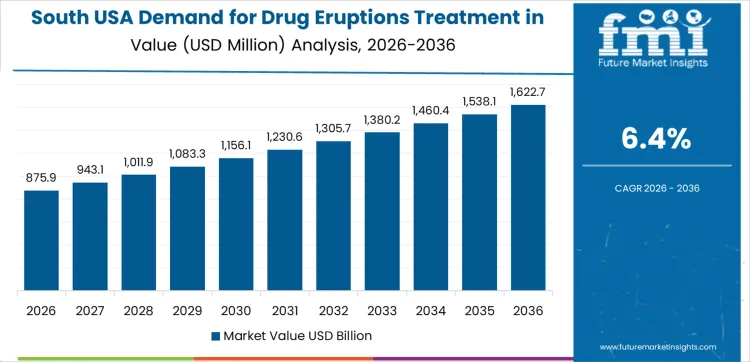
South USA is experiencing strong demand for drug eruptions treatment, with a 6.4% CAGR. The region’s rapidly expanding healthcare sector and growing awareness of adverse drug reactions are contributing to this increase. States like Texas, Florida, and Georgia are seeing more cases of drug eruptions as the use of complex drug regimens continues to rise, particularly among aging populations with multiple comorbidities. The South's healthcare providers are increasingly adopting advanced dermatological treatments to address drug eruptions caused by these medications. Growing focus on personalized treatment options and the rise of outpatient care are encouraging more patients to seek effective solutions for drug eruptions. With an aging population and the rising use of pharmaceutical treatments, the demand for drug eruptions treatment in the South will continue to grow steadily, supported by both healthcare advancements and patient care improvements.
How is Demand for Drug Eruptions Treatment Expanding in Northeast USA?
Northeast USA is seeing steady demand for drug eruptions treatment, with a 5.7% CAGR. The region’s large, aging population and its significant healthcare infrastructure, including specialized dermatology centers, are key drivers of this growth. States like New York and Pennsylvania are seeing increasing cases of drug eruptions due to the widespread use of medications among older adults and individuals with chronic conditions. As the demand for personalized healthcare rises, patients in the Northeast are increasingly seeking treatment options to address the skin reactions caused by medications. The region’s focus on providing high-quality dermatological care and advancing medical research into adverse drug reactions is further boosting the demand for drug eruptions treatments. With greater awareness of skin conditions caused by drug reactions and the adoption of targeted therapies, demand for these treatments in Northeast USA is expected to continue growing steadily.
Why is Demand for Drug Eruptions Treatment Growing in Midwest USA?
Midwest USA is experiencing moderate demand for drug eruptions treatment, with a 4.9% CAGR. The region’s growing healthcare sector, particularly in states like Illinois, Ohio, and Michigan, is contributing to the rise in demand for treatments for drug-induced skin conditions. The increasing use of medications, particularly among the elderly population, is leading to a higher incidence of drug eruptions, driving the need for specialized dermatological treatments. As the healthcare system in the Midwest continues to expand, so does the focus on providing personalized care for patients suffering from adverse drug reactions. The region’s large number of healthcare providers and dermatology specialists are increasingly offering advanced therapies to treat drug eruptions, further boosting demand. As awareness of the importance of treating drug-induced skin conditions grows, demand for drug eruptions treatment in the Midwest will continue to rise, especially as the population ages and more people seek solutions for medication-related side effects.
What is the competitive landscape of Demand for Drug Eruptions Treatment in USA?
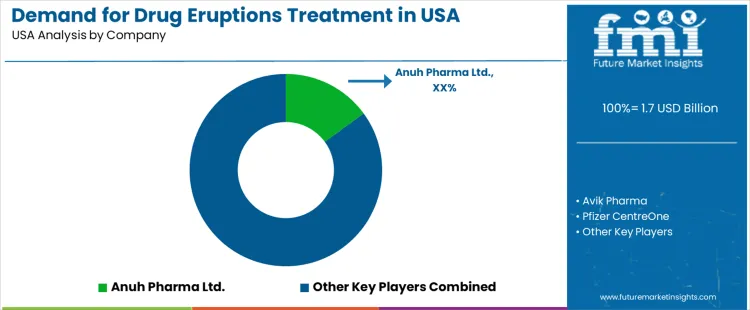
Demand for drug eruptions treatment in the USA is increasing as more patients seek effective solutions for managing adverse reactions caused by medications. Drug eruptions, including skin rashes, blisters, and other dermatological conditions, can arise from both prescription and over-the-counter drugs, leading to significant discomfort and potential complications. With a growing awareness of drug-induced side effects and the need for tailored treatments, the industry for drug eruptions therapies is expanding, driven by advances in dermatology and pharmacology.
Anuh Pharma Ltd. is a key player in the industry, offering specialized treatments aimed at managing drug-induced skin eruptions. The company’s strategy focuses on developing targeted therapies that address the underlying causes of these eruptions, with a particular emphasis on improving patient outcomes through effective, safe treatments. Their approach to product development and commitment to dermatological solutions has positioned them as a strong competitor in the industry.
Other notable companies include Avik Pharma, Pfizer CentreOne, Hovione, and Bausch Health Companies Inc. Avik Pharma specializes in affordable solutions for drug eruptions, providing treatments that help manage symptoms and improve patient comfort. Pfizer CentreOne offers a range of therapeutic options, leveraging its extensive pharmaceutical expertise to address dermatological concerns caused by drug reactions. Hovione focuses on providing quality pharmaceutical products, including therapies for drug eruptions, with an emphasis on consistency and reliability. Bausch Health Companies Inc. brings a comprehensive portfolio of dermatology treatments, including those aimed at drug-induced skin conditions, leveraging its established brand reputation.
Key Players in USA Drug Eruptions Treatment Demand
- Anuh Pharma Ltd.
- Avik Pharma
- Pfizer CentreOne
- Hovione
- Bausch Health Companies Inc.
Scope of Report
| Items | Values |
|---|---|
| Quantitative Units (2026) | USD billion |
| Key Segments | Corticosteroids, Immunosuppressant Drugs, Anti-cytokines, Hemorrheologic Agents, Antihistamines |
| Route of Administration | Oral, Parenteral, Intravenous, Others |
| Distribution Channel | Hospital Pharmacies, Online Pharmacies, Others |
| Region | West USA, South USA, Northeast USA, Midwest USA |
| Key Players Profiled | Anuh Pharma Ltd., Avik Pharma, Pfizer CentreOne, Hovione, Bausch Health Companies Inc. |
| Additional Attributes | Dollar sales by drug class, route of administration, and distribution channel; regional CAGR and growth trends in drug eruptions treatment in the USA |
USA Drug Eruptions Treatment Demand by Key Segments
Drug Class
- Corticosteroids
- Immunosuppressant Drugs
- Anti-cytokines
- Hemorrheologic Agents
- Antihistamines
Route of Administration
- Oral
- Parenteral
- Intravenous
- Others
Distribution Channel
- Hospital Pharmacies
- Online Pharmacies
- Others
Region
- West USA
- South USA
- Northeast USA
- Midwest USA
Frequently Asked Questions
How big is the demand for drug eruptions treatment in USA in 2026?
The demand for drug eruptions treatment in USA is estimated to be valued at USD 1.7 billion in 2026.
What will be the size of drug eruptions treatment in USA in 2036?
The market size for the drug eruptions treatment in USA is projected to reach USD 3.3 billion by 2036.
How much will be the demand for drug eruptions treatment in USA growth between 2026 and 2036?
The demand for drug eruptions treatment in USA is expected to grow at a 6.2% CAGR between 2026 and 2036.
What are the key product types in the drug eruptions treatment in USA?
The key product types in drug eruptions treatment in USA are corticosteroids, immunosuppressant drugs, anti-cytokines, hemorrheologic agents and antihistamines.
Which route of administration segment is expected to contribute significant share in the drug eruptions treatment in USA in 2026?
In terms of route of administration, oral segment is expected to command 40.0% share in the drug eruptions treatment in USA in 2026.
Preview the report firsthand - request a free sample
Get SampleGet the brochure for pricing and purchase details.
Get PDFTable of Content
- Executive Summary
- USA Market Outlook
- Demand-side Trends
- Supply-side Trends
- Technology Roadmap Analysis
- Analysis and Recommendations
- Market Overview
- Market Coverage / Taxonomy
- Market Definition / Scope / Limitations
- Market Background
- Market Dynamics
- Drivers
- Restraints
- Opportunity
- Trends
- Scenario Forecast
- Demand in Optimistic Scenario
- Demand in Likely Scenario
- Demand in Conservative Scenario
- Opportunity Map Analysis
- Product Life Cycle Analysis
- Supply Chain Analysis
- Investment Feasibility Matrix
- Value Chain Analysis
- PESTLE and Porter’s Analysis
- Regulatory Landscape
- Regional Parent Market Outlook
- Production and Consumption Statistics
- Import and Export Statistics
- Market Dynamics
- USA Market Analysis 2020 to 2024 and Forecast, 2025 to 2035
- Historical Market Size Value (USD Million) Analysis, 2020 to 2024
- Current and Future Market Size Value (USD Million) Projections, 2025 to 2035
- Y-o-Y Growth Trend Analysis
- Absolute $ Opportunity Analysis
- USA Market Pricing Analysis 2020 to 2024 and Forecast 2025 to 2035
- USA Market Analysis 2020 to 2024 and Forecast 2025 to 2035, By Drug Class
- Introduction / Key Findings
- Historical Market Size Value (USD Million) Analysis By Drug Class , 2020 to 2024
- Current and Future Market Size Value (USD Million) Analysis and Forecast By Drug Class , 2025 to 2035
- Corticosteroids
- Immunosuppressant Drugs
- Anti-cytokines
- Hemorrheologic Agents
- Antihistamines
- Y-o-Y Growth Trend Analysis By Drug Class , 2020 to 2024
- Absolute $ Opportunity Analysis By Drug Class , 2025 to 2035
- USA Market Analysis 2020 to 2024 and Forecast 2025 to 2035, By Route of Administration
- Introduction / Key Findings
- Historical Market Size Value (USD Million) Analysis By Route of Administration, 2020 to 2024
- Current and Future Market Size Value (USD Million) Analysis and Forecast By Route of Administration, 2025 to 2035
- Oral
- Parenteral
- Intravenous
- Others
- Y-o-Y Growth Trend Analysis By Route of Administration, 2020 to 2024
- Absolute $ Opportunity Analysis By Route of Administration, 2025 to 2035
- USA Market Analysis 2020 to 2024 and Forecast 2025 to 2035, By Distribution Channel
- Introduction / Key Findings
- Historical Market Size Value (USD Million) Analysis By Distribution Channel, 2020 to 2024
- Current and Future Market Size Value (USD Million) Analysis and Forecast By Distribution Channel, 2025 to 2035
- Hospital Pharmacies
- Online Pharmacies
- Others
- Y-o-Y Growth Trend Analysis By Distribution Channel, 2020 to 2024
- Absolute $ Opportunity Analysis By Distribution Channel, 2025 to 2035
- Market Structure Analysis
- Competition Dashboard
- Competition Benchmarking
- Market Share Analysis of Top Players
- By Regional
- By Drug Class
- By Route of Administration
- By Distribution Channel
- Competition Analysis
- Competition Deep Dive
- Anuh Pharma Ltd.
- Overview
- Product Portfolio
- Profitability by Market Segments (Product/Age /Sales Channel/Region)
- Sales Footprint
- Strategy Overview
- Marketing Strategy
- Product Strategy
- Channel Strategy
- Avik Pharma
- Pfizer CentreOne
- Hovione
- Bausch Health Companies Inc.
- Anuh Pharma Ltd.
- Competition Deep Dive
- Assumptions & Acronyms Used
- Research Methodology


