

- Industry Size (2025)
- USD 382.8 Mn
- Forecast (2035)
- USD 643.0 Mn
- CAGR (2025 to 2035)
- 5.3%
Demand for Dysmenorrhea Treatment in Japan Forecast and Outlook 2025 to 2035
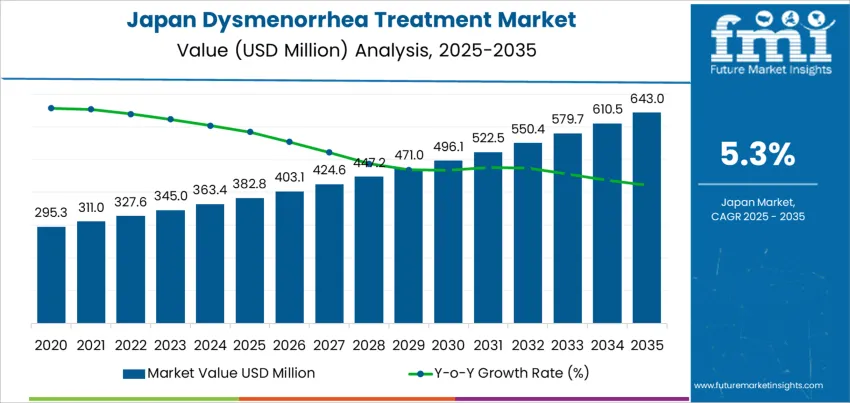
The demand for dysmenorrhea treatment in Japan is expected to grow from USD 382.8 million in 2025 to USD 643.0 million by 2035, with a CAGR of 5.3%. Dysmenorrhea, characterized by painful menstruation, affects a significant portion of women, driving the demand for effective treatments to alleviate pain and discomfort. As awareness of menstrual health and the need for effective management of dysmenorrhea increases, the demand for treatment options such as over-the-counter pain relief medications, hormonal therapies, and alternative treatments will continue to rise.
The growing focus on women’s health and wellness, alongside increasing efforts to address gender-specific health issues, is contributing to the expansion of the dysmenorrhea treatment industry. The rise in awareness regarding the impact of menstrual pain on quality of life and productivity is pushing more women to seek treatment, creating an ongoing demand for both pharmaceutical and non-pharmaceutical solutions. The increasing preference for non-invasive treatment options, such as herbal remedies and heat therapy, is also driving growth in this sector.
In addition to conventional pain relief methods, new treatment options, such as hormonal interventions and advanced analgesics, are expected to contribute to industry growth. As the healthcare sector continues to focus on women’s reproductive health, the availability of a diverse range of treatment options for dysmenorrhea will support steady demand throughout the forecast period.
Quick Stats of the Demand for Dysmenorrhea Treatment in Japan
- Demand for Dysmenorrhea Treatment in Japan Value (2025): USD 382.8 million
- Demand for Dysmenorrhea Treatment in Japan Forecast Value (2035): USD 643.0 million
- Demand for Dysmenorrhea Treatment in Japan Forecast CAGR (2025-2035): 5.3%
- Demand for Dysmenorrhea Treatment in Japan Leading Treatment Type: Non-steroidal Anti-inflammatory Drugs (NSAIDs)
- Demand for Dysmenorrhea Treatment in Japan Key Growth Regions: Kyushu & Okinawa, Kanto, Kansai, Chubu, Tohoku, Rest of Japan
- Demand for Dysmenorrhea Treatment in Japan Top Players: Novartis AG, F. Hoffmann-La Roche Ltd, Merck, Inc, Pfizer Inc., GlaxoSmithKline PLC
What is the Growth Forecast for the Demand for Dysmenorrhea Treatment in Japan through 2035?
From 2025 to 2030, the demand for dysmenorrhea treatment in Japan is expected to grow from USD 382.8 million to USD 496.1 million, adding USD 113.3 million in value. This growth will be driven by increasing awareness of menstrual health and a broader range of treatment options becoming available. As more women seek effective relief for menstrual pain, the demand for both pharmaceutical solutions like pain relievers and non-pharmaceutical options, such as heat therapy and herbal treatments, will rise. The growing recognition of the impact of dysmenorrhea on women’s quality of life, productivity, and overall well-being is contributing to this shift toward more active treatment-seeking behavior.
From 2030 to 2035, demand will continue to rise from USD 496.1 million to USD 643.0 million, contributing USD 146.9 million in value. Although the growth rate may moderate slightly as the industry matures, the demand for dysmenorrhea treatments will remain robust. This will be supported by advancements in pain management technologies, new hormonal therapies, and non-invasive solutions designed to ease menstrual discomfort. With women becoming increasingly proactive about their reproductive health and the availability of diverse treatment options, the demand for effective treatments will continue to grow. The continued focus on women’s health, coupled with innovations in medical solutions for menstrual pain, will ensure sustained growth in the dysmenorrhea treatment sector throughout the forecast period.
Demand for Dysmenorrhea Treatment in Japan Key Takeaways
| Metric | Value |
|---|---|
| Demand for Dysmenorrhea Treatment in Japan Value (2025) | USD 382.8 million |
| Demand for Dysmenorrhea Treatment in Japan Forecast Value (2035) | USD 643.0 million |
| Demand for Dysmenorrhea Treatment in Japan Forecast CAGR (2025-2035) | 5.3% |
Why is the Demand for Dysmenorrhea Treatment in Japan Growing?
The demand for dysmenorrhea treatment in Japan is growing as more women seek effective solutions for managing menstrual pain, a common condition affecting a significant portion of the female population. Dysmenorrhea, characterized by painful menstruation, can have a substantial impact on daily activities and overall well-being. With a growing focus on women’s health and wellness, the demand for treatments that provide relief from menstrual cramps is rising in Japan.
A major driver of this growth is the increasing awareness and diagnosis of dysmenorrhea, as more women are seeking medical solutions to alleviate the discomfort associated with menstrual pain. The availability of over-the-counter and prescription medications, such as nonsteroidal anti-inflammatory drugs (NSAIDs), hormonal therapies, and newer treatments, is contributing to the growing demand for effective management options. Women are increasingly turning to natural remedies, such as herbal supplements and acupuncture, which are gaining popularity in Japan due to their perceived lower risk of side effects.
Japan’s healthcare system is focusing more on improving the quality of life for women, particularly in relation to reproductive health. As women increasingly prioritize their health and seek solutions for common yet often overlooked conditions like dysmenorrhea, the demand for treatments is expected to rise. With ongoing advancements in both pharmaceutical and alternative therapies, the industry for dysmenorrhea treatment in Japan is expected to grow steadily through 2035.
What is the Segment-Wise Analysis of Demand for Dysmenorrhea Treatment in Japan?
Demand for dysmenorrhea treatment in Japan is segmented by treatment type and dysmenorrhea type. By treatment type, demand is divided into non-steroidal anti-inflammatory drugs (NSAIDs), anti-inflammatory drugs, intravenous immunoglobulin (IVIG), cell therapy, hormone therapy, and other treatments, with NSAIDs leading at 60%. The demand is also segmented by dysmenorrhea type, including primary dysmenorrhea and secondary dysmenorrhea, with primary dysmenorrhea accounting for 65% of the demand. Regionally, demand is divided into Kanto, Kinki, Chubu, Kyushu & Okinawa, Tohoku, and the Rest of Japan.
Why Do NSAIDs Lead the Demand for Dysmenorrhea Treatment in Japan?
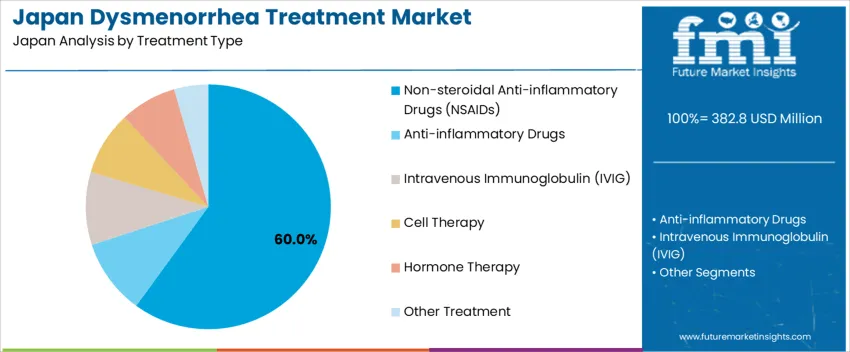
Non-steroidal anti-inflammatory drugs (NSAIDs) account for 60% of the demand for dysmenorrhea treatment in Japan due to their proven effectiveness in managing pain and inflammation associated with menstruation. NSAIDs are widely used as the first line of treatment for dysmenorrhea, as they work by inhibiting the production of prostaglandins, which cause uterine contractions and pain during menstruation. Their widespread use is also driven by their affordability, accessibility, and ability to provide rapid relief. In Japan, where managing menstrual pain is important for maintaining daily productivity and well-being, NSAIDs are favored due to their proven track record, ease of use, and over-the-counter availability. As consumer awareness and demand for effective pain relief grow, NSAIDs are expected to remain the dominant treatment option for dysmenorrhea in Japan.
Why Does Primary Dysmenorrhea Lead the Demand for Dysmenorrhea Treatment in Japan?
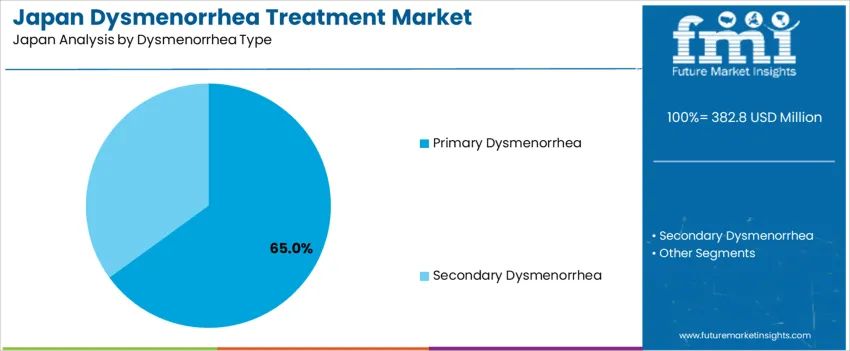
Primary dysmenorrhea accounts for 65% of the demand for dysmenorrhea treatment in Japan, driven by its prevalence among adolescent and young adult women. Primary dysmenorrhea refers to menstrual pain that is not caused by an underlying medical condition and typically occurs with the onset of menstruation. It is the most common type of dysmenorrhea and is often characterized by cramping and lower abdominal pain, which can interfere with daily activities. Due to its high occurrence among younger women, primary dysmenorrhea is the leading condition for which pain management treatments, such as NSAIDs, are sought. As societal awareness of menstrual health improves and more women seek treatment for menstrual discomfort, primary dysmenorrhea remains the dominant form of dysmenorrhea in Japan, driving the demand for effective pain relief options.
What are the Key Trends, Drivers, and Restraints in Demand for Dysmenorrhea Treatment in Japan?
Demand for dysmenorrhea treatment in Japan is rising as a significant share of women experience moderate to severe menstrual pain. A large portion of Japanese women suffer from menstrual symptoms, with many describing the pain as moderate or severe, significantly affecting their daily lives. As awareness increases about the impact of dysmenorrhea, not only physical pain but also mental stress and reduced quality of life more women seek medical or therapeutic support. Growing acceptance of gynecological care and reduced stigma around menstruation-related issues is contributing to greater demand for treatment. Still, some women may tolerate symptoms without seeking care, limiting full industry penetration.
Why is Demand for Dysmenorrhea Treatment Growing in Japan?
Demand for dysmenorrhea treatment in Japan is increasing as many women experience menstrual pain that disrupts daily routines, including work, school, and social activities. For those with severe dysmenorrhea, the physical, psychological, and emotional impacts on quality of life are significant. Growing awareness of these negative effects encourages women to seek medical care, pain relief, or hormonal therapies. As medical care becomes more accessible and treatments for menstrual disorders become more widely available, there is a greater willingness to seek help. Societal support for women's health issues is growing, making treatment more socially acceptable and helping women feel more comfortable addressing their menstrual health concerns.
How are Technological & Industry Innovations Driving Dysmenorrhea Treatment Demand in Japan?
Technological advancements and increased awareness of women's health issues have helped boost the demand for dysmenorrhea treatments in Japan. The availability of effective pain-relief medications, improved low-dose hormonal treatments, and expanded insurance coverage have made it easier and more affordable for patients to access care. Research into menstrual disorders has led to better treatment protocols, making it easier for women to seek help rather than endure symptoms. Changing attitudes in the workplace, along with support from employers and society, are helping to reduce stigma around seeking treatment, encouraging more women to address their dysmenorrhea and improve their quality of life.
What are the Key Challenges and Risks That Could Limit Dysmenorrhea Treatment Demand in Japan?
Despite growing demand for dysmenorrhea treatments, several barriers remain. A significant number of women still view menstrual pain as a normal part of life and may avoid seeking medical care. Cultural and social norms can discourage open discussion about menstrual health, limiting uptake of treatment. Some treatments, such as hormonal therapy, may have side effects, leading to reluctance or non‑compliance. Inconsistent adherence to treatment due to fluctuating symptoms, cost, or lifestyle factors may hinder long-term use. Finally, many women with milder symptoms may prefer over-the-counter pain relief or non-medical approaches, reducing reliance on clinical treatments for dysmenorrhea.
What is the Regional Demand Outlook for Dysmenorrhea Treatment in Japan?
| Region | CAGR (%) |
|---|---|
| Kyushu & Okinawa | 6.0% |
| Kanto | 5.5% |
| Kansai | 4.8% |
| Chubu | 4.3% |
| Tohoku | 3.7% |
| Rest of Japan | 3.6% |
Demand for dysmenorrhea treatment in Japan is steadily growing, with Kyushu & Okinawa leading at a 6.7% CAGR, driven by increasing awareness of women’s health and rising demand for wellness products. Kanto follows with a 6.1% CAGR, supported by the region’s large urban population and healthcare infrastructure. Kansai shows a 5.4% CAGR, fueled by its emphasis on both modern and traditional healthcare approaches. Chubu experiences a 4.7% CAGR, driven by increasing health awareness and the growing focus on self-care. Tohoku and the Rest of Japan show moderate growth at 4.2% and 3.9%, respectively, with steady adoption in rural and suburban areas. As more women prioritize their health and seek effective treatments, demand for dysmenorrhea treatment will continue to rise steadily across Japan.
How is Demand for Dysmenorrhea Treatment Growing in Kyushu & Okinawa?
Kyushu & Okinawa shows the highest demand for dysmenorrhea treatment, growing at a 6.7% CAGR. The region’s increasing awareness of women's health, combined with a growing emphasis on wellness and preventive care, is driving the adoption of dysmenorrhea treatments. As more women seek relief from menstrual pain and related symptoms, the demand for effective treatments such as medications, heat patches, and other therapies continues to rise. The region’s strong healthcare infrastructure and increasing focus on women’s health ensure the availability of treatments across urban and rural areas. The rise in younger women adopting healthier lifestyles and the growing interest in natural and non-invasive treatment options also contribute to the demand for dysmenorrhea treatments. As women’s health awareness continues to grow in Kyushu & Okinawa, demand for these treatments is expected to remain strong.
Why is Demand for Dysmenorrhea Treatment Rising in Kanto?
Kanto is experiencing steady demand for dysmenorrhea treatment, with a 6.1% CAGR. The region’s large urban population, particularly in Tokyo, is increasingly seeking solutions to manage dysmenorrhea, driven by greater awareness of women's health and a focus on comfort and convenience. The rise in work-related stress and lifestyle diseases, coupled with the need for efficient pain management, has increased demand for effective treatments such as pain relievers, anti-inflammatory drugs, and natural remedies. Kanto's robust healthcare infrastructure, including advanced clinics and pharmacies, ensures easy access to a variety of treatment options. Furthermore, as women in the region become more health-conscious and proactive about their well-being, the demand for dysmenorrhea treatments is expected to remain strong and grow steadily, fueled by an emphasis on holistic and personalized healthcare.
How is Demand for Dysmenorrhea Treatment Expanding in Kansai?
Kansai is seeing steady demand for dysmenorrhea treatment, with a 5.4% CAGR. The region’s increasing awareness of women’s health issues, combined with a growing focus on overall wellness, is driving the adoption of treatments for dysmenorrhea. As more women in Kansai, particularly in cities like Osaka and Kyoto, seek solutions to manage menstrual pain and discomfort, the demand for effective treatments, including pain relief medication and herbal remedies, continues to grow. Kansai’s emphasis on traditional medicine and natural treatments supports the increasing popularity of non-invasive and holistic solutions. With a focus on improving healthcare access and women’s health services, Kansai’s demand for dysmenorrhea treatments is expected to remain robust, driven by both modern and alternative approaches to menstrual health management.
Why is Demand for Dysmenorrhea Treatment Growing in Chubu?
Chubu is experiencing steady demand for dysmenorrhea treatment, growing at a 4.7% CAGR. The region’s increasing focus on women’s health, combined with rising awareness of the impact of dysmenorrhea on daily life, is driving the demand for effective treatments. As Chubu’s population becomes more health-conscious and seeks convenient, effective pain management options, demand for treatments such as pain relievers, hormonal therapies, and natural remedies is rising. The region’s growing access to healthcare services, especially in urban areas like Nagoya, supports the availability of treatment options. Furthermore, Chubu’s increasing focus on wellness and self-care is driving the adoption of non-invasive treatment options for menstrual discomfort. As more women in Chubu prioritize their health and comfort, demand for dysmenorrhea treatment is expected to continue growing steadily.
How is Demand for Dysmenorrhea Treatment Expanding in Tohoku?
Tohoku is seeing moderate demand for dysmenorrhea treatment, with a 4.2% CAGR. While the region’s demand is smaller compared to more urbanized areas, there is steady growth in interest for treatments, driven by the increasing awareness of women’s health issues. As more women in Tohoku seek relief from menstrual pain, the demand for effective treatments like pain relievers and herbal remedies is on the rise. The region’s aging population and growing focus on improving healthcare services contribute to the adoption of dysmenorrhea treatments. As Tohoku’s healthcare infrastructure continues to improve and access to wellness services increases, more women in the region are seeking treatments for menstrual health issues. This steady increase in demand reflects the broader trend of growing health consciousness among women in Tohoku.
Why is Demand for Dysmenorrhea Treatment Steady in the Rest of Japan?
The Rest of Japan is experiencing steady demand for dysmenorrhea treatment, growing at a 3.9% CAGR. While demand is smaller compared to urban regions, there is consistent growth in the adoption of treatments as more women in rural and suburban areas seek relief from menstrual discomfort. The rising awareness of women’s health issues, combined with the increasing focus on accessible healthcare, is driving the adoption of effective dysmenorrhea treatments. As more women in the Rest of Japan become health-conscious and seek non-invasive pain relief solutions, the demand for treatments such as over-the-counter medications, heating pads, and natural remedies is expected to continue rising. The growing availability of healthcare services in rural areas ensures that women across the Rest of Japan have access to the treatments they need, supporting steady demand growth.
What is the Competitive Landscape of Dysmenorrhea Treatment Demand in Japan?
The demand for dysmenorrhea treatment in Japan is significant, driven by the high prevalence of menstrual pain among women. Studies indicate that a large percentage of women in Japan experience menstrual discomfort, with many suffering from moderate to severe symptoms. This widespread issue has created a consistent demand for effective treatments that can relieve pain and improve quality of life. The impact of dysmenorrhea on daily activities, including work and social engagements, further fuels the need for reliable therapeutic options.
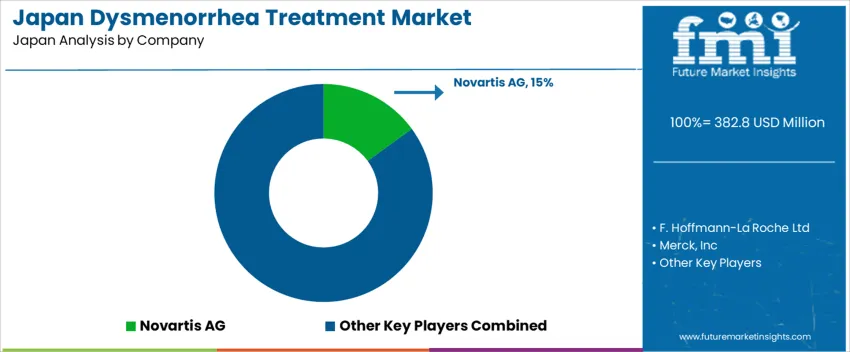
The leading providers in the dysmenorrhea treatment industry in Japan include Novartis AG, F. Hoffmann-La Roche Ltd, Merck Inc., Pfizer Inc., and GlaxoSmithKline PLC. Novartis AG holds the largest industry share at 15.0%, offering a range of medications such as hormonal therapies and nonsteroidal anti-inflammatory drugs (NSAIDs) that help manage menstrual pain. Other companies, including Pfizer and Bayer AG, offer a combination of prescription and over-the-counter treatments targeting the pain and discomfort associated with dysmenorrhea, with a focus on efficacy and safety.
The growth in demand for dysmenorrhea treatments is driven by the increasing awareness of women's health issues and the need for effective pain management. As more women seek professional treatment rather than relying on over-the-counter solutions, there is growing competition among pharmaceutical companies to provide safer, more effective options. Providers differentiate themselves through innovative drug formulations, ease of use, and strong clinical evidence supporting their products. As the awareness of menstrual health continues to rise, the demand for dysmenorrhea treatments is expected to grow, making it a competitive and evolving industry.
Key Players in Japan Dysmenorrhea Treatment Demand
- Novartis AG
- F. Hoffmann-La Roche Ltd
- Merck, Inc
- Pfizer Inc.
- GlaxoSmithKline PLC
Scope of Report
| Items | Values |
|---|---|
| Quantitative Units (2025) | USD million |
| Treatment Type | Non-steroidal Anti-inflammatory Drugs (NSAIDs), Anti-inflammatory Drugs, Intravenous Immunoglobulin (IVIG), Cell Therapy, Hormone Therapy, Other Treatment |
| Dysmenorrhea Type | Primary Dysmenorrhea, Secondary Dysmenorrhea |
| Region | Kyushu & Okinawa, Kanto, Kansai, Chubu, Tohoku, Rest of Japan |
| Countries Covered | Japan |
| Key Companies Profiled | Novartis AG, F. Hoffmann-La Roche Ltd, Merck Inc, Pfizer Inc., GlaxoSmithKline PLC |
| Additional Attributes | Dollar sales by treatment type and dysmenorrhea type; regional CAGR and adoption trends; advancements in dysmenorrhea treatment options; increasing focus on non-invasive treatments; demand for personalized therapies |
Japan Dysmenorrhea Treatment Demand by Key Segments
Treatment Type
- Non‑steroidal Anti‑inflammatory Drugs (NSAIDs)
- Anti-inflammatory Drugs
- Intravenous Immunoglobulin (IVIG)
- Cell Therapy
- Hormone Therapy
- Other Treatment
Dysmenorrhea Type
- Primary Dysmenorrhea
- Secondary Dysmenorrhea
Region
- Kyushu & Okinawa
- Kanto
- Kansai
- Chubu
- Tohoku
- Rest of Japan
Frequently Asked Questions
How big is the demand for dysmenorrhea treatment in Japan in 2025?
The demand for dysmenorrhea treatment in Japan is estimated to be valued at USD 382.8 million in 2025.
What will be the size of dysmenorrhea treatment in Japan in 2035?
The market size for the dysmenorrhea treatment in Japan is projected to reach USD 643.0 million by 2035.
How much will be the demand for dysmenorrhea treatment in Japan growth between 2025 and 2035?
The demand for dysmenorrhea treatment in Japan is expected to grow at a 5.3% CAGR between 2025 and 2035.
What are the key product types in the dysmenorrhea treatment in Japan?
The key product types in dysmenorrhea treatment in Japan are non‑steroidal anti‑inflammatory drugs (nsaids), anti-inflammatory drugs, intravenous immunoglobulin (ivig), cell therapy, hormone therapy and other treatment.
Which dysmenorrhea type segment is expected to contribute significant share in the dysmenorrhea treatment in Japan in 2025?
In terms of dysmenorrhea type, primary dysmenorrhea segment is expected to command 65.0% share in the dysmenorrhea treatment in Japan in 2025.
Preview the report firsthand - request a free sample
Get SampleGet the brochure for pricing and purchase details.
Get PDFTable of Content
- Executive Summary
- Japan Market Outlook
- Demand-side Trends
- Supply-side Trends
- Technology Roadmap Analysis
- Analysis and Recommendations
- Market Overview
- Market Coverage / Taxonomy
- Market Definition / Scope / Limitations
- Market Background
- Market Dynamics
- Drivers
- Restraints
- Opportunity
- Trends
- Scenario Forecast
- Demand in Optimistic Scenario
- Demand in Likely Scenario
- Demand in Conservative Scenario
- Opportunity Map Analysis
- Product Life Cycle Analysis
- Supply Chain Analysis
- Investment Feasibility Matrix
- Value Chain Analysis
- PESTLE and Porter’s Analysis
- Regulatory Landscape
- Regional Parent Market Outlook
- Production and Consumption Statistics
- Import and Export Statistics
- Market Dynamics
- Japan Market Analysis 2020 to 2024 and Forecast, 2025 to 2035
- Historical Market Size Value (USD Million) Analysis, 2020 to 2024
- Current and Future Market Size Value (USD Million) Projections, 2025 to 2035
- Y-o-Y Growth Trend Analysis
- Absolute $ Opportunity Analysis
- Japan Market Pricing Analysis 2020 to 2024 and Forecast 2025 to 2035
- Japan Market Analysis 2020 to 2024 and Forecast 2025 to 2035, By Treatment Type
- Introduction / Key Findings
- Historical Market Size Value (USD Million) Analysis By Treatment Type , 2020 to 2024
- Current and Future Market Size Value (USD Million) Analysis and Forecast By Treatment Type , 2025 to 2035
- Non‑steroidal Anti‑inflammatory Drugs (NSAIDs)
- Anti-inflammatory Drugs
- Intravenous Immunoglobulin (IVIG)
- Cell Therapy
- Hormone Therapy
- Other Treatment
- Y-o-Y Growth Trend Analysis By Treatment Type , 2020 to 2024
- Absolute $ Opportunity Analysis By Treatment Type , 2025 to 2035
- Japan Market Analysis 2020 to 2024 and Forecast 2025 to 2035, By Dysmenorrhea Type
- Introduction / Key Findings
- Historical Market Size Value (USD Million) Analysis By Dysmenorrhea Type, 2020 to 2024
- Current and Future Market Size Value (USD Million) Analysis and Forecast By Dysmenorrhea Type, 2025 to 2035
- Primary Dysmenorrhea
- Secondary Dysmenorrhea
- Y-o-Y Growth Trend Analysis By Dysmenorrhea Type, 2020 to 2024
- Absolute $ Opportunity Analysis By Dysmenorrhea Type, 2025 to 2035
- Market Structure Analysis
- Competition Dashboard
- Competition Benchmarking
- Market Share Analysis of Top Players
- By Regional
- By Treatment Type
- By Dysmenorrhea Type
- Competition Analysis
- Competition Deep Dive
- Novartis AG
- Overview
- Product Portfolio
- Profitability by Market Segments (Product/Age /Sales Channel/Region)
- Sales Footprint
- Strategy Overview
- Marketing Strategy
- Product Strategy
- Channel Strategy
- F. Hoffmann-La Roche Ltd
- Merck, Inc
- Pfizer Inc.
- GlaxoSmithKline PLC
- Novartis AG
- Competition Deep Dive
- Assumptions & Acronyms Used
- Research Methodology


