

- Industry Size (2025)
- USD 97.1 Mn
- Forecast (2035)
- USD 141.3 Mn
- CAGR (2025 to 2035)
- 3.8%
Demand for Malaria Treatment in Japan Forecast and Outlook 2025 to 2035
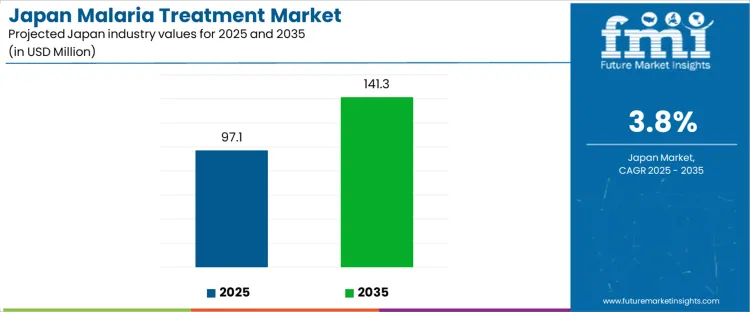
The demand for malaria treatment in Japan is expected to grow from USD 97.1 million in 2025 to USD 141.3 million by 2035, reflecting a compound annual growth rate (CAGR) of 3.8%. While malaria is not endemic to Japan, the demand for treatments remains driven by the country's commitment to global health initiatives, including the prevention and treatment of malaria in travelers, expatriates, and in humanitarian aid. Additionally, Japan plays an important role in the research, development, and distribution of antimalarial drugs, contributing to its continued market presence. The country’s healthcare system, which provides robust access to treatments, will continue to facilitate the growth in malaria treatment demand.
The market is further supported by Japan’s involvement in international malaria control programs and the ongoing development of more effective antimalarial drugs. With advancements in malaria drug therapies, including combination treatments and more targeted therapies, Japan’s pharmaceutical sector is expected to expand its focus on malaria, supporting the steady demand for treatments. Global travel and the risk of malaria transmission from affected regions are also factors contributing to Japan’s market growth in malaria treatment.
Quick Stats of the Demand for Malaria Treatment in Japan
- Demand for Malaria Treatment in Japan Value (2025): USD 97.1 million
- Demand for Malaria Treatment in Japan Forecast Value (2035): USD 141.3 million
- Demand for Malaria Treatment in Japan Forecast CAGR (2025-2035): 3.8%
- Demand for Malaria Treatment in Japan Leading Route of Administration: Oral (70%)
- Demand for Malaria Treatment in Japan Key Growth Regions: Kyushu & Okinawa, Kanto, Kansai, Chubu, Tohoku, Rest of Japan
- Demand for Malaria Treatment in Japan Key Players: Novartis AG, Sanofi, Ajanta Pharma, Pfizer Inc., F. Hoffmann-La Roche Ltd
What is the Growth Forecast for the Malaria Treatment Market through 2035?
The market share erosion or gain analysis for malaria treatment in Japan shows a steady increase in market demand, with a slight tendency toward gradual growth. Starting at USD 97.1 million in 2025, the market grows to USD 100.8 million in 2026 and USD 104.6 million in 2027. This early growth indicates stable demand driven by ongoing medical and research commitments, despite the low endemic occurrence of malaria within Japan.
From 2027 onward, the market continues to expand with consistent growth, reaching USD 108.6 million in 2028, USD 112.8 million in 2029, and USD 117.1 million in 2030. This steady rise reflects both the ongoing demand for malaria treatments for travelers and international efforts to combat malaria. By 2035, the market is projected to reach USD 141.3 million, indicating sustained growth over the decade. The analysis suggests that while Japan's malaria treatment market is relatively small in comparison to endemic regions, its steady upward trajectory reflects a consistent gain in market share, driven by continued commitment to global health initiatives, pharmaceutical development, and an increasing focus on effective malaria treatment options.
Key Takeaways of Malaria Treatment Industry in Japan
| Metric | Value |
|---|---|
| Industry Sales Value (2025) | USD 97.1 million |
| Industry Forecast Value (2035) | USD 141.3 million |
| Industry Forecast CAGR (2025-2035) | 3.8% |
What Is Driving the Demand for Malaria Treatment in Japan?
The demand for malaria treatment in Japan is influenced by the fact that malaria remains a risk for travelers to and from endemic regions. All recent malaria cases in Japan have been imported rather than locally transmitted. The annual number of reported cases typically ranges between forty and eighty, although fewer cases have been observed during periods of reduced international travel. Imported cases often involve species such as Plasmodium falciparum and Plasmodium vivax, which can lead to severe illness, maintaining a steady clinical demand for diagnosis and effective antimalarial treatment.
Future demand for malaria treatment in Japan is likely to depend on travel patterns and global malaria prevalence. If travel to malaria-endemic countries increases, imported cases will likely rise, sustaining the demand for antimalarial drugs and diagnostic services. An increase in awareness among healthcare providers regarding the risks of imported tropical diseases may further drive treatment demand. Additionally, factors such as climate change could influence the range of mosquito habitats, potentially raising concerns about the re-introduction of malaria and affecting public health preparedness and treatment requirements.
What Are the Key Segments in Malaria Treatment Market in Japan?
The malaria treatment market in Japan is segmented by drug type and route of administration. Artemisinin-based combination therapies (ACTs) lead the drug type segment, accounting for 34% of the market share. In terms of route of administration, oral treatments dominate, holding 70% of the market. The demand for malaria treatment in Japan is influenced by the need for effective therapies against imported cases, given the country's relatively low incidence of malaria.
Which Drug Type Drives Malaria Treatment Demand in Japan?
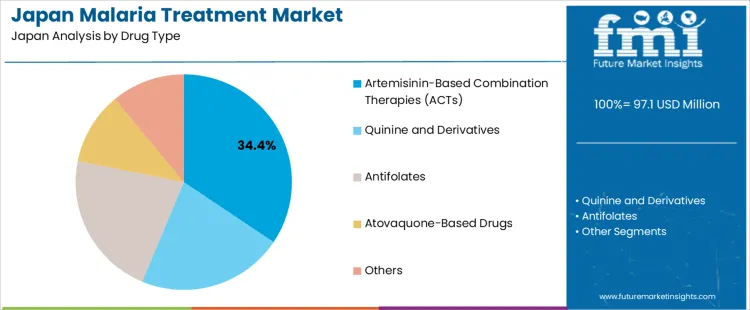
Artemisinin-based combination therapies (ACTs) are the most widely used treatment for malaria in Japan, representing 34% of the market share. ACTs are considered the gold standard for treating malaria, especially in cases of Plasmodium falciparum, the most dangerous malaria parasite. These combination therapies are effective in rapidly clearing the parasites from the bloodstream and are recommended by the World Health Organization for malaria treatment globally. The demand for ACTs in Japan is driven by the need to treat imported malaria cases, as the country has successfully reduced local transmission. Other drugs, such as quinine and derivatives, antifolates, and atovaquone-based drugs, are also used, but ACTs remain the primary choice due to their proven efficacy and the global shift towards combination therapies to combat drug resistance.
Which Route of Administration Drives Malaria Treatment Demand in Japan?
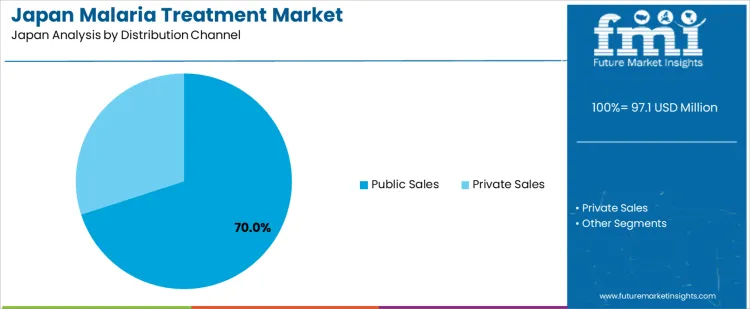
Oral administration is the most common route for malaria treatment in Japan, accounting for 70% of the market share. Oral treatments are preferred for their convenience, ease of use, and the ability to be administered outside of a hospital setting, which is particularly important for treating imported malaria cases. Oral treatments, such as ACTs, are typically well-tolerated and effective in managing malaria infections, especially when initiated early. While injectable forms of malaria treatments are also available, particularly for severe cases that require immediate intervention, oral treatments remain the dominant route of administration due to their suitability for outpatient care and ease of administration. The widespread availability of oral medications has contributed significantly to the effective treatment of malaria in Japan.
What is the Demand for Malaria Treatment in Japan?
The demand for malaria treatment in Japan is relatively low compared to other countries due to the country’s success in malaria control and eradication efforts. However, demand still exists due to the increasing number of Japanese travelers to malaria-endemic regions, as well as the growing focus on global health initiatives aimed at combating infectious diseases. Japan's healthcare system is well-equipped to handle malaria cases, and there is a continued need for effective treatments and preventive measures, especially as global travel increases and the risk of malaria re-emergence remains a concern.
What are the Drivers of Demand for Malaria Treatment in Japan?
Several factors are driving the demand for malaria treatment in Japan. First, while malaria is not endemic in Japan, the rising number of Japanese citizens traveling to malaria-endemic areas for business, tourism, and humanitarian work increases the potential risk of infection. Second, Japan’s strong commitment to global health initiatives, such as supporting the World Health Organization’s malaria elimination goals, drives the need for the country to maintain effective treatments and stockpiles of antimalarial drugs. Third, Japan's healthcare system’s focus on preparedness for infectious diseases ensures that effective malaria treatments remain available, even though cases may be rare. Additionally, the development of new antimalarial drugs and treatments, especially those aimed at overcoming drug-resistant malaria strains, is contributing to the ongoing demand for malaria treatment in Japan.
What are the Restraints on Demand for Malaria Treatment in Japan?
Despite the relatively low number of malaria cases in Japan, there are several factors that limit the widespread demand for malaria treatment. One significant restraint is the fact that malaria is not endemic in Japan, so the overall number of cases remains low, and the need for ongoing treatments is minimal. As a result, public awareness and the prioritization of malaria treatment are not as high as for other infectious diseases. Another challenge is the cost of maintaining and supplying antimalarial drugs, as they may not be frequently used and can result in stockpiling. Additionally, there may be limited access to malaria treatment in certain areas, as the healthcare infrastructure in Japan is primarily focused on other more prevalent diseases. Finally, the availability of effective preventive measures, such as malaria vaccines and travel medications, may reduce the reliance on treatment once infected.
What are the Key Trends Influencing Demand for Malaria Treatment in Japan?
Several key trends are influencing the demand for malaria treatment in Japan. One important trend is the increasing number of Japanese travelers visiting malaria-endemic regions, which drives the need for preventive measures and effective treatment options. Another trend is Japan’s involvement in international malaria eradication programs, which ensures that the country remains prepared and stocked with antimalarial drugs. The development of more effective treatments, including those aimed at combating drug-resistant malaria, is another trend shaping the demand for malaria treatment in Japan. Additionally, there is a growing emphasis on research and development of malaria vaccines, which could reduce the need for treatment in the long term but still drives current demand for effective therapies. Finally, Japan’s strong healthcare infrastructure, combined with its commitment to global health, supports continued interest in maintaining effective malaria treatment options, even as cases remain low within the country.
What is the Regional Demand Outlook for Malaria Treatment in Japan?
The demand for malaria treatment in Japan is projected to grow at a steady pace, with Kyushu & Okinawa leading the way at a projected CAGR of 4.8%. Kanto follows with a growth rate of 4.4%, while Kansai is expected to grow at 3.9%. Chubu is projected to grow at a rate of 3.4%, while Tohoku and Rest of Japan show more moderate growth, with CAGRs of 3.0% and 2.8%, respectively. Although malaria is not as widespread in Japan as in tropical regions, the increasing focus on improving healthcare systems and travel-related health concerns are driving demand for malaria treatments.
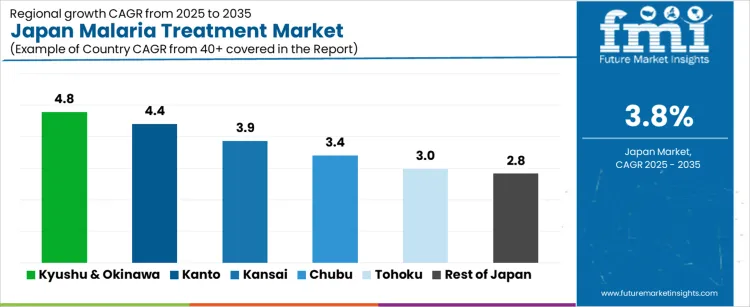
| Region | CAGR (2025-2035) |
|---|---|
| Kyushu & Okinawa | 4.8% |
| Kanto | 4.4% |
| Kansai | 3.9% |
| Chubu | 3.4% |
| Tohoku | 3.0% |
| Rest of Japan | 2.8% |
What is Driving the Growth of Malaria Treatment in Kyushu & Okinawa?
Kyushu & Okinawa is projected to experience the highest growth in the Malaria Treatment market, with a projected CAGR of 4.8%. The region’s position as a travel gateway to Southeast Asia and its increased engagement in international trade and tourism are contributing factors. With more travelers from malaria-endemic regions visiting, the need for effective malaria prevention and treatment is growing. Additionally, the region's aging population, which is more vulnerable to infectious diseases, is driving the adoption of new malaria treatments. Kyushu & Okinawa’s healthcare systems are focusing on enhancing the accessibility of treatments and improving responses to infectious diseases. As the demand for effective malaria management rises, the region's growing awareness and focus on global health concerns contribute to its leading market position.
Why is the Malaria Treatment Market Expanding in Kanto?
In Kanto, the demand for malaria treatment is projected to grow at a CAGR of 4.4%. Kanto, including Japan's capital, Tokyo, has a high population density and a well-developed healthcare system, which allows for rapid adoption of treatments for infectious diseases, including malaria. The increasing number of international travelers, particularly those visiting malaria-endemic regions, is driving demand for malaria treatments. As Kanto’s hospitals and clinics focus on providing comprehensive travel health services, the market for malaria treatments is expected to expand. Additionally, Kanto's focus on improving preventive health measures, including travel vaccinations and malaria prophylaxis, is contributing to the growth of this market. The demand for malaria treatments is expected to increase as the region continues to prioritize international health concerns.
How is the Malaria Treatment Market Growing in Kansai?
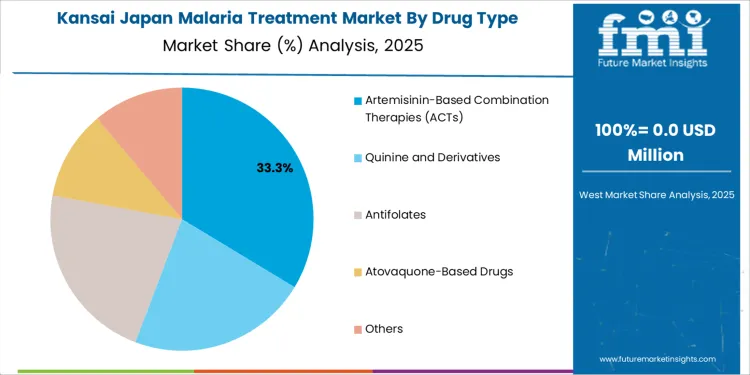
In Kansai, the Malaria Treatment market is projected to grow at a CAGR of 3.9%. Kansai, with cities like Osaka, Kyoto, and Kobe, is experiencing increasing demand for malaria treatments due to its high levels of international trade and tourism. The region’s strong healthcare infrastructure, along with its growing recognition of the importance of addressing travel-related health risks, is driving market growth. Kansai’s healthcare providers are increasingly offering malaria prevention and treatment services to cater to the rising number of travelers visiting malaria-endemic regions. Additionally, Kansai's aging population, which is more vulnerable to infectious diseases, is contributing to the demand for effective malaria treatments. The region’s focus on improving health outcomes and expanding access to global health services is expected to continue supporting the growth of the malaria treatment market.
What is Contributing to the Growth of Malaria Treatment in Chubu?
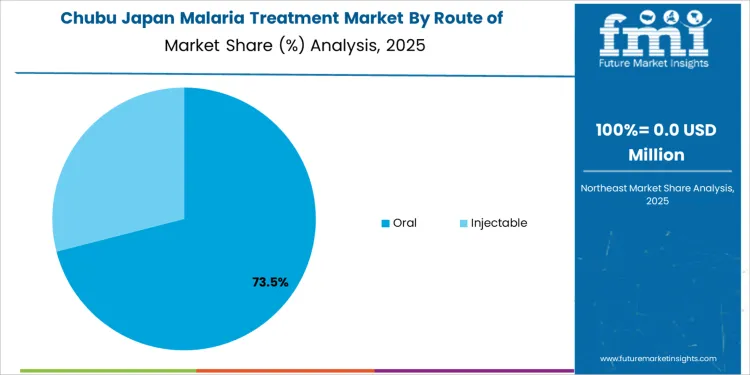
In Chubu, the Malaria Treatment market is expected to grow at a CAGR of 3.4%. Chubu, with its key cities like Nagoya, is seeing an increase in the number of international travelers and business activities that bring individuals from malaria-endemic regions. As Chubu continues to expand its healthcare services and improve its focus on international health, the demand for malaria treatments is expected to rise. The region's healthcare systems are adopting measures to improve awareness about malaria prevention and treatment, particularly for travelers and residents returning from endemic areas. With an aging population, the region’s healthcare providers are increasingly offering specialized services to manage infectious diseases, contributing to steady growth in the malaria treatment market.
What is Influencing the Growth of Malaria Treatment in Tohoku?
In Tohoku, the Malaria Treatment market is projected to grow at a CAGR of 3.0%. The region's moderate growth is driven by an increase in international travel, particularly for business and leisure trips to malaria-endemic countries. The awareness of travel health concerns, including malaria, is contributing to the adoption of preventive treatments and therapies. As the region's healthcare providers focus on improving health infrastructure and addressing emerging health risks, demand for malaria treatments is steadily rising. Tohoku’s population, including an aging demographic, is increasingly seeking healthcare solutions to manage infectious diseases, including malaria, which is contributing to the growing market.
What is Contributing to the Growth of Malaria Treatment in Rest of Japan?
In Rest of Japan, the Malaria Treatment market is expected to grow at a more moderate rate of 2.8%. Although the demand is smaller compared to major metropolitan areas, the region is seeing gradual growth due to the increasing awareness of malaria risks, especially for international travelers. Rest of Japan's healthcare providers are increasingly offering malaria prevention and treatment services, which is driving demand. As access to healthcare services improves in rural areas, the market for malaria treatments is expected to grow steadily. Additionally, the rise in business and tourism activities in regions outside of Japan’s metropolitan areas is contributing to the growing adoption of malaria treatments.
What is the Competitive Landscape for Demand for Malaria Treatment in Japan?
Demand for malaria treatment in Japan remains modest but steady, driven primarily by imported cases rather than local transmission. Most malaria cases diagnosed in Japan are among travelers returning from endemic regions. The need for effective treatment arises from periodic imported malaria, sometimes with serious illness — particularly from species such as Plasmodium falciparum. While absolute volume is low relative to endemic countries, the requirement for rapid diagnosis, reliable supply of antimalarial drugs, and capability to treat severe cases keeps the treatment market relevant in Japan. On the supply side, global pharmaceutical companies compete to meet the niche but critical demand for antimalarial drugs in Japan. According to your list, Novartis AG holds a leading share among identified firms. Other important players include Sanofi, Ajanta Pharma, Pfizer Inc., and F. Hoffmann La Roche Ltd. These companies supply antimalarial medications suitable for import associated malaria, including treatment for both uncomplicated and severe malaria. Competition among suppliers centers on drug efficacy against different Plasmodium species, availability of combination therapies, regulatory approval, drug safety, ability to respond rapidly to cases, and stable supply chains. Firms that maintain robust regulatory compliance, ensure availability of effective antimalarials, and support clinicians and hospitals in diagnostics and treatment delivery are best positioned to serve the Japanese demand for malaria treatment.
Key Players of the Malaria Treatment Industry in Japan
- Novartis AG
- Sanofi
- Ajanta Pharma
- Pfizer Inc.
- F. Hoffmann-La Roche Ltd
Scope of the Report
| Items | Details |
|---|---|
| Quantitative Units | USD Million |
| Regions Covered | Japan |
| Drug Type | Artemisinin Based Combination Therapies (ACTs); Quinine & Derivatives; Antifolates; Atovaquone Based Drugs; Others (e.g. older antimalarials, combination/adjunctive) |
| Route of Administration | Oral; Injectable |
| Drug Classification | Branded; Generic |
| Distribution Channel | Public Sales; Private Sales |
| Key Companies / Suppliers | Novartis AG; Sanofi; Ajanta Pharma; Pfizer Inc.; F. Hoffmann La Roche Ltd |
| Additional Attributes | Dollar sales by drug class and route reflect primarily imported malaria treatment demand. Because malaria is eradicated in Japan (only imported cases), treatment demand is small and episodic, driven by international travel or imported cases. Demand peaks when travelers return from endemic areas and require prompt treatment. Supply must cover standard protocols — oral ACTs, injectable quinine or atovaquone based drugs — and allow for both branded and generic options. |
Key Segments in the Demand for Malaria Treatment in Japan
Drug Type:
- Artemisinin Based Combination Therapies (ACTs)
- Quinine and Derivatives
- Antifolates
- Atovaquone Based Drugs
- Others
Route of Administration:
- Oral
- Injectable
Type:
- Branded
- Generic
Distribution Channel:
- Public Sales
- Private Sales
Region:
- Kyushu & Okinawa
- Kanto
- Kansai
- Chubu
- Tohoku
- Rest of Japan
Frequently Asked Questions
How big is the demand for malaria treatment in Japan in 2025?
The demand for malaria treatment in Japan is estimated to be valued at USD 97.1 million in 2025.
What will be the size of malaria treatment in Japan in 2035?
The market size for the malaria treatment in Japan is projected to reach USD 141.3 million by 2035.
How much will be the demand for malaria treatment in Japan growth between 2025 and 2035?
The demand for malaria treatment in Japan is expected to grow at a 3.8% CAGR between 2025 and 2035.
What are the key product types in the malaria treatment in Japan?
The key product types in malaria treatment in Japan are artemisinin-based combination therapies (acts), quinine and derivatives, antifolates, atovaquone-based drugs and others.
Which route of administration segment is expected to contribute significant share in the malaria treatment in Japan in 2025?
In terms of route of administration, oral segment is expected to command 70.0% share in the malaria treatment in Japan in 2025.
Preview the report firsthand - request a free sample
Get SampleGet the brochure for pricing and purchase details.
Get PDFTable of Content
- Executive Summary
- Japan Market Outlook
- Demand-side Trends
- Supply-side Trends
- Technology Roadmap Analysis
- Analysis and Recommendations
- Market Overview
- Market Coverage / Taxonomy
- Market Definition / Scope / Limitations
- Market Background
- Market Dynamics
- Drivers
- Restraints
- Opportunity
- Trends
- Scenario Forecast
- Demand in Optimistic Scenario
- Demand in Likely Scenario
- Demand in Conservative Scenario
- Opportunity Map Analysis
- Product Life Cycle Analysis
- Supply Chain Analysis
- Investment Feasibility Matrix
- Value Chain Analysis
- PESTLE and Porter’s Analysis
- Regulatory Landscape
- Regional Parent Market Outlook
- Production and Consumption Statistics
- Import and Export Statistics
- Market Dynamics
- Japan Market Analysis 2020 to 2024 and Forecast, 2025 to 2035
- Historical Market Size Value (USD Million) Analysis, 2020 to 2024
- Current and Future Market Size Value (USD Million) Projections, 2025 to 2035
- Y-o-Y Growth Trend Analysis
- Absolute $ Opportunity Analysis
- Japan Market Pricing Analysis 2020 to 2024 and Forecast 2025 to 2035
- Japan Market Analysis 2020 to 2024 and Forecast 2025 to 2035, By Drug Type
- Introduction / Key Findings
- Historical Market Size Value (USD Million) Analysis By Drug Type , 2020 to 2024
- Current and Future Market Size Value (USD Million) Analysis and Forecast By Drug Type , 2025 to 2035
- Artemisinin-Based Combination Therapies (ACTs)
- Quinine and Derivatives
- Antifolates
- Atovaquone-Based Drugs
- Others
- Y-o-Y Growth Trend Analysis By Drug Type , 2020 to 2024
- Absolute $ Opportunity Analysis By Drug Type , 2025 to 2035
- Japan Market Analysis 2020 to 2024 and Forecast 2025 to 2035, By Route of Administration
- Introduction / Key Findings
- Historical Market Size Value (USD Million) Analysis By Route of Administration, 2020 to 2024
- Current and Future Market Size Value (USD Million) Analysis and Forecast By Route of Administration, 2025 to 2035
- Oral
- Injectable
- Y-o-Y Growth Trend Analysis By Route of Administration, 2020 to 2024
- Absolute $ Opportunity Analysis By Route of Administration, 2025 to 2035
- Japan Market Analysis 2020 to 2024 and Forecast 2025 to 2035, By Type
- Introduction / Key Findings
- Historical Market Size Value (USD Million) Analysis By Type, 2020 to 2024
- Current and Future Market Size Value (USD Million) Analysis and Forecast By Type, 2025 to 2035
- Branded
- Generic
- Y-o-Y Growth Trend Analysis By Type, 2020 to 2024
- Absolute $ Opportunity Analysis By Type, 2025 to 2035
- Japan Market Analysis 2020 to 2024 and Forecast 2025 to 2035, By Distribution Channel
- Introduction / Key Findings
- Historical Market Size Value (USD Million) Analysis By Distribution Channel, 2020 to 2024
- Current and Future Market Size Value (USD Million) Analysis and Forecast By Distribution Channel, 2025 to 2035
- Public Sales
- Private Sales
- Y-o-Y Growth Trend Analysis By Distribution Channel, 2020 to 2024
- Absolute $ Opportunity Analysis By Distribution Channel, 2025 to 2035
- Market Structure Analysis
- Competition Dashboard
- Competition Benchmarking
- Market Share Analysis of Top Players
- By Regional
- By Drug Type
- By Route of Administration
- By Type
- By Distribution Channel
- Competition Analysis
- Competition Deep Dive
- Novartis AG
- Overview
- Product Portfolio
- Profitability by Market Segments (Product/Age /Sales Channel/Region)
- Sales Footprint
- Strategy Overview
- Marketing Strategy
- Product Strategy
- Channel Strategy
- Sanofi
- Ajanta Pharma
- Pfizer Inc.
- F. Hoffmann-La Roche Ltd
- Novartis AG
- Competition Deep Dive
- Assumptions & Acronyms Used
- Research Methodology


