

- Industry Size (2025)
- USD 606.6 Mn
- Forecast (2035)
- USD 1198.9 Mn
- CAGR (2025 to 2035)
- 7.1%
Demand for Alopecia Treatment in Japan Forecast and Outlook 2025-2035
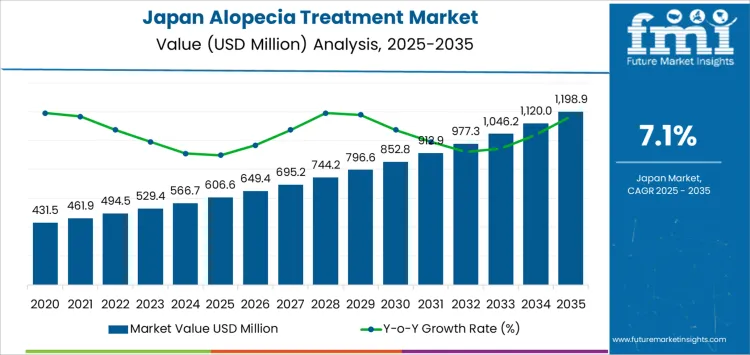
Demand for alopecia treatment in Japan is valued at USD 606.6 million in 2025 and is projected to reach USD 1,198.9 million by 2035 at a CAGR of 7.1%. Hair transplant services, laser based therapies, injectables, oral drugs, topical formulations, and supportive drug therapies shape the current treatment mix across the country. Alopecia areata, alopecia totalis, alopecia universalis, alopecia barbae, and chemotherapy related hair loss form the core clinical indications addressed by care providers. Hospitals remain the largest treatment access point, supported by dermatology clinics, hair care clinics, pharmacy chains, and online sales platforms. Product innovation centers on long use topical solutions, refined injectables, and compact laser devices optimized for clinical settings.
Kanto, Kinki, and Chubu drive national demand through dense specialist networks, higher procedure volumes, and strong consumer spending on aesthetic health. Kyushu, Tohoku, and other prefectures show gradual uptake through hospital led expansion and tele dermatology services. Growth across the outlook period reflects rising age related hair disorders, lifestyle linked hair loss, and post chemotherapy recovery needs. Urban clinics expand bundled therapy packages combining drugs and device based procedures. Pharmaceutical suppliers strengthen oral and topical portfolios aimed at long duration treatment cycles. Device manufacturers focus on portable laser systems for outpatient use. Demand through 2035 remains shaped by population aging, higher diagnosis rates, clinic network expansion, and increased acceptance of medical grade hair restoration solutions across Japan.
Quick Stats of the Alopecia Treatment Industry in Japan:
- Alopecia Treatment Industry in Japan Value (2025): USD 606.6 million
- Alopecia Treatment Industry in Japan Forecast Value (2035): USD 1,198.9 million
- Alopecia Treatment Industry in Japan Forecast CAGR (2025-2035): 7.1%
- Leading Dosage Form in Alopecia Treatment Industry in Japan: Hair Transplant Services (23%)
- Key Growth Regions in Alopecia Treatment Industry in Japan: Kyushu & Okinawa, Kanto, Kansai, Chubu
- Top Players in Alopecia Treatment Industry in Japan: Pfizer, Teva Pharmaceuticals USA, Sun Pharmaceuticals, Sandoz, Abbott
What is the Demand Forecast for Alopecia Treatment in Japan through 2035?
Demand for alopecia treatment in Japan is valued at USD 606.6 million in 2025 and moves to USD 796.6 million by 2030, creating a USD 190.0 million expansion within the first half of the forecast window. The rise from USD 431.5 million in 2020 reflects steady widening of treatment adoption beyond clinical hair loss into appearance-driven wellness care. Dermatology clinics report higher repeat visitation tied to long-cycle therapy programs that combine topical pharmaceuticals, oral agents, regenerative injections, and device-based stimulation. Urban consumption remains dominant, shaped by rising male grooming expenditure and growing female participation in post-partum and stress-related hair restoration programs. Demand in this stage is volume driven through sustained patient continuity rather than short-term surges.
From 2030 to 2035, demand increases from USD 796.6 million to USD 1,198.9 million, adding a larger USD 402.3 million during the later phase. Annual demand expansion strengthens as treatment penetration extends into middle-aged and elderly demographics managing age-linked thinning. Outpatient procedure intensity rises through platelet-based therapies, low-level laser systems, and combination regimens that elevate per-patient spending. Cross-border medical tourism linked to cosmetic dermatology also contributes incremental demand for clinic-based solutions. Digital consultation platforms widen access to prescription therapies across regional cities. By 2035, alopecia treatment demand in Japan reflects structurally higher lifetime care engagement rather than isolated cosmetic intervention cycles.
Alopecia Treatment Industry in Japan Key Takeaways
| Metric | Value |
|---|---|
| Industry Value (2025) | USD 606.6 million |
| Forecast Value (2035) | USD 1,198.9 million |
| Forecast CAGR (2025-2035) | 7.1% |
What Is Driving the Demand for Alopecia Treatment in Japan?
The demand for alopecia treatment in Japan is shaped by early onset hair thinning, strong social focus on personal appearance, and long standing medical engagement with scalp health. Hair loss carries visible social impact in professional and social settings, which drives early consultation rather than delayed treatment. Dermatology clinics and specialized hair loss centers became widely established across urban areas, normalizing medical management of alopecia rather than cosmetic concealment alone. Male pattern hair loss formed the initial core of demand through office workers and aging executives. Female alopecia gradually gained equal clinical attention as diagnostic awareness improved and stigma reduced. Preventive treatment culture, routine health checkups, and strong retail pharmacy access reinforced continuous use of prescription and non-prescription hair loss therapies across different age groups.
Future demand for alopecia treatment in Japan will be shaped by rising stress exposure, digital lifestyle patterns, and continued expansion of female treatment adoption. Younger patients are entering treatment earlier due to visibility of hair loss on social platforms and heightened self-image pressure. Growth will continue through teledermatology, subscription based treatment programs, and personalized therapy approaches that combine pharmaceuticals with scalp devices and nutritional support. Barriers include long treatment duration required for visible results, cost sensitivity outside insurance coverage, and variable response outcomes that affect patient persistence. Safety concerns around long term medication use also influence adherence. Long term demand will depend on sustained clinical confidence, early stage intervention adoption, and integration of medical and aesthetic hair care practices across urban and regional Japan healthcare services.
What Is the Demand for Alopecia Treatment in Japan by Dosage Form and Indication?
The demand for alopecia treatment in Japan is shaped by cosmetic awareness, aging demographics, and growing acceptance of medical hair restoration. Hair transplant services lead by dosage form due to rising clinic availability and long term treatment outcomes. Alopecia areata leads by indication because of its higher diagnosis rate within autoimmune related hair loss cases. Procurement is driven by dermatology clinics, cosmetic surgery centers, and hospital outpatient departments. Import reliance remains present for select pharmaceuticals and surgical equipment. Substitution pressure exists across topical, oral, and procedural options based on disease severity and patient preference. Demand stability is supported by persistent cosmetic demand and expanding private dermatology infrastructure.
Why do hair transplant services dominate the demand for alopecia treatment in Japan by dosage form?
Hair transplant services account for 23% of the demand for alopecia treatment in Japan by dosage form, reflecting preference for permanent follicular restoration in advanced hair loss cases. Consumption intensity is driven by male pattern baldness management, post scarring alopecia correction, and cosmetic image priorities among working age men. Usage remains stable because procedural outcomes offer long term density improvement without daily drug dependence. Procurement is led by private aesthetic clinics and specialty dermatology hospitals. Price sensitivity remains moderate because procedures are paid through personal spending rather than insurance. Specification control emphasizes graft survival rates, follicular unit extraction accuracy, and post-surgical wound healing consistency.
Hair transplant services also generate repeat demand through staged grafting plans and touch up procedures across multiyear treatment cycles. Repeat utilization remains predictable in patients seeking incremental density improvement. Providers favor standardized surgical instruments and imaging guided graft placement systems to control outcome variability. Margin structure remains controlled under clinic competition and staff specialization costs. Regulatory exposure remains elevated due to surgical safety and infection control standards. Import reliance persists for micro surgical tools and imaging systems. Substitution pressure from topical and oral drugs remains limited in patients with extensive follicular loss.
What drives alopecia areata to lead the demand for alopecia treatment in Japan by indication?
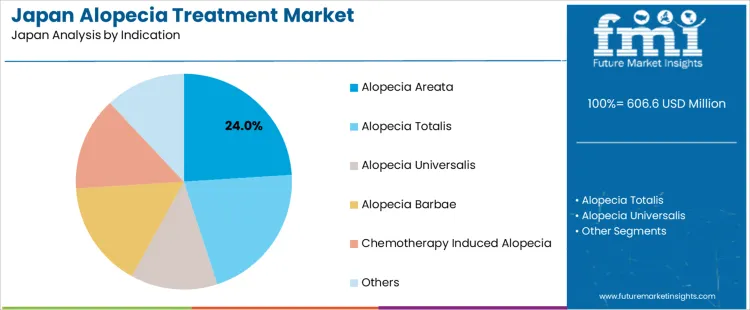
Alopecia areata represents 24.0% of the demand for alopecia treatment in Japan by indication, reflecting its higher clinical incidence across both pediatric and adult populations. Consumption intensity is driven by autoimmune related hair loss that presents in patch based patterns with unpredictable progression. Usage remains stable because patients seek early treatment to prevent spread to totalis or universalis forms. Procurement is dominated by dermatology clinics and hospital outpatient departments. Price sensitivity remains moderate because treatment pathways extend across long durations. Specification control emphasizes immunomodulatory response predictability, regrowth consistency, and relapse monitoring under both drug and procedural therapy.
Alopecia areata management also generates consistent repeat demand through relapse cycles and long term follow up care. Repeat utilization remains predictable due to the chronic nature of autoimmune driven hair disorders. Providers favor combined therapy approaches that include topical, oral, and injectable regimens based on severity. Margin structure remains controlled under outpatient reimbursement models. Regulatory exposure remains elevated due to off label immunotherapy use and long term safety monitoring. Import reliance persists for select biologic inputs and corticosteroid preparations. Substitution pressure from cosmetic camouflage exists but does not replace medical intervention demand.
What Is Driving the Demand for Alopecia Treatment in Japan Dermatology and Personal Image Care?
Demand for alopecia treatment in Japan is shaped by strong social emphasis on personal grooming, early intervention behavior, and rising stress-related hair loss among working-age adults. Urban lifestyles, long working hours, and sleep disruption increase scalp health concerns across both men and women. Dermatology clinics, cosmetic surgery centers, and prescription hair clinics form the primary care network. Younger consumers seek early-stage treatment to stabilize progression rather than restore advanced loss. Demand aligns with appearance-focused self-care, clinic-led diagnosis, and long-term treatment adherence rather than one-time cosmetic correction.
How Is Work-Related Stress Expanding Early-Stage Hair Loss Treatment?
High professional stress, irregular sleep patterns, and dietary imbalance contribute to rising early-stage alopecia among office workers in Japan. Many patients seek treatment during the thinning phase rather than after visible scalp exposure. Clinics offer diagnostic scalp imaging, hormone screening, and customized topical protocols. Corporate culture places value on youthful appearance and grooming consistency. This environment pulls alopecia treatment into preventive care behavior rather than delayed cosmetic repair.
Why Is Aesthetic Medicine Integration Strengthening Clinical Demand?
Alopecia treatment in Japan is closely linked with aesthetic dermatology rather than isolated medical care. Hair clinics frequently operate within cosmetic medicine centers that also offer skin rejuvenation, anti-aging injections, and body contour services. Patients view hair density as part of overall facial balance and youth presentation. This integrated service structure elevates treatment frequency and encourages long-term maintenance plans rather than short treatment cycles.
How Do Treatment Duration, Cost Exposure, and Satisfaction Limits Restrain Expansion?
Alopecia treatment requires long persistence with visible outcomes appearing slowly. Monthly cost burden restricts continuation for younger patients without disposable income. Response variation across individuals leads to discontinuation in some cases. Social hesitation around visible procedures such as transplantation also narrows the eligible base. These behavioral and financial limits contain expansion even under strong appearance-driven motivation.
What is the Demand for Alopecia Treatment in Japan by Region?
| Region | CAGR (%) |
|---|---|
| Kyushu & Okinawa | 8.8% |
| Kanto | 8.1% |
| Kansai | 7.1% |
| Chubu | 6.3% |
| Tohoku | 5.5% |
| Rest of Japan | 5.2% |
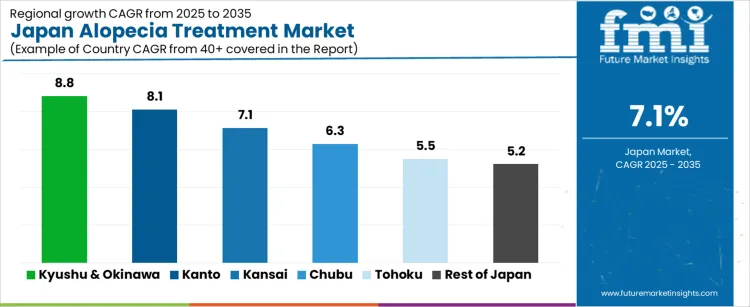
The demand for alopecia treatment in Japan is rising steadily across all regions, led by Kyushu and Okinawa at an 8.8% CAGR. Growth in this region is supported by expanding dermatology clinic networks, rising awareness of early intervention therapies, and higher adoption of topical and oral treatment options among younger demographics. Kanto follows at 8.1%, driven by dense urban populations, high concentration of specialty hair restoration clinics, and strong uptake of prescription based solutions. Kansai records 7.1% growth, reflecting stable demand from private dermatology practices and aesthetic treatment centers. Chubu at 6.3% shows moderate uptake linked to regional hospital dermatology departments. Tohoku and the Rest of Japan, at 5.5% and 5.2%, reflect slower growth shaped by aging populations, fewer specialty clinics, and more conservative treatment adoption patterns.
How Is Aesthetic Clinic Growth Accelerating Alopecia Treatment Demand in Kyushu and Okinawa?
Demand for alopecia treatment in Kyushu and Okinawa is advancing at a CAGR of 8.8% through 2035, supported by rising dermatology clinic density, expanding aesthetic medicine adoption, and strong interest in early stage hair loss care. This region records growing use of topical therapies, oral medications, and platelet rich plasma procedures. Kyushu and Okinawa show stronger clinic led treatment flow compared with regions that rely more on hospital based dermatology. Growth reflects rising self care awareness among younger adults and steady expansion of private hair restoration centers.
- Dermatology clinics anchor most treatment volumes
- Platelet rich plasma procedures gain wider clinical use
- Younger patient intake supports early intervention demand
- Private hair restoration centers drive service expansion
Why Is Urban Lifestyle and Preventive Care Sustaining Alopecia Treatment Growth in Kanto?
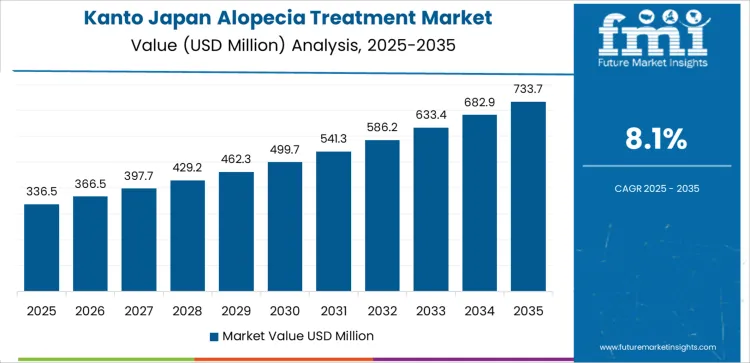
Demand for alopecia treatment in Kanto is rising at a CAGR of 8.1% through 2035, driven by high working population density, strong preventive healthcare behavior, and dense concentration of advanced dermatology clinics in Tokyo. Kanto leads in prescription drug therapy adoption, digital consultation platforms, and long term treatment adherence. This region shows higher continuity of care across treatment cycles than most other parts of Japan. Growth reflects lifestyle stress factors, extended working hours, and increased image focused personal care spending.
- Prescription therapies dominate structured treatment plans
- Digital consultations support long term patient retention
- Working age population sustains continuous treatment demand
- Advanced clinics expand combination therapy availability
What Is Supporting Balanced Alopecia Treatment Expansion Across Kansai?
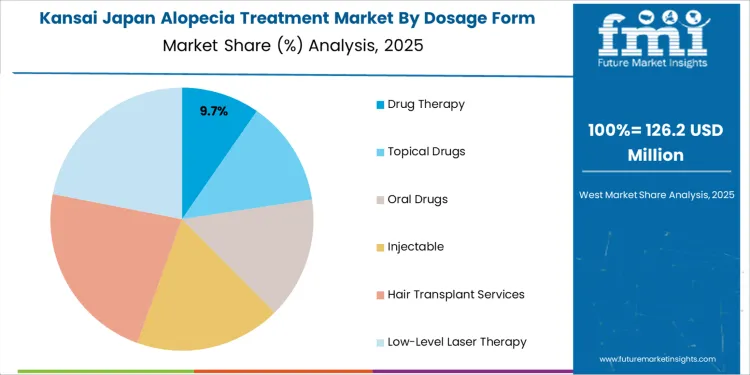
Demand for alopecia treatment in Kansai is progressing at a CAGR of 7.1% through 2035, supported by stable dermatology services, growing aesthetic medicine acceptance, and consistent patient inflow across Osaka and Kyoto. Kansai shows balanced use of topical medications, oral therapies, and non surgical regenerative treatments. This region reflects steady adoption rather than rapid surge driven expansion. Growth remains linked to gradual increase in cosmetic dermatology visits and rising male grooming awareness across professional and service sector populations.
- Balanced therapy mix supports steady revenue flow
- Male grooming trends influence clinic visit growth
- Cosmetic dermatology supports consistent patient intake
- Non surgical restoration techniques gain stable acceptance
How Is Industrial Workforce Healthcare Access Shaping Alopecia Treatment Demand in Chubu?
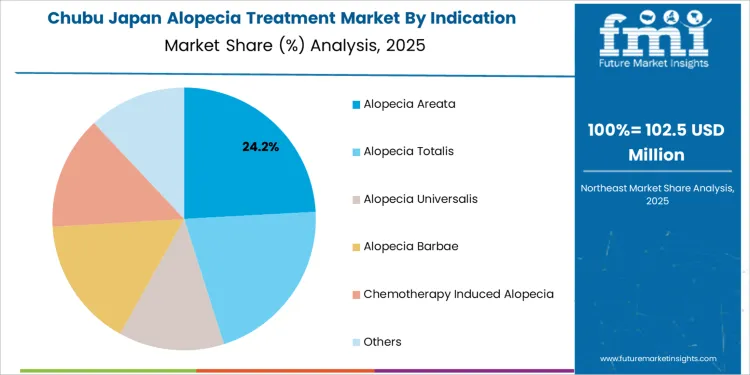
Demand for alopecia treatment in Chubu is advancing at a CAGR of 6.3% through 2035, supported by workforce linked healthcare access, steady clinic expansion, and moderate cosmetic treatment spending in Aichi. Chubu shows stronger reliance on hospital affiliated dermatology departments compared with larger urban private clinic clusters. Treatment demand remains focused on prescription drugs and topical solutions rather than advanced regenerative therapies. Growth reflects stable income levels and rising awareness of early intervention benefits among industrial and office based workers.
- Hospital affiliated dermatology guides most treatments
- Prescription drug therapy leads adoption patterns
- Workforce healthcare access sustains patient inflow
- Moderate cosmetic spending shapes conservative therapy uptake
Why Is Demographic Structure Moderating Alopecia Treatment Growth in Tohoku?
Demand for alopecia treatment in Tohoku is rising at a CAGR of 5.5% through 2035, supported by aging population trends, stable basic dermatology access, and limited private aesthetic clinic density. Miyagi anchors most regional treatment activity through hospital based dermatology services. Tohoku shows lower demand for premium hair restoration services due to demographic structure and spending patterns. Growth remains focused on essential medical management of hair loss rather than cosmetic driven treatment expansion.
- Aging population drives basic medical hair loss treatment
- Hospital services anchor most regional patient volume
- Limited premium clinic availability restricts advanced therapy use
- Conservative spending patterns influence treatment choices
How Is Small City Healthcare Access Influencing Alopecia Treatment Demand in Rest of Japan?
Demand for alopecia treatment in Rest of Japan is advancing at a CAGR of 5.2% through 2035, supported by gradual expansion of dermatology clinics, growing pharmacy based treatment uptake, and steady awareness of hair loss management. These areas differ from Kanto through lower private clinic concentration and slower cosmetic medicine adoption. Treatment demand remains focused on over the counter solutions and primary care referrals for prescription therapies. Growth remains steady and guided by household healthcare spending and gradual service availability improvement.
- Pharmacy channels support basic treatment access
- Primary care referrals guide prescription therapy use
- Lower clinic density shapes slower service expansion
- Household spending patterns influence steady demand growth
What Is Driving the Demand for Alopecia Treatment in Japan and Which Companies Shape Prescribing Access?
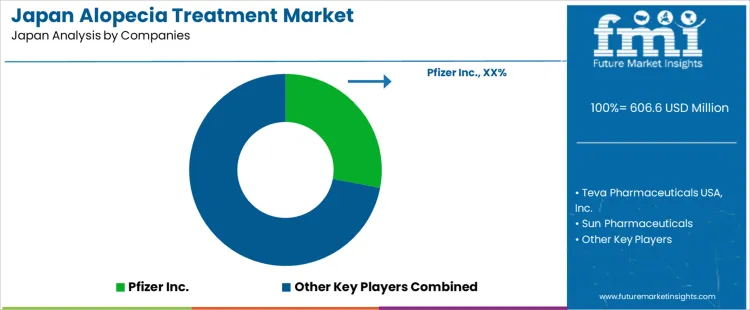
The demand for alopecia treatment in Japan is shaped by high awareness of hair loss across working age men, rising clinical consultation among women, and long established outpatient dermatology care. Shiseido holds a central domestic position through prescription and quasi drug hair growth products supported by in house research and nationwide clinic distribution. Rohto Pharmaceutical supports demand through scalp treatment and medical hair care products positioned at the pharmacy and clinic level. Kowa contributes through dermatology focused formulations supplied to hospital outpatient departments. Abbott participates through nutritional and hormone related products linked to hair health support used under physician guidance. These domestic suppliers anchor routine patient access through strong pharmacy integration.
Pfizer, Teva Pharmaceuticals, Sun Pharmaceuticals, and Sandoz participate through generic and branded oral therapies supplied to hospital and clinic formularies under national reimbursement rules. Prescribing in Japan is governed by Ministry of Health approval status, long term safety data, and defined treatment sequencing in dermatology practice. Buyer preference within clinics favors therapies with predictable response rates, stable supply, and minimal systemic adverse effects. Retail channel use remains controlled through pharmacist oversight for non-prescription treatment options. Demand visibility tracks workplace appearance norms, rising female pattern hair loss diagnosis, social media driven treatment awareness, and steady growth in dermatology outpatient visits across urban prefectures.
Key Players in the Alopecia Treatment Industry in Japan
- Pfizer Inc.
- Teva Pharmaceuticals USA, Inc.
- Sun Pharmaceuticals
- Sandoz
- Abbott
Scope of the Report
| Items | Values |
|---|---|
| Quantitative Units (2025) | USD million |
| Dosage Form | Drug Therapy, Topical Drugs, Oral Drugs, Injectable, Hair Transplant Services, Low-Level Laser Therapy |
| Indication | Alopecia Areata, Alopecia Totalis, Alopecia Universalis, Alopecia Barbae, Chemotherapy Induced Alopecia, Others |
| Sales Channel | Hospitals, Hair Care Clinics, Dermatology Clinics, Retail Pharmacy Chains, Online Sales Channel |
| Region | Kyushu & Okinawa, Kanto, Kansai, Chubu, Tohoku, Rest of Japan |
| Countries Covered | Japan |
| Key Companies Profiled | Pfizer Inc., Teva Pharmaceuticals USA, Inc., Sun Pharmaceuticals, Sandoz, Abbott, Shiseido, Rohto Pharmaceutical, Kowa |
| Additional Attributes | Dollar by sales by dosage form, indication, and channel; Regional CAGR and growth drivers; Male vs female adoption; Outpatient vs hospital-based procedures; Hair transplant and regenerative therapy adoption; Digital consultation and teledermatology use; Repeat treatment cycles for long-term drug and device therapies; Treatment adherence and patient retention programs; Import reliance for pharmaceuticals and surgical tools; Specification controls for device and procedural outcomes; Regulatory exposure for long-term safety monitoring; Substitution pressure across therapy types; Cosmetic medicine integration impact on demand |
Alopecia Treatment Industry in Japan Segmentation
Dosage Form:
- Drug Therapy
- Topical Drugs
- Oral Drugs
- Injectable
- Hair Transplant Services
- Low-Level Laser Therapy
Indication:
- Alopecia Areata
- Alopecia Totalis
- Alopecia Universalis
- Alopecia Barbae
- Chemotherapy Induced Alopecia
- Others
Sales Channel:
- Hospitals
- Hair Care Clinics
- Dermatology Clinics
- Retail Pharmacy Chains
- Online Sales Channel
Region
- Kyushu & Okinawa
- Kanto
- Kansai
- Chubu
- Tohoku
- Rest of Japan
Frequently Asked Questions
How big is the demand for alopecia treatment in Japan in 2025?
The demand for alopecia treatment in Japan is estimated to be valued at USD 606.6 million in 2025.
What will be the size of alopecia treatment in Japan in 2035?
The market size for the alopecia treatment in Japan is projected to reach USD 1,198.9 million by 2035.
How much will be the demand for alopecia treatment in Japan growth between 2025 and 2035?
The demand for alopecia treatment in Japan is expected to grow at a 7.1% CAGR between 2025 and 2035.
What are the key product types in the alopecia treatment in Japan?
The key product types in alopecia treatment in Japan are drug therapy, topical drugs, oral drugs, injectable, hair transplant services and low-level laser therapy.
Which indication segment is expected to contribute significant share in the alopecia treatment in Japan in 2025?
In terms of indication, alopecia areata segment is expected to command 24.0% share in the alopecia treatment in Japan in 2025.
Preview the report firsthand - request a free sample
Get SampleGet the brochure for pricing and purchase details.
Get PDFTable of Content
- Executive Summary
- Japan Market Outlook
- Demand-side Trends
- Supply-side Trends
- Technology Roadmap Analysis
- Analysis and Recommendations
- Market Overview
- Market Coverage / Taxonomy
- Market Definition / Scope / Limitations
- Market Background
- Market Dynamics
- Drivers
- Restraints
- Opportunity
- Trends
- Scenario Forecast
- Demand in Optimistic Scenario
- Demand in Likely Scenario
- Demand in Conservative Scenario
- Opportunity Map Analysis
- Product Life Cycle Analysis
- Supply Chain Analysis
- Investment Feasibility Matrix
- Value Chain Analysis
- PESTLE and Porter’s Analysis
- Regulatory Landscape
- Regional Parent Market Outlook
- Production and Consumption Statistics
- Import and Export Statistics
- Market Dynamics
- Japan Market Analysis 2020 to 2024 and Forecast, 2025 to 2035
- Historical Market Size Value (USD Million) Analysis, 2020 to 2024
- Current and Future Market Size Value (USD Million) Projections, 2025 to 2035
- Y-o-Y Growth Trend Analysis
- Absolute $ Opportunity Analysis
- Japan Market Pricing Analysis 2020 to 2024 and Forecast 2025 to 2035
- Japan Market Analysis 2020 to 2024 and Forecast 2025 to 2035, By Dosage Form
- Introduction / Key Findings
- Historical Market Size Value (USD Million) Analysis By Dosage Form , 2020 to 2024
- Current and Future Market Size Value (USD Million) Analysis and Forecast By Dosage Form , 2025 to 2035
- Drug Therapy
- Topical Drugs
- Oral Drugs
- Injectable
- Hair Transplant Services
- Low-Level Laser Therapy
- Y-o-Y Growth Trend Analysis By Dosage Form , 2020 to 2024
- Absolute $ Opportunity Analysis By Dosage Form , 2025 to 2035
- Japan Market Analysis 2020 to 2024 and Forecast 2025 to 2035, By Indication
- Introduction / Key Findings
- Historical Market Size Value (USD Million) Analysis By Indication, 2020 to 2024
- Current and Future Market Size Value (USD Million) Analysis and Forecast By Indication, 2025 to 2035
- Alopecia Areata
- Alopecia Totalis
- Alopecia Universalis
- Alopecia Barbae
- Chemotherapy Induced Alopecia
- Others
- Y-o-Y Growth Trend Analysis By Indication, 2020 to 2024
- Absolute $ Opportunity Analysis By Indication, 2025 to 2035
- Japan Market Analysis 2020 to 2024 and Forecast 2025 to 2035, By Sales Channel
- Introduction / Key Findings
- Historical Market Size Value (USD Million) Analysis By Sales Channel, 2020 to 2024
- Current and Future Market Size Value (USD Million) Analysis and Forecast By Sales Channel, 2025 to 2035
- Hospitals
- Hair Care Clinics
- Dermatology Clinics
- Retail Pharmacy Chains
- Online Sales Channel
- Y-o-Y Growth Trend Analysis By Sales Channel, 2020 to 2024
- Absolute $ Opportunity Analysis By Sales Channel, 2025 to 2035
- Market Structure Analysis
- Competition Dashboard
- Competition Benchmarking
- Market Share Analysis of Top Players
- By Regional
- By Dosage Form
- By Indication
- By Sales Channel
- Competition Analysis
- Competition Deep Dive
- Pfizer Inc.
- Overview
- Product Portfolio
- Profitability by Market Segments (Product/Age /Sales Channel/Region)
- Sales Footprint
- Strategy Overview
- Marketing Strategy
- Product Strategy
- Channel Strategy
- Teva Pharmaceuticals USA, Inc.
- Sun Pharmaceuticals
- Sandoz
- Abbott
- Pfizer Inc.
- Competition Deep Dive
- Assumptions & Acronyms Used
- Research Methodology


