

- Industry Size (2025)
- USD 189.3 Mn
- Forecast (2035)
- USD 250.7 Mn
- CAGR (2025 to 2035)
- 2.9%
Demand for Keloid Treatment in Japan Forecast and Outlook 2025 to 2035
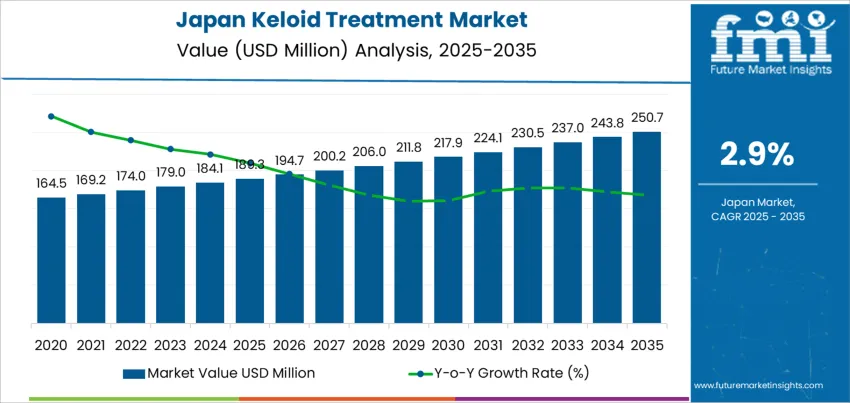
The demand for keloid treatment in Japan is expected to grow from USD 189.3 million in 2025 to USD 250.7 million by 2035, driven by a CAGR of 2.9%. Keloids, which are raised, thickened scars that form during wound healing, often require specialized treatments for both medical and cosmetic purposes. The increasing prevalence of conditions like burns, acne, and surgeries, which can lead to keloid formation, will continue to drive demand. As individuals become more proactive about skin health, there is growing interest in treatments that can reduce or eliminate these persistent scars. Keloid treatments, including topical medications, corticosteroid injections, laser therapy, and surgical procedures, are widely used to improve the appearance of scars and promote better skin healing.
Advancements in dermatological treatments and rising awareness of skin health are key factors behind the demand for keloid treatments. With increased consumer knowledge about scar management and aesthetic concerns, there is growing demand for non-invasive and effective options. Technological advancements, such as improved laser therapy and minimally invasive procedures, will make these treatments more accessible and effective. As more individuals seek cosmetic solutions, the demand for keloid treatments will continue to rise. The expansion of dermatology services and the growing popularity of cosmetic procedures will also contribute to this industry growth, ensuring that keloid treatment remains an essential part of the healthcare and cosmetic sectors throughout the forecast period.
Quick Stats of the Demand for Keloid Treatment in Japan
- Demand for Keloid Treatment in Japan Value (2025): USD 189.3 million
- Demand for Keloid Treatment in Japan Forecast Value (2035): USD 250.7 million
- Demand for Keloid Treatment in Japan Forecast CAGR (2025-2035): 2.9%
- Demand for Keloid Treatment in Japan Leading Treatment Type: Intralesional Corticosteroid Injections
- Demand for Keloid Treatment in Japan Key Growth Regions: Kyushu & Okinawa, Kanto, Kansai, Chubu, Tohoku, Rest of Japan
- Demand for Keloid Treatment in Japan Top Players: Novartis AG, Bristol-Myers Squibb Company, Perrigo Company plc., Sensus Healthcare, RXi Pharmaceuticals, Inc.
What is the Growth Forecast for the Demand for Keloid Treatment in Japan through 2035?
From 2025 to 2030, the demand for keloid treatments in Japan is expected to grow from USD 189.3 million to USD 224.1 million, adding USD 34.8 million in value. This growth will be driven by increasing awareness of skin health, along with advancements in treatment technologies such as laser therapy, corticosteroid injections, and non-invasive procedures. As more individuals seek effective solutions for managing keloids, the demand for both medical and cosmetic treatments will continue to rise. The growing focus on skin aesthetics and rising numbers of cosmetic dermatology treatments will contribute to the industry’s expansion. Technological innovations that improve the effectiveness and convenience of keloid treatments will further drive this demand.
From 2030 to 2035, demand will continue to rise from USD 224.1 million to USD 250.7 million, contributing USD 26.6 million in value. While the growth rate may moderate slightly as the industry matures, the demand for keloid treatments will remain strong due to ongoing innovations in treatment methods and the increasing emphasis on skin health and appearance. The rising demand for cosmetic dermatology services, coupled with the continued adoption of advanced treatments for managing scars, will ensure that the keloid treatment sector remains vital. As more consumers turn to effective, personalized treatment options, both medical and aesthetic solutions will maintain their role in improving skin health and addressing aesthetic concerns throughout the forecast period.
Demand for Keloid Treatment in Japan Key Takeaways
| Metric | Value |
|---|---|
| Demand for Keloid Treatment in Japan Value (2025) | USD 189.3 million |
| Demand for Keloid Treatment in Japan Forecast Value (2035) | USD 250.7 million |
| Demand for Keloid Treatment in Japan Forecast CAGR (2025-2035) | 2.9% |
Why is the Demand for Keloid Treatment in Japan Growing?
The demand for keloid treatment in Japan is growing due to an increased awareness of skin conditions and cosmetic treatments, as well as a rise in the number of individuals seeking effective solutions for scar management. Keloids, which are thick, raised scars that form at the site of an injury or incision, can cause both physical and emotional distress for those affected. As awareness of available treatments increases, more individuals are turning to medical solutions to reduce the appearance and discomfort caused by keloids.
A significant driver of this growth is Japan’s aging population, which often experiences more frequent skin injuries due to surgery or other medical procedures. As older individuals are more prone to developing keloids, the demand for treatment options is expected to rise. In addition, there is a growing focus on cosmetic dermatology in Japan, where individuals are increasingly seeking aesthetic procedures to improve skin appearance and enhance self-confidence. The availability of various treatment options, including corticosteroid injections, laser therapy, cryotherapy, and surgical interventions, is contributing to the industry’s expansion.
Advances in treatment techniques and greater access to specialized care are also playing a role in driving demand. As Japan’s healthcare system continues to prioritize skin health and patient satisfaction, the demand for keloid treatments is expected to grow steadily through 2035. This growth is supported by both the increasing number of individuals seeking solutions for keloid management and the continued innovation in non-invasive treatment options.
What is the Segment-Wise Analysis of Demand for Keloid Treatment in Japan?
Demand for keloid treatment in Japan is segmented by treatment type and end user. By treatment type, demand is divided into intralesional corticosteroid injections, occlusive dressing, cryosurgery, excision, radiation therapy, and laser therapy, with intralesional corticosteroid injections leading at 22%. The demand is also segmented by end user, including hospitals, dermatology clinics, ambulatory surgical centers (ASCs), and others, with hospitals accounting for 45% of the demand. Regionally, demand is divided into Kanto, Kinki, Chubu, Kyushu & Okinawa, Tohoku, and the Rest of Japan.
Why Do Intralesional Corticosteroid Injections Lead the Demand for Keloid Treatment in Japan?
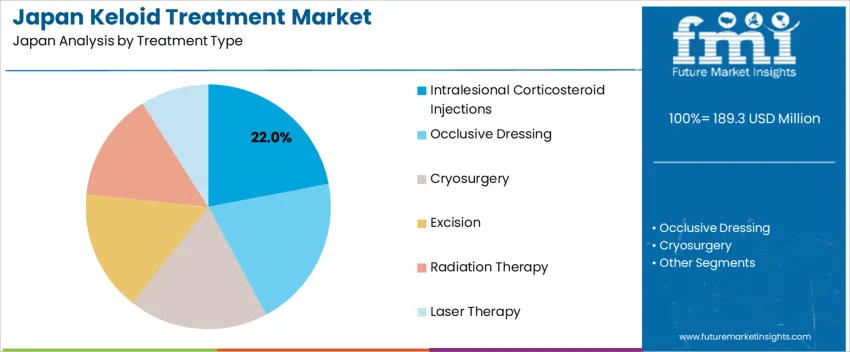
Intralesional corticosteroid injections account for 22% of the demand for keloid treatment in Japan, driven by their effectiveness in reducing inflammation, preventing further keloid growth, and flattening existing scars. These injections are commonly used as the first line of treatment for keloids due to their ability to control the overproduction of collagen that causes the formation of keloids. The procedure is relatively simple, minimally invasive, and well-tolerated by patients, making it a popular choice among both patients and healthcare providers. Corticosteroid injections are cost-effective compared to other treatments and are typically used in conjunction with other therapies, such as excision or laser therapy, to enhance results. As awareness of effective keloid treatments increases, intralesional corticosteroid injections are expected to remain a leading choice in Japan for managing keloid scars.
Why Do Hospitals Lead the Demand for Keloid Treatment in Japan?
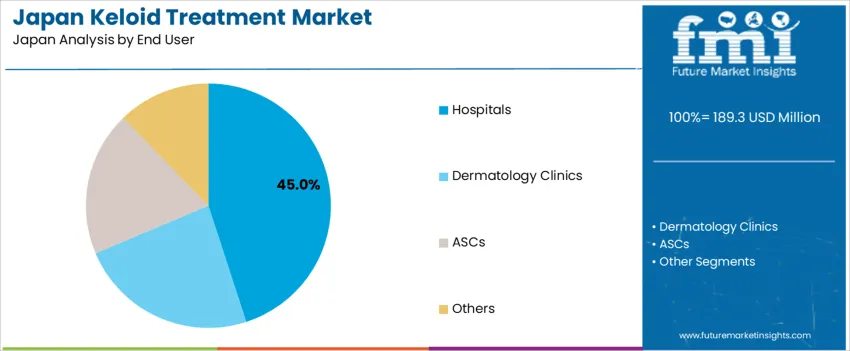
Hospitals account for 45% of the demand for keloid treatment in Japan, driven by their central role in providing specialized care and advanced treatment options for patients with severe or complicated keloid scars. Hospitals typically have access to a wider range of treatment modalities, such as intralesional corticosteroid injections, cryosurgery, and excision, which are often required for larger or more persistent keloids. In addition, hospitals offer comprehensive care, including post-treatment follow-ups and management of potential complications, which makes them a preferred setting for individuals seeking more intensive treatment. Japan’s aging population, along with an increasing number of patients seeking keloid treatments due to cosmetic concerns, contributes to the strong demand for hospital-based keloid care. As keloid treatment options continue to improve, hospitals will remain the dominant end user for keloid treatments in Japan.
What are the Key Trends, Drivers, and Restraints in Demand for Keloid Treatment in Japan?
Demand for keloid treatment in Japan is increasing as more people particularly young individuals and women are affected by keloids and seek medical help. Although the overall incidence is relatively low, clinical data shows that many patients visit specialized scar and plastic-surgery clinics. Rising awareness of the negative impacts of keloids-discomfort, itching, pain, cosmetic issues, and psychological distress encourages more patients to seek treatment rather than ignore the condition. Improved diagnostic clarity and the availability of a range of treatment options (topical therapy, tape/plaster, injections, surgery, etc.) also support demand. The variable efficacy of treatments, recurrence risk, and the long-term commitment required for conservative therapies act as restraints to broader uptake.
Why is Demand for Keloid Treatment Growing in Japan?
Demand is growing because keloids can significantly impact quality of life, causing both physical discomfort (pain, itch, stiffness) and psychosocial distress, especially when scars appear in visible areas. As awareness of these impacts increases among both patients and physicians, more people are opting for professional treatment instead of ineffective home remedies. Societal changes that reduce stigma around seeking dermatologic or cosmetic care make patients more willing to visit clinics. The availability of multiple therapeutic approaches (conservative, noninvasive, surgical) means patients with varying scar severity and preferences have more options, making treatment more accessible.
How are Technological & Industry Innovations Driving Keloid Treatment Demand in Japan?
Advances in treatment methods and improved clinical protocols have made keloid care more effective and acceptable. Conservative treatments such as steroid‑impregnated tape/plaster are widely used in Japan as first‑line therapy and have shown effectiveness at flattening and softening scars over months of continuous use. Newer options including laser therapy, cryosurgery, improved surgical techniques, and better postoperative scar‑management (compression garments, silicone sheets) give patients alternatives if conservative therapy fails. Increased clinical guidelines and diagnostic tools help standardize diagnosis and treatment planning, raising confidence among clinicians and patients in seeking keloid treatments.
What are the Key Challenges and Risks That Could Limit Keloid Treatment in Japan?
Despite advances, several challenges persist that may limit demand or effectiveness. First, while treatments exist, none guarantee a permanent cure: recurrence rates remain high, especially for severe or large keloids, making long‑term outcomes uncertain. Second, many treatments (tapes, plasters, injections, compressive therapy) require long-term, consistent application or follow-up, which can deter patients unwilling or unable to commit. Third, some therapies have side effects (skin thinning, pigmentation changes, discomfort, risk of recurrence) or may not suit all scar locations or skin types. Lastly, social or cultural factors may prevent some individuals from seeking treatment, particularly for mild cases or scars in less visible areas.
What is the Regional Demand Outlook for Keloid Treatment in Japan?
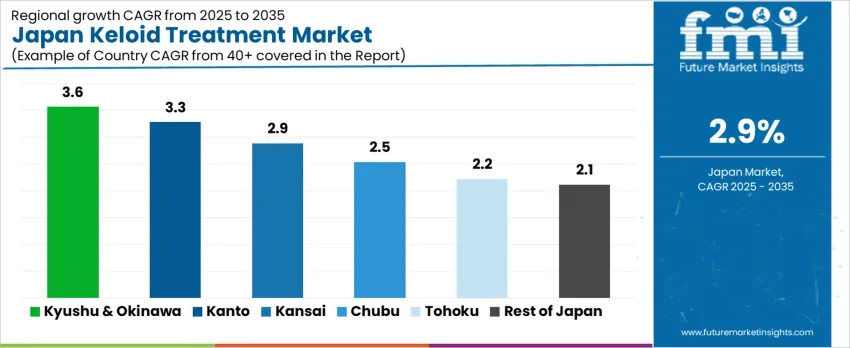
| Region | CAGR (%) |
|---|---|
| Kyushu & Okinawa | 3.6% |
| Kanto | 3.3% |
| Kansai | 2.9% |
| Chubu | 2.5% |
| Tohoku | 2.2% |
| Rest of Japan | 2.1% |
Demand for keloid treatment in Japan is steadily growing, with Kyushu & Okinawa leading at a 3.6% CAGR, driven by an emphasis on wellness and skincare. Kanto follows with a 3.3% CAGR, supported by its urban population and advanced healthcare services. Kansai shows a 2.9% CAGR, fueled by a growing focus on both medical and cosmetic dermatology. Chubu experiences a 2.5% CAGR, driven by increasing interest in aesthetic treatments and healthcare advancements. Tohoku and the Rest of Japan show moderate growth at 2.2% and 2.1%, respectively, with steady adoption in rural and suburban areas. As awareness of skin health and scar management increases, demand for keloid treatment will continue to grow across Japan.
How is Demand for Keloid Treatment Growing in Kyushu & Okinawa?
Kyushu & Okinawa shows the highest demand for keloid treatment, growing at a 3.6% CAGR. The region’s increasing focus on women’s health, combined with growing awareness of scar and skin care, drives the demand for treatments for keloids caused by surgeries, injuries, or acne. As the population ages and more people seek aesthetic solutions, especially for scars that affect personal appearance, demand continues to rise. Okinawa’s growing tourism industry also plays a role, as tourists seek treatments for both cosmetic improvements and skin care. The availability of both surgical and non-surgical treatment options, including topical treatments, laser therapies, and silicone sheets, further supports the demand for keloid management. As more residents and tourists seek solutions for improved skin health, Kyushu & Okinawa’s demand for keloid treatments is expected to remain strong and continue to grow steadily.
Why is Demand for Keloid Treatment Rising in Kanto?
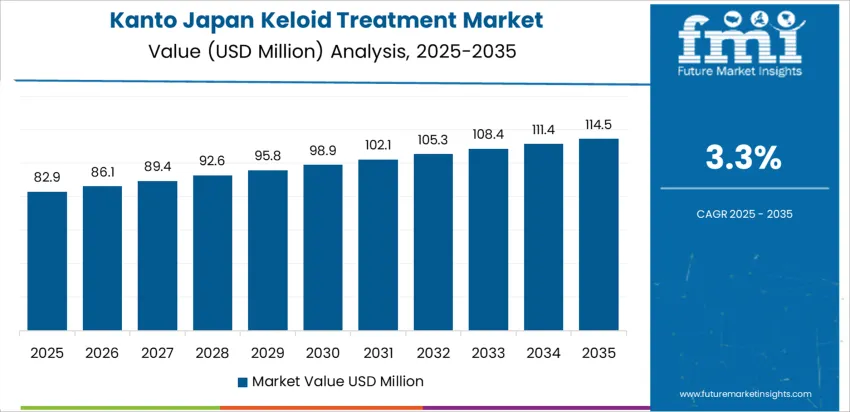
Kanto is experiencing steady demand for keloid treatment, with a 3.3% CAGR. The region’s urban population, particularly in Tokyo, increasingly seeks solutions for keloids resulting from scars caused by injuries, surgeries, or acne. Rising awareness about skin care, coupled with growing interest in aesthetic treatments, has led to an uptick in demand for effective scar treatments. Kanto’s advanced healthcare infrastructure and high access to dermatological services make it easier for individuals to seek professional help. The growing focus on self-care, appearance, and the increasing availability of treatment options, such as laser therapy and corticosteroid injections, contribute to the steady growth of keloid treatment demand in the region. As people prioritize comfort and appearance, Kanto’s demand for keloid treatments is expected to continue growing.
How is Demand for Keloid Treatment Expanding in Kansai?
Kansai is seeing steady demand for keloid treatment, with a 2.9% CAGR. The region’s interest in both medical and cosmetic dermatology drives demand for solutions to manage keloids, especially in cities like Osaka and Kyoto. As the aging population grows and more individuals experience surgeries, trauma, or acne, the need for effective treatments increases. Kansai’s focus on beauty and self-care further encourages the adoption of non-invasive treatments such as silicone gels, laser therapies, and corticosteroid injections. The region’s healthcare infrastructure and innovative dermatology services ensure easy access to these treatments. With more Kansai residents becoming aware of skin health and scar management, the demand for keloid treatments is expected to continue to grow, particularly as cosmetic concerns remain a key driver of adoption.
Why is Demand for Keloid Treatment Growing in Chubu?
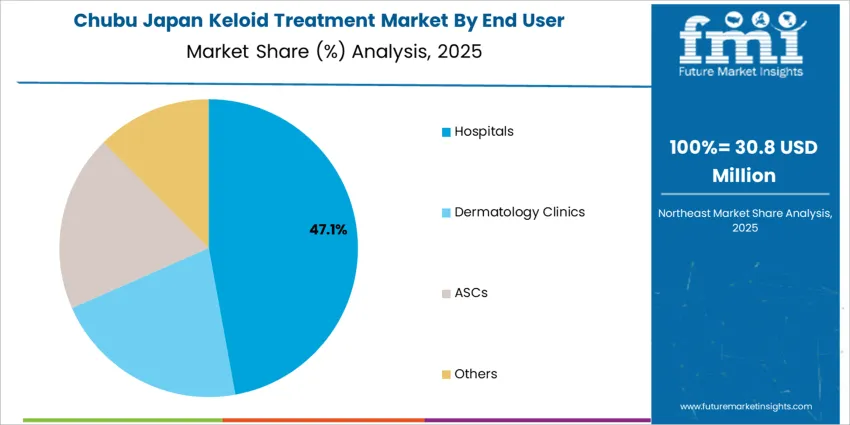
Chubu is experiencing steady demand for keloid treatment, growing at a 2.5% CAGR. The region’s increasing focus on aesthetic treatments and expanding healthcare infrastructure are key contributors to the rising demand for keloid treatments. As the population ages, more individuals seek treatments for scars resulting from surgeries, accidents, or acne. Chubu’s growing interest in cosmetic and dermatological services drives the adoption of treatments such as silicone sheets, laser therapy, and steroid injections. With more people looking for non-invasive solutions to improve the appearance of scars, the demand for keloid treatments continues to rise steadily. Chubu’s strong emphasis on wellness and skincare, combined with increasing awareness of effective scar management solutions, ensures that the demand for keloid treatments remains consistent in the region.
How is Demand for Keloid Treatment Expanding in Tohoku?
Tohoku is seeing moderate demand for keloid treatment, with a 2.2% CAGR. While demand is smaller compared to urbanized regions, there is steady growth as more individuals seek treatments for keloids caused by surgeries, injuries, or acne. As Tohoku’s healthcare infrastructure improves and more residents gain access to dermatological services, demand for keloid treatment is rising. With a growing focus on improving healthcare access and raising awareness of scar management, Tohoku’s population is becoming more proactive in seeking treatment for keloids. Non-surgical options such as topical creams, laser therapy, and corticosteroid injections are gaining traction in the region. Though growth is slower than in major urban centers, the steady rise in demand reflects broader national trends toward greater awareness of skin health and scar management.
Why is Demand for Keloid Treatment Steady in the Rest of Japan?
The Rest of Japan is experiencing steady demand for keloid treatment, growing at a 2.1% CAGR. Although demand is smaller in rural areas compared to major urban regions, there is consistent growth as more individuals in these areas become aware of the benefits of scar treatment. As access to healthcare improves, more people are seeking non-invasive treatments for keloids, such as silicone sheets, laser therapy, and topical treatments. The rising focus on skin health and appearance is contributing to the gradual adoption of these treatments. Local tourism and the rise of smaller guesthouses in suburban areas also drive the demand for cosmetic services, including keloid treatments. As people in the Rest of Japan become more health-conscious, demand for keloid treatments is expected to grow steadily, though at a slower pace.
What is the Competitive Landscape of Keloid Treatment Demand in Japan?
Demand for keloid treatment in Japan is growing, driven by increasing awareness of the impact of keloids on patients' appearance and quality of life. Keloids are a common condition, particularly in individuals with a genetic predisposition, with onset often occurring during puberty. The demand for effective therapies to reduce keloid formation, prevent recurrence, and improve cosmetic outcomes is strong. The growing number of patients seeking both medical and aesthetic solutions for scar management is helping to drive the industry.
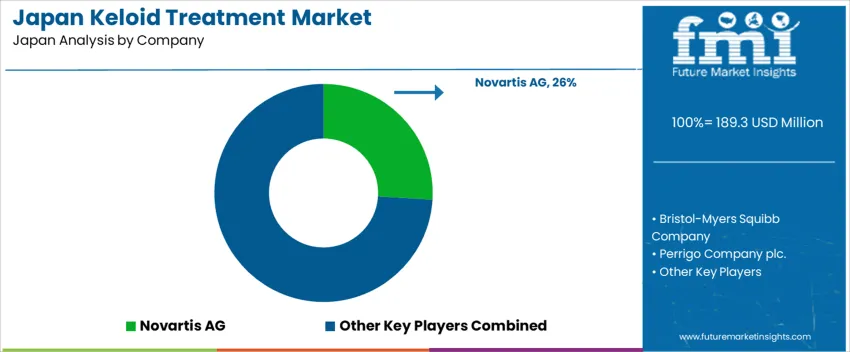
Key players in the keloid treatment industry in Japan include Novartis AG, Bristol-Myers Squibb Company, Perrigo Company plc., Sensus Healthcare, and RXi Pharmaceuticals, Inc. Novartis AG holds a leading industry share of 26.0%, offering a range of treatments, including pharmacological therapies and topical solutions. Other companies such as Bristol-Myers Squibb, Perrigo, and Sensus Healthcare also play a significant role by providing alternative therapies such as laser treatments, corticosteroid injections, and innovative drug formulations aimed at preventing excessive scar tissue formation and reducing the appearance of keloids.
The growth in the keloid treatment industry is driven by factors such as the genetic predisposition of Japanese and other Asian populations to keloid formation and the increasing demand for minimally invasive treatments. Patients are increasingly seeking non-surgical options that offer effective scar reduction with fewer risks and shorter recovery times. The growing focus on aesthetic improvement and overall quality of life motivates patients to seek out ongoing treatments, expanding the industry and intensifying competition among providers. Companies differentiate themselves by offering a combination of effective therapies, minimal side effects, and cost‑effective treatment options.
Key Players in Japan Keloid Treatment Demand
- Novartis AG
- Bristol-Myers Squibb Company
- Perrigo Company plc.
- Sensus Healthcare
- RXi Pharmaceuticals, Inc.
Scope of Report
| Items | Values |
|---|---|
| Quantitative Units (2025) | USD million |
| Treatment Type | Intralesional Corticosteroid Injections, Occlusive Dressing, Cryosurgery, Excision, Radiation Therapy, Laser Therapy |
| End User | Hospitals, Dermatology Clinics, ASCs, Others |
| Region | Kyushu & Okinawa, Kanto, Kansai, Chubu, Tohoku, Rest of Japan |
| Countries Covered | Japan |
| Key Companies Profiled | Novartis AG, Bristol-Myers Squibb Company, Perrigo Company plc., Sensus Healthcare, RXi Pharmaceuticals, Inc. |
| Additional Attributes | Dollar sales by treatment type and end-user; regional CAGR and adoption trends; advancements in keloid treatment therapies; increasing use of minimally invasive techniques; growing demand for personalized keloid therapies |
Japan Keloid Treatment Demand by Key Segments
Treatment Type
- Intralesional Corticosteroid Injections
- Occlusive Dressing
- Cryosurgery
- Excision
- Radiation Therapy
- Laser Therapy
End User
- Hospitals
- Dermatology Clinics
- ASCs
- Others
Region
- Kyushu & Okinawa
- Kanto
- Kansai
- Chubu
- Tohoku
- Rest of Japan
Bibliography
- Japanese Dermatological Association. (2023). Clinical guidelines for diagnosis and treatment of keloids and hypertrophic scars in Japan. Japanese Dermatological Association Clinical Practice Publications.
- Ministry of Health, Labour and Welfare Japan. (2023). National healthcare utilization statistics for dermatology and scar management services. MHLW Healthcare Statistics Reports.
- Novartis AG. (2023). Corticosteroid based therapies and clinical applications in scar and keloid management. Novartis Medical Affairs Publications.
- Sensus Healthcare. (2023). Laser based dermatological treatments for keloid and hypertrophic scar reduction. Sensus Healthcare Clinical Technology White Papers.
Frequently Asked Questions
How big is the demand for keloid treatment in Japan in 2025?
The demand for keloid treatment in Japan is estimated to be valued at USD 189.3 million in 2025.
What will be the size of keloid treatment in Japan in 2035?
The market size for the keloid treatment in Japan is projected to reach USD 250.7 million by 2035.
How much will be the demand for keloid treatment in Japan growth between 2025 and 2035?
The demand for keloid treatment in Japan is expected to grow at a 2.9% CAGR between 2025 and 2035.
What are the key product types in the keloid treatment in Japan?
The key product types in keloid treatment in Japan are intralesional corticosteroid injections, occlusive dressing, cryosurgery, excision, radiation therapy and laser therapy.
Which end user segment is expected to contribute significant share in the keloid treatment in Japan in 2025?
In terms of end user, hospitals segment is expected to command 45.0% share in the keloid treatment in Japan in 2025.
Preview the report firsthand - request a free sample
Get SampleGet the brochure for pricing and purchase details.
Get PDFTable of Content
- Executive Summary
- Japan Market Outlook
- Demand-side Trends
- Supply-side Trends
- Technology Roadmap Analysis
- Analysis and Recommendations
- Market Overview
- Market Coverage / Taxonomy
- Market Definition / Scope / Limitations
- Market Background
- Market Dynamics
- Drivers
- Restraints
- Opportunity
- Trends
- Scenario Forecast
- Demand in Optimistic Scenario
- Demand in Likely Scenario
- Demand in Conservative Scenario
- Opportunity Map Analysis
- Product Life Cycle Analysis
- Supply Chain Analysis
- Investment Feasibility Matrix
- Value Chain Analysis
- PESTLE and Porter’s Analysis
- Regulatory Landscape
- Regional Parent Market Outlook
- Production and Consumption Statistics
- Import and Export Statistics
- Market Dynamics
- Japan Market Analysis 2020 to 2024 and Forecast, 2025 to 2035
- Historical Market Size Value (USD Million) Analysis, 2020 to 2024
- Current and Future Market Size Value (USD Million) Projections, 2025 to 2035
- Y-o-Y Growth Trend Analysis
- Absolute $ Opportunity Analysis
- Japan Market Pricing Analysis 2020 to 2024 and Forecast 2025 to 2035
- Japan Market Analysis 2020 to 2024 and Forecast 2025 to 2035, By Treatment Type
- Introduction / Key Findings
- Historical Market Size Value (USD Million) Analysis By Treatment Type , 2020 to 2024
- Current and Future Market Size Value (USD Million) Analysis and Forecast By Treatment Type , 2025 to 2035
- Intralesional Corticosteroid Injections
- Occlusive Dressing
- Cryosurgery
- Excision
- Radiation Therapy
- Laser Therapy
- Y-o-Y Growth Trend Analysis By Treatment Type , 2020 to 2024
- Absolute $ Opportunity Analysis By Treatment Type , 2025 to 2035
- Japan Market Analysis 2020 to 2024 and Forecast 2025 to 2035, By End User
- Introduction / Key Findings
- Historical Market Size Value (USD Million) Analysis By End User, 2020 to 2024
- Current and Future Market Size Value (USD Million) Analysis and Forecast By End User, 2025 to 2035
- Hospitals
- Dermatology Clinics
- ASCs
- Others
- Y-o-Y Growth Trend Analysis By End User, 2020 to 2024
- Absolute $ Opportunity Analysis By End User, 2025 to 2035
- Market Structure Analysis
- Competition Dashboard
- Competition Benchmarking
- Market Share Analysis of Top Players
- By Regional
- By Treatment Type
- By End User
- Competition Analysis
- Competition Deep Dive
- Novartis AG
- Overview
- Product Portfolio
- Profitability by Market Segments (Product/Age /Sales Channel/Region)
- Sales Footprint
- Strategy Overview
- Marketing Strategy
- Product Strategy
- Channel Strategy
- Bristol-Myers Squibb Company
- Perrigo Company plc.
- Sensus Healthcare
- RXi Pharmaceuticals, Inc.
- Novartis AG
- Competition Deep Dive
- Assumptions & Acronyms Used
- Research Methodology


