

- Industry Size (2026)
- USD 11.2 Mn
- Forecast (2036)
- USD 18 Mn
- CAGR (2026 to 2036)
- 4.4%
Demand for Erythema Treatment in Japan Forecast and Outlook 2026 to 2036
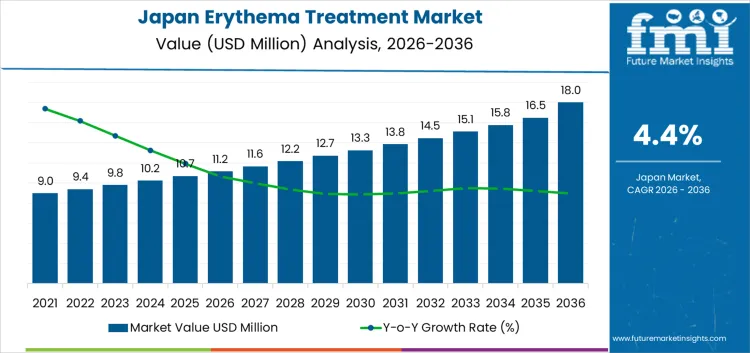
Demand for erythema treatment in Japan is projected to grow from USD 11.2 million in 2026 to USD 18 million by 2036, reflecting a CAGR of 4.4%. This growth is driven by the increasing awareness of skin conditions like sunburn, rosacea, and allergic reactions, as well as the aging population more prone to skin disorders. By drug type, corticosteroids lead with 35% of the demand, followed by antihistamines, antibiotics, and calcineurin inhibitors. Topical treatments dominate with 65% of the demand, as they offer targeted action and fewer side effects compared to oral treatments.
Quick Stats of the Demand for Erythema Treatment in Japan
- Demand for Erythema Treatment in Japan Value (2026): USD 11.2 million
- Demand for Erythema Treatment in Japan Forecast Value (2036): USD 18 million
- Demand for Erythema Treatment in Japan Forecast CAGR (2026-2036): 4.4%
- Demand for Erythema Treatment in Japan Leading Drug Type: Corticosteroids
- Demand for Erythema Treatment in Japan Key Growth Regions: Kyushu & Okinawa, Kanto, Kansai, Chubu, Tohoku, Rest of Japan
- Demand for Erythema Treatment in Japan Top Players: Pfizer Inc., Novartis AG, GlaxoSmithKline plc (GSK), AbbVie Inc., Bausch Health Companies Inc.
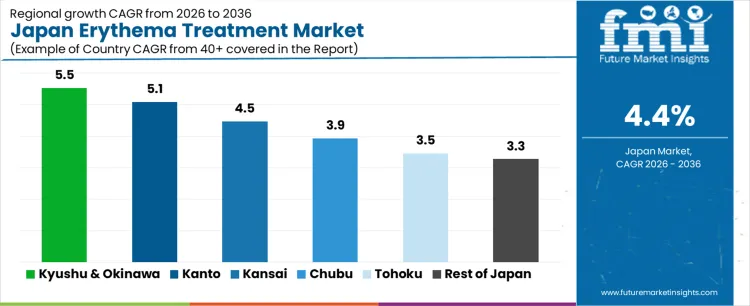
Kyushu & Okinawa leads with a 5.5% CAGR, driven by strong healthcare infrastructure and increased awareness of dermatological care. Kanto follows with a 5.1% CAGR, supported by its large urban population and advanced medical facilities. Kansai shows a 4.5% CAGR, fueled by its aging population and growing focus on dermatological care. Chubu and Tohoku experience moderate growth at 3.9% and 3.5% CAGR, respectively, as dermatology services expand. The rest of Japan shows steady growth at 3.3%, with increasing adoption of erythema treatments in rural areas. Major players like Pfizer, Novartis, and GSK are driving innovation with targeted therapies, ensuring a robust industry expansion.
Demand for Erythema Treatment in Japan Key Takeaways
| Metric | Value |
|---|---|
| Demand for Erythema Treatment in Japan Value (2026) | USD 11.2 million |
| Demand for Erythema Treatment in Japan Forecast Value (2036) | USD 18 million |
| Demand for Erythema Treatment in Japan Forecast CAGR (2026-2036) | 4.4% |
Why is the Demand for Erythema Treatment in Japan Growing?
The demand for erythema treatment in Japan is growing due to the increasing awareness of skin conditions that cause redness and inflammation, such as sunburn, acne, and allergic reactions. Erythema, characterized by redness of the skin caused by increased blood flow, is a common symptom of various dermatological conditions. The rising focus on skincare, alongside the growing demand for effective treatments to address inflammatory skin issues, is driving the need for erythema therapies. Japan’s aging population, which is more prone to skin disorders, contributes to the growing demand for these treatments.
Key drivers for this growth include the increasing number of individuals seeking treatments for skin irritation and redness, particularly in a country where aesthetics and skincare are highly valued. The availability of both over-the-counter and prescription treatments, such as topical corticosteroids and innovative biologics, is improving access to effective erythema treatments. Furthermore, the growing awareness of the harmful effects of UV exposure is leading to a rise in demand for erythema treatments for conditions like sunburn, which can cause temporary or chronic skin irritation.
What is the Segment-Wise Analysis of Demand for Erythema Treatment in Japan?
Demand for erythema treatment in Japan is segmented by drug type, route of administration, and region. By drug type, corticosteroids lead with 35% of the demand, followed by antihistamines, antibiotics, and calcineurin inhibitors. In terms of route of administration, topical treatments account for 65% of the demand, with oral treatments making up the remainder. Regionally, demand is distributed across Kyushu & Okinawa, Kanto, Kansai, Chubu, Tohoku, and the rest of Japan.
Why Do Corticosteroids Lead the Demand for Erythema Treatment in Japan?
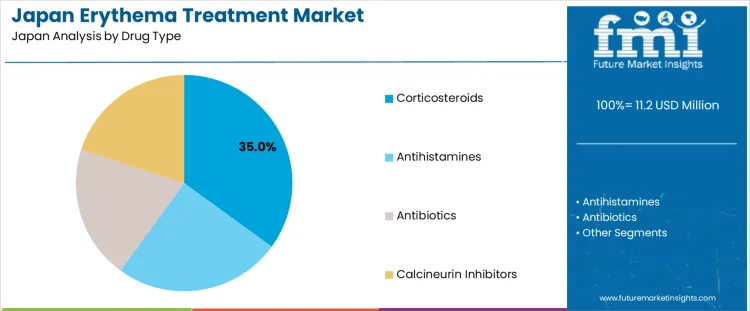
Corticosteroids account for 35% of the demand for erythema treatment in Japan, driven by their proven effectiveness in reducing inflammation and redness. As a first-line treatment, corticosteroids provide fast relief from the swelling, itching, and irritation caused by erythema. Their ability to target inflammation locally while controlling flare-ups makes them the preferred choice for healthcare providers. As awareness of skin health grows and the need for efficient treatments increases, corticosteroids remain a dominant option in the management of erythema. Their availability and proven efficacy for treating various skin conditions further support their strong position in the industry, ensuring they continue to be widely used across Japan.
How Does Topical Administration Drive the Demand for Erythema Treatment in Japan?
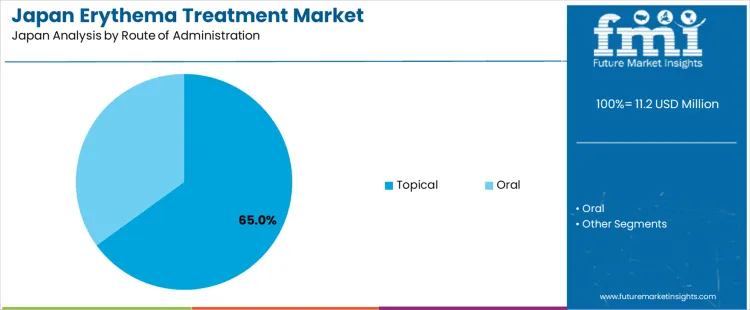
Topical administration accounts for 65% of the demand for erythema treatment in Japan, due to its targeted action on affected areas of the skin. Treatments like corticosteroids and calcineurin inhibitors, applied topically, provide effective relief from erythema symptoms without the systemic side effects of oral medications. This method of treatment offers quick and focused results, making it highly preferred by both patients and healthcare providers. The growing preference for non-invasive, easy-to-apply treatments has boosted the demand for topical options in managing skin conditions like erythema. As the focus on skin health and effective, convenient treatments increases, topical administration remains the leading method for treating erythema in Japan.
What are the Key Trends, Drivers and Restraints in Demand for Erythema Treatment in Japan?
Demand for erythema treatment in Japan is increasing as awareness of skin health grows alongside interest in dermatology and cosmetic care. Erythema, or persistent skin redness, is associated with conditions like rosacea, dermatitis, UV damage, and irritation. Trends include a rise in dermatology consultations, use of anti‑inflammatory topical agents, and interest in laser/light‑based therapies. Drivers include an aging population with more sensitive skin and heightened consumer focus on complexion and aesthetics.
Why is Demand for Erythema Treatment Growing in Japan?
Demand for erythema treatment in Japan is growing because more people are seeking effective solutions for visible redness linked to rosacea, eczema and environmental stressors. Japanese consumers place strong value on clear, even‑toned skin, and redness can be perceived as a cosmetic and social concern. Regular exposure to UV radiation and urban pollution contributes to skin irritation, prompting more frequent dermatologic visits. Aging skin’s reduced barrier function also increases susceptibility to redness. Increased availability of diagnostic services, teledermatology, and consumer education about skin conditions further encourage individuals to seek professional treatment rather than self‑manage redness.
How are Technological and Industry Innovations Driving Erythema Treatment Demand in Japan?
Technological and clinical innovations are driving demand for erythema treatment in Japan by improving diagnostic precision and therapeutic outcomes. Advanced imaging tools and digital skin analysis systems help clinicians objectively assess redness severity and monitor treatment response. Laser and intense pulsed light (IPL) therapies have become more accessible, offering targeted reduction of visible blood vessels and diffuse redness with minimal downtime. Innovations in topical drug formulations, such as stabilized anti‑inflammatory agents, barrier repair creams, and combinations tailored to sensitive skin, provide additional non‑invasive options. Telehealth and mobile dermatology platforms also expand access to specialist care, increasing treatment uptake.
What is the Regional Demand Outlook for Erythema Treatment in Japan?
| Region | CAGR (%) |
|---|---|
| Kyushu & Okinawa | 5.5% |
| Kanto | 5.1% |
| Kansai | 4.5% |
| Chubu | 3.9% |
| Tohoku | 3.5% |
| Rest of Japan | 3.3% |
Demand for erythema treatment in Japan is growing steadily, with Kyushu & Okinawa leading at a 5.5% CAGR, driven by the region’s increasing healthcare infrastructure and focus on dermatological care. Kanto follows with a 5.1% CAGR, supported by its large urban population and advanced medical facilities. Kansai shows a 4.5% CAGR, fueled by the region’s emphasis on wellness and aging population. Chubu experiences a 3.9% CAGR, with steady growth driven by its expanding healthcare services and rising awareness of erythema. Tohoku and the rest of Japan see moderate growth at 3.5% and 3.3% CAGR, respectively, as access to dermatological care expands in rural areas.
How is Demand for Erythema Treatment Growing in Kyushu & Okinawa?
Kyushu & Okinawa leads the demand for erythema treatment in Japan, growing at a 5.5% CAGR. The region's focus on healthcare improvements and an increasing awareness of dermatological conditions is driving the adoption of treatments for erythema. Kyushu, particularly in cities like Fukuoka, has a growing dermatology sector that is enhancing the diagnosis and management of skin conditions. Okinawa’s warm climate and tourism industry are also factors influencing the demand for skin treatments, as tourists and locals alike seek remedies for erythema and other skin irritations caused by sun exposure. As dermatological services continue to improve in the region and more patients seek treatment for erythema, the demand for therapeutic solutions is expected to rise steadily, contributing to the region's overall healthcare development.
Why is Demand for Erythema Treatment Rising in Kanto?
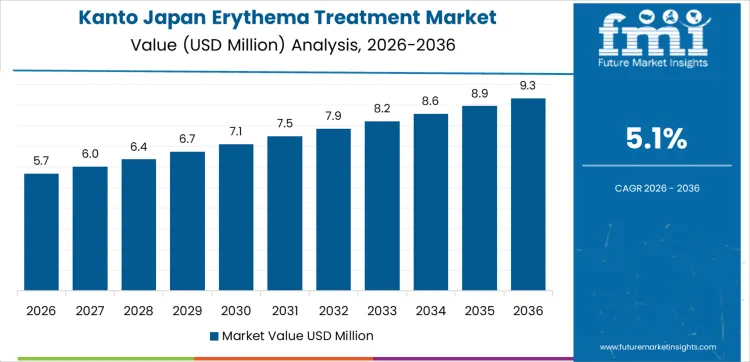
Kanto is experiencing steady demand for erythema treatment, with a 5.1% CAGR. As Japan’s largest urban region, particularly Tokyo, Kanto is seeing a rising number of individuals seeking treatment for erythema, driven by increased awareness of skin health and access to advanced medical services. The region’s strong healthcare infrastructure, including specialized dermatology clinics and hospitals, is contributing to the growing availability of erythema treatment options. The increase in cosmetic dermatology and aesthetic procedures in Kanto also plays a role in raising awareness about erythema and other skin conditions. With a large urban population exposed to environmental stressors like air pollution and sun exposure, demand for erythema treatments in Kanto is expected to continue growing, fueled by an expanding focus on skin health and wellness.
How is Demand for Erythema Treatment Expanding in Kansai?
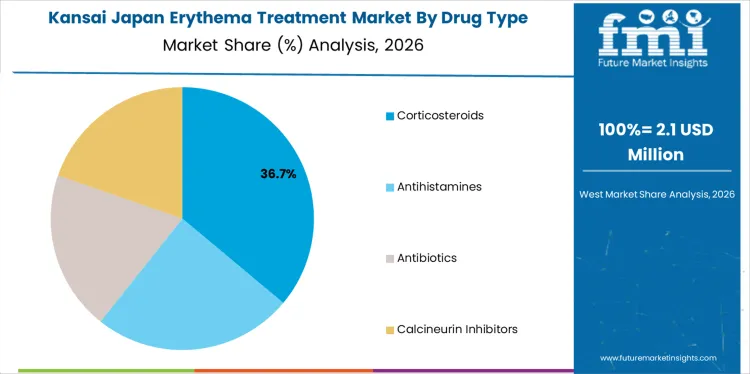
Kansai is seeing moderate demand for erythema treatment, growing at a 4.5% CAGR. The region’s well-developed healthcare infrastructure, particularly in cities like Osaka and Kyoto, is driving the increasing demand for erythema treatments. Kansai’s strong emphasis on public health and wellness, combined with an active lifestyle in urban areas, is contributing to the rising number of individuals seeking dermatological solutions for erythema. The region’s aging population, coupled with the increasing incidence of skin conditions associated with aging, is further fueling the need for erythema treatments. As Kansai continues to prioritize dermatology and skincare, the demand for erythema treatment will likely rise, particularly with the expansion of specialized services and the growing awareness of skin health in the region.
How is Demand for Erythema Treatment Growing in Chubu?
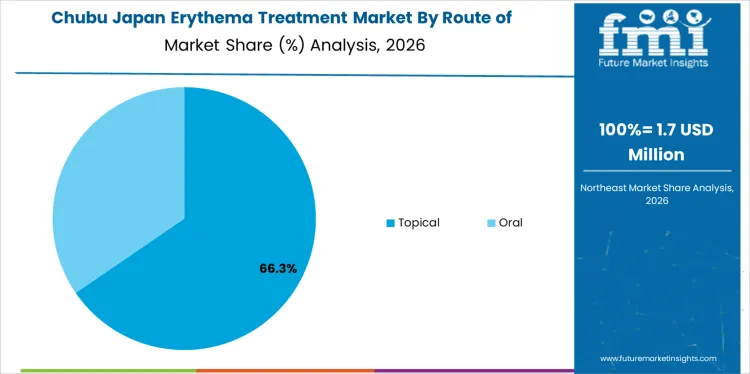
Chubu is experiencing moderate demand for erythema treatment, with a 3.9% CAGR. The region’s healthcare sector is expanding, with a growing focus on dermatological care and the treatment of skin conditions such as erythema. Chubu, particularly in cities like Nagoya, is increasingly seeing a rise in the number of dermatology clinics and healthcare services available to the public. As awareness of erythema and other skin issues grows, more patients are seeking treatments for skin redness and irritation. The region’s climate and increasing outdoor activities are contributing to the rise in erythema cases, leading to greater demand for effective treatments. With the healthcare sector’s continued expansion and an increased focus on skin health, Chubu will see steady growth in demand for erythema treatment over the coming years.
How is Demand for Erythema Treatment Growing in Tohoku?
Tohoku is seeing moderate demand for erythema treatment, growing at a 3.5% CAGR. While Tohoku’s healthcare infrastructure is less concentrated than in more urbanized regions, the increasing awareness of skin conditions such as erythema is contributing to a gradual rise in demand for treatment options. The region’s aging population is a key driver of this demand, as older individuals are more likely to suffer from skin irritation and redness due to environmental factors and age-related conditions. As Tohoku’s healthcare services improve and dermatological care becomes more accessible, more patients are seeking erythema treatment, contributing to steady growth. As skin health becomes a more prominent concern in the region, the need for effective erythema therapies will continue to rise.
How is Demand for Erythema Treatment Growing in Rest of Japan?
The rest of Japan is experiencing moderate demand for erythema treatment, with a 3.3% CAGR. While demand is not as concentrated in major urban areas, smaller cities and rural regions are seeing a gradual increase in the need for dermatological care, including treatments for erythema. As awareness of skin conditions continues to grow across the country, more patients in these areas are seeking effective treatment options. The region’s healthcare providers are focusing more on expanding dermatology services, ensuring that patients in rural areas have access to the necessary care. With the rise in outdoor activities and an aging population in rural regions, the demand for erythema treatment in the rest of Japan is expected to increase steadily as more individuals seek solutions for skin health issues.
What is the Competitive Landscape of Erythema Treatment in Japan?
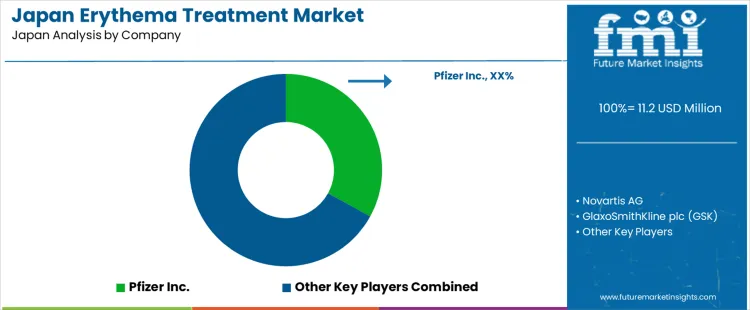
Demand for erythema treatment in Japan is growing as more individuals seek effective solutions for managing skin redness and irritation caused by a variety of conditions, such as sunburn, rosacea, allergic reactions, and drug-induced skin eruptions. As Japan's skincare industry continues to evolve, consumers are looking for advanced treatments that offer both immediate relief and long-term improvement in skin health, driving the demand for topical therapies, creams, and oral medications.
Pfizer Inc. is a leading player in the erythema treatment industry, offering a range of dermatological solutions designed to address skin inflammation and redness. The company’s strategy focuses on providing innovative, targeted treatments that meet the needs of individuals suffering from erythema-related conditions. Pfizer’s strong industry presence is reinforced by its comprehensive research and development efforts in dermatology.
Novartis AG offers specialized treatments for inflammatory skin conditions, including erythema, leveraging its expertise in immunology and dermatology. GSK provides a range of topical treatments aimed at reducing redness and irritation, focusing on effective, gentle formulations. AbbVie and Bausch Health focus on comprehensive skin health treatments, offering therapies that help manage symptoms of erythema and promote overall skin recovery. As competition increases, these companies continue to innovate with more effective, skin-friendly solutions to meet the growing demand for erythema treatment in Japan.
Key Players in Japan Erythema Treatment Demand
- Pfizer Inc.
- Novartis AG
- GlaxoSmithKline plc (GSK)
- AbbVie Inc.
- Bausch Health Companies Inc.
Scope of Report
| Items | Values |
|---|---|
| Quantitative Units (2026) | USD million |
| Key Segments | Corticosteroids, Antihistamines, Antibiotics, Calcineurin Inhibitors |
| Route of Administration | Topical, Oral |
| Distribution Channel | Online Pharmacies, Hospital Pharmacies, Retail Pharmacies |
| Key Country | Japan |
| Region | Kyushu & Okinawa, Kanto, Kansai, Chubu, Tohoku, Rest of Japan |
| Key Players Profiled | Pfizer Inc., Novartis AG, GlaxoSmithKline plc (GSK), AbbVie Inc., Bausch Health Companies Inc. |
| Additional Attributes | Dollar sales by drug type, route of administration, and distribution channel; regional CAGR and growth trends in erythema treatment demand in Japan |
Japan Erythema Treatment Demand by Key Segments
Drug Type:
- Corticosteroids
- Antihistamines
- Antibiotics
- Calcineurin Inhibitors
Route of Administration:
- Topical
- Oral
Distribution Channel:
- Online Pharmacies
- Hospital Pharmacies
- Retail Pharmacies
Region:
- Kyushu & Okinawa
- Kanto
- Kansai
- Chubu
- Tohoku
- Rest of Japan
Frequently Asked Questions
How big is the demand for erythema treatment in Japan in 2026?
The demand for erythema treatment in Japan is estimated to be valued at USD 11.2 million in 2026.
What will be the size of erythema treatment in Japan in 2036?
The market size for the erythema treatment in Japan is projected to reach USD 18.0 million by 2036.
How much will be the demand for erythema treatment in Japan growth between 2026 and 2036?
The demand for erythema treatment in Japan is expected to grow at a 4.4% CAGR between 2026 and 2036.
What are the key product types in the erythema treatment in Japan?
The key product types in erythema treatment in Japan are corticosteroids, antihistamines, antibiotics and calcineurin inhibitors.
Which route of administration segment is expected to contribute significant share in the erythema treatment in Japan in 2026?
In terms of route of administration, topical segment is expected to command 65.0% share in the erythema treatment in Japan in 2026.
Preview the report firsthand - request a free sample
Get SampleGet the brochure for pricing and purchase details.
Get PDFTable of Content
- Executive Summary
- Japan Market Outlook
- Demand-side Trends
- Supply-side Trends
- Technology Roadmap Analysis
- Analysis and Recommendations
- Market Overview
- Market Coverage / Taxonomy
- Market Definition / Scope / Limitations
- Market Background
- Market Dynamics
- Drivers
- Restraints
- Opportunity
- Trends
- Scenario Forecast
- Demand in Optimistic Scenario
- Demand in Likely Scenario
- Demand in Conservative Scenario
- Opportunity Map Analysis
- Product Life Cycle Analysis
- Supply Chain Analysis
- Investment Feasibility Matrix
- Value Chain Analysis
- PESTLE and Porter’s Analysis
- Regulatory Landscape
- Regional Parent Market Outlook
- Production and Consumption Statistics
- Import and Export Statistics
- Market Dynamics
- Japan Market Analysis 2021 to 2025 and Forecast, 2026 to 2036
- Historical Market Size Value (USD Million) Analysis, 2021 to 2025
- Current and Future Market Size Value (USD Million) Projections, 2026 to 2036
- Y-o-Y Growth Trend Analysis
- Absolute $ Opportunity Analysis
- Japan Market Pricing Analysis 2021 to 2025 and Forecast 2026 to 2036
- Japan Market Analysis 2021 to 2025 and Forecast 2026 to 2036, By Drug Type
- Introduction / Key Findings
- Historical Market Size Value (USD Million) Analysis By Drug Type , 2021 to 2025
- Current and Future Market Size Value (USD Million) Analysis and Forecast By Drug Type , 2026 to 2036
- Corticosteroids
- Antihistamines
- Antibiotics
- Calcineurin Inhibitors
- Y-o-Y Growth Trend Analysis By Drug Type , 2021 to 2025
- Absolute $ Opportunity Analysis By Drug Type , 2026 to 2036
- Japan Market Analysis 2021 to 2025 and Forecast 2026 to 2036, By Route of Administration
- Introduction / Key Findings
- Historical Market Size Value (USD Million) Analysis By Route of Administration, 2021 to 2025
- Current and Future Market Size Value (USD Million) Analysis and Forecast By Route of Administration, 2026 to 2036
- Topical
- Oral
- Y-o-Y Growth Trend Analysis By Route of Administration, 2021 to 2025
- Absolute $ Opportunity Analysis By Route of Administration, 2026 to 2036
- Japan Market Analysis 2021 to 2025 and Forecast 2026 to 2036, By Distribution Channel
- Introduction / Key Findings
- Historical Market Size Value (USD Million) Analysis By Distribution Channel, 2021 to 2025
- Current and Future Market Size Value (USD Million) Analysis and Forecast By Distribution Channel, 2026 to 2036
- Online Pharmacies
- Hospital Pharmacies
- Retail Pharmacies
- Y-o-Y Growth Trend Analysis By Distribution Channel, 2021 to 2025
- Absolute $ Opportunity Analysis By Distribution Channel, 2026 to 2036
- Market Structure Analysis
- Competition Dashboard
- Competition Benchmarking
- Market Share Analysis of Top Players
- By Regional
- By Drug Type
- By Route of Administration
- By Distribution Channel
- Competition Analysis
- Competition Deep Dive
- Pfizer Inc.
- Overview
- Product Portfolio
- Profitability by Market Segments (Product/Age /Sales Channel/Region)
- Sales Footprint
- Strategy Overview
- Marketing Strategy
- Product Strategy
- Channel Strategy
- Novartis AG
- GlaxoSmithKline plc (GSK)
- AbbVie Inc.
- Bausch Health Companies Inc.
- Pfizer Inc.
- Competition Deep Dive
- Assumptions & Acronyms Used
- Research Methodology


