

- Industry Size (2025)
- USD 2.6 Bn
- Forecast (2035)
- USD 5.0 Bn
- CAGR (2025 to 2035)
- 6.7%
Demand for Dysmenorrhea Treatment in USA 2025 to 2035
The USA dysmenorrhea treatment demand is valued at USD 2.6 billion in 2025 and is forecasted to reach USD 5.0 billion by 2035, reflecting a CAGR of 6.7%. Rising treatment-seeking behaviour, increased diagnosis of menstrual disorders, and broader access to over-the-counter pain relief options support ongoing growth. Public health campaigns addressing menstrual wellbeing and improved availability of non-prescription therapies also contribute to wider adoption. NSAIDs represent the leading treatment category, as they provide first-line relief from cramping and inflammation. These agents remain widely recommended by healthcare providers due to established clinical efficacy and affordability. Oral contraceptives and hormonal therapies form an additional treatment pathway for patients with recurrent or severe conditions.
Demand is concentrated in West USA, South USA, and Northeast USA. These regions record higher prescription volumes through established women’s health networks and retail pharmacy penetration. Telehealth services and subscription-based medication delivery are expanding accessibility. Top suppliers include Bayer, Pfizer Inc., Johnson & Johnson, Perrigo Company plc, and GlaxoSmithKline plc. Their focus includes product availability across both OTC and prescription channels, support for gynecological guidance, and enhanced consumer awareness of treatment options.
Quick Stats for USA Dysmenorrhea Treatment Demand
- USA Dysmenorrhea Treatment Sales Value (2025): USD 2.6 billion
- USA Dysmenorrhea Treatment Forecast Value (2035): USD 5.0 billion
- USA Dysmenorrhea Treatment Forecast CAGR (2025 to 2035): 6.7%
- Leading Category in USA Dysmenorrhea Treatment Demand: NSAIDs
- Key Growth Regions in USA Dysmenorrhea Treatment Demand: West USA, South USA, Northeast USA
- Top Players in USA Dysmenorrhea Treatment Demand: Bayer; Pfizer Inc.; Johnson & Johnson; Perrigo Company plc; GlaxoSmithKline plc
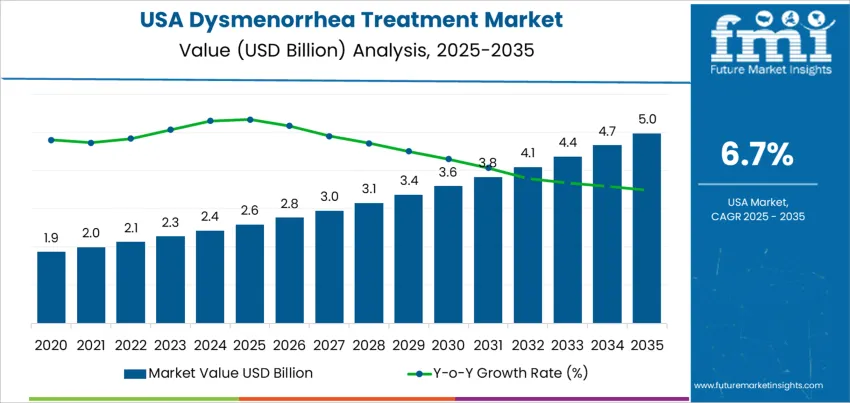
What is the Growth Forecast for Dysmenorrhea Treatment Industry in USA through 2035?
A 10-year growth comparison for demand for dysmenorrhea treatment in the United States shows a steady upward trajectory supported by increased diagnosis and expanding availability of both prescription and over-the-counter therapies. During the early portion of the forecast period, growth is influenced by rising awareness of menstrual health and stronger engagement from younger demographics seeking effective pain management solutions. Broader adoption of telehealth consultations and digital symptom-tracking tools improves access to treatment, contributing to consistent volume gains.
In later years, the rate of growth remains positive but becomes more dependent on innovation rather than new adoption. Extended-release NSAIDs, hormonal therapies, and complementary treatment formats such as heat patches or wearable devices contribute incremental lifts. Stronger alignment of dysmenorrhea treatment with women’s health initiatives in employer and insurance programs strengthens baseline demand. Category maturity and ongoing price competition moderate acceleration. The decade-long comparison underscores reliable progression in the United States. Improvements in clinical guidance, consumer education, and technology-enabled care support measurable expansion year after year while indicating stable, steady growth rather than sharp cyclical changes.
USA Dysmenorrhea Treatment Key Takeaways
| Metric | Value |
|---|---|
| USA Dysmenorrhea Treatment Sales Value (2025) | USD 2.6 billion |
| USA Dysmenorrhea Treatment Forecast Value (2035) | USD 5.0 billion |
| USA Dysmenorrhea Treatment Forecast CAGR (2025 to 2035) | 6.7% |
Why is the Demand for Dysmenorrhea Treatment in the USA Growing?
Demand for dysmenorrhea treatment in the USA is increasing because a large number of women experience monthly pelvic pain that interferes with work, school and daily activity. Primary care physicians and gynecology clinics emphasize early evaluation of menstrual pain, which leads more patients to seek targeted treatment rather than relying only on over the counter medication.
Broader health awareness encourages women to discuss symptoms with clinicians and consider both pharmaceutical and non-pharmaceutical options. NSAIDs remain widely used, while prescriptions for hormonal therapies such as oral contraceptives support cycle regulation and reduced cramping. Expansion of telehealth services improves access to gynecologic consultations in rural and suburban areas, strengthening treatment continuity. Adolescents also receive care earlier due to school based education and parental attention to activity limitations.
Supplement makers and wellness brands introduce products containing magnesium, omega 3s and botanical extracts to appeal to individuals interested in supportive therapies. Heating devices and wearable pain relief tools offer additional non drug choices for daily use. Constraints include cost concerns for specialist visits and branded medications, inconsistent insurance coverage for some treatment types and delayed care among individuals who normalize severe pain. Some patients require diagnostic work to rule out conditions such as endometriosis before selecting long term management.
Which Treatment Types and Dysmenorrhea Types Lead Demand for Dysmenorrhea Treatment in the USA?
Demand for dysmenorrhea treatment in the United States is driven by consistent reliance on OTC medication, rapid-relief pain solutions, and improved access to women’s health services. High awareness of menstrual pain management and greater purchasing involvement by younger consumers support sustained product use. Treatment choices vary by symptom severity and medical consultation patterns, with self-managed care dominating early-stage intervention.
By Treatment Type, NSAIDs Hold the Largest Share
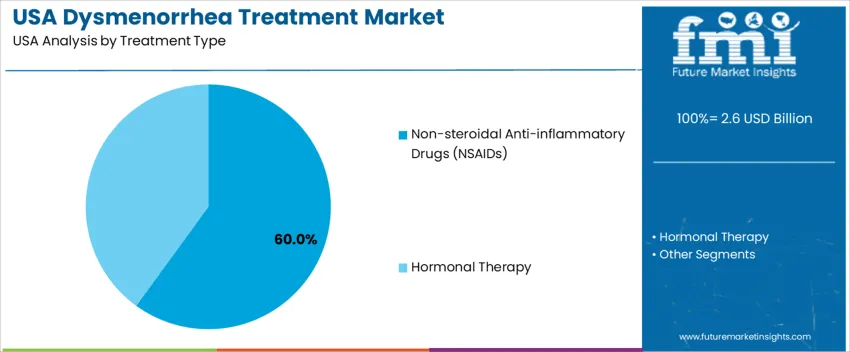
Non-steroidal anti-inflammatory drugs (NSAIDs) account for 60.0%, as they provide rapid relief, broad OTC accessibility, and strong clinical familiarity for menstrual pain management. U.S. consumers prefer ibuprofen and naproxen due to affordability and faster symptom response without requiring physician visits. Hormonal therapy represents the remaining segment share, used when menstrual pain is linked to cycle-related hormonal imbalance. Adoption is more prevalent under gynecological supervision and in patients requiring long-term regulation of menstrual patterns. Insurance coverage and tolerance to therapy influence USAge patterns, while NSAIDs retain first-line status across most age groups.
Key Points:
- NSAIDs dominate due to accessibility and rapid effectiveness
- Hormonal therapy serves regulated and medically-managed pain needs
- OTC purchasing drives high treatment continuity
By Dysmenorrhea Type, Primary Dysmenorrhea Represents the Largest Share
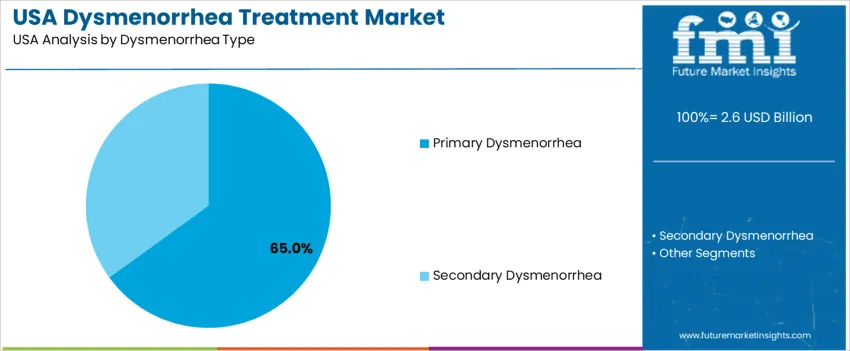
Primary dysmenorrhea holds 65.0%, driven by high prevalence among adolescents and young adults experiencing monthly recurring pain without underlying disorders. Individuals frequently self-treat through pharmacies and retail channels, increasing overall consumption. Secondary dysmenorrhea accounts for the remainder and is associated with conditions such as endometriosis or fibroids requiring clinical diagnosis. This segment shows higher medical intervention rates, including advanced therapies with structured follow-ups. Increased awareness of menstrual disorders and earlier diagnostic approaches are gradually shaping treatment uptake, though primary cases continue to dominate due to broader incidence.
Key Points:
- Primary dysmenorrhea accounts for widespread recurrent pain cases
- Secondary cases require condition-specific diagnosis and treatment
- Young demographics sustain leading demand contribution
What are the Drivers, Restraints, and Key Trends of the Demand for Dysmenorrhea Treatment in the USA?
Growth in telehealth gynecology access, rising diagnosis among younger women and increased workplace productivity concerns are driving demand.
In the United States, dysmenorrhea treatment demand rises as primary care providers and OB GYN specialists address menstrual pain more proactively through regular checkups and virtual consultations. Employers and colleges promote menstrual health support to reduce absenteeism and maintain performance, especially in service and office industries with high female participation. Over the counter analgesics and heating therapies remain widely used, while prescription treatments such as NSAIDs and hormonal contraceptives support more severe or recurrent cases. Awareness campaigns encourage women to seek diagnosis for underlying causes like endometriosis, increasing referrals to gynecologic specialists. Retail pharmacies and digital platforms enhance access to pain management products for home use, supporting consistent purchasing across age groups.
Costs for advanced therapies, limited awareness of chronic symptoms and emotional hesitation to seek gynecologic care restrain demand.
Some women manage pain independently without consulting physicians, which delays diagnosis of secondary dysmenorrhea and reduces uptake of targeted therapies. Insurance coverage for specialist visits and long acting hormonal methods requires copayments that may discourage consistent care. Cultural discomfort discussing pelvic pain leads some patients to normalize severe symptoms and avoid medical evaluation. Treatment adherence may be interrupted when side effects occur, reducing steady demand for prescription options. These behavioral and financial influences moderate full engagement with clinical pathways.
Shift toward personalized pain management, increased integration of digital symptom tracking and rising availability of non-opioid therapeutic options define key trends.
Clinicians emphasize individualized treatment plans aligned with pain severity, reproductive goals and coexisting conditions. Symptom tracking apps support accurate reporting during consultations and help physicians identify patterns associated with secondary causes. Non opioid formulations gain adoption due to national efforts to restrict opioid prescribing for chronic conditions. Heat patches, TENS devices and menstrual wellness supplements expand retail demand for self-directed relief. These developments indicate steady, access driven demand for dysmenorrhea treatment within the United States as menstrual health receives broader clinical and workplace attention.
Analysis of the Demand for Dysmenorrhea Treatment in the USA by Region
Demand for dysmenorrhea treatment in the United States is expanding as awareness of menstrual-health management increases and healthcare providers adopt improved therapeutic protocols for pain and inflammation. Growth reflects rising access to OTC pain relievers, digital-health consultations, and prescription therapeutics for chronic cases including endometriosis-related menstrual pain. Telemedicine enables faster diagnosis and treatment adjustments, particularly for younger patients seeking discreet care options. West USA records 7.8% CAGR, leading development through strong women’s-health networks. South USA grows at 6.9%, Northeast USA at 6.2%, and Midwest USA at 5.4%, showing nationwide adoption influenced by insurance coverage, retail pharmacy chains, and gynecology-specialist availability.
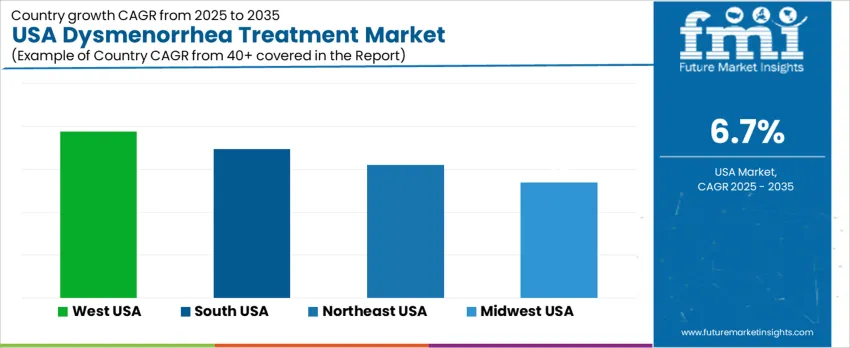
| Region | CAGR (2025 to 2035) |
|---|---|
| West USA | 7.8% |
| South USA | 6.9% |
| Northeast USA | 6.2% |
| Midwest USA | 5.4% |
How is West USA driving demand for dysmenorrhea treatment?
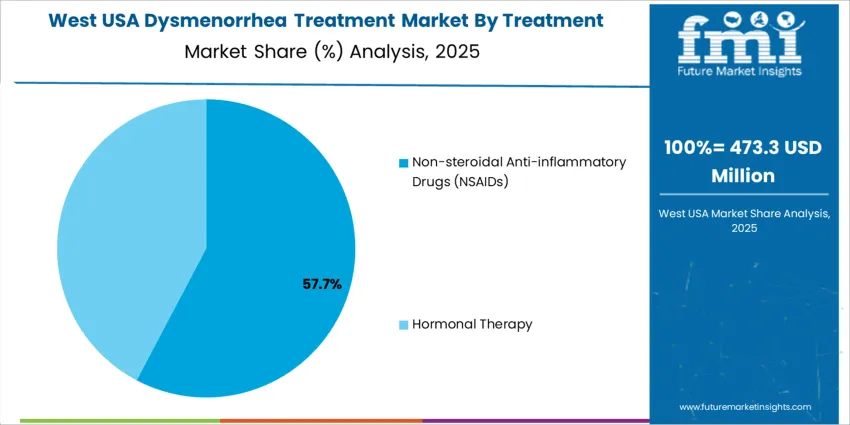
West USA reports 7.8% CAGR, the highest regional momentum due to advanced women’s-health services in California and Washington, along with strong participation in preventive-care programs. Retail pharmacies maintain comprehensive OTC selections including NSAIDs and menstrual-heat patches. Gynecology specialists integrate prescription therapies such as hormonal modulation for cases where over-the-counter regimens fall short. Technology-driven patient engagement helps users track symptom cycles and treatment efficacy. Health insurers expand reimbursement support for clinic visits tied to chronic pelvic pain evaluation. Fitness-aware populations adopt dietary supplements and non-pharmacological relief methods supported by clinician guidance. Procurement teams consider product safety labeling, instructional clarity, and availability through both in-store and e-commerce channels.
- Preventive-care services strengthening treatment pathways
- Retail access expanding OTC pain-relief options
- Digital tracking improving symptom-management planning
- Insurance participation supporting clinical treatment access
How is South USA shaping adoption patterns?
South USA reaches 6.9% CAGR, driven by demographic expansion in Texas, Georgia, and Florida, where healthcare systems increase gynecology service availability in suburban industries. Pharmacists assist consumers in selecting oral pain relievers and menstrual-cramp therapy compatible with existing care plans. University-linked clinics support counseling and timely diagnosis for students experiencing persistent symptoms. Telehealth services grow in regions facing long travel distances to specialists, enhancing early-stage intervention. Retailers stock a wide range of heating solutions and wearable comfort products for non-drug relief. Buyers evaluate consistent inventory and packaging designed for clear self-administration.
- Suburban population growth increasing treatment access needs
- University clinics supporting early-intervention diagnosis
- Telemedicine reducing specialist-access barriers
- Retail variety reinforcing self-care adoption
How is Northeast USA influencing treatment procurement?
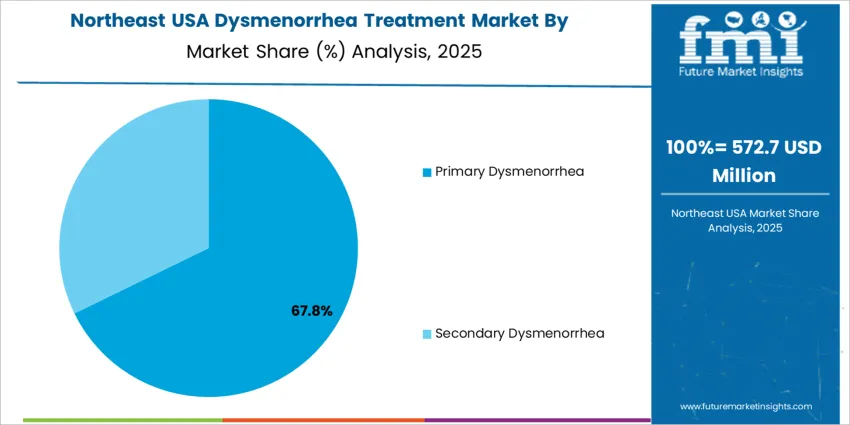
Northeast USA posts 6.2% CAGR, supported by strong networks of gynecologic practices in New York, New Jersey, and Massachusetts. Healthcare providers apply structured diagnostic methods that guide progression from OTC regimens to prescription solutions when necessary. Insurer support for clinician visits encourages adherence to evidence-based care. Urban convenience consumers favor compact product packaging suitable for mobility during daily commutes. Pharmacies include menstrual-wellness categories in dedicated shelves that simplify product identification. Clinical protocols assess personalized pain-management combinations, including heat devices and dietary supplementation.
- Evidence-based escalation guiding treatment pathways
- Urban lifestyles driving portable-packaging utilization
- Insurance coverage supporting informed clinical decisions
- Clear retail categorization improving product selection
How is Midwest USA contributing to national demand?
Midwest USA expands at 5.4% CAGR, shaped by diversification of care channels across Illinois, Michigan, and Ohio. Hospital-linked outpatient clinics provide structured guidance for chronic menstrual pain that impacts workplace productivity. Primary-care physicians help manage baseline treatment continuity for recurring conditions. Community pharmacies serve as consultation points offering access to heat therapy, topical care solutions, and supplements. Procurement decisions emphasize affordability and steady inventory to address seasonal purchasing variations that align with fluctuating consumer budgets.
- Outpatient care sustaining reliable treatment engagement
- Primary-care involvement supporting continuity of use
- Community pharmacies enabling accessible product access
- Cost-focused purchasing maintaining steady availability
What does the competitive landscape for dysmenorrhea treatment demand in the United States look like?
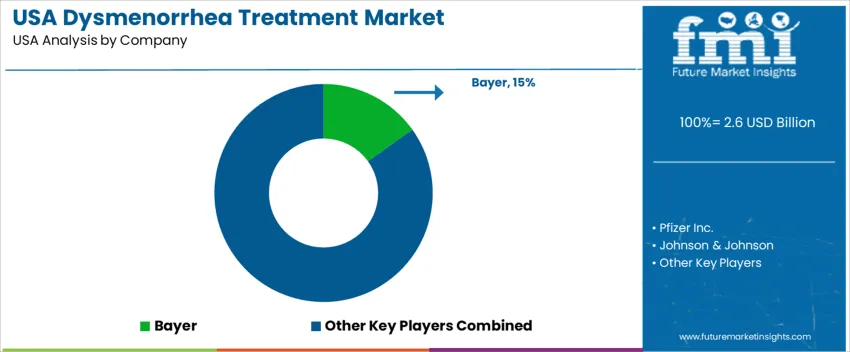
Dysmenorrhea treatment demand in the United States is shaped by widespread use of over-the-counter pain relievers, prescription hormone therapies, and supportive care products addressing menstrual discomfort. Non-steroidal anti-inflammatory drugs remain the primary approach due to familiarity and availability in retail pharmacy channels. Gynecology providers prescribe hormonal interventions for patients with recurring or severe symptoms linked to underlying reproductive conditions. Product preferences reflect convenience, rapid onset of relief, and clear labeling aligned with guidance by healthcare professionals.
Bayer holds an estimated 15.1% share through analgesics used for menstrual pain control. Brand recognition and broad pharmacy distribution help sustain consumer purchasing. Pfizer participates with oral contraceptives prescribed for symptom management and cycle regulation. Johnson & Johnson supplies pain relief products commonly recommended for general cramping. Perrigo Company plc supports private-label alternatives distributed through national retailers, expanding access in cost-sensitive segments. GlaxoSmithKline remains active with branded over-the-counter analgesics used by women seeking familiar options for home management of monthly discomfort.
Competitive positioning in the United States depends on clinical trust, clear safety communication, consistency of access in retail and online channels, and insurance support for prescription therapies in gynecological care. Adoption continues to align with recommendations for non-opioid pain relief and first-line hormonal intervention when medically appropriate.
Key Players in USA Dysmenorrhea Treatment Demand
- Bayer
- Pfizer Inc.
- Johnson & Johnson
- Perrigo Company plc
- GlaxoSmithKline plc
Scope of the Report
| Items | Values |
|---|---|
| Quantitative Units | USD billion |
| Treatment Type | Non-steroidal Anti-inflammatory Drugs (NSAIDs), Hormonal Therapy |
| Dysmenorrhea Type | Primary Dysmenorrhea, Secondary Dysmenorrhea |
| Regions Covered | West USA, South USA, Northeast USA, Midwest USA |
| Key Companies Profiled | Bayer, Pfizer Inc., Johnson & Johnson, Perrigo Company plc, GlaxoSmithKline plc |
| Additional Attributes | Dollar sales by treatment class and dysmenorrhea type; adoption of OTC vs. prescription therapies; regional demand variations driven by access to women’s health services; growing preference for hormonal regulation approaches for secondary dysmenorrhea; industry influenced by digital health and tele-prescriptions; competition from generic NSAIDs and private-label women’s health brands across USA. |
USA Dysmenorrhea Treatment Demand by Segments
Treatment Type:
- Non‑steroidal Anti‑inflammatory Drugs (NSAIDs)
- Hormonal Therapy
Dysmenorrhea Type:
- Primary Dysmenorrhea
- Secondary Dysmenorrhea
Region:
- West USA
- South USA
- Northeast USA
- Midwest USA
Frequently Asked Questions
How big is the demand for dysmenorrhea treatment in USA in 2025?
The demand for dysmenorrhea treatment in USA is estimated to be valued at USD 2.6 billion in 2025.
What will be the size of dysmenorrhea treatment in USA in 2035?
The market size for the dysmenorrhea treatment in USA is projected to reach USD 5.0 billion by 2035.
How much will be the demand for dysmenorrhea treatment in USA growth between 2025 and 2035?
The demand for dysmenorrhea treatment in USA is expected to grow at a 6.7% CAGR between 2025 and 2035.
What are the key product types in the dysmenorrhea treatment in USA?
The key product types in dysmenorrhea treatment in USA are non‑steroidal anti‑inflammatory drugs (nsaids) and hormonal therapy.
Which dysmenorrhea type segment is expected to contribute significant share in the dysmenorrhea treatment in USA in 2025?
In terms of dysmenorrhea type, primary dysmenorrhea segment is expected to command 65.0% share in the dysmenorrhea treatment in USA in 2025.
Preview the report firsthand - request a free sample
Get SampleGet the brochure for pricing and purchase details.
Get PDFTable of Content
- Executive Summary
- USA Market Outlook
- Demand-side Trends
- Supply-side Trends
- Technology Roadmap Analysis
- Analysis and Recommendations
- Market Overview
- Market Coverage / Taxonomy
- Market Definition / Scope / Limitations
- Market Background
- Market Dynamics
- Drivers
- Restraints
- Opportunity
- Trends
- Scenario Forecast
- Demand in Optimistic Scenario
- Demand in Likely Scenario
- Demand in Conservative Scenario
- Opportunity Map Analysis
- Product Life Cycle Analysis
- Supply Chain Analysis
- Investment Feasibility Matrix
- Value Chain Analysis
- PESTLE and Porter’s Analysis
- Regulatory Landscape
- Regional Parent Market Outlook
- Production and Consumption Statistics
- Import and Export Statistics
- Market Dynamics
- USA Market Analysis 2020 to 2024 and Forecast, 2025 to 2035
- Historical Market Size Value (USD Million) Analysis, 2020 to 2024
- Current and Future Market Size Value (USD Million) Projections, 2025 to 2035
- Y-o-Y Growth Trend Analysis
- Absolute $ Opportunity Analysis
- USA Market Pricing Analysis 2020 to 2024 and Forecast 2025 to 2035
- USA Market Analysis 2020 to 2024 and Forecast 2025 to 2035, By Treatment Type
- Introduction / Key Findings
- Historical Market Size Value (USD Million) Analysis By Treatment Type , 2020 to 2024
- Current and Future Market Size Value (USD Million) Analysis and Forecast By Treatment Type , 2025 to 2035
- Non‑steroidal Anti‑inflammatory Drugs (NSAIDs)
- Hormonal Therapy
- Y-o-Y Growth Trend Analysis By Treatment Type , 2020 to 2024
- Absolute $ Opportunity Analysis By Treatment Type , 2025 to 2035
- USA Market Analysis 2020 to 2024 and Forecast 2025 to 2035, By Dysmenorrhea Type
- Introduction / Key Findings
- Historical Market Size Value (USD Million) Analysis By Dysmenorrhea Type, 2020 to 2024
- Current and Future Market Size Value (USD Million) Analysis and Forecast By Dysmenorrhea Type, 2025 to 2035
- Primary Dysmenorrhea
- Secondary Dysmenorrhea
- Y-o-Y Growth Trend Analysis By Dysmenorrhea Type, 2020 to 2024
- Absolute $ Opportunity Analysis By Dysmenorrhea Type, 2025 to 2035
- Market Structure Analysis
- Competition Dashboard
- Competition Benchmarking
- Market Share Analysis of Top Players
- By Regional
- By Treatment Type
- By Dysmenorrhea Type
- Competition Analysis
- Competition Deep Dive
- Bayer
- Overview
- Product Portfolio
- Profitability by Market Segments (Product/Age /Sales Channel/Region)
- Sales Footprint
- Strategy Overview
- Marketing Strategy
- Product Strategy
- Channel Strategy
- Pfizer Inc.
- Johnson & Johnson
- Perrigo Company plc
- GlaxoSmithKline plc
- Bayer
- Competition Deep Dive
- Assumptions & Acronyms Used
- Research Methodology


