

- Industry Size (2026)
- USD 2.4 Bn
- Forecast (2036)
- USD 3.8 Bn
- CAGR (2026 to 2036)
- 4.7%
Demand for Onychomycosis Treatment in USA 2026 to 2036
Demand for onychomycosis treatment in USA is valued at USD 2.4 billion in 2026 and is forecasted to reach USD 3.8 billion by 2036, reflecting a CAGR of 4.7%. Demand grows due to high prevalence of fungal nail infections, aging population trends, and increased diagnosis through dermatology and podiatry visits. Rising awareness of treatment options and cosmetic concerns supports steady patient uptake.
Quick Stats for Demand for Onychomycosis Treatment in USA
- USA Onychomycosis Treatment Sales Value (2026): USD 2.4 billion
- USA Onychomycosis Treatment Forecast Value (2036): USD 3.8 billion
- USA Onychomycosis Treatment Forecast CAGR (2026 to 2036): 4.7%
- Leading Treatment Modality in USA: Drug-based Treatments
- Key Growth Regions in USA: West USA, South USA, Northeast USA, Midwest USA
- Top Players in USA: Novartis, Pfizer, Janssen (Johnson & Johnson), Merck & Co., Kaken Pharmaceutical Co., Ltd.
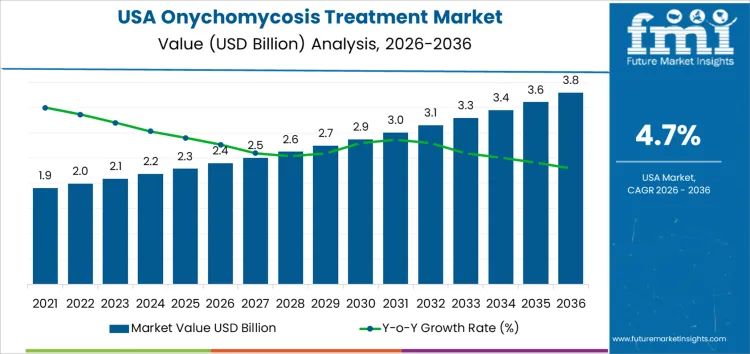
Drug-based treatments lead modality usage because oral and topical antifungal therapies offer clinically proven efficacy and standardized treatment protocols. Clinicians rely on systemic agents for severe infections and topical formulations for mild to moderate cases and maintenance therapy. Improvements in drug safety profiles, shorter treatment durations, and combination regimens enhance adherence and outcomes.
West USA, South USA, Northeast USA, and Midwest USA represent key growth regions supported by access to dermatology care, prescription coverage, and outpatient treatment availability. Novartis, Pfizer, Janssen (Johnson & Johnson), Merck & Co., and Kaken Pharmaceutical Co., Ltd. anchor competitive activity through established antifungal portfolios, ongoing formulation improvements, and distribution networks aligned with evolving clinical management of onychomycosis across the United States.
USA Onychomycosis Treatment Key Takeaways
| Metric | Value |
|---|---|
| USA Onychomycosis Treatment Sales Value (2026) | USD 2.4 billion |
| USA Onychomycosis Treatment Forecast Value (2036) | USD 3.8 billion |
| USA Onychomycosis Treatment Forecast CAGR (2026-2036) | 4.7% |
Why is the Demand for Onychomycosis Treatment in USA Growing?
Demand for onychomycosis treatment in the United States grows due to increasing prevalence of fungal nail infections across adult and elderly populations. Aging demographics experience reduced nail growth and compromised circulation, which raises susceptibility to persistent infections. Higher incidence of diabetes and peripheral vascular disease increases risk of secondary complications, prompting earlier clinical intervention. Podiatry and dermatology practices report steady patient volumes seeking diagnosis and long term management for nail disorders affecting mobility and quality of life. Improved awareness encourages individuals to pursue treatment rather than viewing nail fungus as a cosmetic issue.
Expanded use of occlusive footwear and communal facilities supports transmission risk, increasing case identification. Advancements in diagnostic methods improve confirmation rates, which supports targeted therapy initiation. Availability of oral antifungals, topical solutions, and device based therapies broadens treatment pathways suited to varied patient profiles. Clinical emphasis on preventing recurrence increases follow up and maintenance treatment duration. Insurance coverage for medically necessary cases supports utilization across outpatient settings. Growth in home care and teledermatology services improves access to early evaluation and prescription management. Pharmaceutical development activity introduces formulations designed for improved nail penetration and adherence, sustaining treatment demand nationwide.
How Are the Segments Classified in the Demand for Onychomycosis Treatment in USA?
Demand for onychomycosis treatment in USA is shaped by rising prevalence of fungal nail infections, aging population profiles, and increased dermatology consultations. Clinicians evaluate treatment efficacy, duration of therapy, recurrence risk, and patient adherence considerations. Adoption patterns reflect preference for pharmacological management supported by procedural alternatives, with treatment selection influenced by infection severity, nail involvement extent, and patient age characteristics.
Which Treatment Modality Accounts for the Largest Share of Onychomycosis Care in USA?
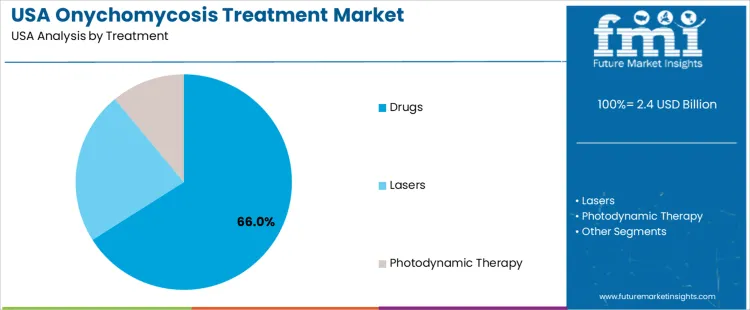
Drug-based treatments hold 66.0%, accounting for the largest share of onychomycosis treatment demand in USA. Antifungal drugs provide systemic or topical management options suited for widespread or moderate nail infections. Clinical protocols favor drug therapy due to accessibility, established efficacy data, and compatibility with outpatient care. Laser treatments hold 23.0%, supporting localized fungal eradication with reduced systemic exposure. Photodynamic therapy accounts for 11.0%, applied in selected cases requiring targeted intervention. Treatment distribution reflects reliance on pharmacological approaches complemented by device-based therapies.
Key Points
- Drug therapies dominate due to established efficacy and accessibility.
- Laser treatments support localized, non-systemic intervention.
- Photodynamic therapy serves selected clinical scenarios.
Which Indication Represents the Highest Share of Onychomycosis Cases Treated in USA?
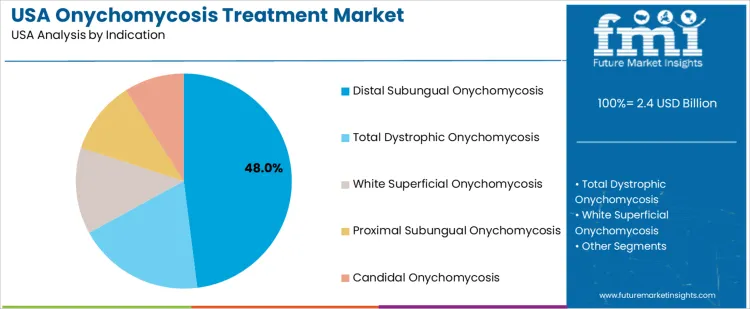
Distal subungual onychomycosis holds 48.0%, representing the highest indication share in USA demand. This form commonly affects toenails and progresses gradually, driving sustained treatment needs. Total dystrophic onychomycosis holds 19.0%, associated with advanced nail destruction requiring intensive management. White superficial onychomycosis accounts for 13.0%, involving surface-level infection. Proximal subungual onychomycosis holds 11.0%, often linked to immunocompromised conditions. Candidal onychomycosis holds 9.0%, affecting fingernails more frequently. Indication distribution reflects dominance of distal nail involvement patterns.
Key Points
- Distal subungual cases dominate due to prevalence and progression.
- Advanced forms require intensive treatment approaches.
- Less common types represent specialized management needs.
Which Age Group Drives the Highest Demand for Onychomycosis Treatment in USA?
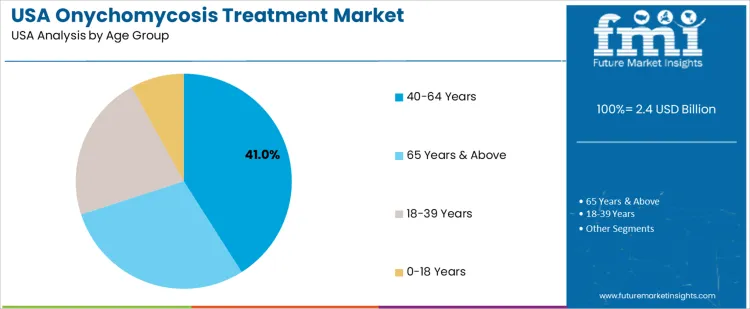
Adults aged 40 to 64 years hold 41.0%, driving the highest treatment demand in USA. This group experiences higher exposure to risk factors including occupational stress, comorbidities, and prolonged nail trauma. Adults aged 65 years and above hold 29.0%, reflecting age-related immune changes and reduced nail growth rates. The 18 to 39 years group accounts for 22.0%, associated with lifestyle and sports-related exposure. Children aged 0 to 18 years hold 8.0%, reflecting lower prevalence. Age distribution highlights concentration of treatment demand among middle-aged and older adults.
Key Points
- Middle-aged adults represent the largest treatment group.
- Older populations show elevated susceptibility and recurrence.
- Pediatric cases remain comparatively limited.
What are the Key Dynamics in the Onychomycosis Treatment Industry?
Demand rises as dermatologists, podiatrists, and primary care providers in USA manage increasing cases of onychomycosis linked to aging demographics, diabetes prevalence, and lifestyle factors. Treatment includes topical antifungals, systemic agents, and combination regimens tailored to infection severity, nail involvement, and comorbidity profiles. Adoption aligns with enhanced diagnostic practices, patient awareness, and care pathways across outpatient clinics and specialty practices.
How do disease prevalence and clinical practice patterns drive demand in USA?
Onychomycosis represents a common nail infection affecting a significant portion of adults, especially older individuals and those with compromised circulation or diabetes. US clinicians use clinical examination, microscopy, and culture or molecular assays to confirm fungal etiology before initiating therapy. Mild to moderate cases often begin with topical antifungals, while systemic agents are prescribed for more extensive or recalcitrant infections. Podiatrists integrate antifungal regimens with mechanical debridement to improve drug penetration. Dermatology practices follow evidence-based guidelines that consider efficacy, safety, and patient adherence. Patient education on chronicity and long-term management supports sustained clinical engagement.
How do treatment cost, reimbursement factors, and adherence challenges influence demand stability in USA?
Systemic antifungal agents and newer topical formulations involve variable out-of-pocket cost depending on insurance coverage under Medicare, Medicaid, and private plans, affecting patient uptake. Prior authorization and formulary placement decisions influence regimen selection in clinical practice. Adherence challenges arise due to long treatment durations required for nail growth cycles, leading clinicians to evaluate combination approaches to enhance outcomes. Safety considerations, particularly for systemic agents in patients with liver disease or drug interactions, shape prescribing behavior. Competitive pressure from over-the-counter remedies exists, though clinical efficacy varies. Demand remains stable due to clinical necessity, while expansion depends on improved therapies, payer alignment, and patient adherence support within the US healthcare landscape.
How Is Demand for Onychomycosis Treatment in the USA Evolving by Region?
Demand for onychomycosis treatment in the USA is increasing due to aging population, diabetes prevalence, and improved diagnosis in outpatient settings. West USA leads with a 5.4% CAGR, supported by dermatology access and early treatment initiation. South USA follows at 4.8%, driven by higher fungal infection incidence and primary care utilization. Northeast USA records a 4.3% CAGR, shaped by specialist-led prescribing and guideline-based therapy selection. Midwest USA posts 3.7%, reflecting conservative treatment initiation and cost-managed care delivery. Regional variation reflects specialist density, patient awareness, comorbidity burden, and treatment adherence patterns across dermatology and primary care settings in the USA.
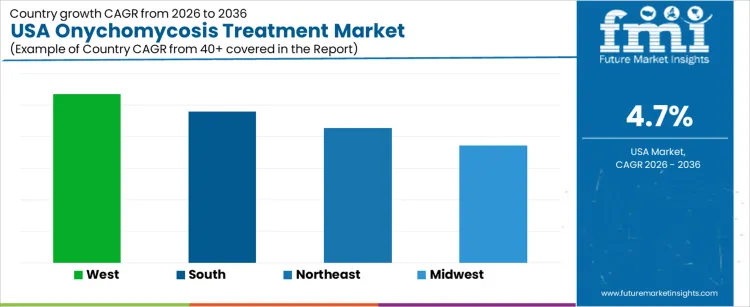
| Region | CAGR (2026 to 2036) |
|---|---|
| West USA | 5.4% |
| South USA | 4.8% |
| Northeast USA | 4.3% |
| Midwest USA | 3.7% |
What factors explain higher onychomycosis treatment uptake in West USA?
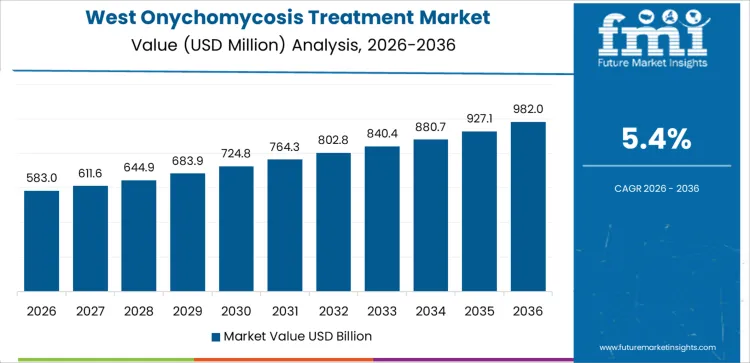
West USA drives demand through strong dermatology presence, patient awareness, and early intervention practices. Region’s CAGR of 5.4% reflects frequent diagnosis during routine skin examinations and proactive cosmetic-driven treatment seeking. Dermatologists prescribe topical and oral antifungals based on infection severity and patient risk profile. Higher disposable income supports adherence to longer treatment regimens. Clinics emphasize diagnostic confirmation using microscopy or culture prior to therapy initiation. Demand favors newer topical formulations with improved penetration and tolerability. Growth remains outpatient-led, aligned with early-stage treatment and emphasis on appearance, comfort, and recurrence prevention.
- High dermatology access and early diagnosis
- Cosmetic and quality-of-life driven treatment
- Use of confirmed diagnostic testing
- Adoption of newer topical therapies
Why is onychomycosis treatment demand expanding steadily in South USA?
South USA demand is shaped by warm climate conditions, higher fungal exposure, and increased diabetes prevalence. Region’s CAGR of 4.8% reflects frequent presentation of nail infections in primary care and podiatry settings. Providers manage onychomycosis as part of broader foot health programs, especially among diabetic patients. Oral antifungal therapy remains common for moderate to severe cases. Patient education improves treatment initiation and follow-through. Demand growth remains volume-driven, supported by higher incidence rates and routine management within community healthcare practices.
- Warm climate and higher fungal exposure
- Strong podiatry and primary care involvement
- Diabetes-linked foot care management
- Volume-driven outpatient treatment demand
How do prescribing practices influence demand in Northeast USA?
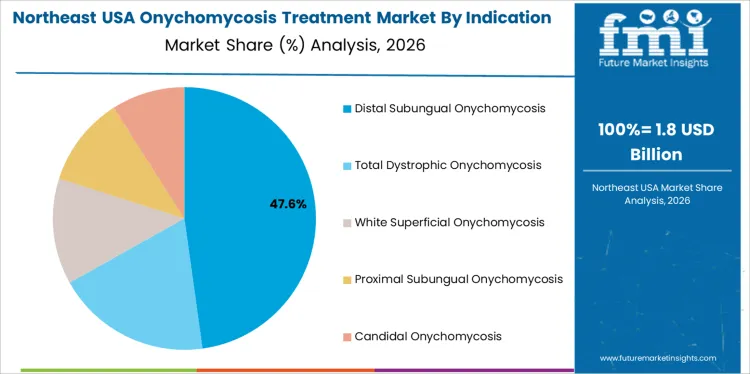
Northeast USA demand reflects specialist-led care, cautious prescribing, and guideline adherence. Region’s CAGR of 4.3% is supported by dermatology-confirmed diagnosis and selective treatment initiation. Clinicians emphasize risk-benefit assessment due to potential systemic therapy side effects. Topical treatments are preferred for mild cases, with oral agents reserved for confirmed and persistent infections. Insurance coverage and formulary considerations influence therapy choice. Demand growth aligns with structured care pathways and patient compliance rather than high incidence growth.
- Specialist-confirmed diagnosis patterns
- Guideline-aligned and selective prescribing
- Preference for topical therapy in mild cases
- Insurance-influenced treatment selection
What limits faster growth of onychomycosis treatment in Midwest USA?
Midwest USA demand is anchored in conservative care models, cost sensitivity, and stable patient awareness levels. Region’s CAGR of 3.7% reflects treatment initiation primarily for symptomatic or advanced infections. Primary care providers manage most cases, with limited specialist referral. Patients often delay treatment due to slow disease progression perception. Generic oral antifungals dominate prescriptions where treatment proceeds. Demand growth remains steady and necessity-driven, aligned with functional impairment management rather than cosmetic concern.
- Conservative and symptom-driven treatment initiation
- Primary care-led case management
- Cost-sensitive therapy selection
- Stable and maintenance-oriented demand patterns
What is the competitive landscape of demand for onychomycosis treatment in the USA?
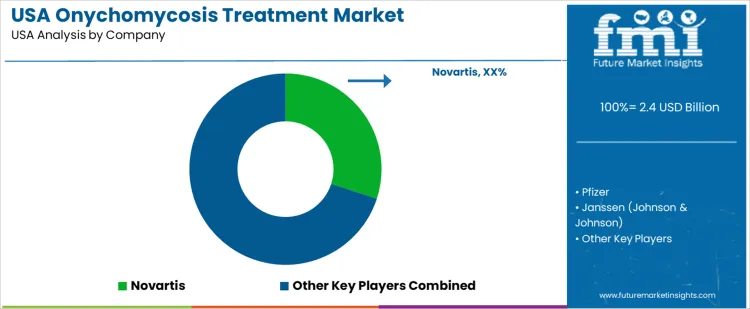
Demand for onychomycosis treatment in the USA is driven by widespread prevalence of fungal nail infections, patient desire for effective and cosmetically acceptable therapies, and growth in outpatient dermatology services. Treatment pathways include systemic oral antifungals, topical lacquers, and combination regimens guided by efficacy, safety, and patient adherence. Buyers evaluate clinical effectiveness, dosing convenience, interaction profiles, and formulation preferences suited to toenail and fingernail infections. Procurement teams prioritize FDA-approved therapies, strong clinical evidence, and distribution channels that support retail and prescription access. Trend in the USA market reflects increasing interest in non-oral topical options with improved penetration, and expanded patient education around early treatment to avoid progression.
Novartis, through its dermatology portfolio, holds a leading position in the USA with systemic antifungal agents used widely in onychomycosis management supported by clinical familiarity and broad prescriber adoption. Pfizer participates with oral antifungal therapies integrated into standard treatment protocols in primary care and dermatology practices. Janssen (Johnson & Johnson) supports demand with systemic and topical options positioned for efficacy and safety in diverse patient populations. Merck & Co. contributes with prescription treatments backed by clinical data addressing fungal clearance and relapse prevention. Kaken Pharmaceutical Co., Ltd., operating through U.S. distribution partnerships, provides topical and systemic antifungal products used in specialized patient care settings. Competitive positioning in the USA reflects regulatory compliance, clinical evidence strength, physician familiarity, and product accessibility supporting patient adherence and treatment success.
Key Players in USA Onychomycosis Treatment Demand
- Novartis
- Pfizer
- Janssen (Johnson & Johnson)
- Merck & Co.
- Kaken Pharmaceutical Co., Ltd.
Scope of the Report
| Items | Details |
|---|---|
| Quantitative Units | USD billion |
| Treatment | Drugs; Lasers; Photodynamic Therapy |
| Indication | Distal Subungual Onychomycosis; Total Dystrophic Onychomycosis; White Superficial Onychomycosis; Proximal Subungual Onychomycosis; Candidal Onychomycosis |
| Age Group | 0–18 Years; 18–39 Years; 40–64 Years; 65 Years & Above |
| Gender | Male; Female |
| Distribution Channel | Retail Sales; Institutional Sales |
| Regions Covered | West USA; South USA; Northeast USA; Midwest USA |
| Key Companies Profiled | Novartis; Pfizer; Janssen (Johnson & Johnson); Merck & Co.; Kaken Pharmaceutical Co., Ltd. |
| Additional Attributes | Demand is driven by rising prevalence among aging populations, higher diagnosis rates, and preference for oral and topical antifungal drugs. Retail channels dominate due to chronic treatment needs, while laser-based therapies gain adoption in specialty clinics across major US regions. |
USA Onychomycosis Treatment Demand by Segments
Treatment:
- Drugs
- Lasers
- Photodynamic Therapy
Indication:
- Distal Subungual Onychomycosis
- Total Dystrophic Onychomycosis
- White Superficial Onychomycosis
- Proximal Subungual Onychomycosis
- Candidal Onychomycosis
Age Group:
- 40-64 Years
- 65 Years & Above
- 18-39 Years
- 0-18 Years
Gender:
- Male
- Female
Distribution Channel:
- Retail Sales
- Institutional Sales
Region:
- West USA
- South USA
- Northeast USA
- Midwest USA
Frequently Asked Questions
How big is the demand for onychomycosis treatment in USA in 2026?
The demand for onychomycosis treatment in USA is estimated to be valued at USD 2.4 billion in 2026.
What will be the size of onychomycosis treatment in USA in 2036?
The market size for the onychomycosis treatment in USA is projected to reach USD 3.8 billion by 2036.
How much will be the demand for onychomycosis treatment in USA growth between 2026 and 2036?
The demand for onychomycosis treatment in USA is expected to grow at a 4.7% CAGR between 2026 and 2036.
What are the key treatment types in the onychomycosis treatment in USA?
The key treatment types in onychomycosis treatment in USA are drugs, lasers and photodynamic therapy.
Which indication segment is expected to contribute significant share in the onychomycosis treatment in USA in 2026?
In terms of indication, distal subungual onychomycosis segment is expected to command 48.0% share in the onychomycosis treatment in USA in 2026.
Preview the report firsthand - request a free sample
Get SampleGet the brochure for pricing and purchase details.
Get PDFTable of Content
- Executive Summary
- USA Market Outlook
- Demand-side Trends
- Supply-side Trends
- Technology Roadmap Analysis
- Analysis and Recommendations
- Market Overview
- Market Coverage / Taxonomy
- Market Definition / Scope / Limitations
- Market Background
- Market Dynamics
- Drivers
- Restraints
- Opportunity
- Trends
- Scenario Forecast
- Demand in Optimistic Scenario
- Demand in Likely Scenario
- Demand in Conservative Scenario
- Opportunity Map Analysis
- Product Life Cycle Analysis
- Supply Chain Analysis
- Investment Feasibility Matrix
- Value Chain Analysis
- PESTLE and Porter’s Analysis
- Regulatory Landscape
- Regional Parent Market Outlook
- Production and Consumption Statistics
- Import and Export Statistics
- Market Dynamics
- USA Market Analysis 2021 to 2025 and Forecast, 2026 to 2036
- Historical Market Size Value (USD Million) Analysis, 2021 to 2025
- Current and Future Market Size Value (USD Million) Projections, 2026 to 2036
- Y-o-Y Growth Trend Analysis
- Absolute $ Opportunity Analysis
- USA Market Pricing Analysis 2021 to 2025 and Forecast 2026 to 2036
- USA Market Analysis 2021 to 2025 and Forecast 2026 to 2036, By Treatment
- Introduction / Key Findings
- Historical Market Size Value (USD Million) Analysis By Treatment , 2021 to 2025
- Current and Future Market Size Value (USD Million) Analysis and Forecast By Treatment , 2026 to 2036
- Drugs
- Lasers
- Photodynamic Therapy
- Drugs
- Y-o-Y Growth Trend Analysis By Treatment , 2021 to 2025
- Absolute $ Opportunity Analysis By Treatment , 2026 to 2036
- USA Market Analysis 2021 to 2025 and Forecast 2026 to 2036, By Indication
- Introduction / Key Findings
- Historical Market Size Value (USD Million) Analysis By Indication, 2021 to 2025
- Current and Future Market Size Value (USD Million) Analysis and Forecast By Indication, 2026 to 2036
- Distal Subungual Onychomycosis
- Total Dystrophic Onychomycosis
- White Superficial Onychomycosis
- Proximal Subungual Onychomycosis
- Candidal Onychomycosis
- Distal Subungual Onychomycosis
- Y-o-Y Growth Trend Analysis By Indication, 2021 to 2025
- Absolute $ Opportunity Analysis By Indication, 2026 to 2036
- USA Market Analysis 2021 to 2025 and Forecast 2026 to 2036, By Age Group
- Introduction / Key Findings
- Historical Market Size Value (USD Million) Analysis By Age Group, 2021 to 2025
- Current and Future Market Size Value (USD Million) Analysis and Forecast By Age Group, 2026 to 2036
- 40-64 Years
- 65 Years & Above
- 18-39 Years
- 0-18 Years
- 40-64 Years
- Y-o-Y Growth Trend Analysis By Age Group, 2021 to 2025
- Absolute $ Opportunity Analysis By Age Group, 2026 to 2036
- USA Market Analysis 2021 to 2025 and Forecast 2026 to 2036, By Gender
- Introduction / Key Findings
- Historical Market Size Value (USD Million) Analysis By Gender, 2021 to 2025
- Current and Future Market Size Value (USD Million) Analysis and Forecast By Gender, 2026 to 2036
- Male
- Female
- Male
- Y-o-Y Growth Trend Analysis By Gender, 2021 to 2025
- Absolute $ Opportunity Analysis By Gender, 2026 to 2036
- USA Market Analysis 2021 to 2025 and Forecast 2026 to 2036, By Distribution Channel
- Introduction / Key Findings
- Historical Market Size Value (USD Million) Analysis By Distribution Channel, 2021 to 2025
- Current and Future Market Size Value (USD Million) Analysis and Forecast By Distribution Channel, 2026 to 2036
- Retail Sales
- Institutional Sales
- Retail Sales
- Y-o-Y Growth Trend Analysis By Distribution Channel, 2021 to 2025
- Absolute $ Opportunity Analysis By Distribution Channel, 2026 to 2036
- Market Structure Analysis
- Competition Dashboard
- Competition Benchmarking
- Market Share Analysis of Top Players
- By Regional
- By Treatment
- By Indication
- By Age Group
- By Gender
- By Distribution Channel
- Competition Analysis
- Competition Deep Dive
- Novartis
- Overview
- Product Portfolio
- Profitability by Market Segments (Product/Age /Sales Channel/Region)
- Sales Footprint
- Strategy Overview
- Marketing Strategy
- Product Strategy
- Channel Strategy
- Pfizer
- Janssen (Johnson & Johnson)
- Merck & Co.
- Kaken Pharmaceutical Co., Ltd.
- Novartis
- Competition Deep Dive
- Assumptions & Acronyms Used
- Research Methodology


