

- Industry Size (2025)
- USD 0.5 Bn
- Forecast (2035)
- USD 0.8 Bn
- CAGR (2025 to 2035)
- 4.8%
Demand for Babesiosis Treatment in USA Forecast and Outlook (2025 to 2035)
The demand for babesiosis treatment in the USA is expected to grow from USD 0.5 billion in 2025 to USD 0.8 billion by 2035, reflecting a compound annual growth rate (CAGR) of 4.8%. Babesiosis, a tick-borne disease caused by the Babesia parasite, requires timely and effective treatment to prevent severe complications, especially in immunocompromised individuals. As awareness of tick-borne diseases increases and more effective treatments are developed, the market for babesiosis treatment is expected to see steady growth over the forecast period.
The market will experience incremental growth, starting at USD 0.5 billion in 2025 and increasing to USD 0.5 billion in 2026. By 2027, demand will reach USD 0.6 billion, continuing to rise steadily each year. By 2035, the demand for babesiosis treatment is forecasted to reach USD 0.8 billion, driven by advances in treatment options, growing awareness, and increased healthcare access for affected populations.
Quick Stats of the Demand for Babesiosis Treatment in USA
- Demand for Babesiosis Treatment in USA Value (2025): USD 0.5 billion
- Demand for Babesiosis Treatment in USA Forecast Value (2035): USD 0.8 billion
- Demand for Babesiosis Treatment in USA Forecast CAGR (2025-2035): 4.8%
- Demand for Babesiosis Treatment in USA Drug Type: 61% Generic
- Demand for Babesiosis Treatment in USA Key Growth Regions: West USA, South USA, Northeast USA, Midwest USA
- Demand for Babesiosis Treatment in USA Key Players: GlaxoSmithKline LLC, Pfizer Inc., Amneal Pharmaceuticals LLC, Apotex Inc., Lupin Pharmaceuticals
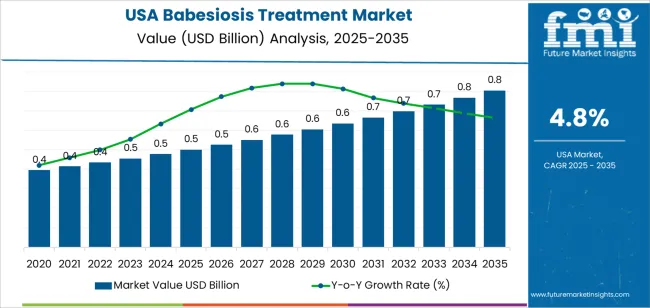
What is the Growth Forecast for the Babesiosis Treatment Industry in USA through 2035?
The acceleration and deceleration pattern for babesiosis treatment demand shows a gradual increase in the early years (2025-2029), with moderate growth each year. The rate of growth remains steady, reflecting ongoing, incremental increases in demand as treatments improve and public awareness increases. However, the market will not experience a sharp acceleration in growth; instead, the demand will rise at a measured pace.
After 2029, the rate of growth is expected to stabilize and may decelerate slightly as the market matures. This reflects the natural progression of the treatment market as the adoption of available treatments reaches a steady state, and the disease is increasingly managed effectively. While there will be continued growth, the rate may slow as the population at risk stabilizes and healthcare infrastructure improves, reducing the urgency for rapid treatment expansion. This results in a gradual yet steady increase in market value through 2035.
USA Babesiosis Treatment Industry Key Takeaways
| Metric | Value |
|---|---|
| Industry Sales Value (2025) | USD 0.5 billion |
| Industry Forecast Value (2035) | USD 0.8 billion |
| Industry Forecast CAGR (2025-2035) | 4.8% |
Why is the Demand for Treatment of Babesiosis in USA Growing?
Demand for treatment of babesiosis in the USA is increasing as incidence and awareness of the disease rise. Cases have become more frequent in regions where the tick vector is expanding its range. Many infections remain mild or asymptomatic, but serious illness can develop - especially in older individuals or those with weakened immune systems - leading to greater need for effective treatment. The broader tick borne disease burden in parts of the country contributes to greater recognition of babesiosis and increased diagnostic testing. Growing incidence, combined with rising concern among clinicians and public health authorities, supports stronger demand for medical management of babesiosis.
The demand is also driven by evolving medical standards and treatment practices. For symptomatic patients the standard therapy involves a course of antimicrobial drugs over 7 to 10 days. Severe or persistent infections may require longer or more intensive treatment, which increases demand for medical care resources, supportive therapy, monitoring and follow up. As awareness spreads that babesiosis can be serious if untreated - causing hemolytic anemia, organ complications or relapse - more patients seek formal diagnosis and treatment. Research into improved therapies, better diagnostics, and potential preventive measures further supports growth in demand for babesiosis treatment.
What Is the Current State of the Demand for Babesiosis Treatment in the USA in Terms of Drug Type and Route of Administration?
The demand for babesiosis treatment in the USA is primarily driven by drug type and route of administration. The leading drug type is generic, capturing 61% of the market share, while oral administration is the most common, accounting for 64% of the demand. Babesiosis, a parasitic infection caused by protozoa transmitted by ticks, requires effective treatment options. As the need for accessible and cost-effective treatments grows, the demand for generic drugs and oral administration methods remains strong in the USA.
How Is Generic Drug Leading the Demand for Babesiosis Treatment in the USA?
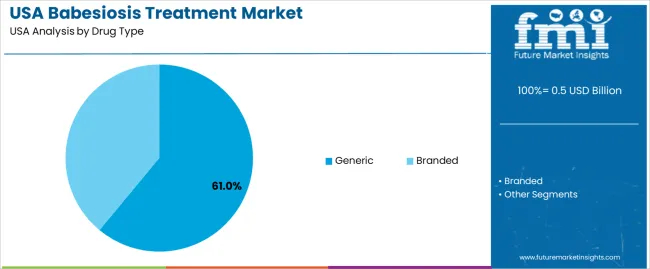
Generic drugs lead the demand for babesiosis treatment in the USA, holding 61% of the market share. Generic treatments are cost-effective alternatives to branded drugs and offer the same therapeutic benefits. The demand for generic drugs is driven by the growing focus on affordable healthcare, as well as the increasing number of patients seeking accessible treatments for babesiosis, particularly those who are uninsured or underinsured.
Generic drugs are typically available at a lower price point than their branded counterparts, making them an attractive option for both patients and healthcare providers. As the prevalence of babesiosis rises and the need for effective treatments becomes more critical, the affordability and accessibility of generic drugs will continue to be a driving factor in the treatment landscape. The large share of generics in the market also reflects the success of generic formulations in offering a safe, reliable, and accessible treatment option for patients suffering from babesiosis in the USA.
How Is Oral Administration Leading the Route of Administration Demand for Babesiosis Treatment in the USA?
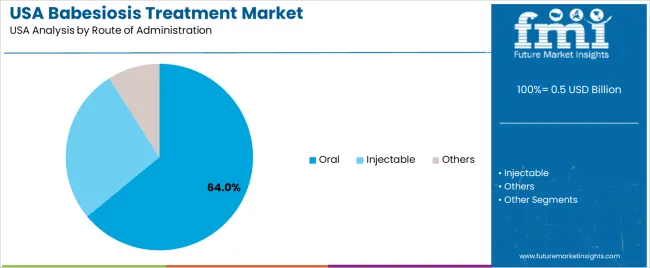
Oral administration leads the route of administration demand for babesiosis treatment in the USA, accounting for 64% of the market share. Oral treatments are preferred due to their ease of use, convenience, and the ability for patients to self-administer the medication at home. Oral drugs for babesiosis are typically taken as tablets or capsules, offering an effective and less invasive method of treatment compared to injectable options.
The demand for oral administration is driven by patient preference and the widespread availability of oral medications that are effective in treating babesiosis. Oral treatments offer the advantage of better patient compliance, as they do not require healthcare facility visits or professional administration. With an increasing number of babesiosis cases in areas where tick-borne diseases are common, the demand for oral drugs will continue to lead the market, as they provide an accessible, effective, and patient-friendly treatment option.
What is the Summary of Demand for Babesiosis Treatment in the USA?
Demand for Babesiosis treatment in the USA has increased due to a rise in reported cases and growing awareness of the disease. Babesiosis is a parasitic infection transmitted by ticks, mainly in the Northeast and Upper Midwest, that can lead to severe illness in certain populations. With more diagnoses, the demand for effective treatments, testing, and medical care has grown, especially as cases become more recognized in regions previously thought to be low risk.
What are the Drivers of Demand for Babesiosis Treatment in the USA?
Several factors drive the demand for Babesiosis treatment in the USA. One key factor is the increase in infections across previously low-risk areas, expanding the pool of potential patients. There is also a rise in awareness among healthcare providers, leading to more diagnoses and treatment prescriptions. Additionally, the vulnerable population, including the elderly and immunocompromised, requires effective treatment to prevent severe complications. The need for blood screening to prevent transfusion-transmitted Babesia further drives the demand for therapeutic interventions and preventive care.
What are the Restraints on Demand for Babesiosis Treatment in the USA?
Despite growing demand, several challenges limit the uptake of treatment. Many cases of Babesiosis are asymptomatic or mild, leading to underdiagnosis and fewer treatment needs. The difficulty of diagnosing the disease, especially outside high-prevalence areas, contributes to misdiagnoses or delayed treatment. Additionally, the current therapeutic options, while effective, may not be suitable for all cases, especially severe or drug-resistant infections. Prolonged treatment regimens and the uncertainty around recurrence also present barriers to widespread adoption.
What are the Key Trends Influencing Demand for Babesiosis Treatment in the USA?
Key trends influencing demand for Babesiosis treatment include the increasing spread of tick vectors, which expands the regions affected by the disease. As awareness among healthcare providers grows, more cases are being tested for and diagnosed, increasing the need for treatments. There is also growing interest in developing improved therapies with better efficacy and shorter treatment times. Additionally, the rise in blood safety protocols and the need for screening to prevent transfusion-transmitted Babesia is creating demand for both diagnostic and therapeutic solutions.
What is the Regional Demand Outlook for Babesiosis Treatment in the USA?
The demand for babesiosis treatment in the USA is projected to rise across all regions. The fastest growth is forecast for the West USA at 5.6% CAGR. The South USA follows at 5.0%, the Northeast USA at 4.5%, and the Midwest USA at 3.9%. These differences reflect variations in disease incidence (tick-borne infections), public health awareness, healthcare infrastructure, and regional adoption of diagnostic and treatment protocols.
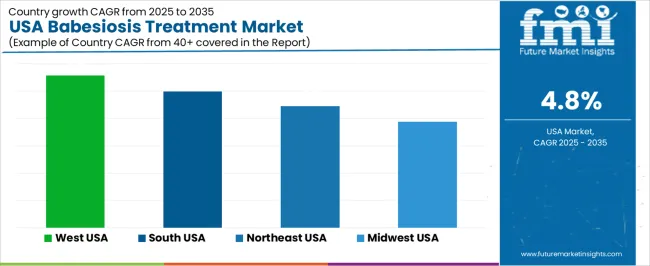
| Region | CAGR (%) |
|---|---|
| West USA | 5.6 |
| South USA | 5.0 |
| Northeast USA | 4.5 |
| Midwest USA | 3.9 |
What supports demand for babesiosis treatment in West USA?
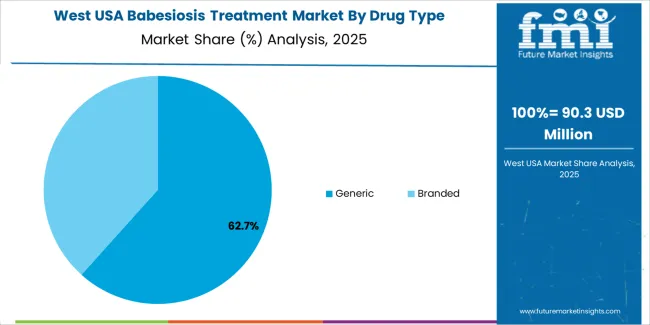
In the West USA, a projected 5.6% annual growth in demand for babesiosis treatment may be supported by rising awareness of tick-borne diseases and expanding healthcare services. Although babesiosis is most common in the Northeast and Midwest of the USA, sporadic cases have been reported on the West Coast, and increased mobility may raise the number of cases there over time. Healthcare providers may become more vigilant for babesiosis symptoms such as fever, hemolytic anemia, and flu-like signs, leading to higher diagnosis rates and treatment prescriptions. Improved diagnostics and growing physician awareness can also drive demand for treatment. Broader public health focus on vector-borne diseases and prevention may support this growth for treatment therapies in the West region.
Why is demand for babesiosis treatment growing in South USA?
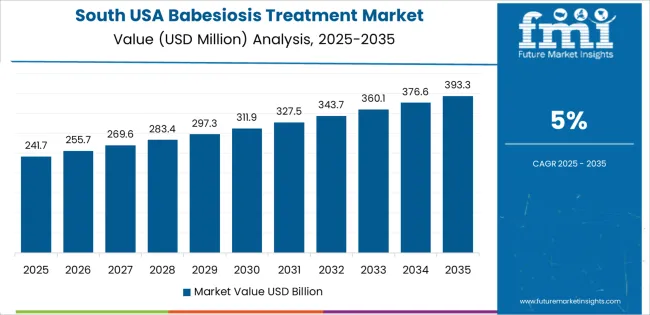
In the South USA, a 5.0% CAGR for babesiosis treatment demand may reflect increased awareness of tick-borne illnesses, expanded travel, and population shifts. While classical hotspots are in the Northeast and Upper Midwest, movement of populations and possibly expanded tick habitats could lead to new cases. Medical practitioners in the South may increasingly consider babesiosis in differential diagnosis for patients presenting with anemia or flu-like symptoms, especially given rising national attention to tick-borne disease prevalence. Growth in treatment demand may also stem from increased public health screening, blood-transfusion screening, and demand for safe, effective therapies to manage infection and prevent transmission.
How is demand expected to evolve in Northeast USA for babesiosis treatment?
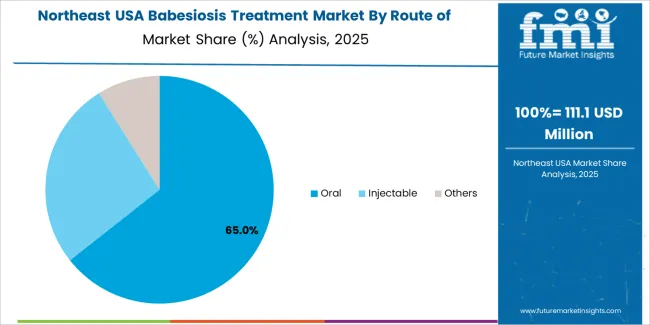
In the Northeast USA, the projected CAGR of 4.5% aligns with the region’s historically high incidence of babesiosis. The causative parasite, Babesiosis (most often Babesia microti), is transmitted by deer ticks common to this region. Rising case counts, improved reporting, and greater awareness among clinicians contribute to increasing demand for treatment. Further, as tick populations expand and climate patterns shift, more individuals may be exposed, prompting higher demand for diagnosis and therapy. Standard treatment regimens such as a combination of Atovaquone plus Azithromycin for mild cases are in use, and more demand for pharmaceuticals and supportive care is likely. As prevention and early intervention become more important, treatment demand may grow in tandem.
What factors influence treatment demand growth in Midwest USA?
In the Midwest USA, a forecast CAGR of 3.9% for babesiosis treatment reflects the region’s role as an established endemic zone, though with lower growth compared to other regions. The presence of tick populations capable of transmitting Babesia, coupled with gradual expansion of awareness among healthcare providers and patients, supports a steady demand for treatment. However, the relatively lower growth may reflect fewer new cases compared with the Northeast, or slower expansion of tick habitats. Additionally, in some areas, under-diagnosis or misdiagnosis may limit recorded demand. As diagnostic capacity, physician awareness, and public health surveillance improve, demand for babesiosis treatment in the Midwest is likely to increase gradually.
How does growing babesiosis incidence shape the overall treatment market in the USA?
Increasing incidence of babesiosis in the USA drives demand for therapeutic interventions. The overall treatment market globally is projected to grow at a 5.1% CAGR from 2025 to 2035, reflecting rising infections, improved diagnostics, and increasing recognition of the disease’s health risk. As more people contract the disease, need for effective treatments both for mild and severe cases grows. Regulatory attention, public health funding, and research into new therapies further support market expansion. For patients with mild-to-moderate babesiosis, standard therapy involves drugs such as atovaquone and azithromycin, while severe cases may require more aggressive treatment including clindamycin and quinine or even exchange transfusion. This expanding clinical demand underlies the rising projected growth in treatment adoption across regions.
What is the Competitive Landscape for the Babesiosis Treatment Market in the USA?
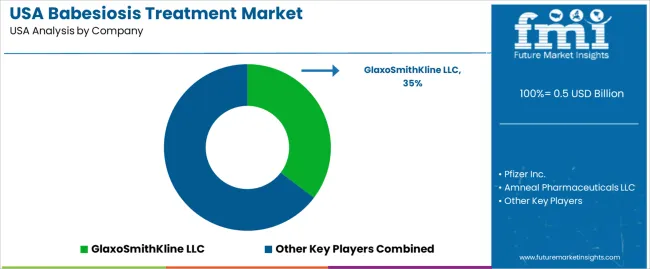
The treatment market for Babesiosis in the USA remains dominated by generic antiparasitic and antibiotic therapies rather than branded, proprietary products. The leading company listed is GlaxoSmithKline LLC (GSK) with about 35.3% share. Other firms named - Pfizer Inc., Amneal Pharmaceuticals LLC, Apotex Inc. and Lupin Pharmaceuticals - are among suppliers of generic drug formulations used in babesiosis therapy or supply of relevant antiparasitic or antibiotic agents. Demand arises from tick borne infections causing babesiosis in various USA regions. Prevalence influences demand for effective treatment regimens involving established medicines.
Treatment protocols for babesiosis typically rely on drug combinations such as Atovaquone plus Azithromycin for mild to moderate cases. This regimen is preferred because of effectiveness and relatively fewer adverse effects compared to older options. In cases where the preferred regimen may not be suitable, the alternative combination of Clindamycin plus Quinine remains in use, especially for severe infections or special patient conditions. Providers may supplement drug therapy with supportive care, including blood transfusions, renal support, or other measures for serious disease.
Competition among pharmaceutical suppliers of babesiosis treatment seems limited. Most key firms supply generic versions of recommended drugs rather than novel therapies. This results in emphasis on drug availability, regulatory compliance, manufacturing quality, and distribution networks. As new therapies remain under research, including drugs with activity against resistant strains, the market may evolve. Presently demand remains tied to known effective regimens and capacity to supply antiparasitic and antibiotic medicines across affected regions.
Key Players of the Babesiosis Treatment Industry in USA
- GlaxoSmithKline LLC
- Pfizer Inc.
- Amneal Pharmaceuticals LLC
- Apotex Inc.
- Lupin Pharmaceuticals
Scope of the Report
| Items | Details |
|---|---|
| Quantitative Units | USD Billion |
| Regions Covered | USA |
| Drug Type | Generic, Branded |
| Route of Administration | Oral, Injectable, Others |
| End-Users | Hospitals, Home Healthcare, Academic Research Institutes, Others |
| Key Companies Profiled | GlaxoSmithKline LLC, Pfizer Inc., Amneal Pharmaceuticals LLC, Apotex Inc., Lupin Pharmaceuticals |
| Additional Attributes | Dollar sales by drug type, route of administration, and end-users indicate strong demand for both branded and generic treatments for babesiosis. Oral administration is common, though injectable options are preferred in hospitals. Leading companies like GlaxoSmithKline, Pfizer, and Amneal Pharmaceuticals provide effective treatments for babesiosis. The market is expected to grow with increasing awareness of the disease, improved treatment options, and the rising demand for home healthcare solutions. |
Key Segments of the Demand for Babesiosis Treatment in USA
Drug Type:
- Generic
- Branded
Route of Administration:
- Oral
- Injectable
- Others
End-Users:
- Hospitals
- Home Healthcare
- Academic Research Institutes
- Others
Region:
- Northeast USA
- West USA
- Midwest USA
- South USA
Frequently Asked Questions
How big is the demand for babesiosis treatment in USA in 2025?
The demand for babesiosis treatment in USA is estimated to be valued at USD 0.5 billion in 2025.
What will be the size of babesiosis treatment in USA in 2035?
The market size for the babesiosis treatment in USA is projected to reach USD 0.8 billion by 2035.
How much will be the demand for babesiosis treatment in USA growth between 2025 and 2035?
The demand for babesiosis treatment in USA is expected to grow at a 4.8% CAGR between 2025 and 2035.
What are the key product types in the babesiosis treatment in USA?
The key product types in babesiosis treatment in USA are generic and branded.
Which route of administration segment is expected to contribute significant share in the babesiosis treatment in USA in 2025?
In terms of route of administration, oral segment is expected to command 64.0% share in the babesiosis treatment in USA in 2025.
Preview the report firsthand - request a free sample
Get SampleGet the brochure for pricing and purchase details.
Get PDFTable of Content
- Executive Summary
- USA Market Outlook
- Demand-side Trends
- Supply-side Trends
- Technology Roadmap Analysis
- Analysis and Recommendations
- Market Overview
- Market Coverage / Taxonomy
- Market Definition / Scope / Limitations
- Market Background
- Market Dynamics
- Drivers
- Restraints
- Opportunity
- Trends
- Scenario Forecast
- Demand in Optimistic Scenario
- Demand in Likely Scenario
- Demand in Conservative Scenario
- Opportunity Map Analysis
- Product Life Cycle Analysis
- Supply Chain Analysis
- Investment Feasibility Matrix
- Value Chain Analysis
- PESTLE and Porter’s Analysis
- Regulatory Landscape
- Regional Parent Market Outlook
- Production and Consumption Statistics
- Import and Export Statistics
- Market Dynamics
- USA Market Analysis 2020 to 2024 and Forecast, 2025 to 2035
- Historical Market Size Value (USD Million) Analysis, 2020 to 2024
- Current and Future Market Size Value (USD Million) Projections, 2025 to 2035
- Y-o-Y Growth Trend Analysis
- Absolute $ Opportunity Analysis
- USA Market Pricing Analysis 2020 to 2024 and Forecast 2025 to 2035
- USA Market Analysis 2020 to 2024 and Forecast 2025 to 2035, By Drug Type
- Introduction / Key Findings
- Historical Market Size Value (USD Million) Analysis By Drug Type , 2020 to 2024
- Current and Future Market Size Value (USD Million) Analysis and Forecast By Drug Type , 2025 to 2035
- Generic
- Branded
- Y-o-Y Growth Trend Analysis By Drug Type , 2020 to 2024
- Absolute $ Opportunity Analysis By Drug Type , 2025 to 2035
- USA Market Analysis 2020 to 2024 and Forecast 2025 to 2035, By Route of Administration
- Introduction / Key Findings
- Historical Market Size Value (USD Million) Analysis By Route of Administration, 2020 to 2024
- Current and Future Market Size Value (USD Million) Analysis and Forecast By Route of Administration, 2025 to 2035
- Oral
- Injectable
- Others
- Y-o-Y Growth Trend Analysis By Route of Administration, 2020 to 2024
- Absolute $ Opportunity Analysis By Route of Administration, 2025 to 2035
- USA Market Analysis 2020 to 2024 and Forecast 2025 to 2035, By End-Users
- Introduction / Key Findings
- Historical Market Size Value (USD Million) Analysis By End-Users, 2020 to 2024
- Current and Future Market Size Value (USD Million) Analysis and Forecast By End-Users, 2025 to 2035
- Hospitals
- Home Healthcare
- Academic Research Institutes
- Others
- Y-o-Y Growth Trend Analysis By End-Users, 2020 to 2024
- Absolute $ Opportunity Analysis By End-Users, 2025 to 2035
- Market Structure Analysis
- Competition Dashboard
- Competition Benchmarking
- Market Share Analysis of Top Players
- By Regional
- By Drug Type
- By Route of Administration
- By End-Users
- Competition Analysis
- Competition Deep Dive
- GlaxoSmithKline LLC
- Overview
- Product Portfolio
- Profitability by Market Segments (Product/Age /Sales Channel/Region)
- Sales Footprint
- Strategy Overview
- Marketing Strategy
- Product Strategy
- Channel Strategy
- Pfizer Inc.
- Amneal Pharmaceuticals LLC
- Apotex Inc.
- Lupin Pharmaceuticals
- GlaxoSmithKline LLC
- Competition Deep Dive
- Assumptions & Acronyms Used
- Research Methodology


