

- Industry Size (2026)
- USD 355.0 Mn
- Forecast (2036)
- USD 628.4 Mn
- CAGR (2026 to 2036)
- 5.9%
Demand for Anorectal Malformation Treatment in USA 2026 to 2036
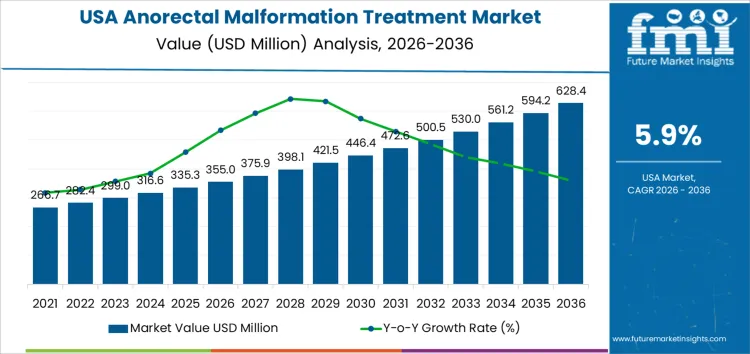
Demand for anorectal malformation treatment in USA is valued at USD 355.0 million in 2026 and is expected to reach USD 628.4 million by 2036, reflecting a CAGR of 5.9%. Demand grows due to improved neonatal screening, higher diagnosis rates, and advances in pediatric surgical care that support early intervention and long-term outcome management. Expansion of specialized pediatric centers and multidisciplinary care models strengthens treatment access across regions.
Quick Stats for Demand for Anorectal Malformation Treatment in USA
- USA Anorectal Malformation Treatment Sales Value (2026): USD 355.0 million
- USA Anorectal Malformation Treatment Forecast Value (2036): USD 628.4 million
- USA Anorectal Malformation Treatment Forecast CAGR (2026 to 2036): 5.9%
- Leading Treatment Type Segment in USA: Anorectal Repair
- Key Growth Regions in USA: West USA, South USA, Northeast USA, Midwest USA
- Top Players in USA: Becton, Dickinson and Company; Medtronic; Stryker; Ethicon (Johnson & Johnson); Pediatric Surgical Associates / Care Networks
Anorectal repair leads treatment-type usage because definitive surgical correction remains central to functional restoration and quality-of-life improvement. Surgeons prioritize techniques that enable precise anatomical reconstruction, reduced complication risk, and better continence outcomes. Adoption of minimally invasive approaches, enhanced perioperative care, and improved postoperative management protocols supports consistent procedural volumes.
West USA, South USA, Northeast USA, and Midwest USA represent key growth regions driven by concentration of tertiary pediatric hospitals, surgical expertise, and referral networks. Becton, Dickinson and Company, Medtronic, Stryker, Ethicon (Johnson & Johnson), and Pediatric Surgical Associates / Care Networks anchor competitive activity through pediatric-focused surgical instruments, advanced devices, and integrated care solutions aligned with evolving clinical standards and long-term patient management needs across the United States.
USA Anorectal Malformation Treatment Key Takeaways
| Metric | Value |
|---|---|
| USA Anorectal Malformation Treatment Sales Value (2026) | USD 355.0 million |
| USA Anorectal Malformation Treatment Forecast Value (2036) | USD 628.4 million |
| USA Anorectal Malformation Treatment Forecast CAGR (2026 to 2036) | 5.9% |
Why is the Demand for Anorectal Malformation Treatment in USA Growing?
Demand for anorectal malformation treatment in the United States grows due to improved neonatal survival rates, early diagnosis, and structured long term care pathways. Advanced prenatal imaging and postnatal screening increase identification of congenital anorectal conditions shortly after birth. Higher survival of premature and low birth weight infants raises incidence of complex congenital anomalies requiring surgical intervention. Pediatric surgical centers expand specialized programs focused on staged repair, bowel management, and long term functional outcomes. Clinical practice emphasizes early corrective surgery combined with multidisciplinary follow up involving gastroenterology, urology, and rehabilitation services.
Growth in pediatric healthcare infrastructure improves referral access to tertiary care centers with expertise in complex congenital disorders. Awareness among parents and clinicians supports timely treatment planning and postoperative management. Advances in minimally invasive surgical techniques improve recovery profiles and reduce complication rates. Long term survivorship care increases demand for ongoing monitoring of continence, nutrition, and quality of life outcomes into adolescence and adulthood. Insurance coverage for pediatric surgical care and follow up services supports sustained utilization. Research activity and outcome registries strengthen standardized treatment protocols across hospitals, reinforcing consistent demand for specialized anorectal malformation treatment services nationwide.
How Are the Segments Classified in the Demand for Anorectal Malformation Treatment in USA?
Demand for anorectal malformation treatment in USA is shaped by early neonatal diagnosis, availability of pediatric surgical expertise, and structured long-term care pathways. Providers evaluate procedural safety, staged intervention planning, postoperative outcomes, and continuity of follow-up care. Adoption patterns reflect concentration within tertiary hospitals supported by multidisciplinary pediatric teams, standardized surgical protocols, and coordinated inpatient and outpatient management models.
Which Treatment Approach Accounts for the Highest Share of Anorectal Malformation Care in USA?
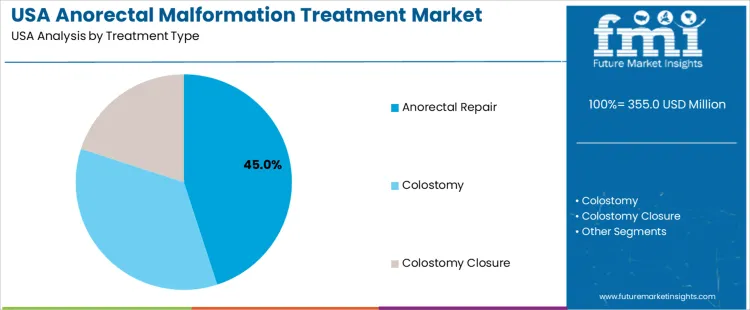
Anorectal repair holds 45.0%, accounting for the highest treatment share in USA. Definitive repair procedures address anatomical correction and functional restoration, forming the central component of long-term management strategies. Surgical planning emphasizes precision, timing, and preservation of continence-related structures. Colostomy holds 35.0%, supporting staged management in complex or high-risk neonatal cases requiring diversion before definitive correction. Colostomy closure holds 20.0%, completing treatment pathways following stabilization and corrective surgery. Treatment distribution reflects clinical priority for definitive repair while maintaining staged approaches to manage procedural risk.
Key Points
- Anorectal repair leads due to role in definitive correction.
- Colostomy supports staged management in complex cases.
- Closure procedures complete structured surgical pathways.
Which End-Use Setting Dominates Anorectal Malformation Treatment Demand in USA?
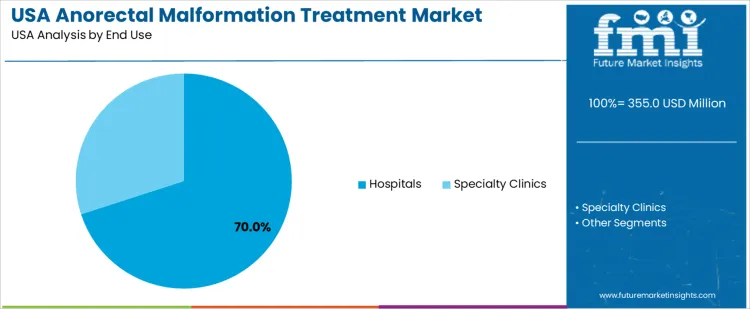
Hospitals hold 70.0%, dominating anorectal malformation treatment demand in USA. Tertiary and children’s hospitals provide neonatal intensive care, pediatric surgery capability, and perioperative monitoring required for complex congenital interventions. These settings support multidisciplinary coordination across surgery, neonatology, and postoperative care. Specialty clinics hold 30.0%, focusing on outpatient evaluation, follow-up monitoring, and long-term functional management after primary surgical intervention. End-use distribution reflects reliance on hospital-based infrastructure for initial treatment and staged procedures.
Key Points
- Hospitals dominate due to surgical and intensive care needs.
- Multidisciplinary teams support complex congenital treatment.
- Specialty clinics manage follow-up and long-term care.
What are the Key Dynamics in the Anorectal Malformation Treatment Industry?
Demand increases as pediatric surgical centers, congenital anomaly specialists, and multidisciplinary care teams manage anorectal malformations identified at birth and in early childhood across USA. Early diagnosis through neonatal screening and prenatal imaging supports timely referral to pediatric surgeons. Adoption aligns with advanced surgical techniques, expanded access to specialized care, and structured follow-up integrated into congenital anomaly programs within tertiary care networks.
How do incidence patterns and pediatric surgical standards drive demand in USA?
Anorectal malformations present at birth and require surgical evaluation to restore function, prevent complications, and support long-term quality of life. Pediatric surgeons at children’s hospitals and specialized centers use posterior sagittal anorectoplasty, minimally invasive techniques, and staged reconstructive approaches. Early intervention reduces risk of stricture, incontinence, and associated urogenital anomalies. Integrated care models link pediatric gastroenterology, urology, and pelvic floor therapy to comprehensive treatment plans. Prenatal counseling and genetic evaluation support family guidance and care coordination. Referral networks ensure access to high-volume centers with expertise in complex congenital anomalies. Surgeon experience and institutional standards influence outcomes and procedure selection.
How do insurance coverage, specialist availability, and long-term care need influence demand stability in USA?
Treatment cost and access depend on insurance coverage under Medicaid, private plans, and Children’s Health Insurance Program, affecting choice of facility and timing of intervention. Availability of pediatric colorectal specialists and trained support staff varies by region, influencing travel needs for families outside metropolitan centers. Long-term follow-up including bowel management programs and functional therapy increases utilization of outpatient services. Care coordination across specialties adds administrative complexity. Early diagnosis rates and newborn screening practices shape procedure volumes. Demand remains steady due to clinical necessity, while growth depends on equitable access, specialist training pathways, and integration of long-term function support within USA healthcare delivery systems.
How Is Demand for Anorectal Malformation Treatment in the USA Evolving by Region?
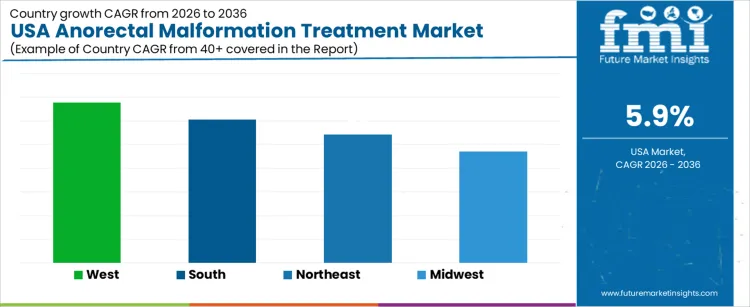
Demand for anorectal malformation treatment in the USA is increasing due to improved neonatal diagnosis, survival outcomes, and structured pediatric surgical care. West USA leads with a 6.8% CAGR, supported by advanced children’s hospitals and early intervention protocols. South USA follows at 6.1%, driven by population growth and expansion of pediatric specialty services. Northeast USA records a 5.4% CAGR, shaped by academic medicine, referral-based care, and standardized surgical pathways. Midwest USA posts 4.7%, reflecting integrated hospital networks and stable case volumes. Regional variation reflects access to pediatric surgery centers, referral patterns, diagnostic timing, and long-term follow-up infrastructure across the USA.
| Region | CAGR (2026 to 2036) |
|---|---|
| West USA | 6.8% |
| South USA | 6.1% |
| Northeast USA | 5.4% |
| Midwest USA | 4.7% |
What clinical and infrastructure factors support growth in West USA?
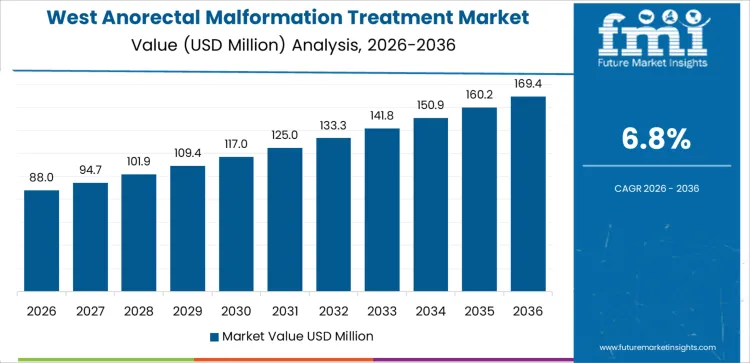
West USA drives demand through concentration of tertiary pediatric hospitals, neonatal intensive care units, and pediatric colorectal surgery specialists. Region’s CAGR of 6.8% reflects early diagnosis, timely surgical intervention, and structured post-operative care pathways. Hospitals manage complex cases using multidisciplinary teams involving surgeons, neonatologists, and gastroenterologists. Advanced imaging and prenatal screening support early case identification. Families benefit from proximity to specialized centers offering long-term follow-up for continence management and associated anomalies. Demand favors comprehensive treatment programs integrating surgery, rehabilitation, and outpatient monitoring. Growth remains care-quality driven, aligned with early intervention standards and referral inflows from surrounding states.
- High concentration of pediatric specialty centers
- Early diagnosis and surgical intervention
- Multidisciplinary treatment models
- Strong long-term follow-up infrastructure
Why does South USA show expand demand for anorectal malformation treatment?
South USA demand is shaped by rising birth volumes, improved access to pediatric surgical services, and regional hospital expansion. Region’s CAGR of 6.1% reflects increasing capacity to diagnose and treat congenital anomalies at birth. Health systems invest in pediatric surgery units and referral coordination to reduce transfer delays. Community hospitals improve screening and stabilization prior to referral. Families increasingly access follow-up care through regional specialty clinics. Demand growth remains volume-driven, supported by demographic trends and broader availability of specialized pediatric care across urban and suburban areas.
- Population growth influencing case volumes
- Expansion of pediatric surgical capacity
- Improved referral and transfer coordination
- Broader access to specialty follow-up care
How do academic medical centers influence treatment demand in Northeast USA?
Northeast USA demand reflects strong presence of academic hospitals, teaching programs, and evidence-based pediatric care. Region’s CAGR of 5.4% is supported by referral-based treatment of complex anorectal malformations. Surgeons follow standardized protocols informed by clinical research and long-term outcome studies. Hospitals emphasize surgical precision, complication management, and structured continence programs. Families access coordinated care involving pediatric surgery, urology, and nutrition services. Demand growth aligns with stable referral patterns and emphasis on care outcomes rather than expanding birth volumes.
- Academic hospital-led treatment delivery
- Standardized and research-informed protocols
- Management of complex referral cases
- Coordinated multidisciplinary care models
What factors contribute to steady treatment demand in Midwest USA?
Midwest USA demand is anchored in integrated health systems, regional children’s hospitals, and consistent neonatal care access. Region’s CAGR of 4.7% reflects stable treatment volumes and disciplined care delivery. Hospitals focus on timely surgical correction, standardized post-operative management, and cost-controlled care pathways. Referral distances influence centralized treatment at regional hubs. Long-term follow-up remains structured but conservative in scale. Growth remains system-driven, aligned with predictable case incidence and sustained pediatric surgical coverage rather than expansion of specialty centers.
- Integrated regional healthcare systems
- Centralized pediatric surgical hubs
- Standardized and cost-managed care delivery
- Stable and predictable case incidence
What is the competitive landscape of demand for anorectal malformation treatment in the USA?
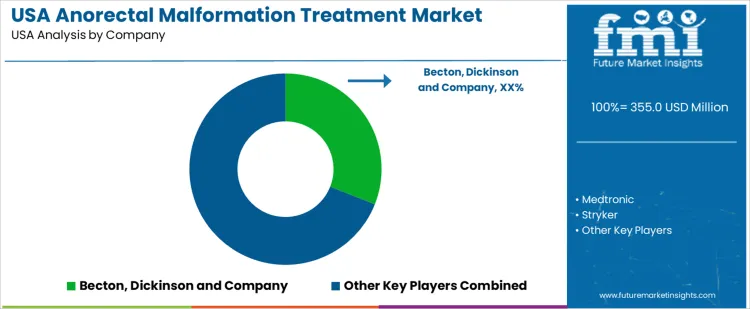
Demand for anorectal malformation treatment in the USA is driven by congenital anomaly prevalence, pediatric surgical care standards, and multidisciplinary management protocols involving neonatology, pediatric surgery, and colorectal specialty clinics. Treatment pathways include initial surgical correction such as posterior sagittal anorectoplasty, staged reconstruction for complex anomalies, and long-term management of bowel function and continence. Buyers in clinical settings evaluate surgical device compatibility, evidence-based procedural tools, postoperative care protocols, and integration with clinical decision support systems. Procurement teams prioritize suppliers with U.S. regulatory approvals, clinician training programs, and reliable product performance for delicate pediatric interventions. Trend in the USA market reflects emphasis on standardized care pathways, outcomes tracking, and enhanced perioperative support improving functional results and quality of life.
Pediatric surgical specialists in the USA frequently select products and technologies supported by robust clinical evidence; leading instrument providers include Becton, Dickinson and Company supplying surgical and diagnostic tools used in colorectal procedures. Medtronic participates with electrosurgical and minimally invasive surgical platforms used in corrective operations. Stryker supports demand through imaging and operative suite equipment facilitating precision in reconstructive procedures. Ethicon (Johnson & Johnson) contributes with advanced stapling and suturing technologies used in complex anorectal repairs. Pediatric Surgical Associates and Care Networks operate as clinical service organizations delivering specialized care rather than manufacturing devices, influencing best practices and device adoption. Competitive positioning in the USA reflects regulatory compliance, clinical evidence support, surgeon familiarity, and integration with pediatric care models focused on long-term functional outcomes.
Key Players in USA Anorectal Malformation Treatment Demand
- Becton, Dickinson and Company
- Medtronic
- Stryker
- Ethicon (Johnson & Johnson)
- Pediatric Surgical Associates/Care Networks
Scope of the Report
| Items | Details |
|---|---|
| Quantitative Units | USD million |
| Treatment Type | Anorectal Repair; Colostomy; Colostomy Closure |
| End Use | Hospitals; Specialty Clinics |
| Regions Covered | West USA; South USA; Northeast USA; Midwest USA |
| Key Companies Profiled | Becton, Dickinson and Company; Medtronic; Stryker; Ethicon (Johnson & Johnson); Pediatric Surgical Associates / Care Networks |
| Additional Attributes | Demand is driven by congenital birth incidence rates, early pediatric diagnosis, and availability of specialized pediatric surgery centers. Hospital settings account for most procedures due to surgical complexity. Adoption is influenced by neonatal care infrastructure, surgeon expertise, and reimbursement coverage for pediatric surgical interventions. |
USA Anorectal Malformation Treatment Demand by Segments
Treatment Type:
- Anorectal Repair
- Colostomy
- Colostomy Closure
End Use:
- Hospitals
- Specialty Clinics
Region:
- West USA
- South USA
- Northeast USA
- Midwest USA
Frequently Asked Questions
How big is the demand for anorectal malformation treatment in USA in 2026?
The demand for anorectal malformation treatment in USA is estimated to be valued at USD 355.0 million in 2026.
What will be the size of anorectal malformation treatment in USA in 2036?
The market size for the anorectal malformation treatment in USA is projected to reach USD 628.4 million by 2036.
How much will be the demand for anorectal malformation treatment in USA growth between 2026 and 2036?
The demand for anorectal malformation treatment in USA is expected to grow at a 5.9% CAGR between 2026 and 2036.
What are the key product types in the anorectal malformation treatment in USA?
The key product types in anorectal malformation treatment in USA are anorectal repair, colostomy and colostomy closure.
Which end use segment is expected to contribute significant share in the anorectal malformation treatment in USA in 2026?
In terms of end use, hospitals segment is expected to command 70.0% share in the anorectal malformation treatment in USA in 2026.
Preview the report firsthand - request a free sample
Get SampleGet the brochure for pricing and purchase details.
Get PDFTable of Content
- Executive Summary
- USA Market Outlook
- Demand-side Trends
- Supply-side Trends
- Technology Roadmap Analysis
- Analysis and Recommendations
- Market Overview
- Market Coverage / Taxonomy
- Market Definition / Scope / Limitations
- Market Background
- Market Dynamics
- Drivers
- Restraints
- Opportunity
- Trends
- Scenario Forecast
- Demand in Optimistic Scenario
- Demand in Likely Scenario
- Demand in Conservative Scenario
- Opportunity Map Analysis
- Product Life Cycle Analysis
- Supply Chain Analysis
- Investment Feasibility Matrix
- Value Chain Analysis
- PESTLE and Porter’s Analysis
- Regulatory Landscape
- Regional Parent Market Outlook
- Production and Consumption Statistics
- Import and Export Statistics
- Market Dynamics
- USA Market Analysis 2021 to 2025 and Forecast, 2026 to 2036
- Historical Market Size Value (USD Million) Analysis, 2021 to 2025
- Current and Future Market Size Value (USD Million) Projections, 2026 to 2036
- Y-o-Y Growth Trend Analysis
- Absolute $ Opportunity Analysis
- USA Market Pricing Analysis 2021 to 2025 and Forecast 2026 to 2036
- USA Market Analysis 2021 to 2025 and Forecast 2026 to 2036, By Treatment Type
- Introduction / Key Findings
- Historical Market Size Value (USD Million) Analysis By Treatment Type , 2021 to 2025
- Current and Future Market Size Value (USD Million) Analysis and Forecast By Treatment Type , 2026 to 2036
- Anorectal Repair
- Colostomy
- Colostomy Closure
- Anorectal Repair
- Y-o-Y Growth Trend Analysis By Treatment Type , 2021 to 2025
- Absolute $ Opportunity Analysis By Treatment Type , 2026 to 2036
- USA Market Analysis 2021 to 2025 and Forecast 2026 to 2036, By End Use
- Introduction / Key Findings
- Historical Market Size Value (USD Million) Analysis By End Use, 2021 to 2025
- Current and Future Market Size Value (USD Million) Analysis and Forecast By End Use, 2026 to 2036
- Hospitals
- Specialty Clinics
- Hospitals
- Y-o-Y Growth Trend Analysis By End Use, 2021 to 2025
- Absolute $ Opportunity Analysis By End Use, 2026 to 2036
- Market Structure Analysis
- Competition Dashboard
- Competition Benchmarking
- Market Share Analysis of Top Players
- By Regional
- By Treatment Type
- By End Use
- Competition Analysis
- Competition Deep Dive
- Becton, Dickinson and Company
- Overview
- Product Portfolio
- Profitability by Market Segments (Product/Age /Sales Channel/Region)
- Sales Footprint
- Strategy Overview
- Marketing Strategy
- Product Strategy
- Channel Strategy
- Medtronic
- Stryker
- Ethicon (Johnson & Johnson)
- Pediatric Surgical Associates/Care Networks
- Becton, Dickinson and Company
- Competition Deep Dive
- Assumptions & Acronyms Used
- Research Methodology


