

- Industry Size (2025)
- USD 194.1 Mn
- Forecast (2035)
- USD 337.8 Mn
- CAGR (2025 to 2035)
- 5.7%
Demand for Vitamin B Test in USA Forecast and Outlook 2025 to 2035
The demand for Vitamin B tests in the USA is expected to grow from USD 194.1 million in 2025 to USD 337.8 million by 2035, reflecting a compound annual growth rate (CAGR) of 5.7%. Vitamin B testing is essential for diagnosing deficiencies in various forms of Vitamin B (such as B12, B6, and folate), which can lead to significant health issues if left untreated. With increasing awareness of the importance of maintaining proper Vitamin B levels for overall health, particularly in aging populations and those with specific dietary restrictions, the market for Vitamin B testing is expected to expand steadily.
The market will experience consistent growth, starting at USD 194.1 million in 2025 and increasing to USD 205.1 million in 2026, USD 216.8 million in 2027, and USD 229.2 million in 2028. By 2029, demand for Vitamin B tests will rise to USD 242.2 million, continuing its upward trajectory through the 2030s. By 2035, the demand for Vitamin B testing is projected to reach USD 337.8 million, driven by the growing focus on preventive healthcare and early diagnosis of deficiencies.
Quick Stats of the Demand for Vitamin B Test in USA
- Demand for Vitamin B Test in USA Value (2025): USD 194.1 million
- Demand for Vitamin B Test in USA Forecast Value (2035): USD 337.8 million
- Demand for Vitamin B Test in USA Forecast CAGR (2025-2035): 5.7%
- Demand for Vitamin B Test in USA Key Product Type: 47% Vitamin B12
- Demand for Vitamin B Test in USA Key Growth Regions: West USA, South USA, Northeast USA, Midwest USA
- Demand for Vitamin B Test in USA Key Players: Abbott Laboratories, Quest Diagnostics, Labcorp, Siemens Healthineers
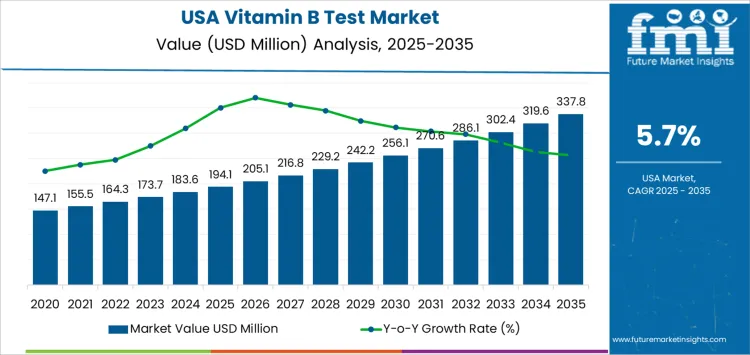
What is the Growth Forecast for the Vitamin B Test Industry in USA through 2035?
The contribution of volume vs price growth in the Vitamin B test market reflects a more significant role for volume-driven expansion in the earlier years of the forecast period (2025-2029). The primary driver for market growth during these years is expected to be the increase in the number of tests conducted as awareness of Vitamin B deficiencies and their health impacts grows. As demand for testing rises, particularly among aging populations, individuals with poor dietary intake, and those at risk for deficiency-related conditions, volume growth will be a significant contributor to market expansion.
In the latter part of the forecast period (2029–2035), price growth is expected to become a more prominent factor as technological advancements in testing methods and improved diagnostic accuracy lead to higher-value, more efficient tests. This could include integrating Vitamin B tests into comprehensive health check-ups or developing more sophisticated tests, which may be priced higher due to enhanced capabilities or convenience. However, despite this price growth, the overall market will continue to be primarily driven by volume increases as demand for Vitamin B testing continues to grow, particularly in the healthcare sector, where early diagnosis and prevention of deficiencies become increasingly prioritized.
USA Vitamin B Industry Key Takeaways
| Metric | Value |
|---|---|
| Industry Sales Value (2025) | USD 194.1 million |
| Industry Forecast Value (2035) | USD 337.8 million |
| Industry Forecast CAGR (2025-2035) | 5.7% |
Why is the Demand for Vitamin B Testing in USA Growing?
Demand for vitamin B testing in the USA is rising as awareness increases about the health risks associated with deficiencies in B vitamins-especially vitamin B₁₂. Deficiency in B₁₂ can cause anemia, neurological symptoms, and general fatigue. Many individuals, including older adults, vegetarians or vegans, and people with certain digestive disorders, are at a higher risk of deficiency. Because of this, more healthcare providers recommend periodic testing to detect low levels early and prevent longer term complications. Public health focus on preventive care and regular health check ups supports broader use of vitamin B tests to maintain wellness rather than treat acute illness.
At the same time improvements in diagnostic capacity and rising interest in wellness and preventive health support growth in the market for vitamin B tests. Better lab techniques and more accurate assays make tests more reliable. Growing physician awareness of subtle presentations of deficiency-often without overt symptoms-encourages more frequent screening. In addition, as chronic conditions related to aging, metabolic health, and diet become more common, regular monitoring of vitamin B levels becomes more relevant. As dietary patterns shift, aging population grows, and preventive health becomes more standard practice, demand for vitamin B testing in the USA is likely to grow steadily.
What Is the Current State of the Demand for Vitamin B Tests in the USA in Terms of Product and Application?
The demand for vitamin B tests in the USA is primarily driven by product and application. The leading product type is Vitamin B12, which accounts for 47% of the market share, while ELISA (Enzyme-Linked Immunosorbent Assay) dominates the application segment, capturing 38% of the demand. Vitamin B tests are essential for diagnosing deficiencies in vitamins like B12 and B9 (folic acid), which can lead to a variety of health issues such as anemia, nerve damage, and impaired cell function. As healthcare professionals focus on detecting and treating vitamin deficiencies early, the demand for reliable, accurate testing methods continues to grow.
How Is Vitamin B12 Leading the Demand for Vitamin B Tests in the USA?
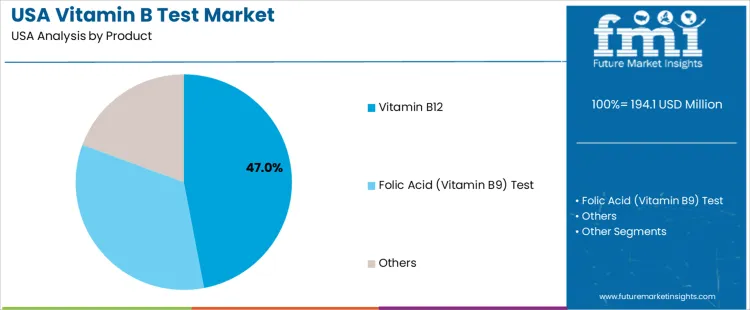
Vitamin B12 leads the demand for vitamin B tests in the USA, holding 47% of the market share. Vitamin B12 testing is crucial for diagnosing deficiencies in this essential nutrient, which plays a key role in nerve function, DNA production, and red blood cell formation. Vitamin B12 deficiency is particularly prevalent among older adults, vegetarians, and individuals with certain health conditions, making regular testing important for early diagnosis and treatment.
The demand for vitamin B12 tests is driven by the increasing awareness of vitamin deficiencies and their potential impact on overall health. Deficiency in vitamin B12 can lead to symptoms such as fatigue, weakness, memory loss, and neurological issues, making accurate testing a critical tool for clinicians. As more people seek proactive health management and preventative care, the demand for vitamin B12 testing will remain strong. Additionally, the rise in geriatric populations, along with the growing trend of plant-based diets, is expected to further drive the need for B12 testing in clinical and healthcare settings across the USA.
How Is ELISA Leading the Application Demand for Vitamin B Tests in the USA?
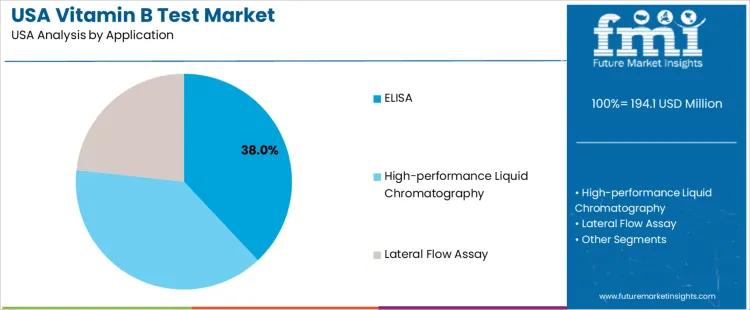
ELISA (Enzyme-Linked Immunosorbent Assay) leads the application demand for vitamin B tests in the USA, capturing 38% of the market share. ELISA is a widely used and reliable method for detecting and quantifying substances, including vitamins like B12 and folic acid, in biological samples. This immunoassay technique is highly valued for its sensitivity, specificity, and ease of use, making it ideal for routine diagnostic testing in clinical laboratories.
The demand for ELISA-based vitamin B tests is driven by its accuracy and efficiency in detecting vitamin deficiencies. It is particularly useful for large-scale screening and for diagnosing both chronic and acute conditions related to vitamin B deficiencies. As healthcare providers continue to prioritize accurate, non-invasive diagnostic methods for early disease detection, ELISA will remain the preferred testing method. With advancements in technology and increasing healthcare awareness, the demand for ELISA-based tests is expected to grow, reinforcing its dominance in the market for vitamin B testing applications in the USA.
What is the Demand Dynamics for Vitamin B Testing in the USA?
Demand for vitamin B testing in the USA is increasing as more individuals and healthcare providers focus on identifying nutritional deficiencies. Vitamin B tests, especially for B12 and folate, are used to check for deficiencies that can affect health, particularly in relation to blood, nerve, and metabolic functions. As the population becomes more aware of the effects of vitamin deficiencies and the benefits of preventive healthcare, more people are opting for these tests. The overall demand for vitamin B testing continues to grow, especially in clinical and wellness settings.
What are the Drivers of Demand for Vitamin B Testing in the USA?
The demand for vitamin B testing is driven by several factors. The increasing prevalence of health conditions that affect vitamin B absorption, such as gastrointestinal disorders, aging, and chronic diseases, has raised the need for regular testing. The growing trend of preventive healthcare and wellness screenings has led more individuals to seek out testing as part of their routine health checks. Additionally, the growing recognition of the neurological, hematologic, and metabolic consequences of vitamin B deficiency in conditions like anemia, neuropathy, and cognitive decline drives clinicians to test more frequently. Advancements in diagnostic methods and the availability of home testing kits make it easier for individuals to access vitamin B testing without needing to visit a healthcare provider.
What are the Restraints on Demand for Vitamin B Testing in the USA?
Despite increasing demand, there are several restraints on the adoption of vitamin B testing. One key restraint is that vitamin B deficiencies are relatively uncommon in the general population due to widespread food fortification and balanced diets. This reduces the perceived need for testing, especially for individuals without specific symptoms. Another challenge is that testing for vitamin B deficiencies can be complex and may require multiple biomarkers or follow-up tests to confirm results. The cost of comprehensive B-vitamin panels and the lack of consistent insurance coverage can also limit accessibility for some individuals. Additionally, variability in test interpretation and the overlap of deficiency symptoms with other health conditions can reduce the frequency with which vitamin B tests are ordered.
What are the Key Trends Influencing Demand for Vitamin B Testing in the USA?
A key trend is the growing focus on preventive healthcare, where vitamin B testing is becoming more integrated into routine check-ups and wellness screenings. As people become more health-conscious and proactive about nutrition, there is increasing demand for tests that detect deficiencies early. Another trend is the use of home testing kits, which provide individuals with easier access to vitamin B testing without needing a healthcare provider’s referral. Advancements in diagnostic technology, such as more reliable assays and sensitive biomarkers, are also improving the accuracy of vitamin B testing, helping to identify deficiencies before symptoms become severe. Additionally, the aging population, along with an increase in chronic conditions, is expanding the market for vitamin B testing as older adults are more likely to experience deficiencies.
What is the Regional Demand Outlook for Vitamin B Testing in the USA?
The demand for Vitamin B testing in the USA is expected to rise across all regions, with the West leading at a CAGR of 6.6%. The South follows at 5.9%, the Northeast at 5.2%, and the Midwest at 4.6%. These variations reflect differences in demographics, healthcare access, clinical screening practices, and growing awareness of nutritional health. Increased recognition of vitamin B deficiencies, especially among older adults, vegetarians, and individuals with absorption issues, along with greater preventive health screening and improved diagnostic methods, contribute to this upward trend in demand.
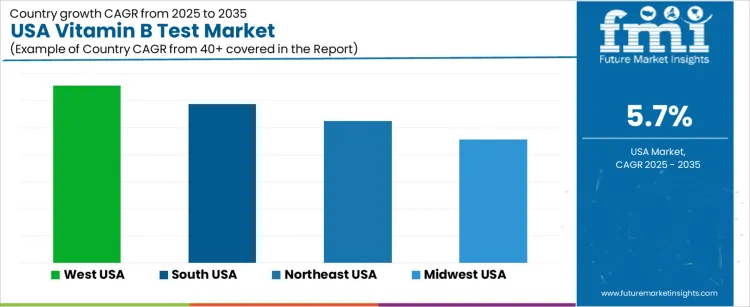
| Region | CAGR (%) |
|---|---|
| West USA | 6.6 |
| South USA | 5.9 |
| Northeast USA | 5.2 |
| Midwest USA | 4.6 |
What Drives Vitamin B Testing Demand in the West USA?
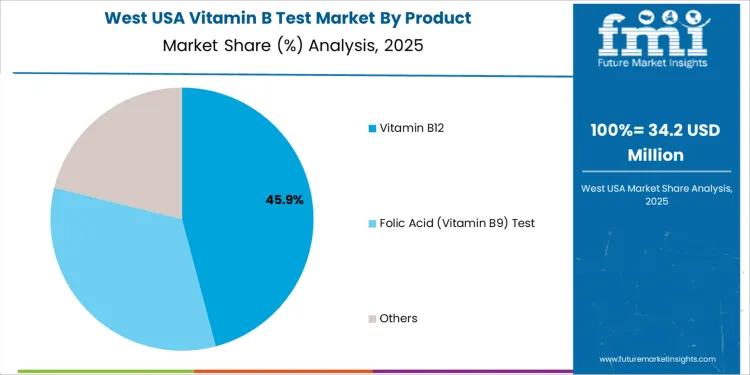
In the West USA, the projected 6.6% annual growth in demand for Vitamin B tests arises from multiple factors. The region tends to have higher health awareness and access to well developed healthcare infrastructure. As populations age and lifestyle choices such as vegetarian or vegan diets increase, more individuals may experience risk factors for B vitamin deficiency. Deficiencies in vitamins like B12 can lead to significant conditions including anemia and neurological problems.
Advances in diagnostic technologies and broader availability of testing through clinics, laboratories, and even point of care or direct to consumer platforms have made vitamin testing more accessible. Routine health check ups increasingly include micronutrient screening as part of preventive healthcare. As a result, demand for tests covering vitamin B complex or individual vitamins, such as B12 or folate, is rising steadily in the West region.
Why Is Vitamin B Testing Demand Growing in the South USA?
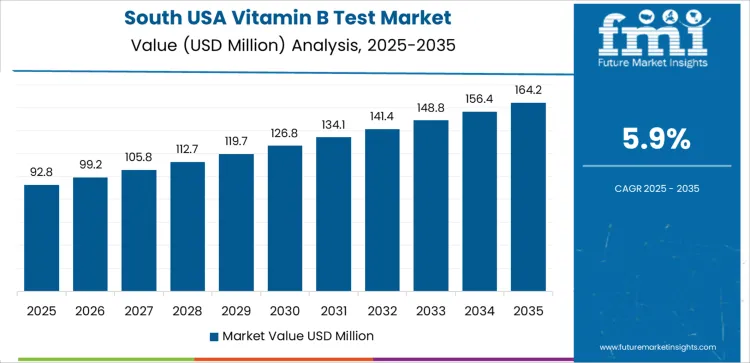
In the South USA, a 5.9% CAGR for vitamin B testing reflects growing clinical and consumer interest in nutritional health. The region includes a substantial portion of the population that may have dietary patterns, chronic conditions, or socioeconomic factors that increase the risk of vitamin B deficiencies. Medical providers may order testing for individuals with symptoms such as fatigue, weakness, or neuropathic signs, or for patients with risk factors such as gastrointestinal disorders, malabsorption, or restrictive diets.
Alongside rising chronic disease burden and awareness of nutritional status, more clinics and diagnostic centers in the South are offering vitamin level testing. As preventive health initiatives and wellness screening gain traction, consumers are more likely to seek vitamin B tests, contributing to steady demand growth in this region.
What Factors Support Vitamin B Testing Demand in the Northeast USA?
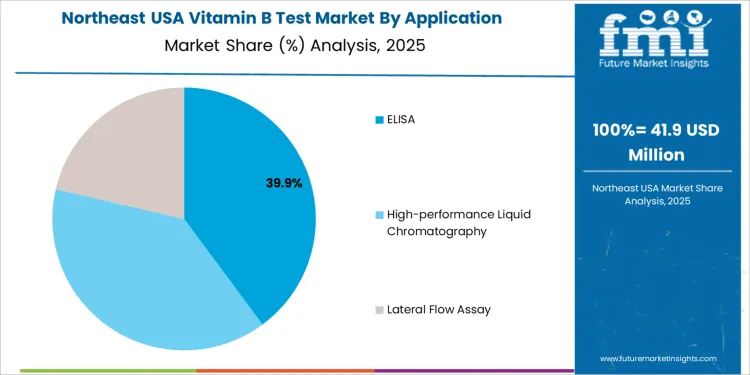
In the Northeast USA, the projected 5.2% CAGR for vitamin B testing reflects stable demand underpinned by established medical infrastructure, higher population density, and availability of diagnostic services. Many healthcare providers in this region follow clinical guidelines recommending screening for vitamin B deficiency when patients present risk factors such as older age, impaired absorption, or certain medications.
Diagnostic methods, including serum B12 measurement, methylmalonic acid or homocysteine testing when needed, and folate assays, are widely accessible across the Northeast. As awareness rises about long term risks associated with undiagnosed B vitamin deficiency-including neurological impairment and anemia-the demand for accurate, timely vitamin B testing continues to grow in this region.
How Is Demand for Vitamin B Testing Evolving in the Midwest USA?
In the Midwest USA, the 4.6% CAGR points to gradual but consistent growth in demand for vitamin B testing. The region’s demographic mix includes both urban and rural areas, with a significant portion of older adults and patients with chronic conditions that increase thrombotic risk. Healthcare infrastructure expansion as well as rising incidence of risk factors such as obesity, diabetes, and sedentary lifestyle contribute to greater need for preventive anticoagulation. Post surgical prophylaxis, management of atrial fibrillation, and treatment of venous thromboembolism remain key applications.
As newer oral anticoagulants become more widely available and cost effective, adoption rises among physicians and patients, sustaining gradual demand growth in the Midwest.
Why Is Overall Demand for Vitamin B Testing Increasing Across the USA?
Several factors drive the nationwide rise in demand for Vitamin B tests. First, there is growing awareness of the health roles played by B vitamins in metabolism, nervous system function, and blood cell formation. Deficiency can lead to serious health consequences such as anemia, neuropathy, and cognitive decline.
Second, demographic changes-including an aging population-increase the number of individuals at risk for B vitamin deficiency. Third, modern healthcare is shifting toward preventive and wellness oriented models, where regular screening for nutrient levels is incorporated into routine care. Finally, advances in diagnostic technology, broader availability of testing via clinics, labs, and direct to consumer services, as well as increasing physician awareness of subclinical deficiencies, make vitamin B testing more common.
What is the Competitive Landscape for the Vitamin B Test Market in the USA?
The demand for vitamin B tests in the USA is growing as awareness rises around nutritional deficiencies, ageing populations, and chronic health conditions that impair nutrient absorption. Vitamin B, especially B12 and folate, plays key roles in neurological function, red blood cell formation, and metabolic health. Deficiencies can lead to anemia, neuropathy, cognitive problems and other health issues. Routine health check ups, preventive wellness screenings, and increased focus on nutrition in healthcare settings drive demand for vitamin B tests. Diagnostic laboratories, hospitals, clinics and wellness centers increasingly incorporate vitamin B panels into standard blood testing regimes. The market expansion is supported by improved access to diagnostic services and growing public interest in preventive healthcare.
In this context several major firms compete for market share. According to your data, Abbott Laboratories holds about 19.2% share. Other significant providers include Quest Diagnostics, Labcorp, Siemens Healthineers and other companies combined. These players differ by type of testing offered, speed of turnaround, assay technologies, panel breadth (single B vitamin vs. full vitamin panel), and laboratory network reach. Some cater to large hospitals and clinical labs offering comprehensive B vitamin panels; others focus on high throughput processing or point of care testing for broader population screening. Their competitive edge lies in accuracy, reliability, testing capacity and convenience for patients and clinicians. As vitamin B deficiency remains a public health concern, competition among these firms will likely intensify to meet rising demand for accessible and effective diagnostic services.
Key Players of the Vitamin B Industry in USA
- Abbott Laboratories
- Quest Diagnostics
- Labcorp
- Siemens Healthineers
- Other Companies (combined)
Scope of the Report
| Items | Details |
|---|---|
| Quantitative Units | USD Million |
| Regions Covered | USA |
| Product | Vitamin B12, Folic Acid (Vitamin B9) Test, Others |
| Application | ELISA, High-performance Liquid Chromatography, Lateral Flow Assay |
| End-User | Hospitals, Clinics, Homecare Settings, Diagnostic Centers |
| Key Companies Profiled | Abbott Laboratories, Quest Diagnostics, Labcorp, Siemens Healthineers, Other Companies (combined) |
| Additional Attributes | Dollar sales by product and application show strong demand for Vitamin B12 and folic acid tests, particularly in hospitals and diagnostic centers. ELISA is the leading application method, followed by high-performance liquid chromatography for accurate results. Abbott Laboratories and Quest Diagnostics are prominent players, offering advanced testing solutions. The market is expected to grow with increasing awareness of vitamin B deficiencies and the need for more accurate diagnostic tests in clinical and homecare settings. |
Key Segments in the Demand for Vitamin B Test in USA
Product
- Vitamin B12
- Folic Acid (Vitamin B9) Test
- Others
Application
- ELISA
- High-performance Liquid Chromatography
- Lateral Flow Assay
End-user
- Hospitals
- Clinics
- Homecare Settings
- Diagnostic Centers
Region
- Northeast USA
- West USA
- Midwest USA
- South USA
Frequently Asked Questions
How big is the demand for vitamin B test in USA in 2025?
The demand for vitamin B test in USA is estimated to be valued at USD 194.1 million in 2025.
What will be the size of vitamin B test in USA in 2035?
The market size for the vitamin B test in USA is projected to reach USD 337.8 million by 2035.
How much will be the demand for vitamin B test in USA growth between 2025 and 2035?
The demand for vitamin B test in USA is expected to grow at a 5.7% CAGR between 2025 and 2035.
What are the key product types in the vitamin B test in USA?
The key product types in vitamin B test in USA are vitamin b12, folic acid (vitamin b9) test and others.
Which application segment is expected to contribute significant share in the vitamin B test in USA in 2025?
In terms of application, elisa segment is expected to command 38.0% share in the vitamin B test in USA in 2025.
Preview the report firsthand - request a free sample
Get SampleGet the brochure for pricing and purchase details.
Get PDFTable of Content
- Executive Summary
- USA Market Outlook
- Demand-side Trends
- Supply-side Trends
- Technology Roadmap Analysis
- Analysis and Recommendations
- Market Overview
- Market Coverage / Taxonomy
- Market Definition / Scope / Limitations
- Market Background
- Market Dynamics
- Drivers
- Restraints
- Opportunity
- Trends
- Scenario Forecast
- Demand in Optimistic Scenario
- Demand in Likely Scenario
- Demand in Conservative Scenario
- Opportunity Map Analysis
- Product Life Cycle Analysis
- Supply Chain Analysis
- Investment Feasibility Matrix
- Value Chain Analysis
- PESTLE and Porter’s Analysis
- Regulatory Landscape
- Regional Parent Market Outlook
- Production and Consumption Statistics
- Import and Export Statistics
- Market Dynamics
- USA Market Analysis 2020 to 2024 and Forecast, 2025 to 2035
- Historical Market Size Value (USD Million) Analysis, 2020 to 2024
- Current and Future Market Size Value (USD Million) Projections, 2025 to 2035
- Y-o-Y Growth Trend Analysis
- Absolute $ Opportunity Analysis
- USA Market Pricing Analysis 2020 to 2024 and Forecast 2025 to 2035
- USA Market Analysis 2020 to 2024 and Forecast 2025 to 2035, By Product
- Introduction / Key Findings
- Historical Market Size Value (USD Million) Analysis By Product , 2020 to 2024
- Current and Future Market Size Value (USD Million) Analysis and Forecast By Product , 2025 to 2035
- Vitamin B12
- Folic Acid (Vitamin B9) Test
- Others
- Y-o-Y Growth Trend Analysis By Product , 2020 to 2024
- Absolute $ Opportunity Analysis By Product , 2025 to 2035
- USA Market Analysis 2020 to 2024 and Forecast 2025 to 2035, By Application
- Introduction / Key Findings
- Historical Market Size Value (USD Million) Analysis By Application, 2020 to 2024
- Current and Future Market Size Value (USD Million) Analysis and Forecast By Application, 2025 to 2035
- ELISA
- High-performance Liquid Chromatography
- Lateral Flow Assay
- Y-o-Y Growth Trend Analysis By Application, 2020 to 2024
- Absolute $ Opportunity Analysis By Application, 2025 to 2035
- USA Market Analysis 2020 to 2024 and Forecast 2025 to 2035, By End-user
- Introduction / Key Findings
- Historical Market Size Value (USD Million) Analysis By End-user, 2020 to 2024
- Current and Future Market Size Value (USD Million) Analysis and Forecast By End-user, 2025 to 2035
- Hospitals
- Clinics
- Homecare Settings
- Diagnostic Centers
- Y-o-Y Growth Trend Analysis By End-user, 2020 to 2024
- Absolute $ Opportunity Analysis By End-user, 2025 to 2035
- Market Structure Analysis
- Competition Dashboard
- Competition Benchmarking
- Market Share Analysis of Top Players
- By Regional
- By Product
- By Application
- By End-user
- Competition Analysis
- Competition Deep Dive
- Abbott Laboratories
- Overview
- Product Portfolio
- Profitability by Market Segments (Product/Age /Sales Channel/Region)
- Sales Footprint
- Strategy Overview
- Marketing Strategy
- Product Strategy
- Channel Strategy
- Quest Diagnostics
- Labcorp
- Siemens Healthineers
- Other Companies (combined)
- Abbott Laboratories
- Competition Deep Dive
- Assumptions & Acronyms Used
- Research Methodology


