

- Industry Size (2025)
- USD 112.4 Mn
- Forecast (2035)
- USD 160.1 Mn
- CAGR (2025 to 2035)
- 3.6%
Demand for Electrophoresis Equipment and Supplies in Japan Forecast and Outlook 2025 to 2035
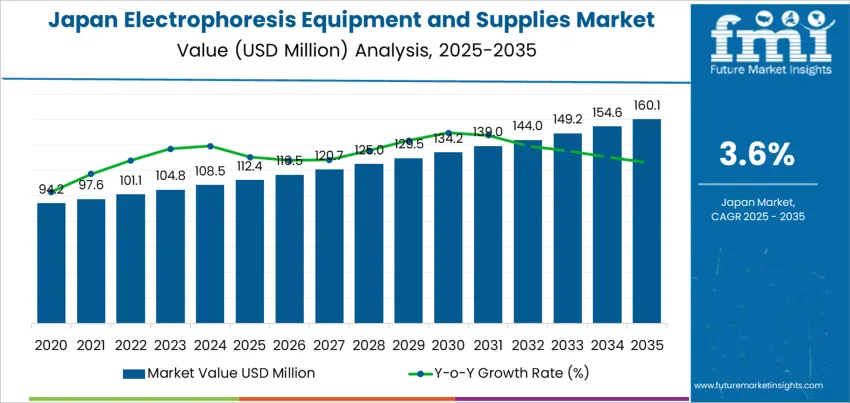
The demand for electrophoresis equipment and supplies in Japan is expected to grow from USD 112.4 million in 2025 to USD 160.1 million by 2035, driven by a compound annual growth rate (CAGR) of 3.6%. Electrophoresis, a widely used technique in laboratories for the separation of proteins, nucleic acids, and other biomolecules, is crucial in medical research, diagnostics, and biotechnology applications. As research and clinical applications expand, particularly in molecular biology, genomics, and proteomics, the demand for electrophoresis equipment, including gel electrophoresis systems, power supplies, and associated supplies, is expected to rise. The growing emphasis on personalized medicine and precision diagnostics will further boost the demand for advanced electrophoresis tools in Japan's medical and research sectors.
The industry will also benefit from advancements in electrophoresis supplies, such as pre-cast gels, staining reagents, and buffers, which enhance the efficiency and reliability of experiments. The increasing focus on research efficiency and reproducibility will drive the adoption of advanced electrophoresis systems that integrate with laboratory automation systems. The rising demand for protein-based therapeutics and biopharmaceuticals will further propel the demand for electrophoresis equipment used in protein analysis. The continued development of cutting-edge electrophoresis techniques, such as capillary electrophoresis and microfluidics, will further support industry growth throughout the forecast period.
Quick Stats of the Demand for Electrophoresis Equipment and Supplies in Japan
- Demand for Electrophoresis Equipment and Supplies in Japan Value (2025): USD 112.4 million
- Demand for Electrophoresis Equipment and Supplies in Japan Forecast Value (2035): USD 160.1 million
- Demand for Electrophoresis Equipment and Supplies in Japan Forecast CAGR (2025-2035): 3.6%
- Demand for Electrophoresis Equipment and Supplies in Japan Leading Product Type: Gel Electrophoresis Systems
- Demand for Electrophoresis Equipment and Supplies in Japan Key Growth Regions: Kyushu & Okinawa, Kanto, Kansai, Chubu, Tohoku, Rest of Japan
- Demand for Electrophoresis Equipment and Supplies in Japan Top Players: Thermo Fisher Scientific, Bio-Rad Laboratories, Agilent Technologies, GE Healthcare, General Electric (GE)
What is the Growth Forecast for the Demand for Electrophoresis Equipment and Supplies in Japan through 2035?
From 2025 to 2030, demand for electrophoresis equipment and supplies is expected to grow from USD 112.4 million to USD 134.2 million, adding USD 21.8 million in value. This period will see robust growth, driven by an increasing focus on advancements in molecular diagnostics and the growing need for high-throughput screening techniques in pharmaceutical and biotechnology industries. Japan’s strong commitment to medical research and development, particularly in the fields of cancer research, genomics, and drug discovery, will continue to fuel the demand for electrophoresis technologies. Innovations in electrophoresis equipment that offer enhanced automation, accuracy, and throughput will attract both academic institutions and commercial research labs, further expanding the industry.
From 2030 to 2035, the demand will continue to rise from USD 134.2 million to USD 160.1 million, contributing USD 25.9 million in value. This phase will be characterized by steady growth as the application of electrophoresis in clinical diagnostics, such as genetic testing and disease biomarkers, continues to expand. The continued emphasis on biotechnology and molecular research in Japan, driven by both government initiatives and private sector investments, will support the demand for electrophoresis equipment. As Japan focuses on improving its healthcare infrastructure and expanding the use of genomic medicine, electrophoresis technologies will play a critical role in facilitating personalized healthcare solutions.
Demand for Electrophoresis Equipment and Supplies in Japan Key Takeaways
| Metric | Value |
|---|---|
| Demand for Electrophoresis Equipment and Supplies in Japan Value (2025) | USD 112.4 million |
| Demand for Electrophoresis Equipment and Supplies in Japan Forecast Value (2035) | USD 160.1 million |
| Demand for Electrophoresis Equipment and Supplies in Japan Forecast CAGR (2025-2035) | 3.6% |
Why is the Demand for Electrophoresis Equipment and Supplies in Japan Growing?
The demand for electrophoresis equipment and supplies in Japan is expanding due to the growing need for advanced laboratory technologies in research and healthcare. Electrophoresis, a technique used for analyzing proteins, nucleic acids, and other biomolecules, is essential in fields such as molecular biology, biotechnology, and diagnostics. Its widespread use in academic, pharmaceutical, and clinical laboratories is driving the increasing demand for specialized equipment and consumables.
A key driver of this growth is the continued emphasis on scientific research and development in Japan. The country’s robust biotechnology and pharmaceutical sectors, along with an expanding healthcare industry, are pushing for more advanced and precise technologies for molecular analysis. Electrophoresis equipment plays a crucial role in the development of new therapies, drugs, and diagnostic tools, supporting the country’s innovative research initiatives.
The growing demand for personalized medicine and precision healthcare is fueling the need for sophisticated diagnostic technologies like electrophoresis. These technologies are enabling better understanding and diagnosis of genetic disorders, leading to more targeted treatments. As Japan continues to invest in healthcare and research infrastructure, the demand for electrophoresis equipment and supplies is projected to grow through 2035.
What is the Segment-Wise Analysis of Demand for Electrophoresis Equipment and Supplies in Japan?
Demand for electrophoresis equipment and supplies in Japan is segmented by type, end use, application, and region. By type, demand is divided into gel electrophoresis systems, capillary electrophoresis systems, accessories, and vacuums, with gel electrophoresis systems leading. The demand is also segmented by end use, including hospitals & diagnostic centers, academic & research institutes, and pharmaceutical & biotechnology companies. In terms of application, demand is divided into protein diagnostics, haemoglobin analysis, and microbial detection. Regionally, demand is spread across Kyushu & Okinawa, Kanto, Kansai, Chubu, Tohoku, and the rest of Japan.
Why Do Gel Electrophoresis Systems Lead the Demand for Electrophoresis Equipment and Supplies in Japan?
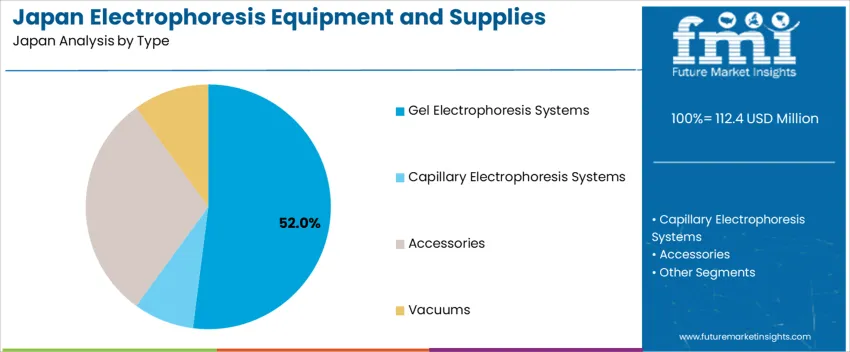
Gel electrophoresis systems lead the demand in Japan due to their well-established role in separating proteins, nucleic acids, and other biomolecules for analysis. These systems are essential tools in medical diagnostics, research, and biotechnology applications, offering precise and reliable results for identifying specific molecules in complex biological samples. The widespread adoption of gel electrophoresis systems in hospitals, diagnostic centers, and academic research institutes contributes to their dominance in the industry. Their versatility, ease of use, and proven track record make gel electrophoresis systems a preferred choice across various scientific and healthcare disciplines. As the demand for molecular diagnostics, proteomics, and genetic analysis continues to rise, gel electrophoresis systems remain at the forefront of electrophoresis equipment in Japan.
Why Do Hospitals & Diagnostic Centers Lead the Demand for Electrophoresis Equipment and Supplies in Japan?
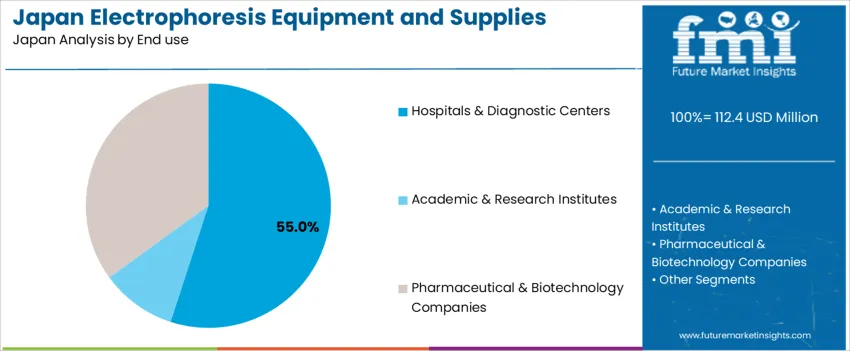
Hospitals & diagnostic centers account for 55% of the demand for electrophoresis equipment and supplies in Japan, driven by their critical role in clinical diagnostics and patient care. Electrophoresis techniques, particularly for protein diagnostics and haemoglobin analysis, are essential in diagnosing a wide range of medical conditions, such as anemia, genetic disorders, and protein-related diseases. Hospitals and diagnostic centers are also at the forefront of implementing advanced diagnostic technologies to meet the growing need for precision medicine. As the healthcare industry in Japan continues to focus on enhancing diagnostic capabilities, particularly in molecular biology and protein analysis, the demand for electrophoresis equipment in these settings will continue to increase. Hospitals and diagnostic centers are expected to remain the dominant end users of electrophoresis equipment and supplies in Japan.
What are the Key Trends, Drivers, and Restraints in Demand for Electrophoresis Equipment and Supplies in Japan?
Electrophoresis remains a standard method for separating and analyzing biomolecules such as DNA, RNA, and proteins. Japanese research institutions, diagnostic labs, and pharmaceutical firms increasingly rely on electrophoresis systems including gel and capillary types for genomics, proteomics, and quality-control applications. Advances such as automation, digital controls, high-throughput systems, and integration with imaging or data-analysis tools are making electrophoresis more precise and efficient. These factors boost demand for both hardware (instruments) and recurring consumables (gels, buffers, reagents). Growth is driven by rising investment in biomedical research, a growing focus on personalized medicine and precision diagnostics, and expansion of the pharmaceutical and life-sciences sectors in Japan.
Why is Demand for Electrophoresis Equipment and Supplies Growing in Japan?
The demand for electrophoresis equipment and supplies is increasing due to the rise in biomedical research investments and a growing focus on personalized medicine and diagnostics. Japan’s pharmaceutical and life-sciences sectors are expanding, driving the need for advanced molecular separation techniques for genetic testing, drug development, and quality control in biopharmaceutical production. Technological innovations in electrophoresis systems, such as automation, improved sensitivity, and faster run times, enhance efficiency in labs, making these systems more attractive. The integration of electrophoresis equipment with digital analysis tools and imaging systems is also promoting greater adoption. The increased use of high-throughput systems in research labs and clinical diagnostics is driving demand.
How are Technological & Industry Innovations Driving Demand for Electrophoresis Equipment and Supplies in Japan?
Technological advancements are significantly enhancing the demand for electrophoresis equipment and supplies in Japan. Innovations such as automation, digital controls, and high-throughput systems have improved the efficiency and precision of electrophoresis methods, making them more reliable for research and diagnostics. The development of ready-to-use gels, improved buffer systems, and capillary electrophoresis kits has contributed to the increasing demand for consumables. These innovations not only streamline laboratory workflows but also support faster, more reproducible results. The integration of electrophoresis equipment with imaging and data-analysis tools allows for advanced molecular analysis, further driving the adoption of these systems in research and clinical applications.
What are the Key Challenges and Risks That Could Limit Electrophoresis Equipment and Supplies Demand in Japan?
One key factor is competition from alternative separation or analysis techniques, such as liquid chromatography or next-generation sequencing, which may replace electrophoresis in certain applications. The high cost of advanced electrophoresis systems and recurring consumables can be a financial burden, especially for smaller research labs or diagnostic facilities with limited budgets. The demand for skilled technicians to operate sophisticated electrophoresis systems and the need to comply with stringent regulatory standards in clinical diagnostics can restrict adoption. As research priorities shift and funding fluctuates, laboratories may reduce their reliance on electrophoresis in favor of other emerging technologies. These factors, along with the evolving focus on newer diagnostic and research techniques, could present obstacles to the long-term growth of electrophoresis equipment and supplies in Japan.
What is the Regional Demand Outlook for Electrophoresis Equipment and Supplies in Japan?
| Region | CAGR (%) |
|---|---|
| Kyushu & Okinawa | 4.5% |
| Kanto | 4.1% |
| Kansai | 3.6% |
| Chubu | 3.2% |
| Tohoku | 2.8% |
| Rest of Japan | 2.7% |
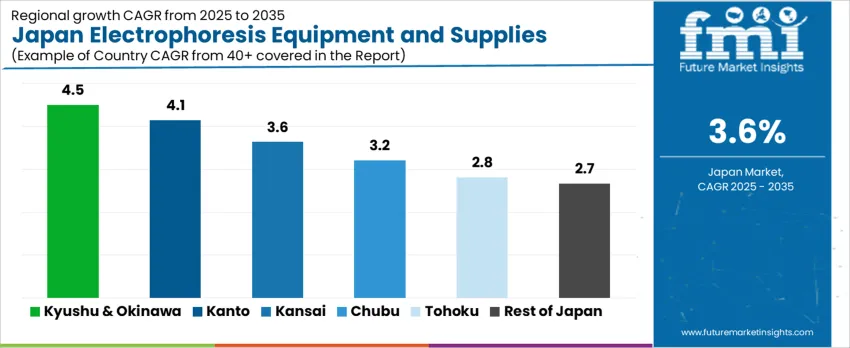
Demand for electrophoresis equipment and supplies in Japan is steadily growing, with Kyushu & Okinawa leading at a 4.5% CAGR, driven by research investments and healthcare expansion. Kanto follows with a 4.1% CAGR, supported by its large biotech and pharmaceutical sectors. Kansai shows a 3.6% CAGR, with growth fueled by academic and medical research applications. Chubu experiences a 3.2% CAGR, with steady demand from healthcare and industrial sectors. Tohoku and the Rest of Japan see moderate growth at 2.8% and 2.7%, respectively, reflecting increased access to advanced technologies in rural and suburban areas. As demand for molecular research and diagnostics rises, electrophoresis equipment adoption continues to grow across Japan.
How is Demand for Electrophoresis Equipment Growing in Kyushu & Okinawa?
Kyushu & Okinawa leads the demand for electrophoresis equipment and supplies, growing at a 4.5% CAGR. The region's strong emphasis on research, particularly in life sciences, along with an increasing number of academic and biotech centers, supports this demand. With Kyushu & Okinawa’s expanding healthcare infrastructure, demand for electrophoresis equipment in diagnostics and research continues to rise. Laboratories in the region are increasingly adopting advanced electrophoresis systems for tasks such as protein and DNA analysis, which are essential for medical, food safety, and environmental research. The growing presence of biotech start-ups and the focus on R&D further boost the region’s demand. The rising adoption of automated systems and microfluidic-based solutions contributes to steady growth. As scientific and clinical research continues to expand, demand for electrophoresis equipment in Kyushu & Okinawa will remain strong.
Why is Demand for Electrophoresis Equipment Rising in Kanto?
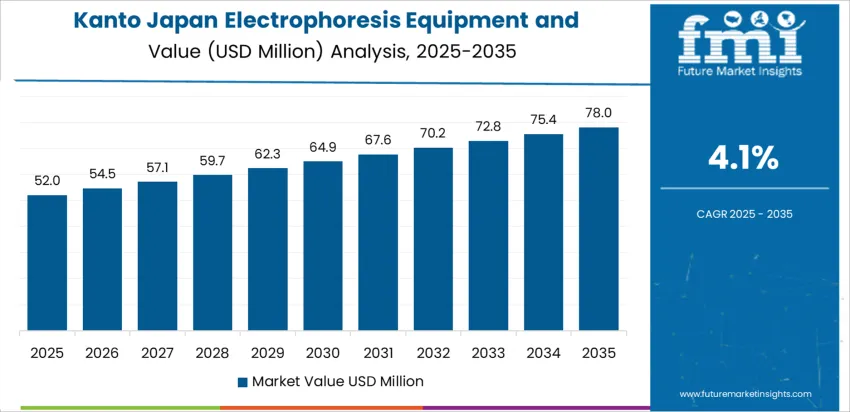
Kanto is experiencing steady demand for electrophoresis equipment, with a 4.1% CAGR. The region, home to Tokyo, Japan's leading biotech and pharmaceutical companies, plays a crucial role in driving the demand for advanced laboratory equipment. As the healthcare and biotechnology sectors in Kanto grow, the need for precise, efficient tools like electrophoresis systems increases. These systems are essential for research and diagnostics related to genomics, proteomics, and molecular biology, sectors in which Kanto leads. The expansion of biotech companies and academic institutions investing in next-generation sequencing technologies contributes to the region’s increasing reliance on electrophoresis for protein and nucleic acid analysis. Kanto’s large population and robust healthcare services drive the demand for diagnostic testing equipment, further supporting the steady growth of electrophoresis systems.
How is Demand for Electrophoresis Equipment Expanding in Kansai?
Kansai is seeing moderate demand for electrophoresis equipment, with a 3.6% CAGR. The region’s strong focus on medical research and development, particularly in cities like Osaka and Kyoto, is driving the need for laboratory technologies such as electrophoresis systems. Kansai’s academic and research institutions, along with growing biotech companies, are increasingly adopting electrophoresis equipment for applications in molecular biology and diagnostics. With a rising demand for protein analysis, DNA sequencing, and other molecular research techniques, the need for advanced electrophoresis equipment continues to expand. The region’s pharmaceutical and clinical research facilities contribute to the adoption of electrophoresis systems for quality control and research purposes. As the healthcare and biotech sectors continue to evolve, demand for electrophoresis equipment in Kansai is expected to grow steadily, with particular growth in research-driven applications.
Why is Demand for Electrophoresis Equipment Growing in Chubu?
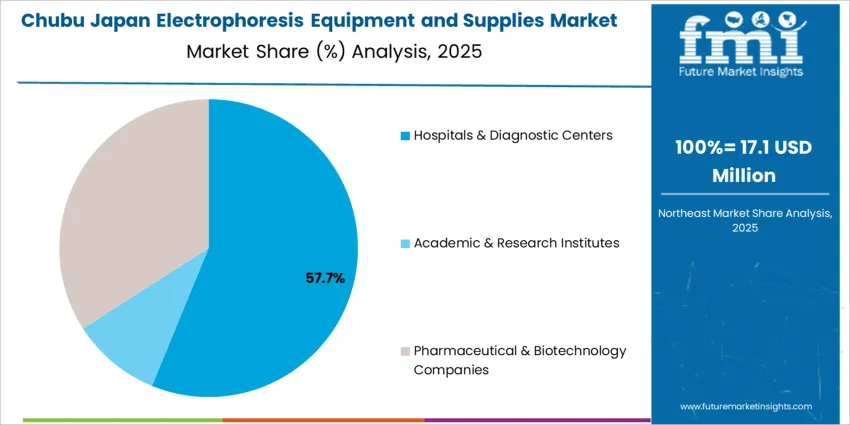
Chubu is experiencing steady demand for electrophoresis equipment, growing at a 3.2% CAGR. The region’s expanding healthcare infrastructure, including hospitals and research centers, is supporting the adoption of electrophoresis systems for a variety of diagnostic and research applications. As Chubu's biotech and pharmaceutical sectors grow, laboratories increasingly turn to electrophoresis for tasks such as protein and nucleic acid analysis. = Chubu’s industrial base, including companies involved in food safety and environmental testing, contributes to the region's demand for electrophoresis equipment. The region's investment in modern laboratory technologies, coupled with the increasing awareness of the importance of accurate diagnostics, is driving demand for electrophoresis systems. As Chubu continues to develop its healthcare and research infrastructure, demand for electrophoresis equipment is expected to grow steadily, supported by rising research and diagnostic needs.
How is Demand for Electrophoresis Equipment Expanding in Tohoku?
Tohoku is seeing moderate demand for electrophoresis equipment, with a 2.8% CAGR. While the region’s demand is smaller compared to major urban areas, increasing healthcare needs and rising interest in life sciences are contributing to steady growth. Laboratories in Tohoku are beginning to adopt electrophoresis systems for molecular biology applications, particularly in diagnostics and food safety. The region’s growing focus on improving healthcare and research capabilities is further supporting the adoption of advanced laboratory equipment. Although growth is slower in Tohoku compared to urban regions like Kanto and Kansai, the increasing need for molecular research, particularly in agriculture and environmental testing, is driving consistent demand. As Tohoku’s healthcare infrastructure continues to develop, demand for electrophoresis equipment is expected to rise gradually.
Why is Demand for Electrophoresis Equipment Steady in the Rest of Japan?
The Rest of Japan is experiencing steady demand for electrophoresis equipment, growing at a 2.7% CAGR. Although demand is lower in rural areas compared to urban centers, there is consistent growth as more laboratories, healthcare centers, and research institutions in smaller regions adopt electrophoresis technologies for diagnostics and research. The rise in awareness of molecular testing, particularly in environmental and food safety sectors, is contributing to this growth. As more rural areas improve access to diagnostic tools and laboratory equipment, demand for electrophoresis systems continues to rise steadily. The increasing accessibility of electrophoresis equipment through online and local retail channels is making it easier for these regions to adopt advanced laboratory technologies. The consistent demand from smaller institutions and healthcare providers across the Rest of Japan supports gradual growth.
What Is Driving the Demand for Electrophoresis Equipment and Supplies in Japan and Who Are the Key Players Shaping the Industry?
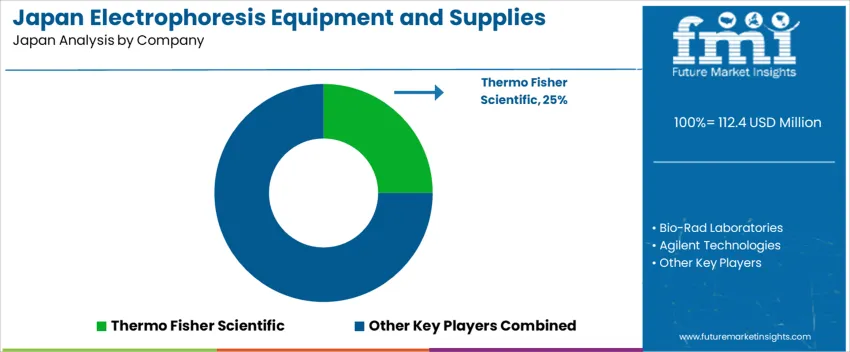
The demand for electrophoresis equipment and supplies in Japan is growing, driven by advancements in research and diagnostics, particularly in the fields of molecular biology, genetics, and biotechnology. Electrophoresis is a key technique used in laboratories for separating proteins, nucleic acids, and other biomolecules based on their size, charge, and other properties. The increasing focus on precision medicine, drug development, and diagnostics is fueling demand for high-quality electrophoresis equipment and supplies. Japan’s strong emphasis on innovation in medical and scientific research, supported by its world-class laboratories and research institutions, continues to drive the adoption of electrophoresis systems in academic and commercial settings.
Key players shaping the electrophoresis equipment industry in Japan include Thermo Fisher Scientific, Bio-Rad Laboratories, Agilent Technologies, GE Healthcare, and General Electric (GE). Thermo Fisher Scientific holds a significant industry share of 25.0%, providing a wide range of electrophoresis equipment, including gel electrophoresis systems, reagents, and consumables. These companies lead the industry by offering innovative, high-performance solutions that meet the evolving needs of researchers and healthcare professionals. Their products are critical for various applications, including protein analysis, DNA sequencing, and gene expression profiling, ensuring that they remain integral to scientific and medical advancements in Japan.
The growth of the electrophoresis equipment industry in Japan is also supported by increased funding for scientific research and development. As Japan continues to prioritize innovation in the healthcare and biotechnology sectors, the demand for cutting-edge laboratory equipment like electrophoresis systems is expected to rise. With the increasing complexity of biological research and the need for more accurate diagnostic tools, electrophoresis equipment will play a pivotal role in advancing scientific discovery and clinical applications in Japan.
Key Players in Japan Electrophoresis Equipment and Supplies Demand
- Thermo Fisher Scientific
- Bio-Rad Laboratories
- Agilent Technologies
- GE Healthcare
- General Electric (GE)
Scope of Report
| Items | Values |
|---|---|
| Quantitative Units (2025) | USD million |
| Type | Gel Electrophoresis Systems, Capillary Electrophoresis Systems, Accessories, Vacuums |
| End Use | Hospitals & Diagnostic Centers, Academic & Research Institutes, Pharmaceutical & Biotechnology Companies |
| Application | Protein Diagnostics, Haemoglobin Analysis, Microbial Detection |
| Region | Kyushu & Okinawa, Kanto, Kansai, Chubu, Tohoku, Rest of Japan |
| Countries Covered | Japan |
| Key Companies Profiled | Thermo Fisher Scientific, Bio-Rad Laboratories, Agilent Technologies, GE Healthcare, General Electric (GE) |
| Additional Attributes | Dollar sales by type and end-user; regional CAGR and adoption trends; growing demand for electrophoresis systems in research and diagnostics; increasing use in protein diagnostics and hemoglobin analysis in clinical settings. |
Japan Electrophoresis Equipment and Supplies Demand by Key Segments
Type
- Gel Electrophoresis Systems
- Capillary Electrophoresis Systems
- Accessories
- Vacuums
End use
- Hospitals & Diagnostic Centers
- Academic & Research Institutes
- Pharmaceutical & Biotechnology Companies
Application
- Protein Diagnostics
- Haemoglobin Analysis
- Microbial Detection
Region
- Kyushu & Okinawa
- Kanto
- Kansai
- Chubu
- Tohoku
- Rest of Japan
Frequently Asked Questions
How big is the demand for electrophoresis equipment and supplies in Japan in 2025?
The demand for electrophoresis equipment and supplies in Japan is estimated to be valued at USD 112.4 million in 2025.
What will be the size of electrophoresis equipment and supplies in Japan in 2035?
The market size for the electrophoresis equipment and supplies in Japan is projected to reach USD 160.1 million by 2035.
How much will be the demand for electrophoresis equipment and supplies in Japan growth between 2025 and 2035?
The demand for electrophoresis equipment and supplies in Japan is expected to grow at a 3.6% CAGR between 2025 and 2035.
What are the key product types in the electrophoresis equipment and supplies in Japan?
The key product types in electrophoresis equipment and supplies in Japan are gel electrophoresis systems, capillary electrophoresis systems, accessories and vacuums.
Which end use segment is expected to contribute significant share in the electrophoresis equipment and supplies in Japan in 2025?
In terms of end use, hospitals & diagnostic centers segment is expected to command 55.0% share in the electrophoresis equipment and supplies in Japan in 2025.
Preview the report firsthand - request a free sample
Get SampleGet the brochure for pricing and purchase details.
Get PDFTable of Content
- Executive Summary
- Japan Market Outlook
- Demand-side Trends
- Supply-side Trends
- Technology Roadmap Analysis
- Analysis and Recommendations
- Market Overview
- Market Coverage / Taxonomy
- Market Definition / Scope / Limitations
- Market Background
- Market Dynamics
- Drivers
- Restraints
- Opportunity
- Trends
- Scenario Forecast
- Demand in Optimistic Scenario
- Demand in Likely Scenario
- Demand in Conservative Scenario
- Opportunity Map Analysis
- Product Life Cycle Analysis
- Supply Chain Analysis
- Investment Feasibility Matrix
- Value Chain Analysis
- PESTLE and Porter’s Analysis
- Regulatory Landscape
- Regional Parent Market Outlook
- Production and Consumption Statistics
- Import and Export Statistics
- Market Dynamics
- Japan Market Analysis 2020 to 2024 and Forecast, 2025 to 2035
- Historical Market Size Value (USD Million) Analysis, 2020 to 2024
- Current and Future Market Size Value (USD Million) Projections, 2025 to 2035
- Y-o-Y Growth Trend Analysis
- Absolute $ Opportunity Analysis
- Japan Market Pricing Analysis 2020 to 2024 and Forecast 2025 to 2035
- Japan Market Analysis 2020 to 2024 and Forecast 2025 to 2035, By Type
- Introduction / Key Findings
- Historical Market Size Value (USD Million) Analysis By Type , 2020 to 2024
- Current and Future Market Size Value (USD Million) Analysis and Forecast By Type , 2025 to 2035
- Gel Electrophoresis Systems
- Capillary Electrophoresis Systems
- Accessories
- Vacuums
- Y-o-Y Growth Trend Analysis By Type , 2020 to 2024
- Absolute $ Opportunity Analysis By Type , 2025 to 2035
- Japan Market Analysis 2020 to 2024 and Forecast 2025 to 2035, By End use
- Introduction / Key Findings
- Historical Market Size Value (USD Million) Analysis By End use, 2020 to 2024
- Current and Future Market Size Value (USD Million) Analysis and Forecast By End use, 2025 to 2035
- Hospitals & Diagnostic Centers
- Academic & Research Institutes
- Pharmaceutical & Biotechnology Companies
- Y-o-Y Growth Trend Analysis By End use, 2020 to 2024
- Absolute $ Opportunity Analysis By End use, 2025 to 2035
- Japan Market Analysis 2020 to 2024 and Forecast 2025 to 2035, By Application
- Introduction / Key Findings
- Historical Market Size Value (USD Million) Analysis By Application, 2020 to 2024
- Current and Future Market Size Value (USD Million) Analysis and Forecast By Application, 2025 to 2035
- Protein Diagnostics
- Haemoglobin Analysis
- Microbial Detection
- Y-o-Y Growth Trend Analysis By Application, 2020 to 2024
- Absolute $ Opportunity Analysis By Application, 2025 to 2035
- Market Structure Analysis
- Competition Dashboard
- Competition Benchmarking
- Market Share Analysis of Top Players
- By Regional
- By Type
- By End use
- By Application
- Competition Analysis
- Competition Deep Dive
- Thermo Fisher Scientific
- Overview
- Product Portfolio
- Profitability by Market Segments (Product/Age /Sales Channel/Region)
- Sales Footprint
- Strategy Overview
- Marketing Strategy
- Product Strategy
- Channel Strategy
- Bio-Rad Laboratories
- Agilent Technologies
- GE Healthcare
- General Electric (GE)
- Thermo Fisher Scientific
- Competition Deep Dive
- Assumptions & Acronyms Used
- Research Methodology


