

- Industry Size (2026)
- USD 2.41 Bn
- Forecast (2036)
- USD 3.84 Bn
- CAGR (2026 to 2036)
- 4.8%
Electrophoresis Equipment and Supplies Market Size, Market Forecast and Outlook By FMI
In 2025, the electrophoresis equipment and supplies market was valued at USD 2.30 billion. Based on Future Market Insights' analysis, demand for electrophoresis equipment and supplies is estimated to grow to USD 2.41 billion in 2026 and USD 3.84 billion by 2036. Industry is projected to witness a CAGR of 4.8% during the forecast period. Growth is sustained by steady research spending in life sciences, rising clinical diagnostics volumes, and continued use of gel and capillary electrophoresis in molecular biology workflows. Growth is likely to be regulated by budget constraints in academic labs, pricing pressure from large procurement tenders, and substitution from next-generation analytical platforms such as high-throughput sequencing systems, which limit acceleration.
Thermo Fisher Scientific announced the launch of a new IVDR-compliant capillary electrophoresis system, the Applied Biosystems SeqStudio Flex Dx Genetic Analyzer. This is designed specifically to support clinical laboratories’ needs for regulatory-ready genomic testing workflows, including fragment analysis and Sanger sequencing. This product release is strong industry evidence that clinical molecular diagnostics centers and research labs are procuring electrophoresis platforms and associated consumables to meet evolving diagnostic and compliance requirements in genomic testing [1].
Summary of Electrophoresis Equipment and Supplies Market
- Market Definition
- The industrial automation market covers hardware, software, and control systems used to monitor, regulate, and optimize manufacturing and process operations across sectors such as automotive, chemicals, food processing, and energy.
- Demand Drivers
- Expansion of smart factories in automotive and electronics manufacturing is increasing procurement of programmable logic controllers and distributed control systems to reduce manual intervention and downtime.
- Rising labor costs in developed economies are prompting manufacturers to deploy industrial robotics and machine vision systems to maintain output consistency and throughput.
- Regulatory compliance in sectors such as pharmaceuticals and food processing is driving investment in automated process control and traceability systems to meet audit and reporting standards.
- Key Segments Analyzed
- By product type, programmable logic controllers and distributed control systems account for a substantial share of installations due to their central role in plant-wide control architecture.
- By end user, research represents a leading segment, capturing a market share of 38% in 2026.
- By geography, East Asia remains a dominant region, supported by large-scale electronics and automotive manufacturing clusters.
- Analyst Opinion at FMI
- Nikhil Kaitwade, principal consultant for Industrial Automation at Future Market Insights, opines, "Industry‑leading CXOs are shifting investment strategies toward solutions that deliver quantifiable productivity gains and energy‑efficiency outcomes, prioritizing integrated, performance‑driven automation ecosystems over isolated equipment upgrades."
- Strategic Implications / Executive Takeaways
- Prioritize modular automation architectures that allow phased upgrades instead of full system overhauls.
- Align automation investments with energy efficiency and carbon reduction targets to secure regulatory and financial incentives.
- Develop long-term service and maintenance contracts to stabilize recurring revenue beyond capital equipment sales.
- Methodology
- Market estimates were triangulated using manufacturer revenue disclosures and plant-level automation spending benchmarks.
- Forecast assumptions incorporate capital expenditure cycles across automotive, chemicals, and discrete manufacturing sectors.
- Outputs were validated through interviews with system integrators and cross-checked against regional industrial production indices.
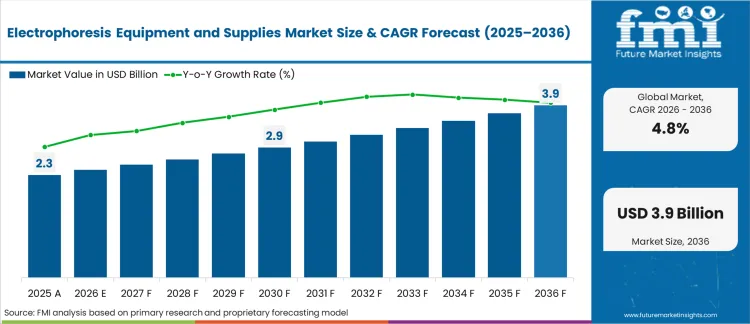
| Metric | Value |
|---|---|
| Expected Value (2026E) | USD 2.41 billion |
| Projected Value (2036F) | USD 3.84 billion |
| CAGR (2026-2036) | 4.8% |
Source: Future Market Insights - analysis driven by proprietary forecasting models and primary research
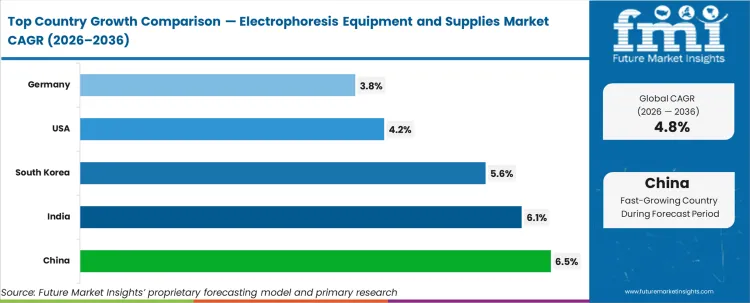
China (6.5%) and India (6.1%) are projected to record the fastest growth through 2036, supported by expanding domestic biopharmaceutical manufacturing capacity and increased government funding for genomics and molecular diagnostics infrastructure. South Korea (5.6%) follows, driven by contract development and manufacturing organization expansion and precision medicine initiatives.
The United States (4.2%), Germany (3.8%), and Japan (3.5%) represent mature markets. These countries primarily generate replacement demand for aging gel and capillary systems rather than new installations, with procurement cycles constrained by grant-dependent academic budgets and capital expenditure controls in hospital laboratories.
Electrophoresis Equipment and Supplies Market Definition
The electrophoresis equipment and supplies market covers instruments and consumables used to separate and analyze biological molecules such as DNA, RNA, and proteins. These systems use an electric field to move charged molecules through a gel or capillary, allowing laboratories to identify size, purity, or concentration. The market includes gel electrophoresis units, capillary electrophoresis systems, power supplies, reagents, buffers, and staining kits. Primary end users include pharmaceutical companies, clinical diagnostics laboratories, biotechnology firms, and academic research institutes.
Electrophoresis Equipment and Supplies Market Inclusions
This report covers global and regional market size estimates for electrophoresis equipment and supplies from 2026 to 2036. It provides value forecasts, CAGR analysis, and absolute dollar growth assessment. The study segments the market by product type, application, and end user, along with detailed regional and country-level breakdowns. It also includes pricing trend analysis, procurement patterns, regulatory influences, and trade flow assessment to support strategic decision-making.
Electrophoresis Equipment and Supplies Market Exclusions
The scope excludes broader analytical instrumentation such as chromatography systems, mass spectrometers, flow cytometers, and next-generation sequencing platforms unless directly integrated with electrophoresis workflows. It also omits downstream finished products such as diagnostic test kits, fully assembled therapeutic biologics, and genomic data interpretation software. The study focuses strictly on electrophoresis instruments, related hardware components, and consumables including gels, buffers, reagents, and staining materials.
Electrophoresis Equipment and Supplies Market Research Methodology
- Primary Research: FMI analysts conducted interviews with procurement managers at biopharmaceutical manufacturing facilities, directors of molecular diagnostics laboratories, product managers at leading electrophoresis system manufacturers, and distributors specializing in life sciences analytical instruments and bioprocessing technologies. Insights were also gathered from academic laboratory heads involved in genomics research tools procurement.
- Desk Research: Secondary research included review of annual reports, SEC filings, investor presentations, regulatory agency publications, and procurement notices related to molecular diagnostics equipment, laboratory automation systems, and biopharmaceutical quality control technologies. Trade association publications and publicly available clinical laboratory compliance guidelines were also examined.
- Market-Sizing and Forecasting: FMI applied a hybrid model combining bottom-up revenue mapping of leading manufacturers with top-down validation against spending trends in biotechnology research infrastructure and clinical diagnostics instrumentation. Forecast assumptions incorporate capital expenditure cycles, consumables pull-through rates, and regional funding allocations.
- Data Validation and Update Cycle: All estimates were triangulated using supply-side revenue data and demand-side procurement benchmarks across laboratory consumables and analytical separation technologies. Forecasts are reviewed periodically to reflect regulatory updates, grant funding shifts, and manufacturer capacity expansions.
Segment Analysis
Electrophoresis Equipment and Supplies Market Analysis by Product Type
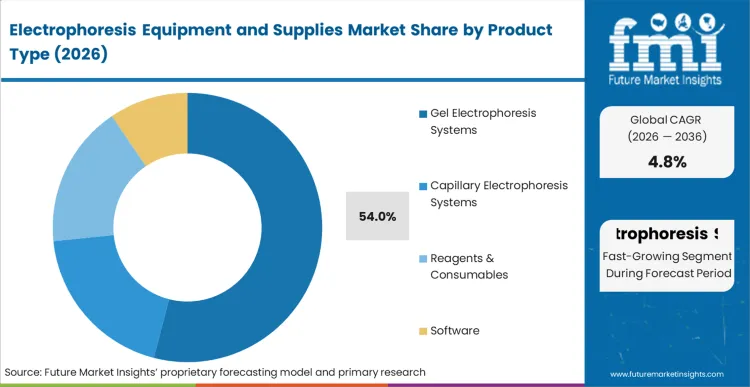
Based on FMI's electrophoresis equipment and supplies market report, gel electrophoresis systems are estimated to hold a 54% share in 2026. This segment leads because gel platforms remain the lowest-cost, most standardized option for routine DNA/RNA and protein separation across research and QC labs. They solve a practical buyer problem: dependable results with minimal training and low per-test operating cost.
- Portfolio acquisition: LICORbio expanded its electrophoresis footprint by acquiring SERVA Electrophoresis (reagents, consumables, and workflow instrumentation), reinforcing the market’s pull-through model where installed workflows drive repeat purchases of gels, buffers, and related consumables [2].
- System launch: Thermo Fisher Scientific introduced the Applied Biosystems SeqStudio Flex Dx genetic analyzer, an IVDR-compliant capillary electrophoresis platform for Sanger sequencing and fragment analysis, signaling continued product investment aimed at regulated clinical genomics workflows [3].
- Procurement demand: A 2024 Indian university equipment tender explicitly specifies purchase requirements for a vertical electrophoresis system compatible with both handcast and commercial precast gels, illustrating ongoing institutional procurement that supports steady replacement and consumables demand [4].
Electrophoresis Equipment and Supplies Market Analysis by Application
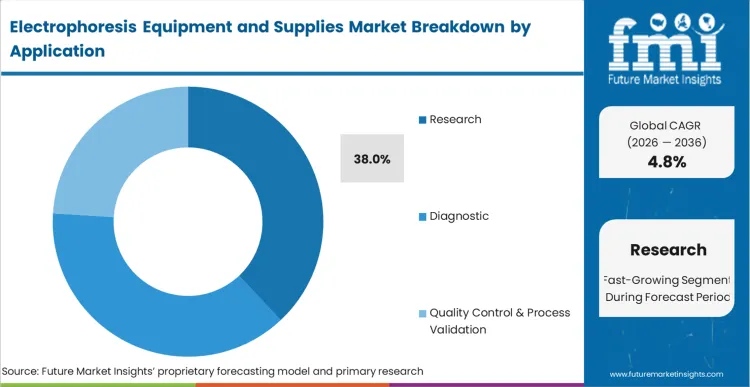
Based on FMI's industry analysis, consumption in research applications is estimated to hold a 38% share in 2026. Research dominates due to sustained use of gel and capillary electrophoresis in academic genomics, proteomics, and molecular biology workflows. The segment benefits from recurring consumables demand and grant-funded laboratory procurement, addressing researchers’ need for reliable nucleic acid and protein separation in exploratory and validation studies.
- Government funding: The USA National Institutes of Health (NIH) allocated over USD 47 billion in fiscal year 2023 to biomedical research, supporting university and institutional laboratory procurement of molecular analysis tools, including electrophoresis systems and reagents [5].
- Product development: Bio-Rad Laboratories expanded its portfolio of precast gels and electrophoresis reagents to support high-resolution protein and nucleic acid separation workflows in life science research settings, reinforcing consumables pull-through in academic labs [6].
- Institutional procurement: The UK Biotechnology and Biological Sciences Research Council (BBSRC) continues to fund genomics and molecular biology research infrastructure programs, indirectly sustaining equipment demand in university laboratories [7].
Electrophoresis Equipment and Supplies Market Drivers, Restraints, and Opportunities
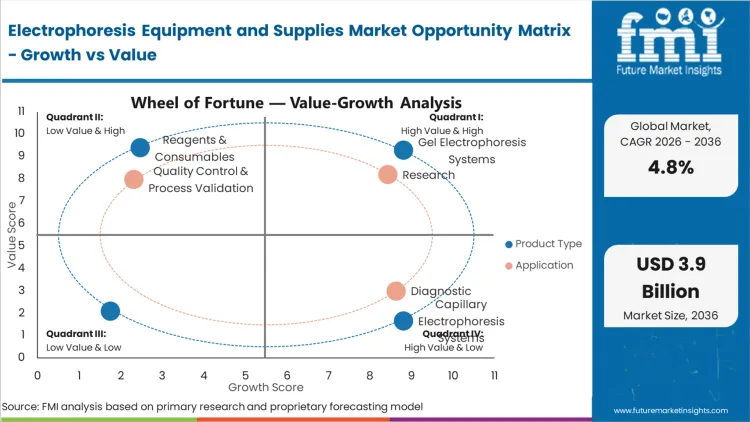
Electrophoresis equipment and supplies demand has evolved as a structurally stable, mid-growth analytical tools segment anchored in academic research and biopharmaceutical quality control. The market exists at its current valuation because electrophoretic separation remains embedded in standardized molecular biology protocols, regulatory testing workflows, and batch-release documentation requirements. Continued compliance obligations in biologics manufacturing and sustained public funding for genomics research underpin recurring consumables demand, even as capital equipment cycles fluctuate.
FMI analysts observe a transition from conventional slab gel systems toward automated and capillary-based electrophoresis platforms in clinical and regulated environments. Demand for low-cost manual systems is softening in mature academic labs where equipment replacement is deferred due to grant timing constraints.
Higher-value capillary systems are gaining traction in diagnostic laboratories and biologics characterization, where throughput, reproducibility, and audit-ready documentation justify higher unit prices. Although volumes for advanced systems are lower than basic gel units, higher average selling prices and consumables pull-through partially offset slower unit expansion, keeping overall CAGR in the mid-single-digit range.
- IVDR-driven upgrades: Implementation of the European Union In Vitro Diagnostic Regulation (EU 2017/746) is prompting clinical laboratories to adopt validated and traceable electrophoresis systems that meet conformity assessment requirements. This regulatory shift favors automated, compliance-ready platforms over legacy manual systems in EU member states.
- Asia biomanufacturing expansion: Growth of biologics production capacity in China and India is increasing demand for electrophoresis in process validation and batch release testing. Domestic pharmaceutical scale-up and contract manufacturing expansion are generating new installations beyond academic research demand.
- Sequencing substitution pressure: Wider adoption of next-generation sequencing and high-throughput molecular analysis tools is reducing reliance on electrophoresis in certain exploratory research applications. While electrophoresis remains essential for confirmation and quality control, substitution pressure in early-stage genomics limits acceleration beyond steady incremental growth.
Regional Analysis
The regional analysis covers the United States, Germany, Japan, China, India, and South Korea, representing North America, Europe, and Asia Pacific. The market is segmented geographically into mature replacement-driven economies and high-growth manufacturing and research hubs. Based on FMI’s report, the full study includes detailed country-wise market attractiveness analysis and comparative growth benchmarking.
.webp "Top Country Growth Comparison Electrophoresis Equipment And Supplies Market Cagr (2026 2036)")
| Countries | Value CAGR (2026 to 2036) |
|---|---|
| USA | 4.2% |
| Germany | 3.8% |
| China | 6.5% |
| India | 6.1% |
| South Korea | 5.6% |
Source: Future Market Insights analysis, supported by a proprietary forecasting model and primary research
North America Market Analysis
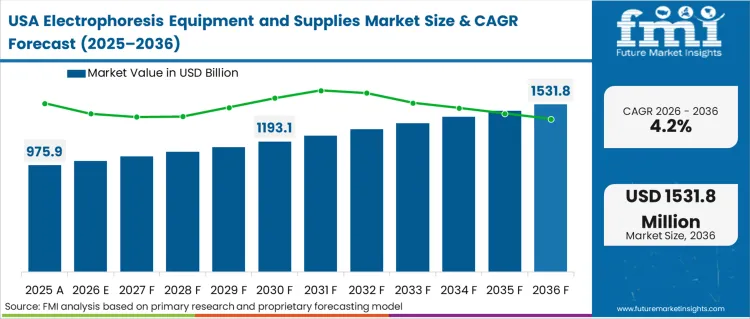
North America is the installed-base and compliance anchor for electrophoresis workflows, where validated methods and audit trails keep consumables demand steady even when capital budgets tighten. Thermo Fisher Scientific, Bio-Rad Laboratories, and Danaher hold strong positions through broad portfolios that bundle instruments with reagents and service coverage across biopharma QC and clinical labs. Regulatory-linked method validation reinforces replacement and upgrade cycles.
- United States: The market for electrophoresis equipment and supplies in the United States is forecast to register a CAGR of 4.2% through 2036. Public research funding sustains a wide installed base of gel systems and routine consumables demand, supported by NIH’s scale as the largest USA public funder of biomedical research with an annual budget of more than US$47 billion as per the FY2023 reference [8]. The shift toward personalized medicine and targeted therapies in the USA oncology sector is further catalyzing the adoption of high-resolution capillary electrophoresis, which is increasingly utilized for precise biomarker validation and clinical trial assay development.
The comprehensive FMI report provides an in-depth analysis of the broader North American market, extending beyond the USA to explore lucrative opportunities in Canada. Canada is witnessing a steady rise in demand driven by heavy provincial investments in life science research hubs across Toronto and Vancouver, creating a consistent pipeline for both foundational gel systems and advanced automated workflows in academic and clinical settings.
Europe Market Analysis
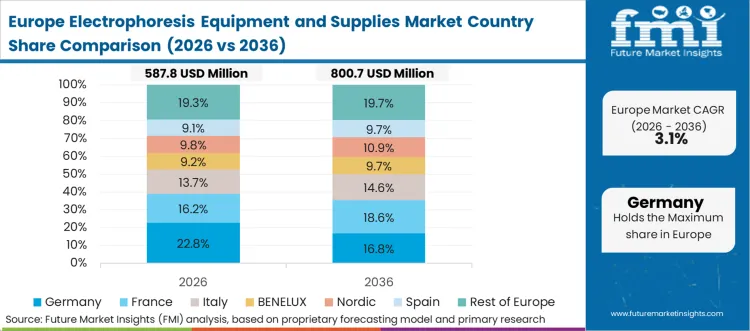
Europe is the global regulatory laboratory for clinical diagnostics, where tighter conformity and documentation requirements shape purchasing preferences for validated workflows. Merck KGaA, Sartorius, and Cytiva compete through reagent breadth, lab workflow integration, and service reach across pharma and academic institutions. The region’s demand is influenced by stepwise transitions in IVD compliance, alongside sustained public science funding that keeps university and institute laboratories active buyers of consumables.
- Germany: Demand for electrophoresis equipment and supplies in Germany is estimated to expand at a CAGR of 3.8% through 2036. Germany’s public research ecosystem continues to be supported by federal science and innovation policy priorities communicated through national reporting and program announcements, which underpins routine purchasing of molecular biology tools in universities and public institutes.
FMI’s report gets in-depth on the wider European landscape by analyzing additional high-potential markets outside of Germany. The United Kingdom and France represent critical, highly lucrative hubs. The UK’s "Life Sciences Vision" framework is driving massive genomics initiatives that heavily rely on separation tools for sequencing prep, while France's expanding network of private diagnostic laboratories is pushing a rapid upgrade cycle toward fully automated, IVDR-compliant capillary systems.
Asia Pacific Market Analysis
Asia Pacific is the scale-up and capacity-build region, combining expanding biomanufacturing with fast-growing molecular diagnostics adoption. Shimadzu Corporation, Sysmex Corporation, and global suppliers with strong APAC footprints including Thermo Fisher Scientific and Bio-Rad compete through distributor networks, localized applications support, and workflow bundling that locks in consumables pull-through. Growth is strongest where policy-led diagnostics modernization and biopharma capacity additions are most active.
- China: China's electrophoresis equipment and supplies industry is projected to witness growth at a CAGR of 6.5% through 2036. Regulatory and market-structure changes in diagnostics are a key driver. The rapid proliferation of centralized third-party clinical testing laboratories (ICLs) across urban Chinese centers is driving volume-based procurement of automated electrophoresis systems to handle high-throughput infectious disease and oncology screening.
- India: Over the forecast period, electrophoresis equipment and supplies in India are set for a CAGR of 6.1% through 2036. National programs such as the National Biopharma Mission prioritize development across vaccines, biologics, diagnostics, and medical devices, supporting infrastructure build-out that expands the addressable base for molecular biology tools used in R&D and applied testing [14]. India's expanding role as a global hub for biosimilar manufacturing is generating sustained demand for high-fidelity electrophoresis consumables, as contract research organizations (CROs) scale up batch-release testing to meet international export standards.
- South Korea: Sales of electrophoresis equipment and supplies in South Korea are on track to record a CAGR of 5.6% through 2036. Regulatory emphasis on quality systems supports consistent procurement in clinical and manufacturing labs. The Ministry of Food and Drug Safety (MFDS) maintains and publishes medical device regulations and GMP-related requirements that shape how laboratories and suppliers document and manage device-related processes, reinforcing demand for validated workflows [16]. South Korea's aggressive investments in state-of-the-art genomic research clusters are fostering partnerships between local biotech firms and global equipment suppliers, ensuring a continuous pipeline for advanced capillary separation technologies.
The FMI report goes in-depth to evaluate the wider Asia Pacific ecosystem, highlighting that Japan remains a highly mature and lucrative technological anchor for the region. Japan's well-established life sciences sector and aging population are driving severe demand for precision diagnostics, prompting steady replacement cycles where legacy gel systems are rapidly being swapped for high-resolution, automated capillary platforms capable of handling complex clinical assays.
Competitive aligners for market players
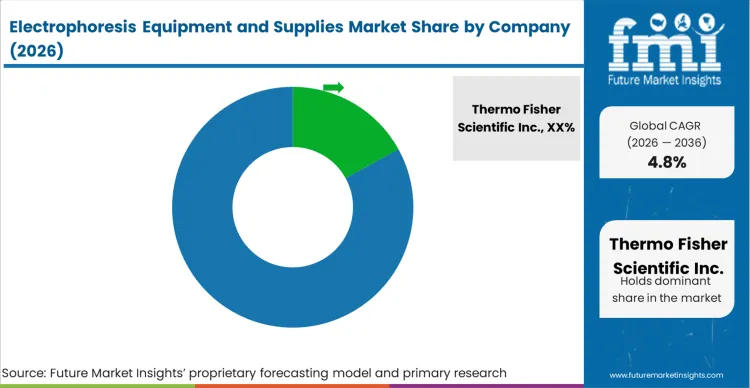
The competitive structure is moderately fragmented, with global life-science majors competing alongside specialist electrophoresis brands and regional catalog suppliers. Scale players win share by bundling instruments, consumables, and service coverage, while smaller suppliers compete on price and local availability. Across most buying cycles, the primary competitive variable is total workflow cost, meaning instrument uptime plus consumables pull-through and support responsiveness.
Structural advantage sits with companies that control both the installed base and the recurring consumables stream. Thermo Fisher Scientific, Bio-Rad Laboratories, Agilent Technologies, and Merck KGaA benefit from broad catalogs that let labs standardize reagents, gels, and accessories on one vendor, reducing qualification work and simplifying audits. Players with strong application support teams also convert method-development wins into long-running consumables demand because protocols, validated once, tend to stay in place.
Buyer behavior is procurement-led in mature markets and program-led in fast-growth markets. Large biopharma and reference labs manage supplier dependency through dual-sourcing for routine consumables, framework contracts for standard SKUs, and limited-vendor lists for validated workflows. This lowers pricing power on gels, buffers, and commodity accessories, while allowing better margins on systems tied to service contracts, validated methods, and regulated documentation requirements.
Recent developments
- Agilent Technologies: Released the Agilent ProteoAnalyzer system, an automated parallel capillary electrophoresis platform for protein analysis (January 2024).
- Bio-Rad Laboratories: Launched the ChemiDoc Go Imaging System for benchtop gel and western blot imaging (July 2024).
- Helena Biosciences: Announced the official UK launch of V8 UltraCE for clinical electrophoresis at IBMS Biomedical Science Congress (September 2025)
Key Players Profiled
- Thermo Fisher Scientific Inc.
- Bio-Rad Laboratories, Inc.
- Agilent Technologies, Inc.
- Merck KGaA
- Danaher Corporation
- Shimadzu Corporation
- PerkinElmer, Inc.
- QIAGEN N.V.
- Cleaver Scientific Ltd.
- Takara Bio Inc.
Scope of the Report
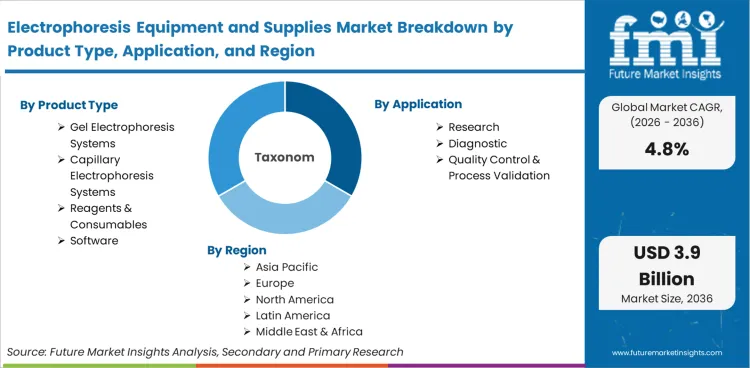
| Metric | Value |
|---|---|
| Quantitative Units | 2026: USD 2.41 billion 2036: USD 3.84 billion CAGR (2026 to 2036): 4.8% |
| Market Definition | Instruments and consumables used to separate and analyze DNA, RNA, and proteins using an electric field (gel or capillary formats), purchased by labs for research, diagnostics, and QC workflows. |
| Product Type Segmentation | Gel electrophoresis systems; Capillary electrophoresis systems; Power supplies; Gel documentation and imaging systems; Reagents and consumables (gels, buffers, stains, ladders, kits); Accessories (tanks, trays, combs, capillaries). |
| Application Segmentation | Research (38%); Diagnostic; Quality Control & Process Validation. |
| End-User Segmentation | Pharmaceutical and biotechnology companies; Clinical diagnostics laboratories and hospitals; Academic and research institutes; Contract research/manufacturing organizations (CROs/CMOs). |
| Regions Covered | North America; Europe; Asia Pacific. |
| Countries Covered | United States; Germany; Japan; China; India; South Korea. |
| Key Companies Profiled | Thermo Fisher Scientific Inc.; Bio-Rad Laboratories, Inc.; Agilent Technologies, Inc.; Merck KGaA; Danaher Corporation; Shimadzu Corporation; QIAGEN N.V.; Takara Bio Inc.; Cleaver Scientific Ltd.; PerkinElmer, Inc. |
| Forecast Period | 2026 to 2036 |
| Approach | Hybrid market sizing (bottom-up company and channel mapping plus top-down validation), supported by primary interviews and desk research; triangulation using supply-side disclosures and demand-side procurement benchmarks. |
Electrophoresis Equipment and Supplies Market Analysis by Segments
Product Type:
- Gel Electrophoresis Systems
- Capillary Electrophoresis Systems
- Reagents & Consumables
- Software
Application:
- Research
- Diagnostic
- Quality Control & Process Validation
End User:
- Pharmaceutical & Biotechnology Companies
- Academic & Research Institutes
- Diagnostic Laboratories
- Forensic Laboratories
Region:
- North America
- Latin America
- Europe
- East Asia
- South Asia
- Oceania
- Middle East & Africa
Bibliography
- [1] BioPharma APAC. (2024). Thermo Fisher Scientific launches IVDR-compliant SeqStudio™ Flex Dx to elevate clinical lab performance.
- [2] LICORbio. (2025, July 1). LICORbio expands portfolio with strategic acquisition of SERVA Electrophoresis.
- [3] CAP TODAY. (2025, May). Thermo Fisher launches IVDR-compliant capillary electrophoresis system.
- [4] Sant Gadge Baba Amravati University. (2024, October 14). E-Tender Notice: Office & Laboratory Equipment (2024-25) [PDF].
- [5] National Institutes of Health (NIH). (2024). NIH budget overview: Fiscal year 2023. USA Department of Health & Human Services.
- [6] Bio-Rad Laboratories, Inc. (2024). Life science research product portfolio updates and annual report disclosures. Bio-Rad Investor Relations
- [7] UK Research and Innovation (UKRI) - Biotechnology and Biological Sciences Research Council (BBSRC). (2024). Strategic delivery plan and research funding overview.
- [8] National Institutes of Health. (2025, April 18). Direct economic contributions.
- [9] USA Food and Drug Administration. (2024, March 6). Q2(R2) Validation of Analytical Procedures.
- [10] Thermo Fisher Scientific. (2025). Thermo Fisher Scientific invests to enhance USA innovation and support customers’ manufacturing (Investor Relations news release).
- [11] European Commission. (n.d.). New regulations (Medical Devices Sector, IVDR applicability and rollout).
- [12] Federal Ministry of Education and Research (BMBF), Germany. (2024). Federal report on research and innovation 2024: Short version [PDF].
- [13] National Medical Products Administration (NMPA), China. (2024, June 5). Provisions for In-vitro Diagnostic Reagent Registration and Filing.
- [14] Department of Biotechnology (DBT), Government of India. (2025, July 9). National Biopharma Mission.
- [15] Indian Council of Medical Research (ICMR). (n.d.). Guidelines (Public guidance and laboratory-related documents portal).
- [16] Ministry of Food and Drug Safety (MFDS), Republic of Korea. (n.d.). Medical devices regulations (Regulations list page).
- [17] Thermo Fisher Scientific. (2025, December 2). Thermo Fisher Scientific deepens investment in Asia’s biopharma ecosystem with expansion of bioprocess design centers (Investor Relations news release).
This bibliography is provided for reader reference and is not exhaustive. The full report contains the complete reference list and detailed citations.
This Report Addresses
- Market intelligence to enable structured strategic decision-making across mature and emerging electrophoresis equipment and supplies markets.
- Market size estimation and 10-year revenue forecasts from 2026 to 2036, supported by validated research funding analysis and clinical testing volume projections.
- Growth opportunity mapping across product types and end-user segments with emphasis on automated capillary systems for clinical diagnostics and precast gel consumables.
- Segment and regional revenue forecasts covering pharmaceutical, biotechnology, academic, and diagnostic laboratory applications.
- Competition strategy assessment including instrument portfolio, consumable recurring revenue, and application-specific solutions.
- Regulatory impact analysis covering FDA and EMA quality guidelines, clinical laboratory standards, and research funding trends.
- Market report delivery in PDF, Excel, PPT, and interactive dashboard formats for executive and operational use.
Frequently Asked Questions
How large is the electrophoresis equipment and supplies market currently?
In 2025, the market was valued at USD 2.30 billion.
What will the market size be in 2026?
Demand is estimated to reach USD 2.41 billion in 2026.
What is the projected market size by 2036?
The market is forecast to reach USD 3.84 billion by 2036.
What is the expected CAGR during the forecast period?
FMI projects a CAGR of 4.8% from 2026 to 2036.
How much absolute growth is anticipated over the forecast period?
The market is expected to expand from USD 2.41 billion in 2026 to USD 3.84 billion in 2036.
Is the growth outlook steady or high acceleration?
With a 4.8% CAGR from 2026 to 2036, growth is steady and incremental rather than rapid expansion.
Which application segment is poised to lead the market?
Research applications lead with a 38% share in 2025.
How significant is gel electrophoresis in the overall product mix?
Gel electrophoresis systems account for approximately 54% share in 2025.
What revenue opportunity exists between 2026 and 2036?
The market is projected to increase from USD 2.41 billion in 2026 to USD 3.84 billion by 2036.
How large will the market be at the end of the forecast horizon?
By 2036, the market is expected to reach USD 3.84 billion.
What growth rate should investors factor into long-term planning?
A CAGR of 4.8% from 2026 to 2036 should be considered in strategic planning.
How does the 2026 valuation compare with the base year?
The market rises from USD 2.30 billion in 2025 to USD 2.41 billion in 2026.
Will the market nearly double by 2036?
No, it grows from USD 2.41 billion in 2026 to USD 3.84 billion in 2036 at a 4.8% CAGR.
What scale of opportunity does the research segment represent?
Research applications account for 38% share in 2025 within a USD 2.30 billion market.
What does the 2036 projection indicate for suppliers?
Suppliers are targeting a USD 3.84 billion market by 2036.
How stable is long-term demand in this market?
Demand expands at a projected 4.8% CAGR from 2026 to 2036, indicating moderate stability.
What baseline should procurement teams use for budgeting?
Procurement planning should reference USD 2.41 billion in 2026 as the starting forecast value.
How does product dominance influence revenue distribution?
Gel electrophoresis holds 54% share in 2025 within a USD 2.30 billion market.
Preview the report firsthand - request a free sample
Get SampleGet the brochure for pricing and purchase details.
Get PDFTable of Content
- Executive Summary
- Global Market Outlook
- Demand-side Trends
- Supply-side Trends
- Technology Roadmap Analysis
- Analysis and Recommendations
- Market Overview
- Market Coverage / Taxonomy
- Market Definition / Scope / Limitations
- Research Methodology
- Chapter Orientation
- Analytical Lens and Working Hypotheses
- Market Structure, Signals, and Trend Drivers
- Company Annual and Sustainability Reports
- Peer-reviewed Journals and Academic Literature
- Corporate Websites, Product Literature, and Technical Notes
- Earnings Decks and Investor Briefings
- Statutory Filings and Regulatory Disclosures
- Technical White Papers and Standards Notes
- Trade Journals, Industry Magazines, and Analyst Briefs
- Conference Proceedings, Webinars, and Seminar Materials
- Government Statistics Portals and Public Data Releases
- Press Releases and Reputable Media Coverage
- Specialist Newsletters and Curated Briefings
- Sector Databases and Reference Repositories
- FMI Internal Proprietary Databases and Historical Market Datasets
- Subscription Datasets and Paid Sources
- Social Channels, Communities, and Digital Listening Inputs
- Additional Desk Sources
- Expert Input and Fieldwork (Primary Evidence)
- Primary Modes
- Qualitative Interviews and Expert Elicitation
- Quantitative Surveys and Structured Data Capture
- Blended Approach
- Why Primary Evidence is Used
- Field Techniques
- Interviews
- Surveys
- Focus Groups
- Observational and In-context Research
- Social and Community Interactions
- Stakeholder Universe Engaged
- C-suite Leaders
- Board Members
- Presidents and Vice Presidents
- R&D and Innovation Heads
- Technical Specialists
- Domain Subject-matter Experts
- Scientists
- Physicians and Other Healthcare Professionals
- Governance, Ethics, and Data Stewardship
- Research Ethics
- Data Integrity and Handling
- Primary Modes
- Tooling, Models, and Reference Databases
- Data Engineering and Model Build
- Data Acquisition and Ingestion
- Cleaning, Normalisation, and Verification
- Synthesis, Triangulation, and Analysis
- Quality Assurance and Audit Trail
- Market Background
- Market Dynamics
- Drivers
- Restraints
- Opportunity
- Trends
- Scenario Forecast
- Demand in Optimistic Scenario
- Demand in Likely Scenario
- Demand in Conservative Scenario
- Opportunity Map Analysis
- Product Life Cycle Analysis
- Supply Chain Analysis
- Investment Feasibility Matrix
- Value Chain Analysis
- PESTLE and Porter’s Analysis
- Regulatory Landscape
- Regional Parent Market Outlook
- Production and Consumption Statistics
- Import and Export Statistics
- Market Dynamics
- Global Market Analysis 2021 to 2025 and Forecast, 2026 to 2036
- Historical Market Size Value (USD Million) Analysis, 2021 to 2025
- Current and Future Market Size Value (USD Million) Projections, 2026 to 2036
- Y-o-Y Growth Trend Analysis
- Absolute $ Opportunity Analysis
- Global Market Pricing Analysis 2021 to 2025 and Forecast 2026 to 2036
- Global Market Analysis 2021 to 2025 and Forecast 2026 to 2036, By Product Type
- Introduction / Key Findings
- Historical Market Size Value (USD Million) Analysis By Product Type , 2021 to 2025
- Current and Future Market Size Value (USD Million) Analysis and Forecast By Product Type , 2026 to 2036
- Gel Electrophoresis Systems
- Capillary Electrophoresis Systems
- Reagents & Consumables
- Software
- Gel Electrophoresis Systems
- Y-o-Y Growth Trend Analysis By Product Type , 2021 to 2025
- Absolute $ Opportunity Analysis By Product Type , 2026 to 2036
- Global Market Analysis 2021 to 2025 and Forecast 2026 to 2036, By Application
- Introduction / Key Findings
- Historical Market Size Value (USD Million) Analysis By Application, 2021 to 2025
- Current and Future Market Size Value (USD Million) Analysis and Forecast By Application, 2026 to 2036
- Research
- Diagnostic
- Quality Control & Process Validation
- Research
- Y-o-Y Growth Trend Analysis By Application, 2021 to 2025
- Absolute $ Opportunity Analysis By Application, 2026 to 2036
- Global Market Analysis 2021 to 2025 and Forecast 2026 to 2036, By Region
- Introduction
- Historical Market Size Value (USD Million) Analysis By Region, 2021 to 2025
- Current Market Size Value (USD Million) Analysis and Forecast By Region, 2026 to 2036
- North America
- Latin America
- Western Europe
- Eastern Europe
- East Asia
- South Asia and Pacific
- Middle East & Africa
- Market Attractiveness Analysis By Region
- North America Market Analysis 2021 to 2025 and Forecast 2026 to 2036, By Country
- Historical Market Size Value (USD Million) Trend Analysis By Market Taxonomy, 2021 to 2025
- Market Size Value (USD Million) Forecast By Market Taxonomy, 2026 to 2036
- By Country
- USA
- Canada
- Mexico
- By Product Type
- By Application
- By Country
- Market Attractiveness Analysis
- By Country
- By Product Type
- By Application
- Key Takeaways
- Latin America Market Analysis 2021 to 2025 and Forecast 2026 to 2036, By Country
- Historical Market Size Value (USD Million) Trend Analysis By Market Taxonomy, 2021 to 2025
- Market Size Value (USD Million) Forecast By Market Taxonomy, 2026 to 2036
- By Country
- Brazil
- Chile
- Rest of Latin America
- By Product Type
- By Application
- By Country
- Market Attractiveness Analysis
- By Country
- By Product Type
- By Application
- Key Takeaways
- Western Europe Market Analysis 2021 to 2025 and Forecast 2026 to 2036, By Country
- Historical Market Size Value (USD Million) Trend Analysis By Market Taxonomy, 2021 to 2025
- Market Size Value (USD Million) Forecast By Market Taxonomy, 2026 to 2036
- By Country
- Germany
- UK
- Italy
- Spain
- France
- Nordic
- BENELUX
- Rest of Western Europe
- By Product Type
- By Application
- By Country
- Market Attractiveness Analysis
- By Country
- By Product Type
- By Application
- Key Takeaways
- Eastern Europe Market Analysis 2021 to 2025 and Forecast 2026 to 2036, By Country
- Historical Market Size Value (USD Million) Trend Analysis By Market Taxonomy, 2021 to 2025
- Market Size Value (USD Million) Forecast By Market Taxonomy, 2026 to 2036
- By Country
- Russia
- Poland
- Hungary
- Balkan & Baltic
- Rest of Eastern Europe
- By Product Type
- By Application
- By Country
- Market Attractiveness Analysis
- By Country
- By Product Type
- By Application
- Key Takeaways
- East Asia Market Analysis 2021 to 2025 and Forecast 2026 to 2036, By Country
- Historical Market Size Value (USD Million) Trend Analysis By Market Taxonomy, 2021 to 2025
- Market Size Value (USD Million) Forecast By Market Taxonomy, 2026 to 2036
- By Country
- China
- Japan
- South Korea
- By Product Type
- By Application
- By Country
- Market Attractiveness Analysis
- By Country
- By Product Type
- By Application
- Key Takeaways
- South Asia and Pacific Market Analysis 2021 to 2025 and Forecast 2026 to 2036, By Country
- Historical Market Size Value (USD Million) Trend Analysis By Market Taxonomy, 2021 to 2025
- Market Size Value (USD Million) Forecast By Market Taxonomy, 2026 to 2036
- By Country
- India
- ASEAN
- Australia & New Zealand
- Rest of South Asia and Pacific
- By Product Type
- By Application
- By Country
- Market Attractiveness Analysis
- By Country
- By Product Type
- By Application
- Key Takeaways
- Middle East & Africa Market Analysis 2021 to 2025 and Forecast 2026 to 2036, By Country
- Historical Market Size Value (USD Million) Trend Analysis By Market Taxonomy, 2021 to 2025
- Market Size Value (USD Million) Forecast By Market Taxonomy, 2026 to 2036
- By Country
- Kingdom of Saudi Arabia
- Other GCC Countries
- Turkiye
- South Africa
- Other African Union
- Rest of Middle East & Africa
- By Product Type
- By Application
- By Country
- Market Attractiveness Analysis
- By Country
- By Product Type
- By Application
- Key Takeaways
- Key Countries Market Analysis
- USA
- Pricing Analysis
- Market Share Analysis, 2025
- By Product Type
- By Application
- Canada
- Pricing Analysis
- Market Share Analysis, 2025
- By Product Type
- By Application
- Mexico
- Pricing Analysis
- Market Share Analysis, 2025
- By Product Type
- By Application
- Brazil
- Pricing Analysis
- Market Share Analysis, 2025
- By Product Type
- By Application
- Chile
- Pricing Analysis
- Market Share Analysis, 2025
- By Product Type
- By Application
- Germany
- Pricing Analysis
- Market Share Analysis, 2025
- By Product Type
- By Application
- UK
- Pricing Analysis
- Market Share Analysis, 2025
- By Product Type
- By Application
- Italy
- Pricing Analysis
- Market Share Analysis, 2025
- By Product Type
- By Application
- Spain
- Pricing Analysis
- Market Share Analysis, 2025
- By Product Type
- By Application
- France
- Pricing Analysis
- Market Share Analysis, 2025
- By Product Type
- By Application
- India
- Pricing Analysis
- Market Share Analysis, 2025
- By Product Type
- By Application
- ASEAN
- Pricing Analysis
- Market Share Analysis, 2025
- By Product Type
- By Application
- Australia & New Zealand
- Pricing Analysis
- Market Share Analysis, 2025
- By Product Type
- By Application
- China
- Pricing Analysis
- Market Share Analysis, 2025
- By Product Type
- By Application
- Japan
- Pricing Analysis
- Market Share Analysis, 2025
- By Product Type
- By Application
- South Korea
- Pricing Analysis
- Market Share Analysis, 2025
- By Product Type
- By Application
- Russia
- Pricing Analysis
- Market Share Analysis, 2025
- By Product Type
- By Application
- Poland
- Pricing Analysis
- Market Share Analysis, 2025
- By Product Type
- By Application
- Hungary
- Pricing Analysis
- Market Share Analysis, 2025
- By Product Type
- By Application
- Kingdom of Saudi Arabia
- Pricing Analysis
- Market Share Analysis, 2025
- By Product Type
- By Application
- Turkiye
- Pricing Analysis
- Market Share Analysis, 2025
- By Product Type
- By Application
- South Africa
- Pricing Analysis
- Market Share Analysis, 2025
- By Product Type
- By Application
- USA
- Market Structure Analysis
- Competition Dashboard
- Competition Benchmarking
- Market Share Analysis of Top Players
- By Regional
- By Product Type
- By Application
- Competition Analysis
- Competition Deep Dive
- Thermo Fisher Scientific Inc.
- Overview
- Product Portfolio
- Profitability by Market Segments (Product/Age /Sales Channel/Region)
- Sales Footprint
- Strategy Overview
- Marketing Strategy
- Product Strategy
- Channel Strategy
- Bio-Rad Laboratories, Inc.
- Agilent Technologies, Inc.
- Merck KGaA
- Danaher Corporation
- Shimadzu Corporation
- PerkinElmer, Inc.
- QIAGEN N.V.
- Cleaver Scientific Ltd.
- Takara Bio Inc.
- Thermo Fisher Scientific Inc.
- Competition Deep Dive
- Assumptions & Acronyms Used


