

- Industry Size (2026)
- USD 1.7 Bn
- Forecast (2036)
- USD 5.3 Bn
- CAGR (2026 to 2036)
- 11.7%
Art Supplies Packaging Market Forecast and Outlook 2026 to 2036
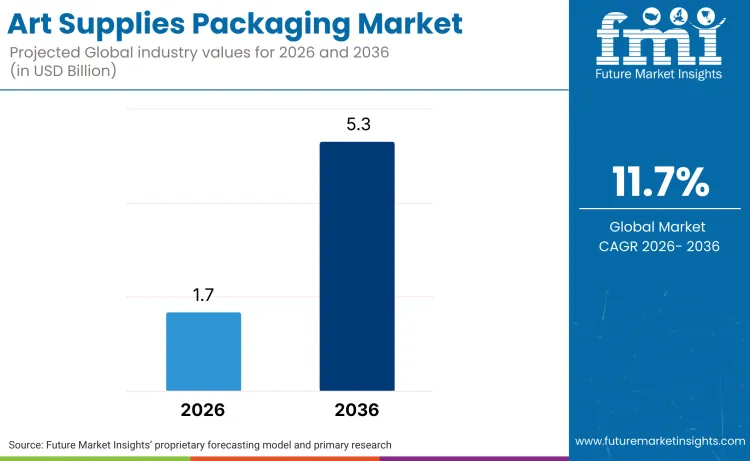
The global art supplies packaging market is set to record a valuation of USD 1.7 billion in 2026, advancing toward USD 5.3 billion by 2036, representing a robust 11.7% CAGR. As per Future Market Insights, expansion is further supported by increasing consumer awareness of sustainable practices and the rising popularity of environmentally friendly art materials. This growth trajectory is heavily influenced by the EU Packaging and Packaging Waste Regulation (PPWR) adopted in December 2024, which mandates that all packaging must be economically recyclable by 2030.
Johan Tegell, Strategic Product Director at NEFAB, captured the industry's proactive stance in October 2024: "We are happy to receive this recognition from ScanStar for our approach to sustainable packaging, which we truly believe has the potential to make a real difference in the industry." This sentiment underscores a sector-wide shift where sustainability is no longer optional but a core competitive metric for art and craft material brands seeking to justify shelf space in major retailers.
Manufacturers are increasingly focusing on compliance and carbon footprints to secure shelf space, effectively using sustainability as a defensive moat against cheaper, non-compliant imports. With regulations like California's SB 54 enforcing producer responsibility, the pressure is on to redesign kit boxes and blister packs for everything from art and office marker pen sets to canvas bundles. Pregis addresses to this sustainability pressure by matching 100% of electricity with wind power at six facilities in December 2024, signaling that low-carbon manufacturing is becoming a critical competitive advantage for supplying major art retail chains.
Summary of Art Supplies Packaging Market
What Is the Growth Outlook for the Art Supplies Packaging Market as per Future Market Insights Projection?
Future Market Insights projects the global art supplies packaging market to grow from USD 1.7 billion in 2026 to USD 5.3 billion by 2036, representing a robust 11.7% CAGR over the forecast period.
FMI Research Approach: Based on FMI’s proprietary global modeling framework incorporating regulatory compliance costs (SB 54, PPWR), retail activity indicators validating hobbyist consumption resilience, and industrial demand assessments informed by nearshoring logistics data.
How Do FMI Analysts Perceive the Art Supplies Packaging Market to Evolve?
FMI analysts perceive the market transitioning away from traditional window cartons and PET blisters toward cellulose-based clear films and fiber-heavy formats.
FMI Research Approach: Developed using analysis of China's GB 4806.15-2024 regulatory requirements, examination of material innovation pipelines such as Avery Dennison’s "AD CleanFiber," and facility expansion disclosures from integrated paper and fiber manufacturers.
Which Country Holds the Largest Share in the Global Art Supplies Packaging Market?
The United States holds one of the highest value shares globally, supported by a strong hobbyist sector and stringent state-level regulations like California SB 54 that drive continuous demand for compliant packaging solutions.
FMI Research Approach: Built using country-level retail activity indicators, analysis of packaging material shifts driven by producer responsibility mandates, and mapping of supplier concentration among North America’s integrated packaging manufacturers.
How Large Will the Art Supplies Packaging Market Be by 2036?
The global art supplies packaging market is expected to reach USD 5.3 billion by 2036, supported by sustained demand from the paints and liquids segment, which currently commands a 38% share.
FMI Research Approach: Long-term forecasts rely on demographic and educational enrollment trends in emerging markets, industrial capacity expansion data supporting global paperboard availability, and channel-specific scaling assumptions for premium packaging value.
What Is the Definition of the Art Supplies Packaging Market?
The art supplies packaging market encompasses all revenue generated from purpose-designed primary and secondary packaging solutions used for bundling paints, brushes, canvases, and sculpting tools into organized retail kits. It includes window cartons, blister cards, flexible pouches, and specialty paper-based formats marketed explicitly for creative applications.
FMI Research Approach: Definition structured using FMI’s segmentation taxonomy covering product types, end-use channels, and material compositions. The classification draws from operational inclusion criteria for educational kits and professional artist sets, alongside explicit exclusions for non-retail specific packaging categories.
What Are Globally Unique Trends Shaping the Art Supplies Packaging Market?
Globally, the sector is shaped by an ongoing shift toward mono-material recyclability and the elimination of solvent-based adhesives in children's products.
FMI Research Approach: Insights derived from global regulatory tracking (EU PPWR), sustainability performance disclosures from major manufacturers like Bio Pappel and Pregis, and assessment of competitive reinvestment patterns across Europe, Asia, and North America.
Art Supplies Packaging Market Key Takeaways
| Metric | Details |
|---|---|
| Industry Size (2026) | USD 1.7 billion |
| Industry Value (2036) | USD 5.3 billion |
| CAGR (2026-2036) | 11.7% |
Source: Future Market Insights (FMI) analysis, based on proprietary forecasting model and primary research.
How Sustainability Regulations Drive Design Overhaul?
The implementation of stringent environmental laws is the primary engine for design overhaul, effectively creating a recurring demand for compliant packaging structures. California's SB 54, updated in January 2026, mandates that producers pay USD 5 billion over 10 years, USD 500 million annually beginning in 2027, to ensure recyclability. This massive financial liability necessitates cost-effective, circular packaging designs for items like water color sets and acrylics. Manufacturers are prioritizing converted paper products that screen out cleanly during recycling to avoid these punitive fees, moving away from mixed-material laminates that have historically been difficult to separate at Materials Recovery Facilities (MRFs).
How is the Art Supplies Packaging Market Segmented?
The art supplies packaging market is segmented by product, pack type, and material. It is segmented by product into paints & liquids, dry media, and tools, each requiring distinct levels of barrier protection and visibility. The material landscape spans paperboard, PET, and flexible plastics, illustrating the industry’s balance between chemical resistance and the growing preference for renewable substrates. These segmentation layers define how manufacturers design, position, and supply packaging solutions tailored to both hazardous liquid art materials and solid oil colors or dry media.
Why do Paints & Liquids hold a dominant share?
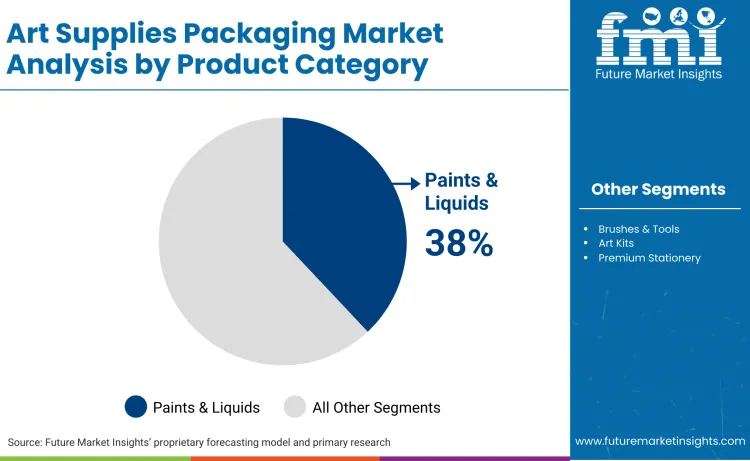
Paints & liquids lead the product category with a 38% share, driven by the absolute necessity for leak-proof, chemical-resistant barriers. USA CDC estimates 29 million housing units have lead-based paint hazards (deteriorated paint and lead-contaminated house dust), including 2.6 million homes to young children, underscoring why secure containment and spill prevention for paint-like materials remains a safety priority. Brands utilize flexible spouted pouches and high-barrier tubes to meet this demand, ensuring product integrity during transport. This trend is forcing packaging manufacturers to optimize their production lines for flexible formats that reduce weight compared to rigid glass, effectively lowering logistics costs for heavy water colour palette sets and liquid mediums. The shift is also functional; artists increasingly prefer lightweight, re-closable pouches that allow for precise dispensing of mediums without the waste associated with traditional rigid containers.
Why does Paperboard lead the material segment?
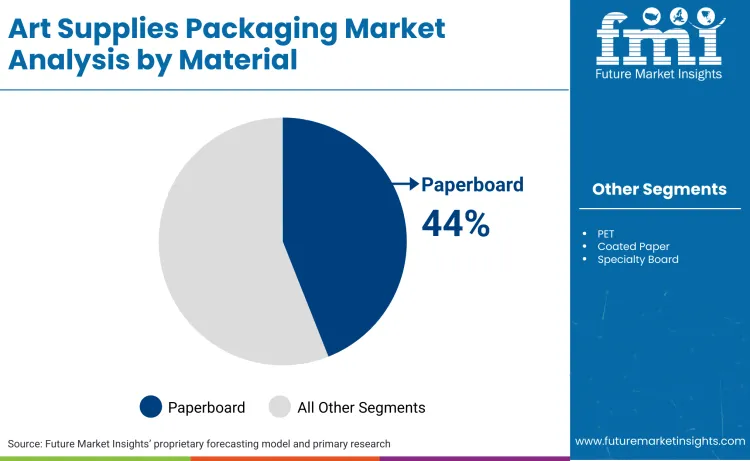
Paperboard dominates materials with a 44% share, a direct response to brands seeking to reduce plastic usage in secondary packaging. Bio Pappel has set a benchmark here by achieving one of the lowest water consumption rates in the industry, recycling 88.5% of water used in industrial processes. This efficiency appeals to eco-conscious art brands selling acrylic paper and sketchpads, who increasingly demand packaging that aligns with the environmental values of their creative customer base. As the "unboxing" experience becomes central to social media marketing, the tactile quality of recycled paperboard offers a premium, artisanal feel that glossy plastics cannot replicate.
Why is the Pack Type evolving toward Fiber-based Windows?
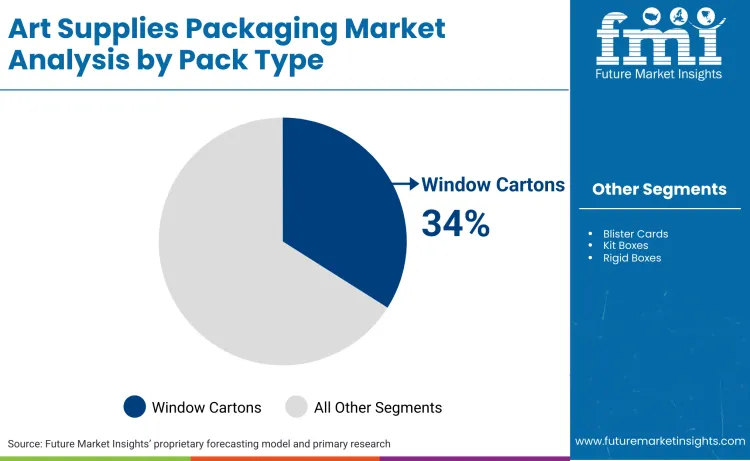
Window cartons are projected to maintain a 34% market share throughout the forecast period, despite the increasing challenges posed by traditional plastic windows, which are facing significant pressure from retailers. Tesco’s removal of 12 million plastic windows served as a warning to the industry, prompting a shift toward cellulose-based clear films or open-window designs for acrylic pad and canvas sets. This format diversification is driven by the consumer need to see color vibrancy and texture before purchase, forcing brands to innovate with translucent fiber materials that provide visibility without contaminating recycling streams. The "die-cut window" without any film is also gaining traction for sketch paper pads, allowing direct tactile interaction with the paper surface while eliminating plastic entirely.
Why Is the Material Transition to Fiber Accelerating?
The primary conflict line lies between fiber innovators and plastic incumbents, forcing companies to rethink how they protect heavy art materials. NEFAB is aggressively pushing fiber-based solutions to displace rigid plastics in logistics. The launch of the "EdgePak Collar" in October 2024 specifically targets the heavy-duty logistics segment, replacing wood and plastic with corrugated fiber. This innovation allows tracing paper and canvas manufacturers to ship bulk products with significantly lower carbon footprints, meeting the strict scope 3 emissions targets of major retailers. By utilizing engineered fiber that rivals the strength of plywood, these solutions prove that sustainability does not require a compromise on protection for fragile art materials.
How Are Compliance Moats Reshaping Corporate Strategy?
Regulatory compliance has become a barrier to entry, effectively creating a "compliance moat" that protects large, integrated players. Berry Global’s spin-off of its "Magnera" division in November 2024 allowed it to focus pure-play resources on consumer packaging compliance. By shedding non-core assets, Berry positioned itself to acquire smaller players who cannot afford the certification costs associated with EU PPWR for decor papers and drafting film packaging. This trend indicates a market consolidation where only those capable of navigating complex regulatory landscapes can survive, pushing smaller converters to either merge or exit the high-stakes European and North American markets.
Why Is Premium "Unboxing" Driving Innovation?
For the premium stationery and art segment, the battle is aesthetic, driving demand for sustainable materials that do not compromise on luxury. Avery Dennison is leading here with its "Infinity Collection," launched in September 2025, targeting high-end art brands that need sustainable packaging for specialty paper that doesn't look "recycled." This innovation differentiates premium brands from bulk suppliers like Pregis, who dominate the utilitarian e-commerce mailer space, proving that sustainability can coexist with the high-end presentation required for professional artist tools. The focus is on texture, printability, and the "sound" of quality, ensuring that the packaging reflects the premium nature of the paper goods inside.
What is the Regional Outlook for Art Supplies Packaging Market?
The global art supplies packaging market exhibits a clear regional divide, with emerging markets expanding primarily on the strength of industrial production and nearshoring, while developed markets grow through strict regulatory compliance and material substitution. In Asia, China serves as the primary production hub, propelled by massive industrial capacity and new safety standards, reflected in its robust CAGR of 13.6%. Western regions such as the USA and Germany, growing at 10.8% and 10.4%, are undergoing a structural pivot toward renewable energy in manufacturing and circular economy pilots. Markets like Mexico (12.2%) and Japan (9.0%) reflect specialized dynamics, with Mexico leveraging nearshoring trends for industrial packaging and Japan focusing on premium aesthetic compliance.
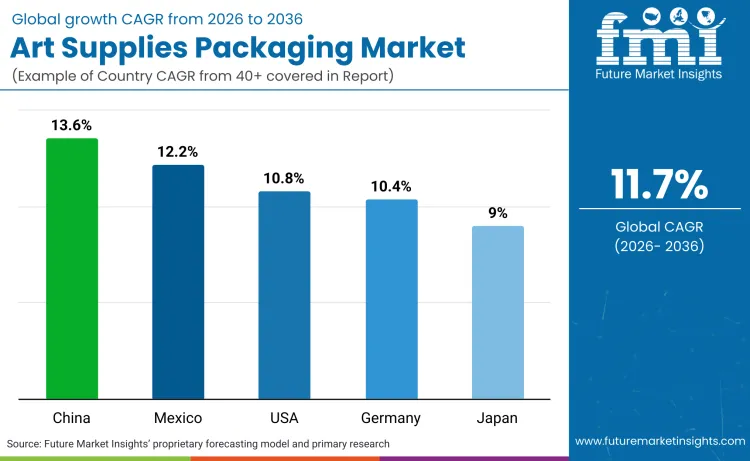
| Country | CAGR (2026 to 2036) |
|---|---|
| China | 13.6% |
| Mexico | 12.2% |
| USA | 10.8% |
| Germany | 10.4% |
| Japan | 9.0% |
Source: FMI historical analysis and forecast data.
Why is China Enforcing Strict Adhesives Standards?
The industry in China is poised to register a 13.6% CAGR, driven by the enforcement of GB 4806.15-2024 in February 2025 which strictly regulates adhesives in children's art kits to prevent contamination. This policy shift forces domestic manufacturers to abandon cheap solvent-based glues in favor of compliant alternatives. Avery Dennison’s factory accreditation in August 2025 proves that aligning with these "Green Packaging" goals is the only path to retaining market share in the region's booming education and boxboard packaging sector. The shift effectively raises the quality floor for the entire market, pushing out non-compliant "grey market" producers.
Why is Mexico Outpacing Developed Neighbors?
Expansion in Mexico is forecast at a stellar 12.2% CAGR, outpacing the USA and Japan due to the nearshoring boom and new circular laws. The General Law on Circular Economy (LGEC), active in the 2026 context, has mandated Extended Producer Responsibility for industrial packaging. Bio Pappel is the dominant force here, utilizing its "Urban Forest" model to recycle 88.5% of process water. This local capacity is fueling demand for industrial kraft pouch packaging that meets the new circular standards required by North American buyers, who are increasingly auditing their Mexican supply chains for ESG compliance.
Why is the USA Pivoting to Renewable-Powered Manufacturing?
Demand for art supplies packaging in the USA is projected to expand at a 10.8% CAGR, reshaped by regulatory pressure and corporate climate commitments. The California SB 54 update in January 2026 mandates that producers cover USD 5 billion in costs to ensure recyclability by 2032. In direct response to such climate mandates, Kris Getty, Chief Sustainability Officer at Pregis, stated in December 2024: "Achieving net zero requires bold actions. This milestone reflects our unwavering commitment to environmental responsibility and demonstrates our investment in decarbonizing our operations." This confirms the US market is pivoting toward renewable-powered domestic manufacturing for display packaging, as retailers like Michaels and Hobby Lobby demand proof of carbon reduction.
How is Germany Piloting Circular Economy Standards?
The art supplies packaging industry in Germany is poised to register a 10.4% CAGR, driven by high regulatory bars specifically regarding transport packaging. The Umweltbundesamt (UBA) standards have created a fertile environment for reusable systems. Faber Group has capitalized on this by expanding circular pooling services, proving that reusable transport packaging is viable at scale for bulk art supplies. Germany remains the primary testing ground for the EU's strictest circular economy pilots, influencing design choices for paper tapes and adhesive solutions across the continent, prioritizing repulpability over sheer adhesive strength.
Why is Japan Focusing on Premium Compliance?
Development in Japan is estimated to register a 9.0% CAGR, defined by a dual focus on luxury aesthetics and strict plastic reduction. "Labelexpo 2025 is a major showcase of innovation... we will demonstrate how we are helping to address key challenges across industries," noted Mariana Rodriguez, VP/GM Materials Group EMENA at Avery Dennison, highlighting the premiumization trend. The Ministry of Economy, Trade and Industry (METI) supported this shift with the 2025 Plastic Resource Circulation Act, requiring 25% recycled content in PET bottles. This regulatory environment drives demand for high-end washi tapes packaging that meets sustainability targets without sacrificing the intricate, multi-layered "gift-like" presentation that Japanese consumers expect.
How Is Competition Evolving in the Art Supplies Packaging Market?
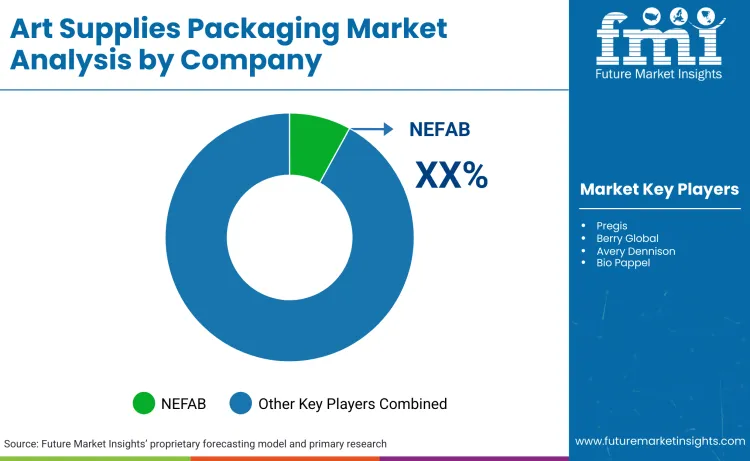
The competitive outlook is suggesting a move toward a battle between fiber innovators and plastic incumbents. Bio Pappel and NEFAB are aggressively pushing fiber-based solutions to displace rigid plastics, particularly in the heavy-duty logistics segment. NEFAB’s launch of the "EdgePak Collar" in October 2024 targets this specific need, replacing wood and plastic with corrugated fiber for bulk shipments. This technical supremacy allows fiber-based players to capture market share from traditional plastic crate manufacturers, offering a lighter, recyclable alternative that reduces freight costs for heavy art materials.
Compliance has become a critical competitive differentiator. Berry Global responded to this landscape by spinning off its "Magnera" division in November 2024 to focus resources on consumer packaging compliance. By shedding non-core assets, Berry is positioning itself to acquire smaller players who cannot afford the certification costs associated with California SB 54 or EU PPWR. This consolidation strategy forces smaller cellophane tape and adhesive manufacturers to specialize in niche artistic segments or face acquisition by these "compliance giants."
Premium aesthetics remain a key battleground for brand differentiation. Avery Dennison is leading the "Premium Stationery" segment with its "Infinity Collection," launched in September 2025. This move targets high-end art brands that require sustainable packaging which does not look utilitarian. By offering premium, sustainable labeling and boxing solutions, Avery Dennison differentiates itself from bulk suppliers like Pregis, who dominate the utilitarian e-commerce space for gift packaging and accessories.
Recent Developments:
- In February 2025, Winsor & Newton introduced a new premium watercolor product featuring sustainably sourced pigments and eco-friendly packaging, setting a new standard for artist-grade materials. This development promotes sustainability in art supplies packaging by incorporating recyclable and biodegradable materials, aligning with growing consumer demand for environmentally responsible products.
- In March 2025, Crayola LLC partnered with Scholastic to provide standardized art kits and co-create educational content for K-12 schools, deepening the company's institutional reach. This collaboration expands access to packaged art supplies, emphasizing durable and child-safe packaging solutions for educational distribution.
- In June 2025, Crayola LLC launched the ‘Creative Acts of Color’ campaign, promoting its newly introduced iconic 64-count crayon box. This innovation focuses on vibrant, user-friendly packaging designs that enhance shelf appeal and recyclability in the art supplies market.
Key Players in Art Supplies Packaging Market
- Bio Pappel
- NEFAB
- Pregis
- Avery Dennison
- Berry Global (Magnera)
- Faber Group
- Smurfit Westrock
- Mondi Group
- Sonoco Products Company
- Huhtamaki
- DS Smith
- Graphic Packaging International
Market Definition
The art supplies packaging market represents revenue generated from the sale of primary and secondary packaging materials designed specifically for bundling paints, brushes, canvases, sculpting tools, and mixed media kits. As operationally defined in the article, the market measures the commercial value of window cartons, blister cards, flexible pouches, and tube laminates used for both educational school kits and professional artist portfolios. Market sizing reflects the value of packaging sold to art supply brands and retailers, expressed in USD billion.
The market explicitly includes packaging solutions for liquid media (paints, inks), dry media (pastels, charcoal), and tools (brushes, palettes). Packaging materials must be specifically marketed and sold for creative applications. Revenue from sustainability certifications and "circular pooling" logistics services is included where bundled with packaging sales. The market excludes revenues from general-purpose shipping boxes not designed for retail display. Loose consumables sold without kit packaging are excluded.
Scope of Report
| Items | Values |
|---|---|
| Quantitative Units (2026) | USD 1.7 billion |
| Product Type | Paints & Liquids, Dry Media, Tools & Accessories, Canvases & Surfaces |
| Pack Type | Window Cartons (34%), Blister Cards (28%), Flexible Pouches, Tubes, Rigid Boxes |
| Material Type | Paperboard (44%), PET (30%), Flexible Plastic, Metal, Molded Fiber |
| Regions Covered | North America, Europe, Asia Pacific, Latin America, Middle East & Africa |
| Countries Covered | United States, Germany, China, Japan, Mexico, and 35+ countries |
| Key Companies Profiled | Bio Pappel, NEFAB, Pregis, Avery Dennison, Berry Global, Faber Group |
| Additional Attributes | Revenue analysis by pack type and material, regulatory impact assessment (CA SB 54, EU PPWR), sustainable material penetration, circular pooling adoption trends, competitive consolidation analysis |
Source: FMI historical analysis and forecast data.
Art Supplies Packaging Market by Segments
By Product Category:
- Paints & Liquids
- Dry Media (Pencils, Pastels, Charcoal)
- Tools & Accessories (Brushes, Palettes)
- Canvases & Surfaces
By Pack Type:
- Window Cartons
- Blister Cards & Clamshells
- Flexible Pouches & Sachets
- Tubes (Laminate/Aluminum)
- Rigid Boxes & Tins
By Material Type:
- Paperboard & Corrugated
- PET & Rigid Plastics
- Flexible Plastics
- Metal
- Molded Fiber
By Region:
- North America
- Europe
- Asia Pacific
- Latin America
- Middle East & Africa
Bibliography
- United Nations Statistics Division (UNSD). (2024). Industrial commodity production statistics: Paper, paperboard, and packaging materials. UNdata.
- OECD Environment Directorate. (2024). Extended Producer Responsibility systems and packaging waste performance. OECD.
- European Topic Centre on Circular Economy and Resource Use. (2024). Material flow indicators for packaging waste streams in the EU. ETC-CE.
- USA Bureau of Labor Statistics (BLS). (2025). Producer Price Index for paperboard containers and packaging materials. BLS.
- USA Department of Agriculture (USDA). (2024). Forest products annual market review: Pulp, paper, and packaging materials. USDA Forest Service.
- Statistics Canada. (2024). Manufacturing sales for paper and packaging product industries. Government of Canada.
- Australian Bureau of Statistics (ABS). (2024). Waste account: Packaging materials and recycling performance. ABS.
Frequently Asked Questions
What is the current global market size for Art Supplies Packaging?
The global market is valued at USD 1.7 billion in 2026, driven by the need for compliant packaging in the educational and professional art sectors.
What is the projected CAGR for the Art Supplies Packaging market?
Market revenues are projected to grow at a robust 11.7% CAGR from 2026 to 2036, driven by the transition to higher-value sustainable materials.
Which product segment currently dominates the industry?
Paints & Liquids hold the dominant 38% market share, due to the high value and technical requirements of leak-proof packaging for these materials.
What are the primary drivers for adoption in the USA?
Regulatory mandates like California's SB 54, which imposes significant costs on non-recyclable packaging, are the primary drivers for adoption of sustainable alternatives.
Who are the leading players in the Art Supplies Packaging market?
Bio Pappel, NEFAB, and Avery Dennison lead the sector, leveraging innovation in fiber-based materials and global compliance capabilities.
Preview the report firsthand - request a free sample
Get SampleGet the brochure for pricing and purchase details.
Get PDFTable of Content
- Executive Summary
- Global Market Outlook
- Demand Side Trends
- Supply Side Trends
- Technology Roadmap Analysis
- Analysis and Recommendations
- Market Overview
- Market Coverage / Taxonomy
- Market Definition / Scope / Limitations
- Research Methodology
- Chapter Orientation
- Analytical Lens and Working Hypotheses
- Market Structure, Signals, and Trend Drivers
- Benchmarking and Cross-market Comparability
- Market Sizing, Forecasting, and Opportunity Mapping
- Research Design and Evidence Framework
- Desk Research Programme (Secondary Evidence)
- Company Annual and Sustainability Reports
- Peer-reviewed Journals and Academic Literature
- Corporate Websites, Product Literature, and Technical Notes
- Earnings Decks and Investor Briefings
- Statutory Filings and Regulatory Disclosures
- Technical White Papers and Standards Notes
- Trade Journals, Industry Magazines, and Analyst Briefs
- Conference Proceedings, Webinars, and Seminar Materials
- Government Statistics Portals and Public Data Releases
- Press Releases and Reputable Media Coverage
- Specialist Newsletters and Curated Briefings
- Sector Databases and Reference Repositories
- FMI Internal Knowledge Base and Historical Datasets
- Subscription Datasets and Paid Sources
- Social Channels, Communities, and Digital Listening Inputs
- Additional Desk Sources
- Expert Input and Fieldwork (Primary Evidence)
- Primary Modes
- Qualitative Interviews and Expert Elicitation
- Quantitative Surveys and Structured Data Capture
- Blended Approach
- Why Primary Evidence is Used
- Field Techniques
- Interviews
- Surveys
- Focus Groups
- Observational and In-context Research
- Social and Community Interactions
- Stakeholder Universe Engaged
- C-suite Leaders
- Board Members
- Presidents and Vice Presidents
- R&D and Innovation Heads
- Technical Specialists
- Domain Subject-matter Experts
- Scientists
- Physicians and Other Healthcare Professionals
- Governance, Ethics, and Data Stewardship
- Research Ethics
- Data Integrity and Handling
- Primary Modes
- Tooling, Models, and Reference Databases
- Desk Research Programme (Secondary Evidence)
- Data Engineering and Model Build
- Data Acquisition and Ingestion
- Cleaning, Normalisation, and Verification
- Synthesis, Triangulation, and Analysis
- Quality Assurance and Audit Trail
- Market Background
- Market Dynamics
- Drivers
- Restraints
- Opportunity
- Trends
- Scenario Forecast
- Demand in Optimistic Scenario
- Demand in Likely Scenario
- Demand in Conservative Scenario
- Opportunity Map Analysis
- Product Life Cycle Analysis
- Supply Chain Analysis
- Investment Feasibility Matrix
- Value Chain Analysis
- PESTLE and Porter's Analysis
- Regulatory Landscape
- Regional Parent Market Outlook
- Production and Consumption Statistics
- Import and Export Statistics
- Market Dynamics
- Global Market Analysis 2021 to 2025 and Forecast, 2026 to 2036
- Historical Market Size Value (USD Billion) Analysis, 2021 to 2025
- Current and Future Market Size Value (USD Billion) Projections, 2026 to 2036
- Y-o-Y Growth Trend Analysis
- Absolute $ Opportunity Analysis
- Global Market Pricing Analysis 2021 to 2025 and Forecast 2026 to 2036
- Y-o-Y Growth Trend Analysis 2021 to 2025
- Absolute $ Opportunity Analysis 2026 to 2036
- Global Market Analysis 2021 to 2025 and Forecast 2026 to 2036, By Product Category
- Introduction / Key Findings
- Historical Market Size Value (USD Billion) Analysis By Product Category, 2021 to 2025
- Current and Future Market Size Value (USD Billion) Analysis and Forecast By Product Category, 2026 to 2036
- Paints & Liquids
- Dry Media
- Tools & Accessories
- Canvases & Surfaces
- Y-o-Y Growth Trend Analysis By Product Category, 2021 to 2025
- Absolute $ Opportunity Analysis By Product Category, 2026 to 2036
- Global Market Analysis 2021 to 2025 and Forecast 2026 to 2036, By Pack Type
- Introduction / Key Findings
- Historical Market Size Value (USD Billion) Analysis By Pack Type, 2021 to 2025
- Current and Future Market Size Value (USD Billion) Analysis and Forecast By Pack Type, 2026 to 2036
- Window Cartons
- Blister Cards & Clamshells
- Flexible Pouches & Sachets
- Tubes
- Rigid Boxes & Tins
- Y-o-Y Growth Trend Analysis By Pack Type, 2021 to 2025
- Absolute $ Opportunity Analysis By Pack Type, 2026 to 2036
- Global Market Analysis 2021 to 2025 and Forecast 2026 to 2036, By Material Type
- Introduction / Key Findings
- Historical Market Size Value (USD Billion) Analysis By Material Type, 2021 to 2025
- Current and Future Market Size Value (USD Billion) Analysis and Forecast By Material Type, 2026 to 2036
- Paperboard & Corrugated
- PET & Rigid Plastics
- Flexible Plastics
- Metal
- Molded Fiber
- Y-o-Y Growth Trend Analysis By Material Type, 2021 to 2025
- Absolute $ Opportunity Analysis By Material Type, 2026 to 2036
- Global Market Analysis 2021 to 2025 and Forecast 2026 to 2036, By Region
- Introduction
- Historical Market Size Value (USD Billion) Analysis By Region, 2021 to 2025
- Current Market Size Value (USD Billion) Analysis and Forecast By Region, 2026 to 2036
- North America
- Latin America
- Western Europe
- Eastern Europe
- East Asia
- South Asia and Pacific
- Middle East & Africa
- Market Attractiveness Analysis By Region
- North America Market Analysis 2021 to 2025 and Forecast 2026 to 2036, By Country
- Historical Market Size Value (USD Billion) Trend Analysis By Market Taxonomy, 2021 to 2025
- Market Size Value (USD Billion) Forecast By Market Taxonomy, 2026 to 2036
- By Country
- USA
- Canada
- Mexico
- By Product Category
- By Pack Type
- By Material Type
- By Country
- Market Attractiveness Analysis
- By Country
- By Product Category
- By Pack Type
- By Material Type
- Key Takeaways
- Latin America Market Analysis 2021 to 2025 and Forecast 2026 to 2036, By Country
- Historical Market Size Value (USD Billion) Trend Analysis By Market Taxonomy, 2021 to 2025
- Market Size Value (USD Billion) Forecast By Market Taxonomy, 2026 to 2036
- By Country
- Brazil
- Chile
- Rest of Latin America
- By Product Category
- By Pack Type
- By Material Type
- By Country
- Market Attractiveness Analysis
- By Country
- By Product Category
- By Pack Type
- By Material Type
- Key Takeaways
- Western Europe Market Analysis 2021 to 2025 and Forecast 2026 to 2036, By Country
- Historical Market Size Value (USD Billion) Trend Analysis By Market Taxonomy, 2021 to 2025
- Market Size Value (USD Billion) Forecast By Market Taxonomy, 2026 to 2036
- By Country
- Germany
- UK
- Italy
- Spain
- France
- Nordic
- BENELUX
- Rest of Western Europe
- By Product Category
- By Pack Type
- By Material Type
- By Country
- Market Attractiveness Analysis
- By Country
- By Product Category
- By Pack Type
- By Material Type
- Key Takeaways
- Eastern Europe Market Analysis 2021 to 2025 and Forecast 2026 to 2036, By Country
- Historical Market Size Value (USD Billion) Trend Analysis By Market Taxonomy, 2021 to 2025
- Market Size Value (USD Billion) Forecast By Market Taxonomy, 2026 to 2036
- By Country
- Russia
- Poland
- Hungary
- Balkan & Baltic
- Rest of Eastern Europe
- By Product Category
- By Pack Type
- By Material Type
- By Country
- Market Attractiveness Analysis
- By Country
- By Product Category
- By Pack Type
- By Material Type
- Key Takeaways
- East Asia Market Analysis 2021 to 2025 and Forecast 2026 to 2036, By Country
- Historical Market Size Value (USD Billion) Trend Analysis By Market Taxonomy, 2021 to 2025
- Market Size Value (USD Billion) Forecast By Market Taxonomy, 2026 to 2036
- By Country
- China
- Japan
- South Korea
- By Product Category
- By Pack Type
- By Material Type
- By Country
- Market Attractiveness Analysis
- By Country
- By Product Category
- By Pack Type
- By Material Type
- Key Takeaways
- South Asia and Pacific Market Analysis 2021 to 2025 and Forecast 2026 to 2036, By Country
- Historical Market Size Value (USD Billion) Trend Analysis By Market Taxonomy, 2021 to 2025
- Market Size Value (USD Billion) Forecast By Market Taxonomy, 2026 to 2036
- By Country
- India
- ASEAN
- Australia & New Zealand
- Rest of South Asia and Pacific
- By Product Category
- By Pack Type
- By Material Type
- By Country
- Market Attractiveness Analysis
- By Country
- By Product Category
- By Pack Type
- By Material Type
- Key Takeaways
- Middle East & Africa Market Analysis 2021 to 2025 and Forecast 2026 to 2036, By Country
- Historical Market Size Value (USD Billion) Trend Analysis By Market Taxonomy, 2021 to 2025
- Market Size Value (USD Billion) Forecast By Market Taxonomy, 2026 to 2036
- By Country
- Kingdom of Saudi Arabia
- Other GCC Countries
- Turkiye
- South Africa
- Other African Union
- Rest of Middle East & Africa
- By Product Category
- By Pack Type
- By Material Type
- By Country
- Market Attractiveness Analysis
- By Country
- By Product Category
- By Pack Type
- By Material Type
- Key Takeaways
- Key Countries Market Analysis
- USA
- Pricing Analysis
- Market Share Analysis, 2025
- By Product Category
- By Pack Type
- By Material Type
- Canada
- Pricing Analysis
- Market Share Analysis, 2025
- By Product Category
- By Pack Type
- By Material Type
- Mexico
- Pricing Analysis
- Market Share Analysis, 2025
- By Product Category
- By Pack Type
- By Material Type
- Brazil
- Pricing Analysis
- Market Share Analysis, 2025
- By Product Category
- By Pack Type
- By Material Type
- Chile
- Pricing Analysis
- Market Share Analysis, 2025
- By Product Category
- By Pack Type
- By Material Type
- Germany
- Pricing Analysis
- Market Share Analysis, 2025
- By Product Category
- By Pack Type
- By Material Type
- UK
- Pricing Analysis
- Market Share Analysis, 2025
- By Product Category
- By Pack Type
- By Material Type
- Italy
- Pricing Analysis
- Market Share Analysis, 2025
- By Product Category
- By Pack Type
- By Material Type
- Spain
- Pricing Analysis
- Market Share Analysis, 2025
- By Product Category
- By Pack Type
- By Material Type
- France
- Pricing Analysis
- Market Share Analysis, 2025
- By Product Category
- By Pack Type
- By Material Type
- India
- Pricing Analysis
- Market Share Analysis, 2025
- By Product Category
- By Pack Type
- By Material Type
- ASEAN
- Pricing Analysis
- Market Share Analysis, 2025
- By Product Category
- By Pack Type
- By Material Type
- Australia & New Zealand
- Pricing Analysis
- Market Share Analysis, 2025
- By Product Category
- By Pack Type
- By Material Type
- China
- Pricing Analysis
- Market Share Analysis, 2025
- By Product Category
- By Pack Type
- By Material Type
- Japan
- Pricing Analysis
- Market Share Analysis, 2025
- By Product Category
- By Pack Type
- By Material Type
- South Korea
- Pricing Analysis
- Market Share Analysis, 2025
- By Product Category
- By Pack Type
- By Material Type
- Russia
- Pricing Analysis
- Market Share Analysis, 2025
- By Product Category
- By Pack Type
- By Material Type
- Poland
- Pricing Analysis
- Market Share Analysis, 2025
- By Product Category
- By Pack Type
- By Material Type
- Hungary
- Pricing Analysis
- Market Share Analysis, 2025
- By Product Category
- By Pack Type
- By Material Type
- Kingdom of Saudi Arabia
- Pricing Analysis
- Market Share Analysis, 2025
- By Product Category
- By Pack Type
- By Material Type
- Turkiye
- Pricing Analysis
- Market Share Analysis, 2025
- By Product Category
- By Pack Type
- By Material Type
- South Africa
- Pricing Analysis
- Market Share Analysis, 2025
- By Product Category
- By Pack Type
- By Material Type
- USA
- Market Structure Analysis
- Competition Dashboard
- Competition Benchmarking
- Market Share Analysis of Top Players
- By Regional
- By Product Category
- By Pack Type
- By Material Type
- Competition Analysis
- Competition Deep Dive
- Bio Pappel
- NEFAB
- Pregis
- Avery Dennison
- Berry Global (Magnera)
- Faber Group
- Smurfit Westrock
- Mondi Group
- Sonoco Products Company
- Huhtamaki
- DS Smith
- Graphic Packaging International
- Competition Deep Dive
- Assumptions & Acronyms Used


