

- Industry Size (2025)
- USD 78.6 Mn
- Forecast (2035)
- USD 173.6 Mn
- CAGR (2025 to 2035)
- 8.3%
Demand for Email Application in Japan Forecast and Outlook 2025 to 2035
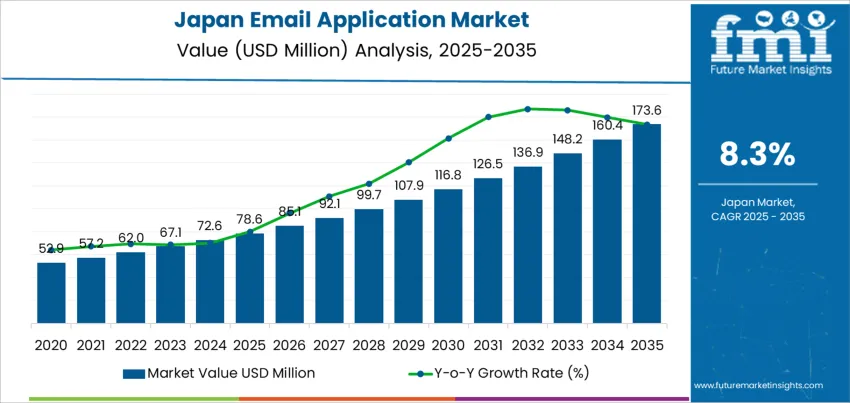
The demand for email applications in Japan is expected to grow from USD 78.6 million in 2025 to USD 173.6 million by 2035, reflecting a compound annual growth rate (CAGR) of 8.3%. Email applications are widely used across both personal and professional settings, with businesses relying heavily on email for communication, collaboration, and promoting. As Japan continues to embrace digital transformation and increase its reliance on cloud-based services, the demand for email applications will rise. Companies across various sectors will continue to implement these solutions for efficient, secure, and organized communication.
The growing trend of remote work and flexible work arrangements will drive increased demand for advanced email applications. As more businesses adopt hybrid working models, they require secure and efficient email solutions to maintain communication across remote and in-office teams. Furthermore, the demand for features such as integrated calendar management, task organization, and collaboration tools will continue to rise as organizations seek more comprehensive email platforms to enhance productivity and workflow.
The use of email applications in personal communication is also expected to remain strong. With the rise of smartphone usage and the integration of email platforms with other mobile applications, users will continue to access and manage emails seamlessly across devices. Email applications are becoming more than just communication tools, evolving into platforms that offer additional features like cloud storage, encrypted communication, and customizable organization tools.
Quick Stats of the Demand for Email Application in Japan
- Demand for Email Application in Japan Value (2025): USD 78.6 million
- Demand for Email Application in Japan Forecast Value (2035): USD 173.6 million
- Demand for Email Application in Japan Forecast CAGR (2025-2035): 8.3%
- Demand for Email Application in Japan Leading Product Type: Cloud Business Email
- Demand for Email Application in Japan Key Growth Regions: Kyushu & Okinawa, Kanto, Kansai, Chubu, Tohoku, Rest of Japan
- Demand for Email Application in Japan Top Players: Microsoft Outlook, Gmail (Google), Apple Mail, Yahoo Mail, Zoho Mail
What is the Growth Forecast for the Demand for Email Application in Japan through 2035?
From 2025 to 2030, demand for email applications in Japan is expected to grow from USD 78.6 million to USD 116.8 million, adding USD 38.2 million in value. This growth will be driven by the increased adoption of email services across various industries and the rise in digital communication needs. As businesses seek comprehensive tools to manage communication, workflows, and collaboration, the demand for integrated, multi-functional email solutions will continue to grow. The shift toward hybrid and remote work models will further contribute to this demand, as organizations require secure, efficient email solutions to facilitate communication across distributed teams.
From 2030 to 2035, the demand for email applications will continue to rise from USD 116.8 million to USD 173.6 million, contributing USD 56.8 million in value. While growth may moderate slightly as the industry matures, the demand for secure, user-friendly, and feature-rich email applications will remain robust. The focus on digital transformation, coupled with increasing reliance on smartphones and connected devices, will sustain this demand. Features such as AI-driven sorting, smarter organization, and enhanced security will continue to drive growth, as businesses and personal users look for more efficient and secure ways to manage their emails and digital communication.
Demand for Email Application in Japan Key Takeaways
| Metric | Value |
|---|---|
| Demand for Email Application in Japan Value (2025) | USD 78.6 million |
| Demand for Email Application in Japan Forecast Value (2035) | USD 173.6 million |
| Demand for Email Application in Japan Forecast CAGR (2025-2035) | 8.3% |
Why is the Demand for Email Application in Japan Growing?
The demand for email applications in Japan is growing as businesses, government agencies, and consumers continue to rely on email as a primary tool for communication. As digital transformation accelerates across industries, email applications have become essential for managing personal and professional communications. The increasing need for secure, efficient, and user-friendly communication platforms is driving the adoption of email applications in Japan.
A major driver of this growth is the growing reliance on email for business operations, particularly as more companies adopt remote work and digital collaboration tools. As businesses prioritize efficiency and security in their communication, email applications have evolved to meet these needs, offering advanced features such as encryption, spam filtering, and cloud integration. Japan's technologically advanced business environment and high internet penetration rates have contributed to the growing demand for these applications.
The growing focus on cybersecurity and data privacy is influencing the demand for secure email applications. With increasing concerns about data breaches and cyber threats, both individuals and businesses in Japan are seeking more reliable and secure email platforms. The rise in mobile email usage, driven by smartphones and tablets, is also pushing demand for email applications that are compatible across multiple devices. As the need for effective, secure, and flexible communication tools continues to rise, the industry for email applications in Japan is expected to grow steadily through 2035.
What is the Segment-Wise Analysis of Demand for Email Applications in Japan?
Demand for email applications in Japan is segmented by product type and deployment. By product type, demand is divided into cloud business email, enterprise messaging platforms, consumer email, email clients, and messaging platforms for service providers, with cloud business email leading at 45%. The demand is also segmented by deployment type, including public cloud and on-premises, with public cloud accounting for 60% of the demand. Regionally, demand is divided into Kanto, Kinki, Chubu, Kyushu & Okinawa, Tohoku, and the Rest of Japan.
Why Does Cloud Business Email Lead the Demand for Email Applications in Japan?
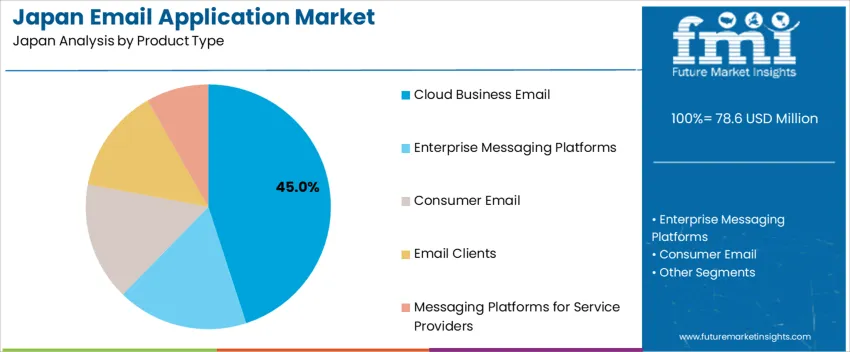
Cloud business email accounts for 45% of the demand for email applications in Japan, driven by its scalability, flexibility, and cost-effectiveness. Cloud-based email solutions are increasingly popular among businesses as they provide easy access to email services from any device, while eliminating the need for complex infrastructure and maintenance. Cloud business email also allows companies to scale their email usage according to their needs, making it an attractive option for businesses of all sizes. As Japanese companies continue to prioritize digital transformation, cloud business email solutions offer enhanced collaboration features, better integration with other cloud services, and improved security, all of which contribute to their widespread adoption. The flexibility, reduced operational costs, and ease of management make cloud business email the dominant choice for businesses in Japan, ensuring continued strong demand.
Why Does Public Cloud Deployment Lead the Demand for Email Applications in Japan?
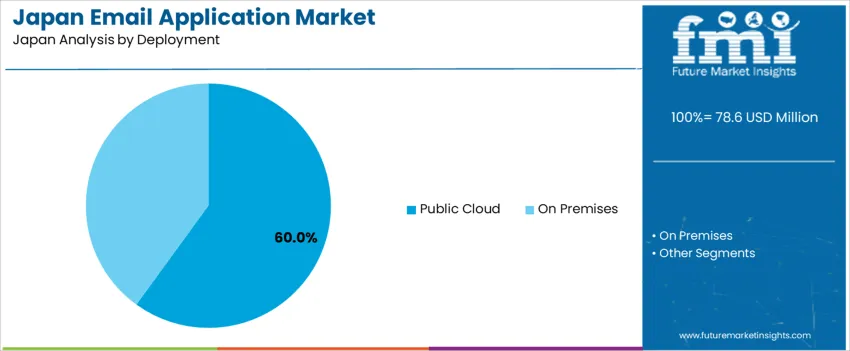
Public cloud deployment accounts for 60% of the demand for email applications in Japan, driven by the increasing adoption of cloud technologies in the business sector. Public cloud services offer several advantages, including lower upfront costs, scalability, and the ability to access email services from anywhere with an internet connection. These benefits are particularly appealing to businesses looking to reduce IT infrastructure costs while maintaining flexibility. Public cloud solutions are also easier to manage and update, as cloud providers handle security and maintenance. With the rise of remote work, the demand for public cloud-based email services has surged, as businesses and organizations prioritize secure, accessible, and collaborative communication tools. As digitalization continues to expand in Japan, the demand for public cloud-based email solutions is expected to grow, solidifying public cloud as the preferred deployment method for email applications.
What are the Key Trends, Drivers, and Restraints in Demand for Email Applications in Japan?
Demand for email applications remains robust in Japan because both individuals and businesses continue to value email for formal, documented, and asynchronous communication. With high internet penetration, most people check email daily, and email remains central for official communication, e‑commerce notifications, billing, work correspondence, and promoting newsletters. On the other hand, growth is restrained by the rising popularity of instant messaging and real‑time chat apps (especially LINE), which offer faster, more casual communication.
Why is Demand for Email Applications Growing (or Staying Strong) in Japan?
Email applications remain strong in Japan because they offer formal communication structure, long‑form content capability, and superior archival features compared to chat apps. These strengths make email the preferred choice for business communication, e‑commerce receipts, notifications, and customer‑service correspondence. Japanese email users tend to appreciate the detail and clarity that email provides, making it essential for official and professional correspondence. The widespread use of mobile internet allows many people to check their emails on smartphones, ensuring accessibility and convenience. Despite the rise of alternative messaging platforms, email’s role in more formal, structured communication keeps its demand strong, especially in professional and e-commerce settings.
How are Technological & Industry Innovations Affecting Email Application Demand in Japan?
Technological innovations are enhancing email application demand in Japan. Improvements in features like mobile optimization, security (spam filters, encryption), and integration with business tools like CRM and promoting automation systems make email a more efficient and secure channel. Companies continue to invest in email systems for promoting, with automated mailing systems, personalized newsletters, and structured communication. The use of hybrid communication strategies, combining email with messaging apps and chatbots, further drives demand. This hybrid approach leverages email for formal or documented communication while integrating faster channels for casual interactions. Innovations in email functionality and integration with other tools continue to strengthen its role in both business and personal communication.
What are the Key Challenges and Risks That Could Limit Email Application Demand in Japan?
Several challenges may limit email application demand in Japan. The rise of real‑time messaging and chat apps has led many users to favor instant messaging for personal communication, reducing the frequency of email use. This shift has particularly affected younger generations, who may prefer more immediate and interactive platforms. Email overload and spam remain persistent concerns, which can reduce user engagement and cause frustration. Businesses are increasingly adopting new customer‑engagement tools such as messengers, in‑app notifications, and conversational commerce, reducing reliance on email for outreach and support. As more modern, quicker communication tools gain popularity, email’s dominance in certain sectors may face further challenges.
What is the Regional Demand Outlook for Email Application in Japan?
| Region | CAGR (%) |
|---|---|
| Kyushu & Okinawa | 10.3% |
| Kanto | 9.5% |
| Kansai | 8.3% |
| Chubu | 7.3% |
| Tohoku | 6.4% |
| Rest of Japan | 6.1% |
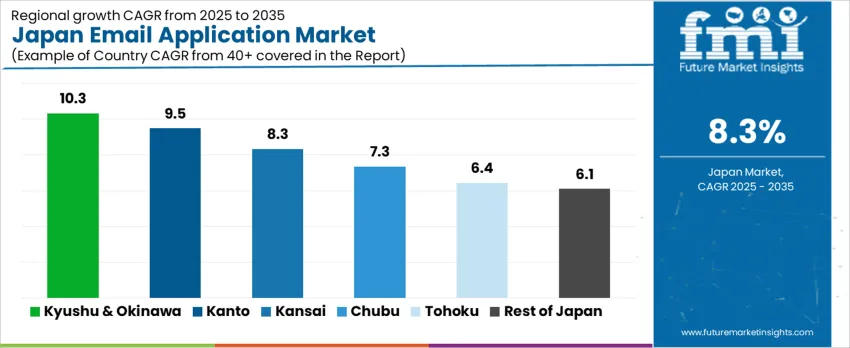
Demand for email applications in Japan is steadily growing, with Kyushu & Okinawa leading at a 10.3% CAGR, driven by increasing digital adoption and the tourism sector. Kanto follows with a 9.5% CAGR, supported by the region’s urban population and shift toward remote work. Kansai shows an 8.3% CAGR, fueled by growing e-commerce and innovation in digital communication. Chubu experiences a 7.3% CAGR, driven by industrial digitalization and the rise of e-commerce. Tohoku and the Rest of Japan see moderate growth at 6.4% and 6.1%, respectively, with increasing adoption in rural and suburban areas. As businesses and individuals continue to prioritize digital solutions, demand for email applications will continue to grow across Japan.
How is Demand for Email Applications Growing in Kyushu & Okinawa?
Kyushu & Okinawa shows the highest demand for email applications, growing at a 10.3% CAGR. The region’s growing digital infrastructure, coupled with the increasing adoption of e-commerce, online communication, and mobile applications, is driving demand for email applications. As businesses in Kyushu & Okinawa increasingly shift towards digital platforms, the need for efficient communication tools like email applications rises. The region’s expanding tourism sector also contributes to this demand, as hotels, resorts, and other businesses rely on email applications for communication and customer service. The increasing focus on remote work, especially in the wake of global digital trends, has further accelerated the adoption of email applications. As both businesses and individuals in the region prioritize digital transformation, the demand for email applications is expected to continue growing strongly.
Why is Demand for Email Applications Rising in Kanto?
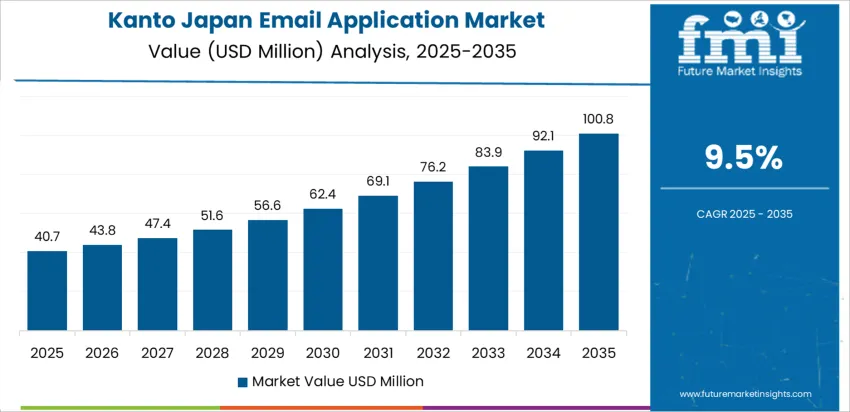
Kanto is experiencing steady demand for email applications, with a 9.5% CAGR. As Japan’s largest and most urbanized region, Kanto has seen rapid digital transformation in both the business and personal communication sectors. The increasing adoption of remote work, especially in urban centers like Tokyo, is a key driver of the growing demand for email applications. Businesses across various sectors, including finance, retail, and technology, rely heavily on email communication for internal collaboration and customer service. Moreover, the rise of e-commerce and digital promoting in Kanto has further amplified the need for email applications to support communication with clients and customers. As consumer preferences continue to shift towards digital solutions, the demand for email applications in Kanto will continue to grow steadily, driven by both professional and personal communication needs.
How is Demand for Email Applications Expanding in Kansai?
Kansai is seeing steady demand for email applications, with an 8.3% CAGR. The region’s rapidly digitizing business environment, particularly in cities like Osaka and Kyoto, is contributing to the rising need for efficient communication tools like email applications. The increasing trend of remote work, as well as the growing use of digital communication in industries like tourism, retail, and technology, is driving the adoption of email applications. Kansai’s focus on innovation in digital promoting and e-commerce further supports this demand, as businesses increasingly rely on email campaigns to reach consumers. As the region’s educational and research institutions embrace digital tools for communication, the use of email applications is rising. As Kansai continues to prioritize digital transformation and remote work practices, the demand for email applications is expected to maintain steady growth.
Why is Demand for Email Applications Growing in Chubu?
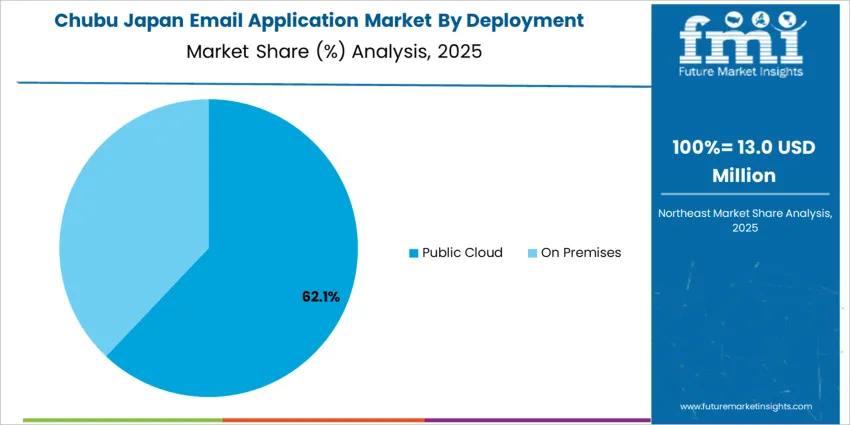
Chubu is experiencing steady demand for email applications, growing at a 7.3% CAGR. The region’s strong industrial base, including sectors like manufacturing and automotive, is driving the need for efficient communication platforms like email applications. As more businesses in Chubu embrace digital solutions for internal and external communication, email applications are becoming a key tool in their daily operations. The increasing use of e-commerce and digital promoting in Chubu’s commercial sectors, along with the rise of remote work, further contributes to this demand. As the region’s businesses and consumers continue to adopt digital technologies, the need for email applications in both professional and personal settings is expected to grow steadily. Chubu’s expanding digital infrastructure and the growing reliance on communication tools will continue to support the steady rise in demand for email applications.
How is Demand for Email Applications Expanding in Tohoku?
Tohoku is seeing moderate demand for email applications, with a 6.4% CAGR. While the region’s demand is smaller compared to urbanized areas, the adoption of email applications is steadily increasing as businesses and individuals in Tohoku embrace digital communication. The region’s small and medium-sized enterprises (SMEs), especially in agriculture, manufacturing, and services, are adopting email applications to enhance communication with clients, suppliers, and employees. The growing trend of remote work and digital education in Tohoku is contributing to the demand for email applications. As the region continues to modernize and integrate digital tools into everyday life, the use of email applications will rise steadily, particularly in response to the growing need for efficient communication and collaboration in both business and personal settings.
Why is Demand for Email Applications Steady in the Rest of Japan?
The Rest of Japan is experiencing steady demand for email applications, with a 6.1% CAGR. While demand in rural areas is smaller compared to major urban centers, there is consistent growth as more businesses and individuals in these regions adopt digital communication tools. As local businesses shift towards e-commerce and digital promoting, email applications are becoming increasingly essential for customer engagement and communication. The rise of remote work in smaller towns and rural areas is contributing to the growing use of email applications for personal and professional communication. As access to digital infrastructure improves and consumers become more digitally connected, the demand for email applications in the Rest of Japan is expected to continue growing steadily, driven by the overall digital transformation across the country.
What is the Competitive Landscape of Email Application Demand in Japan?
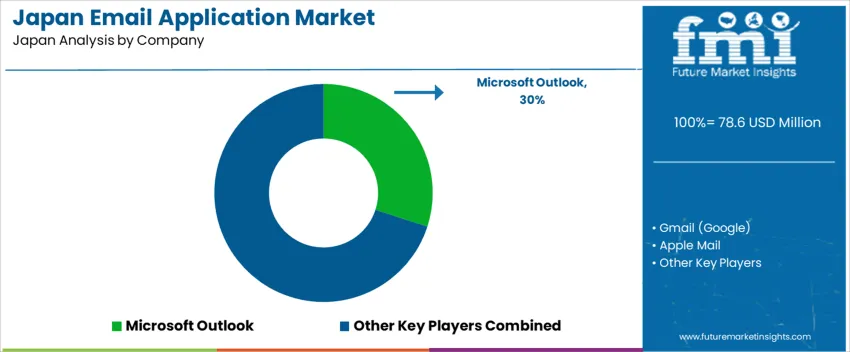
The demand for email applications in Japan is robust, driven by the increasing use of digital communication in both business and personal contexts. With a high percentage of the population using the internet, email continues to be a primary means of communication across various sectors. Remote work, cloud adoption, and digital collaboration have further reinforced the central role that email plays in both professional and personal communication in Japan. As the digital landscape evolves, the demand for reliable, secure, and efficient email platforms continues to grow.
Key players in the email application industry in Japan include Microsoft Outlook, Gmail (Google), Apple Mail, Yahoo Mail, and Zoho Mail. Microsoft Outlook holds a significant share of 30.0%, primarily due to its integration with the Microsoft 365 suite, making it the go-to choice for businesses and enterprises. Gmail (Google) is widely used by both individual users and businesses due to its user-friendly interface, large storage capacity, and integration with Google’s productivity tools. Apple Mail is favored by users of Apple devices, with its seamless integration into macOS and iOS. Yahoo Mail maintains a strong presence, particularly in Japan, offering a localized experience. Zoho Mail caters to small and medium-sized businesses, offering cost-effective solutions with cloud-based email hosting and business collaboration features.
Competition in the Japanese email industry is driven by factors like ease of integration, security, and user experience. Microsoft Outlook leads in enterprise settings due to its compatibility with other business tools, while Gmail’s simplicity and robust features appeal to individual users and small businesses. Apple Mail benefits from its deep integration with Apple products. As the industry grows, email providers must offer features such as enhanced security, reliability, and mobile compatibility to remain competitive, especially as the demand for cloud-based, privacy-conscious services increases.
Key Players in Japan Email Application Demand
- Microsoft Outlook
- Gmail (Google)
- Apple Mail
- Yahoo Mail
- Zoho Mail
Scope of Report
| Items | Values |
|---|---|
| Quantitative Units (2025) | USD million |
| Product Type | Cloud Business Email, Enterprise Messaging Platforms, Consumer Email, Email Clients, Messaging Platforms for Service Providers |
| Deployment | Public Cloud, On Premises |
| Region | Kyushu & Okinawa, Kanto, Kansai, Chubu, Tohoku, Rest of Japan |
| Countries Covered | Japan |
| Key Companies Profiled | Microsoft Outlook, Gmail (Google), Apple Mail, Yahoo Mail, Zoho Mail |
| Additional Attributes | Dollar sales by product type and deployment; regional CAGR and adoption trends; increasing demand for cloud-based email solutions; rise in enterprise email usage for business communication and collaboration |
Japan Email Application Demand by Key Segments
Product Type
- Cloud Business Email
- Enterprise Messaging Platforms
- Consumer Email
- Email Clients
- Messaging Platforms for Service Providers
Deployment
- Public Cloud
- On Premises
Region
- Kyushu & Okinawa
- Kanto
- Kansai
- Chubu
- Tohoku
- Rest of Japan
Frequently Asked Questions
How big is the demand for email application in Japan in 2025?
The demand for email application in Japan is estimated to be valued at USD 78.6 million in 2025.
What will be the size of email application in Japan in 2035?
The market size for the email application in Japan is projected to reach USD 173.6 million by 2035.
How much will be the demand for email application in Japan growth between 2025 and 2035?
The demand for email application in Japan is expected to grow at a 8.3% CAGR between 2025 and 2035.
What are the key product types in the email application in Japan?
The key product types in email application in Japan are cloud business email, enterprise messaging platforms, consumer email, email clients and messaging platforms for service providers.
Which deployment segment is expected to contribute significant share in the email application in Japan in 2025?
In terms of deployment, public cloud segment is expected to command 60.0% share in the email application in Japan in 2025.
Preview the report firsthand - request a free sample
Get SampleGet the brochure for pricing and purchase details.
Get PDFTable of Content
- Executive Summary
- Japan Market Outlook
- Demand-side Trends
- Supply-side Trends
- Technology Roadmap Analysis
- Analysis and Recommendations
- Market Overview
- Market Coverage / Taxonomy
- Market Definition / Scope / Limitations
- Market Background
- Market Dynamics
- Drivers
- Restraints
- Opportunity
- Trends
- Scenario Forecast
- Demand in Optimistic Scenario
- Demand in Likely Scenario
- Demand in Conservative Scenario
- Opportunity Map Analysis
- Product Life Cycle Analysis
- Supply Chain Analysis
- Investment Feasibility Matrix
- Value Chain Analysis
- PESTLE and Porter’s Analysis
- Regulatory Landscape
- Regional Parent Market Outlook
- Production and Consumption Statistics
- Import and Export Statistics
- Market Dynamics
- Japan Market Analysis 2020 to 2024 and Forecast, 2025 to 2035
- Historical Market Size Value (USD Million) Analysis, 2020 to 2024
- Current and Future Market Size Value (USD Million) Projections, 2025 to 2035
- Y-o-Y Growth Trend Analysis
- Absolute $ Opportunity Analysis
- Japan Market Pricing Analysis 2020 to 2024 and Forecast 2025 to 2035
- Japan Market Analysis 2020 to 2024 and Forecast 2025 to 2035, By Product Type
- Introduction / Key Findings
- Historical Market Size Value (USD Million) Analysis By Product Type , 2020 to 2024
- Current and Future Market Size Value (USD Million) Analysis and Forecast By Product Type , 2025 to 2035
- Cloud Business Email
- Enterprise Messaging Platforms
- Consumer Email
- Email Clients
- Messaging Platforms for Service Providers
- Y-o-Y Growth Trend Analysis By Product Type , 2020 to 2024
- Absolute $ Opportunity Analysis By Product Type , 2025 to 2035
- Japan Market Analysis 2020 to 2024 and Forecast 2025 to 2035, By Deployment
- Introduction / Key Findings
- Historical Market Size Value (USD Million) Analysis By Deployment, 2020 to 2024
- Current and Future Market Size Value (USD Million) Analysis and Forecast By Deployment, 2025 to 2035
- Public Cloud
- On Premises
- Y-o-Y Growth Trend Analysis By Deployment, 2020 to 2024
- Absolute $ Opportunity Analysis By Deployment, 2025 to 2035
- Market Structure Analysis
- Competition Dashboard
- Competition Benchmarking
- Market Share Analysis of Top Players
- By Regional
- By Product Type
- By Deployment
- Competition Analysis
- Competition Deep Dive
- Microsoft Outlook
- Overview
- Product Portfolio
- Profitability by Market Segments (Product/Age /Sales Channel/Region)
- Sales Footprint
- Strategy Overview
- Marketing Strategy
- Product Strategy
- Channel Strategy
- Gmail (Google)
- Apple Mail
- Yahoo Mail
- Zoho Mail
- Microsoft Outlook
- Competition Deep Dive
- Assumptions & Acronyms Used
- Research Methodology


