

- Industry Size (2025)
- USD 134.9 Mn
- Forecast (2035)
- USD 250.3 Mn
- CAGR (2025 to 2035)
- 6.4%
Demand for Hazelnut Paste in Japan Forecast and Outlook 2025 to 2035
The demand for hazelnut paste in Japan is expected to grow from USD 134.9 million in 2025 to USD 250.3 million by 2035, driven by a compound annual growth rate (CAGR) of 6.4%. Hazelnut paste, known for its rich flavor and versatility in culinary applications, has become increasingly popular in both the food and beverage industries. It is commonly used in products such as spreads, confectionery, ice creams, and baked goods. As consumers increasingly seek indulgent yet natural ingredients, hazelnut paste is well-positioned to benefit from the ongoing demand for premium, clean-label ingredients in various food categories. The growing trend of healthier alternatives in confectionery, coupled with the increasing demand for plant-based and organic ingredients, further supports the upward trajectory of hazelnut paste demand in Japan.
The growth in demand will also be supported by the increasing use of hazelnut paste in high-end chocolate and confectionery products, where it is valued for its smooth texture and distinctive flavor profile. The continued popularity of nut-based spreads, alongside rising consumer interest in plant-based diets and healthier snack options, will further solidify hazelnut paste as a key ingredient in Japan's food industry. Increased availability in both local markets and e-commerce platforms will help ensure that the demand for hazelnut paste continues to rise throughout the forecast period.
Quick Stats of the Demand for Hazelnut Paste in Japan
- Demand for Hazelnut Paste in Japan Value (2025): USD 134.9 million
- Demand for Hazelnut Paste in Japan Forecast Value (2035): USD 250.3 million
- Demand for Hazelnut Paste in Japan Forecast CAGR (2025-2035): 6.4%
- Demand for Hazelnut Paste in Japan Leading Product Type: Jars
- Demand for Hazelnut Paste in Japan Key Growth Regions: Kyushu & Okinawa, Kanto, Kansai, Chubu, Tohoku, Rest of Japan
- Demand for Hazelnut Paste in Japan Top Players: Ferrero, The Hershey Company, Mondelez International, Olam International, Unilever
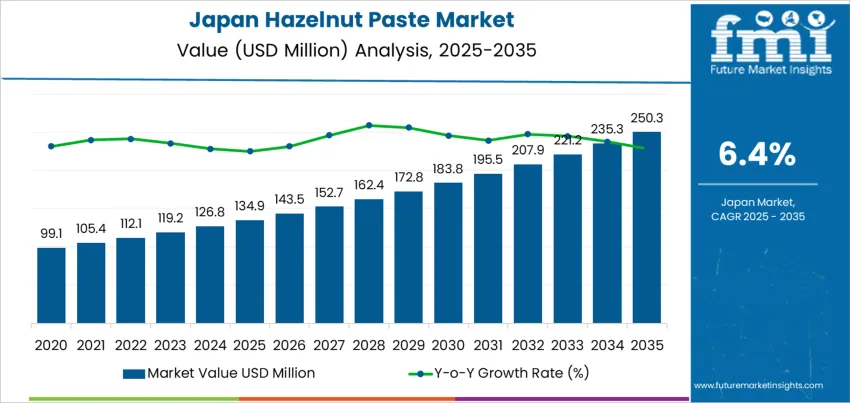
What is the Growth Forecast for the Demand for Hazelnut Paste in Japan through 2035?
From 2025 to 2030, demand for hazelnut paste is expected to grow from USD 134.9 million to USD 183.8 million, adding USD 48.9 million in value. This growth is driven by rising consumer preference for high-quality, natural, and nut-based ingredients. Hazelnut paste is increasingly featured in innovative food formulations, including spreads, smoothies, granola bars, and specialty foods. The versatility of hazelnut paste, combined with its rich taste and health benefits such as high levels of antioxidants and healthy fats, is helping it gain traction among health-conscious consumers. The continued expansion of premium food products in the retail industry will further contribute to this growth.
From 2030 to 2035, demand for hazelnut paste will continue to rise from USD 183.8 million to USD 250.3 million, contributing USD 66.5 million in value. This phase will see steady growth as hazelnut paste becomes a common ingredient in both mainstream and specialty food products. As demand for clean-label, sustainable, and organic food ingredients continues to rise, hazelnut paste will gain further acceptance in a variety of product categories. The expansion of international hazelnut production, along with advances in processing technology, will also ensure that hazelnut paste remains affordable and accessible to manufacturers across Japan.
Demand for Hazelnut Paste in Japan Key Takeaways
| Metric | Value |
|---|---|
| Demand for Hazelnut Paste in Japan Value (2025) | USD 134.9 million |
| Demand for Hazelnut Paste in Japan Forecast Value (2035) | USD 250.3 million |
| Demand for Hazelnut Paste in Japan Forecast CAGR (2025-2035) | 6.4% |
Why is the Demand for Hazelnut Paste in Japan Growing?
The demand for hazelnut paste in Japan is growing due to the increasing popularity of premium and specialty food products. Hazelnut paste, commonly used in confectionery, bakery items, and as a spread, is becoming more popular among consumers seeking healthier, flavorful alternatives. Its versatility in both sweet and savory applications ranging from gourmet chocolates to smoothies, ice creams, and sauces is driving its expanding use.
A key factor behind this growth is the rising demand for high-quality, natural ingredients in the food industry. As health-conscious consumers seek products with rich flavors but fewer artificial additives and excessive sugar, hazelnut paste is viewed as a healthier choice compared to more traditional spreads like peanut butter. Known for its high nutritional profile, which includes vitamins, healthy fats, and antioxidants, hazelnut paste is being embraced by consumers seeking a more wholesome, nutrient-rich option in their diets.
The premiumization trend in food products is contributing to the increasing demand for hazelnut paste. With a growing appetite for luxury chocolates, artisanal spreads, and gourmet products, hazelnut paste has found a place in high-end food offerings. As consumers increasingly prioritize quality and natural ingredients, especially in the confectionery and snack sectors, hazelnut paste is being integrated into more premium product lines. As awareness of its health benefits and versatility continues to grow, the demand for hazelnut paste in Japan is expected to expand steadily through 2035.
What is the Segment-Wise Analysis of Demand for Hazelnut Paste in Japan?
Demand for hazelnut paste in Japan is segmented by packaging, application, and region. By packaging, demand is divided into jars, tubes, pouches, and others, with jars leading at 55%. The demand is also segmented by application, including food & beverage, personal care & cosmetics, pharmaceuticals, and others, with food & beverage leading at 45%. Regionally, demand is spread across Kyushu & Okinawa, Kanto, Kansai, Chubu, Tohoku, and the rest of Japan.
Why Do Jars Lead the Demand for Hazelnut Paste in Japan?
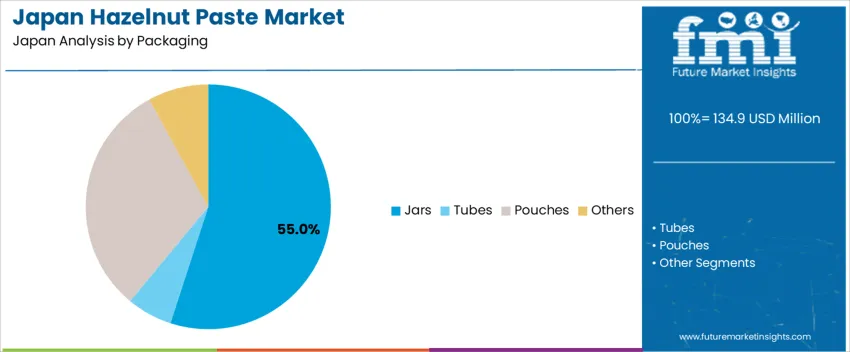
Jars account for 55% of the demand for hazelnut paste in Japan, driven by their convenience, storage capacity, and the ability to preserve product freshness. Jars are commonly used for larger quantities of hazelnut paste, making them ideal for consumers who use the product frequently, such as in food preparation and baking. The wide availability of jars in retail outlets and the ease with which they can be resealed and stored contribute to their dominance in the industry. Jars are often preferred for food products due to their hygienic packaging and ability to keep the paste fresh for longer periods. As the demand for hazelnut paste continues to grow, particularly in culinary applications, jars will remain the dominant packaging type in Japan.
Why Does Food & Beverage Lead the Demand for Hazelnut Paste in Japan?
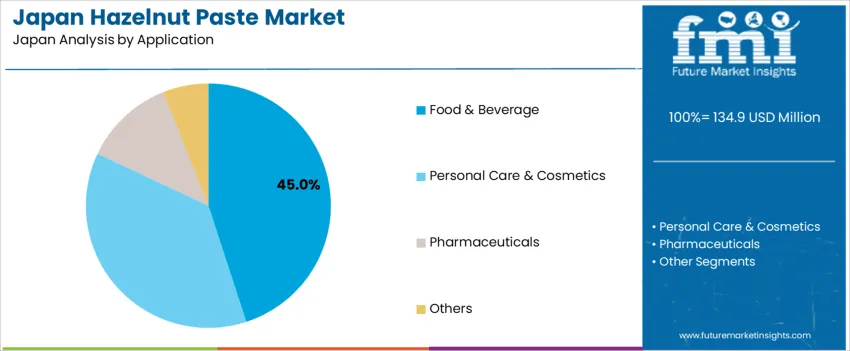
Food & beverage accounts for 45% of the demand for hazelnut paste in Japan, driven by its widespread use as a versatile ingredient in a variety of culinary applications. Hazelnut paste is commonly used in the production of spreads, desserts, chocolates, and beverages, making it a staple in many kitchens and food manufacturing processes. Its rich, nutty flavor and smooth texture make it an ideal addition to both sweet and savory dishes. The increasing popularity of plant-based diets and natural food products in Japan has further boosted the demand for hazelnut paste, as it is often seen as a healthier and more sustainable alternative to other spreads and nut butters. As the food & beverage industry continues to innovate with new product offerings, hazelnut paste will remain a key ingredient, ensuring its ongoing dominance in the industry.
What are the Key Trends, Drivers, and Restraints in Demand for Hazelnut Paste in Japan?
As Japanese consumers develop a greater preference for plant-based and natural ingredients, hazelnut paste is gaining traction due to its versatility as a spread, filling, and ingredient in various bakery items and desserts. The rising interest in gourmet food, along with a broader acceptance of nut-based spreads, supports this demand. Hazelnut paste is often promoted as a healthy, indulgent alternative to traditional sugary spreads, which appeals to health-conscious consumers looking for more nutritious options. The growth of this segment faces challenges. Hazelnut paste production in Japan relies on imports, as hazelnuts are not widely cultivated domestically, leading to higher costs. This, in turn, increases the retail price, which may limit the affordability for some consumers.
Why is Demand for Hazelnut Paste Growing in Japan?
Demand for hazelnut paste in Japan is expanding due to changing consumer preferences toward healthier and more diverse food options. With an increasing interest in Western-style breakfast foods, such as toasts and sandwiches, hazelnut paste is gaining popularity as a premium spread, offering an alternative to butter and jam. In addition to its rich flavor, hazelnut paste is often promoted as a nutritious option, with health benefits such as antioxidants and healthy fats. The demand for nut-based spreads is further supported by the growing trend of plant-based and clean-label products. As more consumers seek out premium, natural ingredients in their diets, hazelnut paste fits the bill. The rise of cafés, specialty bakeries, and e-commerce platforms has made hazelnut paste more accessible, allowing it to move beyond niche industries into mainstream retail outlets.
How are Technological & Industry Innovations Driving Hazelnut Paste Demand in Japan?
Technological innovations in the production and packaging of hazelnut paste have helped boost its appeal and availability in Japan. Advances in processing methods, such as improved roasting, grinding, and pasteurization, have enhanced the texture, consistency, and overall quality of hazelnut paste. These innovations ensure that the final product is smooth, flavorful, and stable, making it more attractive to Japanese consumers who value high-quality ingredients. Developments in packaging, such as airtight jars and resealable containers, have extended the shelf life and improved the convenience of hazelnut paste. This ensures that the product stays fresh longer and is easier to store, making it suitable for both households and commercial use. In response to evolving consumer preferences, manufacturers have also introduced flavored variants of hazelnut paste and organic or vegan options, which appeal to health-conscious consumers.
What are the Key Challenges and Risks That Could Limit Hazelnut Paste Demand in Japan?
One of the primary constraints is the cost of production, as hazelnuts are not widely cultivated domestically. Japan relies on imported hazelnuts, which makes the price of hazelnut paste relatively high compared to other spreads. This price point may deter price-sensitive consumers, particularly when competing products, such as peanut butter or locally preferred spreads, are more affordable. Another challenge is the fluctuation in the global supply of hazelnuts, which can lead to price volatility, affecting both production costs and retail prices. The cultural preference for traditional Japanese food products and local spreads may limit the acceptance of hazelnut paste among consumers unfamiliar with nut-based alternatives. While the demand for hazelnut paste is growing, these challenges could hinder its broader adoption, especially in an industry that has long been dominated by other familiar spreads and ingredients.
What is the Regional Demand Outlook for Hazelnut Paste in Japan?
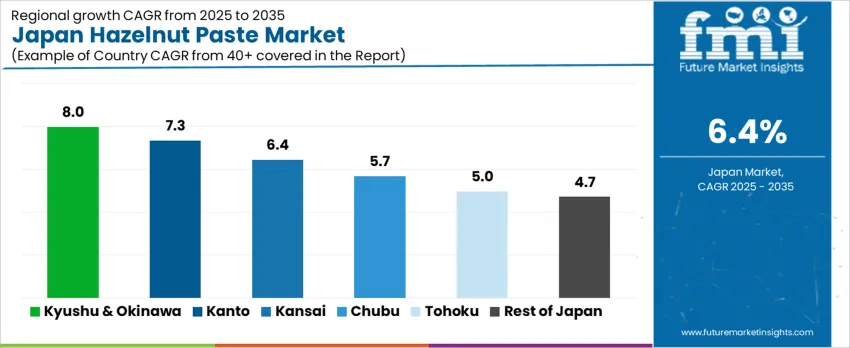
| Region | CAGR (%) |
|---|---|
| Kyushu & Okinawa | 8.0% |
| Kanto | 7.3% |
| Kansai | 6.4% |
| Chubu | 5.7% |
| Tohoku | 5.0% |
| Rest of Japan | 4.7% |
Demand for hazelnut paste in Japan is growing steadily, with Kyushu & Okinawa leading at an 8.0% CAGR, driven by health-conscious consumers and the region’s warm climate. Kanto follows with a 7.3% CAGR, fueled by urban demand for premium and functional food products. Kansai shows a 6.4% CAGR, supported by its food culture and interest in global flavors. Chubu experiences a 5.7% CAGR, with steady growth driven by health trends. Tohoku and the Rest of Japan see moderate growth at 5.0% and 4.7%, respectively, as awareness and access improve in rural areas. As health-consciousness and demand for diverse food products rise, the industry for hazelnut paste will continue expanding across Japan.
How is Demand for Hazelnut Paste Growing in Kyushu & Okinawa?
Kyushu & Okinawa leads the demand for hazelnut paste, growing at an 8.0% CAGR. The region’s warm climate, particularly in Okinawa, plays a major role in the popularity of refreshing beverages and desserts like hazelnut paste-based treats. Consumers are increasingly drawn to the health benefits of hazelnut paste, including its digestive and immune-boosting properties. As health-consciousness rises, more people opt for natural, plant-based ingredients, and hazelnut paste fits well into these trends. Okinawa’s tourism industry supports demand, as visitors look for local, unique food products. The growing awareness of premium products and the rising focus on sustainability in food choices also contribute to the increased use of hazelnut paste in both homes and commercial establishments. As these trends continue, demand for hazelnut paste in Kyushu & Okinawa is expected to remain strong.
Why is Demand for Hazelnut Paste Rising in Kanto?
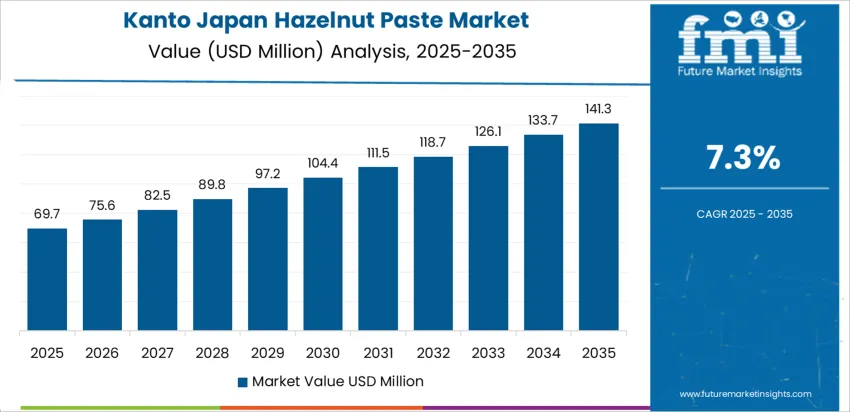
Kanto is experiencing steady demand for hazelnut paste, growing at a 7.3% CAGR. The region's large urban population, particularly in Tokyo, is driving much of this growth. Kanto consumers are increasingly prioritizing health and wellness, which boosts the popularity of functional, plant-based food products like hazelnut paste. Known for its health benefits and unique flavor, hazelnut paste is gaining traction among health-conscious individuals who prefer natural, nutrient-dense ingredients. The region’s vast retail sector, with cafes and online platforms, ensures that these products are easily accessible. Kanto’s food service industry, including bakeries and cafes, also plays a major role in driving the demand. As more people seek plant-based and sustainable alternatives, demand for hazelnut paste is expected to grow steadily, supported by the region’s preference for premium, innovative food products.
How is Demand for Hazelnut Paste Expanding in Kansai?
Kansai is seeing steady demand for hazelnut paste, growing at a 6.4% CAGR. The region's culinary culture, especially in cities like Osaka and Kyoto, drives the growing popularity of hazelnut paste. Known for its rich flavor and versatility in baked goods, pastries, and spreads, hazelnut paste is increasingly being incorporated into traditional and contemporary recipes. Consumers in Kansai are more aware of global food trends, leading to a rising preference for healthier, plant-based products. Bakeries, cafes, and dessert shops in the region are adopting hazelnut paste to meet the demand for premium offerings. Moreover, the growing awareness of the health benefits of nuts, such as improved digestion and immune support, is another driver. With better accessibility through retail and online stores, the steady demand for hazelnut paste in Kansai reflects an overall shift towards more varied, health-conscious diets.
Why is Demand for Hazelnut Paste Growing in Chubu?
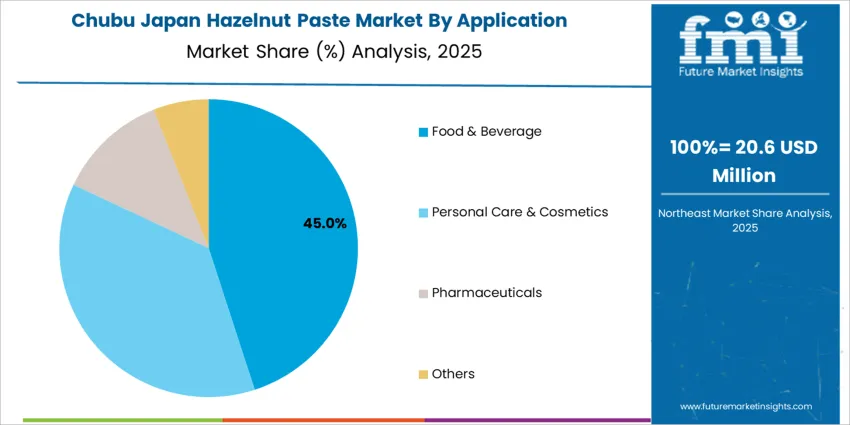
Chubu is experiencing steady demand for hazelnut paste, with a 5.7% CAGR. The region’s growing focus on health and wellness, coupled with an increasing interest in plant-based and functional food products, is driving the rise in demand. As consumers in cities like Nagoya embrace healthier diets and experiment with new ingredients, hazelnut paste has become a popular choice for both home use and commercial food production. Known for its flavor and health benefits, hazelnut paste is used in a variety of applications, from spreads to desserts and baked goods. Chubu’s expanding food service industry, including local bakeries and cafés, is also contributing to the rising demand. As more consumers opt for natural, clean-label products, demand for hazelnut paste, with its natural and nutrient-dense profile, is expected to continue growing steadily in the region.
How is Demand for Hazelnut Paste Expanding in Tohoku?
Tohoku is seeing moderate demand for hazelnut paste, growing at a 5.0% CAGR. While the region’s industry is smaller compared to urban areas, there is steady growth driven by increasing consumer interest in plant-based and health-focused food products. Tohoku’s growing awareness of global food trends, combined with an expanding interest in Western-style pastries and confections, is boosting demand for hazelnut paste. As more people in the region embrace home baking and healthier food choices, hazelnut paste is being incorporated into various recipes for spreads, desserts, and snacks. The rise in health-consciousness, especially among younger consumers, is making hazelnut paste a more attractive option due to its nutrient density and natural properties. As retail distribution expands and access improves, demand for hazelnut paste is expected to rise steadily in Tohoku, though at a slower pace compared to more urbanized regions.
Why is Demand for Hazelnut Paste Steady in the Rest of Japan?
The Rest of Japan is experiencing steady demand for hazelnut paste, growing at a 4.7% CAGR. While demand is lower in rural regions compared to urban centers, there is a consistent rise as consumer awareness of global food trends and healthier alternatives increases. Rural consumers are becoming more familiar with premium, plant-based ingredients like hazelnut paste, which offers health benefits like improved digestion and skin health. As more small-town bakeries, cafes, and food service providers incorporate hazelnut paste into their offerings, demand rises slowly but steadily. The growth of e-commerce and improvements in distribution channels allow consumers in rural areas to access specialty food products more easily. As the demand for healthier, plant-based foods continues to rise across Japan, the Rest of Japan’s consistent demand for hazelnut paste is expected to grow at a moderate but steady pace.
What is Driving the Demand for Hazelnut Paste in Japan and Who Are the Key Players Shaping the Industry?
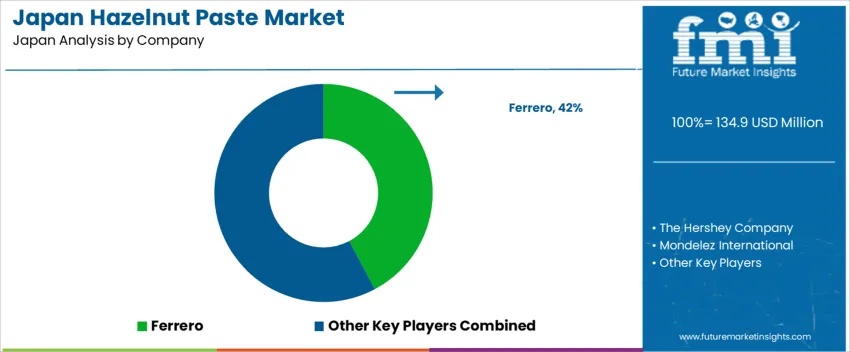
The demand for hazelnut paste in Japan is increasing due to the growing popularity of hazelnuts as a key ingredient in various food and beverage applications. Hazelnut paste is commonly used in spreads, confectionery, baked goods, and dairy products due to its rich flavor, smooth texture, and versatility. As Japanese consumers continue to seek premium, high-quality ingredients for indulgent and gourmet food products, hazelnut paste is gaining traction. With the increasing demand for plant-based alternatives and nut-based products, hazelnut paste is increasingly being used as a substitute for other spreads, such as chocolate and peanut butter, in response to consumer preference for healthier and more natural options.
Key players shaping the hazelnut paste industry in Japan include Ferrero, The Hershey Company, Mondelez International, Olam International, and Unilever. Ferrero leads the industry with a dominant share of 42.2%, benefiting from its strong brand presence, particularly through its popular hazelnut-based products like Nutella. These companies are driving industry growth by offering a wide range of hazelnut-based products, including pastes and spreads, that cater to both consumer preferences for indulgence and the growing trend towards plant-based, dairy-free alternatives. Their strong distribution networks and innovative product offerings play a crucial role in expanding the presence of hazelnut paste in Japan’s competitive food and beverage sector.
The growth of the hazelnut paste industry in Japan is also supported by an increasing trend toward premium and gourmet food products. As the demand for specialty ingredients and high-quality flavor profiles rises, hazelnut paste is becoming a sought-after ingredient among Japanese consumers. This demand is further fueled by evolving consumer tastes, which increasingly prioritize the use of high-quality, natural ingredients in both sweet and savory products, ensuring continued growth for hazelnut paste in Japan.
Key Players in Japan Hazelnut Paste Demand
- Ferrero
- The Hershey Company
- Mondelez International
- Olam International
- Unilever
Scope of Report
| Items | Values |
|---|---|
| Quantitative Units (2025) | USD million |
| Packaging | Jars, Tubes, Pouches, Others |
| Application | Food & Beverage, Personal Care & Cosmetics, Pharmaceuticals, Others |
| Region | Kyushu & Okinawa, Kanto, Kansai, Chubu, Tohoku, Rest of Japan |
| Countries Covered | Japan |
| Key Companies Profiled | Ferrero, The Hershey Company, Mondelez International, Olam International, Unilever |
| Additional Attributes | Dollar sales by packaging type and application; regional CAGR and growth trends; industry penetration of jars vs tubes and pouches; increasing demand for hazelnut paste in food & beverage products; rise of clean-label trends in cosmetics and personal care applications. |
Japan Hazelnut Paste Demand by Key Segments
Packaging
- Jars
- Tubes
- Pouches
- Others
Application
- Food & Beverage
- Personal Care & Cosmetics
- Pharmaceuticals
- Others
Region
- Kyushu & Okinawa
- Kanto
- Kansai
- Chubu
- Tohoku
- Rest of Japan
Frequently Asked Questions
How big is the demand for hazelnut paste in Japan in 2025?
The demand for hazelnut paste in Japan is estimated to be valued at USD 134.9 million in 2025.
What will be the size of hazelnut paste in Japan in 2035?
The market size for the hazelnut paste in Japan is projected to reach USD 250.3 million by 2035.
How much will be the demand for hazelnut paste in Japan growth between 2025 and 2035?
The demand for hazelnut paste in Japan is expected to grow at a 6.4% CAGR between 2025 and 2035.
What are the key product types in the hazelnut paste in Japan?
The key product types in hazelnut paste in Japan are jars, tubes, pouches and others.
Which application segment is expected to contribute significant share in the hazelnut paste in Japan in 2025?
In terms of application, food & beverage segment is expected to command 45.0% share in the hazelnut paste in Japan in 2025.
Preview the report firsthand - request a free sample
Get SampleGet the brochure for pricing and purchase details.
Get PDFTable of Content
- Executive Summary
- Japan Market Outlook
- Demand-side Trends
- Supply-side Trends
- Technology Roadmap Analysis
- Analysis and Recommendations
- Market Overview
- Market Coverage / Taxonomy
- Market Definition / Scope / Limitations
- Market Background
- Market Dynamics
- Drivers
- Restraints
- Opportunity
- Trends
- Scenario Forecast
- Demand in Optimistic Scenario
- Demand in Likely Scenario
- Demand in Conservative Scenario
- Opportunity Map Analysis
- Product Life Cycle Analysis
- Supply Chain Analysis
- Investment Feasibility Matrix
- Value Chain Analysis
- PESTLE and Porter’s Analysis
- Regulatory Landscape
- Regional Parent Market Outlook
- Production and Consumption Statistics
- Import and Export Statistics
- Market Dynamics
- Japan Market Analysis 2020 to 2024 and Forecast, 2025 to 2035
- Historical Market Size Value (USD Million) Analysis, 2020 to 2024
- Current and Future Market Size Value (USD Million) Projections, 2025 to 2035
- Y-o-Y Growth Trend Analysis
- Absolute $ Opportunity Analysis
- Japan Market Pricing Analysis 2020 to 2024 and Forecast 2025 to 2035
- Japan Market Analysis 2020 to 2024 and Forecast 2025 to 2035, By Packaging
- Introduction / Key Findings
- Historical Market Size Value (USD Million) Analysis By Packaging , 2020 to 2024
- Current and Future Market Size Value (USD Million) Analysis and Forecast By Packaging , 2025 to 2035
- Jars
- Tubes
- Pouches
- Others
- Y-o-Y Growth Trend Analysis By Packaging , 2020 to 2024
- Absolute $ Opportunity Analysis By Packaging , 2025 to 2035
- Japan Market Analysis 2020 to 2024 and Forecast 2025 to 2035, By Application
- Introduction / Key Findings
- Historical Market Size Value (USD Million) Analysis By Application, 2020 to 2024
- Current and Future Market Size Value (USD Million) Analysis and Forecast By Application, 2025 to 2035
- Food & Beverage
- Personal Care & Cosmetics
- Pharmaceuticals
- Others
- Y-o-Y Growth Trend Analysis By Application, 2020 to 2024
- Absolute $ Opportunity Analysis By Application, 2025 to 2035
- Market Structure Analysis
- Competition Dashboard
- Competition Benchmarking
- Market Share Analysis of Top Players
- By Regional
- By Packaging
- By Application
- Competition Analysis
- Competition Deep Dive
- Ferrero
- Overview
- Product Portfolio
- Profitability by Market Segments (Product/Age /Sales Channel/Region)
- Sales Footprint
- Strategy Overview
- Marketing Strategy
- Product Strategy
- Channel Strategy
- The Hershey Company
- Mondelez International
- Olam International
- Unilever
- Ferrero
- Competition Deep Dive
- Assumptions & Acronyms Used
- Research Methodology


