

- Industry Size (2025)
- USD 4.5 Bn
- Forecast (2035)
- USD 8.0 Bn
- CAGR (2025 to 2035)
- 5.9%
Demand for Ethnic Food in Japan Forecast and Outlook 2025 to 2035
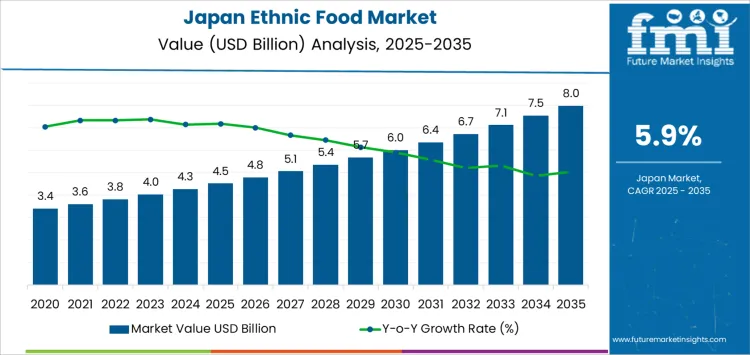
Demand for ethnic food in Japan stands at USD 4.5 billion in 2025 and is projected to reach USD 8.0 billion by 2035 at a CAGR of 5.9%. The industry spans ready to eat meals and snack formats, with prepared meal kits, frozen cuisine, and packaged street food forming the core commercial base. Hypermarkets, convenience outlets, grocery stores, and online platforms shape nationwide access across Kanto, Kansai, Chubu, Kyushu, and Hokkaido. Urban working households, students, and inbound consumers influence product rotation and flavor innovation. Corporate participation includes Ajinomoto, General Mills, Associated British Foods, McCormick, and Orkla through branded imports, local manufacturing, and licensed production models. Supply chains integrate Southeast Asia, South Asia, Europe, and domestic co-packers. Private label programs and regional flavor localization strengthen retail bargaining power across major cities.
Growth through 2035 reflects rising exposure to global cuisines, long working hours, and expanding cold chain capacity. Ready to eat categories benefit from microwave compatibility, portion control formats, and shelf-stable packaging. Snack-based ethnic offerings gain traction in transit hubs and late-hour retail clusters. Pricing movement tracks imported spice costs, seafood inputs, and yen-linked logistics expenses. Kanto and Kansai remain volume anchors, while Kyushu and regional cities show faster outlet expansion. Online grocery and quick commerce widen access beyond dense retail corridors. Competitive strategy centers on limited edition flavors, chef collaborations, halal compliant lines, and plant-forward recipes aligned with dietary diversification. Demand stability is reinforced by tourism recovery, international student inflows, and foodservice crossover into consumer packaged formats. Supplier consolidation and private retail brands influence assortment depth and national price bands.
Quick Stats of the Ethnic Food Industry in Japan
- Ethnic Food Industry in Japan Value (2025): USD 4.5 billion
- Ethnic Food Industry in Japan Forecast Value (2035): USD 8.0 billion
- Ethnic Food Industry in Japan Forecast CAGR (2025-2035): 5.9%
- Leading Type in Ethnic Food Industry in Japan: Ready to Eat Meals (66%)
- Key Growth Regions in Ethnic Food Industry in Japan: Kyushu & Okinawa, Kanto, Kansai
- Top Players in Ethnic Food Industry in Japan: Associated British Foods PLC, General Mills, Inc., Ajinomoto Co. Inc., McCormick & Company Inc., Orkla ASA
What is the Demand Forecast for Ethnic Food in Japan through 2035?
Ethnic food demand in Japan reaches USD 4.5 billion in 2025 and increases to USD 5.7 billion by 2030, creating a USD 1.2 billion value build within this phase. The rise from USD 3.4 billion in 2020 reflects steady diversification of household diets beyond traditional domestic cuisine into Korean, Southeast Asian, Middle Eastern, and Latin American meal formats. Supermarkets continue to expand ready-to-cook ethnic meal kits, spice blends, sauces, and frozen imports to meet weekday cooking demand. Urban working populations account for much of the volume growth, driven by time-constrained cooking habits and rising interest in international flavors consumed at home rather than only in restaurants.
From 2030 to 2035, demand moves from USD 5.7 billion to USD 8.0 billion, adding USD 2.3 billion in additional value. Annual value additions widen as repeated consumption replaces occasional experimentation. Private label ethnic food lines gain shelf space due to stable turnover and controlled pricing. Foodservice operators feeding convenience store supply chains also expand ethnic offerings across bento meals and hot counters. Growth is supported by inbound tourism influence on menu design, school lunch program diversification, and rising availability of halal and plant-based international foods. By 2035, ethnic food demand in Japan reflects routine meal integration across households rather than niche culinary exploration.
Ethnic Food Industry in Japan Key Takeaways
| Metric | Value |
|---|---|
| Industry Value (2025) | USD 4.5 billion |
| Forecast Value (2035) | USD 8.0 billion |
| Forecast CAGR (2025–2035) | 5.9% |
What Is Driving the Demand for Ethnic Food in Japan?
The demand for ethnic food in Japan is shaped by changing urban lifestyles, international tourism recovery, and the steady globalization of everyday eating habits. Historically, overseas cuisines were treated as occasional dining experiences limited to city centers and special occasions. This shifted as convenience stores, supermarkets, and food courts began regular rotation of Korean, Chinese, Southeast Asian, Middle Eastern, and Latin American ready meals. Younger consumers in particular show strong comfort with foreign flavors through travel exposure, digital food culture, and school age international education. Migration of service workers and long term foreign residents also strengthened daily demand for authentic ingredients and prepared foods across residential districts rather than only central business areas.
Future demand for ethnic food in Japan will be shaped by home meal diversification, growth of frozen and chilled international dishes, and rising interest in spice driven flavor profiles. Consumers increasingly seek taste intensity and variety that differs from traditional domestic seasoning, which supports repeat purchase of curries, stir fry kits, tacos, kebabs, and rice bowls inspired by overseas cuisines. Restaurant operators will continue testing limited menu rotations to gauge regional flavor tolerance. Barriers include ingredient sourcing instability, uneven authenticity perception, and cautious adoption in older consumer groups. Long term demand will depend on how well ethnic food balances flavor novelty with Japanese expectations for cleanliness, portion control, and restrained seasoning intensity.
What Is the Demand for Ethnic Food in Japan by Type and Distribution Channel?
The demand for ethnic food in Japan is shaped by urban dining habits, time constrained meal preparation, and steady exposure to international cuisines through travel and media. Ready to eat meals lead by type due to their role in lunch solutions, late evening dining, and solo household consumption. Hypermarkets and supermarkets lead by distribution channel because they support multi cuisine assortment under centralized cold chain control. Procurement is driven by domestic food processors, private label operators, and import distributors serving national retail networks. Import reliance remains present for spice blends and regional sauces. Substitution pressure exists from restaurant takeaway. Demand stability is supported by routine weekday consumption and expanding frozen global meal assortments.
Why do ready to eat meals dominate the demand for ethnic food in Japan by type?
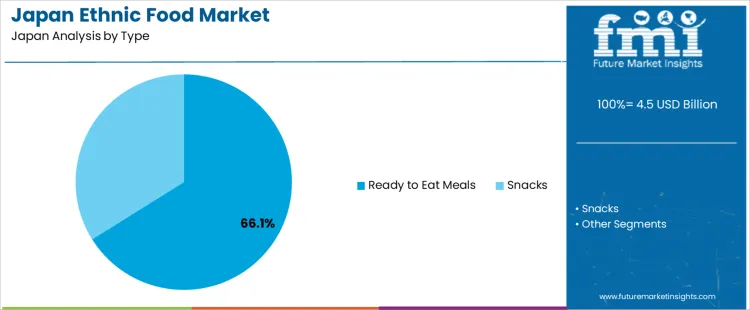
Ready to eat meals account for 66% of the demand for ethnic food in Japan by type, reflecting preference for portion controlled global meals that require minimal preparation. Consumption intensity is driven by office workers, single person households, and late shift employees relying on microwave ready formats. Usage remains stable because these meals fit fixed lunch and dinner routines. Procurement is led by large food manufacturers and private label producers supplying chilled and frozen categories. Price sensitivity remains moderate because meal price aligns with convenience meal budgets. Specification control emphasizes flavor replication accuracy, shelf life stability, portion uniformity, and packaging heat resistance.
Ready to eat ethnic meals also generate steady repeat demand through weekly purchase cycles and rotating menu formats. Repeat utilization remains predictable as consumers rotate between curry, noodles, rice bowls, and regional specialties. Buyers favor standardized base recipes that allow regional flavor variation without altering production flow. Margin structure remains controlled under retailer margin targets and ingredient cost movement. Regulatory exposure centers on food safety audits and country of origin labeling. Import reliance persists for sauces, spice pastes, and protein seasoning systems. Substitution pressure from food delivery platforms continues within urban zones.
What drives hypermarkets and supermarkets to lead the demand for ethnic food in Japan by distribution channel?
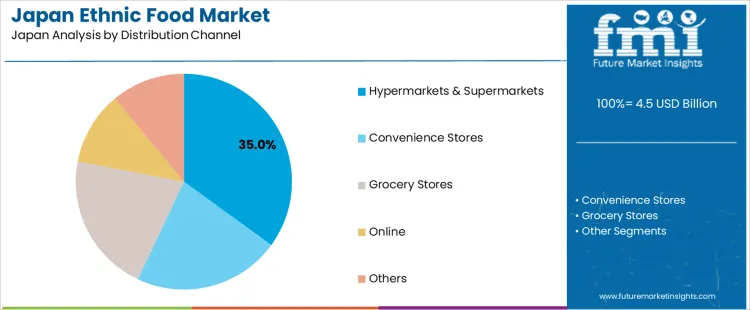
Hypermarkets and supermarkets represent 35.0% of the demand for ethnic food in Japan by distribution channel, reflecting their role as primary household grocery sourcing points. Consumption intensity is driven by family purchases, weekend stock up behavior, and multi item meal planning. Usage remains stable because ethnic meals are increasingly included within routine home dining rather than occasional dining. Procurement is dominated by national retailers operating centralized purchasing and cold chain distribution. Price sensitivity remains moderate as consumers seek value through bundled meal formats. Specification control emphasizes frozen storage stability, barcode traceability, and shelf ready display durability.
Supermarket led sales also generate consistent repeat demand through loyalty program driven shopping patterns. Repeat utilization remains predictable due to weekly household shopping cycles. Buyers favor balanced assortment between domestic ethnic brands and imported labels to manage pricing tiers. Margin structure remains controlled under private label expansion and promotional funding agreements. Regulatory exposure centers on imported food inspection and allergen declaration rules. Import reliance remains present for regional finished meals and key ingredients. Substitution pressure from convenience stores rises for single serve meals, though household bulk purchasing continues to anchor supermarket demand.
What Is Driving the Demand for Ethnic Food in Japan Urban Dining Diversity and Migration Driven Tastes?
Demand for ethnic food in Japan reflects changing urban demographics, inbound tourism recovery, and curiosity toward non traditional flavor profiles among younger consumers. Major cities support dense clusters of Korean, Chinese regional, Indian, Southeast Asian, Middle Eastern, and Latin kitchens. Convenience stores and frozen food brands also adapt global recipes for home preparation. Office workers seek quick global lunches near transit hubs while families explore weekend dining beyond domestic menus. Food media, social platforms, and television travel features expand exposure. Demand aligns with eating out frequency, tourism flows, and willingness to try unfamiliar spice, grain, and protein combinations within routines.
How Are Urban Youth and Student Communities Expanding Daily Ethnic Food Consumption?
Urban youth and international student communities play a central role in regular ethnic food intake across Japan. University districts attract affordable curry shops, halal eateries, noodle bars, and shared kitchens serving overseas comfort dishes. Budget pricing and late operating hours suit student schedules. Social dining culture favors group tasting and menu sharing, which increases trial across cuisines. Smartphone translation and digital menus reduce language barriers during ordering. This daily exposure builds flavor familiarity early in adulthood. Demand grows through habit formation near campuses, language schools, and technical colleges rather than through occasional destination dining alone during formative lifestyle years stages.
Why Do Retail, Frozen Foods, and Street Markets Support Wider Home Consumption?
Retail and frozen food channels extend ethnic food demand beyond restaurants into daily home meals across Japan. Supermarkets stock spice pastes, noodles, flatbreads, sauces, and ready meals suited for small households. Private label ranges simplify unfamiliar recipes into short preparation steps. Street markets linked to migrant communities supply fresh herbs, halal meats, and specialty vegetables not found in standard chains. Compact freezers in urban homes favor portion controlled frozen dishes. This retail structure supports repetition at home rather than rare dining out. Demand follows shopping accessibility, storage constraint adaptation, and weekday time pressure for busy working households across major cities.
What Factors Limit the Pace of Ethnic Food Expansion in Japan?
Ethnic food demand in Japan faces limits tied to spice tolerance, dietary habits, and supply stability. Many consumers prefer restrained heat and familiar textures, which narrows acceptance of heavily spiced or fermented dishes. Ingredient imports depend on weather, currency movement, and shipping schedules that affect menu consistency. Small kitchens limit ability to cook complex meals at home. Some regional areas show lower exposure due to limited restaurant variety. These factors confine growth to urban corridors and transit hubs. Expansion follows gradual taste education, retail adaptation, and localized menu tailoring rather than uniform nationwide adoption speed during shifting consumer lifestyle patterns.
What is the Demand for Ethnic Food in Japan by Region?
| Region | CAGR (%) |
|---|---|
| Kyushu & Okinawa | 7.3% |
| Kanto | 6.7% |
| Kansai | 5.9% |
| Chubu | 5.2% |
| Tohoku | 4.6% |
| Rest of Japan | 4.3% |
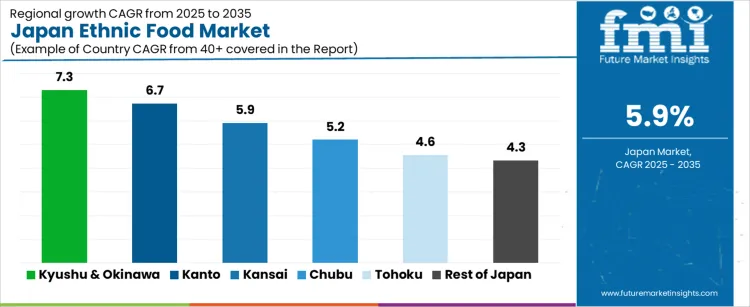
The demand for ethnic food in Japan is expanding steadily across all regions, led by Kyushu and Okinawa at a 7.3% CAGR. Growth in this region is supported by strong tourism flows, high presence of international cuisine in resort zones, and rising consumption of Southeast Asian and Western foods. Kanto follows at 6.7%, driven by dense urban populations, large expatriate communities, and wide availability of global food brands across retail and foodservice channels. Kansai records 5.9% growth, reflecting stable demand from casual dining chains and street food formats. Chubu at 5.2% shows moderate uptake linked to regional retail expansion. Tohoku and the Rest of Japan, at 4.6% and 4.3%, reflect slower growth shaped by traditional dietary preferences and lower exposure to international food trends.
How Is Tourism and Dining Diversity Driving Ethnic Food Demand in Kyushu and Okinawa?
Demand for ethnic food in Kyushu and Okinawa is advancing at a CAGR of 7.3% through 2035, supported by strong inflow of domestic and international tourists, resort dining expansion, and rising preference for global flavors in coastal leisure markets. Restaurants and hotels report steady uptake of Southeast Asian, Korean, and Western cuisine offerings. This region shows higher menu rotation and seasonal food experimentation than most mainland areas. Growth reflects food tourism promotion, resort driven dining variety, and rising consumer interest in international taste profiles for casual and premium dining.
- Resort dining drives steady international menu expansion
- Tourism footfall supports high restaurant turnover
- Southeast Asian cuisines show strong adoption
- Seasonal dining promotions raise demand consistency
Why Is Urban Multicultural Exposure Sustaining Ethnic Food Growth in Kanto?
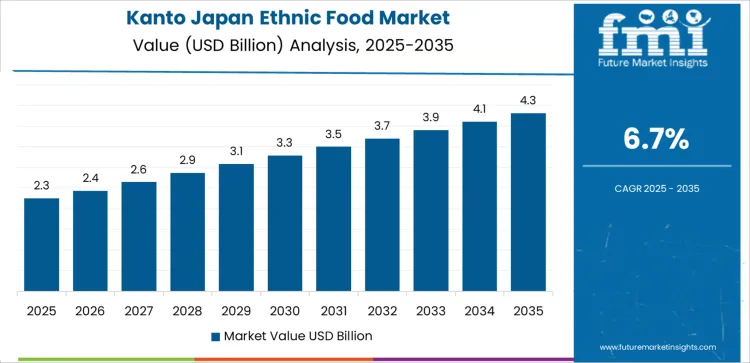
Demand for ethnic food in Kanto is rising at a CAGR of 6.7% through 2035, driven by dense migrant population, strong international restaurant concentration, and wide consumer exposure to global cuisines in metropolitan areas. Kanto leads in Indian, Chinese, Middle Eastern, and Latin American food offerings. Retail shelves also show high penetration of imported cooking sauces and ready to eat global meals. Growth reflects urban dining diversity, strong food delivery usage, and consistent experimentation with international recipes among younger consumers.
- Migrant communities support authentic cuisine demand
- Food delivery platforms expand ethnic meal access
- Ready to eat global meals gain higher shelf presence
- Youth consumers drive experimental dining patterns
What Is Supporting Balanced Ethnic Food Adoption Across Kansai?
Demand for ethnic food in Kansai is progressing at a CAGR of 5.9% through 2035, supported by steady international tourism, growing interest in foreign home cooking, and stable restaurant dining culture across Osaka and Kyoto. Kansai records strong demand for Korean, Italian, and Thai cuisines through both dine in and take home formats. Growth remains stable and linked to culinary festivals, cultural exchange activities, and gradual expansion of imported ingredient assortments in supermarkets.
- Culinary events introduce new international food formats
- Supermarkets expand imported ingredient sections
- Home cooking interest supports packaged ethnic foods
- Restaurant dining sustains steady cuisine rotation
How Is Workforce Lifestyle Shaping Ethnic Food Demand in Chubu?
Demand for ethnic food in Chubu is advancing at a CAGR of 5.2% through 2035, supported by industrial workforce dining habits, growing interest in convenient international meals, and steady presence of chain restaurants offering global menus. Chubu shows higher demand for quick service ethnic food formats such as wraps, bowls, and rice based international dishes. Retail demand remains focused on frozen global meals and cooking sauces. Growth reflects controlled household spending and stable weekday dining patterns.
- Quick service global formats drive weekday demand
- Frozen ethnic meals support retail consumption
- Workplace dining influences meal selection patterns
- Cooking sauce sales sustain home preparation growth
Why Is Demographic Structure Influencing Ethnic Food Growth in Tohoku?
Demand for ethnic food in Tohoku is advancing at a CAGR of 4.6% through 2035, supported by gradual cultural exposure, steady supermarket expansion, and moderate restaurant introduction of foreign cuisine options. Tohoku records higher demand for adapted international flavors aligned with local taste preferences. Growth remains moderate due to lower youth population density and conservative dining habits. Retail purchases focus on simple international ready meals and limited imported packaged foods.
- Adapted flavors support local taste acceptance
- Supermarkets anchor packaged ethnic food distribution
- Conservative dining habits guide slower adoption
- Limited youth population moderates trend driven demand
How Is Small City Retail Expansion Influencing Ethnic Food Demand in Rest of Japan?
Demand for ethnic food in Rest of Japan is advancing at a CAGR of 4.3% through 2035, supported by neighborhood restaurant openings, gradual inclusion of international foods in local stores, and steady curiosity toward new cuisine experiences. These areas show stronger reliance on casual dining and ready to cook ethnic meal kits. Growth remains stable and guided by household food budgets, limited but consistent retail assortment expansion, and gradual exposure to global cooking trends through media and travel.
- Casual dining outlets introduce basic international menus
- Meal kits support easy home preparation adoption
- Store assortment expansion guides steady retail growth
- Household budget control shapes gradual demand rise
What Is Driving the Demand for Ethnic Food in Japan and Which Companies Shape Retail and Foodservice Supply?
The demand for ethnic food in Japan is shaped by inbound tourism recovery, growth in quick service dining, and steady exposure to global cuisines through convenience stores and supermarkets. Ajinomoto holds a central domestic position through broad seasoning, frozen meal, and sauce portfolios used in Chinese, Southeast Asian, and Western style ready meals. McCormick and Company supports demand through spices, blends, and recipe systems used by packaged food brands and restaurant chains. General Mills participates through imported baking mixes, tortillas, and breakfast formats positioned in international food aisles and online retail. Associated British Foods supplies selected specialty ingredients and branded grocery products used by Japanese food processors and niche importers.
Orkla ASA serves limited demand through distributor led access to Nordic and European ethnic food formats sold through premium grocery and specialty retailers. Product selection in Japan is governed by flavor balance suited to local palates, moderate heat levels, allergen labeling accuracy, and compatibility with rice centered meal patterns. Buyer preference favors compact portion sizes, clean ingredient statements, and stable shelf life under humid conditions. Demand visibility tracks convenience store menu rotation, growth in home meal replacement, expansion of foreign resident populations in metropolitan regions, and sustained interest in Korean, Thai, Indian, and Western comfort foods among younger urban consumers.
Key Players in the Ethnic Food in Japan
- Associated British Foods PLC
- General Mills, Inc.
- Ajinomoto Co. Inc.
- McCormick & Company Inc.
- Orkla ASA
Scope of the Report
| Items | Values |
|---|---|
| Quantitative Units (2025) | USD billion |
| Type | Ready to Eat Meals, Snacks |
| Distribution Channel | Hypermarkets & Supermarkets, Convenience Stores, Grocery Stores, Online, Others |
| Region | Kyushu & Okinawa, Kanto, Kansai, Chubu, Tohoku, Rest of Japan |
| Countries Covered | Japan |
| Key Companies Profiled | Ajinomoto Co. Inc., General Mills, Inc., Associated British Foods PLC, McCormick & Company Inc., Orkla ASA |
| Additional Attributes | Dollar by sales by type and distribution channel; Regional CAGR and growth patterns; Ready to eat meals versus snacks consumption split; Urban household adoption, single person and working population influence; Tourism driven demand impact; Private label program penetration; Seasonal and limited edition flavor cycles; Halal and plant-based product integration; Cold chain expansion for frozen and chilled ethnic meals; Retail assortment expansion across hypermarkets, supermarkets, and online platforms; Influence of international students and expatriate communities; Foodservice crossover into consumer packaged formats; Ingredient import reliance for spices, sauces, and proteins; Recipe localization for Japanese palate and restrained seasoning; Repeat purchase cycles and weekday meal integration; Value chain participation of domestic and international branded suppliers; Pricing linked to imported ingredient and logistics costs; Menu rotation and flavor innovation tracking; Household budget sensitivity and multi pack purchase behavior. |
Ethnic Food in Japan Segmentation
Type:
- Ready to Eat Meals
- Snacks
Distribution Channel:
- Hypermarkets & Supermarkets
- Convenience Stores
- Grocery Stores
- Online
- Others
Region:
- Kyushu & Okinawa
- Kanto
- Kansai
- Chubu
- Tohoku
- Rest of Japan
Frequently Asked Questions
How big is the demand for ethnic food in Japan in 2025?
The demand for ethnic food in Japan is estimated to be valued at USD 4.5 billion in 2025.
What will be the size of ethnic food in Japan in 2035?
The market size for the ethnic food in Japan is projected to reach USD 8.0 billion by 2035.
How much will be the demand for ethnic food in Japan growth between 2025 and 2035?
The demand for ethnic food in Japan is expected to grow at a 5.9% CAGR between 2025 and 2035.
What are the key product types in the ethnic food in Japan?
The key product types in ethnic food in Japan are ready to eat meals and snacks.
Which distribution channel segment is expected to contribute significant share in the ethnic food in Japan in 2025?
In terms of distribution channel, hypermarkets & supermarkets segment is expected to command 35.0% share in the ethnic food in Japan in 2025.
Preview the report firsthand - request a free sample
Get SampleGet the brochure for pricing and purchase details.
Get PDFTable of Content
- Executive Summary
- Japan Market Outlook
- Demand-side Trends
- Supply-side Trends
- Technology Roadmap Analysis
- Analysis and Recommendations
- Market Overview
- Market Coverage / Taxonomy
- Market Definition / Scope / Limitations
- Market Background
- Market Dynamics
- Drivers
- Restraints
- Opportunity
- Trends
- Scenario Forecast
- Demand in Optimistic Scenario
- Demand in Likely Scenario
- Demand in Conservative Scenario
- Opportunity Map Analysis
- Product Life Cycle Analysis
- Supply Chain Analysis
- Investment Feasibility Matrix
- Value Chain Analysis
- PESTLE and Porter’s Analysis
- Regulatory Landscape
- Regional Parent Market Outlook
- Production and Consumption Statistics
- Import and Export Statistics
- Market Dynamics
- Japan Market Analysis 2020 to 2024 and Forecast, 2025 to 2035
- Historical Market Size Value (USD Million) Analysis, 2020 to 2024
- Current and Future Market Size Value (USD Million) Projections, 2025 to 2035
- Y-o-Y Growth Trend Analysis
- Absolute $ Opportunity Analysis
- Japan Market Pricing Analysis 2020 to 2024 and Forecast 2025 to 2035
- Japan Market Analysis 2020 to 2024 and Forecast 2025 to 2035, By Type
- Introduction / Key Findings
- Historical Market Size Value (USD Million) Analysis By Type , 2020 to 2024
- Current and Future Market Size Value (USD Million) Analysis and Forecast By Type , 2025 to 2035
- Ready to Eat Meals
- Snacks
- Y-o-Y Growth Trend Analysis By Type , 2020 to 2024
- Absolute $ Opportunity Analysis By Type , 2025 to 2035
- Japan Market Analysis 2020 to 2024 and Forecast 2025 to 2035, By Distribution Channel
- Introduction / Key Findings
- Historical Market Size Value (USD Million) Analysis By Distribution Channel, 2020 to 2024
- Current and Future Market Size Value (USD Million) Analysis and Forecast By Distribution Channel, 2025 to 2035
- Hypermarkets & Supermarkets
- Convenience Stores
- Grocery Stores
- Online
- Others
- Y-o-Y Growth Trend Analysis By Distribution Channel, 2020 to 2024
- Absolute $ Opportunity Analysis By Distribution Channel, 2025 to 2035
- Market Structure Analysis
- Competition Dashboard
- Competition Benchmarking
- Market Share Analysis of Top Players
- By Regional
- By Type
- By Distribution Channel
- Competition Analysis
- Competition Deep Dive
- Associated British Foods PLC
- Overview
- Product Portfolio
- Profitability by Market Segments (Product/Age /Sales Channel/Region)
- Sales Footprint
- Strategy Overview
- Marketing Strategy
- Product Strategy
- Channel Strategy
- General Mills, Inc.
- Ajinomoto Co. Inc.
- McCormick & Company Inc.
- Orkla ASA
- Associated British Foods PLC
- Competition Deep Dive
- Assumptions & Acronyms Used
- Research Methodology


