

- Industry Size (2025)
- USD 37.4 Mn
- Forecast (2035)
- USD 55.6 Mn
- CAGR (2025 to 2035)
- 4.1%
Demand for Smoke Ingredients for Food in Japan Forecast and Outlook 2025 to 2035
The demand for smoke ingredients for food in Japan is expected to grow from USD 37.4 million in 2025 to USD 55.6 million by 2035, reflecting a compound annual growth rate (CAGR) of 4.1%. Smoke ingredients are used to impart smoky flavors to a variety of food products without the need for traditional smoking processes. These ingredients are increasingly popular in the food industry due to their ability to enhance flavor profiles in processed foods, snacks, and ready-to-eat meals. With the growing trend toward convenience foods and unique flavor experiences, the demand for smoke ingredients is expected to rise steadily.
The market is also supported by the increasing demand for natural and clean-label ingredients, as consumers seek food products with fewer additives and preservatives. Innovations in smoke flavoring technology, as well as advancements in food safety and production efficiency, will further drive market growth. As the Japanese food industry continues to prioritize flavor enhancement and convenience, the demand for smoke ingredients for food will likely expand over the next decade.
Quick Stats of the Demand for Smoke Ingredients for Food in Japan
- Demand for Smoke Ingredients for Food in Japan Value (2025): USD 37.4 million
- Demand for Smoke Ingredients for Food in Japan Forecast Value (2035): USD 55.6 million
- Demand for Smoke Ingredients for Food in Japan Forecast CAGR (2025-2035): 4.1%
- Demand for Smoke Ingredients for Food in Japan Leading Form: Liquid (55%)
- Demand for Smoke Ingredients for Food in Japan Key Growth Regions: Kyushu & Okinawa, Kanto, Kansai, Chubu, Tohoku, Rest of Japan
- Demand for Smoke Ingredients for Food in Japan Key Players: MSK, Redbrook Ingredients Services, Besmoke, Dempsey Corporation
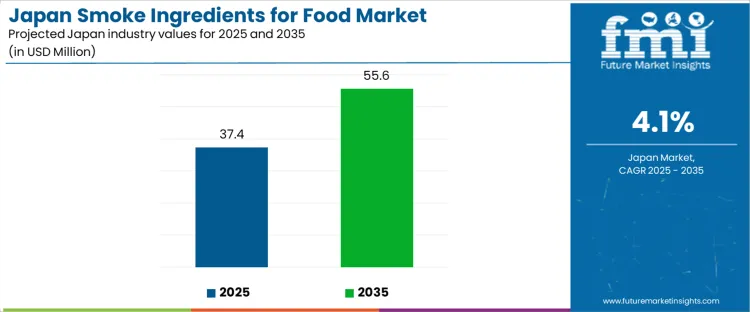
What is the Growth Forecast for the Smoke Ingredients for Food Market through 2035?
The rolling CAGR analysis for the smoke ingredients for food market in Japan shows steady growth over the forecast period. Starting at USD 37.4 million in 2025, the market grows gradually to USD 38.9 million in 2026 and USD 40.5 million in 2027. These early years reflect moderate growth driven by the growing adoption of smoke ingredients in various food sectors as consumer preferences shift towards more diverse and flavorful food options.
From 2027 to 2030, the market continues to show consistent growth, reaching USD 42.1 million in 2028, USD 43.8 million in 2029, and USD 45.6 million in 2030. This steady increase indicates a broadening acceptance of smoke ingredients in food production, driven by the rise in processed food consumption and the demand for distinct flavors. By 2035, the market is expected to reach USD 55.6 million, with rolling CAGR analysis highlighting a predictable and gradual increase in market size. The growth trajectory shows consistent, incremental increases, supported by ongoing innovations in the food industry and the continued consumer interest in flavor enhancement.
Key Takeaways of Smoke Ingredients for Food Industry in Japan
| Metric | Value |
|---|---|
| Industry Sales Value (2025) | USD 37.4 million |
| Industry Forecast Value (2035) | USD 55.6 million |
| Industry Forecast CAGR (2025-2035) | 4.1% |
What Is Driving the Demand for Smoke Ingredients for Food in Japan?
The demand for smoke ingredients for food in Japan is driven by the growing interest in unique and complex flavors, particularly in processed foods like meats, seafood, snacks, and ready-to-eat meals. Food manufacturers increasingly use liquid smoke, wood smoke condensates, and smoke powders to impart smoky flavors without the need for traditional smoking processes. This method offers manufacturers greater efficiency and consistency, as well as cost savings, compared to conventional smoking. As convenience foods continue to gain popularity among Japanese consumers, manufacturers are adopting smoke ingredients to meet the demand for flavorful and easily prepared products. The ability to replicate the rich, smoky taste of grilled or smoked foods while reducing production time and complexity has made smoke ingredients a valuable tool for the food industry in Japan. The convenience, consistency, and reduced operational costs associated with these ingredients make them an attractive option for food producers.
Future demand for smoke ingredients in Japan is expected to grow as consumer interest in processed, convenience, and ready-to-eat foods continues to rise. The increasing demand for clean-label and natural products could also favor the use of wood-derived smoke ingredients, which provide a more natural alternative to artificial flavorings. As food manufacturers expand their offerings in snacks, processed meats, sauces, and plant-based products, the demand for smoke ingredients will likely increase. Technological advancements in smoke flavor extraction and delivery systems may further support this growth, allowing manufacturers to create even more refined and targeted flavor profiles. Additionally, the need for extended shelf life and production scalability in convenience foods will drive the adoption of smoke ingredients as an efficient solution to enhance flavor without traditional smoking methods.
What Are the Key Segments in Smoke Ingredients for Food Market in Japan?
The smoke ingredients for food market in Japan is segmented by form and application. Liquid smoke ingredients lead the form segment, holding 55% of the market share. In terms of application, meat and seafood are the dominant category, accounting for 40% of the market. The increasing demand for smoked flavors and the growth of convenience food products are driving the market for smoke ingredients in Japan.
Which Form Drives Smoke Ingredients for Food Demand in Japan?
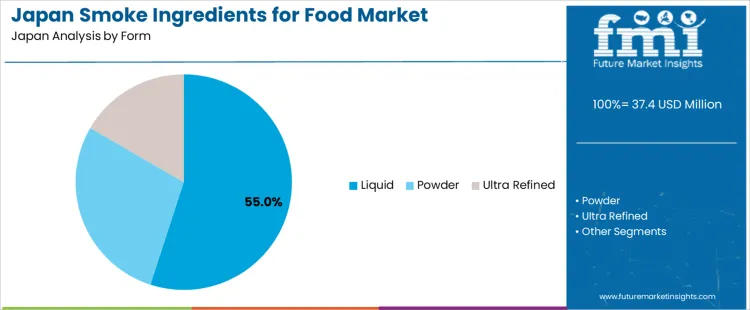
Liquid smoke ingredients are the most widely used form, representing 55% of the market share. Liquid smoke provides a convenient and effective way to impart a smoky flavor to a wide range of foods, including meats, sauces, and snacks, without the need for traditional smoking methods. The demand for liquid smoke is driven by its ease of use, cost-effectiveness, and ability to deliver a consistent flavor profile. It is particularly popular in the food industry for seasoning and flavoring various processed foods, offering a time-saving alternative to conventional smoking processes. While powder and ultra refined forms are also used, liquid smoke remains the dominant choice due to its practicality and widespread application.
Which Application Drives Smoke Ingredients for Food Demand in Japan?
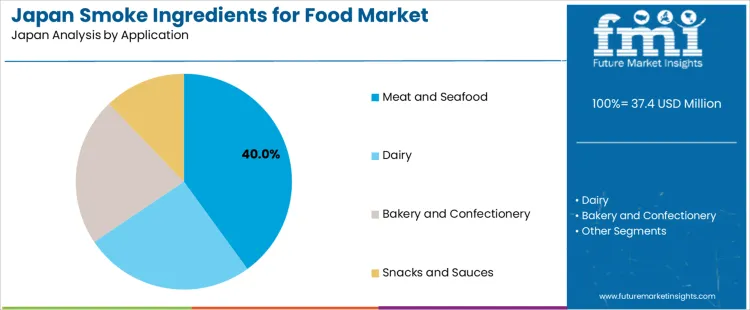
Meat and seafood applications lead the demand for smoke ingredients, accounting for 40% of the market share. The use of smoke ingredients in meat and seafood helps enhance flavor, preserve freshness, and provide an authentic smoky taste. This segment is particularly significant in the production of smoked fish, meats, and ready-to-eat meals, which are popular in Japanese cuisine. As the demand for convenient, flavorful, and premium meat and seafood products increases, smoke ingredients continue to play a key role in enhancing the sensory experience. While other applications such as dairy, bakery and confectionery, and snacks and sauces also contribute to the market, the meat and seafood segment remains the largest driver due to the widespread use of smoked flavors in these products.
What are the Key Dynamics for Smoke Ingredient Demand for Food in Japan?
Demand for smoke ingredients in Japan is being shaped by rising interest in convenience foods, ready-to-eat meals, and processed foods that feature smoky or grilled flavor profiles. Manufacturers prefer smoke ingredients such as liquid smoke, smoke powders or natural wood-derived extracts for meats, seafood, snacks, sauces, and prepared meals. Use of smoke ingredients supports consistent flavor, aroma and preservation without the need for traditional smoking processes. The growing variety of food products and ready-to-eat consumer preferences support a stable consumption base for smoke ingredients in Japan.
What are the Key Drivers for Smoke Ingredient Demand in Japan?
One driver is consumer appetite for smoky and grilled flavors in food products, including meats, seafood, snacks, sauces and ready meals. Smoke ingredients allow producers to deliver authentic smoky taste, aroma and color in a controlled, scalable and hygienic manner. The trend toward clean-label, natural and wood-derived smoke flavors appeals to consumers seeking transparency and simpler ingredient lists. Use in plant-based foods and vegetarian substitutes to mimic grilled or smoked meat flavors offers additional growth potential. Demand from processed and convenience-food manufacturers seeking flavor enhancement under industrial production conditions further supports market expansion.
What are the Restraints for Smoke Ingredient Demand in Japan?
One restraint is consumer concern over health and safety, especially related to perception of smoked or processed foods. Some consumers may view smoke-flavored products as less healthy compared to fresh foods, which could limit uptake in health-conscious segments. Use of specialized smoke ingredients may also raise production costs compared to simpler seasoning or flavoring options, impacting price-sensitive segments. Regulatory or food-safety standards related to additives and flavoring substances may impose compliance burdens for producers, slowing adoption. Variation in taste preferences may also restrict wide acceptance of smoky flavors across all food categories. General meat and seafood consumption patterns, which influence smoked-food popularity, also affect demand, meaning shifts toward lighter or non-smoked cuisines could suppress growth.
What are the Key Trends in Smoke Ingredient Demand for Food in Japan?
A key trend is rising adoption of natural, wood-derived smoke ingredients rather than synthetic smoke flavors, aligning with demand for clean-label, transparent ingredient sourcing. Liquid smoke and powdered smoke formats remain popular given their ease of use, long shelf life and adaptability across different food applications including meats, snacks, sauces, and even plant-based alternatives. Use of smoke ingredients in snacks, sauces, ready-to-eat meals, and processed seafood is increasing as producers aim to deliver smoky taste in convenient formats. Another trend is growing experimentation with smoky flavors in non-traditional categories such as snacks, sauces, confectionery and vegetarian products, broadening the scope beyond conventional smoked meats.
What is the Regional Demand Outlook for Smoke Ingredients for Food in Japan?
The demand for smoke ingredients for food in Japan is projected to grow steadily, with Kyushu & Okinawa leading the way at a projected CAGR of 5.1%. Kanto follows with a growth rate of 4.7%, while Kansai is expected to grow at 4.1%. Chubu is projected to grow at a rate of 3.6%, while Tohoku and Rest of Japan show more moderate growth, with CAGRs of 3.2% and 3%, respectively. The growing interest in smoked flavors across the food industry, combined with the increasing demand for processed and ready-to-eat food products, is driving the adoption of smoke ingredients in Japan.
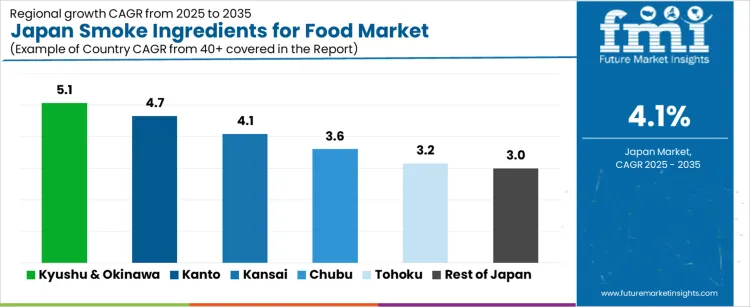
| Region | CAGR (2025-2035) |
|---|---|
| Kyushu & Okinawa | 5.1% |
| Kanto | 4.7% |
| Kansai | 4.1% |
| Chubu | 3.6% |
| Tohoku | 3.2% |
| Rest of Japan | 3.0% |
What is Driving the Growth of Smoke Ingredients for Food in Kyushu & Okinawa?
Kyushu & Okinawa is projected to experience the highest growth in the smoke ingredients market, with a projected CAGR of 5.1%. The region’s growing food industry and the increasing interest in unique and bold flavors are driving the demand for smoked ingredients. As consumers in Kyushu & Okinawa seek more distinctive tastes in their food products, the demand for natural, smoked flavoring ingredients is on the rise. Additionally, the region’s preference for traditional, artisanal food products, which often use smoke as a key ingredient, is contributing to the increased adoption of these ingredients in the food sector. The rise in convenience food consumption, including ready-to-eat meals that incorporate smoked flavors, is expected to further drive the demand for smoke ingredients in the region. With the ongoing trend toward innovative flavors, the market for smoke ingredients in Kyushu & Okinawa is expected to continue growing steadily.
Why is the Smoke Ingredients Market Expanding in Kanto?
In Kanto, the demand for smoke ingredients for food is projected to grow at a CAGR of 4.7%. Kanto, including Tokyo, is Japan’s most populous and economically significant region. The growing food and beverage industry in Kanto, which increasingly focuses on new flavors and convenience, is driving the adoption of smoke ingredients. As consumers in urban areas become more adventurous with their food choices, smoked flavors, which add complexity and depth to dishes, are gaining popularity. Additionally, the increasing demand for processed and ready-to-eat food products in Kanto is pushing the market for smoke ingredients. The region’s strong food manufacturing sector, which seeks to create unique and flavorful products, continues to rely on smoke ingredients to meet consumer demands. With the rising preference for premium, high-quality, and innovative food products in Kanto, the market for smoke ingredients is expected to grow at a steady pace.
How is the Smoke Ingredients Market Growing in Kansai?
In Kansai, the smoke ingredients for food market is projected to grow at a CAGR of 4.1%. Kansai, which includes cities like Osaka and Kyoto, has a rich culinary tradition, and the region’s focus on high-quality food products is driving the demand for smoked ingredients. The region's growing consumer preference for diverse and gourmet flavors, particularly in snacks, meats, and sauces, is increasing the adoption of smoke ingredients in food production. Kansai’s strong food culture, which is open to experimentation with new flavors and ingredients, is contributing to the rise in demand for smoke ingredients. Additionally, Kansai’s food manufacturing sector, including both large food companies and smaller artisanal producers, is embracing smoke as a key ingredient to enhance the appeal of their products. As the region’s consumers continue to seek more unique and premium food options, the market for smoke ingredients is expected to expand steadily.
What is Contributing to the Growth of Smoke Ingredients for Food in Chubu?
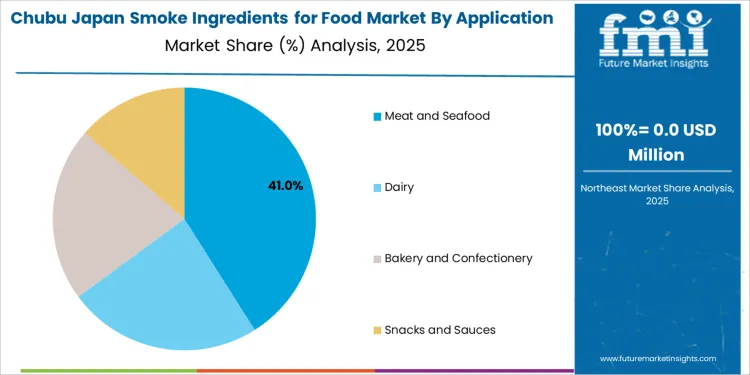
In Chubu, the demand for smoke ingredients for food is expected to grow at a CAGR of 3.6%. Chubu, home to Nagoya, has a well-established food manufacturing sector that is increasingly incorporating smoked flavors into food products to meet changing consumer preferences. The growing trend of flavor diversification, particularly in processed and ready-to-eat foods, is driving the adoption of smoke ingredients in the region. Additionally, as Chubu’s food manufacturers focus on product innovation and improving the flavor profiles of traditional foods, there is an increasing demand for natural smoke ingredients that enhance both the taste and appeal of their products. The region’s increasing focus on premium, high-quality food options is further supporting the growth of the smoke ingredients market in Chubu.
What is Influencing the Growth of Smoke Ingredients for Food in Tohoku?
In Tohoku, the demand for smoke ingredients for food is projected to grow at a CAGR of 3.2%. The region’s growing interest in health-conscious and flavorful food options is contributing to the rise in demand for smoked ingredients. While growth in Tohoku is slower compared to more urbanized regions, the adoption of innovative flavoring techniques in the food sector is gradually increasing. As more consumers in Tohoku look for products with natural, distinctive flavors, the demand for smoke ingredients is expected to grow steadily. The increasing availability of these ingredients in local supermarkets and food outlets, coupled with rising awareness about the benefits of smoked flavors, is helping drive growth in the region.
What is Contributing to the Growth of Smoke Ingredients for Food in Rest of Japan?
In Rest of Japan, the smoke ingredients market is expected to grow at a more moderate rate of 3.0%. Although demand is smaller compared to more urbanized regions, the adoption of smoke ingredients is gradually increasing as consumers in rural and less densely populated areas seek out more distinctive and flavorful food options. As the availability of diverse, high-quality food ingredients expands across the country, more regions are embracing the use of smoked flavors in their food products. Rest of Japan’s growing interest in sustainable and clean-label ingredients is contributing to the adoption of natural smoke flavorings, further supporting market growth. As the demand for functional and flavorful foods continues to rise, the market for smoke ingredients is expected to experience gradual growth across these areas.
What is the Competitive Landscape for Demand for Smoke Ingredients for Food in Japan?
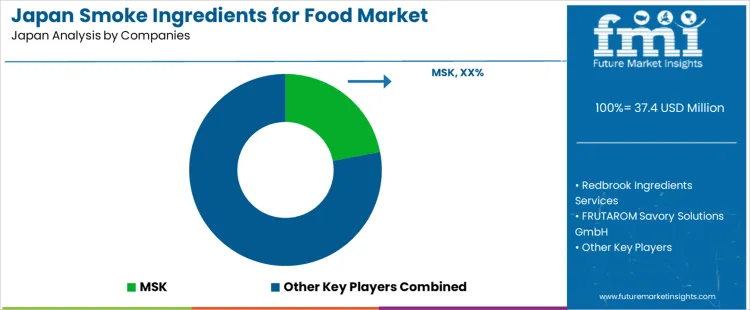
Demand for smoke ingredients in Japan has been rising as consumer interest grows for smoky flavored foods beyond traditional smoked fish or meats. The trend toward convenience foods, ready to eat meals, processed seafood and meats, snacks and sauces boosts demand for smoke flavor additives. Smoke ingredients enable producers to impart traditional smoked aroma, taste, and colour without using time intensive smoking processes. This appeals especially to manufacturers of processed meats, seafood, snacks, and ready meals who seek consistency, cost effectiveness, and compliance with food safety standards. The broader interest in Western style grilled or smoked flavours, combined with evolving consumer palate and convenience oriented lifestyles, further supports growth in smoke ingredient usage.
On the supply side, a handful of specialist ingredient firms and global suppliers compete to meet this demand. These companies offer a range of smoke flavour formulations-liquid smoke, powder smoke, natural or synthetically derived smoke flavourings-suitable for various applications from meat and seafood to snacks, sauces, and processed foods. Competition among them centres on purity and safety of smoke flavour formulations, regulatory compliance under Japanese food additive standards, consistency across batches, capacity to tailor flavour intensity and aroma to local taste preferences, and reliability of supply chain. Suppliers that combine high quality, food safe smoke ingredients with flexibility in flavour profiles and robust support for application (e.g. recipe development for local foods) stand to capture growing share in Japan’s food processing and convenience food sectors.
Key Players of the Smoke Ingredients for Food Industry in Japan
- MSK
- Redbrook Ingredients Services
- Besmoke
- Dempsey Corporation
Scope of the Report
| Items | Values |
|---|---|
| Quantitative Units (2025) | USD Million |
| Form | Liquid, Powder, Ultra Refined |
| Application | Dairy, Bakery and Confectionery, Meat and Seafood, Snacks and Sauces |
| Companies | MSK, Redbrook Ingredients Services, Besmoke, Dempsey Corporation |
| Regions Covered | Kyushu & Okinawa, Kanto, Kansai, Chubu, Tohoku, Rest of Japan |
| Additional Attributes | Dollar by sales by form, application, and region. Includes flavor profiles, product quality and purity, stability during processing and storage, regulatory compliance, impact on sensory attributes (taste, aroma, color), cost-effectiveness, production methods, market share and competitive positioning of key companies, sustainability practices in production, and consumer preferences in the dairy, bakery, meat, seafood, snacks, and sauces sectors. |
Key Segments in the Demand for Smoke Ingredients for Food in Japan
Form
- Liquid
- Powder
- Ultra Refined
Application
- Dairy
- Bakery and Confectionery
- Meat and Seafood
- Snacks and Sauces
Region
- Kyushu & Okinawa
- Kanto
- Kansai
- Chubu
- Tohoku
- Rest of Japan
Frequently Asked Questions
How big is the demand for smoke ingredients for food in Japan in 2025?
The demand for smoke ingredients for food in Japan is estimated to be valued at USD 37.4 million in 2025.
What will be the size of smoke ingredients for food in Japan in 2035?
The market size for the smoke ingredients for food in Japan is projected to reach USD 55.6 million by 2035.
How much will be the demand for smoke ingredients for food in Japan growth between 2025 and 2035?
The demand for smoke ingredients for food in Japan is expected to grow at a 4.1% CAGR between 2025 and 2035.
What are the key product types in the smoke ingredients for food in Japan?
The key product types in smoke ingredients for food in Japan are liquid, powder and ultra refined.
Which application segment is expected to contribute significant share in the smoke ingredients for food in Japan in 2025?
In terms of application, meat and seafood segment is expected to command 40.0% share in the smoke ingredients for food in Japan in 2025.
Preview the report firsthand - request a free sample
Get SampleGet the brochure for pricing and purchase details.
Get PDFTable of Content
- Executive Summary
- Japan Market Outlook
- Demand-side Trends
- Supply-side Trends
- Technology Roadmap Analysis
- Analysis and Recommendations
- Market Overview
- Market Coverage / Taxonomy
- Market Definition / Scope / Limitations
- Market Background
- Market Dynamics
- Drivers
- Restraints
- Opportunity
- Trends
- Scenario Forecast
- Demand in Optimistic Scenario
- Demand in Likely Scenario
- Demand in Conservative Scenario
- Opportunity Map Analysis
- Product Life Cycle Analysis
- Supply Chain Analysis
- Investment Feasibility Matrix
- Value Chain Analysis
- PESTLE and Porter’s Analysis
- Regulatory Landscape
- Regional Parent Market Outlook
- Production and Consumption Statistics
- Import and Export Statistics
- Market Dynamics
- Japan Market Analysis 2020 to 2024 and Forecast, 2025 to 2035
- Historical Market Size Value (USD Million) Analysis, 2020 to 2024
- Current and Future Market Size Value (USD Million) Projections, 2025 to 2035
- Y-o-Y Growth Trend Analysis
- Absolute $ Opportunity Analysis
- Japan Market Pricing Analysis 2020 to 2024 and Forecast 2025 to 2035
- Japan Market Analysis 2020 to 2024 and Forecast 2025 to 2035, By Form
- Introduction / Key Findings
- Historical Market Size Value (USD Million) Analysis By Form , 2020 to 2024
- Current and Future Market Size Value (USD Million) Analysis and Forecast By Form , 2025 to 2035
- Liquid
- Powder
- Ultra Refined
- Y-o-Y Growth Trend Analysis By Form , 2020 to 2024
- Absolute $ Opportunity Analysis By Form , 2025 to 2035
- Japan Market Analysis 2020 to 2024 and Forecast 2025 to 2035, By Application
- Introduction / Key Findings
- Historical Market Size Value (USD Million) Analysis By Application, 2020 to 2024
- Current and Future Market Size Value (USD Million) Analysis and Forecast By Application, 2025 to 2035
- Meat and Seafood
- Dairy
- Bakery and Confectionery
- Snacks and Sauces
- Y-o-Y Growth Trend Analysis By Application, 2020 to 2024
- Absolute $ Opportunity Analysis By Application, 2025 to 2035
- Market Structure Analysis
- Competition Dashboard
- Competition Benchmarking
- Market Share Analysis of Top Players
- By Regional
- By Form
- By Application
- Competition Analysis
- Competition Deep Dive
- MSK
- Overview
- Product Portfolio
- Profitability by Market Segments (Product/Age /Sales Channel/Region)
- Sales Footprint
- Strategy Overview
- Marketing Strategy
- Product Strategy
- Channel Strategy
- Redbrook Ingredients Services
- Besmoke
- Dempsey Corporation
- MSK
- Competition Deep Dive
- Assumptions & Acronyms Used
- Research Methodology


