

- Industry Size (2025)
- USD 7.5 Mn
- Forecast (2035)
- USD 17.2 Mn
- CAGR (2025 to 2035)
- 8.6%
Demand for Curcumin Food Color in Japan Forecast and Outlook 2025 to 2035
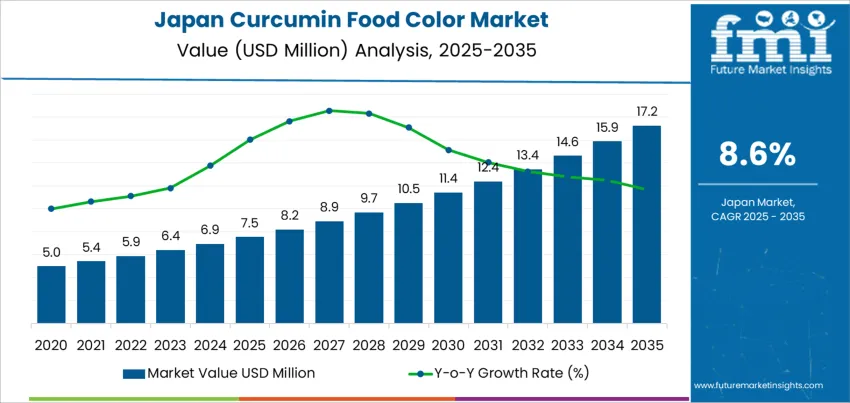
The demand for curcumin food color in Japan is expected to grow from USD 7.5 million in 2025 to USD 17.2 million by 2035, reflecting a compound annual growth rate (CAGR) of 8.6%. Curcumin, derived from turmeric, is a natural food coloring agent known for its vibrant yellow hue and various health benefits. As consumers become more health-conscious and demand cleaner, natural ingredients, curcumin food color is gaining popularity as a safer and healthier alternative to synthetic food colorings. The shift towards clean-label, non-GMO, and plant-based ingredients in the food and beverage industry is expected to continue driving the demand for curcumin food color in Japan, as it aligns with the growing trend of natural and sustainable food products.
The growth of curcumin food color will also be supported by ongoing advancements in product formulations and processing technologies. As manufacturers develop more efficient extraction and processing methods, the cost of curcumin-based colorants will decrease, making them more accessible to a wider range of food producers. The continued rise in health awareness, combined with the increasing demand for natural and sustainable ingredients, will ensure that curcumin remains a key player in the Japanese food and beverage industry.
Quick Stats of the Demand for Curcumin Food Color in Japan
- Demand for Curcumin Food Color in Japan Value (2025): USD 7.5 million
- Demand for Curcumin Food Color in Japan Forecast Value (2035): USD 17.2 million
- Demand for Curcumin Food Color in Japan Forecast CAGR (2025-2035): 8.6%
- Demand for Curcumin Food Color in Japan Leading Form: Paste
- Demand for Curcumin Food Color in Japan Key Growth Regions: Kyushu & Okinawa, Kanto, Kansai, Chubu, Tohoku, Rest of Japan
- Demand for Curcumin Food Color in Japan Top Players: Arjuna Natural Pvt Ltd, Sabinsa Corporation, Synthite Industries Ltd, Biomax Life Sciences Limited, Kancor Ingredients Limited
What is the Growth Forecast for the Demand for Curcumin Food Color in Japan through 2035?
From 2025 to 2030, demand for curcumin food color is expected to grow from USD 7.5 million to USD 11.4 million, adding USD 3.9 million in value. This growth will be driven by the increasing adoption of curcumin in food products such as confectionery, dairy, beverages, and processed foods. As manufacturers respond to consumer demand for natural ingredients, curcumin will become more widely used as a safe, versatile, and vibrant food colorant. The expanding awareness of curcumin’s potential health benefits, such as its anti-inflammatory and antioxidant properties, will further support its growth in food and beverage applications.
From 2030 to 2035, demand will continue to rise from USD 11.4 million to USD 17.2 million, contributing USD 5.8 million in value. The continued shift towards clean-label products, along with the growing popularity of plant-based diets and natural food products, will further accelerate the adoption of curcumin food color. The increasing regulatory pressure on synthetic food colorants and the rising consumer preference for transparency in food labeling will also support the demand for natural colorants like curcumin. As the food and beverage industry continues to innovate with healthier, more natural products, the demand for curcumin food color will see significant growth throughout this period.
Demand for Curcumin Food Color in Japan Key Takeaways
| Metric | Value |
|---|---|
| Demand for Curcumin Food Color in Japan Value (2025) | USD 7.5 million |
| Demand for Curcumin Food Color in Japan Forecast Value (2035) | USD 17.2 million |
| Demand for Curcumin Food Color in Japan Forecast CAGR (2025-2035) | 8.6% |
Why is the Demand for Curcumin Food Color in Japan Growing?
The demand for curcumin food color in Japan is growing due to the increasing preference for natural and plant-based ingredients in food and beverage products. Curcumin, derived from turmeric, is gaining popularity as a natural alternative to synthetic food colorants, especially among health-conscious consumers. This shift towards cleaner labels and natural ingredients in the food industry is driving the demand for curcumin as a safe and vibrant coloring agent for a variety of food products, including baked goods, snacks, beverages, and sauces.
A major driver behind this growth is the rising consumer awareness of the health benefits associated with natural food colors, particularly curcumin’s antioxidant and anti-inflammatory properties. As consumers become more health-conscious, they are seeking food products that are free from artificial additives and preservatives. Curcumin food color is seen as a healthier, more sustainable option compared to synthetic alternatives, making it increasingly popular among both consumers and food manufacturers looking to meet clean label trends.
The growth of the organic and functional food sectors is driving the demand for curcumin food color. As consumers increasingly seek products that promote health and wellness, the demand for natural coloring agents like curcumin, which aligns with these values, is rising. Japan's food industry’s shift towards natural, functional ingredients is expected to further boost the demand for curcumin food color through 2035.
What is the Segment-Wise Analysis of Demand for Curcumin Food Color in Japan?
Demand for curcumin food color in Japan is segmented by form, application, and region. By form, demand is divided into paste, powder, and liquid, with paste leading at 50%. The demand is also segmented by application, including bakery and confectionery, beverages, snacks and savory, dairy and frozen desserts, and meat products, with bakery and confectionery leading at 35%. Regionally, demand is spread across Kyushu & Okinawa, Kanto, Kansai, Chubu, Tohoku, and the rest of Japan.
Why Does Paste Form Lead the Demand for Curcumin Food Color in Japan?
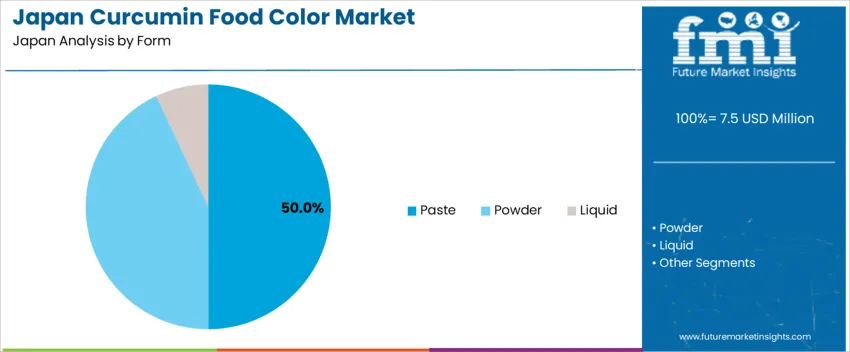
The paste form of curcumin food color accounts for 50% of the demand in Japan due to its convenience and adaptability across various food applications. This form offers a highly concentrated version of the natural pigment, providing a vibrant yellow hue that is ideal for bakery, confectionery, and beverage products. Curcumin paste is highly favored by food manufacturers for its ability to deliver precise color control, which is essential for ensuring consistency in large-scale production. Its long-lasting stability and ability to easily blend with other ingredients make it a go-to solution for consistent and reliable color output. Furthermore, as consumer demand for natural, plant-based food colors increases in Japan, the paste form of curcumin continues to dominate the industry due to its effective, eco-friendly, and practical application. This preference for plant-based, clean-label ingredients in food products drives the ongoing demand for paste form curcumin food color in various industries.
Why Does Bakery and Confectionery Lead the Demand for Curcumin Food Color in Japan?
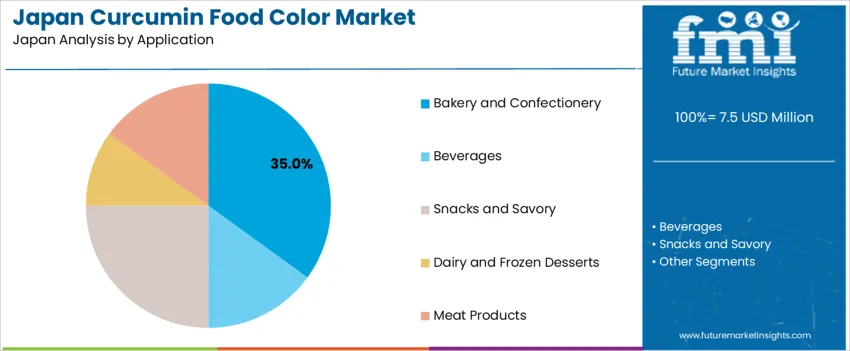
Bakery and confectionery account for 35% of the demand for curcumin food color in Japan, primarily driven by the increasing preference for natural ingredients in the food sector. Curcumin, sourced from turmeric, is used widely in the bakery and confectionery industries to provide a natural and vibrant yellow hue, offering an alternative to synthetic dyes. The use of curcumin is favored due to its safety and non-toxic properties, which align with growing consumer demand for clean-label products. Japanese consumers have become more health-conscious and are seeking out food products with natural and plant-based ingredients, boosting the demand for curcumin food color. Its bright, appealing color enhances the aesthetic value of sweet products like cakes, pastries, and candies, making it a popular choice among manufacturers. As the trend toward healthier, sustainable, and eco-friendly food ingredients continues to rise, the bakery and confectionery sector remains a dominant consumer of curcumin food color in Japan.
What are the Key Trends, Drivers, and Restraints in Demand for Curcumin Food Color in Japan?
Curcumin, the yellow pigment derived from turmeric, is prized for its natural origin, vibrant color, and health benefits such as antioxidant properties. As the clean-label and natural food trends gain momentum, food manufacturers are turning to curcumin as a preferred natural colorant for beverages, confectionery, dairy, and processed foods. This shift is driven by consumer demand for healthier, more transparent ingredients. Challenges remain, including curcumin’s limited stability under heat, light, and varying pH levels, which complicates its use in food processing. Ensuring consistent quality and meeting regulatory standards increases the complexity and cost for manufacturers, limiting widespread adoption of curcumin as a food colorant.
Why is Demand for Curcumin Food Color Growing in Japan?
Demand for curcumin food color is growing in Japan as consumers increasingly prioritize natural ingredients and transparency in food products. With concerns over synthetic dyes, curcumin is seen as a safer and healthier alternative. The growing popularity of clean-label and plant-based foods is driving food and beverage manufacturers to incorporate natural colorants like curcumin into their products. The perceived health benefits of curcumin, such as its antioxidant properties, further enhance its appeal. As consumer preferences shift towards more natural and functional foods, curcumin’s dual role as both a colorant and health booster makes it an attractive option. This demand is particularly strong in the beverage, confectionery, dairy, and processed food sectors, where manufacturers seek to meet evolving consumer tastes and provide cleaner, more transparent products.
How are Technological & Industry Innovations Driving Curcumin Food Color Demand in Japan?
Technological advancements are making curcumin a more practical and reliable food colorant in Japan. Innovations in extraction, stabilization, and formulation have improved curcumin’s performance and shelf life, making it a viable option for more food applications. Methods like microencapsulation and water-dispersible powders help address curcumin’s tendency to fade under heat and light, enhancing its stability. These improvements make curcumin a more versatile ingredient in a range of products, from beverages to baked goods. Innovations in food processing and supply chains are making curcumin easier to source, handle, and incorporate into mainstream products. As manufacturers prioritize clean-label products and functional ingredients, curcumin’s combination of natural appeal and potential health benefits drives its increasing adoption in the Japanese food industry.
What are the Key Challenges and Risks That Could Limit Curcumin Food Color Demand in Japan?
While the demand for curcumin food color in Japan is growing, several challenges could limit its widespread adoption. One of the key challenges is the instability of natural pigments like curcumin, which can degrade under heat, light, or varying pH levels during food processing. This makes it difficult to maintain consistent color in some applications, particularly in products exposed to harsh conditions. Variability in the quality of raw turmeric can affect the purity and performance of curcumin. Regulatory compliance and safety standards also add complexity and cost, especially in the food, pharmaceutical, and cosmetic sectors. Finally, competition from other natural colorants, such as carotenoids and anthocyanins, which may offer more stable or appealing colors, could reduce curcumin’s share in the industry.
What is the Regional Demand Outlook for Curcumin Food Color in Japan?
| Region | CAGR (%) |
|---|---|
| Kyushu & Okinawa | 10.8% |
| Kanto | 9.9% |
| Kansai | 8.7% |
| Chubu | 7.7% |
| Tohoku | 6.7% |
| Rest of Japan | 6.4% |
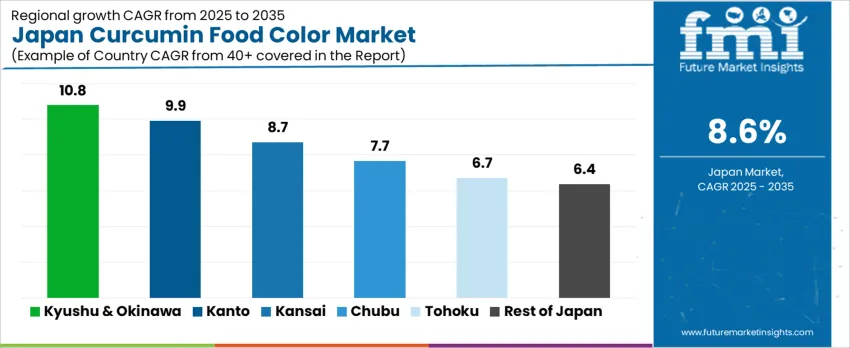
Demand for curcumin food color in Japan is rising across all regions, with Kyushu & Okinawa leading at a 10.8% CAGR, driven by the food and beverage industry's demand for natural colors. Kanto follows with a 9.9% CAGR, supported by its large food production sector and increasing preference for clean-label products. Kansai shows an 8.7% CAGR, driven by the growing trend for healthy and natural food products. Chubu experiences a 7.7% CAGR, supported by its food manufacturing base and the demand for vibrant, natural ingredients. Tohoku and the Rest of Japan see moderate growth at 6.7% and 6.4%, respectively, reflecting a rising interest in natural colorants across regional food sectors.
How is Demand for Curcumin Food Color Growing in Kyushu & Okinawa?
Kyushu & Okinawa leads the demand for curcumin food color, growing at a 10.8% CAGR. The region’s growing food processing and beverage sectors are key drivers of this trend, as businesses shift toward natural alternatives to synthetic food colorants. Okinawa, a popular tourist destination, sees rising demand for health-conscious, natural food products like beverages, snacks, and traditional foods. With the focus on clean-label ingredients, local businesses are increasingly adopting curcumin for its natural coloring properties. The region's strong tourism and hospitality sectors further boost demand, as restaurants, hotels, and resorts seek natural colorants to enhance their food offerings. This growing preference for natural ingredients aligns with the broader consumer shift towards healthier eating habits, ensuring sustained demand for curcumin food color in Kyushu & Okinawa.
Why is Demand for Curcumin Food Color Rising in Kanto?
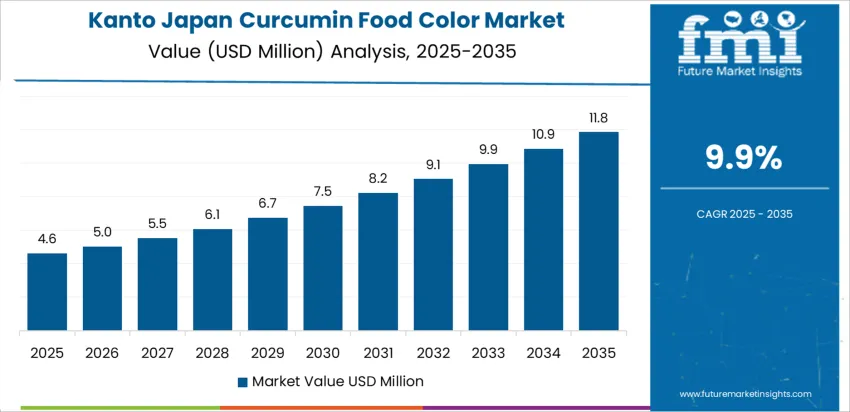
Kanto is experiencing strong demand for curcumin food color, growing at a 9.9% CAGR. The region’s large food production sector, particularly in Tokyo, plays a significant role, as manufacturers focus on creating clean-label, natural products. The increasing consumer preference for healthy, sustainable, and natural food ingredients supports this demand. As foodservice establishments such as restaurants and cafés in Kanto embrace these trends, the adoption of curcumin as a food colorant grows. Kanto's leadership in culinary innovation and food industry trends ensures that natural food colorants like curcumin remain in high demand. The region’s commitment to aligning with consumer expectations for transparency and healthier food options drives further adoption, making curcumin a popular choice for food producers and suppliers in Kanto.
How is Demand for Curcumin Food Color Expanding in Kansai?
Kansai shows steady demand for curcumin food color, growing at an 8.7% CAGR. The region’s strong foodservice and food manufacturing sectors, particularly in Osaka and Kyoto, contribute significantly to the adoption of natural colorants like curcumin. Kansai’s food production industry continues to innovate, with a growing emphasis on health-conscious and natural ingredients, in line with the rising consumer demand for clean-label products. This increasing awareness of the benefits of natural colorants is driving demand for curcumin, as food producers seek vibrant, safe, and sustainable alternatives to artificial additives. The region's rich culinary tradition, which focuses on fresh, natural ingredients, supports the demand for curcumin, making it a preferred choice in the growing Kansai food landscape.
Why is Demand for Curcumin Food Color Growing in Chubu?
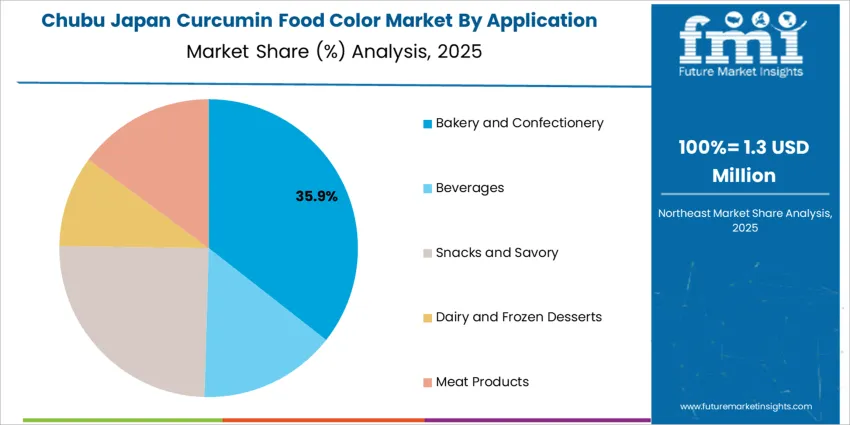
Chubu is experiencing steady demand for curcumin food color, with a 7.7% CAGR. The region's strong manufacturing base, especially in Nagoya, has spurred increased demand for natural colorants in the food production sector. As consumer awareness around food ingredients and their impact on health rises, food producers in Chubu are turning to natural coloring agents like curcumin to meet the demand for clean-label products. This trend is further driven by the region’s growing focus on healthy eating, as consumers increasingly seek foods that avoid synthetic additives. The expanding food processing and beverage industries in Chubu are fueling the demand for natural, vibrant ingredients, ensuring that curcumin food color continues to play an important role in the region’s food production processes.
How is Demand for Curcumin Food Color Expanding in Tohoku?
Tohoku is seeing moderate demand for curcumin food color, with a 6.7% CAGR. The region’s food production industry, though smaller compared to major urban centers, is experiencing steady growth due to modernization and a growing focus on health-conscious eating. As local food producers upgrade their products to cater to the rising demand for natural and healthier ingredients, the adoption of curcumin food color is increasing. This trend is especially evident in smaller establishments like local producers of processed foods, snacks, and beverages. As Tohoku’s food production sector continues to modernize and consumer preferences shift toward natural ingredients, the demand for curcumin will continue to rise steadily. The growing awareness of the health benefits of natural colorants ensures that curcumin’s role in Tohoku’s food landscape will continue to expand.
Why is Demand for Curcumin Food Color Steady in the Rest of Japan?
The Rest of Japan is experiencing steady demand for curcumin food color, growing at a 6.4% CAGR. Although demand is lower than in urban regions, rural and smaller cities are increasingly adopting natural ingredients in their food products. Local food producers, particularly those involved in producing snacks, beverages, and processed foods, are opting for curcumin to enhance the appeal and health benefits of their offerings. As rural areas modernize their food production and consumers become more conscious of healthier food choices, demand for curcumin continues to grow. The Rest of Japan's focus on clean-label, natural ingredients, coupled with an increasing emphasis on sustainability and health, further supports the steady adoption of curcumin food color in these regions. This consistent growth reflects a broader shift toward natural ingredients across Japan's diverse food landscape.
What is Driving the Demand for Curcumin Food Color in Japan and Who Are the Key Players Shaping the Industry?
The demand for curcumin food color in Japan is rising as consumers increasingly seek natural and plant-based alternatives to synthetic food colorants. Curcumin, derived from turmeric, is widely known for its vibrant yellow color and potential health benefits, such as anti-inflammatory and antioxidant properties. As the Japanese food industry continues to prioritize clean-label products, health-conscious consumers are favoring natural colorants like curcumin over artificial dyes. The growing awareness of the potential risks associated with synthetic food additives and the increasing trend toward functional foods are further driving the adoption of curcumin-based food coloring. This shift aligns with Japan's broader focus on health, wellness, and sustainability in food production.
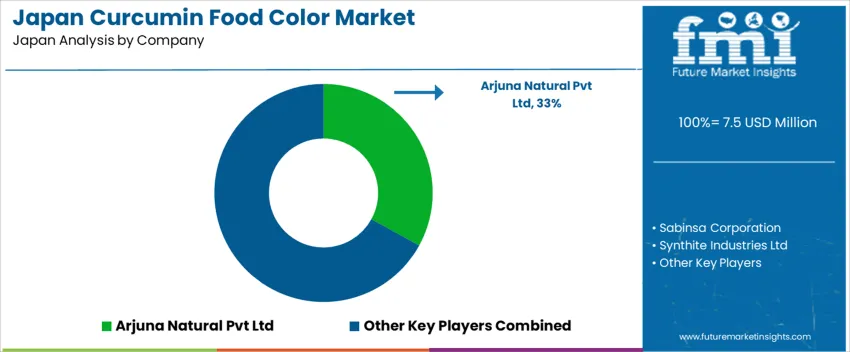
Key players shaping the curcumin food color industry in Japan include Arjuna Natural Pvt Ltd, Sabinsa Corporation, Synthite Industries Ltd, Biomax Life Sciences Limited, and Kancor Ingredients Limited. Arjuna Natural Pvt Ltd leads the industry with a significant share of 33.0%, offering high-quality curcumin-based food colorants that meet the growing demand for natural alternatives. These companies are at the forefront of providing innovative curcumin solutions, ensuring high purity, stability, and consistency, making them essential suppliers to the Japanese food and beverage industry. Their continued focus on product development and sustainable sourcing supports the industry’s growth.
The growth of the curcumin food color industry in Japan is also supported by the increasing demand for clean-label and natural products, particularly in the confectionery, dairy, and beverage sectors. As the preference for healthier, more transparent food ingredients continues to rise, curcumin food color is expected to play an integral role in Japan's evolving food landscape. With the focus on natural ingredients and health benefits, curcumin-based colorants are poised for continued growth in the Japanese industry.
Key Players in Japan Curcumin Food Color Demand
- Arjuna Natural Pvt Ltd
- Sabinsa Corporation
- Synthite Industries Ltd
- Biomax Life Sciences Limited
- Kancor Ingredients Limited
Scope of Report
| Items | Values |
|---|---|
| Quantitative Units (2025) | USD million |
| Form | Paste, Powder, Liquid |
| Application | Bakery and Confectionery, Beverages, Snacks and Savory, Dairy and Frozen Desserts, Meat Products |
| Region | Kyushu & Okinawa, Kanto, Kansai, Chubu, Tohoku, Rest of Japan |
| Countries Covered | Japan |
| Key Companies Profiled | Arjuna Natural Pvt Ltd, Sabinsa Corporation, Synthite Industries Ltd, Biomax Life Sciences Limited, Kancor Ingredients Limited |
| Additional Attributes | Dollar sales by form and application; regional CAGR and growth outlook; adoption of clean-label food colorings; shift towards natural food colorants; innovations in curcumin-based colorants for health-conscious consumer segments. |
Japan Curcumin Food Color Demand by Key Segments
Form
- Paste
- Powder
- Liquid
Application
- Bakery and Confectionery
- Beverages
- Snacks and Savory
- Dairy and Frozen Desserts
- Meat Products
Region
- Kyushu & Okinawa
- Kanto
- Kansai
- Chubu
- Tohoku
- Rest of Japan
Frequently Asked Questions
How big is the demand for curcumin food color in Japan in 2025?
The demand for curcumin food color in Japan is estimated to be valued at USD 7.5 million in 2025.
What will be the size of curcumin food color in Japan in 2035?
The market size for the curcumin food color in Japan is projected to reach USD 17.2 million by 2035.
How much will be the demand for curcumin food color in Japan growth between 2025 and 2035?
The demand for curcumin food color in Japan is expected to grow at a 8.6% CAGR between 2025 and 2035.
What are the key product types in the curcumin food color in Japan?
The key product types in curcumin food color in Japan are paste, powder and liquid.
Which application segment is expected to contribute significant share in the curcumin food color in Japan in 2025?
In terms of application, bakery and confectionery segment is expected to command 35.0% share in the curcumin food color in Japan in 2025.
Preview the report firsthand - request a free sample
Get SampleGet the brochure for pricing and purchase details.
Get PDFTable of Content
- Executive Summary
- Japan Market Outlook
- Demand-side Trends
- Supply-side Trends
- Technology Roadmap Analysis
- Analysis and Recommendations
- Market Overview
- Market Coverage / Taxonomy
- Market Definition / Scope / Limitations
- Market Background
- Market Dynamics
- Drivers
- Restraints
- Opportunity
- Trends
- Scenario Forecast
- Demand in Optimistic Scenario
- Demand in Likely Scenario
- Demand in Conservative Scenario
- Opportunity Map Analysis
- Product Life Cycle Analysis
- Supply Chain Analysis
- Investment Feasibility Matrix
- Value Chain Analysis
- PESTLE and Porter’s Analysis
- Regulatory Landscape
- Regional Parent Market Outlook
- Production and Consumption Statistics
- Import and Export Statistics
- Market Dynamics
- Japan Market Analysis 2020 to 2024 and Forecast, 2025 to 2035
- Historical Market Size Value (USD Million) Analysis, 2020 to 2024
- Current and Future Market Size Value (USD Million) Projections, 2025 to 2035
- Y-o-Y Growth Trend Analysis
- Absolute $ Opportunity Analysis
- Japan Market Pricing Analysis 2020 to 2024 and Forecast 2025 to 2035
- Japan Market Analysis 2020 to 2024 and Forecast 2025 to 2035, By Form
- Introduction / Key Findings
- Historical Market Size Value (USD Million) Analysis By Form , 2020 to 2024
- Current and Future Market Size Value (USD Million) Analysis and Forecast By Form , 2025 to 2035
- Paste
- Powder
- Liquid
- Y-o-Y Growth Trend Analysis By Form , 2020 to 2024
- Absolute $ Opportunity Analysis By Form , 2025 to 2035
- Japan Market Analysis 2020 to 2024 and Forecast 2025 to 2035, By Application
- Introduction / Key Findings
- Historical Market Size Value (USD Million) Analysis By Application, 2020 to 2024
- Current and Future Market Size Value (USD Million) Analysis and Forecast By Application, 2025 to 2035
- Bakery and Confectionery
- Beverages
- Snacks and Savory
- Dairy and Frozen Desserts
- Meat Products
- Y-o-Y Growth Trend Analysis By Application, 2020 to 2024
- Absolute $ Opportunity Analysis By Application, 2025 to 2035
- Market Structure Analysis
- Competition Dashboard
- Competition Benchmarking
- Market Share Analysis of Top Players
- By Regional
- By Form
- By Application
- Competition Analysis
- Competition Deep Dive
- Arjuna Natural Pvt Ltd
- Overview
- Product Portfolio
- Profitability by Market Segments (Product/Age /Sales Channel/Region)
- Sales Footprint
- Strategy Overview
- Marketing Strategy
- Product Strategy
- Channel Strategy
- Sabinsa Corporation
- Synthite Industries Ltd
- Biomax Life Sciences Limited
- Kancor Ingredients Limited
- Arjuna Natural Pvt Ltd
- Competition Deep Dive
- Assumptions & Acronyms Used
- Research Methodology


