

- Industry Size (2025)
- USD 0.9 Bn
- Forecast (2035)
- USD 2.0 Bn
- CAGR (2025 to 2035)
- 8.1%
Demand for Hazelnut Paste in USA (2025-2035)
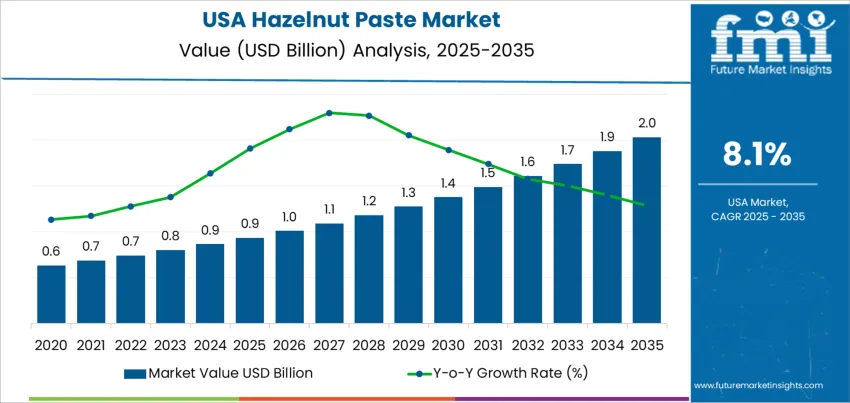
The USA hazelnut paste demand is valued at USD 0.9 billion in 2025 and is forecasted to reach USD 2.0 billion by 2035, reflecting a CAGR of 8.1%. Consumption is shaped by increasing adoption of nut-based spreads in breakfast products, confectionery fillings, and premium bakery formats. Hazelnut paste supports clean-label positioning with plant-based fat sources and naturally sweet flavour profiles, contributing to wider uptake among health-conscious consumers. Growth in artisanal desserts and café-style bakery goods also influences procurement volumes across commercial foodservice.
Jars represent the leading packaging category because they enable direct retail consumption and maintain texture stability during storage. Jar-packed formats remain preferred for chocolate-based spreads and flavoured pastes used both as toppings and recipe ingredients. Manufacturers continue to upgrade sealing properties and product consistency to support longer shelf life and minimise oil separation.
Quick Stats for USA Hazelnut Paste Demand
- USA Hazelnut Paste Sales Value (2025): USD 0.9 billion
- USA Hazelnut Paste Forecast Value (2035): USD 2.0 billion
- USA Hazelnut Paste Forecast CAGR (2025-2035): 8.1%
- Leading Category in USA Hazelnut Paste Demand: Jars
- Key Growth Regions in USA Hazelnut Paste Demand: West USA, South USA, Northeast USA
- Top Players in USA Hazelnut Paste Demand: Ferrero, Barry Callebaut, Olam Food Ingredients, The Hershey Company, Mondelez International
Demand is highest in the West, South, and Northeast, reflecting broader distribution networks and strong engagement from cafés, bakeries, and confectionery brands. Key suppliers include Ferrero, Barry Callebaut, Olam Food Ingredients, The Hershey Company, and Mondelez International. These companies provide hazelnut paste in multiple flavour intensities and fat compositions suited for chocolate fillings, spreadable products, and industrial applications in snacks and sweet baked goods.
What is the Growth Forecast for Hazelnut Paste Industry in USA through 2035?
Growth contribution for demand for hazelnut paste in the United States is driven by consistent use in confectionery and bakery applications. Major chocolate and spread manufacturers produce the highest contribution due to strong brand distribution and continuous product development involving nut-based fillings and flavor inclusions. These companies create stable baseline expansion that shapes much of the overall trajectory.
Premium and artisanal brands add incremental contribution through higher-value products that emphasize natural ingredients and flavor innovation. Their role increases as consumers seek diversified dessert formats and indulgence categories with perceived quality cues. Foodservice and specialty dessert channels contribute further gains through seasonal offerings and menu innovation. Later-stage contribution broadens into plant-based and functional formulations where nut pastes support clean-label and protein-rich positioning. Retail availability through private labels expands volume in mainstream price tiers. The contribution index reflects a balanced structure where high-volume confectionery anchors the category while premium and ingredient-driven innovation adds steady upward impact across the forecast period.
USA Hazelnut Paste Key Takeaways
| Metric | Value |
|---|---|
| USA Hazelnut Paste Sales Value (2025) | USD 0.9 billion |
| USA Hazelnut Paste Forecast Value (2035) | USD 2.0 billion |
| USA Hazelnut Paste Forecast CAGR (2025-2035) | 8.1% |
Why is the Demand for Hazelnut Paste in the USA Growing?
Demand for hazelnut paste in the USA is increasing because confectionery and bakery manufacturers incorporate nut based spreads into chocolates, pastries and premium dessert products. Hazelnut flavor pairs well with cocoa and sweet fillings, which drives USAge in spreads, snack bars and ice cream that target consumers seeking indulgent textures. Growth in specialty coffee shops also strengthens demand for flavored syrups and toppings that include hazelnut paste as a key ingredient.
Health focused shoppers value products containing nuts due to their natural fats and protein content, supporting hazelnut paste USAge in select nutrition products. Home bakers and small artisanal brands use hazelnut paste to introduce premium taste in seasonal offerings and gift oriented packaging. Expanded e commerce distribution improves access to imported and domestically processed pastes in various grades suited to both commercial and household use. Constraints include price volatility driven by hazelnut crop fluctuations and competition from alternative spreads such as almond and peanut butter. Some consumers evaluate sugar levels and allergen concerns when selecting nut based ingredients. Manufacturers review supply chain stability when developing long term product lines using hazelnut paste.
Which Packaging Types and Applications Lead Demand for Hazelnut Paste in the USA?
Demand for hazelnut paste in the United States is influenced by premium bakery growth, indulgent spreads, and clean-label snacking preferences. Manufacturers emphasize nut-based protein, cocoa-enhanced flavors, and versatile USAge across confectionery and dairy. Rising demand from plant-based consumers and artisanal bakeries supports broader distribution in both retail and institutional food sectors. Product development aligns with shelf-stable packaging, allergen compliance, and sustainable material adoption in mainstream retail.
By Packaging, Jars Hold the Largest Share
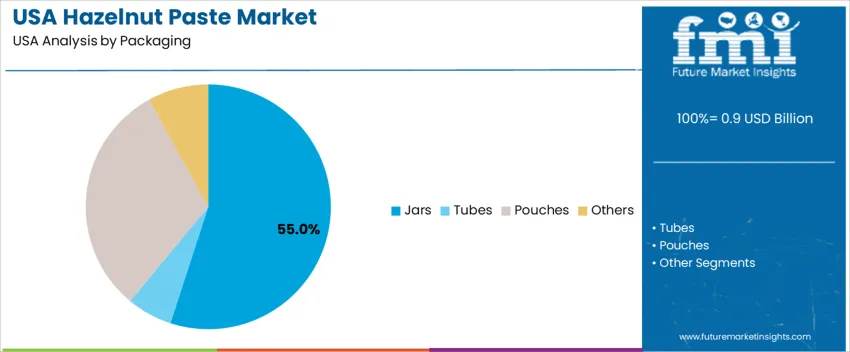
Jars lead U.S. demand with 55.0%, reflecting strong household consumption and compatibility with premium chocolate-hazelnut spreads. Glass and PET jars offer durability, oxygen barriers, and clear visual appeal for branding, supporting product placement in supermarkets and specialty gourmet stores. Pouches represent 31.0%, driven by lightweight logistics and convenience for baking and foodservice operations that require portion-controlled dispensing. Tubes hold 6.0%, used mainly for targeted bakery applications and children’s snacking products where direct squeezing improves USAbility. The remaining 8.0% includes bulk containers for commercial kitchens and industrial manufacturing. Packaging choice aligns with retail merchandising, preservation needs, and ergonomic handling expectations in households and bakeries.
Key Points:
- Jars dominate due to branding visibility and home-use preference
- Pouches grow on convenience and improved transport efficiency
- Tubes target single-serve and foodservice-friendly USAge
By Application, Food & Beverage Leads Demand
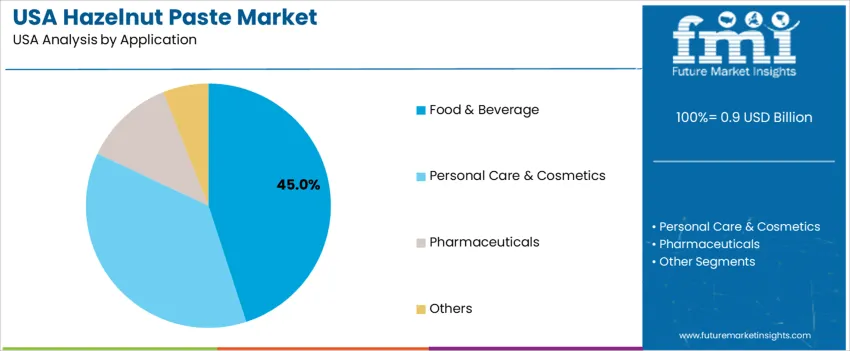
Food & beverage applications account for 45.0%, driven by widespread use in baked goods, confectionery fillings, dairy additions, and premium spreadable snacks. Personal care and cosmetics represent 37.0%, where hazelnut oil is leveraged in moisturizers and exfoliating products marketed as naturally nourishing. Pharmaceuticals hold 12.0%, mostly for nutritional supplements and formulation binders in wellness-focused products. Others contribute 6.0%, including niche culinary and industrial applications. Growth is supported by rising dessert innovation, protein-rich formulations, and consumer preference for natural fats with functional attributes supportive of skin and metabolic health.
Key Points:
- Food consumption remains the core contributor to national demand
- Beauty products leverage natural oil content for premium positioning
- Pharmaceutical uptake continues in nutrition-driven formulations
What are the Drivers, Restraints, and Key Trends of the Demand for Hazelnut Paste in the USA?
Growth of premium bakery and confectionery products, increased nut-based spread consumption and rising demand for clean-label dessert ingredients are driving demand.
In the United States, hazelnut paste is widely used in pastries, chocolates and spreads sold through supermarkets, cafés and online gourmet retailers. Bakeries expand product lines featuring hazelnut fillings in croissants, doughnuts and upscale desserts that reflect European flavor influence. Chocolate manufacturers rely on hazelnut paste for pralines and truffles positioned as premium gifts during seasonal holidays. Health-conscious consumers choose nut-based spreads as alternatives to artificial or high-sugar toppings, supporting retail demand for hazelnut-forward formulations. Foodservice distributors supplying coffee shops and dessert chains procure hazelnut paste for specialty beverages and bakery programs. These commercial and consumer preferences maintain strong ingredient use across U.S. food manufacturing and retail channels.
High raw material import cost, allergy concerns and competition from peanut and almond spreads restrain demand.
Hazelnuts are largely imported, and supply fluctuations from major producing countries influence price volatility for manufacturers in the United States. Tree nut allergy prevalence leads some brands to avoid hazelnut USAge in school-friendly or family-oriented products. Peanut butter and almond-based spreads remain dominant in everyday consumption, requiring hazelnut products to compete mainly in premium-positioned categories. Smaller bakeries may rely on lower-cost flavorings instead of pure paste when ingredient budgets are tight. These cost and competitive dynamics moderate rapid category expansion.
Shift toward organic and single-origin sourcing, increased use in dairy and plant-based alternatives and rising demand in e-commerce gifting assortments define key trends.
Manufacturers promote origin traceability and organic certification to align with consumer expectations for premium and sustainably sourced nut ingredients. Ice cream producers add hazelnut paste to indulgent flavors in both dairy and plant-based varieties to appeal to flexitarian shoppers. Online confectioners and gourmet food brands feature hazelnut items in curated gift boxes that support nationwide shipping. Portion-controlled squeeze pouches are gaining attention for home baking and dessert customization, increasing retail accessibility. These developments indicate steady, flavor-driven demand for hazelnut paste across the United States confectionery, bakery and specialty food sectors.
Analysis of the Demand for Hazelnut Paste in the USA by Region
Demand for hazelnut paste in the United States continues to expand as bakeries, confectionery producers, specialty coffee chains, and home-gourmet consumers increase adoption of nut-based spreads and filling ingredients. Growth reflects intensified preference for premium desserts, artisanal products, and protein-rich flavoring components in frozen and packaged foods. Import reliance from European suppliers’ influences pricing and supply availability, but domestic roasting and processing capabilities continue to mature. West USA leads demand at 9.3% CAGR, followed by South USA at 8.3%, Northeast USA at 7.4%, and Midwest USA at 6.5%. Distribution improvements and product diversification into ice creams, pastries, and beverages reinforce long-term expansion.
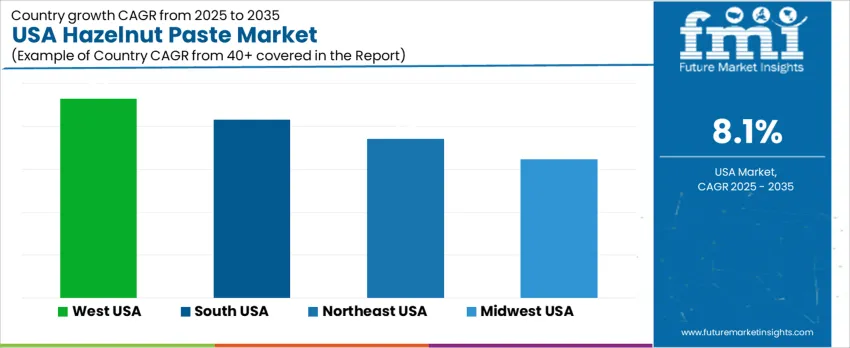
| Region | CAGR (2025-2035) |
|---|---|
| West USA | 9.3% |
| South USA | 8.3% |
| Northeast USA | 7.4% |
| Midwest USA | 6.5% |
How is the West USA driving demand for hazelnut paste?
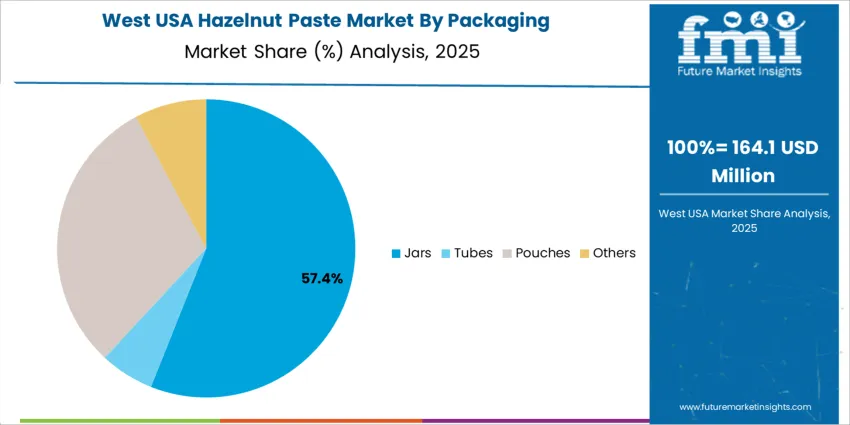
West USA shows 9.3% CAGR, supported by strong specialty café culture and premium bakery concentration in California, Washington, and Oregon. Hazelnut paste remains essential in gelato shops, milkshake formats, and artisan chocolates produced in urban food hubs. Consumer willingness to pay for flavor-led indulgence accelerates growth in private-label spreads. Foodservice trends emphasize plant-based dessert formats that incorporate nut pastes for flavor strength and natural fat content. Ports along the Pacific ensure stable inbound hazelnut supply, reducing procurement delays tied to import cycles.
- Artisanal dessert expansion increasing paste USAge
- Premium confectionery retailers sustaining high consumption
- Imports supported by strong port logistics
- Foodservice innovation expanding product formats
How is the South USA shaping demand for hazelnut paste?
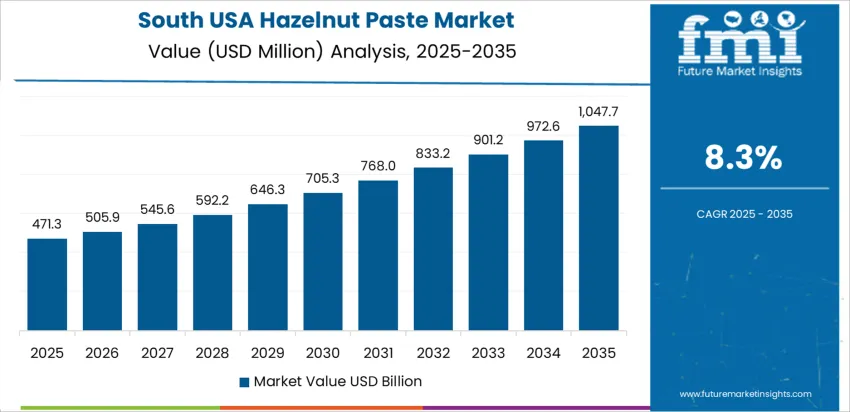
South USA records 8.3% CAGR, driven by growing bakery chains and chocolate manufacturing units in Texas, Florida, and Georgia. Warmer climates support strong ice cream and frozen-dessert demand where hazelnut paste serves as a primary flavor base. Major retail brands launch nut-based spreads targeting snack consumption in expanding suburban populations. Supply chains utilize Gulf Coast distribution hubs to manage ingredient routing efficiently. Buyers focus on paste viscosity and roasting consistency for batch-controlled recipes used in industrial preparation lines.
- Frozen-dessert demand reinforcing procurement volume
- Suburban retail growth supporting spread consumption
- Distribution hubs maintaining ingredient supply stability
- Batch-processing focus shaping paste specifications
How is the Northeast USA influencing procurement and consumption trends?
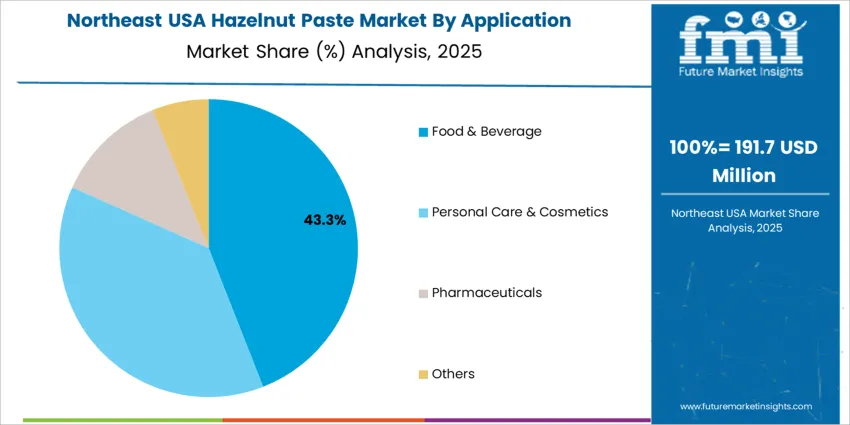
Northeast USA advances at 7.4% CAGR, with demand influenced by high-density patisserie, gourmet bakery, and coffee franchise networks in New York, New Jersey, and Massachusetts. Cafés introduce hazelnut-based sauces in beverage customization menus. European cuisine influence remains strong in metropolitan dining, increasing USAge in pastries and filled baked goods. Specialty importers ensure consistent quality aligned with origin standards. Limited production space in smaller facilities encourages use of pre-processed hazelnut paste rather than in-house grinding.
- Café beverage customizations utilizing hazelnut flavors
- European-style dessert growth supporting bakery demand
- Import quality standards influencing supplier selection
- Ready-to-use pastes improving operational efficiency
How is the Midwest USA contributing to demand expansion?
Midwest USA posts 6.5% CAGR, driven by industrial food manufacturing linked to packaged spreads, bakery fillings, and cereal-coated applications across Illinois, Ohio, and Michigan. Cost-conscious consumers support blended formulations that combine hazelnut paste with cocoa or dairy ingredients. Large-scale production plants require logistical predictability in nut supply, prompting use of domestic hazelnut outputs where available. Distribution aligns with national grocer networks, allowing consistent retail placement of nut-based spreads.
- Industrial bakery and snack processing shaping requirements
- Cost-sensitive blends widening consumer reach
- Emerging domestic supply strengthening procurement reliability
- Retail distribution supporting everyday household USAge
What does the competitive landscape for hazelnut-paste demand in the United States look like?
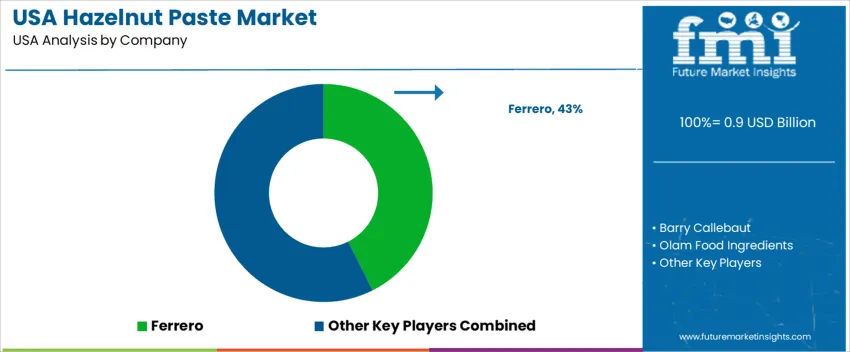
Hazelnut paste demand in the United States aligns with confectionery manufacturing, bakery fillings, dessert spreads, and food-service flavoring applications. Growth reflects continuous consumer interest in nut-based spreads and premium chocolate-nut combinations adopted by large brands and private-label producers. Industrial buyers evaluate flavor consistency, allergen controls, traceability of imported hazelnuts, and supply continuity during seasonal fluctuations. Cold-chain handling and stability in baking environments remain important for commercial bakery procurement teams.
Ferrero holds an estimated 42.6% share through branded spread production and integrated sourcing of processed hazelnuts. Its U.S. confectionery portfolio creates steady demand for paste used in high-volume products distributed through national retailers. Barry Callebaut serves industrial bakery, ice cream, and confectionery producers with customized nut-cocoa pastes that support consistent taste and melt behavior. Olam Food Ingredients contributes with bulk hazelnut processing and paste supply secured through vertically managed sourcing regions, supporting customers focused on predictable ingredient availability.
The Hershey Company participates in flavored spread lines and confectionery innovations that incorporate hazelnut components for premium product tiers. Mondelez International remains active in snack-based applications and seasonal confectionery where hazelnut paste enhances flavor differentiation. Competitive positioning in the United States depends on quality control, roasting expertise, secure import channels, and the ability to scale supply for national brand requirements. Sustainability verification and allergen-management capabilities continue to influence supplier selection across large packaged-food programs.
Key Players in USA Hazelnut Paste Demand
- Ferrero
- Barry Callebaut
- Olam Food Ingredients
- The Hershey Company
- Mondelez International
Scope of the Report
| Items | Values |
|---|---|
| Quantitative Units | USD billion |
| Packaging | Jars, Tubes, Pouches, Others |
| Application | Food & Beverage, Personal Care & Cosmetics, Pharmaceuticals, Others |
| Regions Covered | West USA, South USA, Northeast USA, Midwest USA |
| Key Companies Profiled | Ferrero, Barry Callebaut, Olam Food Ingredients, The Hershey Company, Mondelez International |
| Additional Attributes | Dollar sales by packaging format and application sector; consumption linked to bakery, spreads, and confectionery manufacturing growth; premiumization trends with organic and clean-label formulations; increasing adoption in nutraceutical and beauty products; almond substitution dynamics influenced by pricing and supply volatility; regional sales concentration near large confectionery processing hubs in West and Northeast USA; import dependence on Turkish and European hazelnut supply influencing pricing and contract formulations. |
USA Hazelnut Paste Demand by Segments
Packaging:
- Jars
- Tubes
- Pouches
- Others
Application:
- Food & Beverage
- Personal Care & Cosmetics
- Pharmaceuticals
- Others
Region:
- West USA
- South USA
- Northeast USA
- Midwest USA
Frequently Asked Questions
How big is the demand for hazelnut paste in USA in 2025?
The demand for hazelnut paste in USA is estimated to be valued at USD 0.9 billion in 2025.
What will be the size of hazelnut paste in USA in 2035?
The market size for the hazelnut paste in USA is projected to reach USD 2.0 billion by 2035.
How much will be the demand for hazelnut paste in USA growth between 2025 and 2035?
The demand for hazelnut paste in USA is expected to grow at a 8.1% CAGR between 2025 and 2035.
What are the key product types in the hazelnut paste in USA?
The key product types in hazelnut paste in USA are jars, tubes, pouches and others.
Which application segment is expected to contribute significant share in the hazelnut paste in USA in 2025?
In terms of application, food & beverage segment is expected to command 45.0% share in the hazelnut paste in USA in 2025.
Preview the report firsthand - request a free sample
Get SampleGet the brochure for pricing and purchase details.
Get PDFTable of Content
- Executive Summary
- USA Market Outlook
- Demand-side Trends
- Supply-side Trends
- Technology Roadmap Analysis
- Analysis and Recommendations
- Market Overview
- Market Coverage / Taxonomy
- Market Definition / Scope / Limitations
- Market Background
- Market Dynamics
- Drivers
- Restraints
- Opportunity
- Trends
- Scenario Forecast
- Demand in Optimistic Scenario
- Demand in Likely Scenario
- Demand in Conservative Scenario
- Opportunity Map Analysis
- Product Life Cycle Analysis
- Supply Chain Analysis
- Investment Feasibility Matrix
- Value Chain Analysis
- PESTLE and Porter’s Analysis
- Regulatory Landscape
- Regional Parent Market Outlook
- Production and Consumption Statistics
- Import and Export Statistics
- Market Dynamics
- USA Market Analysis 2020 to 2024 and Forecast, 2025 to 2035
- Historical Market Size Value (USD Million) Analysis, 2020 to 2024
- Current and Future Market Size Value (USD Million) Projections, 2025 to 2035
- Y-o-Y Growth Trend Analysis
- Absolute $ Opportunity Analysis
- USA Market Pricing Analysis 2020 to 2024 and Forecast 2025 to 2035
- USA Market Analysis 2020 to 2024 and Forecast 2025 to 2035, By Packaging
- Introduction / Key Findings
- Historical Market Size Value (USD Million) Analysis By Packaging , 2020 to 2024
- Current and Future Market Size Value (USD Million) Analysis and Forecast By Packaging , 2025 to 2035
- Jars
- Tubes
- Pouches
- Others
- Y-o-Y Growth Trend Analysis By Packaging , 2020 to 2024
- Absolute $ Opportunity Analysis By Packaging , 2025 to 2035
- USA Market Analysis 2020 to 2024 and Forecast 2025 to 2035, By Application
- Introduction / Key Findings
- Historical Market Size Value (USD Million) Analysis By Application, 2020 to 2024
- Current and Future Market Size Value (USD Million) Analysis and Forecast By Application, 2025 to 2035
- Food & Beverage
- Personal Care & Cosmetics
- Pharmaceuticals
- Others
- Y-o-Y Growth Trend Analysis By Application, 2020 to 2024
- Absolute $ Opportunity Analysis By Application, 2025 to 2035
- Market Structure Analysis
- Competition Dashboard
- Competition Benchmarking
- Market Share Analysis of Top Players
- By Regional
- By Packaging
- By Application
- Competition Analysis
- Competition Deep Dive
- Ferrero
- Overview
- Product Portfolio
- Profitability by Market Segments (Product/Age /Sales Channel/Region)
- Sales Footprint
- Strategy Overview
- Marketing Strategy
- Product Strategy
- Channel Strategy
- Barry Callebaut
- Olam Food Ingredients
- The Hershey Company
- Mondelez International
- Ferrero
- Competition Deep Dive
- Assumptions & Acronyms Used
- Research Methodology


