

- Industry Size (2025)
- USD 149.8 Mn
- Forecast (2035)
- USD 258.6 Mn
- CAGR (2025 to 2035)
- 5.6%
Demand for Miso Paste in USA Forecast and Outlook 2025 to 2035
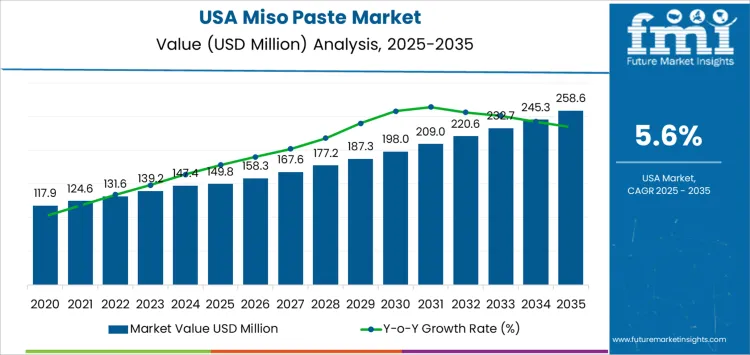
Demand for miso paste in the USA is expected to grow from USD 149.8 million in 2025 to USD 258.6 million by 2035, reflecting a compound annual growth rate (CAGR) of 5.6%. This growth is driven by the increasing adoption of miso paste in both home cooking and foodservice sectors. Miso paste, a staple in Japanese cuisine, is gaining popularity in the USA for its rich umami flavor, health benefits, and versatility across various dishes. As consumers continue to seek nutritious, plant-based, and fermented food options, the demand for miso paste is expected to rise steadily.
The market is also benefiting from the growing trend of ethnic and international cuisine in the American food industry. As health-conscious consumers seek probiotic-rich foods and products with clean labels, miso paste, with its natural fermentation process, is becoming a sought-after ingredient in many culinary applications. The rise in interest for plant-based and functional foods further supports the market for miso paste in the USA.
Quick Stats of the Demand for Miso Paste in USA
- Demand for Miso Paste in USA Value (2025): USD 149.8 million
- Demand for Miso Paste in USA Forecast Value (2035): USD 258.6 million
- Demand for Miso Paste in USA Forecast CAGR (2025-2035): 5.6%
- Demand for Miso Paste in USA Leading Product Type: Red Miso (41%)
- Demand for Miso Paste in USA Key Growth Regions: West USA, South USA, Northeast USA, Midwest USA
- Demand for Miso Paste in USA Key Players: Marukome, Hikari Miso Co. Ltd., Saikyo-Miso Co., Yamato Soysauce & Miso Co., Source Foods
What is the Growth Forecast for the Miso Paste Market through 2035?
The growth momentum of the miso paste market in the USA shows steady acceleration over the forecast period, with consistent increases in demand. Starting at USD 149.8 million in 2025, the market rises to USD 158.3 million in 2026 and USD 167.6 million in 2027, reflecting initial, steady growth driven by increasing consumer interest in fermented and plant-based food products. This period of growth is fueled by the rising awareness of miso paste’s health benefits, particularly its probiotic content.
As the market continues to mature, the momentum builds, reaching USD 177.2 million in 2028 and USD 187.3 million in 2029. From 2029 onward, the growth rate accelerates further, reflecting increased product availability and the broader adoption of miso paste in both mainstream and specialty markets. By 2030, the market reaches USD 198.0 million, continuing its upward trajectory with further growth to USD 209.0 million in 2031. The growth momentum persists with the market reaching USD 220.6 million in 2032, USD 232.7 million in 2033, and ultimately USD 245.3 million by 2034. By 2035, the market reaches USD 258.6 million, indicating sustained demand and growth momentum driven by consumer preference for healthier and more diverse food options.
USA Miso Paste Industry Key Takeaways
| Metric | Value |
|---|---|
| Industry Sales Value (2025) | USD 149.8 million |
| Industry Forecast Value (2035) | USD 258.6 million |
| Industry Forecast CAGR (2025-2035) | 5.6% |
Why is the Demand for Miso Paste Growing in the USA?
Demand for miso paste in the USA is growing as American consumers increasingly embrace international cuisines and explore new flavors in their cooking. Japanese and broader Asian cuisine have gained popularity in home kitchens and restaurants, introducing more people to fermented foods like miso. Miso paste is a versatile ingredient used in a wide range of dishes beyond traditional miso soup, such as marinades, sauces, dressings, and even fusion recipes. The unique umami flavor of miso has made it a sought after ingredient among food enthusiasts looking to expand their culinary repertoires.
At the same time, growing awareness of the health benefits of fermented foods is contributing to increased demand for miso paste. It is rich in protein, minerals, and probiotics, making it a popular choice for those interested in gut health and plant based diets. As consumers look for natural, clean label foods with functional benefits, miso fits well into these preferences. With the continued growth of health consciousness and interest in traditional fermented foods, miso paste is expected to remain a staple in American kitchens.
What Are the Key Segments in Miso Paste Market in the USA?
The miso paste market in the USA is segmented by product type and raw material. Red miso is the leading product type, accounting for 41% of the market share. In terms of raw materials, soybean remains the dominant ingredient, with rice accounting for 28%. The demand for miso paste is driven by the growing interest in Asian cuisine, plant-based products, and health-conscious food options.
Which Product Type Drives Miso Paste Demand in the USA?
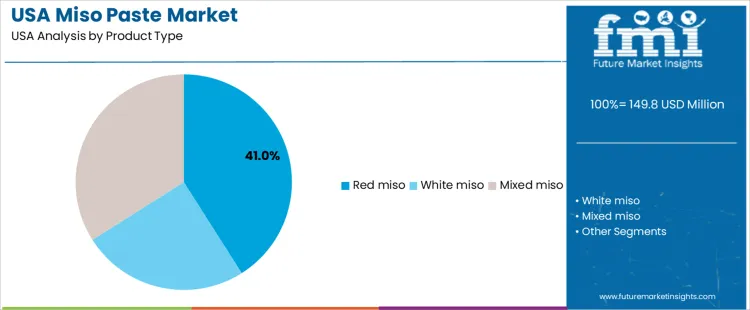
Red miso leads the miso paste market, representing 41% of the total demand in the USA. This variety of miso, known for its deeper, more robust flavor, is particularly popular in soups, marinades, and sauces. Red miso is made through a longer fermentation process, giving it a stronger umami taste compared to other miso types. Its versatility in both traditional Japanese dishes and fusion cuisine has contributed to its dominance in the market. Although white miso and mixed miso are also growing in popularity, red miso continues to be the preferred choice for consumers who favor bold, savory flavors.
Which Raw Material Drives Miso Paste Demand in the USA?
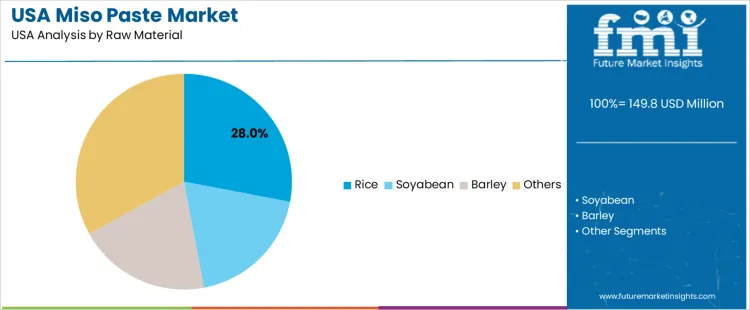
Soybean is the primary raw material used in the production of miso paste, holding the largest share of the market. However, rice also plays a significant role, accounting for 28% of the raw materials used in miso paste production. Soybeans are essential for their protein content and contribute to the rich, fermented taste that is characteristic of miso. Rice, on the other hand, is used in specific types of miso, particularly white miso, to create a milder, sweeter flavor. The growing trend towards plant-based, fermented foods has increased the demand for soy-based miso pastes, with consumers seeking health-conscious, protein-rich options. Other raw materials, such as barley, are also used in certain varieties, contributing to the diversity of flavors available in the market.
What is the Summary of Demand for Miso Paste in USA?
Demand for miso paste in the USA has been steadily rising as American consumers increasingly embrace fermented foods, global cuisines, and plant based diets. Miso’s characteristic umami flavor and versatile use in soups, sauces, marinades, and dressings have made it attractive in both home cooking and restaurant kitchens. As Asian cuisine becomes more mainstream across the United States, miso is no longer limited to niche or ethnic grocery stores; it is widely available in supermarkets, health food stores, and online channels. The combination of convenience, flavor versatility, and perceived health benefits has broadened miso’s appeal beyond traditional Japanese food enthusiasts to a more general consumer base.
What are the Drivers of Demand for Miso Paste in USA?
Several factors are driving increased demand for miso paste in the USA. First, growing interest in health and wellness, including digestive health, probiotic and fermented foods, encourages consumption of miso, which is linked to gut health and nutrient rich diets. Second, rising popularity of Asian cuisine and fusion cooking among American households and restaurants promotes miso as a versatile seasoning or ingredient for soups, sauces, marinades, and global fusion recipes. Third, increasing adoption of plant based, vegetarian, and vegan diets supports miso’s appeal as a protein rich, soy based alternative to meat or dairy in cooking. Fourth, expanded retail availability, including supermarkets, specialty stores, and online outlets, has made miso more accessible to a broader audience, lowering the barrier for first time buyers to experiment with it.
What are the Restraints on Demand for Miso Paste in USA?
Despite growing popularity, some factors limit uptake of miso paste in the USA. One main restraint is limited consumer familiarity; many Americans may still view miso as an “ethnic” or niche ingredient rather than a staple and may lack knowledge on how to use it in everyday cooking. Second, concerns over sodium content and dietary restrictions may deter health conscious consumers from using miso regularly. Third, supply chain and sourcing challenges, particularly for artisanal or imported miso, can lead to variable price points and inconsistent availability, which can hinder broader adoption. Finally, competition from other condiments, sauces, and flavoring agents that are more familiar to Western consumers may limit miso's market penetration beyond specialty or health food segments.
What are the Key Trends Influencing Demand for Miso Paste in USA?
Several trends are shaping the trajectory of miso demand in the USA. A major trend is the mainstreaming of fermented and functional foods as part of health conscious diets; miso is increasingly positioned as a nutritious, gut friendly ingredient. Another trend is culinary innovation and fusion cooking: chefs and home cooks are using miso in nontraditional dishes, such as dressings, marinades, and plant based recipes, increasing its versatility and appeal. There is also growing demand for organic, non GMO, and clean label food products, which fuels interest in premium, traditional or naturally fermented miso varieties. Additionally, expansion of online retail, specialty stores, and mainstream supermarket offerings makes miso more accessible to a wider demographic, supporting further growth.
What is the Regional Demand Outlook for the Miso Paste Market in the USA?
The Miso Paste market in the USA is expected to experience steady growth across various regions, with the West USA leading the way at a projected CAGR of 3.8%. South USA follows closely with a growth rate of 3.4%, while the Northeast USA is projected to grow at 3.1%. The Midwest USA shows moderate growth with a CAGR of 2.7%. Miso paste, a traditional Japanese seasoning made from fermented soybeans, is gaining popularity due to its umami flavor and potential health benefits. As American consumers increasingly turn toward plant-based diets and explore international cuisines, the demand for miso paste in both culinary and health-conscious products is expected to rise.
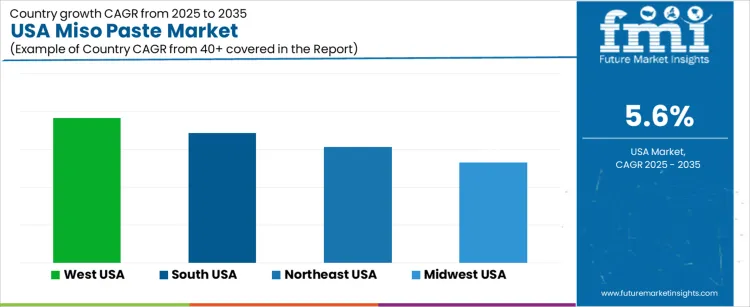
| Region | CAGR (%) |
|---|---|
| West USA | 3.8 |
| South USA | 3.4 |
| Northeast USA | 3.1 |
| Midwest USA | 2.7 |
What is Driving the Growth of Miso Paste in the West USA?
The West USA is projected to experience the highest growth in the Miso Paste market, with a CAGR of 3.8%. The region is known for its diverse food culture and increasing interest in plant-based diets, which is contributing to the rising demand for miso paste. As consumers in the West USA become more health-conscious and seek out natural, fermented products, miso paste’s potential health benefits, including probiotics and digestive support, are driving its adoption in cooking and as an ingredient in various products. The region’s focus on Japanese cuisine, coupled with the increasing popularity of Asian fusion dishes, is also contributing to the growth of miso paste. Additionally, the West USA’s strong market for organic and clean-label products further supports the rising demand for miso paste as a sustainable and flavorful option.
Why is Miso Paste Gaining Popularity in South USA?
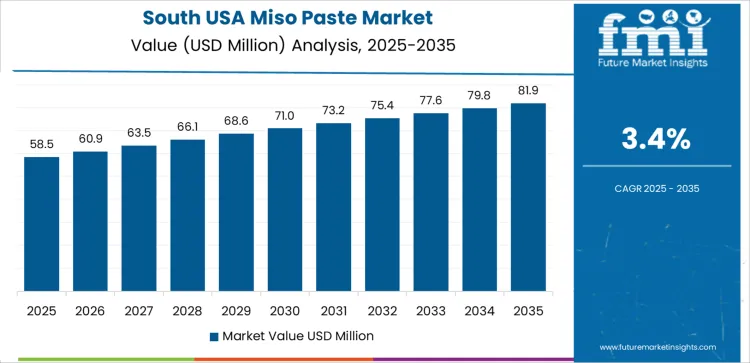
In South USA, the demand for miso paste is projected to grow at a CAGR of 3.4%. The region is experiencing an increasing interest in international cuisines, particularly Asian flavors, which has fueled the adoption of miso paste in both home cooking and restaurants. As Southern consumers embrace more diverse food options, miso paste is becoming an essential ingredient in soups, dressings, and marinades. The growing trend toward plant-based and vegetarian diets, which often emphasize fermented foods, is also contributing to the rise of miso paste in the South USA. Additionally, as consumers become more health-conscious, the potential digestive benefits and the rich umami flavor of miso paste are driving its popularity in the region’s culinary landscape. As the market for international and fusion cuisine continues to grow, the demand for miso paste is expected to increase.
How is the Miso Paste Market Growing in Northeast USA?
In Northeast USA, the Miso Paste market is projected to grow at a CAGR of 3.1%. The region’s strong interest in health and wellness, coupled with the increasing focus on plant-based eating, is contributing to the rising demand for miso paste. Miso paste’s nutritional value, including its protein, fiber, and probiotic content, makes it an attractive option for consumers looking to incorporate more plant-based ingredients into their diets. The growing popularity of Asian cuisine in the Northeast, particularly in metropolitan areas such as New York, further drives the adoption of miso paste in everyday cooking. As more consumers seek out sustainable, clean-label products, miso paste’s natural fermentation process and umami flavor make it a preferred choice in both home kitchens and professional food establishments. The market for miso paste is expected to continue expanding as demand for authentic and functional food products increases.
What is Contributing to the Growth of Miso Paste in Midwest USA?
In Midwest USA, the Miso Paste market is expected to grow at a more moderate rate of 2.7%. While the Midwest has traditionally been slower to adopt international cuisines, there is a growing interest in plant-based diets and health-conscious eating that is driving the demand for miso paste. The increase in vegetarian and vegan populations in the region, along with the rising awareness of fermented foods’ digestive health benefits, is contributing to miso paste’s adoption. Additionally, the growing trend of cooking at home, fueled by both health and convenience factors, is encouraging more consumers in the Midwest to explore new ingredients like miso paste. As the region becomes more attuned to the benefits of fermented foods and international flavors, miso paste’s role in the Midwest market is expected to expand, particularly in health food stores, grocery chains, and restaurants.
What is the Competitive Landscape for Demand for Miso Paste in the USA?
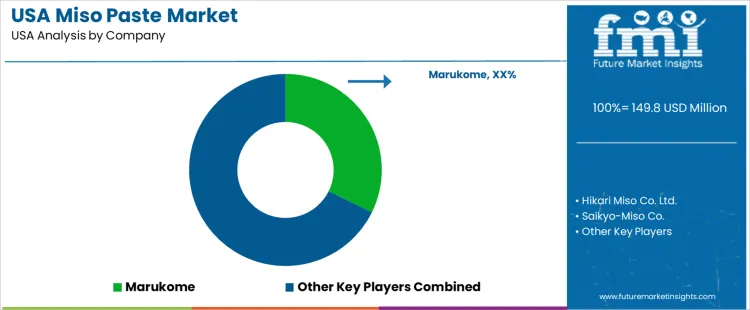
Demand for miso paste in the USA has been increasing steadily as consumer interest in fermented foods, plant based diets, and global cuisines grows. The popularity of Japanese and broader Asian cooking-including dishes like miso soup, ramen, sauces, marinades, and dressings-has introduced miso to a wider American audience. This trend is boosted by a growing appreciation for umami flavor, versatility in cooking, and the nutritional benefits associated with fermented soy based products. In recent years the USA market has also seen rising interest in organic, low sodium, and specialty miso variants as consumers become more health conscious and adventurous with their food choices.
On the supply side, competition among manufacturers and importers is shaped by a few established firms. Based on your list, Marukome, Hikari Miso Co. Ltd., Saikyo-Miso Co., Yamato Soysauce & Miso Co., and Source Foods are among the key players supplying miso paste to the USA market. These firms compete on product authenticity, variety (white, red, mixed miso), quality (traditional fermentation, organic or non GMO), packaging formats, and distribution reach. Those offering value added or specialty products, such as organic or low sodium miso, tend to appeal to niche health conscious or gourmet consumers. As overall consumer demand for fermented, plant based, and globally inspired foods continues to rise, suppliers that combine product quality, authenticity, variety, and accessibility are best positioned to gain market share in the USA market for miso paste.
Key Players of the Miso Paste Industry in USA
- Marukome
- Hikari Miso Co. Ltd.
- Saikyo-Miso Co.
- Yamato Soysauce & Miso co.
- Source Foods
Scope of the Report
| Items | Details |
|---|---|
| Quantitative Units | USD Million |
| Regions Covered | USA |
| Product Type | Red miso, White miso, Mixed miso |
| Raw Material | Soyabean, Rice, Barley, Others |
| End User | Consumer (household), Food Services (restaurants, institutional kitchens) |
| Distribution Channel | Retail (supermarket/ethnic grocery), Specialty Stores, Online Retail, Food Service Distribution |
| Key Companies Profiled | Marukome; Hikari Miso Co. Ltd.; Saikyo Miso Co.; Yamato Soysauce & Miso Co.; Source Foods |
| Additional Attributes | Dollar sales by miso type and raw material show increasing consumer demand for white and mixed miso alongside red miso. Growth is driven by rising popularity of Japanese/Asian cuisine in the US, increased health consciousness (fermented & plant based foods), and expansion of miso use beyond soups — e.g. in sauces, marinades, dressings. Specialty and online retail channels are growing faster than traditional grocery for imported and premium miso. |
Key Segments in the Demand for Miso Paste in USA
Product Type
- Red miso
- White miso
- Mixed miso
Raw Material
- Soyabean
- Rice
- Barley
- Others
End-user
- Consumer
- Food services
Distribution Channel
- Consumer Retail
- Food services
Region
- Northeast USA
- West USA
- Midwest USA
- South USA
Frequently Asked Questions
How big is the demand for miso paste in USA in 2025?
The demand for miso paste in USA is estimated to be valued at USD 149.8 million in 2025.
What will be the size of miso paste in USA in 2035?
The market size for the miso paste in USA is projected to reach USD 258.6 million by 2035.
How much will be the demand for miso paste in USA growth between 2025 and 2035?
The demand for miso paste in USA is expected to grow at a 5.6% CAGR between 2025 and 2035.
What are the key product types in the miso paste in USA?
The key product types in miso paste in USA are red miso, white miso and mixed miso.
Which raw material segment is expected to contribute significant share in the miso paste in USA in 2025?
In terms of raw material, rice segment is expected to command 28.0% share in the miso paste in USA in 2025.
Preview the report firsthand - request a free sample
Get SampleGet the brochure for pricing and purchase details.
Get PDFTable of Content
- Executive Summary
- USA Market Outlook
- Demand-side Trends
- Supply-side Trends
- Technology Roadmap Analysis
- Analysis and Recommendations
- Market Overview
- Market Coverage / Taxonomy
- Market Definition / Scope / Limitations
- Market Background
- Market Dynamics
- Drivers
- Restraints
- Opportunity
- Trends
- Scenario Forecast
- Demand in Optimistic Scenario
- Demand in Likely Scenario
- Demand in Conservative Scenario
- Opportunity Map Analysis
- Product Life Cycle Analysis
- Supply Chain Analysis
- Investment Feasibility Matrix
- Value Chain Analysis
- PESTLE and Porter’s Analysis
- Regulatory Landscape
- Regional Parent Market Outlook
- Production and Consumption Statistics
- Import and Export Statistics
- Market Dynamics
- USA Market Analysis 2020 to 2024 and Forecast, 2025 to 2035
- Historical Market Size Value (USD Million) Analysis, 2020 to 2024
- Current and Future Market Size Value (USD Million) Projections, 2025 to 2035
- Y-o-Y Growth Trend Analysis
- Absolute $ Opportunity Analysis
- USA Market Pricing Analysis 2020 to 2024 and Forecast 2025 to 2035
- USA Market Analysis 2020 to 2024 and Forecast 2025 to 2035, By Product Type
- Introduction / Key Findings
- Historical Market Size Value (USD Million) Analysis By Product Type , 2020 to 2024
- Current and Future Market Size Value (USD Million) Analysis and Forecast By Product Type , 2025 to 2035
- Red miso
- White miso
- Mixed miso
- Y-o-Y Growth Trend Analysis By Product Type , 2020 to 2024
- Absolute $ Opportunity Analysis By Product Type , 2025 to 2035
- USA Market Analysis 2020 to 2024 and Forecast 2025 to 2035, By Raw Material
- Introduction / Key Findings
- Historical Market Size Value (USD Million) Analysis By Raw Material, 2020 to 2024
- Current and Future Market Size Value (USD Million) Analysis and Forecast By Raw Material, 2025 to 2035
- Rice
- Soyabean
- Barley
- Others
- Y-o-Y Growth Trend Analysis By Raw Material, 2020 to 2024
- Absolute $ Opportunity Analysis By Raw Material, 2025 to 2035
- USA Market Analysis 2020 to 2024 and Forecast 2025 to 2035, By End-User
- Introduction / Key Findings
- Historical Market Size Value (USD Million) Analysis By End-User, 2020 to 2024
- Current and Future Market Size Value (USD Million) Analysis and Forecast By End-User, 2025 to 2035
- Consumer
- Food services
- Y-o-Y Growth Trend Analysis By End-User, 2020 to 2024
- Absolute $ Opportunity Analysis By End-User, 2025 to 2035
- USA Market Analysis 2020 to 2024 and Forecast 2025 to 2035, By Distribution channel
- Introduction / Key Findings
- Historical Market Size Value (USD Million) Analysis By Distribution channel, 2020 to 2024
- Current and Future Market Size Value (USD Million) Analysis and Forecast By Distribution channel, 2025 to 2035
- Consumer
- Food services
- Y-o-Y Growth Trend Analysis By Distribution channel, 2020 to 2024
- Absolute $ Opportunity Analysis By Distribution channel, 2025 to 2035
- Market Structure Analysis
- Competition Dashboard
- Competition Benchmarking
- Market Share Analysis of Top Players
- By Regional
- By Product Type
- By Raw Material
- By End-User
- By Distribution channel
- Competition Analysis
- Competition Deep Dive
- Marukome
- Overview
- Product Portfolio
- Profitability by Market Segments (Product/Age /Sales Channel/Region)
- Sales Footprint
- Strategy Overview
- Marketing Strategy
- Product Strategy
- Channel Strategy
- Hikari Miso Co. Ltd.
- Saikyo-Miso Co.
- Yamato Soysauce & Miso co.
- Source Foods
- Marukome
- Competition Deep Dive
- Assumptions & Acronyms Used
- Research Methodology


