

- Industry Size (2025)
- USD 1613.3 Mn
- Forecast (2035)
- USD 2365.2 Mn
- CAGR (2025 to 2035)
- 3.9%
Demand for Interventional Radiology in Japan Forecast and Outlook 2025 to 2035
Interventional radiology demand in Japan is valued at USD 1,613.3 million in 2025 and is projected to reach USD 2,365.2 million by 2035, registering a CAGR of 3.9%. MRI systems represent the leading product category with a 39% share, followed by angiography systems and CT scanners, reflecting sustained capital investment in image-guided therapy platforms. Angioplasty and vertebroplasty together account for a major share of procedure volume, supported by rising cardiovascular and spinal disorder incidence. Cardiology, gastroenterology, and urology remain the most frequent clinical applications. Hospitals dominate end-user demand with a 45% share due to their advanced imaging suites and procedural capacity, while clinics and ambulatory surgical centers are expanding in mid-complexity interventions.
Regional utilization is concentrated across Kanto, Kansai, and Chubu, where tertiary care hospitals, cancer centers, and academic institutions drive high procedure throughput. Oncology-related interventional procedures continue to rise due to increasing image-guided tumor ablation and embolization adoption. Obstetrics and gynecology segments show gradual uptake of minimally invasive vascular interventions for hemorrhage management. Japan’s aging population sustains long-term demand for thrombolysis, nephrostomy, and MSK interventions. Equipment replacement cycles remain steady due to strict performance and safety standards under national healthcare regulations. Pricing remains controlled through reimbursement frameworks, limiting volatility but supporting predictable procurement patterns. Growth through 2035 is supported by procedural migration from open surgery to catheter-based techniques, expanding outpatient interventions, and rising diagnostic imaging integration across hospital networks.
Quick Stats of the Interventional Radiology Industry in Japan:
- Interventional Radiology Industry in Japan Value (2025): USD 1,613.3 million
- Interventional Radiology Industry in Japan Forecast Value (2035): USD 2,365.2 million
- Interventional Radiology Industry in Japan Forecast CAGR (2025 to 2035): 3.9%
- Leading Product in Interventional Radiology Industry in Japan: MRI Systems (39%)
- Key Growth Regions in Interventional Radiology Industry in Japan: Kyushu & Okinawa, Kanto, Kansai, Chubu
- Top Players in Interventional Radiology Industry in Japan: Siemens Healthineers, GE Healthcare, Philips Healthcare, Canon Medical Systems, Hitachi Medical Corporation
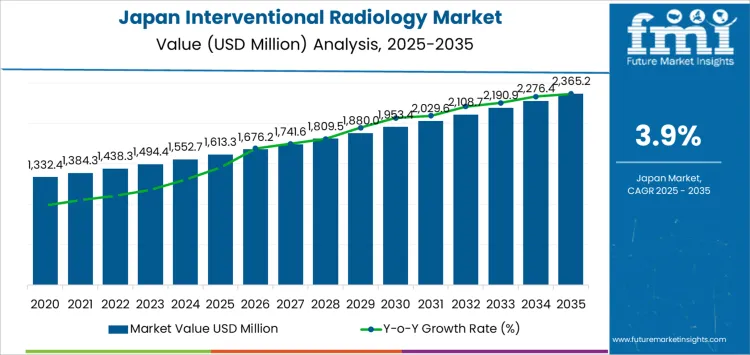
What is the Demand Forecast for Interventional Radiology in Japan through 2035?
Interventional radiology demand in Japan is valued at USD 1,613.3 million in 2025 and reaches USD 1,880.0 million by 2030, translating into a USD 266.7 million expansion over the first half of the forecast period. The rise from USD 1,332.4 million in 2020 reflects how image-guided therapies have shifted from niche hospital services to core treatment pathways in oncology, vascular disease, and emergency care. Utilization is climbing across embolization, thrombectomy, biliary interventions, and minimally invasive tumor ablation as hospitals actively reduce open surgical load. Growth during this phase is anchored in procedure volume expansion rather than device pricing, driven by aging-related vascular disease and higher cancer intervention intensity across urban medical centers.
From 2030 to 2035, demand advances from USD 1,880.0 million to USD 2,365.2 million, adding a larger USD 485.2 million in the second half of the outlook. Annual value additions accelerate as interventional radiology extends into stroke care networks, structural heart support, and day-case oncology procedures. Regional hospitals increasingly deploy catheter labs to decentralize care from tertiary centers, directly lifting procedure throughput. Repeated-use intervention profiles in chronic peripheral artery disease and liver cancer further strengthen demand persistence. By 2035, interventional radiology demand in Japan reflects a structural shift toward minimally invasive medicine as standard clinical practice rather than an adjunct to surgical departments.
Interventional Radiology Industry in Japan Key Takeaways
| Metric | Value |
|---|---|
| Industry Value (2025) | USD 1,613.3 million |
| Forecast Value (2035) | USD 2,365.2 million |
| Forecast CAGR (2025 to 2035) | 3.9% |
What Is Driving the Demand for Interventional Radiology in Japan?
The demand for interventional radiology in Japan is shaped by hospital capacity constraints, high prevalence of chronic vascular and oncologic conditions, and a strong clinical preference for minimally invasive treatment pathways. Historically, many conditions now treated through image guided procedures required open surgery with longer recovery times and higher complication risk. As Japan expanded advanced imaging access across regional hospitals, interventional radiology became embedded in routine care for embolization, vascular access, tumor ablation, and drainage procedures. The aging population played a direct role, as elderly patients tolerate minimally invasive interventions better than major surgery. Oncology care also reinforced demand, with interventional radiology supporting both curative and palliative procedures in liver, lung, and bone metastases where surgical options are limited.
Future demand for interventional radiology in Japan will be shaped by outpatient procedure expansion, workforce shortages in surgical specialties, and pressure to shorten hospital stays. As length of inpatient care becomes more tightly managed under national reimbursement controls, image guided therapies that reduce bed occupancy will gain further institutional support. Growth will continue in peripheral vascular disease management, dialysis access, pain control interventions, and targeted cancer therapies. Barriers include limited availability of trained interventional radiologists outside major urban centers, high capital cost for advanced imaging systems, and scheduling competition with diagnostic radiology. Long term demand will depend on how effectively Japan expands specialist training, balances diagnostic and interventional imaging workloads, and integrates interventional radiology into standardized care pathways across oncology, vascular medicine, and emergency care.
What Is the Demand for Interventional Radiology in Japan by Product and Procedure?
The demand for interventional radiology in Japan is shaped by population aging, high imaging utilization, and hospital centered minimally invasive care pathways. MRI systems lead by product due to their role in soft tissue imaging and procedure guidance. Angioplasty leads by procedure because of sustained cardiovascular disease prevalence and routine endovascular treatment adoption. Procurement is driven by university hospitals, regional medical centers, and public healthcare networks operating under national insurance coverage. Import reliance remains significant for advanced imaging hardware and software platforms. Substitution pressure between modalities remains application specific. Demand stability is reinforced by chronic disease burden and continuous expansion of image guided therapeutic services.
Why do MRI systems dominate the demand for interventional radiology in Japan by product?
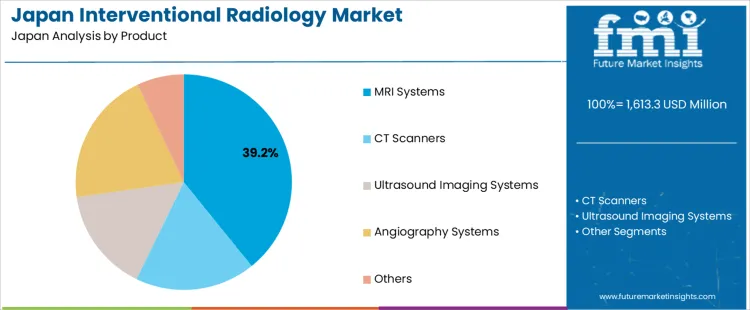
MRI systems account for 39% of the demand for interventional radiology in Japan by product, reflecting their role in high resolution imaging for soft tissue, neurological, and oncologic interventions. Consumption intensity is driven by tumor targeting, vascular mapping, spinal procedures, and functional brain interventions. Usage remains stable because MRI enables precise lesion visualization without ionizing radiation. Procurement is concentrated within tertiary hospitals and university affiliated centers handling complex cases. Price sensitivity remains moderate because system accuracy and clinical versatility outweigh capital cost concerns. Specification control emphasizes magnet stability, gradient performance, image reconstruction speed, and compatibility with interventional accessories.
MRI systems also generate consistent repeat demand through scheduled system upgrades, coil replacement cycles, and software driven performance enhancements. Repeat investment remains predictable as hospitals transition toward higher field strength platforms. Buyers favor standardized MRI environments to integrate navigation software and patient monitoring systems. Margin structure remains controlled under competitive vendor bidding. Regulatory exposure remains elevated under device calibration and patient safety protocols. Import reliance persists for superconducting magnets and control electronics. Substitution pressure from CT exists in trauma settings, though MRI retains dominance for soft tissue guided interventions across multiple specialties.
What drives angioplasty to lead the demand for interventional radiology in Japan by procedure?
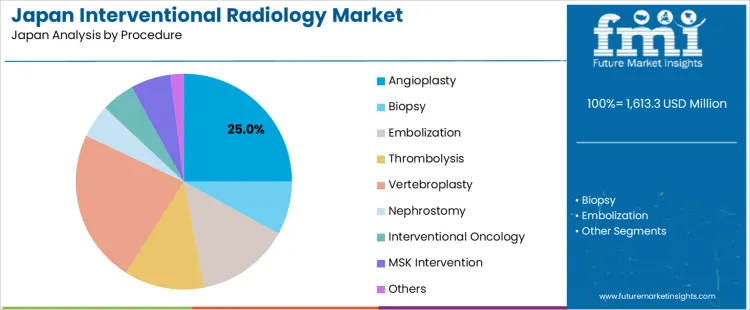
Angioplasty represents 25.0% of the demand for interventional radiology in Japan by procedure, reflecting high procedural volume in coronary, peripheral, and renal artery disease management. Consumption intensity is driven by aging demographics, hypertension prevalence, and ischemic cardiovascular conditions. Usage remains stable because angioplasty supports rapid symptom relief and reduced surgical burden. Procurement is dominated by cardiovascular centers and public hospitals with round the clock catheterization labs. Price sensitivity remains moderate because procedural efficiency reduces long term hospitalization costs. Specification control emphasizes catheter trackability, balloon compliance accuracy, stent deployment precision, and fluoroscopic visualization stability.
Angioplasty also generates predictable repeat demand through scheduled reintervention, restenosis management, and chronic vascular disease follow up. Repeat utilization remains high because patients often require multi site or staged procedures. Providers favor standardized catheter and stent platforms to reduce learning curve variation. Margin structure remains controlled under national reimbursement limits and device price negotiations. Regulatory exposure remains elevated due to implant safety monitoring and outcome reporting. Import reliance persists for balloons, guidewires, and stent systems. Substitution pressure from surgical bypass exists in complex cases, though endovascular preference continues to expand across regional hospital networks.
What Is Driving the Demand for Interventional Radiology in Japan Hospital-Based Minimally Invasive Care?
Demand for interventional radiology in Japan is driven by pressure to reduce surgical burden in an aging population, expansion of catheter-based oncology treatments, and strict inpatient length-of-stay management. Hospitals increasingly rely on image-guided embolization, ablation, and vascular access procedures to treat cancer, stroke, dialysis complications, and internal bleeding with lower physiological stress. National insurance coverage supports these procedures as standard care rather than experimental therapy. Demand is therefore structured around surgical substitution, bed turnover efficiency, and high-risk patient management rather than elective procedural growth alone.
How Is Cancer Treatment Strategy Shifting Workload Toward Image-Guided Therapy?
Japan cancer treatment increasingly integrates transarterial chemoembolization, radiofrequency ablation, and image-guided biopsies as front-line or combination therapies. These approaches reduce the need for open surgery in liver, lung, and renal tumors. Oncology departments favor interventional radiology for repeatable localized control without prolonged recovery. Rising incidence of hepatocellular carcinoma linked to aging and metabolic disease magnifies this demand. Interventional radiology is therefore becoming embedded in routine oncology pathways rather than reserved for late-stage care.
Why Is Dialysis and Vascular Access Management Creating Continuous Procedural Volume?
Japan large dialysis population generates persistent demand for catheter placement, fistula repair, thrombectomy, and angioplasty. Interventional radiology units manage access maintenance as an ongoing clinical service rather than episodic intervention. Rapid response to access failure is critical to prevent treatment disruption and hospitalization. This creates steady procedural volume independent of cancer or emergency care, anchoring demand in chronic renal disease management across urban and regional hospitals.
How Do Specialist Shortages, Equipment Cost, and Training Intensity Restrain Expansion?
Demand for interventional radiology in Japan is restrained by limited availability of trained operators and long certification pathways. High capital cost for angiography suites and hybrid operating rooms restricts installation outside major hospitals. Radiation safety staffing and on-call coverage also strain smaller institutions. These structural limitations concentrate advanced interventional services in tertiary centers and slow uniform national expansion despite strong clinical dependence.
What is the Demand for Interventional Radiology in Japan by Region?
| Region | CAGR (%) |
|---|---|
| Kyushu & Okinawa | 4.9% |
| Kanto | 4.5% |
| Kansai | 3.9% |
| Chubu | 3.5% |
| Tohoku | 3.0% |
| Rest of Japan | 2.9% |
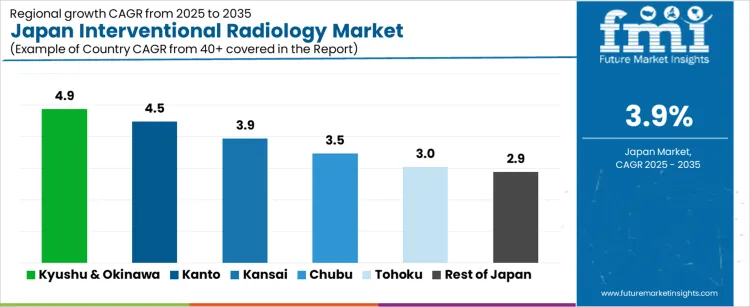
The demand for interventional radiology in Japan is increasing steadily across hospital networks, led by Kyushu and Okinawa at a 4.9% CAGR. Growth in this region is supported by rising use of minimally invasive procedures for oncology, vascular disease, and trauma care, along with expanding catheter lab capacity in regional hubs. Kanto follows at 4.5%, driven by dense tertiary hospitals, advanced imaging infrastructure, and higher procedural volumes in complex cases. Kansai records 3.9% growth, reflecting stable use across university hospitals and large private medical centers. Chubu at 3.5% shows moderate uptake linked to regional stroke and cardiac programs. Tohoku and the Rest of Japan, at 3.0% and 2.9%, reflect slower growth shaped by lower specialist density, fewer high acuity centers, and longer equipment replacement cycles.
How Are Regional Stroke and Oncology Caseloads Driving Interventional Radiology Demand in Kyushu and Okinawa?
Demand for interventional radiology in Kyushu and Okinawa is advancing at a CAGR of 4.9% through 2035, supported by rising stroke intervention volumes, expanding catheter based oncology procedures, and steady upgrades in regional tertiary hospitals. Fukuoka serves as the primary hub for endovascular therapy and image guided tumor ablation. This region differs from Kanto through higher reliance on public hospital networks rather than private specialty centers. Demand growth reflects increasing elderly patient admissions, wider use of minimally invasive vascular treatments, and steady replacement of legacy angiography systems.
- Public tertiary hospitals anchor most IR procedure volumes
- Stroke thrombectomy drives emergency intervention demand
- Oncology ablation supports steady elective procedure growth
- Aging population sustains long term case flow
Why Is High Case Complexity Sustaining Interventional Radiology Growth in Kanto?
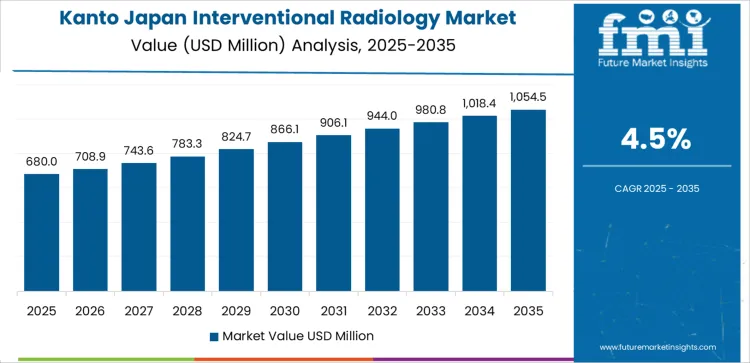
Demand for interventional radiology in Kanto is advancing at a CAGR of 4.5% through 2035, supported by high procedure complexity, dense concentration of teaching hospitals, and rapid adoption of advanced image guided therapies in Tokyo and surrounding areas. Kanto leads in neurointervention, hepatic embolization, and complex peripheral vascular procedures. This region contrasts with Kyushu and Okinawa through higher outpatient procedure penetration and specialist driven referral flows. Growth reflects rising chronic vascular disease burden and continuous technology-driven expansion of minimally invasive treatment pathways.
- Teaching hospitals lead adoption of advanced IR procedures
- Neuro and vascular interventions dominate high value case mix
- Specialist referral networks sustain stable patient inflow
- Outpatient IR procedures expand procedural throughput
What Is Supporting Balanced Interventional Radiology Expansion Across Kansai Hospital Networks?
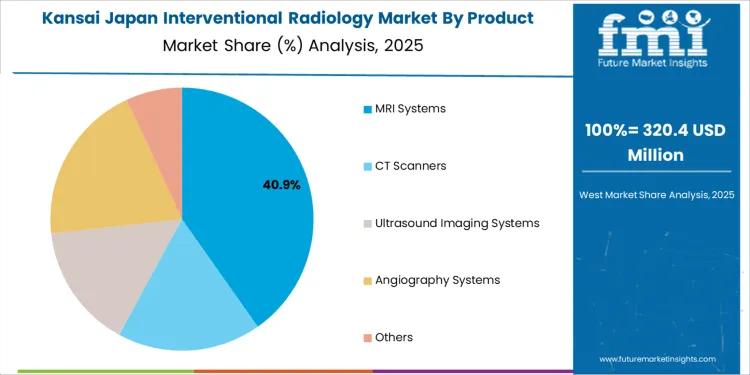
Demand for interventional radiology in Kansai is advancing at a CAGR of 3.9% through 2035, supported by strong university hospitals, steady cardiovascular disease burden, and consistent use of catheter based treatments in Osaka and Kyoto. Kansai shows balanced growth across embolization, drainage, biopsy, and peripheral artery interventions. This region differs from Kanto through slower diffusion of newest navigation platforms and imaging upgrades. Demand is sustained by stable inpatient procedure volumes and integrated collaboration between radiology and surgical departments.
- University hospitals anchor complex IR case management
- Cardiovascular disease supports continuous procedure demand
- Multidisciplinary care models sustain referral efficiency
- Imaging upgrades progress at a steady but measured pace
How Is Industrial Workforce Linked Healthcare Utilization Shaping IR Demand in Chubu?
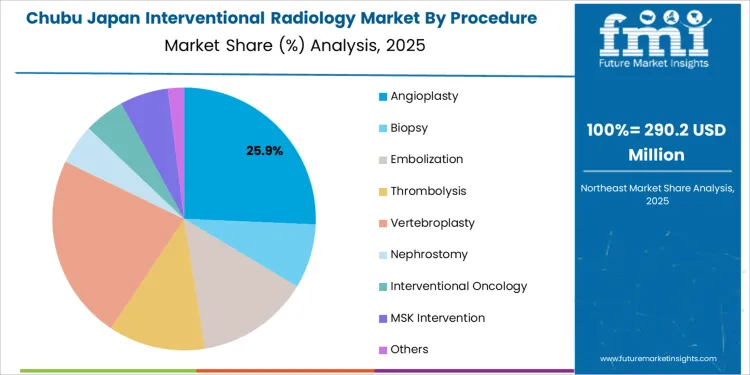
Demand for interventional radiology in Chubu is progressing at a CAGR of 3.5% through 2035, supported by regional general hospitals, steady traumatic injury caseloads, and vascular disease treatment across industrial population centers in Aichi. Chubu differs from Kansai through stronger reliance on general hospitals rather than academic specialty centers. IR demand remains centered on dialysis access management, peripheral artery disease interventions, and image guided drainage procedures. Growth remains moderate and closely aligned with workforce driven hospital utilization.
- Dialysis access procedures support repeat intervention volumes
- General hospitals dominate IR service delivery
- Trauma related interventions add episodic procedure demand
- Workforce linked healthcare use sustains admission flow
Why Is Demographic Decline Moderating Interventional Radiology Growth in Tohoku?
Demand for interventional radiology in Tohoku is advancing at a CAGR of 3.0% through 2035, supported by stable vascular disease incidence, limited hospital expansion, and aging patient profiles. Miyagi serves as the primary regional center for catheter based stroke and vascular interventions. Tohoku contrasts with Kanto through lower procedure density and fewer specialist IR units. Demand remains focused on essential embolization, thrombectomy, and drainage procedures delivered within regional public hospitals.
- Regional hubs concentrate most IR service capacity
- Vascular disease in elderly patients sustains baseline demand
- Public hospitals dominate procedural delivery
- Limited specialist density restricts rapid growth
How Is Limited Specialty Infrastructure Influencing IR Demand in Rest of Japan?
Demand for interventional radiology in Rest of Japan is advancing at a CAGR of 2.9% through 2035, supported by small city general hospitals, essential vascular intervention needs, and gradual diffusion of image guided procedures. These regions differ from Kanto through limited access to advanced neurointervention and oncology ablation services. IR usage remains focused on basic biopsies, drainage, and peripheral vascular procedures. Growth is steady and guided by demographic trends, essential care requirements, and gradual equipment modernization.
- General hospitals anchor most IR service provision
- Basic vascular and drainage procedures dominate case mix
- Limited specialist access moderates advanced procedure growth
- Equipment modernization supports gradual service expansion
What Is Driving the Demand for Interventional Radiology in Japan and Which Companies Shape Hospital System Adoption?
The demand for interventional radiology in Japan is shaped by an aging population, high incidence of vascular and oncology related conditions, and strong preference for minimally invasive treatment across public hospitals. Canon Medical Systems holds a central domestic position through angiography, CT guided intervention, and ultrasound platforms widely deployed in university hospitals and regional medical centers. Hitachi Medical supports demand through image guided therapy systems used in liver intervention, ablation, and vascular access procedures. GE Healthcare maintains a strong installed base through angiography suites and fluoroscopy systems used in cardiovascular and neurointerventional care. Siemens Healthineers supports advanced intervention through robotic angiography platforms and hybrid operating room integration. Philips Healthcare remains active through image guided therapy systems used in stroke care and peripheral vascular procedures.
System selection in Japan is governed by image resolution at low dose, procedure room workflow efficiency, compatibility with domestic PACS infrastructure, and long term service stability. Procurement decisions are shaped by capital budgeting under prefectural hospital planning and long cycle equipment replacement programs. Buyer preference favors suppliers with domestic engineering support, Japanese language workflow software, and stable spare parts availability. Training partnerships with teaching hospitals influence multiyear system placement across regional networks. Demand visibility tracks stroke center expansion, oncology intervention growth, and steady replacement of legacy fluoroscopy units across public and private hospitals. Growth also reflects wider use of catheter based treatments in elderly patients where surgical risk remains elevated.
Key Players in the Interventional Radiology Industry in Japan
- Siemens Healthineers
- GE Healthcare
- Philips Healthcare
- Canon Medical Systems
- Hitachi Medical Corporation
Scope of the Report
| Items | Values |
|---|---|
| Quantitative Units (2025) | USD million |
| Product | MRI Systems, CT Scanners, Ultrasound Imaging Systems, Angiography Systems, Others |
| Procedure | Angioplasty, Biopsy, Embolization, Thrombolysis, Vertebroplasty, Nephrostomy, Interventional Oncology, MSK Intervention, Others |
| Application | Cardiology, Oncology, Urology, Gastroenterology, Obstetrics, Gynecology, Others |
| End User | Hospitals, Clinics, Ambulatory Surgical Centres, Others |
| Region | Kyushu & Okinawa, Kanto, Kansai, Chubu, Tohoku, Rest of Japan |
| Countries Covered | Japan |
| Key Companies Profiled | Siemens Healthineers, GE Healthcare, Philips Healthcare, Canon Medical Systems, Hitachi Medical Corporation |
| Additional Attributes | Dollar by sales by product and procedure; Regional CAGR and growth drivers; Hospital vs clinic procedure distribution; Outpatient vs inpatient utilization; Imaging system replacement cycles; MRI vs angiography system adoption; Procedural migration from open surgery; Stroke, oncology, and vascular caseload expansion; Capital equipment procurement trends; National reimbursement controls; Specialty workforce availability and training intensity; Repeat interventions for chronic disease; Integration with PACS and hospital workflow; Regulatory compliance and patient safety standards |
Interventional Radiology Industry in Japan Segmentation
Product:
- MRI Systems
- CT Scanners
- Ultrasound Imaging Systems
- Angiography Systems
- Others
Procedure:
- Angioplasty
- Biopsy
- Embolization
- Thrombolysis
- Vertebroplasty
- Nephrostomy
- Interventional Oncology
- MSK Intervention
- Others
Application:
- Cardiology
- Oncology
- Urology
- Gastroenterology
- Obstetrics
- Gynecology
- Others
End User:
- Hospitals
- Clinics
- Ambulatory Surgical Centres
- Others
Region
- Kyushu & Okinawa
- Kanto
- Kansai
- Chubu
- Tohoku
- Rest of Japan
Frequently Asked Questions
How big is the demand for interventional radiology in Japan in 2025?
The demand for interventional radiology in Japan is estimated to be valued at USD 1,613.3 million in 2025.
What will be the size of interventional radiology in Japan in 2035?
The market size for the interventional radiology in Japan is projected to reach USD 2,365.2 million by 2035.
How much will be the demand for interventional radiology in Japan growth between 2025 and 2035?
The demand for interventional radiology in Japan is expected to grow at a 3.9% CAGR between 2025 and 2035.
What are the key product types in the interventional radiology in Japan?
The key product types in interventional radiology in Japan are mri systems, ct scanners, ultrasound imaging systems, angiography systems and others.
Which procedure segment is expected to contribute significant share in the interventional radiology in Japan in 2025?
In terms of procedure, angioplasty segment is expected to command 25.0% share in the interventional radiology in Japan in 2025.
Preview the report firsthand - request a free sample
Get SampleGet the brochure for pricing and purchase details.
Get PDFTable of Content
- Executive Summary
- Japan Market Outlook
- Demand-side Trends
- Supply-side Trends
- Technology Roadmap Analysis
- Analysis and Recommendations
- Market Overview
- Market Coverage / Taxonomy
- Market Definition / Scope / Limitations
- Market Background
- Market Dynamics
- Drivers
- Restraints
- Opportunity
- Trends
- Scenario Forecast
- Demand in Optimistic Scenario
- Demand in Likely Scenario
- Demand in Conservative Scenario
- Opportunity Map Analysis
- Product Life Cycle Analysis
- Supply Chain Analysis
- Investment Feasibility Matrix
- Value Chain Analysis
- PESTLE and Porter’s Analysis
- Regulatory Landscape
- Regional Parent Market Outlook
- Production and Consumption Statistics
- Import and Export Statistics
- Market Dynamics
- Japan Market Analysis 2020 to 2024 and Forecast, 2025 to 2035
- Historical Market Size Value (USD Million) Analysis, 2020 to 2024
- Current and Future Market Size Value (USD Million) Projections, 2025 to 2035
- Y-o-Y Growth Trend Analysis
- Absolute $ Opportunity Analysis
- Japan Market Pricing Analysis 2020 to 2024 and Forecast 2025 to 2035
- Japan Market Analysis 2020 to 2024 and Forecast 2025 to 2035, By Product
- Introduction / Key Findings
- Historical Market Size Value (USD Million) Analysis By Product , 2020 to 2024
- Current and Future Market Size Value (USD Million) Analysis and Forecast By Product , 2025 to 2035
- MRI Systems
- CT Scanners
- Ultrasound Imaging Systems
- Angiography Systems
- Others
- Y-o-Y Growth Trend Analysis By Product , 2020 to 2024
- Absolute $ Opportunity Analysis By Product , 2025 to 2035
- Japan Market Analysis 2020 to 2024 and Forecast 2025 to 2035, By Procedure
- Introduction / Key Findings
- Historical Market Size Value (USD Million) Analysis By Procedure, 2020 to 2024
- Current and Future Market Size Value (USD Million) Analysis and Forecast By Procedure, 2025 to 2035
- Angioplasty
- Biopsy
- Embolization
- Thrombolysis
- Vertebroplasty
- Nephrostomy
- Interventional Oncology
- MSK Intervention
- Others
- Y-o-Y Growth Trend Analysis By Procedure, 2020 to 2024
- Absolute $ Opportunity Analysis By Procedure, 2025 to 2035
- Japan Market Analysis 2020 to 2024 and Forecast 2025 to 2035, By Application
- Introduction / Key Findings
- Historical Market Size Value (USD Million) Analysis By Application, 2020 to 2024
- Current and Future Market Size Value (USD Million) Analysis and Forecast By Application, 2025 to 2035
- Cardiology
- Oncology
- Urology
- Gastroenterology
- Obstetrics
- Gynecology
- Others
- Y-o-Y Growth Trend Analysis By Application, 2020 to 2024
- Absolute $ Opportunity Analysis By Application, 2025 to 2035
- Japan Market Analysis 2020 to 2024 and Forecast 2025 to 2035, By End User
- Introduction / Key Findings
- Historical Market Size Value (USD Million) Analysis By End User, 2020 to 2024
- Current and Future Market Size Value (USD Million) Analysis and Forecast By End User, 2025 to 2035
- Hospitals
- Clinics
- Ambulatory Surgical Centres
- Others
- Y-o-Y Growth Trend Analysis By End User, 2020 to 2024
- Absolute $ Opportunity Analysis By End User, 2025 to 2035
- Market Structure Analysis
- Competition Dashboard
- Competition Benchmarking
- Market Share Analysis of Top Players
- By Regional
- By Product
- By Procedure
- By Application
- By End User
- Competition Analysis
- Competition Deep Dive
- Siemens Healthineers
- Overview
- Product Portfolio
- Profitability by Market Segments (Product/Age /Sales Channel/Region)
- Sales Footprint
- Strategy Overview
- Marketing Strategy
- Product Strategy
- Channel Strategy
- GE Healthcare
- Philips Healthcare
- Canon Medical Systems
- Hitachi Medical Corporation
- Siemens Healthineers
- Competition Deep Dive
- Assumptions & Acronyms Used
- Research Methodology


