

- Industry Size (2025)
- USD 25.9 Mn
- Forecast (2035)
- USD 37.1 Mn
- CAGR (2025 to 2035)
- 3.7%
Demand for Organ Transport Devices in Japan Forecast and Outlook 2025 to 2035
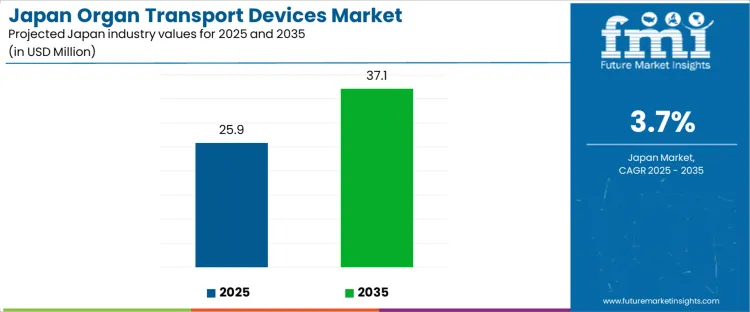
Demand for organ transport devices in Japan is projected to grow from USD 25.9 million in 2025 to USD 37.1 million by 2035, reflecting a compound annual growth rate (CAGR) of 3.7%. Growth is driven by the increasing need for effective solutions for the transportation and preservation of organs for transplantation. Organ transport devices, which are critical in maintaining organ viability during transit, are becoming more advanced, with improvements in temperature regulation, monitoring, and overall device efficiency. As Japan continues to face an aging population and a growing need for organ transplants, the demand for reliable organ transport solutions is expected to increase.
Demand is further supported by ongoing advancements in medical technology and the increasing focus on improving organ transplant success rates. With a stronger emphasis on reducing organ rejection and ensuring that organs arrive in optimal condition for transplantation, the adoption of advanced organ transport devices will continue to rise. Additionally, as the healthcare system in Japan continues to improve, particularly in transplant medicine, the demand for these devices will likely increase over the next decade.
Quick Stats of the Demand for Organ Transport Devices in Japan
- Demand for Organ Transport Devices in Japan Value (2025): USD 25.9 million
- Demand for Organ Transport Devices in Japan Forecast Value (2035): USD 37.1 million
- Demand for Organ Transport Devices in Japan Forecast CAGR (2025-2035): 3.7%
- Demand for Organ Transport Devices in Japan Leading Product: Devices (51%)
- Demand for Organ Transport Devices in Japan Key Growth Regions: Kyushu & Okinawa, Kanto, Kansai, Chubu, Tohoku, Rest of Japan
- Demand for Organ Transport Devices in Japan Key Players: Bridge to Life Ltd., TransMedics, Paragonix Technologies, Inc., XVIVO, OrganOx
What is the Growth Forecast for the Organ Transport Devices Market through 2035?
Growth rate volatility index for the organ transport devices market in Japan shows steady growth with relatively low volatility throughout the forecast period. Starting at USD 25.9 million in 2025, the market increases to USD 26.8 million in 2026 and USD 27.8 million in 2027, reflecting gradual growth as adoption of organ transport devices increases, driven by improvements in transplantation success rates and medical infrastructure.
From 2027, growth rate remains steady, with the market reaching USD 28.8 million in 2028, USD 29.9 million in 2029, and USD 31.0 million in 2030. This constant growth reflects a more stable demand for organ transport devices as the technology becomes increasingly integrated into transplant practices and hospitals. The volatility index remains low, indicating a predictable market expansion, with little deviation in growth rates. By 2035, the market will reach USD 37.1 million, reflecting a gradual but sustained increase driven by ongoing advancements in medical technology and the rising need for organ transplantation.
Key Takeaways of Organ Transport Devices Industry in Japan
| Metric | Value |
|---|---|
| Industry Sales Value (2025) | USD 25.9 million |
| Industry Forecast Value (2035) | USD 37.1 million |
| Industry Forecast CAGR (2025-2035) | 3.7% |
What Is Driving the Demand for Organ Transport Devices in Japan?
Demand for organ transport devices in Japan has been influenced by increasing need for organ transplants arising from organ failure that results from aging or chronic disease. Growth in transplant surgery capacity and improving procedures in organ preservation have supported demand for reliable transport and preservation devices. Use of cold storage and machine perfusion systems for transporting organs such as kidneys and livers has become common as transplant protocols evolve to improve success and safety. The need for devices that maintain organ viability during transport between donor and recipient sites has encouraged the adoption of advanced transport boxes and perfusion solutions. The overall market for organ preservation and transport in Japan is reported to expand under pressures from rising organ failure incidence and broader acceptance of transplantation as a treatment route.
Future demand for organ transport devices in Japan is expected to increase as more transplant candidates register and transplantation programs expand. Advances such as normothermic and hypothermic perfusion, portable preservation systems, and improved storage containers are likely to support further adoption of organ transport technology. Demand may rise for transport solutions for a wider range of organs beyond kidneys and livers, such as pancreas or other less common transplants, if clinical practice expands. Continued focus on reducing organ shortage and improving transplant outcomes may also drive demand for devices that extend viability and safety during transport. Growth of this demand will depend on improvements in logistics, regulatory acceptance, and availability of organs via donor networks.
What Are the Key Segments in Organ Transport Devices Market in Japan?
The organ transport devices market in Japan is segmented by product and organ type. Devices lead the product segment, holding 51% of the market share. In terms of organ type, heart transport represents 28% of the market. The growing need for efficient and safe organ transportation solutions, particularly for life-saving transplant procedures, is driving the demand for organ transport devices in Japan.
Which Product Drives Organ Transport Devices Demand in Japan?
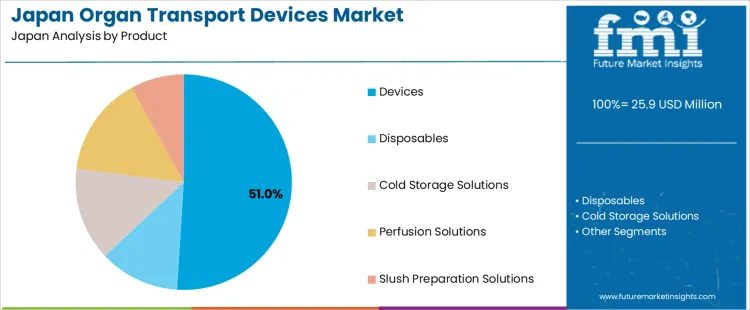
Devices are the dominant product type in the organ transport market, accounting for 51% of the market share. These devices are designed to ensure the safe and efficient transport of organs from donors to recipients, maintaining organ viability throughout the process. Transport devices include systems that regulate temperature, prevent damage, and facilitate the preservation of organ function during transport. The increasing focus on improving organ transplant outcomes and reducing organ rejection has led to a rise in demand for advanced organ transport devices, particularly for critical organs such as the heart and liver. While disposables, cold storage solutions, perfusion solutions, and slush preparation solutions also contribute to the market, transport devices remain the most significant product type due to their critical role in organ preservation and safe delivery.
Which Organ Drives Organ Transport Devices Demand in Japan?
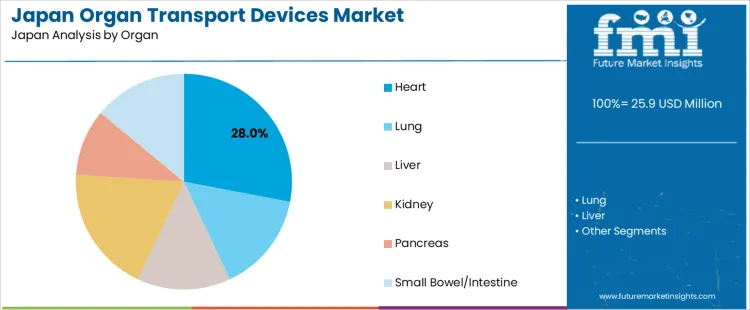
Heart transport is the leading segment in the organ transport devices market in Japan, representing 28% of the market share. The transport of hearts for transplantation is particularly sensitive due to the organ's limited viability outside the body. Efficient and rapid transport solutions are crucial to prevent ischemic injury and ensure the heart remains functional until it reaches the recipient. The demand for organ transport devices for the heart is driven by the growing need for heart transplants and the advancement in organ preservation techniques. Other organs, such as lung, liver, kidney, and pancreas, also contribute to the market, but heart transport remains the most critical due to the urgency and precision required in heart transplantation.
What is the Demand for Organ Transport Devices in Japan?
The demand for organ transport devices in Japan is growing as the country faces challenges related to organ transplantation, including the need for more efficient and reliable methods of transporting organs. Organ transport devices, which are used to preserve and transport organs for transplantation, play a crucial role in ensuring the viability of organs between the donor and recipient. With Japan's aging population and the increasing need for organ transplants, particularly for kidney, liver, and heart transplants, the market for organ transport devices is expected to expand. Technological advancements in preservation techniques and the development of more sophisticated transport devices are further driving this growth.
What are the Drivers of Demand for Organ Transport Devices in Japan?
Several factors are driving the demand for organ transport devices in Japan. First, the increasing number of organ transplant procedures, particularly due to the aging population and the rise in chronic diseases such as liver disease, kidney failure, and heart conditions, is creating a greater need for efficient organ transportation. Second, advancements in organ preservation and transport technology, such as temperature-controlled devices and devices that preserve organs for longer periods, are making it easier to transport organs over longer distances, thereby expanding the donor pool. Third, Japan's healthcare system is focusing on improving organ transplantation outcomes and efficiency, which has led to the adoption of more reliable transport systems that ensure organs remain viable until they are transplanted. Additionally, the growing awareness of the importance of organ donation and the need for better organ management and distribution is increasing the demand for advanced transport devices.
What are the Restraints on Demand for Organ Transport Devices in Japan?
Despite the growing demand, there are several factors that may limit the adoption of organ transport devices in Japan. One key restraint is the high cost of advanced organ transport devices, which may be a barrier for smaller hospitals or transplant centers with limited budgets. Additionally, the complexity of these devices, which may require specialized training for healthcare providers, could slow down their implementation in some regions or healthcare settings. Another challenge is the limited availability of suitable transport devices that meet all the necessary requirements for different types of organs, such as temperature control, oxygenation, and nutrient delivery, which can affect their effectiveness. Furthermore, the logistics of organ transportation, including regulatory restrictions, time constraints, and transportation infrastructure, can pose challenges, particularly in transporting organs over long distances or between regions with varying regulations.
What are the Key Trends Influencing Demand for Organ Transport Devices in Japan?
Several key trends are shaping the demand for organ transport devices in Japan. One major trend is the increasing focus on improving organ preservation techniques, such as the use of machines that keep organs viable outside the body for extended periods, allowing for better matching between donors and recipients. Another trend is the growing emphasis on reducing the time between organ harvesting and transplantation, which has led to the development of faster, more efficient transport devices. Additionally, the expansion of telemedicine and digital health technologies is driving the integration of real-time monitoring systems for organ transportation, which ensures better coordination and tracking during the transport process. The increasing use of innovative transport solutions, such as portable devices that can preserve organs for longer durations, is also contributing to the growth of this market. Lastly, government initiatives and policies aimed at improving organ donation and transplantation systems are encouraging the use of advanced transport devices to enhance the efficiency and success rates of transplant surgeries.
What is the Regional Demand Outlook for the Organ Transport Devices Market in Japan?
The Organ Transport Devices market in Japan is projected to experience steady growth, with Kyushu & Okinawa leading the way at a projected CAGR of 4.6%. Kanto follows with a growth rate of 4.2%, while Kansai is expected to grow at 3.7%. Chubu is projected to grow at a rate of 3.3%, while Tohoku and Rest of Japan show more moderate growth, with CAGRs of 2.9% and 2.7%, respectively. Organ transport devices, which are critical for preserving and transporting organs for transplantation, are in demand due to the increasing need for organ donations and advancements in medical technology that support more efficient and safer transportation processes.
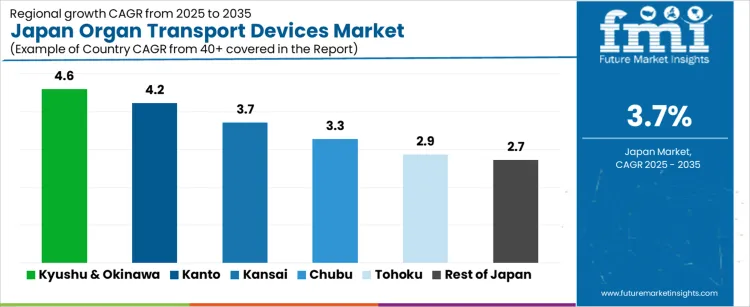
| Region | CAGR (2025-2035) |
|---|---|
| Kyushu & Okinawa | 4.6% |
| Kanto | 4.2% |
| Kansai | 3.7% |
| Chubu | 3.3% |
| Tohoku | 2.9% |
| Rest of Japan | 2.7% |
What is Driving the Growth of Organ Transport Devices in Kyushu & Okinawa?
Kyushu & Okinawa is projected to experience the highest growth in the Organ Transport Devices market, with a projected CAGR of 4.6%. The region’s increasing adoption of advanced medical technologies and the rising need for organ transplantation are key drivers of this growth. As the population in Kyushu & Okinawa continues to age, the demand for organ transplants, particularly kidney and liver transplants, is growing. The region's healthcare systems are focusing on improving the efficiency of organ transportation, reducing transportation times, and ensuring that organs are kept in optimal conditions. These factors are contributing to the increasing demand for specialized organ transport devices, making Kyushu & Okinawa the leading region for market growth.
Why is the Organ Transport Devices Market Expanding in Kanto?
In Kanto, the demand for organ transport devices is projected to grow at a CAGR of 4.2%. Kanto, home to Japan’s capital Tokyo, is a central hub for healthcare innovation, with advanced transplant and medical technologies being adopted across the region. The large population and high demand for organ transplants in Kanto are contributing to the increased need for reliable and efficient organ transport devices. The region’s well-developed healthcare infrastructure, including transplant centers and medical research institutions, is helping drive the adoption of more advanced technologies in organ preservation and transportation. As the need for organ donations continues to rise, healthcare providers in Kanto are increasingly investing in state-of-the-art organ transport devices to ensure better preservation and minimize the risk of organ rejection.
How is the Organ Transport Devices Market Growing in Kansai?
In Kansai, the Organ Transport Devices market is projected to grow at a CAGR of 3.7%. The region’s strong healthcare infrastructure, with major medical centers in cities like Osaka and Kyoto, is driving the adoption of advanced transplant technologies, including organ transport devices. Kansai’s growing focus on improving transplant success rates and reducing transportation times for organs is contributing to the increased demand for these devices. Additionally, the aging population in Kansai, which has a higher incidence of organ failure and transplantation needs, is further driving market growth. As the healthcare system in Kansai continues to embrace technological advancements to improve organ donation and transplantation processes, the market for organ transport devices is expected to expand steadily.
What is Contributing to the Growth of Organ Transport Devices in Chubu?
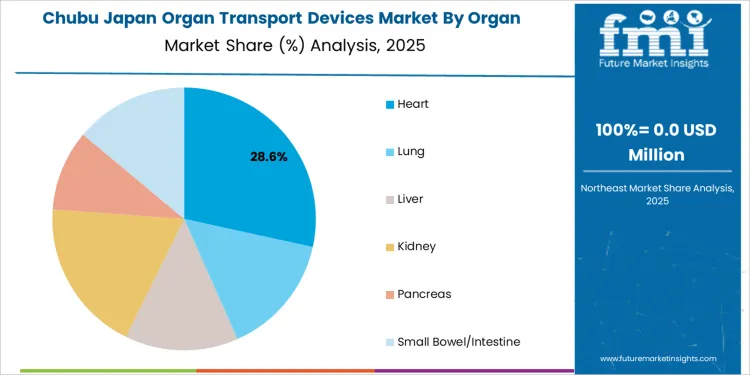
In Chubu, the Organ Transport Devices market is expected to grow at a CAGR of 3.3%. The region’s growing focus on improving transplant procedures and the need for more efficient organ transportation solutions are key factors contributing to this growth. With major cities like Nagoya, Chubu is home to several transplant centers that are increasingly adopting specialized devices to ensure the safe and timely delivery of organs for transplantation. The region's healthcare providers are focusing on improving the success rates of organ transplants and reducing the time between organ retrieval and transplantation, which is helping drive the demand for organ transport devices. As Chubu continues to advance its healthcare infrastructure and embrace innovative medical technologies, the market for organ transport devices is expected to continue its steady growth.
What is Influencing the Growth of Organ Transport Devices in Tohoku?
In Tohoku, the Organ Transport Devices market is projected to grow at a CAGR of 2.9%. Although the growth rate in Tohoku is more moderate compared to other regions, the demand for organ transport devices is still on the rise due to the increasing need for organ transplants. Tohoku's healthcare providers are becoming more focused on improving the efficiency and safety of organ transportation, particularly for patients in rural areas who may have limited access to specialized medical facilities. The region’s aging population and rising healthcare awareness are also contributing to the growing demand for organ transport devices. As healthcare access improves and medical infrastructure continues to develop, the market for organ transport devices in Tohoku is expected to grow gradually.
What is Contributing to the Growth of Organ Transport Devices in Rest of Japan?
In Rest of Japan, the Organ Transport Devices market is expected to grow at a more moderate rate of 2.7%. While the demand is smaller compared to major metropolitan areas, the increasing focus on improving organ transplantation processes in rural and less densely populated regions is contributing to steady market growth. Rest of Japan’s healthcare systems are gradually adopting advanced medical technologies, including organ transport devices, to improve transplant outcomes and reduce the risk of complications. As the region works to improve healthcare access and reduce disparities in medical treatments, the demand for organ transport devices is expected to increase steadily.
What is the Competitive Landscape for Demand for Organ Transport Devices in Japan?
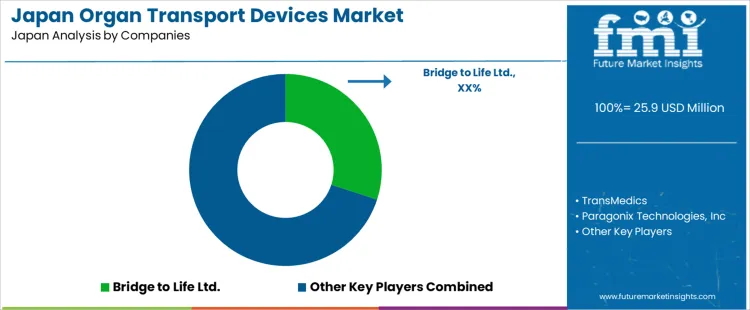
Demand for organ transport devices in Japan is rising alongside growing needs in organ transplantation and organ preservation. Although organ donation rates in Japan remain relatively low, demand for effective transport and preservation solutions is increasing-driven by increasing incidence of end-stage organ failure, rising numbers of transplant patients, and expanding efforts to improve transplant outcomes. As transplant centers and hospitals aim to minimize organ ischemia time and maximize graft viability, demand for temperature-controlled, secure, traceable transport devices-including portable perfusion systems and advanced organ containers-is strengthening. The overall Japanese organ preservation market is forecast to grow gradually over the next decade.
Several specialized medical-device firms compete to provide organ transport solutions adapted to Japanese regulations and clinical needs. Bridge to Life Ltd. leads among the identified suppliers, followed by TransMedics, Paragonix Technologies, Inc., XVIVO, and OrganOx. These companies offer a range of devices-from cold-storage solutions and preservation media to perfusion-based transport systems that better maintain organ viability during transfer. Competition among the suppliers centers on device reliability, proven preservation performance, ease of use under hospital logistics conditions, compatibility with multiple organ types (kidney, liver, lung, heart, etc.), and cost efficiency. Suppliers that combine advanced preservation technology, strong regulatory compliance, and efficient supply-chain support are best positioned to capture growth as demand for secure, high-quality organ transport rises in Japan.
Key Players of the Organ Transport Devices Industry in Japan
- Bridge to Life Ltd.
- TransMedics
- Paragonix Technologies, Inc
- XVIVO
- OrganOx
Scope of the Report
| Items | Details |
|---|---|
| Quantitative Units | USD Million |
| Regions Covered | Japan |
| Product | Devices; Disposables; Cold Storage Solutions; Perfusion Solutions; Slush Preparation Solutions |
| Organ | Heart; Lung; Liver; Kidney; Pancreas; Small Bowel / Intestine |
| End User | Hospitals; Transplant Centers; Organ Procurement Organizations (OPOs) |
| Key Companies Profiled | Bridge to Life Ltd.; TransMedics; Paragonix Technologies, Inc.; XVIVO; OrganOx |
| Additional Attributes | Dollar sales by product type reflect rising demand driven by increasing transplant procedures, enhanced organ preservation technology, and growing preference for advanced perfusion solutions. Hospitals and transplant centers are the primary end users of these devices, and the demand for transport and preservation solutions continues to grow as transplant volumes increase. |
Key Segments in the Demand for Organ Transport Devices in Japan
Product
- Devices
- Disposables
- Cold Storage Solutions
- Perfusion Solutions
- Slush Preparation Solutions
Organ
- Heart
- Lung
- Liver
- Kidney
- Pancreas
- Small Bowel/Intestine
End User
- Hospitals
- Transplant Centers
- Organ Procurement Organizations (OPOs)
Region
- Kyushu & Okinawa
- Kanto
- Kansai
- Chubu
- Tohoku
- Rest of Japan
Frequently Asked Questions
How big is the demand for organ transport devices in Japan in 2025?
The demand for organ transport devices in Japan is estimated to be valued at USD 25.9 million in 2025.
What will be the size of organ transport devices in Japan in 2035?
The market size for the organ transport devices in Japan is projected to reach USD 37.1 million by 2035.
How much will be the demand for organ transport devices in Japan growth between 2025 and 2035?
The demand for organ transport devices in Japan is expected to grow at a 3.7% CAGR between 2025 and 2035.
What are the key product types in the organ transport devices in Japan?
The key product types in organ transport devices in Japan are devices, disposables, cold storage solutions, perfusion solutions and slush preparation solutions.
Which organ segment is expected to contribute significant share in the organ transport devices in Japan in 2025?
In terms of organ, heart segment is expected to command 28.0% share in the organ transport devices in Japan in 2025.
Preview the report firsthand - request a free sample
Get SampleGet the brochure for pricing and purchase details.
Get PDFTable of Content
- Executive Summary
- Japan Market Outlook
- Demand-side Trends
- Supply-side Trends
- Technology Roadmap Analysis
- Analysis and Recommendations
- Market Overview
- Market Coverage / Taxonomy
- Market Definition / Scope / Limitations
- Market Background
- Market Dynamics
- Drivers
- Restraints
- Opportunity
- Trends
- Scenario Forecast
- Demand in Optimistic Scenario
- Demand in Likely Scenario
- Demand in Conservative Scenario
- Opportunity Map Analysis
- Product Life Cycle Analysis
- Supply Chain Analysis
- Investment Feasibility Matrix
- Value Chain Analysis
- PESTLE and Porter’s Analysis
- Regulatory Landscape
- Regional Parent Market Outlook
- Production and Consumption Statistics
- Import and Export Statistics
- Market Dynamics
- Japan Market Analysis 2020 to 2024 and Forecast, 2025 to 2035
- Historical Market Size Value (USD Million) Analysis, 2020 to 2024
- Current and Future Market Size Value (USD Million) Projections, 2025 to 2035
- Y-o-Y Growth Trend Analysis
- Absolute $ Opportunity Analysis
- Japan Market Pricing Analysis 2020 to 2024 and Forecast 2025 to 2035
- Japan Market Analysis 2020 to 2024 and Forecast 2025 to 2035, By Product
- Introduction / Key Findings
- Historical Market Size Value (USD Million) Analysis By Product , 2020 to 2024
- Current and Future Market Size Value (USD Million) Analysis and Forecast By Product , 2025 to 2035
- Devices
- Disposables
- Cold Storage Solutions
- Perfusion Solutions
- Slush Preparation Solutions
- Y-o-Y Growth Trend Analysis By Product , 2020 to 2024
- Absolute $ Opportunity Analysis By Product , 2025 to 2035
- Japan Market Analysis 2020 to 2024 and Forecast 2025 to 2035, By Organ
- Introduction / Key Findings
- Historical Market Size Value (USD Million) Analysis By Organ, 2020 to 2024
- Current and Future Market Size Value (USD Million) Analysis and Forecast By Organ, 2025 to 2035
- Heart
- Lung
- Liver
- Kidney
- Pancreas
- Small Bowel/Intestine
- Y-o-Y Growth Trend Analysis By Organ, 2020 to 2024
- Absolute $ Opportunity Analysis By Organ, 2025 to 2035
- Japan Market Analysis 2020 to 2024 and Forecast 2025 to 2035, By End User
- Introduction / Key Findings
- Historical Market Size Value (USD Million) Analysis By End User, 2020 to 2024
- Current and Future Market Size Value (USD Million) Analysis and Forecast By End User, 2025 to 2035
- Hospitals
- Transplant Centers
- Organ Procurement Organizations (OPOs)
- Y-o-Y Growth Trend Analysis By End User, 2020 to 2024
- Absolute $ Opportunity Analysis By End User, 2025 to 2035
- Market Structure Analysis
- Competition Dashboard
- Competition Benchmarking
- Market Share Analysis of Top Players
- By Regional
- By Product
- By Organ
- By End User
- Competition Analysis
- Competition Deep Dive
- Bridge to Life Ltd.
- Overview
- Product Portfolio
- Profitability by Market Segments (Product/Age /Sales Channel/Region)
- Sales Footprint
- Strategy Overview
- Marketing Strategy
- Product Strategy
- Channel Strategy
- TransMedics
- Paragonix Technologies, Inc
- XVIVO
- OrganOx
- Bridge to Life Ltd.
- Competition Deep Dive
- Assumptions & Acronyms Used
- Research Methodology


