

- Industry Size (2026)
- USD 513.7 Mn
- Forecast (2036)
- USD 1171.2 Mn
- CAGR (2026 to 2036)
- 8.6%
Demand for Smart Home Security Camera in Japan 2026 to 2036
Demand for smart home security camera in Japan is valued at USD 513.7 million in 2026 and is forecasted to reach USD 1,171.2 million by 2036, reflecting a CAGR of 8.6%. Demand expands as households adopt connected home technologies focused on safety, monitoring, and remote access control. Urban living density, rising single-occupant households, and increased parcel delivery volumes support steady installation across residential properties.
Smart video doorbell cameras lead camera-type usage because real-time visitor alerts, motion detection, and two-way communication enhance entry-point security. Integration with smartphones, cloud-based video storage, and home automation platforms improves usability and daily monitoring. Advancements in image clarity, night vision, and AI-based detection strengthen reliability in varied residential environments.
Kyushu & Okinawa, Kanto, Kansai, Chubu, and Tohoku represent key growth regions driven by urbanization, housing renovation activity, and consumer electronics penetration. Panasonic Corporation, Sony Corporation, Toshiba Lifestyle Solutions, NEC Platforms, and Canon anchor competitive activity through hardware engineering expertise, brand trust, and ecosystem compatibility aligned with Japan’s technology standards and residential security expectations.
Quick Stats for Demand for Smart Home Security Camera in Japan
- Japan Smart Home Security Camera Sales Value (2026): USD 513.7 million
- Japan Smart Home Security Camera Forecast Value (2036): USD 1,171.2 million
- Japan Smart Home Security Camera Forecast CAGR (2026 to 2036): 8.6%
- Leading Camera Type in Japan: Smart Video Doorbell Camera
- Key Growth Regions in Japan: Kyushu & Okinawa, Kanto, Kansai, Chubu, Tohoku
- Top Players in Japan: Panasonic Corporation, Sony Corporation, Toshiba Lifestyle Solutions, NEC Platforms, Canon
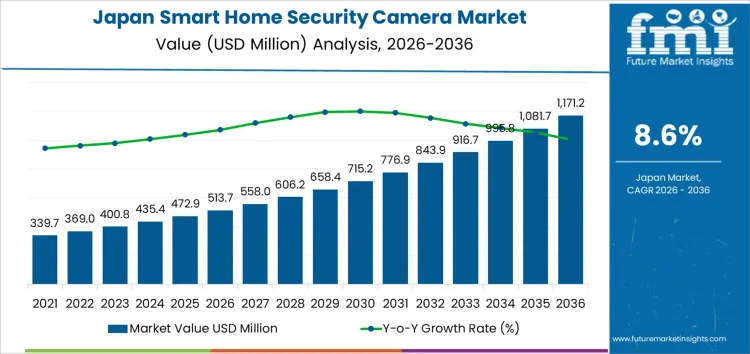
Japan Smart Home Security Camera Key Takeaways
| Metric | Value |
|---|---|
| Japan Smart Home Security Camera Sales Value (2026) | USD 513.7 million |
| Japan Smart Home Security Camera Forecast Value (2036) | USD 1,171.2 million |
| Japan Smart Home Security Camera Forecast CAGR (2026 to 2036) | 8.6% |
Why is the Demand for Smart Home Security Camera in Japan Growing?
Demand for smart home security cameras in Japan grows due to demographic shifts, urban living patterns, and technology adoption across residential settings. Aging population increases interest in remote monitoring that supports independent living and caregiver oversight. Urban households value visual security tools that address concerns related to burglary, package theft, and unattended properties during extended work hours. High penetration of broadband and mobile connectivity supports reliable video streaming and cloud based storage usage. Apartment complexes and single family homes integrate cameras with existing smart home ecosystems that include lighting, access control, and intercom systems.
Natural disaster preparedness influences adoption, as cameras assist in property assessment during earthquakes and typhoons. Compact housing layouts favor discreet devices designed for indoor installation and limited exterior space. Retail availability through electronics stores and online platforms increases consumer access to varied price points and feature sets. Privacy focused design and data protection compliance align with domestic regulatory expectations, supporting consumer confidence. Integration of AI based motion detection and facial recognition improves usability while reducing false alerts. Growth in dual income households sustains demand for monitoring solutions that provide real time visibility during daily absences.
How Are the Segments Classified in the Demand for Smart Home Security Cameras in Japan?
Demand for smart home security cameras in Japan is shaped by urban housing density, property monitoring needs, and preference for compact connected devices. Buyers evaluate installation simplicity, video clarity, mobile notification reliability, and compatibility with domestic smart home ecosystems. Adoption patterns reflect use across apartments and detached homes, supported by neighborhood security awareness and retail-led purchasing behavior aligned with Japan’s consumer electronics distribution structure.
By Camera Type, Do Smart Video Doorbell Cameras Account for the Largest Share of Demand in Japan?
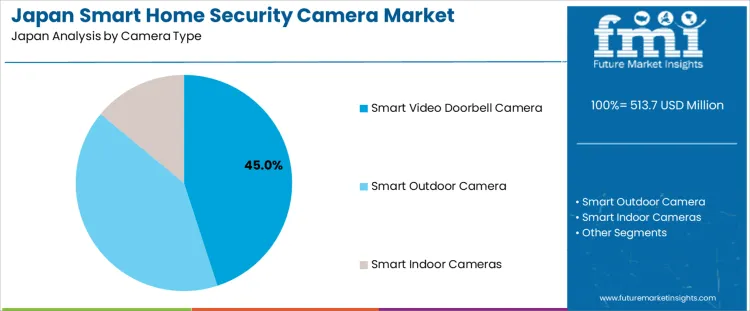
Smart video doorbell cameras hold 45.0%, making them the leading camera-type segment in Japan. These devices support entry-point monitoring, visitor identification, and parcel oversight within compact residential layouts. Integration with intercom-style access systems aligns with common Japanese housing designs. Smart outdoor cameras hold 41.0%, supporting perimeter monitoring for detached homes and low-rise residential properties. These cameras emphasize motion detection accuracy and weather resistance. Smart indoor cameras hold 14.0%, used for interior monitoring, elderly care observation, and pet supervision. Camera-type distribution reflects priority on entrance surveillance and external visibility within Japan’s residential security practices.
Key Points:
- Video doorbells lead due to entry monitoring relevance.
- Outdoor cameras support perimeter-focused security needs.
- Indoor cameras serve supplementary interior monitoring roles.
By Sales Channel, Do Physical Stores and Offline Channels Represent the Largest Share of Demand in Japan?
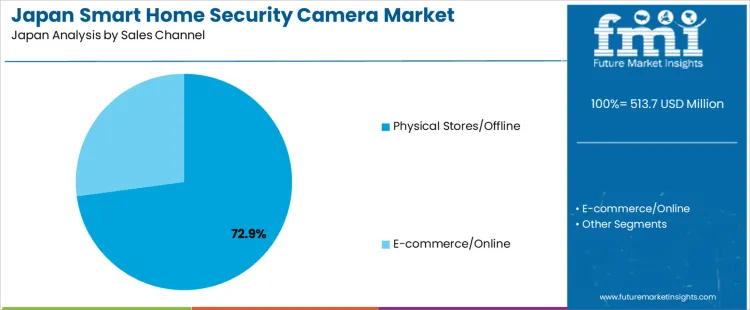
Physical stores and offline channels hold 72.9%, making them the leading sales-channel segment in Japan. Consumers prefer in-store evaluation of device size, features, and compatibility with home layouts. Retail staff support installation guidance and product comparison within electronics specialty stores. E-commerce and online channels hold 27.1%, supporting repeat purchases and price-driven selection. Online platforms also serve urban consumers seeking convenience and home delivery. Sales-channel distribution reflects strong role of brick-and-mortar electronics retailers in consumer decision-making and post-purchase support across Japan.
Key Points:
- Offline channels dominate due to hands-on evaluation preference.
- Retail guidance supports installation and compatibility decisions.
- Online channels serve convenience and replacement purchases.
What are the Key Dynamics in the Smart Home Security Camera Industry in Japan?
Demand increases as households in Japan adopt connected security solutions to address urban living patterns, aging demographics, and property monitoring needs. Smart home security cameras support indoor surveillance, entry monitoring, and remote viewing through mobile platforms. Adoption aligns with high broadband penetration, compact housing layouts, and preference for unobtrusive devices. Sales concentrate in metropolitan areas, apartment complexes, and single-person households across major prefectures.
How do urban living conditions and household security preferences drive demand in Japan?
Japan’s dense urban environments and high share of apartment living encourage use of compact, indoor-focused security cameras. Consumers value monitoring solutions for entrances, delivery areas, and elderly family members living alone. Rising parcel deliveries increase interest in entry-point surveillance. High internet reliability supports stable performance of cloud-connected devices. Japanese consumers prefer discreet designs with quiet operation and minimal installation requirements. Integration with smartphones rather than complex home automation systems drives adoption. Electronics retailers and e-commerce platforms play a central role in distribution. Domestic brands emphasize image clarity, reliability, and data protection, supporting steady demand in urban households.
How do privacy norms, regulatory expectations, and cost considerations influence demand stability?
Strong social norms around privacy influence cautious camera placement and feature usage. Consumers avoid outdoor or neighbor-facing surveillance due to social sensitivity. Data protection expectations require transparent data storage and access controls. Subscription-based cloud services face resistance among price-sensitive users. Competition from traditional security services and intercom systems limits replacement demand. Installation constraints in rental housing restrict hardware modification. Regulatory guidance on recording and data retention shapes product configuration. Demand remains stable for indoor and personal-use cameras, while expansion is moderated by privacy awareness, cost sensitivity, and conservative adoption behavior within Japan’s residential technology landscape.
How Is Demand for Smart Home Security Camera in Japan Evolving by Region?
Demand for smart home security cameras in Japan is rising due to urban living patterns, aging households, and integration of connected home ecosystems. Kyushu and Okinawa lead with a 10.8% CAGR, supported by detached housing security needs and growing retail penetration. Kanto follows at 9.9%, driven by apartment security requirements, convenience store distribution, and subscription-based monitoring. Kansai records an 8.7% CAGR, shaped by balanced adoption across households and small properties. Chubu posts 7.7%, reflecting steady uptake tied to value-focused purchasing. Tohoku shows 6.7%, supported by home monitoring for elderly residents. Rest of Japan records 6.4%, reflecting gradual adoption. Regional variation reflects housing structure, digital familiarity, and security preferences across Japan.
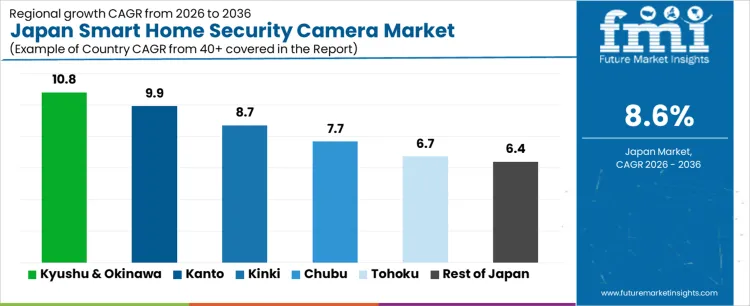
| Region | CAGR (2026 to 2036) |
|---|---|
| Kyushu & Okinawa | 10.8% |
| Kanto | 9.9% |
| Kansai | 8.7% |
| Chubu | 7.7% |
| Tohoku | 6.7% |
| Rest of Japan | 6.4% |
How is Kyushu and Okinawa driving demand for Smart Home Security Cameras in Japan?
Kyushu and Okinawa drive demand through detached housing prevalence, property monitoring needs, and growing awareness of residential security solutions. Region’s CAGR of 10.8% reflects increased installation of outdoor cameras, doorbell cameras, and perimeter monitoring systems. Climatic exposure encourages use of weather-resistant devices capable of continuous operation. Retail chains and electronics stores support wide product availability. Consumers prioritize ease of installation, mobile app integration, and basic alert functionality. Demand favors standalone cameras over fully integrated systems. Growth remains household-led, supported by rising adoption of connected devices and expanding broadband access.
- Detached housing security requirements
- Outdoor and perimeter camera adoption
- Preference for simple and standalone devices
- Strong electronics retail distribution
How is Kanto driving demand for Smart Home Security Cameras in Japan?
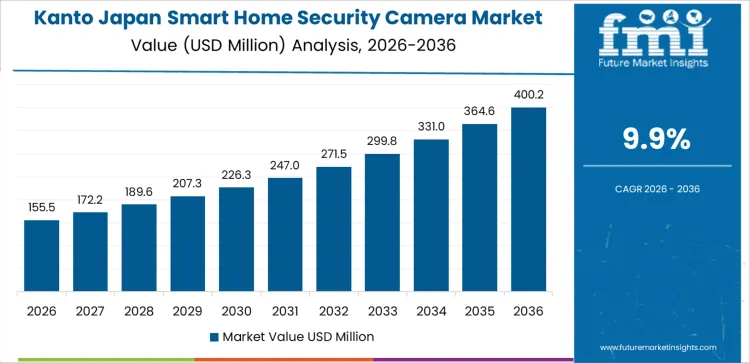
Kanto demand is shaped by dense urban housing, apartment living, and strong digital ecosystem penetration. Region’s CAGR of 9.9% reflects high usage of indoor cameras, doorbell cameras, and cloud-connected monitoring solutions. Property managers and renters adopt cameras for entry monitoring and package security. Convenience stores and online platforms drive frequent purchasing and upgrades. Consumers value compact design, data privacy, and subscription-based video storage. Demand aligns with integration into broader smart home platforms. Growth remains technology-driven and urban-centric.
- Apartment and rental housing security usage
- Indoor and doorbell camera demand
- Cloud storage and subscription services
- Compact and privacy-focused device preference
How is Kansai driving demand for Smart Home Security Cameras in Japan?
Kansai demand reflects balanced adoption across urban and suburban households. Region’s CAGR of 8.7% is supported by use of smart cameras for general home monitoring and family safety. Consumers favor reliable brands, straightforward features, and moderate pricing. Retailers emphasize bundled offerings combining cameras with basic smart home devices. Food delivery and parcel theft concerns support doorbell camera adoption. Demand growth remains steady, aligned with gradual digital adoption rather than rapid technology shifts.
- Household-focused security monitoring
- Preference for reliable and familiar brands
- Bundled smart home device offerings
- Steady and incremental adoption patterns
How is Chubu driving demand for Smart Home Security Cameras in Japan?
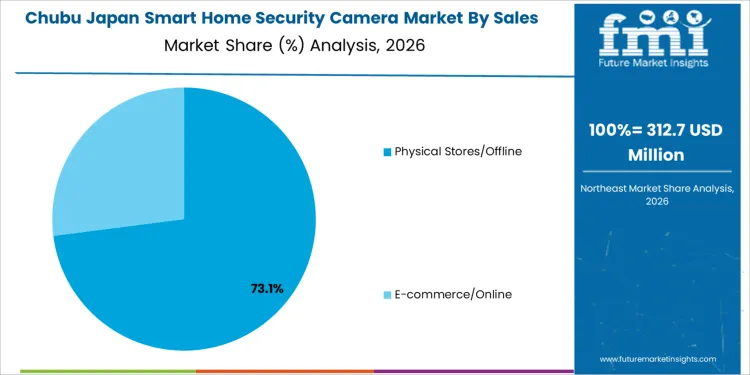
Chubu demand is anchored in value-oriented purchasing and stable household consumption. Region’s CAGR of 7.7% reflects growing use of smart cameras as supplementary security tools rather than comprehensive systems. Consumers prioritize affordability, durability, and ease of use. Big-box electronics retailers and regional chains support steady availability. Adoption remains conservative, with limited reliance on advanced analytics features. Growth aligns with replacement cycles and gradual familiarity with connected devices.
- Value-driven consumer purchasing behavior
- Supplementary home security usage
- Strong regional retail presence
- Gradual feature adoption
How is Tohoku driving demand for Smart Home Security Cameras in Japan?
Tohoku demand is influenced by aging populations, remote property monitoring needs, and regional housing patterns. Region’s CAGR of 6.7% reflects use of cameras for elderly household monitoring and home safety assurance. Consumers value simple operation, reliability, and clear alerts. Shelf-stable hardware and offline functionality support adoption. Demand growth remains cautious and necessity-driven, supported by family monitoring requirements rather than lifestyle integration.
- Elderly household and safety monitoring
- Simple and reliable camera functionality
- Remote property oversight needs
- Necessity-driven adoption behavior
How is Rest of Japan driving demand for Smart Home Security Cameras in Japan?
Rest of Japan shows steady demand driven by gradual digital adoption and routine home security upgrades. Region’s CAGR of 6.4% reflects use of basic smart cameras for indoor monitoring and entry surveillance. Buyers prioritize cost efficiency, availability, and trusted brands. Adoption remains maintenance-oriented, with limited experimentation in advanced features. Growth aligns with steady improvement in household connectivity rather than rapid smart home expansion.
- Basic indoor monitoring applications
- Cost-sensitive purchasing priorities
- Trusted brand reliance
- Gradual and stable adoption patterns
What is the competitive landscape of demand for smart home security cameras in Japan?
Demand for smart home security cameras in Japan is driven by rising home automation adoption, aging household demographics seeking remote monitoring, and increased interest in connected safety solutions. Usage spans indoor surveillance, outdoor perimeter monitoring, doorbell cameras, and integration with smart home hubs. Buyers evaluate video resolution, low-light performance, motion detection accuracy, cybersecurity safeguards, and compatibility with Japanese language interfaces and local smart home ecosystems. Procurement teams prioritize suppliers with strong domestic support, compliance with Japan’s data protection standards, and integration with major home connectivity platforms. Trend in the Japan market reflects preference for easy installation, localized user experiences, and subscription-based cloud storage tailored to Japanese users.
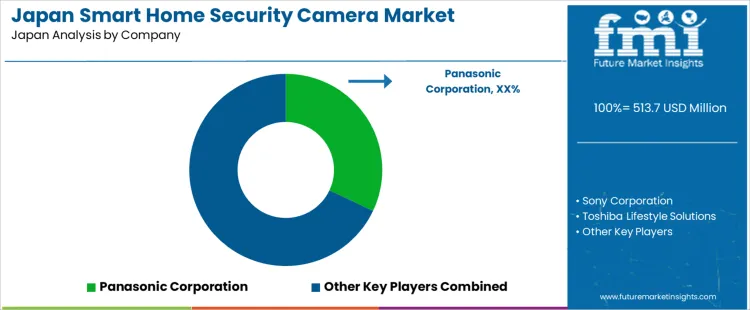
Panasonic Corporation maintains a leading position through domestically engineered smart security cameras aligned with Japan’s consumer electronics expectations and strong retail distribution. Sony Corporation participates with high-resolution imaging solutions integrated into smart home security offerings marketed within Japan. Toshiba Lifestyle Solutions operates with camera systems integrated into broader smart home portfolios supported by domestic technical service. NEC Platforms contributes security cameras and analytics solutions used in residential and small business settings requiring reliable performance and local language support. Canon Japan supports demand through IP camera systems and networked security solutions adapted for home adoption. Competitive positioning in Japan reflects localized feature sets, service reliability, regulatory compliance, and alignment with established consumer electronics ecosystems.
Key Players in Japan Smart Home Security Camera Demand
- Panasonic Corporation
- Sony Corporation
- Toshiba Lifestyle Solutions
- NEC Platforms
- Canon
Scope of the Report
| Items | Values |
|---|---|
| Quantitative Units | USD million |
| Camera Type | Smart Video Doorbell Camera; Smart Outdoor Camera; Smart Indoor Cameras |
| Sales Channel | Physical Stores/Offline; E-commerce/Online |
| Regions Covered | Kyushu & Okinawa; Kanto; Kansai; Chubu; Tohoku; Rest of Japan |
| Key Companies Profiled | Panasonic Corporation; Sony Corporation; Toshiba Lifestyle Solutions; NEC Platforms; Canon |
| Additional Attributes | Dollar sales by camera type and sales channel; regional CAGR variations across Kanto and Kansai; adoption trends for AI-enabled monitoring and cloud storage; increasing preference for online channels; demand growth supported by urban housing security needs and integration with smart home ecosystems. |
Japan Smart Home Security Camera Demand by Segments
By Camera Type:
- Smart Video Doorbell Camera
- Smart Outdoor Camera
- Smart Indoor Cameras
By Sales Channel:
- Physical Stores/Offline
- E-commerce/Online
By Region:
- Kyushu & Okinawa
- Kanto
- Kansai
- Chubu
- Tohoku
- Rest of Japan
Frequently Asked Questions
How big is the demand for smart home security camera in Japan in 2026?
The demand for smart home security camera in Japan is estimated to be valued at USD 513.7 million in 2026.
What will be the size of smart home security camera in Japan in 2036?
The market size for the smart home security camera in Japan is projected to reach USD 1,171.2 million by 2036.
How much will be the demand for smart home security camera in Japan growth between 2026 and 2036?
The demand for smart home security camera in Japan is expected to grow at a 8.6% CAGR between 2026 and 2036.
What are the key product types in the smart home security camera in Japan?
The key product types in smart home security camera in Japan are smart video doorbell camera, smart outdoor camera and smart indoor cameras.
Which sales channel segment is expected to contribute significant share in the smart home security camera in Japan in 2026?
In terms of sales channel, physical stores/offline segment is expected to command 72.9% share in the smart home security camera in Japan in 2026.
Preview the report firsthand - request a free sample
Get SampleGet the brochure for pricing and purchase details.
Get PDFTable of Content
- Executive Summary
- Japan Market Outlook
- Demand-side Trends
- Supply-side Trends
- Technology Roadmap Analysis
- Analysis and Recommendations
- Market Overview
- Market Coverage / Taxonomy
- Market Definition / Scope / Limitations
- Market Background
- Market Dynamics
- Drivers
- Restraints
- Opportunity
- Trends
- Scenario Forecast
- Demand in Optimistic Scenario
- Demand in Likely Scenario
- Demand in Conservative Scenario
- Opportunity Map Analysis
- Product Life Cycle Analysis
- Supply Chain Analysis
- Investment Feasibility Matrix
- Value Chain Analysis
- PESTLE and Porter’s Analysis
- Regulatory Landscape
- Regional Parent Market Outlook
- Production and Consumption Statistics
- Import and Export Statistics
- Market Dynamics
- Japan Market Analysis 2021 to 2025 and Forecast, 2026 to 2036
- Historical Market Size Value (USD Million) Analysis, 2021 to 2025
- Current and Future Market Size Value (USD Million) Projections, 2026 to 2036
- Y-o-Y Growth Trend Analysis
- Absolute $ Opportunity Analysis
- Japan Market Pricing Analysis 2021 to 2025 and Forecast 2026 to 2036
- Japan Market Analysis 2021 to 2025 and Forecast 2026 to 2036, By Camera Type
- Introduction / Key Findings
- Historical Market Size Value (USD Million) Analysis By Camera Type , 2021 to 2025
- Current and Future Market Size Value (USD Million) Analysis and Forecast By Camera Type , 2026 to 2036
- Smart Video Doorbell Camera
- Smart Outdoor Camera
- Smart Indoor Cameras
- Smart Video Doorbell Camera
- Y-o-Y Growth Trend Analysis By Camera Type , 2021 to 2025
- Absolute $ Opportunity Analysis By Camera Type , 2026 to 2036
- Japan Market Analysis 2021 to 2025 and Forecast 2026 to 2036, By Sales Channel
- Introduction / Key Findings
- Historical Market Size Value (USD Million) Analysis By Sales Channel, 2021 to 2025
- Current and Future Market Size Value (USD Million) Analysis and Forecast By Sales Channel, 2026 to 2036
- Physical Stores/Offline
- E-commerce/Online
- Physical Stores/Offline
- Y-o-Y Growth Trend Analysis By Sales Channel, 2021 to 2025
- Absolute $ Opportunity Analysis By Sales Channel, 2026 to 2036
- Market Structure Analysis
- Competition Dashboard
- Competition Benchmarking
- Market Share Analysis of Top Players
- By Regional
- By Camera Type
- By Sales Channel
- Competition Analysis
- Competition Deep Dive
- Panasonic Corporation
- Overview
- Product Portfolio
- Profitability by Market Segments (Product/Age /Sales Channel/Region)
- Sales Footprint
- Strategy Overview
- Marketing Strategy
- Product Strategy
- Channel Strategy
- Sony Corporation
- Toshiba Lifestyle Solutions
- NEC Platforms
- Canon
- Panasonic Corporation
- Competition Deep Dive
- Assumptions & Acronyms Used
- Research Methodology


