

- Industry Size (2025)
- USD 95.9 Mn
- Forecast (2035)
- USD 148.9 Mn
- CAGR (2025 to 2035)
- 4.5%
Demand for Solar Attic Fans in Japan Forecast and Outlook 2025 to 2035
The demand for solar attic fans in Japan is expected to grow steadily from USD 95.9 million in 2025 to USD 148.9 million in 2035, reflecting a 4.5% CAGR. The growth pattern demonstrates a gradual acceleration in the early years of the forecast period, followed by a slight deceleration as the industry matures.
Initially, between 2025 and 2029, the industry sees consistent but moderate growth, with yearly increments ranging from USD 4-6 million. This gradual increase suggests that solar attic fans are gaining traction in Japan due to rising awareness of energy-efficient home solutions and the growing adoption of solar technologies. Demand grows from USD 95.9 million in 2025 to USD 100.2 million in 2026, indicating a slight acceleration, driven by increased energy-efficiency initiatives and homeowners' desire for cost-effective cooling solutions.
Quick Stats of the Demand for Solar Attic Fans in Japan
- Demand for Solar Attic Fans in Japan Value (2025): USD 95.9 million
- Demand for Solar Attic Fans in Japan Forecast Value (2035): USD 148.9 million
- Demand for Solar Attic Fans in Japan Forecast CAGR (2025-2035): 4.5%
- Demand for Solar Attic Fans in Japan Leading Product Type: Roof Mounted Solar Attic Fans
- Demand for Solar Attic Fans in Japan Key Growth Regions: Kyushu & Okinawa, Kanto, Kansai, Chubu, Tohoku, Rest of Japan
- Demand for Solar Attic Fans in Japan Top Players: Crystalline Inc., iliving, Magen eco-energy, Natural Light, Quietcool
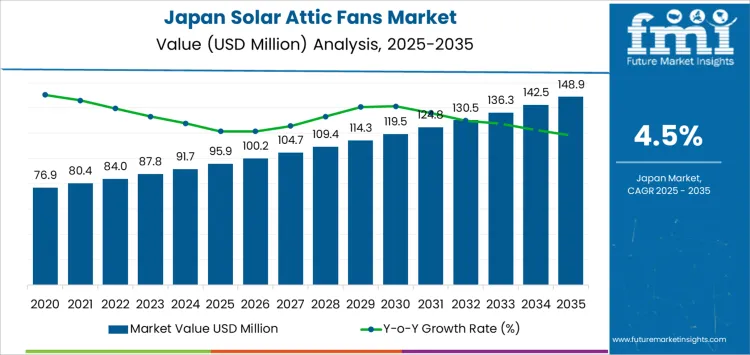
From 2029 onwards, the growth pattern begins to decelerate. In 2030, demand grows by USD 5.5 million to USD 104.7 million, reflecting a slower growth rate than in earlier years. This deceleration is indicative of the industry nearing maturity, as the adoption of solar attic fans is becoming more widespread and most potential customers in Japan have already invested in these energy-efficient solutions. The following years, such as 2031 to 2035, continue this trend, with demand growth tapering off to USD 4.6-5 million annually. While the demand continues to rise, the pace of growth slows, reflecting industry saturation and the established nature of solar attic fans as a viable alternative for energy-efficient ventilation.
Demand for Solar Attic Fans in Japan Key Takeaways
| Metric | Value |
|---|---|
| Demand for Solar Attic Fans in Japan Value (2025) | USD 95.9 million |
| Demand for Solar Attic Fans in Japan Forecast Value (2035) | USD 148.9 million |
| Demand for Solar Attic Fans in Japan Forecast CAGR (2025-2035) | 4.5% |
Why is the Demand for Solar Attic Fans in Japan Growing?
The demand for solar attic fans in Japan is growing as the country embraces more sustainable, energy-efficient solutions for home cooling and ventilation. Solar attic fans are powered by solar energy and are used to ventilate attics, helping to reduce heat buildup and moisture in homes. This not only improves indoor air quality but also lowers the need for air conditioning, making them an attractive option for homeowners looking to reduce energy consumption and costs. As Japan continues to focus on energy efficiency and reducing carbon footprints, solar attic fans have become a viable solution for eco-conscious consumers.
A major driver behind the growth of solar attic fans is Japan’s commitment to renewable energy and sustainable living. As part of its environmental goals, Japan is encouraging the adoption of clean energy solutions across various sectors. Solar attic fans, which harness solar power to provide natural ventilation, align perfectly with this commitment. They help reduce reliance on traditional energy sources, such as electricity, and lower overall energy costs by preventing excess heat accumulation in homes, especially during the summer months.
The increasing awareness of the benefits of proper attic ventilation, including extended roof life and reduced cooling costs, is contributing to the rising demand for solar attic fans. With Japan’s aging housing stock and a growing interest in home improvement and energy efficiency, the demand for solar attic fans is expected to continue growing through 2035. As technology improves and solar energy becomes more accessible, the adoption of solar attic fans is set to expand steadily in the coming years.
What is the Segment-Wise Analysis of Demand for Solar Attic Fans in Japan?
Demand for solar attic fans in Japan is segmented by product type, application, materials, and capacity. By product type, demand is divided into roof-mounted solar attic fans, gable-mounted solar attic fans, and hybrid solar attic fans. The demand is also segmented by application, including commercial, residential, and industrial uses. Materials used in these fans include aluminum, steel, and plastic, with aluminum being the most common due to its durability and lightweight properties. In terms of capacity, the fans are categorized into large capacity fans (above 50 watts), medium capacity fans (20-50 watts), and small capacity fans (up to 20 watts).
How Do Roof Mounted Solar Attic Fans Lead the Demand for Solar Attic Fans in Japan?
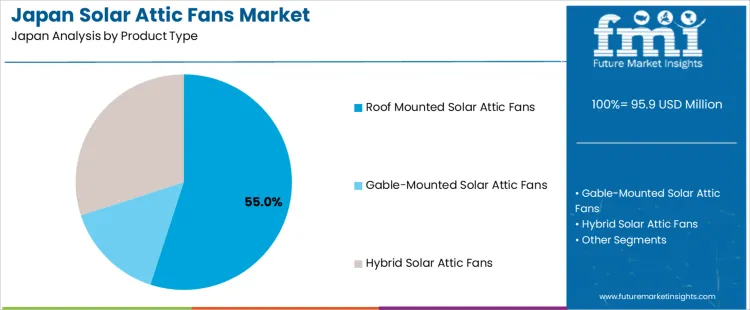
Roof-mounted solar attic fans account for 55% of the demand for solar attic fans in Japan, driven by their efficiency, ease of installation, and effective performance in reducing heat buildup in attics. These fans are installed directly on the roof, where they can harness solar energy throughout the day to cool the attic space, preventing heat accumulation and maintaining a comfortable indoor temperature. Roof-mounted systems are particularly popular in both residential and commercial buildings due to their ability to provide optimal ventilation without taking up internal space.
Their self-sustaining nature, using solar power for operation, aligns with the growing demand for energy-efficient and eco-friendly solutions. As Japan continues to prioritize sustainable building practices and reduce energy consumption, roof-mounted solar attic fans are expected to maintain their dominant position in the industry, offering a practical and cost-effective solution for improving attic ventilation.
Why Does Commercial Application Lead the Demand for Solar Attic Fans in Japan?
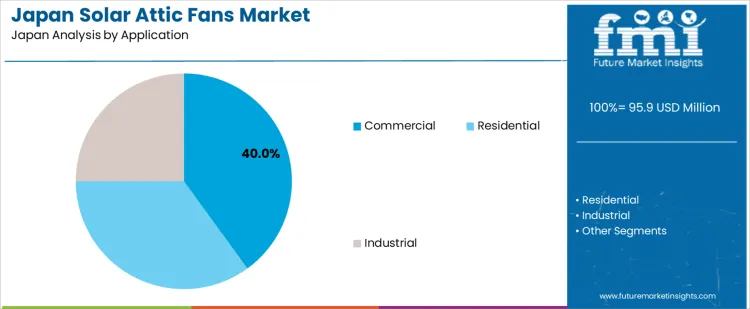
Commercial applications account for 40% of the demand for solar attic fans in Japan, driven by the need for energy-efficient cooling solutions in large buildings and commercial properties. Attic spaces in commercial buildings can become overheated, leading to increased energy consumption for air conditioning systems. Solar attic fans are an effective solution to this problem, as they help regulate the temperature in attic spaces, reducing the strain on HVAC systems and lowering overall energy costs.
As businesses and industries in Japan become more focused on sustainability and energy efficiency, the demand for solar attic fans has increased in commercial settings. The ability to reduce reliance on conventional power sources and contribute to green building initiatives makes solar attic fans an attractive option for commercial property owners. With the growing focus on eco-friendly solutions in commercial buildings, the demand for solar attic fans in this sector is expected to continue to rise.
What are the Key Trends, Drivers, and Restraints in Demand for Solar Attic Fans in Japan?
Solar attic fans help manage heat build-up, humidity, and air circulation, providing valuable benefits in hot and humid regions, which are common in Japan during the summer months. However, adoption can be limited by structural constraints such as insufficient roof space, shading, or unfavorable building designs that hinder solar panel installation. The initial cost of installation, which can be higher than traditional fans, may also deter homeowners or small businesses from making the switch, especially in cost-sensitive environments.
Why is Demand for Solar Attic Fans Growing in Japan?
Rising electricity costs and growing environmental awareness among homeowners and businesses have made renewable-powered solutions more appealing. Solar attic fans provide a sustainable way to reduce energy consumption, lower cooling costs, and improve home ventilation, which is especially valuable during the hot and humid summer months. Japan’s push toward renewable energy and rooftop solar panel installation, combined with government incentives and support for energy-efficient technologies, is making solar attic fans more viable. As solar energy adoption increases across the country, solar attic fans become more accessible and integrated into energy-saving home improvement projects, helping homeowners reduce their carbon footprint and energy bills.
How are Technological & Industry Innovations Driving Solar Attic Fan Demand in Japan?
Advances in solar technology, fan efficiency, and system integration are helping to drive the demand for solar attic fans in Japan. Newer solar panels are more efficient at capturing sunlight, even under lower light conditions, while modern ventilation fans are optimized for better airflow and energy efficiency. This ensures that the system operates reliably and effectively, even in challenging weather conditions. Hybrid systems that combine solar power with battery storage or grid power help mitigate the intermittent nature of solar energy, ensuring consistent ventilation.
As green-building standards become more common in Japan, incorporating solar-powered solutions into residential and commercial projects has become more attractive. These innovations, combined with a growing focus on sustainability, make solar attic fans a more appealing solution for energy-efficient homes and buildings.
What are the Key Challenges and Risks That Could Limit Solar Attic Fan Demand in Japan?
The primary barrier is the high initial cost of installing solar panels and the necessary equipment, which may deter cost-conscious homeowners and small businesses. Many urban homes or apartment buildings may not have the suitable roof space or orientation for effective solar panel installation, limiting the feasibility of solar attic fan systems. The intermittent nature of solar energy, particularly during cloudy or rainy days, may reduce the efficiency and reliability of solar-powered ventilation in some regions. Furthermore, the widespread use of traditional ventilation systems or air conditioning in many Japanese homes can make transitioning to solar-powered solutions more challenging, requiring education and demonstration of long-term energy savings for greater acceptance.
What is the Regional Demand Outlook for Solar Attic Fans in Japan?
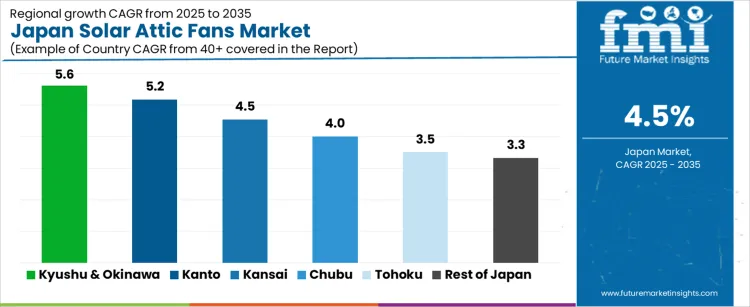
| Region | CAGR (%) |
|---|---|
| Kyushu & Okinawa | 5.6% |
| Kanto | 5.2% |
| Kansai | 4.5% |
| Chubu | 4.0% |
| Tohoku | 3.5% |
| Rest of Japan | 3.3% |
Demand for solar attic fans in Japan is growing steadily across all regions, with Kyushu & Okinawa leading at a 5.6% CAGR, driven by the region’s increasing adoption of energy-efficient technologies and a focus on sustainable living. Kanto follows with a 5.2% CAGR, supported by the region’s large urban population and high awareness of the benefits of solar-powered solutions for reducing energy consumption. Kansai shows a 4.5% CAGR, fueled by the region’s strong interest in energy-efficient building technologies and environmentally friendly products. Chubu experiences a 4.0% CAGR, with steady demand driven by the region’s industrial and residential sectors. Tohoku and the Rest of Japan see moderate growth at 3.5% and 3.3%, respectively.
How is Demand for Solar Attic Fans Growing in Kyushu & Okinawa?
Kyushu & Okinawa leads the demand for solar attic fans, growing at a 5.6% CAGR. The region’s growing focus on renewable energy and energy-efficient technologies is driving the adoption of solar attic fans. Okinawa’s hot climate and high electricity consumption make cooling solutions particularly important, and solar attic fans provide an environmentally friendly way to reduce indoor temperatures while lowering electricity bills. Kyushu’s residential and commercial sectors are increasingly adopting solar-powered systems for energy efficiency and cost savings.
As awareness of the benefits of solar attic fans, such as reducing heat buildup in homes and improving ventilation, continues to grow, demand is expected to remain strong in the region. With government incentives promoting renewable energy adoption, Kyushu & Okinawa’s demand for solar attic fans will likely continue to rise, making it one of the leading regions for this technology.
Why is Demand for Solar Attic Fans Rising in Kanto?
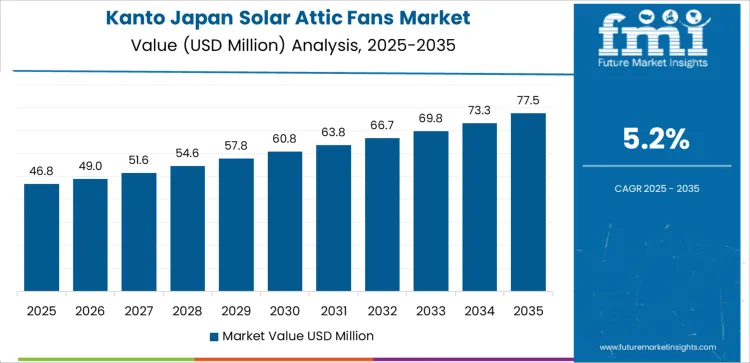
In Kanto, demand for solar attic fans is rising at a 5.2% CAGR. The region’s large urban population, especially in Tokyo, drives the need for efficient cooling solutions to combat the heat generated by dense buildings and high electricity consumption. As more people seek ways to reduce their energy bills and lower their carbon footprint, solar attic fans are becoming an increasingly popular option. These systems help lower attic temperatures, reducing the need for air conditioning and enhancing energy efficiency.
Kanto’s growing emphasis on sustainability and energy-efficient technologies further supports the adoption of solar-powered solutions. With rising awareness of the environmental and cost-saving benefits of solar attic fans, the demand for these products in Kanto is expected to grow steadily. The region’s urban density and focus on smart building technologies make Kanto a key industry for solar attic fans.
How is Demand for Solar Attic Fans Expanding in Kansai?
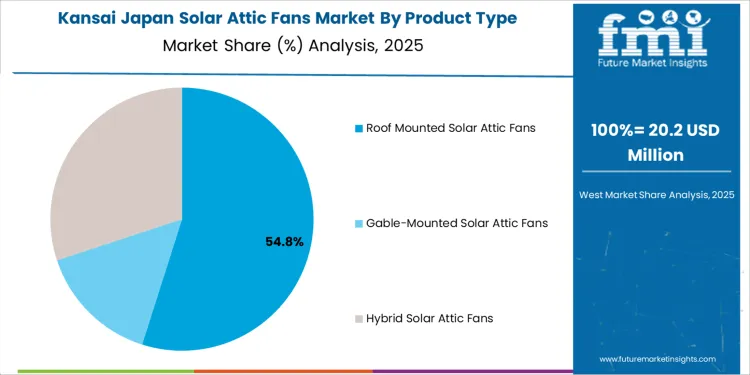
Kansai shows steady demand for solar attic fans, growing at a 4.5% CAGR. The region’s strong interest in energy-efficient and sustainable technologies is driving the adoption of solar-powered solutions, including attic fans. Kansai’s dense urban areas, particularly in Osaka and Kyoto, have high energy consumption due to their large populations and commercial buildings. Solar attic fans are an effective solution for cooling spaces and reducing the reliance on air conditioning, thus lowering energy costs.
The growing awareness of climate change and environmental sustainability in Kansai has led to increased demand for energy-efficient technologies. As residential and commercial sectors in the region continue to adopt eco-friendly solutions, the demand for solar attic fans will remain steady. With government incentives and a continued focus on reducing carbon footprints, Kansai is expected to see further growth in the adoption of solar attic fans.
Why is Demand for Solar Attic Fans Growing in Chubu?
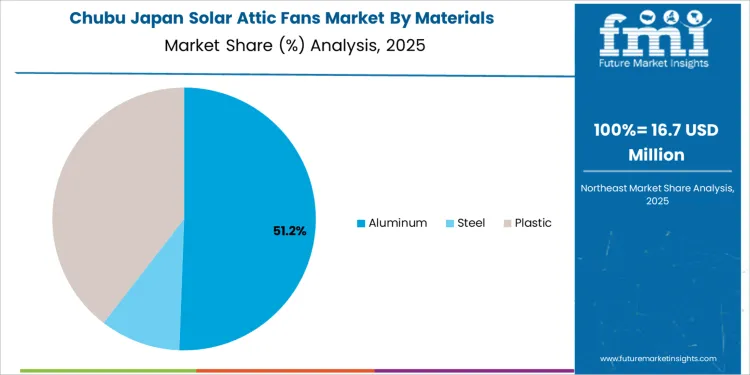
Chubu is experiencing steady demand for solar attic fans, growing at a 4.0% CAGR. The region’s industrial and residential sectors are increasingly adopting energy-efficient solutions to reduce electricity consumption. As urbanization continues and more households and businesses seek sustainable cooling options, the demand for solar attic fans is rising. The region’s manufacturing base, particularly in Nagoya, is also pushing for more environmentally friendly technologies, which has led to an increase in the adoption of solar-powered solutions.
Solar attic fans offer an affordable and energy-efficient way to keep buildings cool by improving ventilation and reducing the need for air conditioning. As awareness of the environmental and cost-saving benefits of solar attic fans increases, the demand in Chubu is expected to grow steadily. With government support for renewable energy technologies, Chubu is poised for continued adoption of solar attic fans in both residential and commercial sectors.
How is Demand for Solar Attic Fans Expanding in Tohoku?
Tohoku is seeing moderate growth in solar attic fan demand, with a 3.5% CAGR. While the region’s adoption of solar attic fans is slower compared to major urban centers, there is growing interest in energy-efficient technologies as the demand for sustainable solutions rises. Tohoku’s colder climate traditionally limited the need for cooling systems, but as global temperatures rise, the need for efficient temperature management in homes and buildings is increasing.
Solar attic fans are becoming an effective solution to reduce heat buildup in attics, improving energy efficiency and reducing reliance on air conditioning. As awareness of the environmental and financial benefits of solar-powered solutions spreads in Tohoku, more homeowners and businesses are likely to adopt these technologies. The region’s ongoing focus on sustainability and energy conservation will drive steady growth in solar attic fan demand, especially as renewable energy adoption continues to expand.
Why is Demand for Solar Attic Fans Steady in the Rest of Japan?
The Rest of Japan is experiencing steady demand for solar attic fans, with a 3.3% CAGR. Although the adoption rate is slower compared to major urban regions, there is growing interest in sustainable technologies as rural areas modernize and seek ways to reduce energy consumption. Solar attic fans are increasingly seen as an affordable and effective solution for cooling homes and reducing electricity costs, particularly in areas where high temperatures are becoming more common.
As awareness of renewable energy technologies and their benefits spreads across smaller cities and rural regions, more consumers are choosing solar attic fans for their energy efficiency and environmental advantages. The growing focus on reducing carbon footprints and the adoption of green technologies will continue to drive steady demand in these areas.
What is Driving the Demand for Solar Attic Fans in Japan and Who Are the Key Providers Supplying Them
The demand for solar attic fans in Japan is increasing as homeowners and businesses seek energy-efficient solutions for managing indoor temperatures and reducing cooling costs. Solar attic fans, powered by solar panels installed on the roof, ventilate attics by expelling hot air and moisture, which helps prevent heat buildup and reduces the load on air conditioning systems. This is especially beneficial in hot weather, where temperature control and energy savings are important. With Japan’s focus on energy conservation and reducing electricity consumption, solar attic fans provide a sustainable way to enhance indoor comfort while lowering energy usage.
Key providers of solar attic fans in Japan include Crystalline Inc., iliving, Magen eco-energy, Natural Light, and Quietcool. Crystalline Inc. leads with a share of 25.0%, offering various solar attic fan models designed for both residential and commercial applications. These companies offer a range of systems, from smaller fans for compact homes to larger models for bigger buildings, providing options for different ventilation needs, noise levels, and airflow efficiency.
Technological advancements are also driving the adoption of solar attic fans in Japan. Newer models offer improved airflow, quieter operation, and more efficient solar panels, making them a practical solution for maintaining stable indoor temperatures. With increasing interest in sustainable and energy-efficient home improvements, solar attic fans are gaining popularity as a cost-effective method for reducing energy consumption and improving ventilation, especially in regions with seasonal heat.
Key Players in Japan Solar Attic Fans Demand
- Crystalline Inc.
- iliving
- Magen eco-energy
- Natural Light
- Quietcool
Scope of Report
| Items | Values |
|---|---|
| Quantitative Units (2025) | USD million |
| Product Type | Roof Mounted Solar Attic Fans, Gable-Mounted Solar Attic Fans, Hybrid Solar Attic Fans |
| Materials | Aluminum, Steel, Plastic |
| Capacity | Large Capacity Fans (Above 50 Watts), Medium Capacity Fans (20-50 Watts), Small Capacity Fans (up to 20 Watts) |
| Application | Commercial, Residential, Industrial |
| Region | Kyushu & Okinawa, Kanto, Kansai, Chubu, Tohoku, Rest of Japan |
| Countries Covered | Japan |
| Key Companies Profiled | Crystalline Inc., iLiving, Magen eco-energy, Natural Light, QuietCool |
| Additional Attributes | Dollar sales by product type, material, and capacity; regional CAGR and growth trends; increasing adoption of hybrid solar attic fans; demand driven by energy efficiency regulations and environmental sustainability. |
Japan Solar Attic Fans Demand by Key Segments
Product Type
- Roof Mounted Solar Attic Fans
- Gable-Mounted Solar Attic Fans
- Hybrid Solar Attic Fans
Materials
- Aluminum
- Steel
- Plastic
Capacity
- Large Capacity Fans (Above 50 Watts)
- Medium Capacity Fans (20-50 Watts)
- Small Capacity Fans (up to 20 Watts)
Application
- Commercial
- Residential
- Industrial
Region
- Kyushu & Okinawa
- Kanto
- Kansai
- Chubu
- Tohoku
- Rest of Japan
Frequently Asked Questions
How big is the demand for solar attic fans in Japan in 2025?
The demand for solar attic fans in Japan is estimated to be valued at USD 95.9 million in 2025.
What will be the size of solar attic fans in Japan in 2035?
The market size for the solar attic fans in Japan is projected to reach USD 148.9 million by 2035.
How much will be the demand for solar attic fans in Japan growth between 2025 and 2035?
The demand for solar attic fans in Japan is expected to grow at a 4.5% CAGR between 2025 and 2035.
What are the key product types in the solar attic fans in Japan?
The key product types in solar attic fans in Japan are roof mounted solar attic fans, gable-mounted solar attic fans and hybrid solar attic fans.
Which materials segment is expected to contribute significant share in the solar attic fans in Japan in 2025?
In terms of materials, aluminum segment is expected to command 50.0% share in the solar attic fans in Japan in 2025.
Preview the report firsthand - request a free sample
Get SampleGet the brochure for pricing and purchase details.
Get PDFTable of Content
- Executive Summary
- Japan Market Outlook
- Demand-side Trends
- Supply-side Trends
- Technology Roadmap Analysis
- Analysis and Recommendations
- Market Overview
- Market Coverage / Taxonomy
- Market Definition / Scope / Limitations
- Market Background
- Market Dynamics
- Drivers
- Restraints
- Opportunity
- Trends
- Scenario Forecast
- Demand in Optimistic Scenario
- Demand in Likely Scenario
- Demand in Conservative Scenario
- Opportunity Map Analysis
- Product Life Cycle Analysis
- Supply Chain Analysis
- Investment Feasibility Matrix
- Value Chain Analysis
- PESTLE and Porter’s Analysis
- Regulatory Landscape
- Regional Parent Market Outlook
- Production and Consumption Statistics
- Import and Export Statistics
- Market Dynamics
- Japan Market Analysis 2020 to 2024 and Forecast, 2025 to 2035
- Historical Market Size Value (USD Million) Analysis, 2020 to 2024
- Current and Future Market Size Value (USD Million) Projections, 2025 to 2035
- Y-o-Y Growth Trend Analysis
- Absolute $ Opportunity Analysis
- Japan Market Pricing Analysis 2020 to 2024 and Forecast 2025 to 2035
- Japan Market Analysis 2020 to 2024 and Forecast 2025 to 2035, By Product Type
- Introduction / Key Findings
- Historical Market Size Value (USD Million) Analysis By Product Type , 2020 to 2024
- Current and Future Market Size Value (USD Million) Analysis and Forecast By Product Type , 2025 to 2035
- Roof Mounted Solar Attic Fans
- Gable-Mounted Solar Attic Fans
- Hybrid Solar Attic Fans
- Y-o-Y Growth Trend Analysis By Product Type , 2020 to 2024
- Absolute $ Opportunity Analysis By Product Type , 2025 to 2035
- Japan Market Analysis 2020 to 2024 and Forecast 2025 to 2035, By Materials
- Introduction / Key Findings
- Historical Market Size Value (USD Million) Analysis By Materials, 2020 to 2024
- Current and Future Market Size Value (USD Million) Analysis and Forecast By Materials, 2025 to 2035
- Aluminum
- Steel
- Plastic
- Y-o-Y Growth Trend Analysis By Materials, 2020 to 2024
- Absolute $ Opportunity Analysis By Materials, 2025 to 2035
- Japan Market Analysis 2020 to 2024 and Forecast 2025 to 2035, By Capacity
- Introduction / Key Findings
- Historical Market Size Value (USD Million) Analysis By Capacity, 2020 to 2024
- Current and Future Market Size Value (USD Million) Analysis and Forecast By Capacity, 2025 to 2035
- Large Capacity Fans (Above 50 Watts)
- Medium Capacity Fans (20-50 Watts)
- Small Capacity Fans (up to 20 Watts)
- Y-o-Y Growth Trend Analysis By Capacity, 2020 to 2024
- Absolute $ Opportunity Analysis By Capacity, 2025 to 2035
- Japan Market Analysis 2020 to 2024 and Forecast 2025 to 2035, By Application
- Introduction / Key Findings
- Historical Market Size Value (USD Million) Analysis By Application, 2020 to 2024
- Current and Future Market Size Value (USD Million) Analysis and Forecast By Application, 2025 to 2035
- Commercial
- Residential
- Industrial
- Y-o-Y Growth Trend Analysis By Application, 2020 to 2024
- Absolute $ Opportunity Analysis By Application, 2025 to 2035
- Market Structure Analysis
- Competition Dashboard
- Competition Benchmarking
- Market Share Analysis of Top Players
- By Regional
- By Product Type
- By Materials
- By Capacity
- By Application
- Competition Analysis
- Competition Deep Dive
- Crystalline Inc.
- Overview
- Product Portfolio
- Profitability by Market Segments (Product/Age /Sales Channel/Region)
- Sales Footprint
- Strategy Overview
- Marketing Strategy
- Product Strategy
- Channel Strategy
- iliving
- Magen eco-energy
- Natural Light
- Quietcool
- Crystalline Inc.
- Competition Deep Dive
- Assumptions & Acronyms Used
- Research Methodology


