

- Industry Size (2025)
- USD 830.0 Mn
- Forecast (2035)
- USD 1140.1 Mn
- CAGR (2025 to 2035)
- 3.2%
Demand for Sweet and Savory Spread in Japan Forecast and Outlook 2025 to 2035
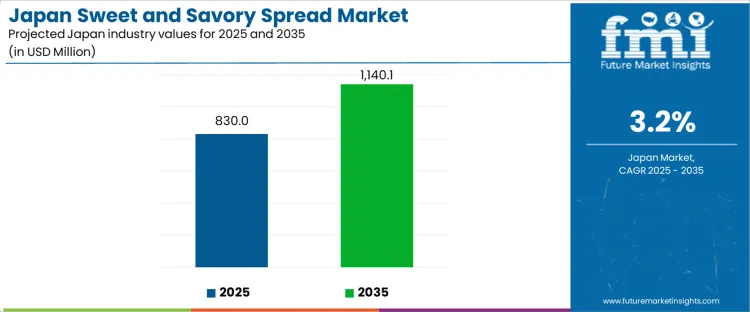
Demand for sweet and savory spreads in Japan is expected to grow from USD 830.0 million in 2025 to USD 1,140.1 million by 2035, reflecting a compound annual growth rate (CAGR) of 3.2%. Growth is driven by the increasing popularity of both traditional and innovative spreads across various consumer segments. As Japanese consumers increasingly seek convenient, ready-to-eat products, demand for spreads such as jams, peanut butter, chocolate spreads, and savory options like hummus and other plant-based spreads is rising.
Growth is also supported by innovations in product offerings, such as reduced sugar, organic, and functional spreads that meet the growing demand for healthier and cleaner food products. With growing interest in plant-based diets and the shift toward more sustainable food choices, there is an opportunity for growth in savory spreads made from vegetables, nuts, and seeds. Demand for sweet and savory spreads is expected to increase as consumers seek variety, convenience, and quality in their food choices.
Quick Stats of the Demand for Sweet and Savory Spread in Japan
- Demand for Sweet and Savory Spread in Japan Value (2025): USD 830.0 million
- Demand for Sweet and Savory Spread in Japan Forecast Value (2035): USD 1,140.1 million
- Demand for Sweet and Savory Spread in Japan Forecast CAGR (2025-2035): 3.2%
- Demand for Sweet and Savory Spread in Japan Leading End-Use Application: Food Processing (38.0%)
- Demand for Sweet and Savory Spread in Japan Key Growth Regions: Kyushu & Okinawa, Kanto, Kansai, Chubu, Tohoku, Rest of Japan
- Demand for Sweet and Savory Spread in Japan Key Players: Unilever, The J.M. Smucker Company, The Kraft Heinz Company, Conagra Brands, Inc., Premier Foods Plc
What is the Growth Forecast for the Sweet and Savory Spread Market through 2035?
The 5-year growth block analysis for the sweet and savory spread market in Japan shows consistent growth, with gradual increases in market value. Starting at USD 830.0 million in 2025, the market grows to USD 856.8 million in 2026, reflecting the continued popularity of spreads across various food segments. In 2027, the market increases to USD 884.4 million, driven by steady demand for traditional spreads as well as rising interest in new, innovative products.
From 2027 to 2030, the market continues to show steady growth, reaching USD 912.9 million in 2028, USD 942.4 million in 2029, and USD 972.8 million in 2030. This steady growth is supported by ongoing innovation, with manufacturers introducing healthier options and catering to new consumer preferences. By 2035, the market is expected to reach USD 1,140.1 million, reflecting significant growth in both sweet and savory spread categories.
Key Takeaways of Sweet and Savory Spread Industry in Japan
| Metric | Value |
|---|---|
| Industry Sales Value (2025) | USD 830 million |
| Industry Forecast Value (2035) | USD 1,140.1 million |
| Industry Forecast CAGR (2025-2035) | 3.2% |
What Is Driving the Demand for Sweet and Savory Spreads in Japan?
The demand for sweet and savory spreads in Japan is shaped by changing consumer lifestyles, evolving taste preferences, and shifting dietary habits. Sweet spreads such as jams, jellies, marmalades and honey-based products have maintained popularity for breakfast breads, toast and snacks. Savory and condiment-style spreads including nut/seed pastes, savory dips and mayonnaise-based products benefit from usage in snacks, sandwiches, Western-style meals, and convenience-oriented food formats. Growing interest in health and nutrition has encouraged development of spreads with reduced sugar, natural or organic ingredients, or protein-rich/seed-based formulations. These shifts influence both demand volume and product variety in the Japanese spread market.
Future demand for sweet and savory spreads in Japan is expected to rise as convenience eating, snack culture and home cooking trends persist. Demand may strengthen for nut and seed-based spreads, savory spreads and healthy-label products as health awareness grows. Innovative flavours, limited-edition seasonal offerings and diversification into spreads targeting different meals (breakfast, snacks, sandwiches, meal kits) will likely support market expansion. Manufacturers’ ability to offer spreads with clean labeling, health-oriented formulations, and variety will influence long-term growth.
What Are the Key Segments in Sweet and Savory Spread Market in Japan?
The sweet and savory spread market in Japan is segmented by product type and end-use application. Butter/cheese spreads lead the product type segment, holding 32% of the market share. In terms of end-use application, food processing is the dominant segment, accounting for 38% of the market. The demand for sweet and savory spreads is driven by their versatility in various food applications and the increasing popularity of convenient, ready-to-use spreads.
Which Product Type Drives Sweet and Savory Spread Demand in Japan?
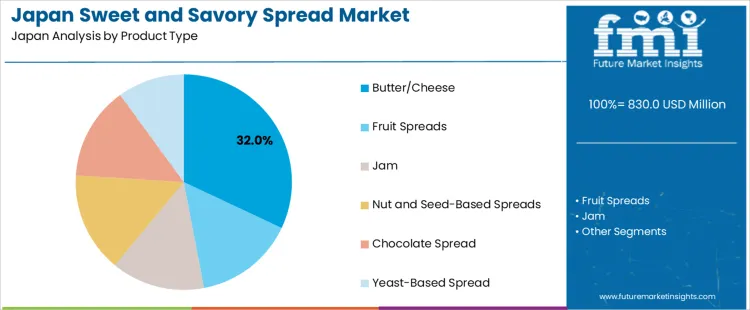
Butter/cheese spreads are the most widely consumed product type in the market, representing 32% of the total demand in Japan. These spreads are popular for their rich flavor, texture, and versatility, commonly used on bread, crackers, and in cooking. The demand for butter and cheese-based spreads is driven by their widespread use in daily meals, particularly in breakfast items and snacks. Their ability to complement both savory and sweet ingredients makes them a preferred choice. While other spreads like fruit spreads, jam, and nut and seed-based spreads also contribute to the market, butter/cheese remains the dominant product due to its longstanding popularity and the tradition of using these products in Japanese cuisine and beyond.
Which End-Use Application Drives Sweet and Savory Spread Demand in Japan?
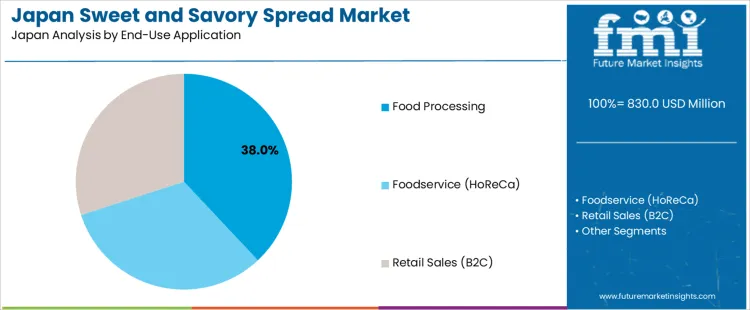
Food processing is the leading end-use application for sweet and savory spreads, holding 38% of the market share. In food processing, spreads are used as key ingredients in various products, including ready-to-eat meals, baked goods, sauces, and snacks. The versatility of spreads in food manufacturing, particularly in the production of pre-packaged and convenience foods, drives their demand in this sector. The growth in processed food consumption, along with the continued trend towards convenience and ready-to-eat meals, is expected to continue fueling the demand for spreads in food processing. While foodservice (HoReCa) and retail sales (B2C) also contribute to the market, food processing remains the largest application due to the widespread incorporation of spreads in mass-produced food items.
What is the Key Dynamics for Sweet and Savory Spread Demand in Japan?
The demand for sweet and savory spreads in Japan is growing as consumers seek more diverse, convenient, and flavorful options for their meals. These spreads are increasingly popular in the breakfast and snack segments, with both traditional and innovative flavors gaining traction. The expansion of ready-to-eat meals and the growing interest in ethnic and fusion cuisines are contributing to the rise in demand for sweet and savory spreads. Increased consumer preference for versatile and easy-to-use products is boosting the market, with spreads being used in a wide range of applications from sandwiches to pastries and cooking.
What are the Key Drivers for Sweet and Savory Spread Demand in Japan?
Key drivers include the rising trend of convenience food, where spreads provide quick and easy solutions for meals and snacks. As consumers prioritize time-saving options, sweet and savory spreads are becoming a staple in households and foodservice businesses. The growing interest in innovative and gourmet flavors, as well as a shift toward healthier, natural ingredient, is pushing manufacturers to create new variations of spreads. Additionally, the increasing popularity of global cuisines, including Mediterranean, Middle Eastern, and Western flavors, is driving the demand for diverse sweet and savory spreads.
What are the Restraints for Sweet and Savory Spread Demand in Japan?
One restraint is the competitive nature of the market, with numerous brands offering a wide variety of sweet and savory spreads. This makes it difficult for new entrants to gain significant market share. Consumer concerns about sugar content in sweet spreads and high sodium content in savory spreads could limit market growth, especially as health-conscious eating continues to gain prominence. Furthermore, the market's focus on premium and organic products may increase production costs, making it more challenging for lower-cost options to thrive. Economic downturns could also affect consumer spending on premium spreads.
What are the Key Trends in Sweet and Savory Spread Demand in Japan?
Key trends include the growing demand for organic, natural, and low-sugar or reduced-fat spreads, as consumers become more health-conscious. The popularity of plant-based and vegan spreads is also on the rise, driven by a shift toward plant-based diets. Another trend is the increasing availability of exotic flavors and ingredients in sweet and savory spreads, as consumers seek new and unique taste experiences. The expansion of online retail platforms is also contributing to the growth of the market, making a wider variety of spreads more accessible to a broader audience.
What is the Regional Demand Outlook for Sweet and Savory Spreads in Japan?
Demand for sweet and savory spreads in Japan is expected to grow steadily, with Kyushu & Okinawa leading the way at a projected CAGR of 4.0%. Kanto follows closely with a growth rate of 3.7%, while Kansai is expected to grow at 3.3%. Chubu is projected to grow at a rate of 2.9%, while Tohoku and the Rest of Japan show more moderate growth, with CAGRs of 2.5% and 2.4%, respectively. The rising interest in diverse, convenient food products and the growing demand for premium spreads, especially in urban areas, are contributing to the market’s steady expansion across Japan.
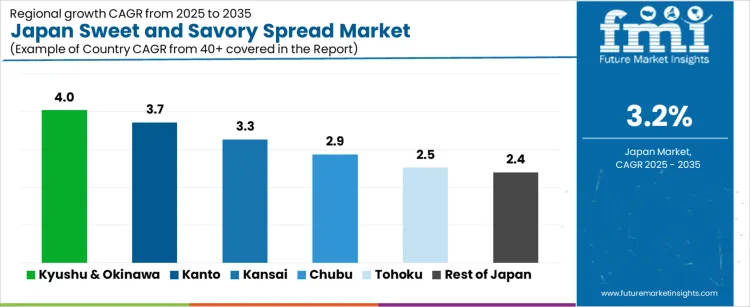
| Region | CAGR (2025-2035) |
|---|---|
| Kyushu & Okinawa | 4.0% |
| Kanto | 3.7% |
| Kansai | 3.3% |
| Chubu | 2.9% |
| Tohoku | 2.5% |
| Rest of Japan | 2.4% |
What is Driving the Growth of Sweet and Savory Spreads in Kyushu & Okinawa?
Kyushu & Okinawa is projected to experience the highest growth in the sweet and savory spreads market, with a projected CAGR of 4.0%. The region’s increasing demand for convenience foods, combined with the growing popularity of premium spreads and more diverse flavor profiles, is a key driver of this growth. As consumers in Kyushu & Okinawa look for quick and easy meal solutions, sweet and savory spreads are becoming more popular as versatile, time-saving ingredients. Additionally, the rise in consumer interest in local and unique flavors, as well as a shift toward healthier ingredient options, is further supporting the growth of this market. The growing number of supermarkets and retail outlets offering a wider variety of spreads is expected to continue driving demand in the region.
Why is the Sweet and Savory Spreads Market Expanding in Kanto?
In Kanto, the demand for sweet and savory spreads is projected to grow at a CAGR of 3.7%. Kanto, including Tokyo, is Japan’s largest and most urbanized region, and it continues to lead the market due to its diverse consumer base and increasing demand for convenient food options. As busy lifestyles continue to shape consumer behavior in urban areas, spreads that offer both ease of use and versatility in meal preparation are gaining popularity. Additionally, Kanto’s growing preference for premium, artisanal, and health-conscious food products is contributing to the market’s expansion. With a variety of sweet and savory spread options available across supermarkets, convenience stores, and online retailers, Kanto’s market for these products is expected to continue growing as consumer preferences evolve.
How is the Sweet and Savory Spreads Market Growing in Kansai?
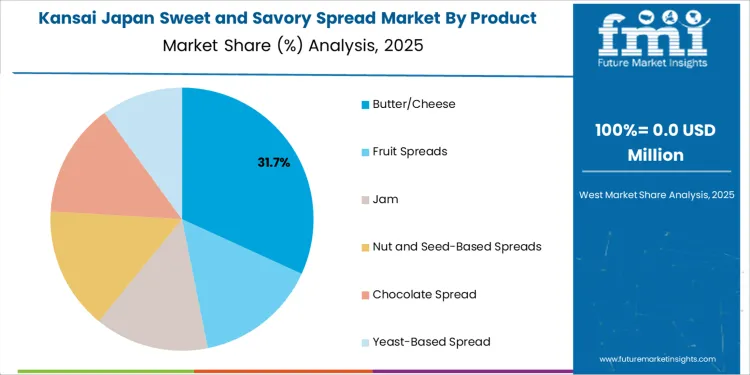
In Kansai, the sweet and savory spreads market is projected to grow at a CAGR of 3.3%. Kansai, which includes cities like Osaka and Kyoto, is a major center for food innovation and culinary culture in Japan. The region’s increasing interest in unique flavors and premium food products is driving the demand for a wider variety of spreads. As consumer preferences shift towards more diverse and flavorful food options, both sweet and savory spreads are gaining traction. The rising popularity of international cuisines, as well as the demand for convenience in food preparation, is also contributing to the market’s growth in Kansai. Additionally, as consumers in Kansai become more health-conscious, there is an increasing demand for spreads made from natural, wholesome ingredients, further fueling the growth of the market.
What is Contributing to the Growth of Sweet and Savory Spreads in Chubu?
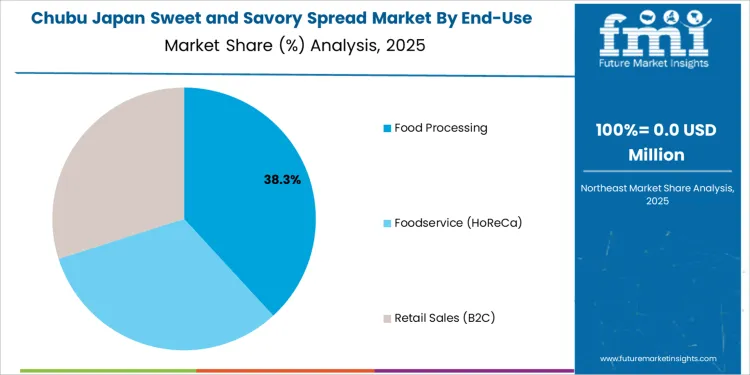
In Chubu, the sweet and savory spreads market is expected to grow at a CAGR of 2.9%. Chubu, which includes Nagoya, has a strong industrial base and a growing food manufacturing sector. As more consumers in Chubu seek convenient and high-quality food options, the demand for sweet and savory spreads is rising. The region’s increasing interest in both traditional Japanese spreads, such as miso-based spreads, and international flavors is contributing to the expansion of the market. Chubu’s focus on innovation in the food sector and the growing preference for premium food products are driving the demand for spreads. With the continued focus on providing diverse, healthier, and more accessible food choices, the market for sweet and savory spreads in Chubu is expected to grow steadily.
What is Influencing the Growth of Sweet and Savory Spreads in Tohoku?
In Tohoku, the sweet and savory spreads market is projected to grow at a CAGR of 2.5%. While the growth rate is more moderate compared to other regions, there is still a rising interest in convenient and premium food options, including spreads. As consumer preferences shift towards healthier food choices and ready-to-eat products, Tohoku is seeing increased demand for sweet and savory spreads. The region’s emphasis on improving food accessibility and convenience is contributing to the growing adoption of spreads, particularly in supermarkets and retail stores. As the population becomes more health-conscious, there is also an increasing demand for spreads made with natural ingredients, further contributing to the growth of the market in Tohoku.
What is Contributing to the Growth of Sweet and Savory Spreads in Rest of Japan?
In Rest of Japan, the sweet and savory spreads market is expected to grow at a more moderate rate of 2.4%. Although demand is smaller compared to major metropolitan regions, the growing consumer awareness of convenience foods and the increasing availability of diverse food products is driving the adoption of sweet and savory spreads. Rest of Japan’s increasing interest in health-conscious eating habits, including the consumption of spreads made with natural or organic ingredients, is contributing to the steady growth of the market. As more rural and less urbanized areas gain access to a broader range of food products, the demand for sweet and savory spreads is expected to expand gradually.
What is the Competitive Landscape for Demand for Sweet and Savory Spreads in Japan?
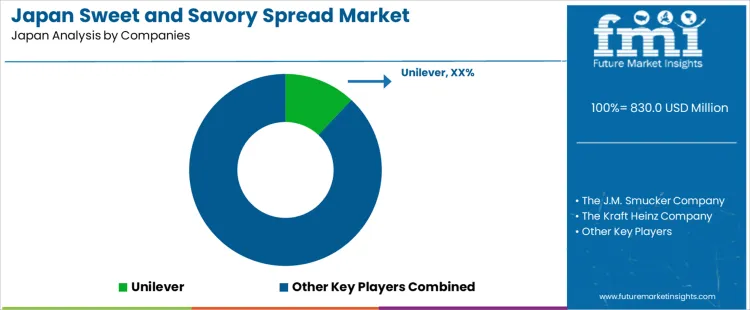
Demand for sweet and savory spreads in Japan has been rising as consumer tastes evolve and lifestyles change. Increasing exposure to global food trends has expanded acceptance of spreads like nut butters, chocolate/hazelnut spreads, jams, and savory pastes beyond traditional Japanese condiments. Demand is further driven by growing interest in convenient breakfast options, snacks, and "Western-style" eating habits, especially among younger and urban populations. In recent years nut- and seed-based spreads (such as peanut butter, almond butter) have gained traction thanks to rising health consciousness and preference for protein-rich or plant-based foods. Demand for spreads that combine taste, convenience, and nutritional appeal continues to grow.
Several major multinational food companies compete for a share of the Japanese spreads market. Unilever holds a share among the identified firms, alongside The J.M. Smucker Company, The Kraft Heinz Company, Conagra Brands, Inc., and Premier Foods Plc. These firms supply a variety of sweet and savory spreads - from chocolate and hazelnut spreads, jams, nut butters, to savoury paste-type spreads.
Competition among them is driven by product variety (sweet vs savory, nut-based vs fruit-based, creamy vs crunchy), taste profile, nutritional credentials (low sugar, high protein, clean-label), packaging convenience, and availability across retail and online channels. Companies that manage to combine appealing flavours, health-conscious formulations, and strong distribution presence are best positioned to benefit from growing spread consumption across households in Japan.
Key Players of the Sweet and Savory Spread Industry in Japan
- Unilever
- The J.M. Smucker Company
- The Kraft Heinz Company
- Conagra Brands, Inc.
- Premier Foods Plc
Scope of the Report
| Items | Values |
|---|---|
| Quantitative Units (2025) | USD Million |
| Product Type | Butter/Cheese, Fruit Spreads, Jam, Nut and Seed-Based Spreads, Chocolate Spread, Yeast-Based Spread |
| End-Use Application | Food Processing, Foodservice (HoReCa), Retail Sales (B2C) |
| Companies | Unilever, The J.M. Smucker Company, The Kraft Heinz Company, Conagra Brands, Inc., Premier Foods Plc |
| Regions Covered | Kyushu & Okinawa, Kanto, Kansai, Chubu, Tohoku, Rest of Japan |
| Additional Attributes | Dollar by sales by product type, end-use application, and region. Includes spread quality and taste profiles, production techniques and innovations, packaging trends, nutritional claims, price sensitivity, impact of consumer preferences on flavor and texture, market share and competitive positioning of key companies, sustainability practices, and trends in the food processing, foodservice, and retail sectors. |
Key Segments in the Demand for Sweet and Savory Spread in Japan
Product Type
- Butter/Cheese
- Fruit Spreads
- Jam
- Nut and Seed-Based Spreads
- Chocolate Spread
- Yeast-Based Spread
End-Use Application
- Food Processing
- Foodservice (HoReCa)
- Retail Sales (B2C)
Region
- Kyushu & Okinawa
- Kanto
- Kansai
- Chubu
- Tohoku
- Rest of Japan
Frequently Asked Questions
How big is the demand for sweet and savory spread in Japan in 2025?
The demand for sweet and savory spread in Japan is estimated to be valued at USD 830.0 million in 2025.
What will be the size of sweet and savory spread in Japan in 2035?
The market size for the sweet and savory spread in Japan is projected to reach USD 1,140.1 million by 2035.
How much will be the demand for sweet and savory spread in Japan growth between 2025 and 2035?
The demand for sweet and savory spread in Japan is expected to grow at a 3.2% CAGR between 2025 and 2035.
What are the key product types in the sweet and savory spread in Japan?
The key product types in sweet and savory spread in Japan are butter/cheese, fruit spreads, jam, nut and seed-based spreads, chocolate spread and yeast-based spread.
Which end-use application segment is expected to contribute significant share in the sweet and savory spread in Japan in 2025?
In terms of end-use application, food processing segment is expected to command 38.0% share in the sweet and savory spread in Japan in 2025.
Preview the report firsthand - request a free sample
Get SampleGet the brochure for pricing and purchase details.
Get PDFTable of Content
- Executive Summary
- Japan Market Outlook
- Demand-side Trends
- Supply-side Trends
- Technology Roadmap Analysis
- Analysis and Recommendations
- Market Overview
- Market Coverage / Taxonomy
- Market Definition / Scope / Limitations
- Market Background
- Market Dynamics
- Drivers
- Restraints
- Opportunity
- Trends
- Scenario Forecast
- Demand in Optimistic Scenario
- Demand in Likely Scenario
- Demand in Conservative Scenario
- Opportunity Map Analysis
- Product Life Cycle Analysis
- Supply Chain Analysis
- Investment Feasibility Matrix
- Value Chain Analysis
- PESTLE and Porter’s Analysis
- Regulatory Landscape
- Regional Parent Market Outlook
- Production and Consumption Statistics
- Import and Export Statistics
- Market Dynamics
- Japan Market Analysis 2020 to 2024 and Forecast, 2025 to 2035
- Historical Market Size Value (USD Million) Analysis, 2020 to 2024
- Current and Future Market Size Value (USD Million) Projections, 2025 to 2035
- Y-o-Y Growth Trend Analysis
- Absolute $ Opportunity Analysis
- Japan Market Pricing Analysis 2020 to 2024 and Forecast 2025 to 2035
- Japan Market Analysis 2020 to 2024 and Forecast 2025 to 2035, By Product Type
- Introduction / Key Findings
- Historical Market Size Value (USD Million) Analysis By Product Type , 2020 to 2024
- Current and Future Market Size Value (USD Million) Analysis and Forecast By Product Type , 2025 to 2035
- Butter/Cheese
- Fruit Spreads
- Jam
- Nut and Seed-Based Spreads
- Chocolate Spread
- Yeast-Based Spread
- Y-o-Y Growth Trend Analysis By Product Type , 2020 to 2024
- Absolute $ Opportunity Analysis By Product Type , 2025 to 2035
- Japan Market Analysis 2020 to 2024 and Forecast 2025 to 2035, By End-Use Application
- Introduction / Key Findings
- Historical Market Size Value (USD Million) Analysis By End-Use Application, 2020 to 2024
- Current and Future Market Size Value (USD Million) Analysis and Forecast By End-Use Application, 2025 to 2035
- Food Processing
- Foodservice (HoReCa)
- Retail Sales (B2C)
- Y-o-Y Growth Trend Analysis By End-Use Application, 2020 to 2024
- Absolute $ Opportunity Analysis By End-Use Application, 2025 to 2035
- Market Structure Analysis
- Competition Dashboard
- Competition Benchmarking
- Market Share Analysis of Top Players
- By Regional
- By Product Type
- By End-Use Application
- Competition Analysis
- Competition Deep Dive
- Unilever
- Overview
- Product Portfolio
- Profitability by Market Segments (Product/Age /Sales Channel/Region)
- Sales Footprint
- Strategy Overview
- Marketing Strategy
- Product Strategy
- Channel Strategy
- The J.M. Smucker Company
- The Kraft Heinz Company
- Conagra Brands, Inc.
- Premier Foods Plc
- Unilever
- Competition Deep Dive
- Assumptions & Acronyms Used
- Research Methodology


