

- Industry Size (2026)
- USD 16.4 Bn
- Forecast (2036)
- USD 25.1 Bn
- CAGR (2026 to 2036)
- 4.3%
Sweet and Savory Spread Market Size, Market Forecast and Outlook By FMI
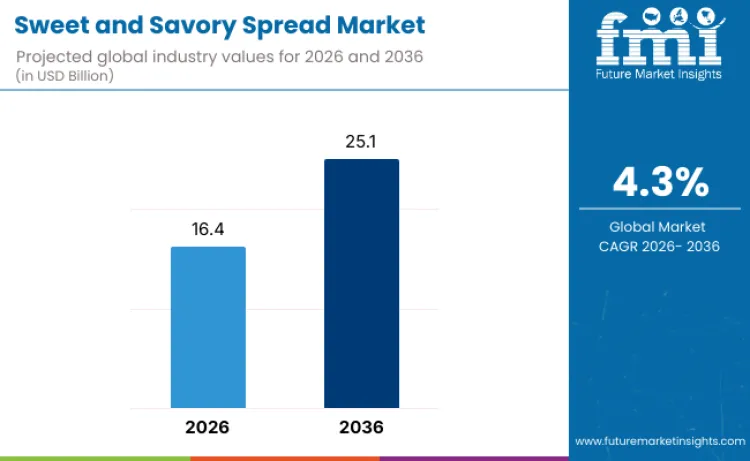
Within the sweet and savory spread industry, market valuation stands ready to achieve USD 16.4 billion throughout 2026, propelled forward by escalating consumer desire for streamlined breakfast options alongside the flourishing artisanal culinary movement across global territories. Revenue generation from spread product sales anticipates robust development at 4.3% CAGR during the assessment timeline ending 2036, elevating complete industry value past USD 25.1 billion. Modern breakfast evolution patterns combined with emerging snacking culture transformations drive this economic progression as fundamental catalysts.
Significant capital allocation toward recipe development occurs among food manufacturers, who pursue enhanced flavor complexity through premium ingredient integration while maintaining nutritional integrity. Manufacturing specialists now migrate from traditional spreading applications toward sophisticated culinary uses, transforming consumption behaviors throughout prosperous markets. Such culinary advances motivate specialty food enterprises to establish refined spread portfolios through artisanal manufacturing approaches.
Heightened awareness concerning wholesome components and transparent labeling creates substantial market influence. Food scientists prioritize taste optimization protocols, implementing precise ingredient proportions to develop intricate flavor combinations. Scientific investigation into natural preservation methodologies generates demand for premium spread categories, establishing consumer confidence in quality standards.
Convenience meal emphasis perpetually stimulates demand for spreadable products, establishing enduring prospects for specialty manufacturers. Governmental nutrition programs encouraging balanced breakfast intake facilitate broader adoption of enriched spread alternatives within institutional meal services. Organizations identify substantial expansion potential across developing markets, where Western breakfast integration and urban development correspond with increased convenience food usage among evolving consumer populations.
Quick Stats for Sweet and Savory Spread Market
- Sweet and Savory Spread Industry Value (2026): USD 16.4 Billion
- Sweet and Savory Spread Industry Forecast Value (2036): USD 25.1 Billion
- Sweet and Savory Spread Industry Forecast CAGR: 4.3%
- Sweet and Savory Spread Industry Leading Product: Butter/Cheese (34%)
- Sweet and Savory Spread Industry Key Growth Regions: USA, U.K., India
- Sweet and Savory Spread Industry Key Players: Unilever, The J.M. Smucker Company, The Kraft Heinz Company, Conagra Brands Inc., Premier Foods Plc
Flavor science expertise merges with preservation technology among research teams to enhance product longevity. Artisanal manufacturing acceleration responds to premium market requirements within specialized food categories. Focus shifts toward comprehensive taste experiences that blend traditional formulations with contemporary convenience needs. Manufacturing improvements allow producers to maintain consistent quality through precision methods, expanding distribution reach while preserving authentic flavors. These developments become essential for future market establishment where spreads provide restaurant-quality experiences via retail channels.
Sweet and Savory Spread Market Key Takeaways
| Metric | Value |
|---|---|
| Industry Size (2026) | USD 16.4 Billion |
| Industry Value (2036) | USD 25.1 Billion |
| CAGR (2026-2036) | 4.3% |
Source: Future Market Insights – analysis driven by proprietary forecasting models and primary research
What Drivers Are Accelerating Butter/Cheese Spread Adoption?
Lifestyle convenience transformations facilitate widespread dairy-based spreading product acceptance. Manufacturing technology improvements enhance production methods through refined emulsification during processing phases. Consumer appeal for butter/cheese spreads stems from seeking familiar dairy flavors with improved spreadability features. Traditional dairy combined with modern packaging research extends refrigerated storage life within retail distribution.
Calcium content emphasis through nutritional education encourages health professional recommendations. Gourmet dairy spread incorporation into breakfast menus capitalizes on these developments among restaurant operations. Premium dairy processing integration occurs within commercial food service while ensuring texture consistency.
How Is the Sweet and Savory Spread Market Segmented Across Key Categories?
International markets structure systematically for breakfast and snacking industry requirements, organizing sectors via product variations, usage applications, packaging configurations, and distribution approaches. Stakeholders utilize this classification to identify consumption prospects, including butter/cheese demand growth in premium breakfast segments or nut-based preferences among health-focused consumers. Category evaluation enables producers to modify manufacturing for retail versus food service industry needs.
Market division demonstrates progression from basic spread commodities toward premium artisanal innovations. Precise categorization becomes vital for consumer behavior understanding and preference identification as industry advancement occurs, ensuring development aligns with evolving culinary standards.
Why Do Butter/Cheese Products Maintain Dominance?
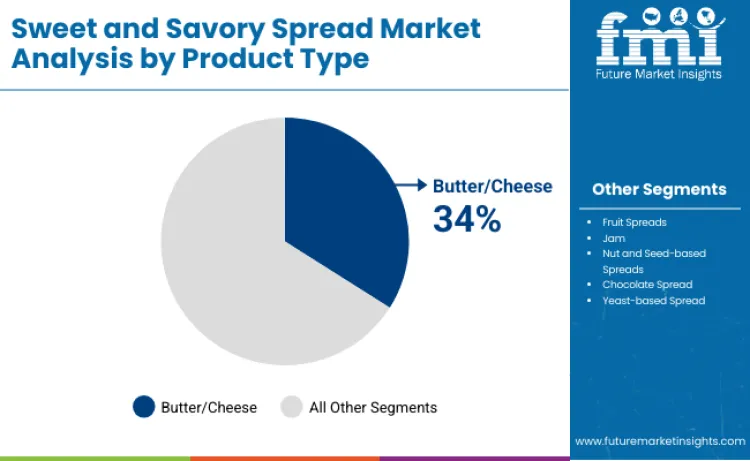
Market presence of 34% belongs to butter/cheese spreads in 2026 due to exceptional dairy authenticity and superior texture qualities. Established dairy processing provides consistent creamy characteristics throughout manufacturing cycles, creating market leadership. Continuous formulation enhancements benefit this segment, featuring stabilizer technology that optimizes refrigerated spreadability. Gourmet cooking and breakfast preparation interest increases through butter/cheese research applications. Traditional breakfast incorporation strengthens market position because these products deliver familiar comfort at practical portions. Diverse cultural contexts maintain butter/cheese spread consumption through culinary heritage appreciation.
Why Are Food Service Applications the Preferred Usage?
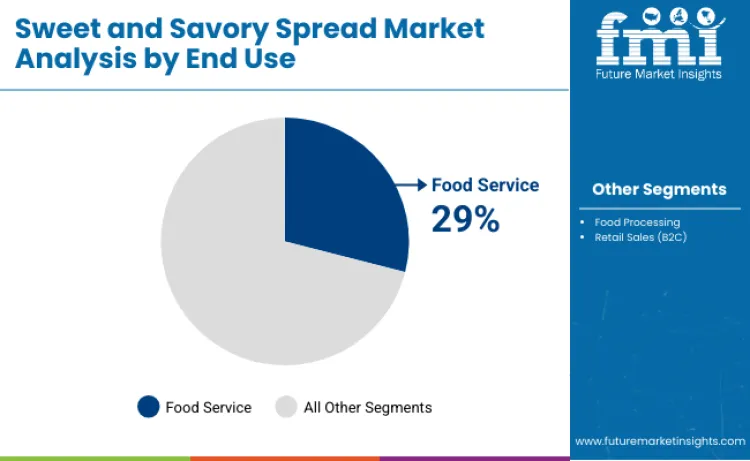
Sector share of 29% commands food service applications in 2026, demonstrating commercial kitchen preference for bulk-packaged spreading solutions. Operational efficiency advantages create market dominance through consistent portion control across establishments. Storage consistency throughout commercial distribution utilizes specialized packaging from suppliers. Restaurant operations receive immediate meal enhancement through these applications, building institutional brand loyalty. Recipe development continuity maintains competitive advantage while addressing chef creativity needs. Reliable supply partnerships strengthen commercial food service revenues due to high volume consumption requirements.
Why Does Butter/Cheese Lead Product Classifications?
Market share of 34% captures butter/cheese in 2026 via universal breakfast appeal requiring authentic dairy flavor experiences. Culinary tradition recommendations for dairy spreads across breakfast applications create leadership, achieving optimal taste satisfaction. Product selection occurs among food enthusiasts for reliable performance and recipe adaptability. Institutional volume growth drives commercial kitchen usage across hospitality establishments. Application diversity enables various preparation method compatibility throughout different cooking approaches. Premium food service operations secure valuable partnerships through dairy processing expertise.
Market Dynamics
How Will Artisanal Trends Impact Product Innovation?
Product development reshaping occurs through artisanal movements demanding small-batch production standards. Specialty processing with distinctive flavor combinations enables craft food adoption for discerning consumers. Multiple gourmet standards create premium positioning requirements simultaneously. Upscale consumer market segments become lost by companies lacking artisanal credentials. Premium product development drives local ingredient sourcing for specialized applications. Traditional recipe modernization optimization receives stimulation through craft food innovation.
How Will Health Consciousness Transform Recipe Development?
Spread formulation revolution occurs through nutritional awareness emphasizing reduced sodium and sugar levels. Breakfast meal occasion fortification delivery becomes possible through healthy ingredient integration. Protein enrichment drives dietary education with nutritionist approval for enhanced nutrition. Organic certification offering expands recipe development versus conventional processing methods. Health-focused consumer engagement creates wellness applications featuring nutritional transparency.
How Will Packaging Innovation Affect Market Accessibility?
Distribution opportunities and logistical challenges emerge through packaging evolution. Brand positioning improvement occurs through sustainable packaging requiring eco-friendly material investments. Food waste reduction impacts portion control developments enabling convenient sizing. Global brand expansion across diverse markets receives facilitation through international packaging growth. Freshness standard maintenance forces barrier technology investments due to quality preservation requirements.
How Will the Sweet and Savory Spread Industry Evolve in Major Nations?
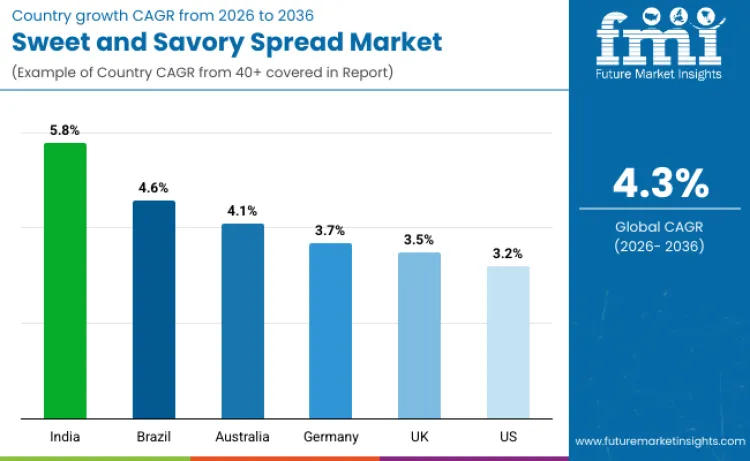
Varied consumption patterns characterize international spread markets, receiving influence from breakfast traditions and flavor preferences. Premium quality with organic certification receives priority in developed economies, while emerging markets emphasize affordability and basic taste satisfaction. Growth center development occurs in Asia-Pacific through Western breakfast culture adoption and modern retail expansion. Artisanal production with traditional recipe preservation creates European market evolution. Food processing modernization receives developing nation government support, maintaining spread industry advancement across manufacturing sectors.
| Country | CAGR (2026 to 2036) |
|---|---|
| USA | 3.2% |
| UK | 3.5% |
| India | 5.8% |
| Germany | 3.7% |
| Australia | 4.1% |
| Brazil | 4.6% |
Source: Future Market Insights’ proprietary forecasting model and primary research
What Is Driving Sweet and Savory Spread Demand in the United States?
Sweet and savory spread sales in the United States are expected to grow at a 3.2% CAGR through 2036. A mature breakfast culture, combined with rising reliance on convenient meal formats among working professionals, continues to support baseline demand. Health-conscious reformulation using organic ingredients and reduced additives is strengthening premium positioning. Growth in grab-and-go breakfast consumption across urban populations and the introduction of internationally inspired flavors are sustaining product innovation and category relevance.
How Is the Sweet and Savory Spread Market Evolving in the United Kingdom?
The UK spread market is projected to expand at a 3.5% CAGR during the assessment period. Long-standing breakfast traditions remain intact while consumers increasingly favor convenient, high-quality options. Strong artisanal production expertise supports premium and specialty spreads made with authentic ingredients. Access to diverse international ingredient supply networks is improving formulation flexibility, enabling manufacturers to respond to evolving taste preferences.
Why Is India Emerging as a High-Growth Market for Sweet and Savory Spreads?
India’s sweet and savory spread market is anticipated to grow at a 5.8% CAGR, driven by rapid urbanization and rising adoption of Western breakfast habits among middle-class consumers. Government initiatives modernizing food processing infrastructure are improving manufacturing capacity. Localized flavor integration alongside global spread formats is creating differentiated offerings, while expanding retail infrastructure and economic growth are attracting international brand investment.
How Is Germany Supporting Stable Growth in Sweet and Savory Spreads?
Sweet and savory spread demand in Germany is expected to rise at a 3.7% CAGR. Strong adherence to organic food regulations and a deeply rooted breakfast culture provide a stable consumption base. Manufacturing excellence and rigorous quality control systems support premium product positioning. Eco-conscious consumers favor sustainably produced spreads, reinforcing brand loyalty and encouraging artisanal and environmentally responsible product development.
What Growth Drivers Are Shaping Australia’s Sweet and Savory Spread Market?
Australia’s spread market is forecast to grow at a 4.1% CAGR, supported by abundant local ingredients and advanced food processing capabilities. Rising demand for natural and minimally processed products is encouraging premium spread innovation. Strong agricultural research systems and quality assurance frameworks are supporting new product development, while domestic production leadership aligns with national food security priorities.
Why Is Brazil Gaining Momentum in Sweet and Savory Spreads?
Brazil’s sweet and savory spread sector is projected to expand at a 4.6% CAGR. Access to tropical ingredients enables distinctive flavor development, while modernization of breakfast habits and increased convenience food adoption are supporting volume growth. Advancements in food processing technology and strong agricultural output are attracting international collaboration. The balance between traditional flavors and modern formats continues to sustain broad consumer appeal.
What is the Competitive Outlook for the Sweet and Savory Spread Market?
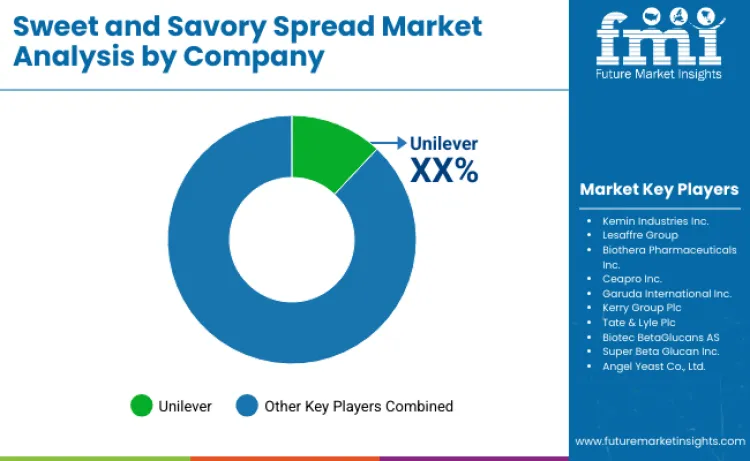
Product formulation and recipe innovation are gaining stronger attention as competitors seek differentiation in the spreads category. Leading companies such as Unilever and The J.M. Smucker Company are increasing investments in flavor development collaborations to support taste optimization and improve product appeal. Rising demand for gourmet offerings is encouraging brands to strengthen premium positioning through artisanal-quality production and refined ingredient selection. Companies are also securing wider visibility through strategic partnerships with retailers to strengthen shelf placement and improve consumer access across key sales channels.
Innovation in ingredient blending continues to shape competitive progress, as manufacturers introduce novel combinations aimed at delivering superior sensory experiences. Consolidation remains moderate, with regional producers being acquired to strengthen specialty brand portfolios against large food conglomerates. Unilever maintains a strong presence through its diversified product range and continued focus on sustainable sourcing initiatives.
Key Players in Sweet and Savory Spread Market
- Unilever
- The J.M. Smucker Company
- The Kraft Heinz Company
- Conagra Brands, Inc.
- Premier Foods Plc
- Ferrero Group
- Wellness Foods Ltd.
- Nestle
- Nature food Chocolatier
- National Grape Co-operative Inc.
Scope of Report
| Items | Values |
|---|---|
| Quantitative Units | USD Billion |
| Product Type Segments | Butter/Cheese; Fruit Spreads; Jam; Nut and Seed-based Spreads; Chocolate Spread; Yeast-based Spread |
| End-Use Application Categories | Food Processing; Foodservice (HoReCa); Retail Sales (B2C) |
| Distribution Channel Types | Supermarkets; Hypermarkets; Convenience Stores; Online Retail; Specialty Stores |
| Regions Covered | North America, Europe, East Asia, South Asia, Latin America, Middle East & Africa |
| Key Countries | USA, UK, India, Germany, Australia, Brazil |
| Key Companies Profiled | Unilever; The J.M. Smucker Company; The Kraft Heinz Company; Conagra Brands Inc.; Premier Foods Plc; Ferrero Group; Wellness Foods Ltd.; Nestle; Nature food Chocolatier; National Grape Co-operative Inc. |
| Additional Attributes | Dollar sales measured for sweet and savory spreads used in breakfast preparation and snacking applications, specified by flavor profile type (sweet, savory, hybrid), ingredient base preference (dairy, fruit, nut, chocolate), application focus (breakfast enhancement, cooking ingredient, snacking), end-user model (household vs. commercial), and compliance alignment with evolving clean-label standards and nutritional regulations. |
Key Segments of the Report
Product Type:
- Butter/Cheese
- Fruit Spreads
- Jam
- Nut and Seed-based Spreads
- Chocolate Spread
- Yeast-based Spread
End-Use Application:
- Food Processing
- Foodservice (HoReCa)
- Retail Sales (B2C)
Distribution Channel:
- Supermarkets
- Hypermarkets
- Convenience Stores
- Online Retail
- Specialty Stores
Bibliography
- International Food Manufacturers Association. (2024). Commercial production trends and product innovation strategies in sweet and savory spread manufacturing.
- Specialty Food Association. (2024). Premium and artisanal spread categories: Consumer demand patterns and retail positioning insights.
- Institute of Food Technologists. (2024). Formulation, preservation, and texture optimization practices for spreadable food products.
- International Dairy Foods Association. (2024). Market applications of butter‑ and cheese‑based spreads in foodservice and retail channels.
Frequently Asked Questions
How big is the sweet and savory spread market in 2026?
The sweet and savory spread industry is valued at USD 16.4 billion in 2026.
What will be the size of the sweet and savory spread market in 2036?
The sweet and savory spread market is projected to reach USD 25.1 billion by 2036.
How much will the sweet and savory spread market grow between 2026 and 2036?
The market is expected to expand at a CAGR of 4.3% during the 2026 to 2036 forecast period.
Which product type segment leads the sweet and savory spread market?
Butter/Cheese leads the product category, accounting for 34% share in 2026.
Which end-use application segment holds the dominant share in the sweet and savory spread market?
Food Service applications dominate the market landscape with a 29% share in 2026.
Preview the report firsthand - request a free sample
Get SampleGet the brochure for pricing and purchase details.
Get PDFTable of Content
- Executive Summary
- Global Market Outlook
- Demand Side Trends
- Supply Side Trends
- Technology Roadmap Analysis
- Analysis and Recommendations
- Market Overview
- Market Coverage / Taxonomy
- Market Definition / Scope / Limitations
- Market Background
- Market Dynamics
- Drivers
- Restraints
- Opportunity
- Trends
- Scenario Forecast
- Demand in Optimistic Scenario
- Demand in Likely Scenario
- Demand in Conservative Scenario
- Opportunity Map Analysis
- Product Life Cycle Analysis
- Supply Chain Analysis
- Investment Feasibility Matrix
- Value Chain Analysis
- PESTLE and Porter’s Analysis
- Regulatory Landscape
- Regional Parent Market Outlook
- Production and Consumption Statistics
- Import and Export Statistics
- Market Dynamics
- Global Market Analysis 2020 to 2025 and Forecast, 2026 to 2036
- Historical Market Size Value (USD Million) Analysis, 2020 to 2025
- Current and Future Market Size Value (USD Million) Projections, 2026 to 2036
- Y-o-Y Growth Trend Analysis
- Absolute $ Opportunity Analysis
- Global Market Pricing Analysis 2020 to 2025 and Forecast 2026 to 2036
- Global Market Analysis 2020 to 2025 and Forecast 2026 to 2036, By Product Type
- Introduction / Key Findings
- Historical Market Size Value (USD Million) Analysis By Product Type, 2020 to 2025
- Current and Future Market Size Value (USD Million) Analysis and Forecast By Product Type, 2026 to 2036
- Butter/Cheese
- Fruit Spreads
- Jam
- Nut and Seed-based Spreads
- Chocolate Spread
- Yeast-based Spread
- Y-o-Y Growth Trend Analysis By Product Type, 2020 to 2025
- Absolute $ Opportunity Analysis By Product Type, 2026 to 2036
- Global Market Analysis 2020 to 2025 and Forecast 2026 to 2036, By End-Use Application
- Introduction / Key Findings
- Historical Market Size Value (USD Million) Analysis By End-Use Application, 2020 to 2025
- Current and Future Market Size Value (USD Million) Analysis and Forecast By End-Use Application, 2026 to 2036
- Food Processing
- Foodservice (HoReCa)
- Retail Sales (B2C)
- Y-o-Y Growth Trend Analysis By End-Use Application, 2020 to 2025
- Absolute $ Opportunity Analysis By End-Use Application, 2026 to 2036
- Global Market Analysis 2020 to 2025 and Forecast 2026 to 2036, By Distribution Channel
- Introduction / Key Findings
- Historical Market Size Value (USD Million) Analysis By Distribution Channel, 2020 to 2025
- Current and Future Market Size Value (USD Million) Analysis and Forecast By Distribution Channel, 2026 to 2036
- Supermarkets
- Hypermarkets
- Convenience Stores
- Online Retail
- Specialty Stores
- Y-o-Y Growth Trend Analysis By Distribution Channel, 2020 to 2025
- Absolute $ Opportunity Analysis By Distribution Channel, 2026 to 2036
- Market Structure Analysis
- Competition Dashboard
- Competition Benchmarking
- Market Share Analysis of Top Players
- By Regional
- By Product Type
- By End-Use Application
- By Distribution Channel
- Competition Analysis
- Competition Deep Dive
- Unilever
- Overview
- Product Portfolio
- Profitability by Market Segments (Product/Application/Sales Channel/Region)
- Sales Footprint
- Strategy Overview
- Marketing Strategy
- Product Strategy
- Channel Strategy
- The J.M. Smucker Company
- The Kraft Heinz Company
- Conagra Brands, Inc.
- Premier Foods Plc
- Ferrero Group
- Wellness Foods Ltd.
- Nestle
- Nature food Chocolatier
- National Grape Co-operative Inc.
- Unilever
- Competition Deep Dive
- Assumptions & Acronyms Used
- Research Methodology


