

- Industry Size (2025)
- USD 5.9 Bn
- Forecast (2035)
- USD 8.8 Bn
- CAGR (2025 to 2035)
- 4.1%
Demand for Sweet and Savory Spread in USA Forecast and Outlook 2025 to 2035
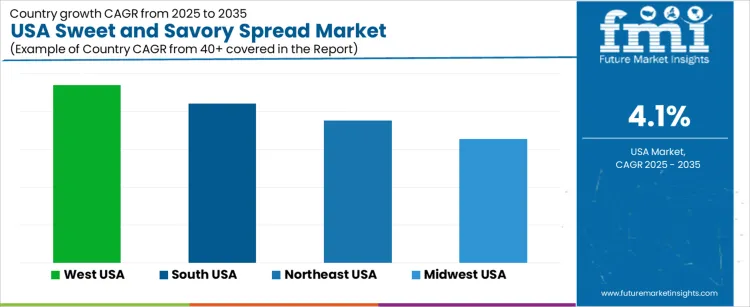
Demand for sweet and savory spreads in the USA is showing steady growth, with regional differences shaping the overall trend. West USA leads the demand with a 4.7% CAGR, driven by health-conscious consumers seeking organic, low-sugar, and plant-based options. Major cities like Los Angeles and San Francisco are seeing high demand, as consumers prioritize healthier, convenient products. South USA follows closely with a 4.2% CAGR, supported by the region’s diverse culinary culture and increasing preference for convenient, flavorful products.
States like Texas and Florida are key drivers, with spreads being used in everyday meals, from sandwiches to snacks. Northeast USA experiences a 3.8% CAGR, with urban areas like New York and Boston fueling demand for premium, artisanal spreads, while Midwest USA shows a 3.3% CAGR, reflecting moderate growth fueled by a focus on convenience and hearty flavors.
Quick Stats of the Demand for Sweet and Savory Spread in USA
- Demand for Sweet and Savory Spread in USA Value (2025): USD 5.9 billion
- Demand for Sweet and Savory Spread in USA Forecast Value (2035): USD 8.8 billion
- Demand for Sweet and Savory Spread in USA Forecast CAGR (2025-2035): 4.1%
- Demand for Sweet and Savory Spread in USA Leading Product Type: Butter/Cheese
- Demand for Sweet and Savory Spread in USA Key Growth Regions: West USA, South USA, Northeast USA
- Demand for Sweet and Savory Spread in USA Top Players: The J.M. Smucker Company, The Kraft Heinz Company, Conagra Brands, Inc.
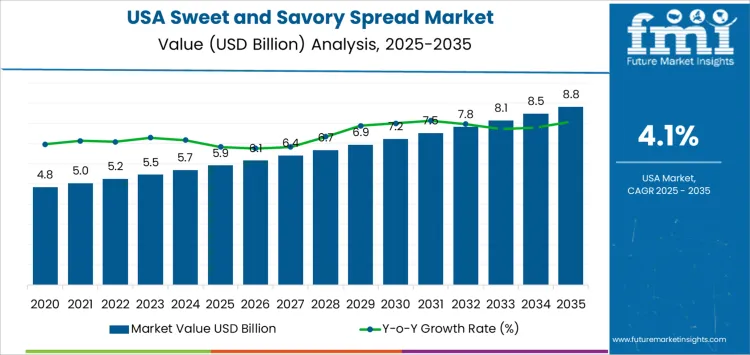
As consumer preferences continue to shift toward healthier and more diverse options, these regional growth trends will persist. The demand for sweet and savory spreads is particularly driven by the growing interest in convenience foods and the versatility of spreads in various applications. While West USA leads with the fastest growth, all regions are benefiting from the rising trend of healthier, more convenient food products. The steady expansion of food processing, foodservice, and retail channels ensures that sweet and savory spreads will remain a staple in American households. As the industry continues to evolve, regional differences will play a crucial role in determining the specific product preferences and growth strategies of key players across the USA.
Demand for Sweet and Savory Spread in USA Key Takeaways
| Metric | Value |
|---|---|
| Demand for Sweet and Savory Spread in USA Value (2025) | USD 5.9 billion |
| Demand for Sweet and Savory Spread in USA Forecast Value (2035) | USD 8.8 billion |
| Demand for Sweet and Savory Spread in USA Forecast CAGR (2025-2035) | 4.1% |
Why is the Demand for Sweet and Savory Spread in USA Growing?
The demand for sweet and savory spreads in the USA is growing due to the increasing popularity of convenient, ready-to-consume snack options. These spreads are widely used as toppings for bread, crackers, and other snacks, providing a quick and flavorful meal or snack option. The growing trend of personalized and innovative flavors in the food sector is driving demand for both sweet and savory varieties, with options such as fruit spreads, nut butters, and savory hummus seeing significant growth. The versatility and convenience of these products contribute to their rising popularity in households.
Health-conscious consumers are also influencing the industry, as there is a growing shift toward spreads with cleaner labels, fewer preservatives, and healthier ingredients. The demand for plant-based, organic, and low-sugar spreads is expanding, catering to consumers who seek healthier alternatives to traditional spreads. The popularity of international flavors and culinary experimentation is fueling demand for a variety of spread options, from sweet chocolate spreads to savory tapenades and pesto.
The development of new packaging formats and innovations, such as squeezable and eco-friendly packaging, is contributing to the growth of the industry. The industry faces challenges related to price sensitivity and competition from private-label brands offering affordable alternatives. Despite these challenges, the continued demand for premium, health-conscious, and innovative spreads is expected to drive steady growth in the sweet and savory spread industry in the USA through 2035.
What is the Segment-Wise Analysis of Demand for Sweet and Savory Spread in USA?
Demand for sweet and savory spread in the USA is segmented by product type and end-use application. By product type, butter/cheese leads with 32% of the demand, followed by fruit spreads, jam, nut and seed-based spreads, chocolate spread, and yeast-based spread. In terms of end-use application, food processing accounts for 38% of the demand, with foodservice (HoReCa) and retail sales (B2C) making up the remaining share. Regionally, demand is divided into West USA, South USA, Northeast USA, and Midwest USA.
How Does Butter/Cheese Lead the Demand for Sweet and Savory Spread in USA?
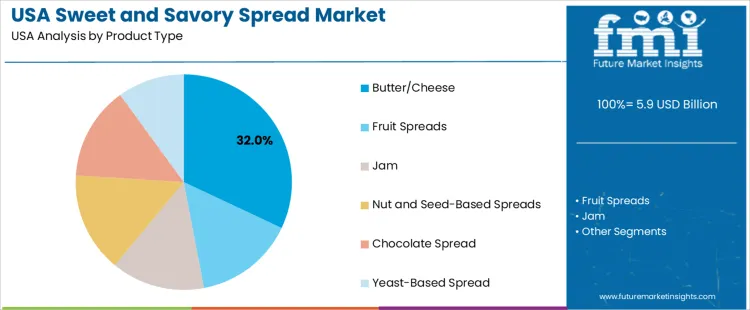
Butter/cheese accounts for 32% of the demand for sweet and savory spreads in the USA, driven by its versatility and widespread use across a range of applications. These spreads are staples in many households, commonly used in both sweet and savory dishes. Their rich flavors and varied textures cater to diverse consumer preferences, making them ideal for a variety of culinary uses, from baking and as a topping to being a base ingredient in many recipes.
Their continued popularity in breakfast and snack foods ensures a consistent and reliable demand. These spreads offer convenience to consumers looking for ready-to-use products, adding to their industry dominance. As the demand for convenient, flavorful, and high-quality spreads grows, butter/cheese continues to lead the segment. This trend is expected to persist, with butter/cheese spreads remaining a core choice for consumers seeking both indulgence and functionality in their spreadable options.
Why Does Food Processing Lead the Demand for Sweet and Savory Spread in USA?
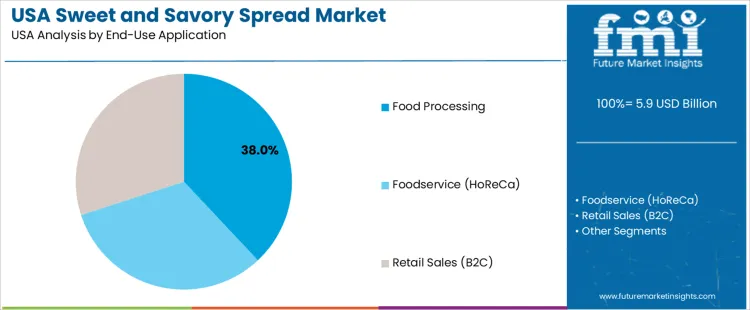
Food processing accounts for 38% of the demand for sweet and savory spreads in the USA, as these products are crucial ingredients in manufacturing a variety of food items. In this sector, spreads are used extensively in packaged foods, ready-to-eat meals, snacks, and baked goods, where they provide essential flavor, texture, and consistency. The ongoing rise in consumer demand for convenient, ready-to-consume products directly fuels the growth of food processing, further driving the demand for these spreads.
As consumers seek more convenient food options, sweet and savory spreads play an important role in ensuring the quality and taste of mass-produced items. The long shelf life and stability of spreads make them a favored ingredient in the processing industry. The continuous growth in the food processing sector, driven by consumer preferences, will likely sustain the demand for sweet and savory spreads in the coming years.
What are the Key Trends, Drivers, and Restraints in Demand for Sweet and Savory Spread in USA?
Spreads such as nut butters, jams, honey, chocolate spreads, and savory options like cheese and butter add flavor, variety, and convenience to daily meals. The growing trend towards easy-to-prepare foods is a key driver of this demand, as busy lifestyles lead consumers to seek products that save time while enhancing taste. The rise of health-conscious consumption is also influencing the industry, with consumers seeking lower-sugar, organic, plant-based, and protein-fortified spreads. Challenges such as concerns about nutritional content particularly sugars and fats are creating restraints. Changing consumer preferences and competition from alternative foods like ready-to-eat meals or snacks could limit the broader adoption of spreads.
Why is Demand for Sweet and Savory Spread Growing in USA?
The demand for sweet and savory spreads in the USA is driven by the growing need for convenience in food preparation. As consumer lifestyles become busier, the preference for quick and easy meal options increases, making spreads ideal for breakfast, snacks, and quick meals. Nut butters, jams, honey, and savory spreads are versatile, offering an easy way to add flavor to bread, crackers, fruits, or even as an ingredient in recipes.
The appeal of spreads is enhanced by their ability to cater to diverse taste preferences and dietary needs. The rising focus on health and wellness has also fueled demand for healthier alternatives, such as low-sugar, organic, and protein-enriched spreads. The increasing availability of these products in supermarkets, convenience stores, and through online platforms has made them more accessible to a wide range of consumers. As consumers continue to prioritize convenience and nutrition, the demand for spreads is expected to grow further.
How are Technological and Product Innovations Driving Spread Demand in USA?
Technological advancements in food processing and packaging have greatly contributed to the growing demand for sweet and savory spreads in the USA. Innovations in formulation have led to the development of spreads with added health benefits, such as nut-based spreads enriched with protein, probiotics, and other nutrients to appeal to health-conscious consumers. The introduction of reduced-sugar, organic, and clean-label products has met the demand for healthier snack options.
Packaging innovations, including resealable jars, tubs, and single-serving sachets, have made spreads more convenient and portable, extending their appeal beyond the breakfast table to snacks and on-the-go meals. These innovations have also helped improve the shelf life and ease of use of spreads. The growing variety of flavors, from traditional fruit jams to savory spreads like avocado and hummus, has expanded consumer choice and encouraged new consumption patterns. As these products continue to evolve, they appeal to an increasingly diverse range of consumers.
What are the Key Challenges and Risks That Could Limit Spread Demand in USA?
Increasing consumer concern about sugar, fat, and calorie content, especially in sweet spreads, could reduce the appeal of traditional products, which are often viewed as unhealthy by health-conscious buyers. This trend is further compounded by the growing preference for whole food options over processed products. Spreads face intense competition from alternative snack products, including fresh fruits, yogurt, and on-the-go bars, which are perceived as healthier options.
Economic fluctuations could also impact the demand for premium or specialty spreads, such as organic or fortified options, due to their higher price points. Shifting dietary trends, such as the rise of low-carb or less-processed food choices, may further limit the growth of traditional spread products. These factors could affect the broader adoption and consumption of spreads in the USA.
What is the Regional Demand Outlook for Sweet and Savory Spread in USA?
| Region | CAGR (%) |
|---|---|
| West USA | 4.7% |
| South USA | 4.2% |
| Northeast USA | 3.8% |
| Midwest USA | 3.3% |
Demand for sweet and savory spreads in the USA is growing steadily, with West USA leading at a 4.7% CAGR, driven by health-conscious consumers seeking organic, low-sugar, and plant-based options. South USA follows at a 4.2% CAGR, fueled by the region’s diverse culinary culture and increasing demand for convenient, flavorful products. Northeast USA experiences a 3.8% CAGR, supported by urban demand for premium, artisanal spreads. Midwest USA shows a 3.3% CAGR, driven by a focus on convenience and hearty, flavorful foods. As consumer interest in healthier, more convenient options rises, demand for sweet and savory spreads will continue to grow.
How is Demand for Sweet and Savory Spread Growing in West USA?
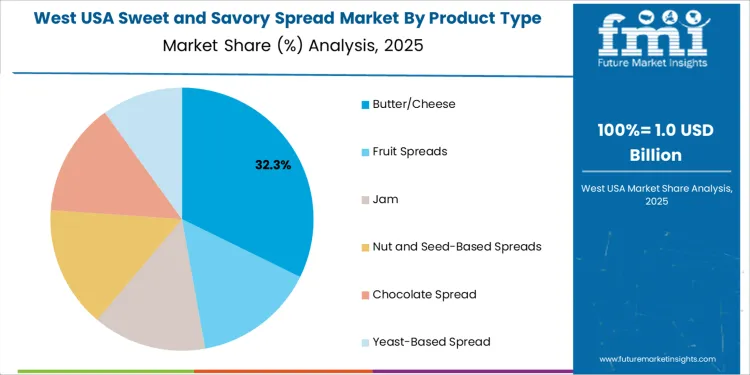
West USA leads the demand for sweet and savory spreads, with a 4.7% CAGR. The region’s diverse and health-conscious population is driving the popularity of spreads, with an increasing interest in organic, low-sugar, and plant-based options. Cities like Los Angeles and San Francisco are seeing strong demand, particularly among consumers who prefer convenient, flavorful products for quick meals. The rise of the "better-for-you" food trend in West USA is contributing to the shift towards healthier spread alternatives.
As consumers focus on portion control and more sustainable ingredients, sweet and savory spreads are becoming essential in daily diets. The demand for premium, artisanal options in the region is also increasing, making West USA a key driver of growth in the spread industry. This trend of health-conscious living will continue to support the growth of sweet and savory spreads in the region.
Why is Demand for Sweet and Savory Spread Rising in South USA?
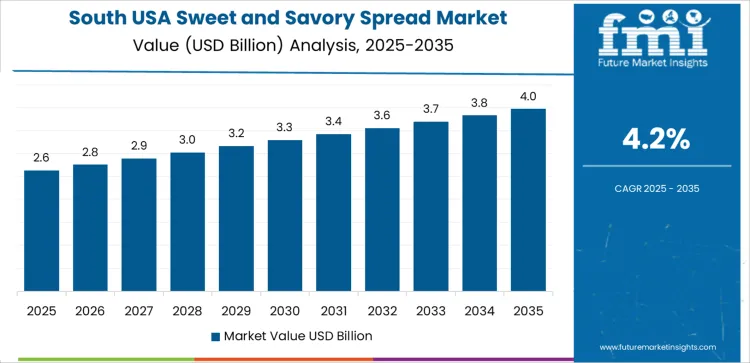
South USA is experiencing steady demand for sweet and savory spreads, with a 4.2% CAGR. The region’s culinary culture, which places a strong emphasis on flavorful, diverse food options, is contributing to the growing popularity of these spreads. Particularly in states like Texas and Florida, sweet and savory spreads are becoming staples in households, used in everything from sandwiches to cooking and baking. The increasing demand for convenient, ready-to-use options is also driving growth, as busy families and professionals embrace spreads as a quick and easy solution.
As consumers continue to explore new flavors and combinations, sweet and savory spreads are being incorporated into a wider variety of products, from snacks to breakfast items. The rising interest in regional and ethnic flavors is further expanding the industry, with consumers seeking unique spread varieties that reflect the diverse Southern palate.
How is Demand for Sweet and Savory Spread Expanding in Northeast USA?
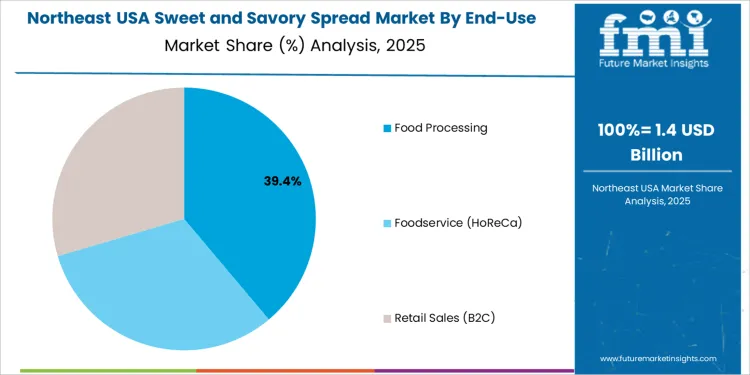
Northeast USA is seeing steady demand for sweet and savory spreads, with a 3.8% CAGR. The region’s focus on convenience and gourmet food options is driving growth, especially in urban areas like New York and Boston, where consumers have a growing preference for premium, artisanal spreads. As health-conscious living continues to trend, spreads made with natural ingredients and lower sugar content are gaining popularity.
The demand for sweet and savory spreads is particularly strong in breakfast foods, sandwiches, and snacks, making it a versatile product for busy lifestyles. As consumers experiment with new flavors and cooking styles, there is a rising interest in both traditional and innovative spread options. This growing appetite for unique, high-quality spreads reflects the region’s evolving food culture, contributing to steady growth in the sweet and savory spread industry.
Why is Demand for Sweet and Savory Spread Growing in Midwest USA?
Midwest USA is experiencing moderate demand for sweet and savory spreads, with a 3.3% CAGR. The region’s increasing interest in convenience foods and savory snack options is helping to drive growth in the spread industry. With a strong tradition of hearty, flavorful foods, spreads are becoming more popular as convenient ingredients for sandwiches, snacks, and dips. The rise in demand for healthy and organic products is also pushing consumers toward spreads made with natural, sustainable ingredients.
While the growth rate is more moderate compared to other regions, there is still a steady rise in the adoption of sweet and savory spreads, particularly as more retailers introduce innovative and healthier options. As consumer preferences shift toward quick, easy-to-use products, the demand for these spreads will continue to grow in the Midwest, supported by the region's evolving culinary trends.
What is the Competitive Landscape of Sweet and Savory Spread Demand in USA?
Demand for sweet and savory spreads in the USA is rising, fueled by the growing popularity of convenient, ready-to-consume products in everyday meals and snacks. These spreads, which include jams, jellies, peanut butter, and savory options, appeal to a broad range of consumers seeking variety and convenience in their food choices. As consumer preferences evolve, demand is shifting toward healthier options, organic ingredients, and more diverse flavor profiles.
Leading players in the USA sweet and savory spread industry include The J.M. Smucker Company, The Kraft Heinz Company are also significant competitors. The company’s strategy focuses on brand diversification and catering to shifting consumer preferences for both indulgent and healthier options.
The J.M. Smucker Company and The Kraft Heinz Company leverage their established brand recognition and extensive distribution networks to capture a significant share of the industry. They focus on delivering high-quality, affordable spreads that cater to both traditional and emerging consumer needs. On the other hand, Conagra Brands, Inc. target specific segments with innovative and regionally popular products, expanding the variety of spreads available to consumers. These companies use strategic advertising, packaging innovations, and expanding distribution channels to differentiate their offerings and maintain competitive positioning in the growing USA industry.
Key Players in USA Sweet and Savory Spread Demand
- Unilever
- The J.M. Smucker Company
- The Kraft Heinz Company
- Conagra Brands, Inc.
Scope of Report
| Items | Values |
|---|---|
| Quantitative Units (2025) | USD billion |
| Product Type | Butter/Cheese, Fruit Spreads, Jam, Nut and Seed-Based Spreads, Chocolate Spread, Yeast-Based Spread |
| End-Use Application | Food Processing, Foodservice (HoReCa), Retail Sales (B2C) |
| Sales Channel | B2B, B2C |
| Regions Covered | West USA, South USA, Northeast USA, Midwest USA |
| Countries Covered | USA |
| Key Companies Profiled | Unilever, The J.M. Smucker Company, The Kraft Heinz Company, Conagra Brands, Inc. |
| Additional Attributes | Dollar sales by product type and end-use application; regional CAGR and growth trends; increasing demand for nut and seed-based spreads; popularity of chocolate spreads. |
USA Sweet and Savory Spread Demand by Key Segments
Product Type
- Butter/Cheese
- Fruit Spreads
- Jam
- Nut and Seed-Based Spreads
- Chocolate Spread
- Yeast-Based Spread
End-Use Application
- Food Processing
- Foodservice (HoReCa)
- Retail Sales (B2C)
Region
- West USA
- South USA
- Northeast USA
- Midwest USA
Frequently Asked Questions
How big is the demand for sweet and savory spread in USA in 2025?
The demand for sweet and savory spread in USA is estimated to be valued at USD 5.9 billion in 2025.
What will be the size of sweet and savory spread in USA in 2035?
The market size for the sweet and savory spread in USA is projected to reach USD 8.8 billion by 2035.
How much will be the demand for sweet and savory spread in USA growth between 2025 and 2035?
The demand for sweet and savory spread in USA is expected to grow at a 4.1% CAGR between 2025 and 2035.
What are the key product types in the sweet and savory spread in USA?
The key product types in sweet and savory spread in USA are butter/cheese, fruit spreads, jam, nut and seed-based spreads, chocolate spread and yeast-based spread.
Which end-use application segment is expected to contribute significant share in the sweet and savory spread in USA in 2025?
In terms of end-use application, food processing segment is expected to command 38.0% share in the sweet and savory spread in USA in 2025.
Preview the report firsthand - request a free sample
Get SampleGet the brochure for pricing and purchase details.
Get PDFTable of Content
- Executive Summary
- USA Market Outlook
- Demand-side Trends
- Supply-side Trends
- Technology Roadmap Analysis
- Analysis and Recommendations
- Market Overview
- Market Coverage / Taxonomy
- Market Definition / Scope / Limitations
- Market Background
- Market Dynamics
- Drivers
- Restraints
- Opportunity
- Trends
- Scenario Forecast
- Demand in Optimistic Scenario
- Demand in Likely Scenario
- Demand in Conservative Scenario
- Opportunity Map Analysis
- Product Life Cycle Analysis
- Supply Chain Analysis
- Investment Feasibility Matrix
- Value Chain Analysis
- PESTLE and Porter’s Analysis
- Regulatory Landscape
- Regional Parent Market Outlook
- Production and Consumption Statistics
- Import and Export Statistics
- Market Dynamics
- USA Market Analysis 2020 to 2024 and Forecast, 2025 to 2035
- Historical Market Size Value (USD Million) Analysis, 2020 to 2024
- Current and Future Market Size Value (USD Million) Projections, 2025 to 2035
- Y-o-Y Growth Trend Analysis
- Absolute $ Opportunity Analysis
- USA Market Pricing Analysis 2020 to 2024 and Forecast 2025 to 2035
- USA Market Analysis 2020 to 2024 and Forecast 2025 to 2035, By Product Type
- Introduction / Key Findings
- Historical Market Size Value (USD Million) Analysis By Product Type , 2020 to 2024
- Current and Future Market Size Value (USD Million) Analysis and Forecast By Product Type , 2025 to 2035
- Butter/Cheese
- Fruit Spreads
- Jam
- Nut and Seed-Based Spreads
- Chocolate Spread
- Yeast-Based Spread
- Y-o-Y Growth Trend Analysis By Product Type , 2020 to 2024
- Absolute $ Opportunity Analysis By Product Type , 2025 to 2035
- USA Market Analysis 2020 to 2024 and Forecast 2025 to 2035, By End-Use Application
- Introduction / Key Findings
- Historical Market Size Value (USD Million) Analysis By End-Use Application, 2020 to 2024
- Current and Future Market Size Value (USD Million) Analysis and Forecast By End-Use Application, 2025 to 2035
- Food Processing
- Foodservice (HoReCa)
- Retail Sales (B2C)
- Y-o-Y Growth Trend Analysis By End-Use Application, 2020 to 2024
- Absolute $ Opportunity Analysis By End-Use Application, 2025 to 2035
- Market Structure Analysis
- Competition Dashboard
- Competition Benchmarking
- Market Share Analysis of Top Players
- By Regional
- By Product Type
- By End-Use Application
- Competition Analysis
- Competition Deep Dive
- The J.M. Smucker Company
- Overview
- Product Portfolio
- Profitability by Market Segments (Product/Age /Sales Channel/Region)
- Sales Footprint
- Strategy Overview
- Marketing Strategy
- Product Strategy
- Channel Strategy
- The Kraft Heinz Company
- Conagra Brands, Inc.
- The J.M. Smucker Company
- Competition Deep Dive
- Assumptions & Acronyms Used
- Research Methodology


